Giveaways
FROM Oamaru, you drive roughly 80 km (50 miles) north to the similarly-named port of Timaru. My last two posts have been about those towns. This post is about places to visit on the way between the two, including the equally historic but slightly inland town of Waimate.

Once you decide to tear yourself away from the beautiful, historic ‘Whitestone City’ of Oamaru, what is the journey like?
About ten or fifteen kilometres north of Oamaru on State Highway 1, known locally as the Glenavy-Hilderthorpe Road, and just over a kilometre past Seven Mile Road on the left, you come to Riverstone Castle.

Riverstone Castle is a fairly recent construction, built from the beautiful white Oamaru Stone quarried locally. You can tour it at certain times of the year: check out the link above.
Just after Riverstone Castle, you come to Glenavy, a town 5 km from the mouth of the Waitaki River, which divides Canterbury from Otago.

Waitaki means ‘water of tears’; the river was massively developed for hydroelectricity during the twentieth century. I did a post about the Waitaki a while back called ‘Ōmārama and the Waitaki Valley: Up to the Place of Light, down the Water of Tears’.
There is a little historic park in Glenavy that is quite interesting, including the colonial mini-jail, which doesn’t look like it would have stopped anyone intent on breaking out, as opposed to sleeping off a night’s drunkenness.

Everything looked really nice in the low winter sunshine.
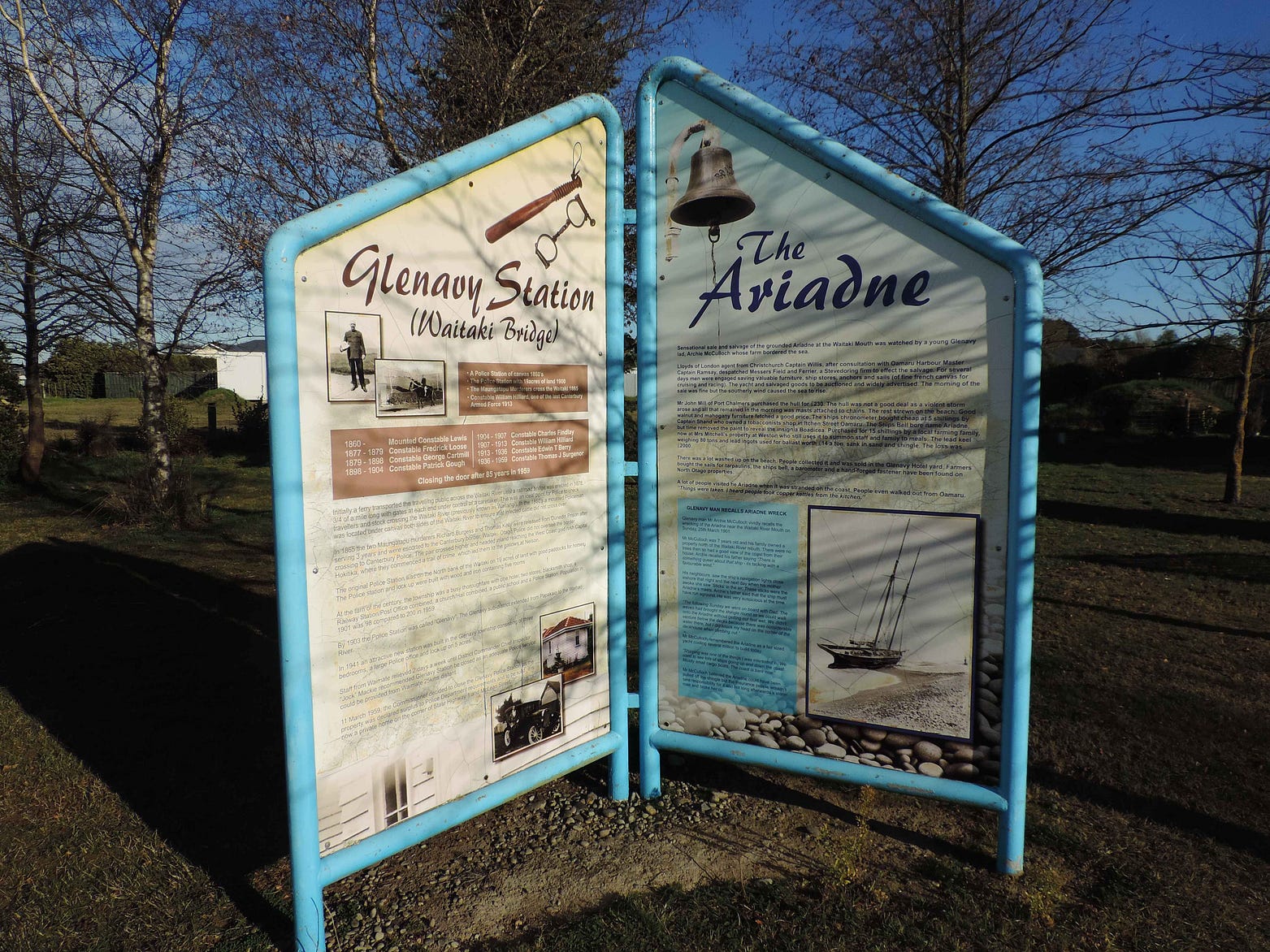
A display about a tree trunk fished out of the Waitaki reminds me how strange it is that many New Zealand plants are closely related to Chilean ones, even though we are on opposite sides of the Pacific. Thus, the closest relative of a New Zealand tree called the Matai or Plum Pine, Prumnopytis taxifolia, is the Chilean Plum Pine, Prumnopytis andina.

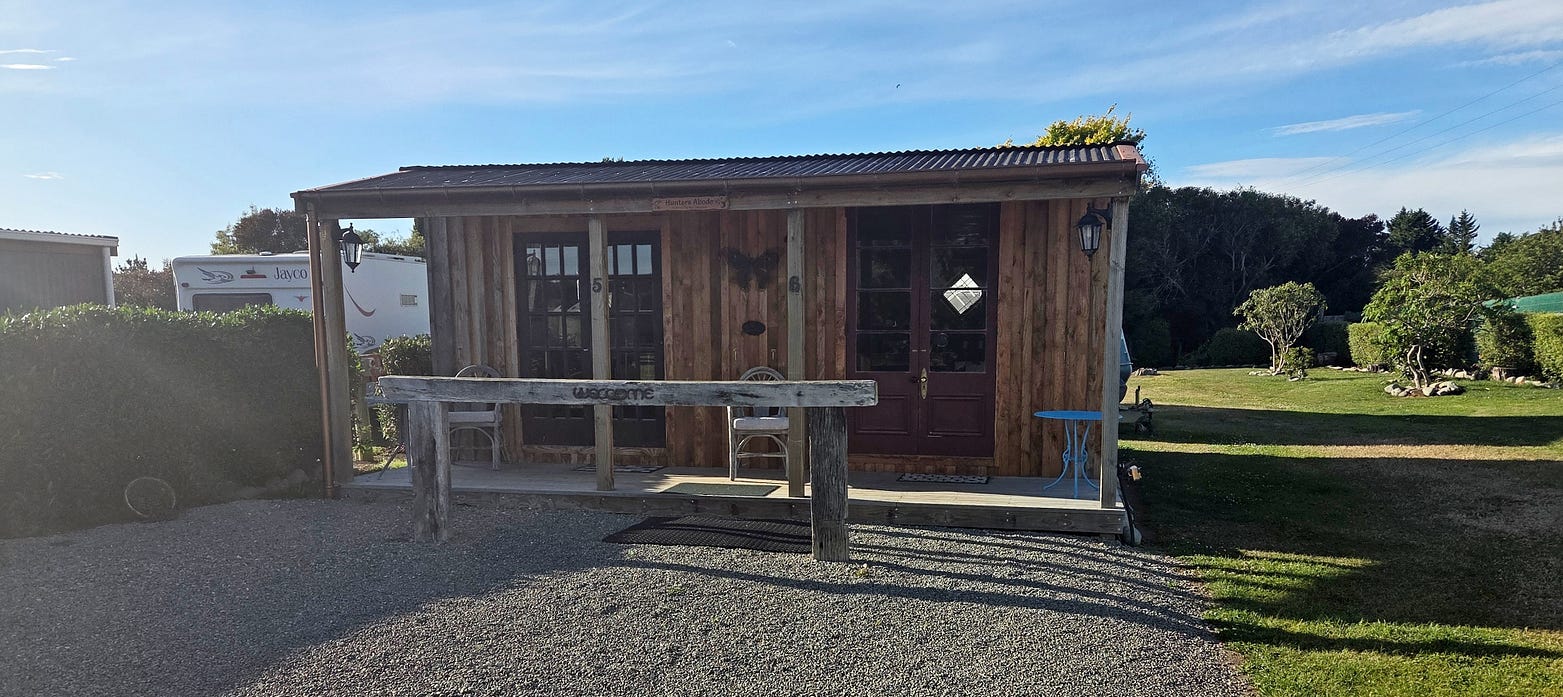
On my most recent trip, I stayed at Glenavys Waitaki River Motor Camp, where they have these cute cabins with old brass beds.

Like most of the coastal towns on this route, Glenavy also offers excellent fishing.
About 16 km, or ten miles, north of Glenavy, you can take a short inland detour via McNamara’s Road to Waimate.
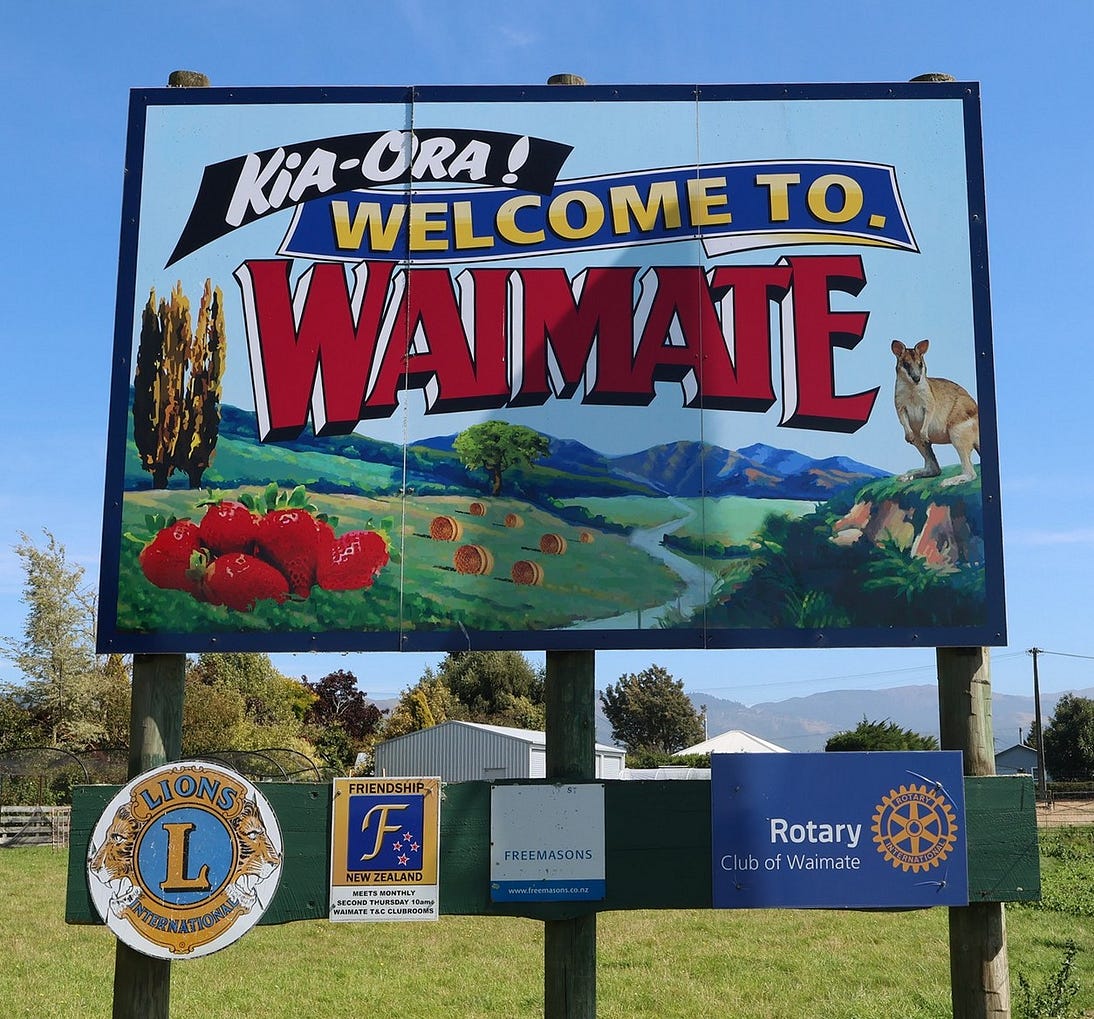
Waimate means ‘Deadwater’, like somewhere in the Wild West. Waimate is a nice town, unassuming, but with a ton of history behind it.

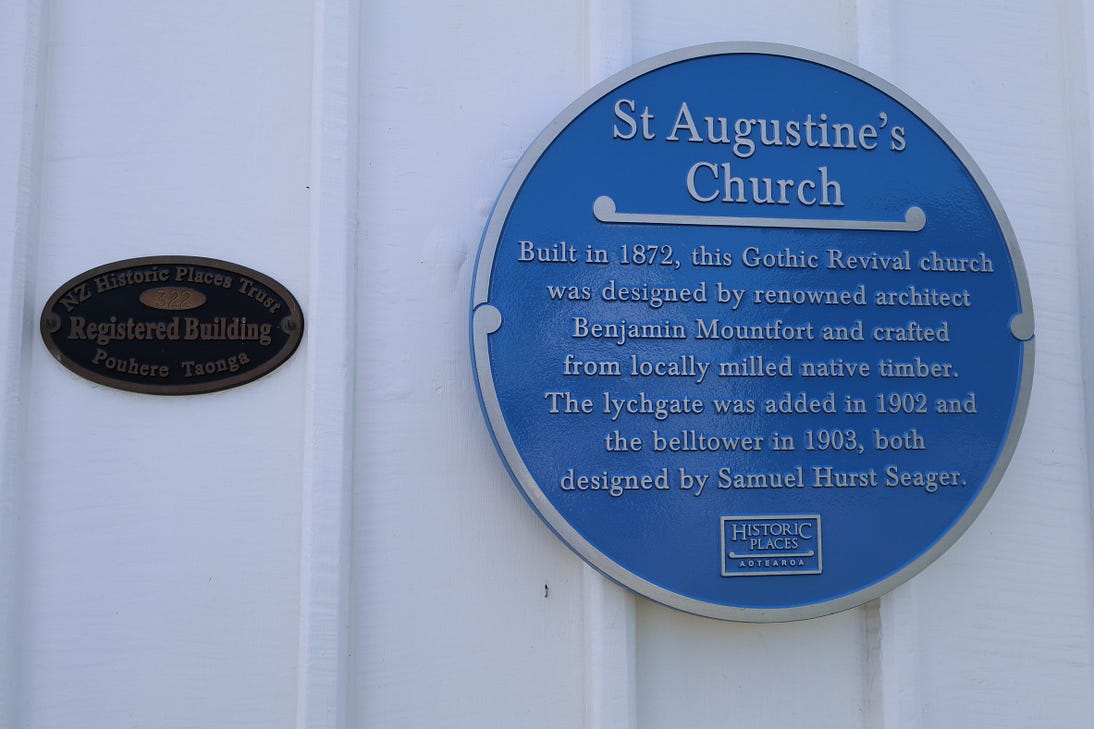
There is an old and traditional-looking wooden church, St Augustine’s Anglican, which dates back to the 1870s.

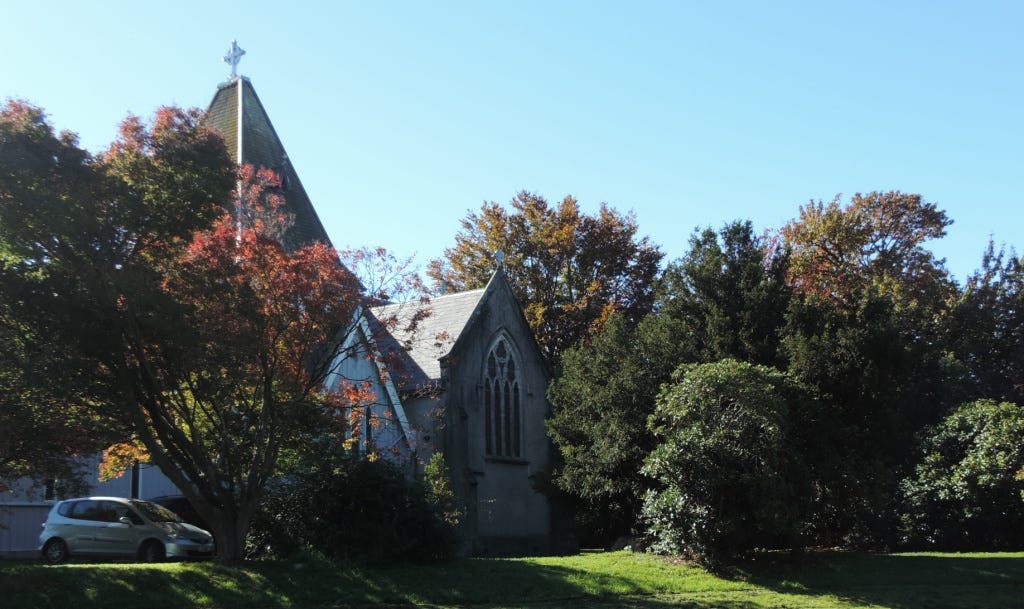
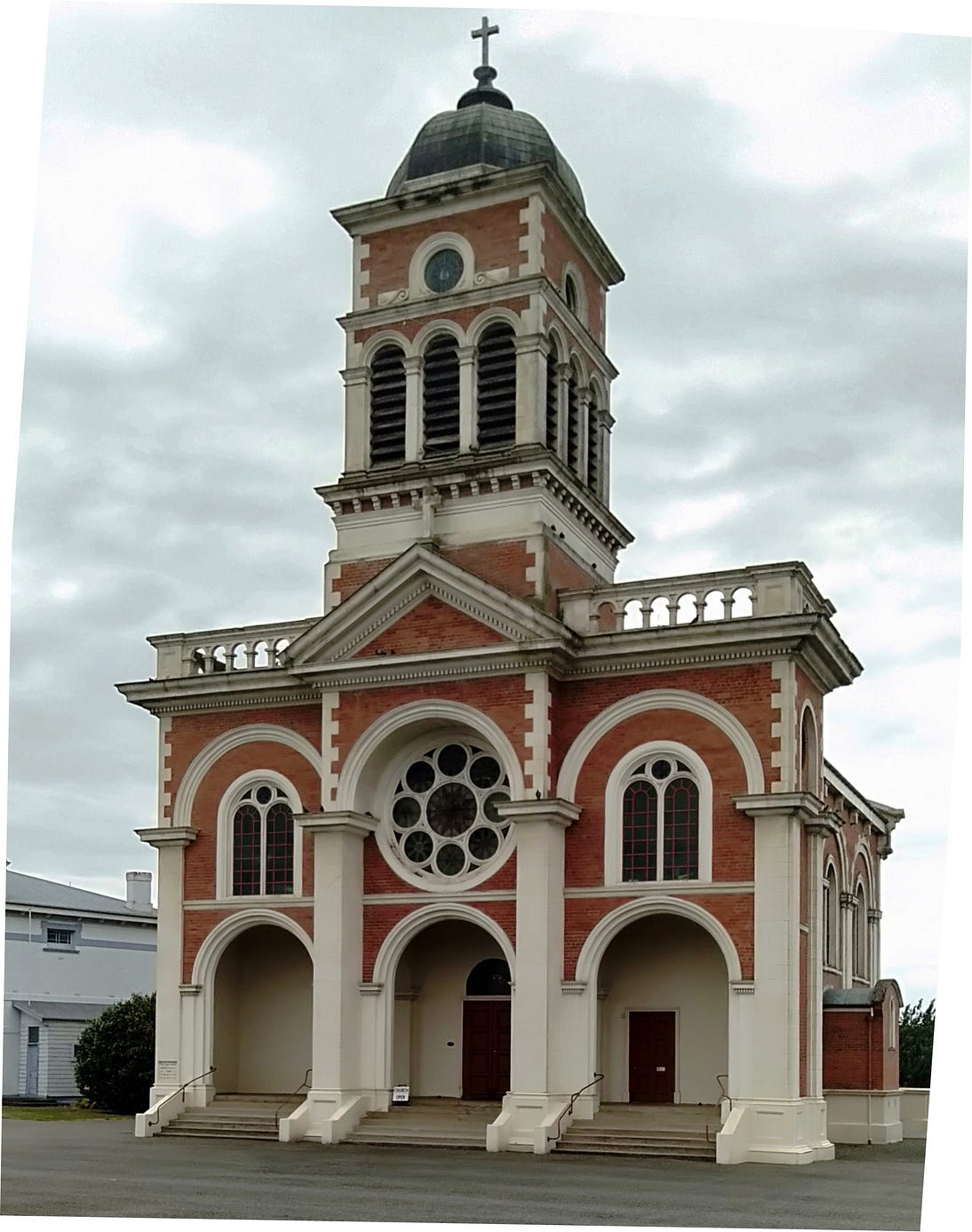
And a stone basilica.
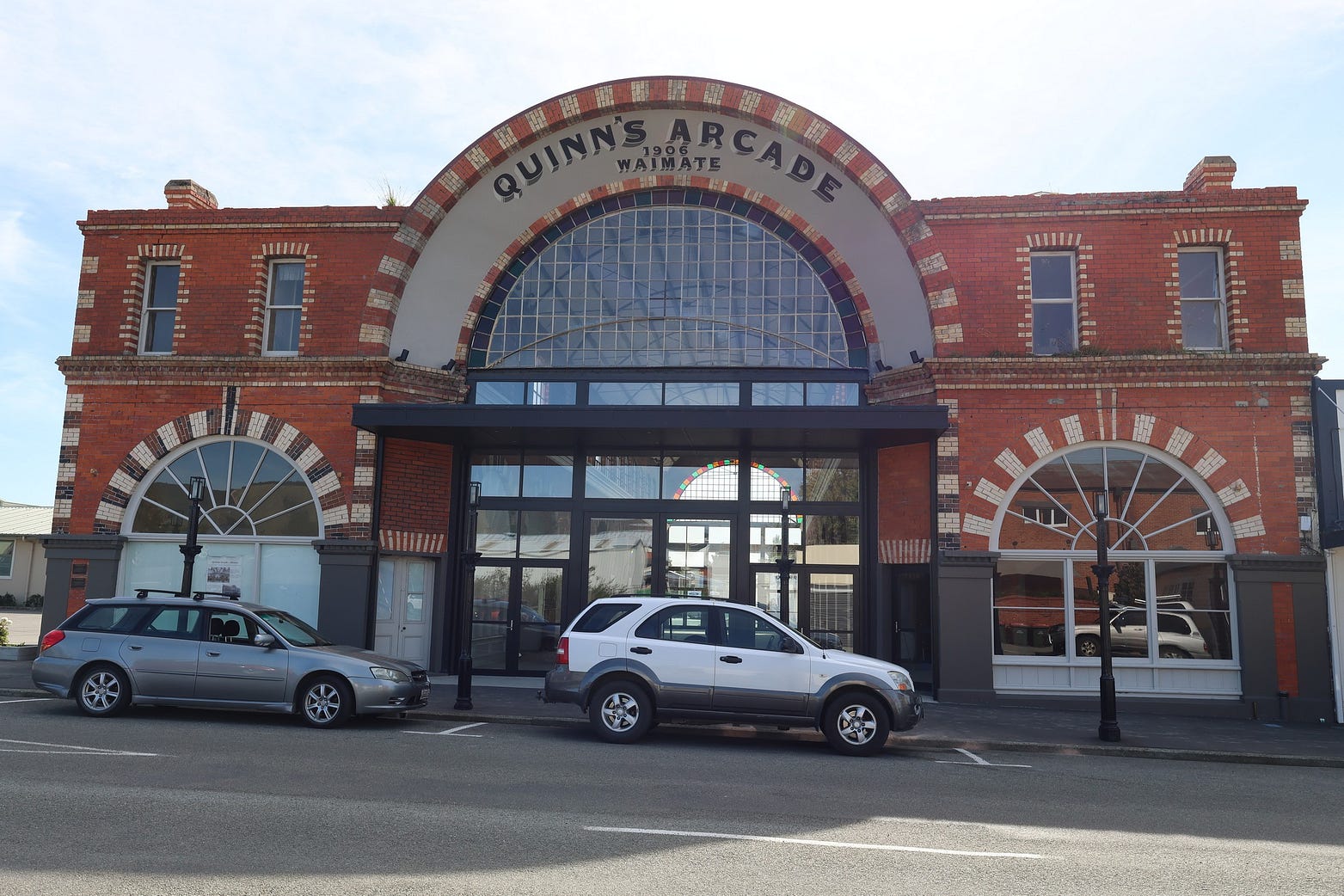
And one of New Zealand’s first shopping malls, Quinn’s Arcade.
Waimate was founded in 1854 by an alliance of settlers and local Māori against the invading Te Rauparaha, scourge of much of the South Island at the time; an event commemorated by one of the murals on the local grain silos, which shows the settler leader Michael Studholme and local Māori chief Te Huruhuru performing a hongi.

Waimate is also the birthplace of the fondly remembered New Zealand Prime Minister Norman Kirk, who assumed that office in 1972 and died, unexpectedly, in 1974.
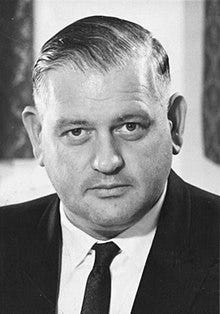
Kirk is interviewed in the first part of this clip:
Frost Over New Zealand — The Leaders | Television | NZ On Screen


The grain silos, which were built about a hundred years ago but ironically almost never used, now serve mainly as a landmark.

Along with the mural of Studholme and Te Huruhuru, they sport additional murals of Norman Kirk, local war hero Eric Batchelor, and one of the first female doctors in New Zealand, Waimate GP Margaret Cruikshank, who perished in the 1918 influenza epidemic.


There’s also a statue of Dr Cruikshank in Seddon Park, nearby.
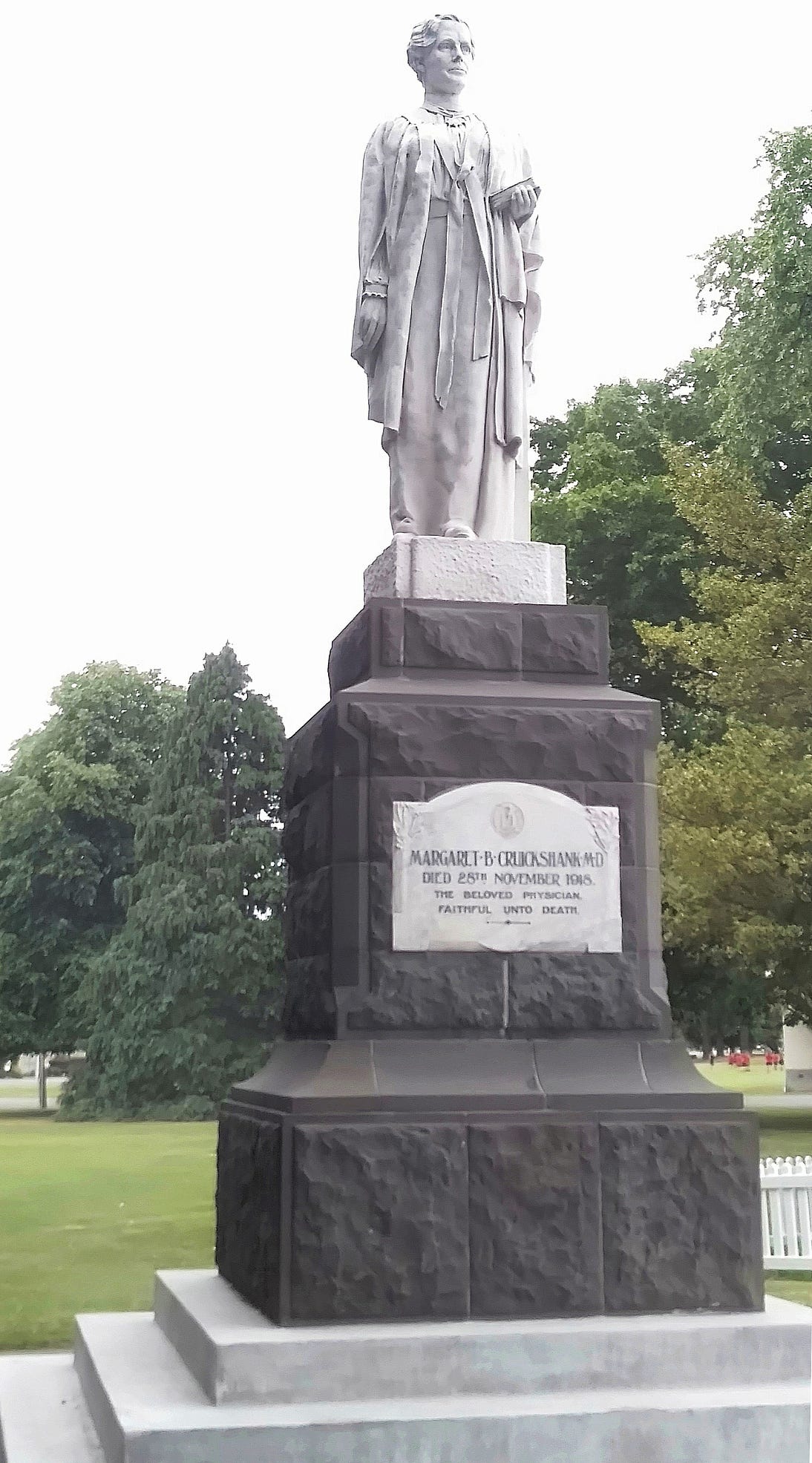
I wonder if this statue inspired Kirk to his life of public service? He’d have gone past it every day as a boy.
Another local hero was La Tour Mollet d’Auvergne, known as Ted d’Auvergne, whose statue was unveiled in 2020 in Waimate. Ted d’Auvergne left a bottle of beer in the Waihao Forks Hotel, about 12 km out of town on the road to Kurow, when he went off to World War II in 1939, telling the publican to keep it for him when he got back.

Unfortunately, Ted was killed in 1941. The bottle is still there behind glass in the pub to this day.
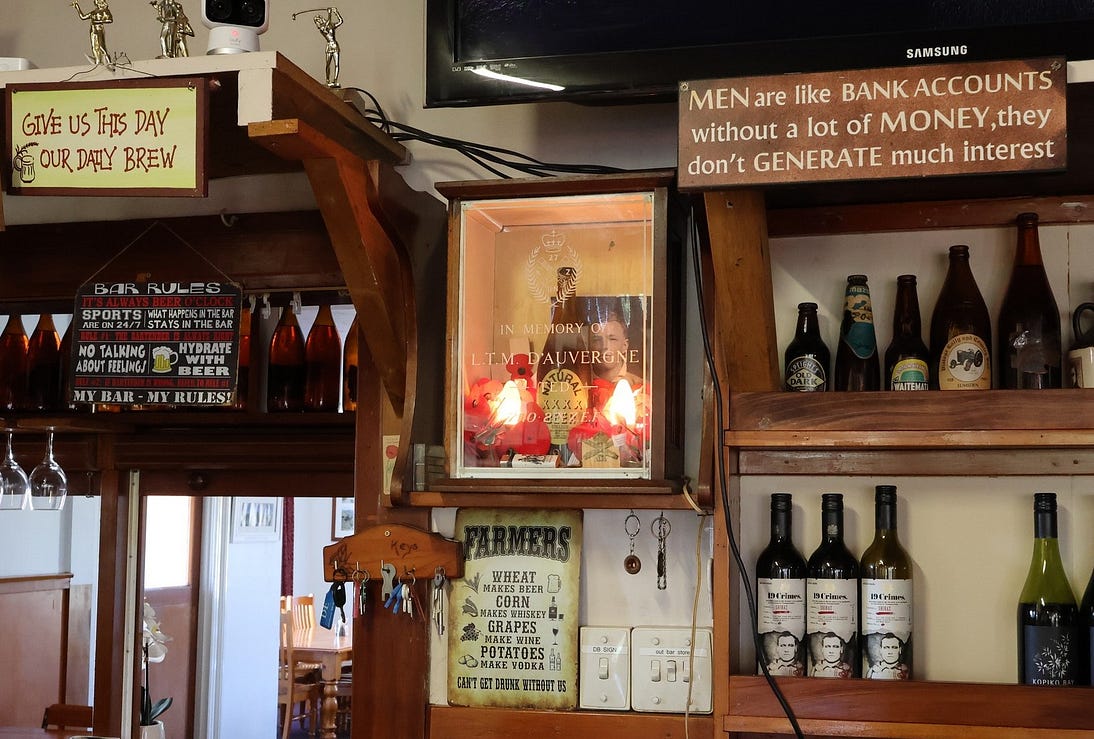
Since 2020, Ted has also been commemorated by a statue that sits beside the pub, possibly where d’Auvergne sat as he was waiting to go to war.


While looking all this up, I came across the similarly named Théophile Malo de la Tour d’Auvergne-Corret, a hero of the French Revolution dubbed the “first grenadier of France” by Napoleon.

Were they related, I wonder? If so, here is another Kiwi-French connection to add to Akaroa, d’Urville, Pompallier, and the others!
There is also a great local museum in Waimate, in the old courthouse.

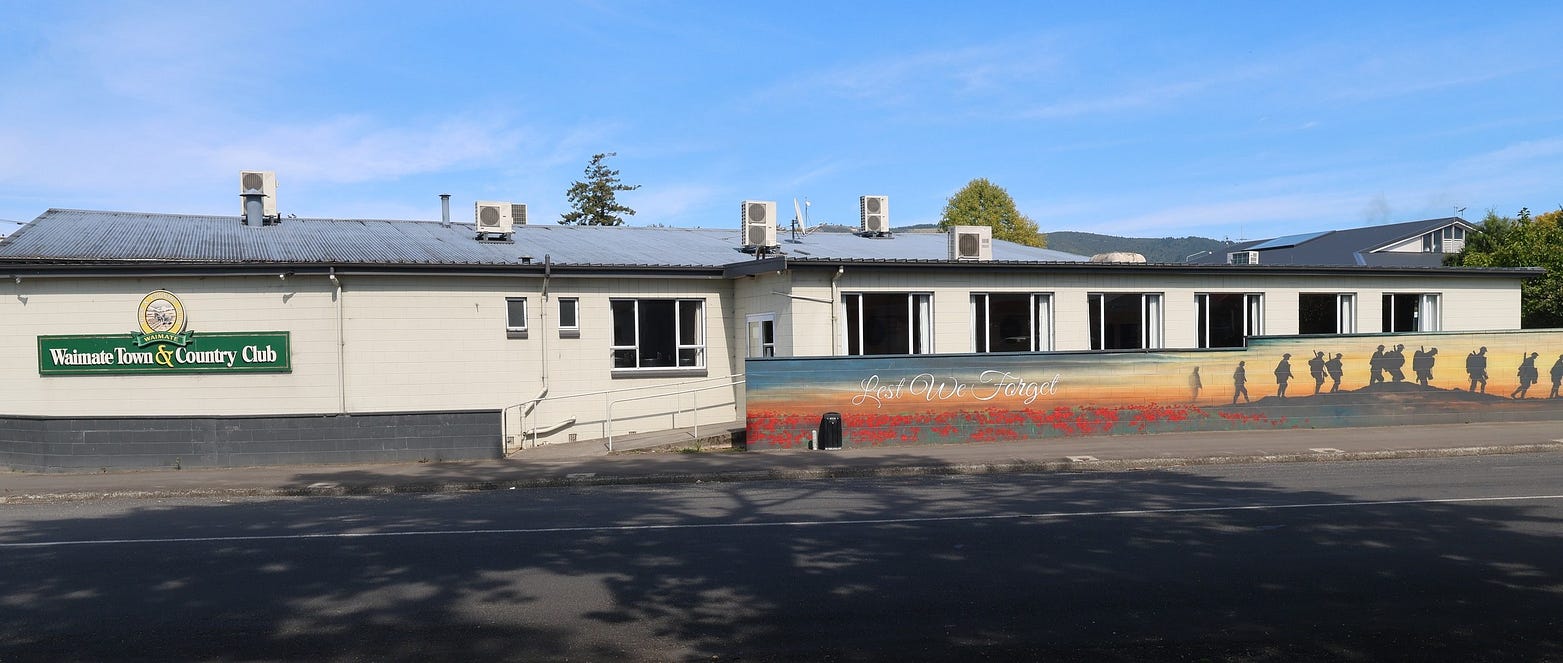
At the Waimate Town & Country Club, we saw a nice mural commemorating wartime service, Ted d’Auvergne and Eric Batchelor not being the only ones to ship out overseas from these parts by any means.
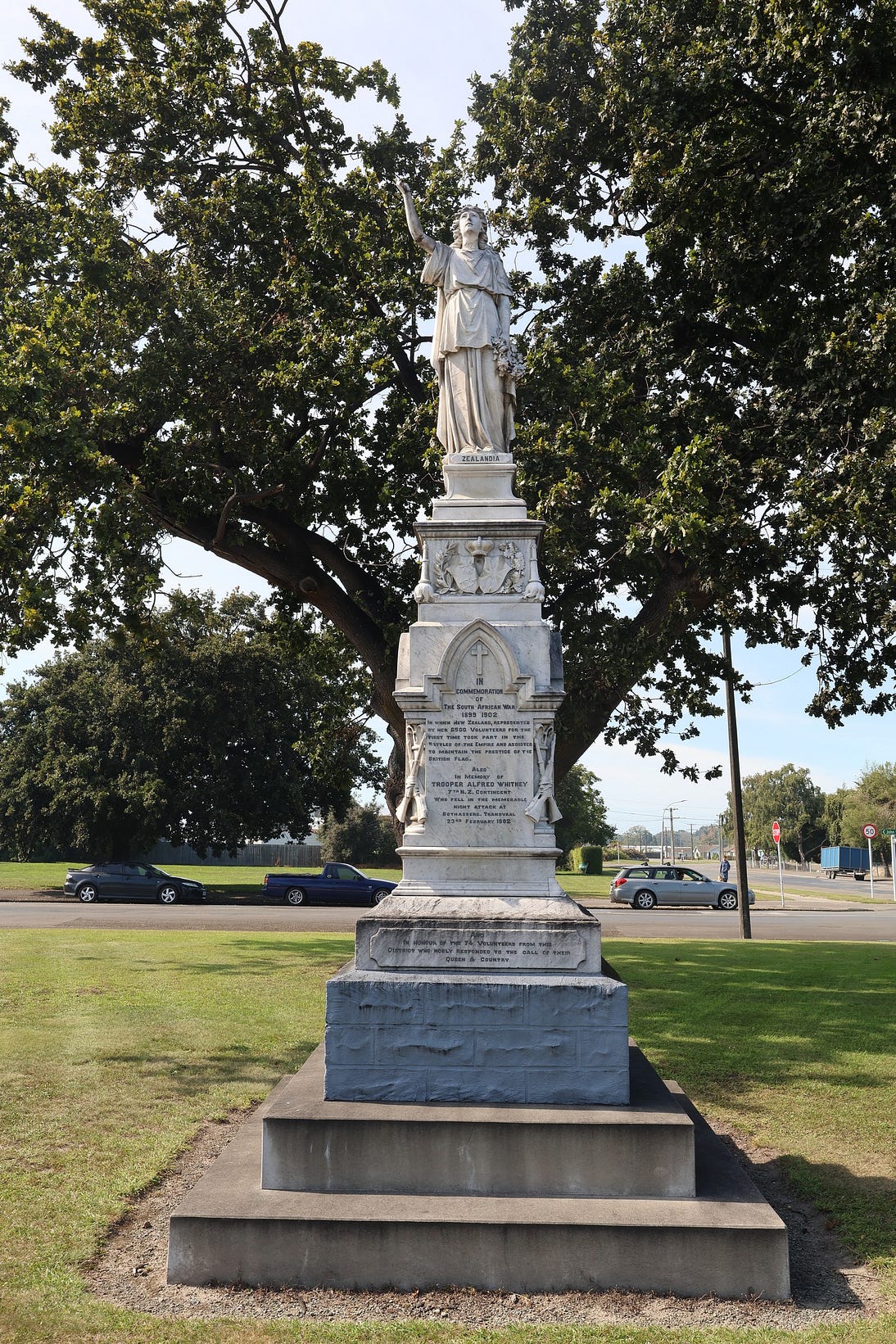
Across the road from the Town & Country club, there was a memorial to the South African War of 1899–1902, with a statue of a dreamy-looking Zealandia on top.
Lastly, before I move on from Waimate, it is worth mentioning that there are lots of wallabies in this part of New Zealand. They were brought over from Australia in colonial times for the fur trade, but soon hopped away and began eating the farmers’ crops.
You’re supposed to report them dead or alive on a government website called ReportWallabies. But at the same time, the locals seem quite proud of the officially unwanted Australian import, and there is a legitimate wallaby park on Bathgate Road, off State Highway 82, the road that takes you back to the main highway north.
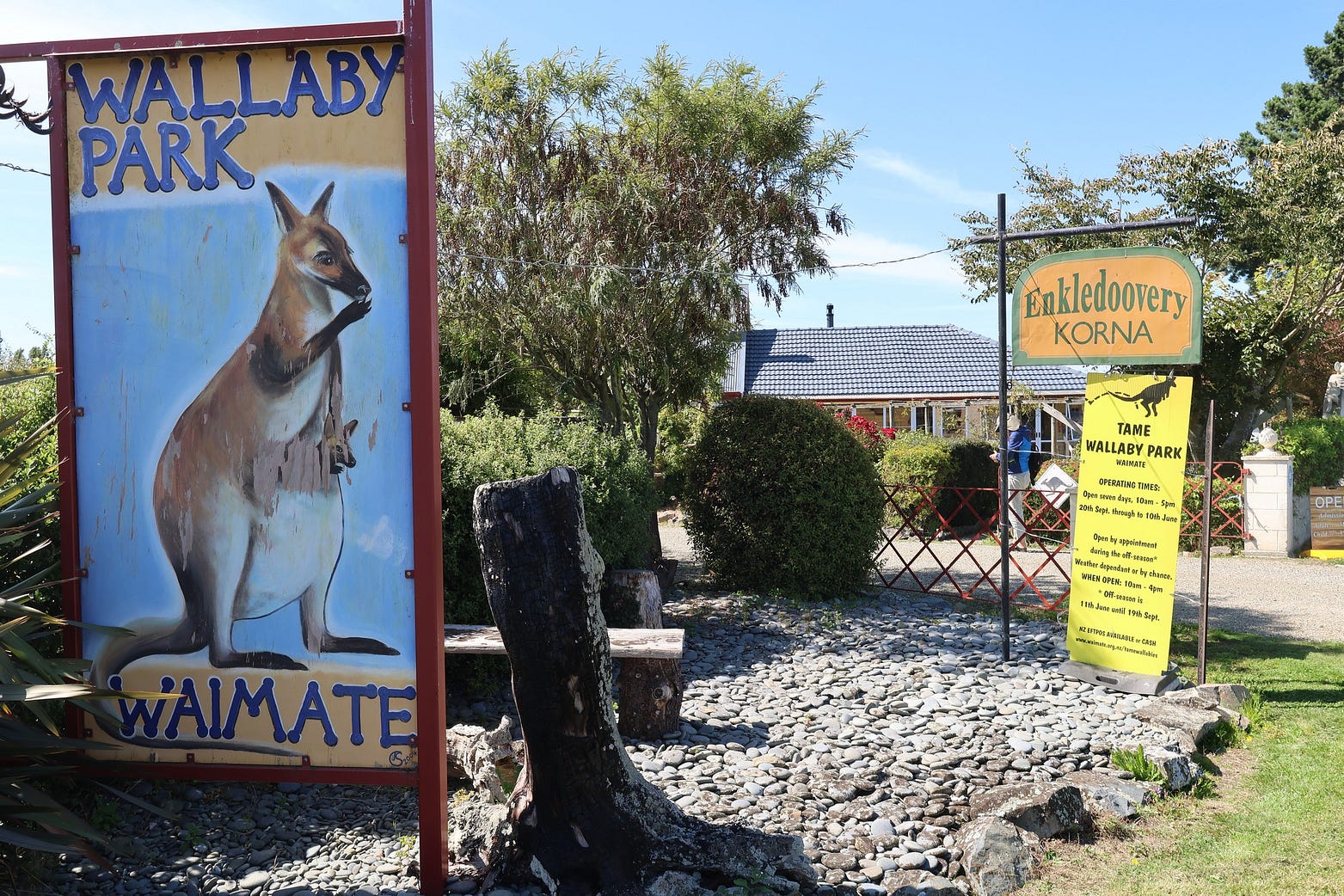
For more on things to see and do in the Waimate District, check out the local tourism website, waimate.org.nz.
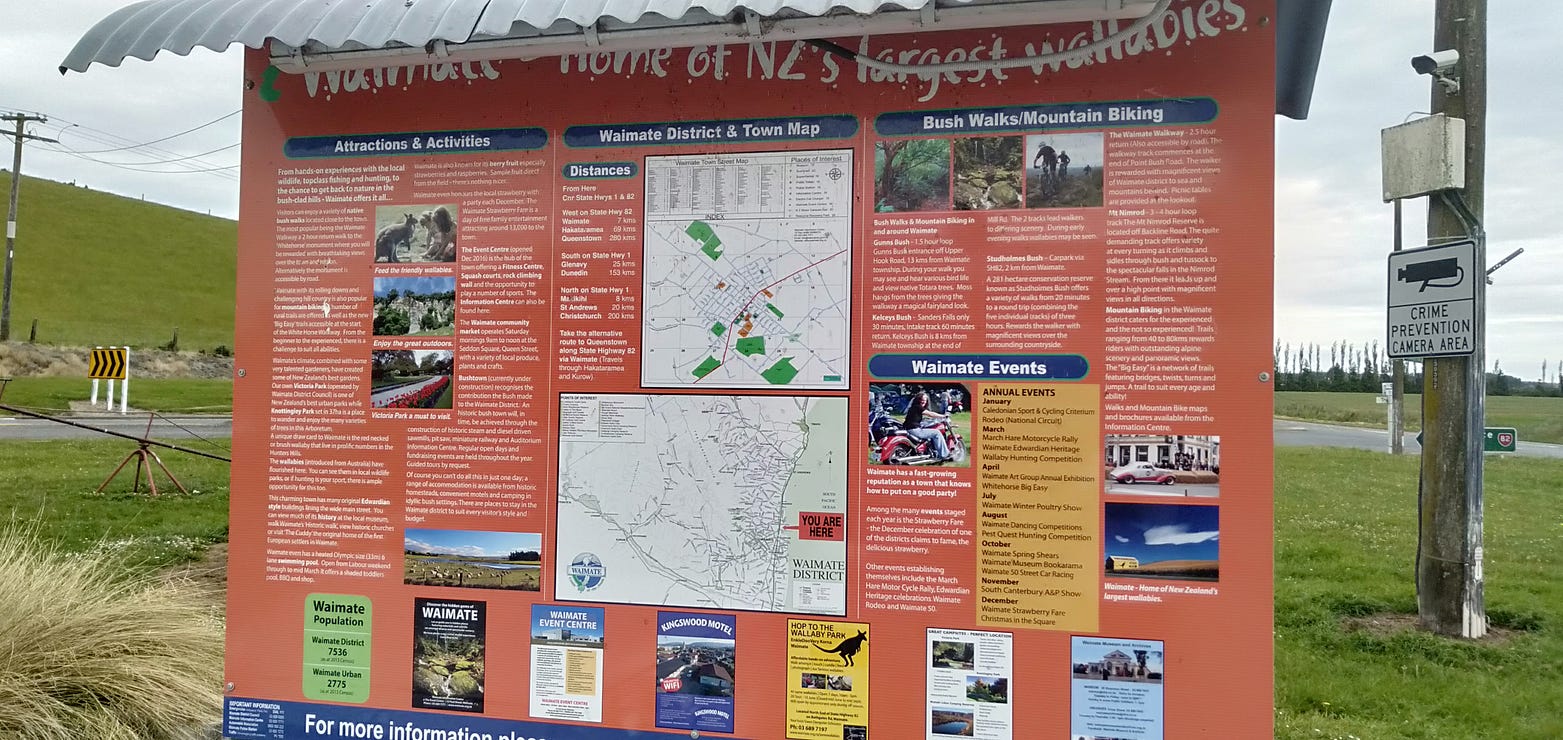
You can also visit Waimate by way of a longer detour from Glenavy, via Duntroon and Kurow. However, that has so many attractions that I’m going to make it the subject of another post!
Past the point where the road from Waimate rejoins the main coast road, there is a turnoff to a bleak spot called Hook Beach, a steep gravel beach favoured by surfcasters, where there is also a monument that reads as follows: “Hereabouts Bishop Selwyn and Edward Shortland met 16th January 1844.” Both men were on separate journeys of exploration at the time: so, it must have been a sort of Dr Livingstone moment, judged worthy of commemoration by whoever it was that erected the monument.

Further north, a traveller on the main road comes to St Andrews, which has a sizable campsite.

Just before Timaru, there is a road leading to Jacks Point, where there is a further coastal clifftop walkway leading to the Jacks Point Lighthouse.
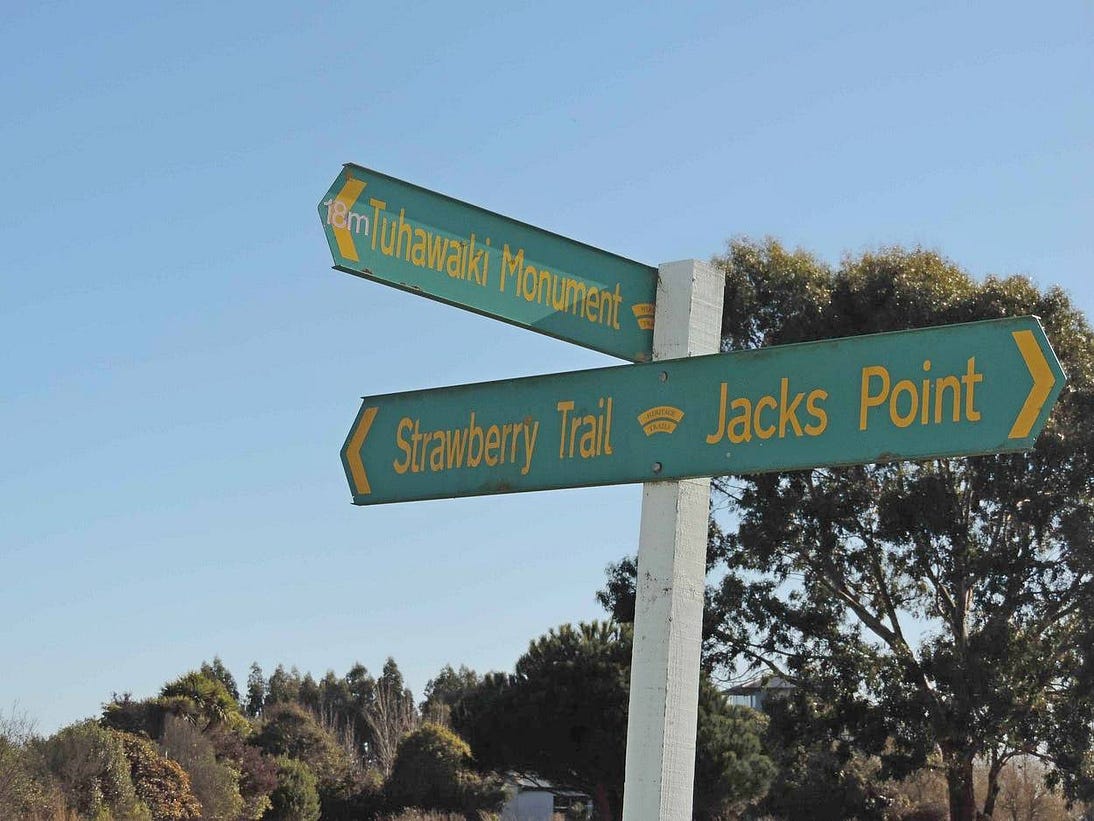
The name Jacks Point commemorates the famous Ngāi Tahu chief Hone Tūhawaiki, a contemporary of Edward Shortland and Bishop Selwyn who was nicknamed ‘Bloody Jack’ by some of the early settlers.
There is a Māori-language monument on the local road to Jacks Point, also known as Tūhawaiki Point, which reads ‘Tuhawaiki he tohu Maumahara tenei mo Tuhawaiki kura rau i toremi ai ki kone i te tau 1844’. These words mean that it was erected in remembrance of the fact that Tūhawaiki was drowned near this spot in 1844.

The drowning of Tūhawaiki was deemed especially unfortunate by many, since Tūhawaiki, who seemed at home in both worlds, had become an important go-between among the South Island Māori and the settlers who were just then starting to flood into the island in numbers, founding Dunedin in 1848 and Christchurch in 1850.
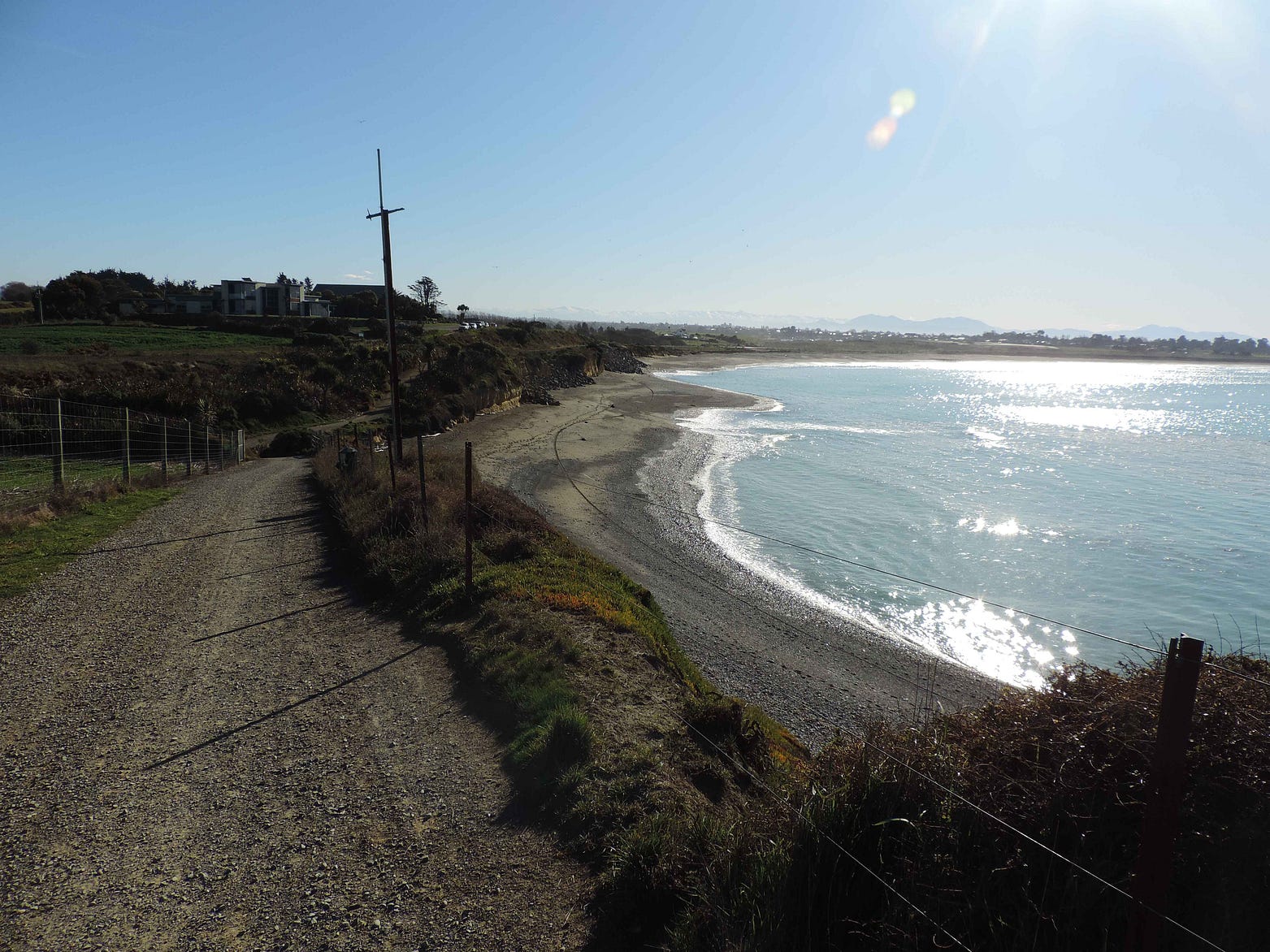
Here is a view from the start of the track that leads to the Jacks Point Lighthouse. Timaru, and the mountains behind it, are in the background.
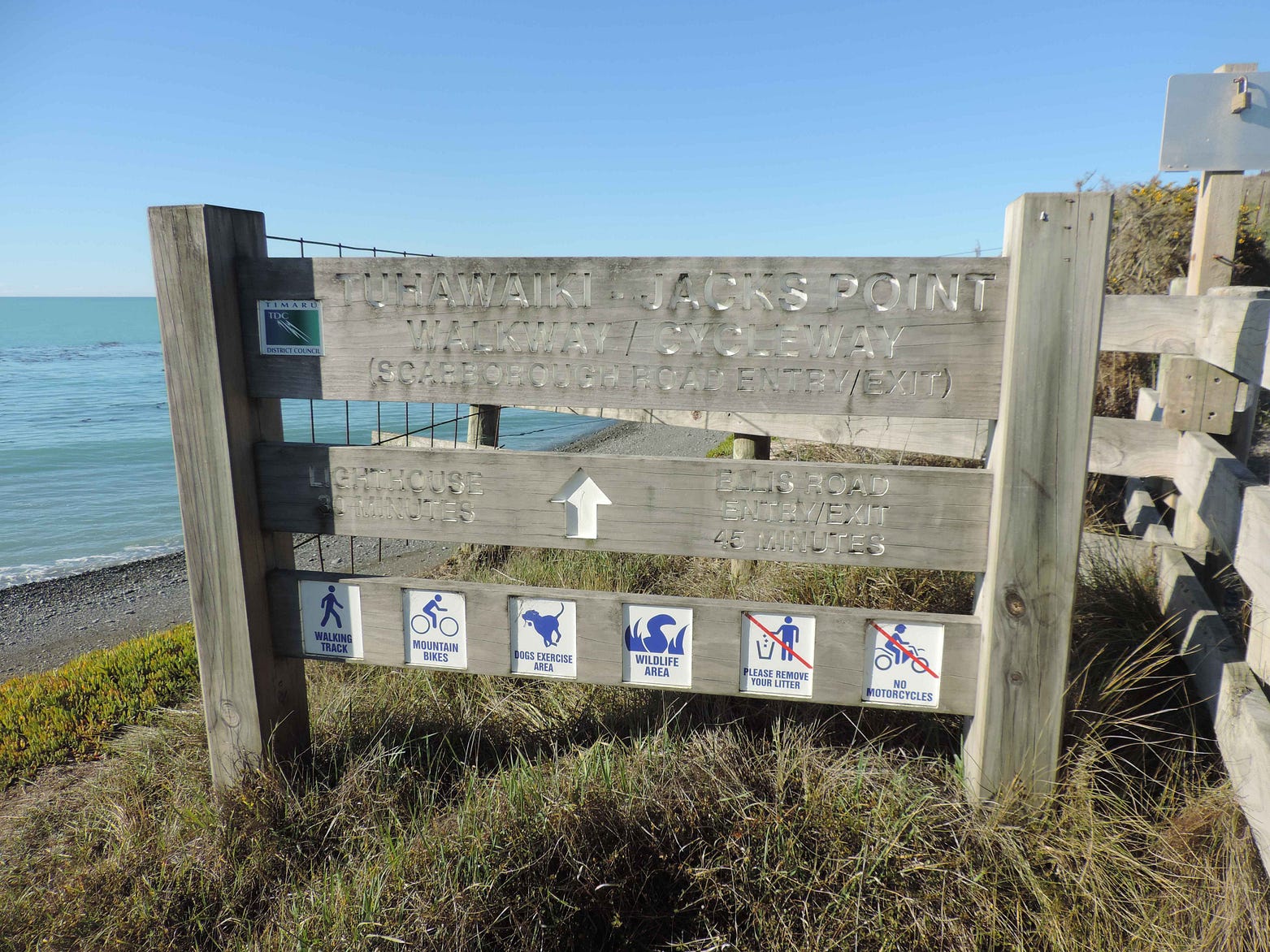

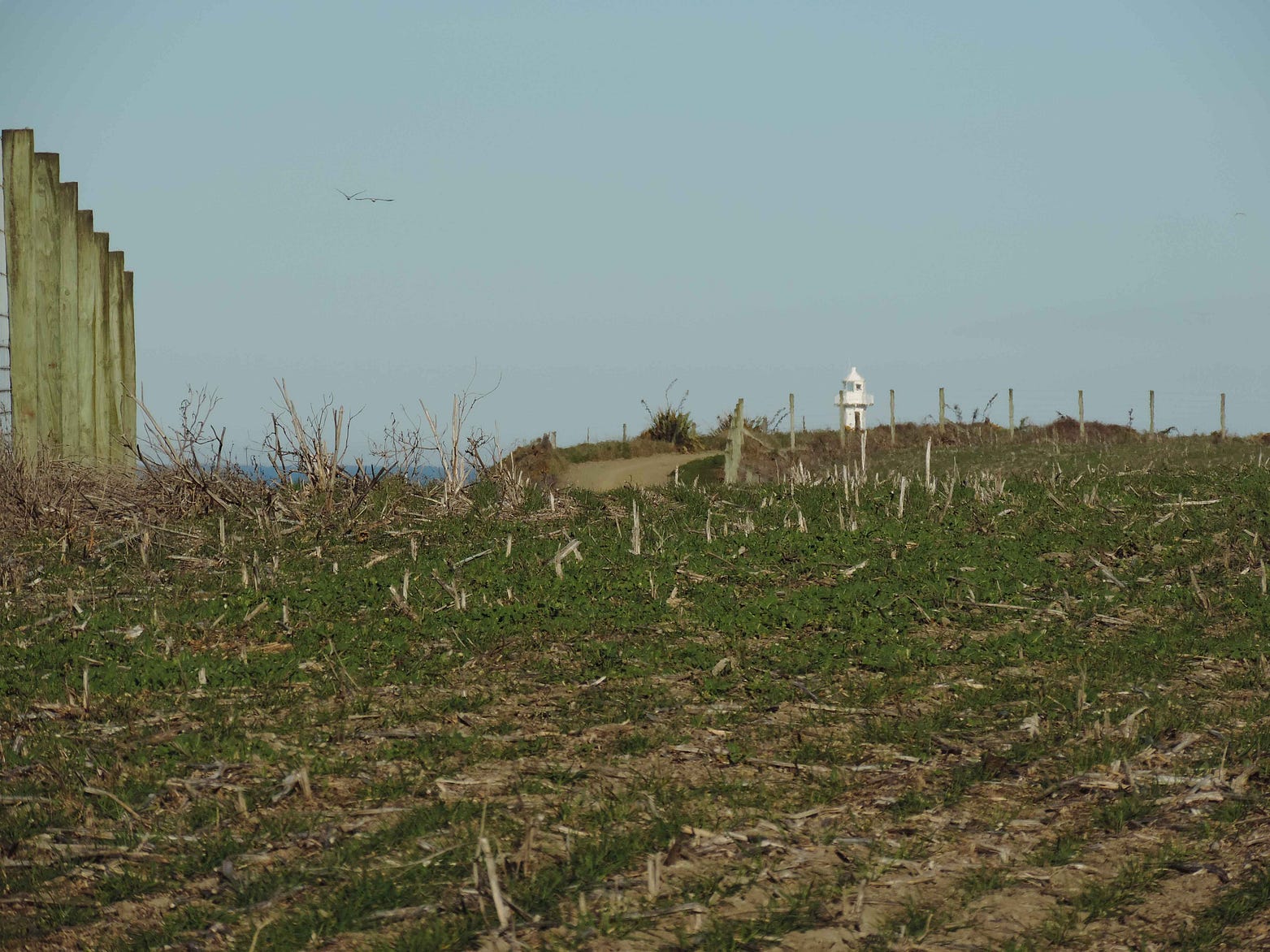
The track to the lighthouse also joins up to Timaru’s urban waterfront track, the Hectors’ Coastal Track. So, you can walk the whole thing from the Timaru waterfront to the Jacks Point Lighthouse.

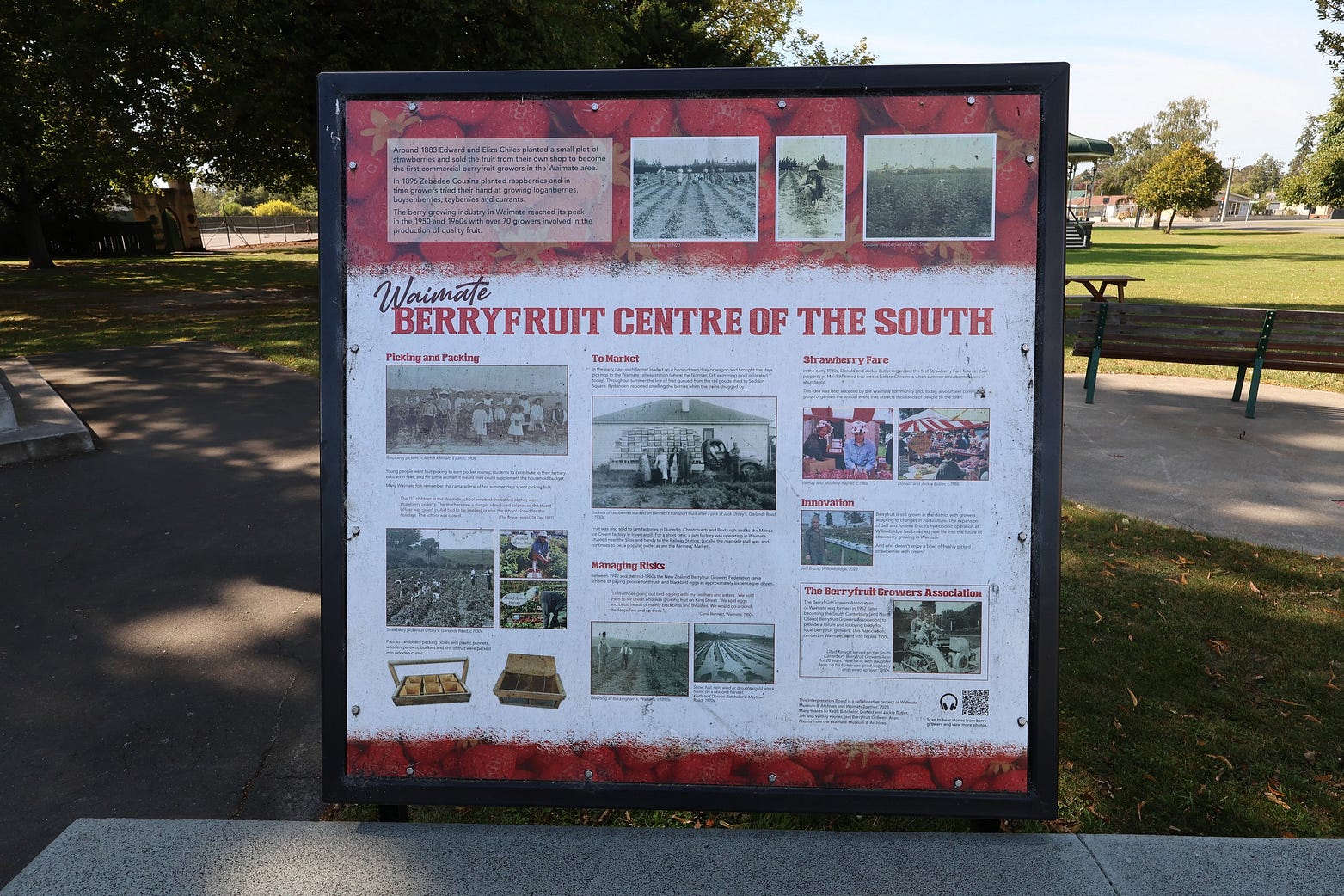
In this region, the main state highway along the coast is called the Strawberry Trail, which sounds like a curious name for a main road, but reflects the fact that nearby Waimate is famous for its berryfruit.
If you liked this post, check out my book about the South Island! It’s available for purchase from this website, a-maverick.com.

Subscribe to our mailing list to receive free giveaways!

