Giveaways
THE Province of Palawan is the northernmost of two chains of islands that stretch from the rest of the Philippines to the island of Borneo.
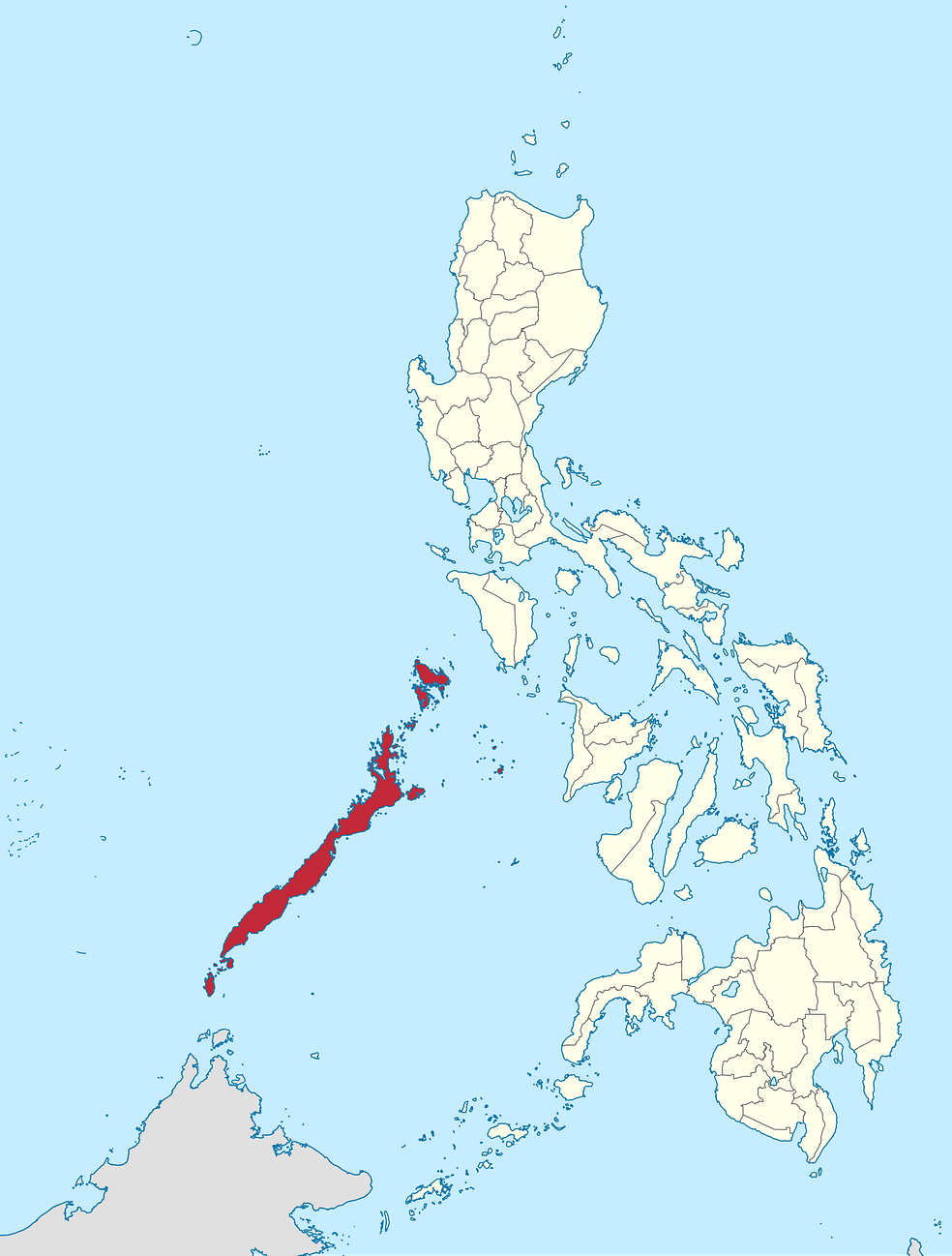
By far the largest island in the Province of Palawan is Palawan Island, 450 km long and 50 km wide. Despite its size, Palawan Island has a fairly small population by Filipino standards, just over one million people.
About halfway between the northern and southern tips of Palaway Island lies the provincial capital, Puerto Princesa, which has a population of just over 300,000.
Just to the north of Palawan Island, the Province of Palawan includes a group of mid-sized islands called the Calamianes.
The Calamianes have an additional 100,000 inhabitants, approximately: many of them belonging to indigenous groups. The Calamianes are also a popular scuba destination, with clear water, beautiful lagoons, and a great deal of wreckage from World War II.
And there are many other small islands in the Palawan Province, as you can see.
Palawan is famous for being comparatively unspoilt and still heavily forested, unlike the rest of the country. This is partly because Palawan Island is so rugged that much of its rainforest cannot easily be felled.
For this reason, Palawan is often referred to as the Philippines’ “last frontier,” or “last ecological frontier,” though even Palawan is now facing inroads from logging and mining.
Nowaday, Palawan is also quite touristy.
I couldn’t be bothered getting around in Puerto Princesa, because the tricycle drivers charged too much, perhaps because it is so touristy. There were also permanent traffic jams when people went to work and came back from work: it reminded me of Queenstown!
Klook had some excellent organised tours for only 10 or 20 dollars. Sunrise tours and Sunset tours. There was also a Sanctuary Tour.
Klook is a really good app. It’s what Asian people use for Asia, and I have found it immensely helpful.
I passed up on most of these tours, either because I didn’t want to go on a tour every day or because they were fully booked (I left it a bit late in that respect).
However, one tour I did manage to make it onto was of the Puerto Princesa Underground River, a UNESCO World Heritage site and one of the New 7 Wonders of Nature, a competition in which it beat out New Zealand’s famously scenic fjord, Piopiotahi/Milford Sound; so as you can see, Palawan’s underground river is fairly spectacular or, at any rate, unique.
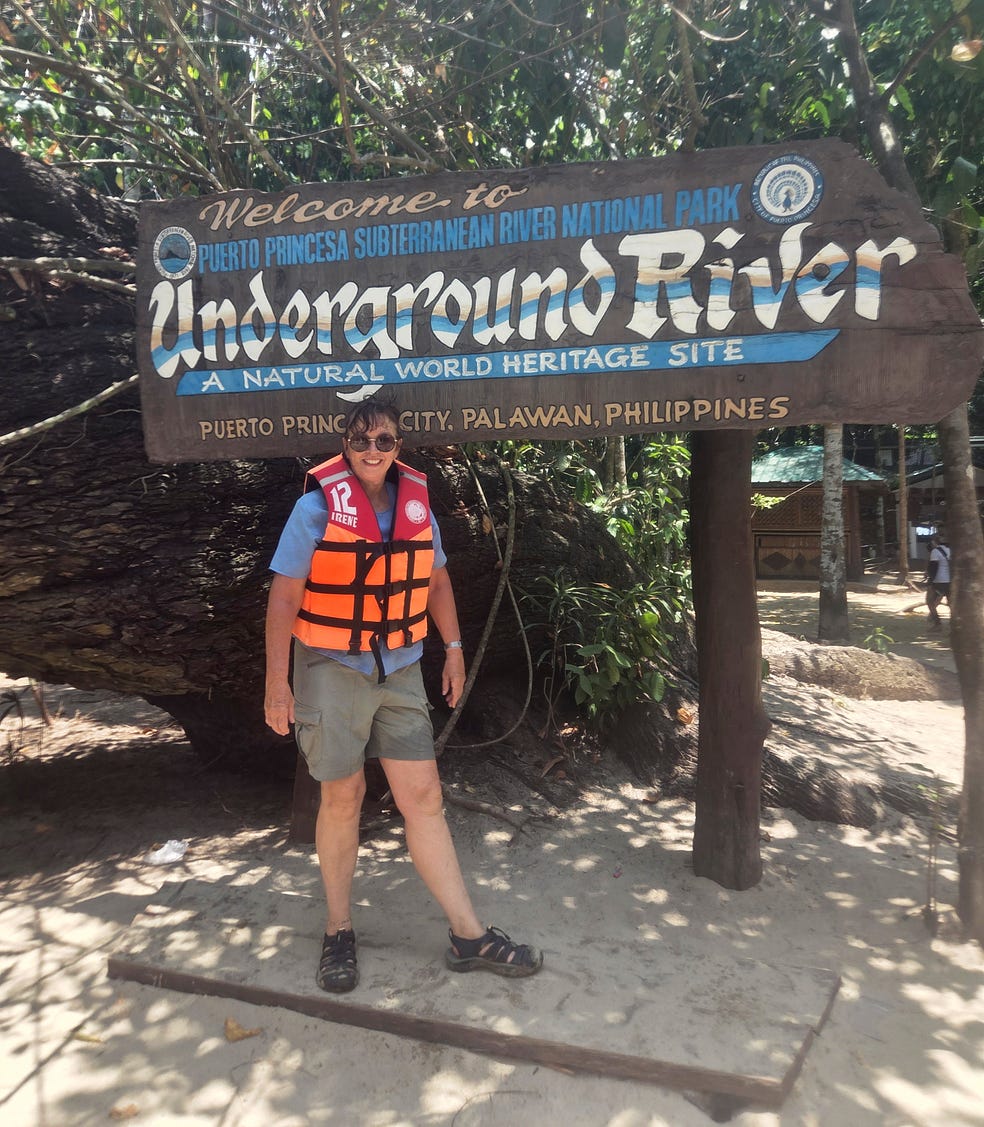
I suspect it was its uniqueness that won the prize, as there are lots of fjords, after all, but not so many navigable underground rivers that I am aware of, at least not outside the realm of myth and legend.
The Underground River is on the west coast of the island, about 50 km north of the built-up area of Puerto Princesa, which is located on the east coast.
The entrance to the Underground River is nonetheless still within the formal city limits of Puerto Princesa.
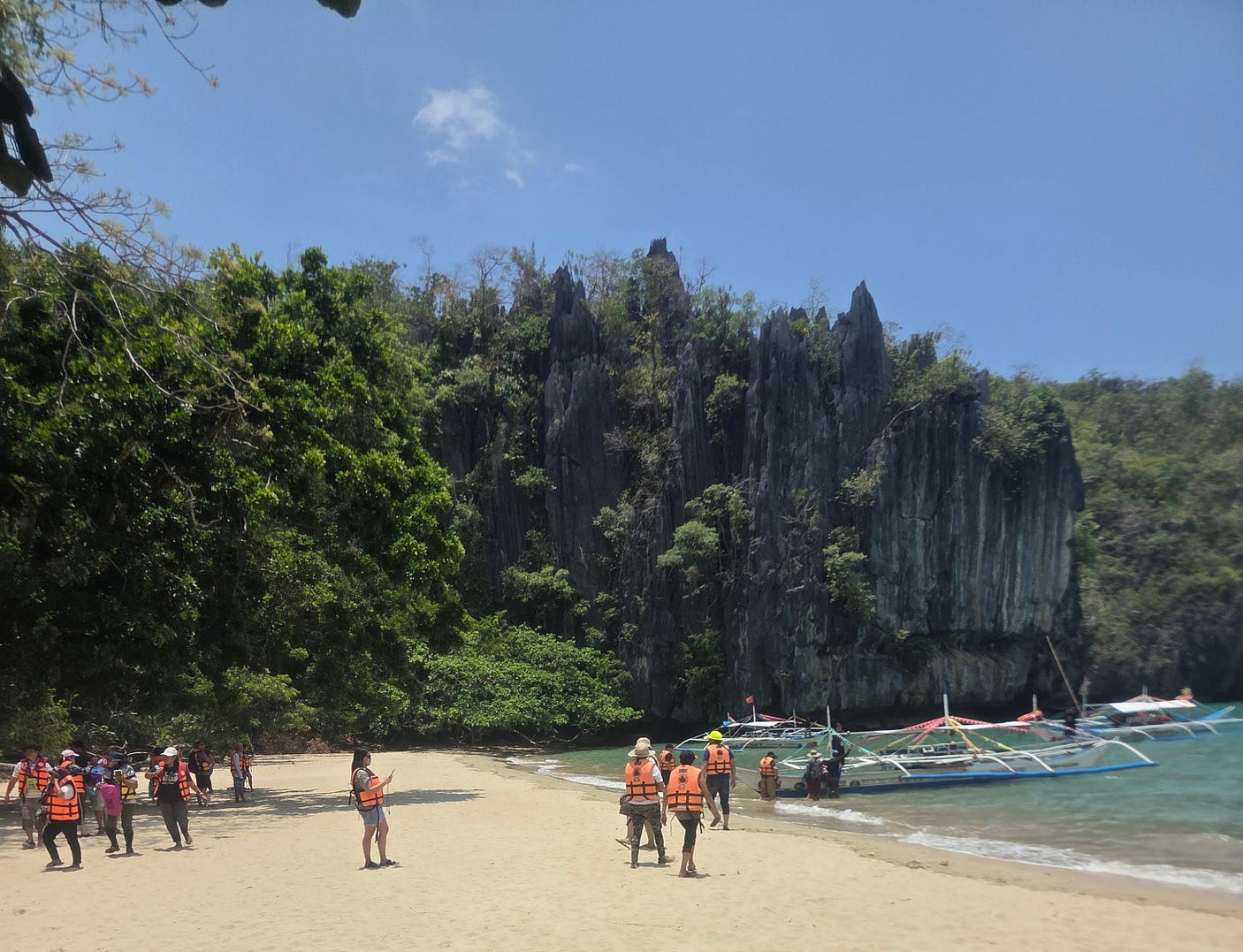
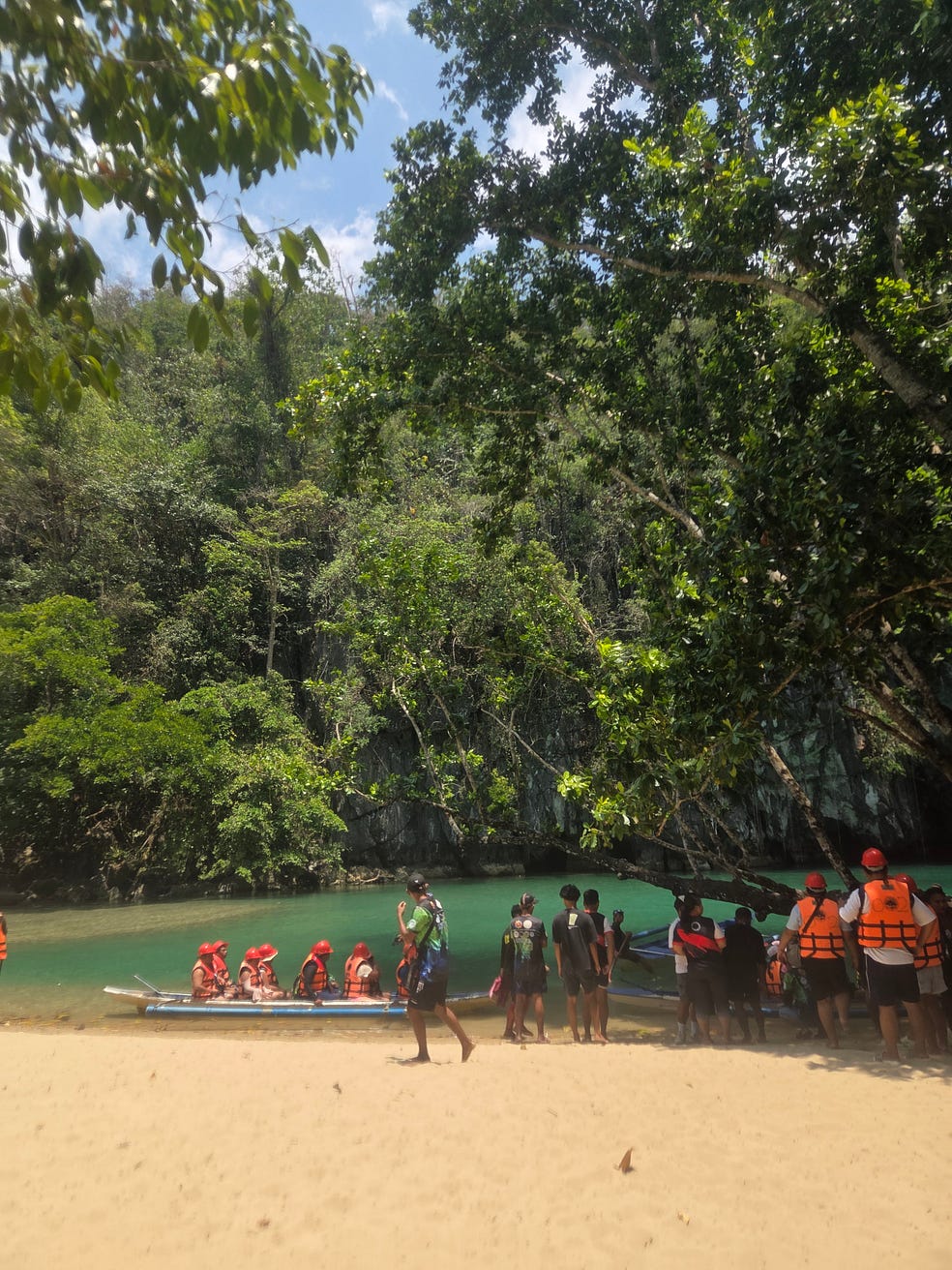
We got to the Underground River by driving to the village of Sabang on the west coast and then heading for a few more kilometres along the coast by fast motorised boats to the entrance of the river, which is navigable for more than eight kilometres underground!
Here we are, getting ready to descend into the Underworld on the Underground River.
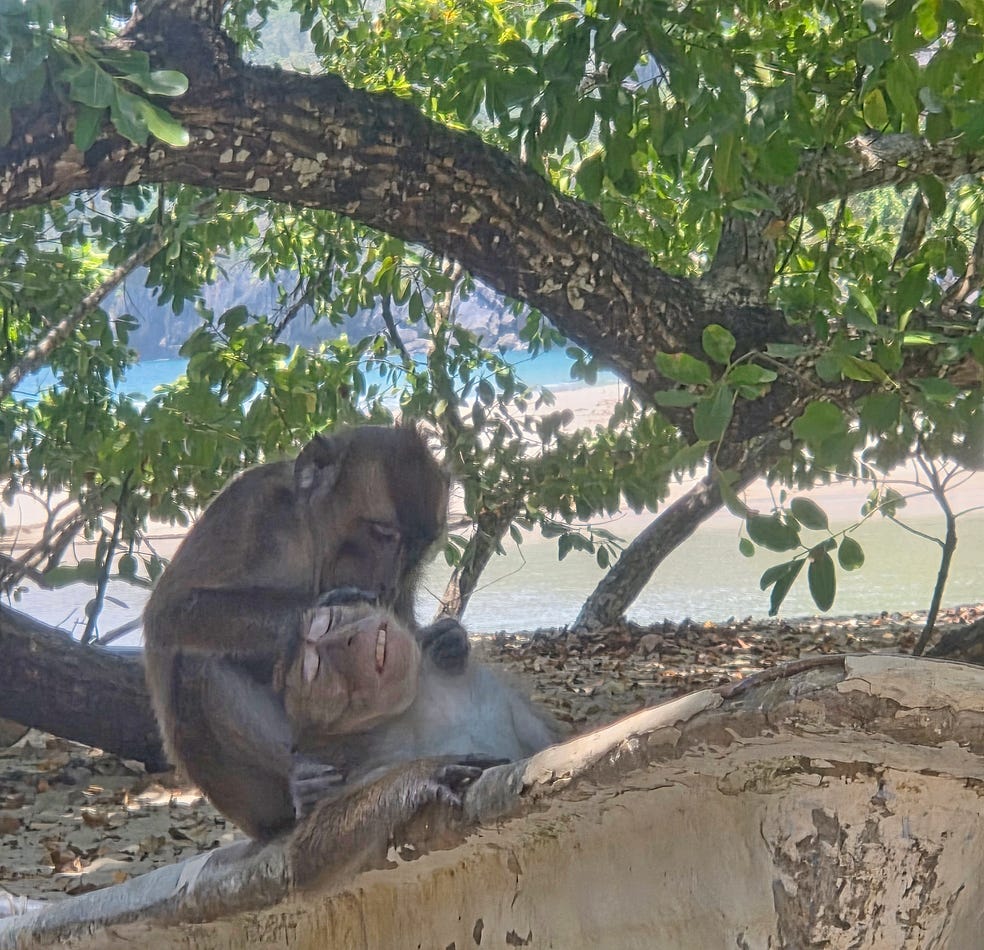
There were monkeys with oddly human-like expressions grooming each other on the beach, as well!
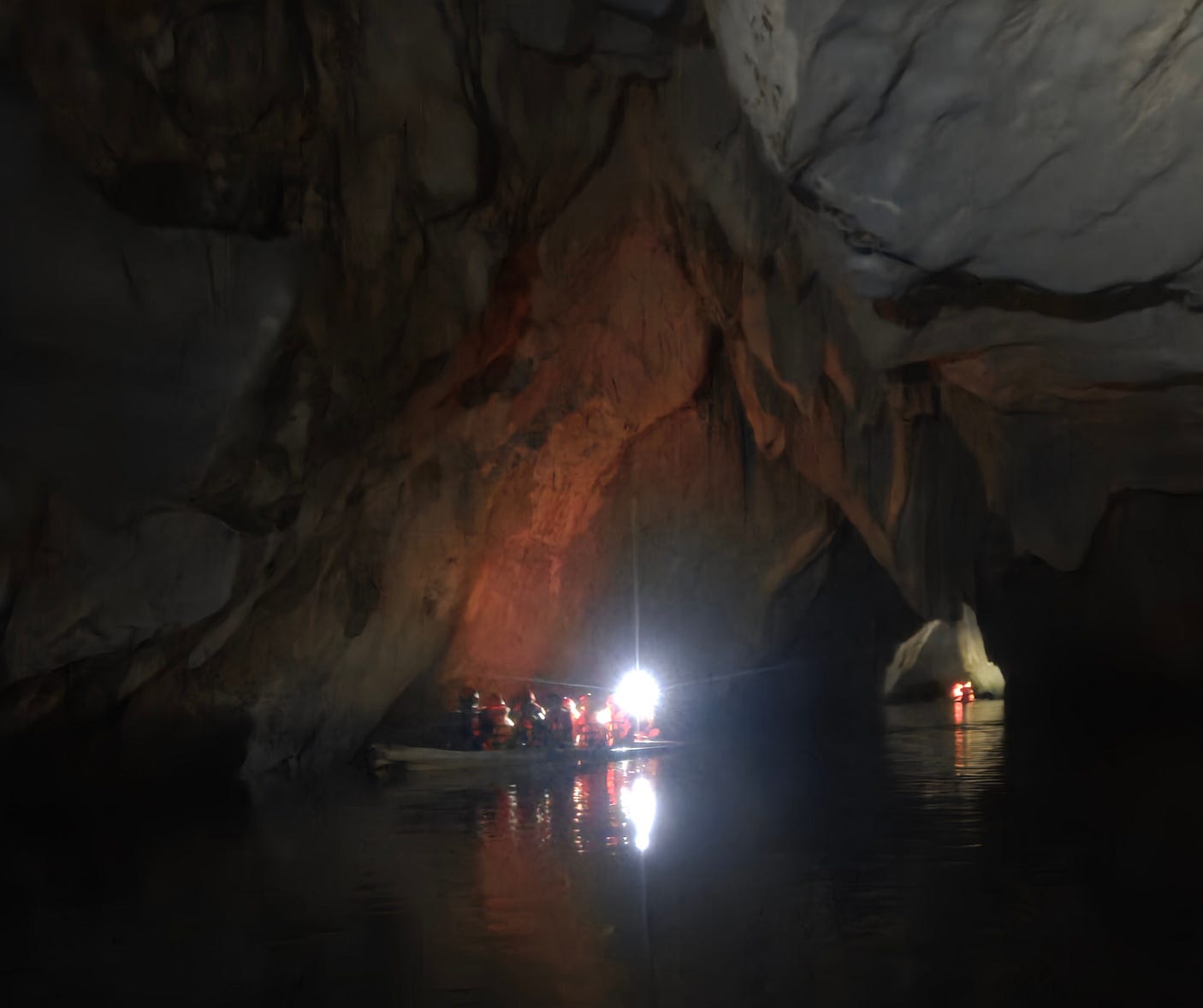
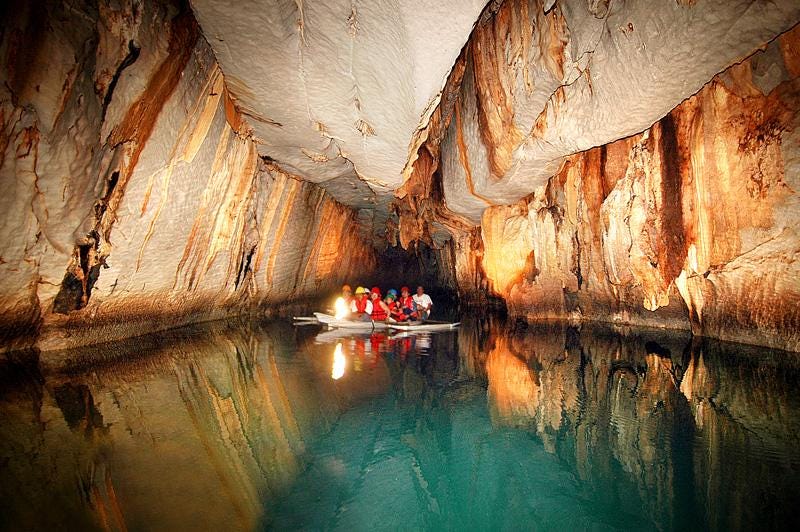
And so, we went into the Underground River, a journey that was incredibly atmospheric.
Here’s a more brightly lit view, from Wikimedia Commons — the water looks very clear!
Here is a video I made of this experience!
Back in Puerto Princesa, I did see the city eventually, as the tour drove around it dropping people off.
Puerto Princesa International Airport serves both domestic and international visitors, and there are two shopping malls in the city.
I stayed at a hostel called the Guni Guni Hostel, which was really clean and with an excellent restaurant next door. However, the restaurant cost about as much as meals would cost in New Zealand.
If you walk further down the road, away from the most touristy parts of town, the food gets cheaper, and the price of a cup of coffee comes down to 40 pesos. Here’s a video I filmed in one of the backstreets, where they have lots of ingenious tuktuks but also lots of low hanging wires and more or less stray dogs!
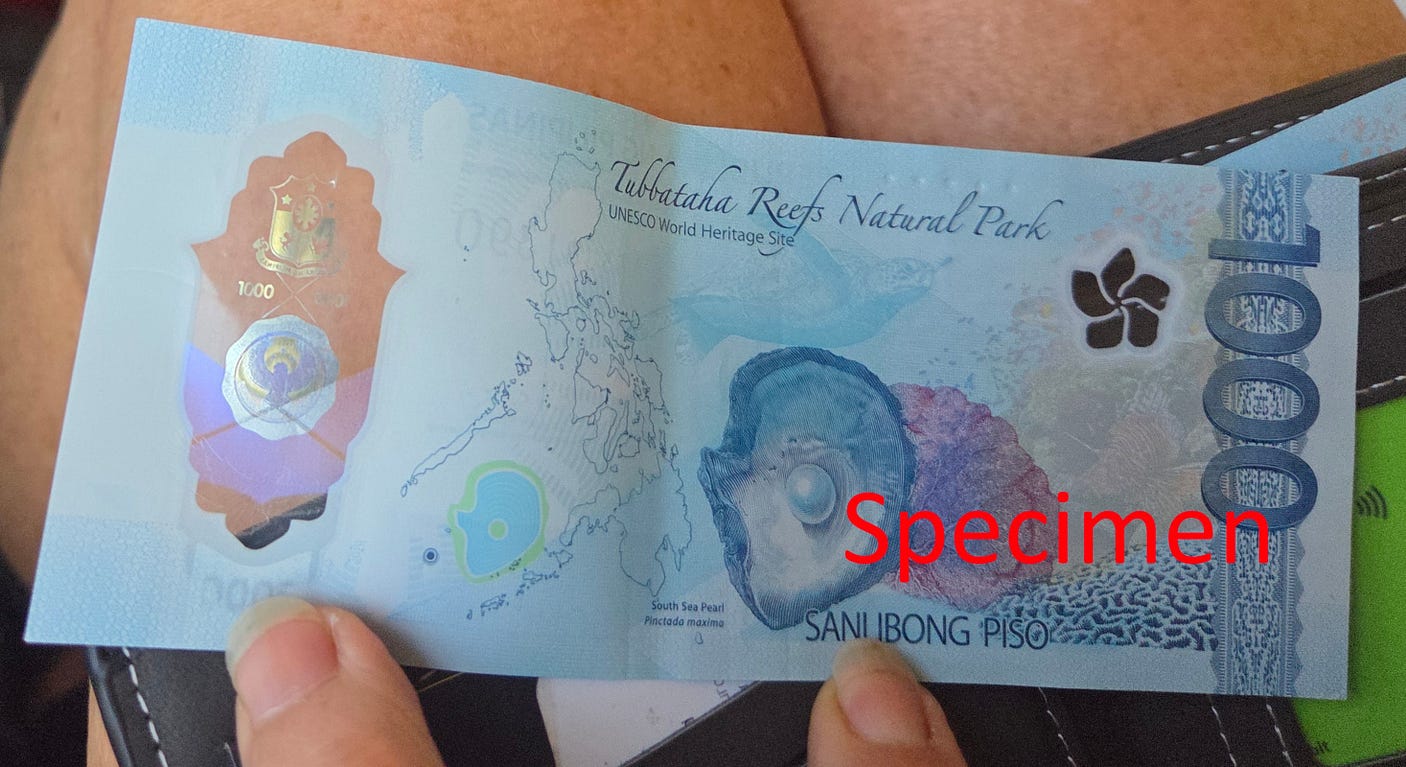
All in all, I enjoyed staying in Puerto Princesa, which is also the departure point for tours to the Tubbataha Reefs Natural Park in the middle of the Sulu Sea, east of Palawan. This famous reef complex, another UNESCO World Heritage Site, is featured on the Philippines’ current 1,000 peso note.
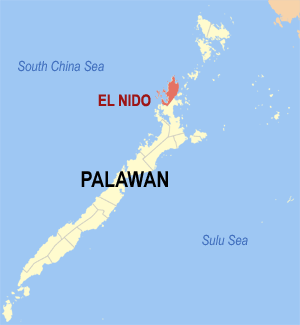
Next, I travelled to El Nido, a spectacular beach resort amid a cluster of tiny offshore islands, near the northern tip of Palawan Island. It took about four hours to get there from Puerto Princesa by bus. The name El Nido means ‘the nest’ in Spanish; it comes from the fact that there are many cliffs in this part of Palawan, on which swiftlets build their nests.
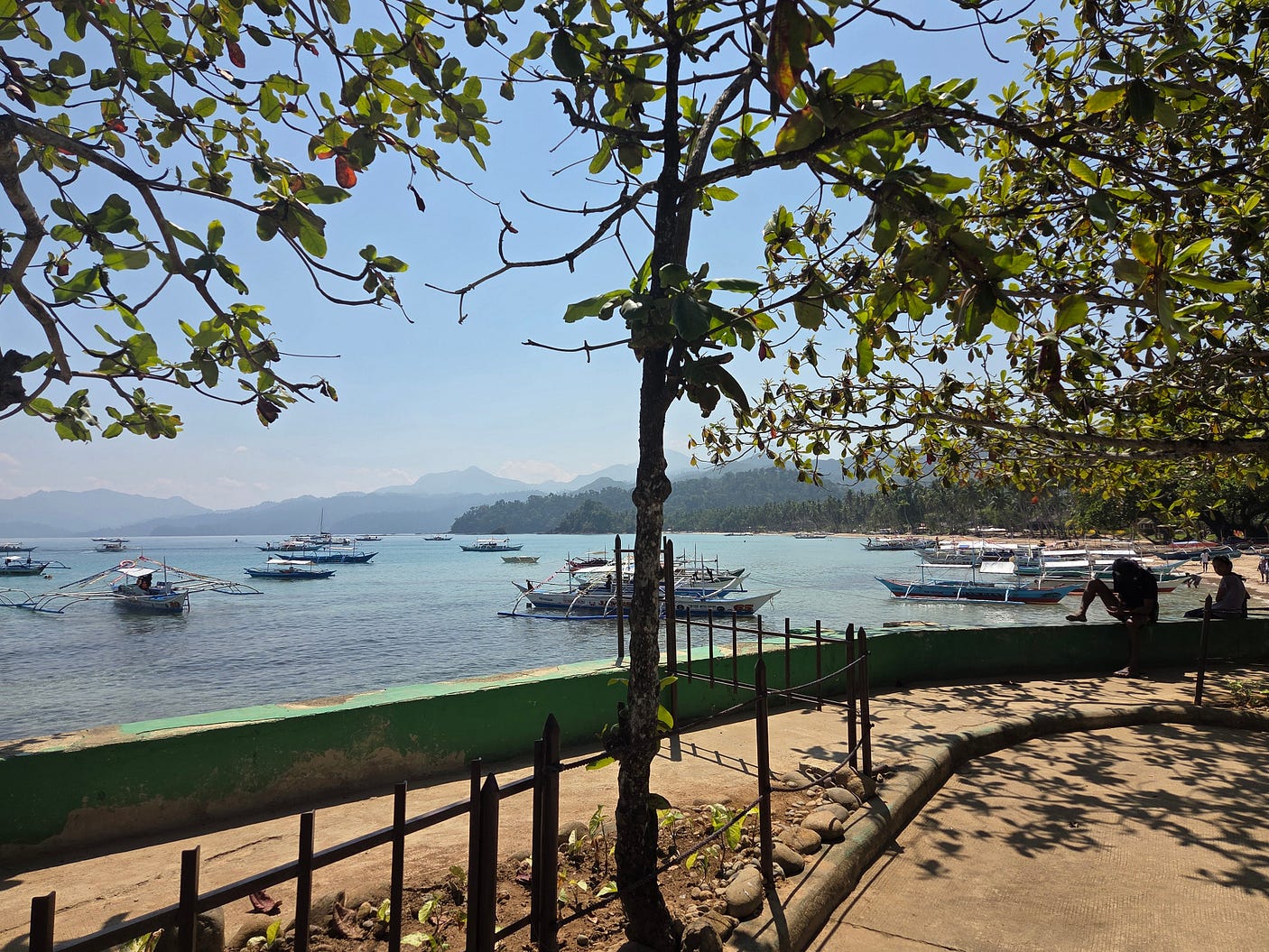
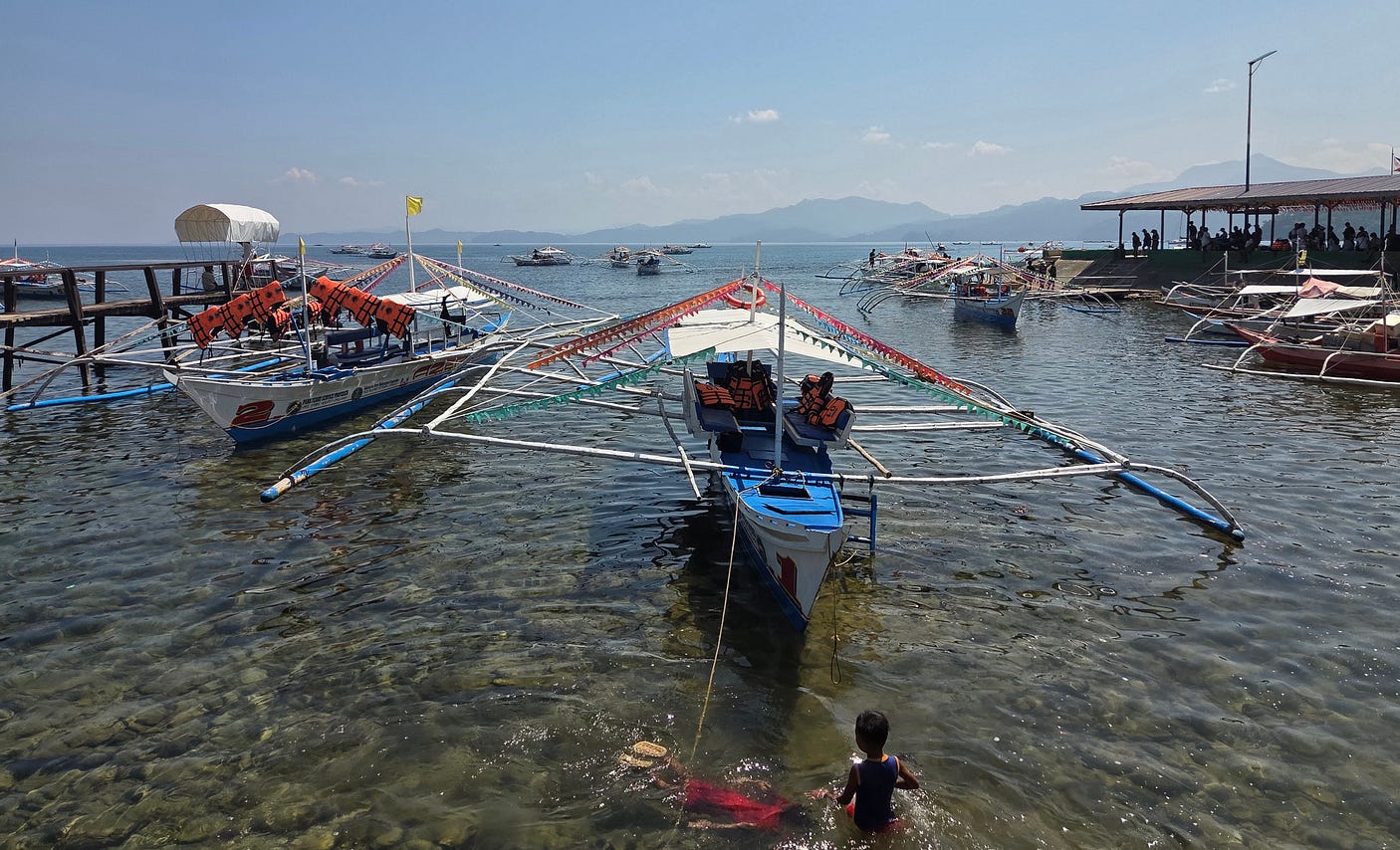
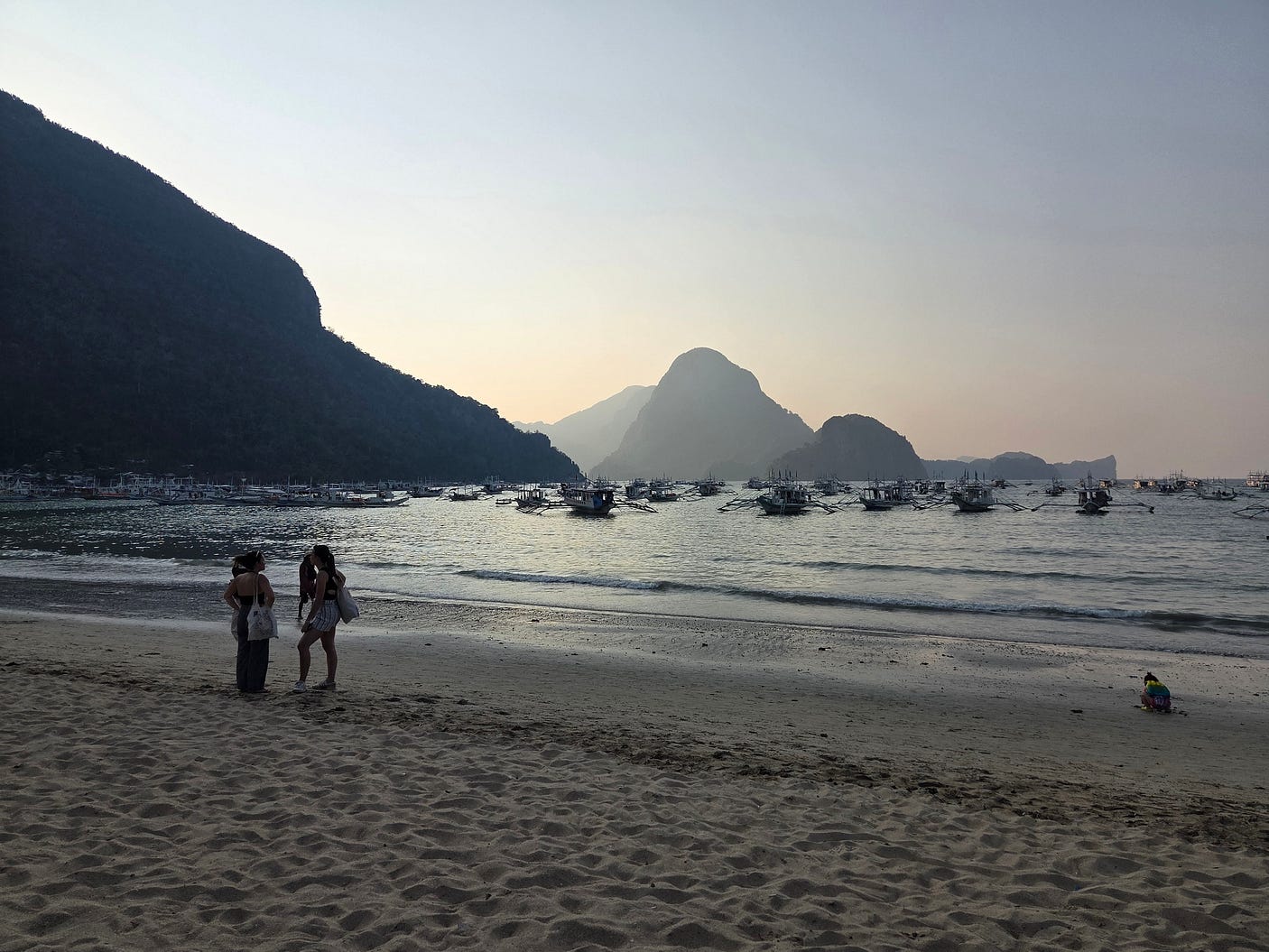
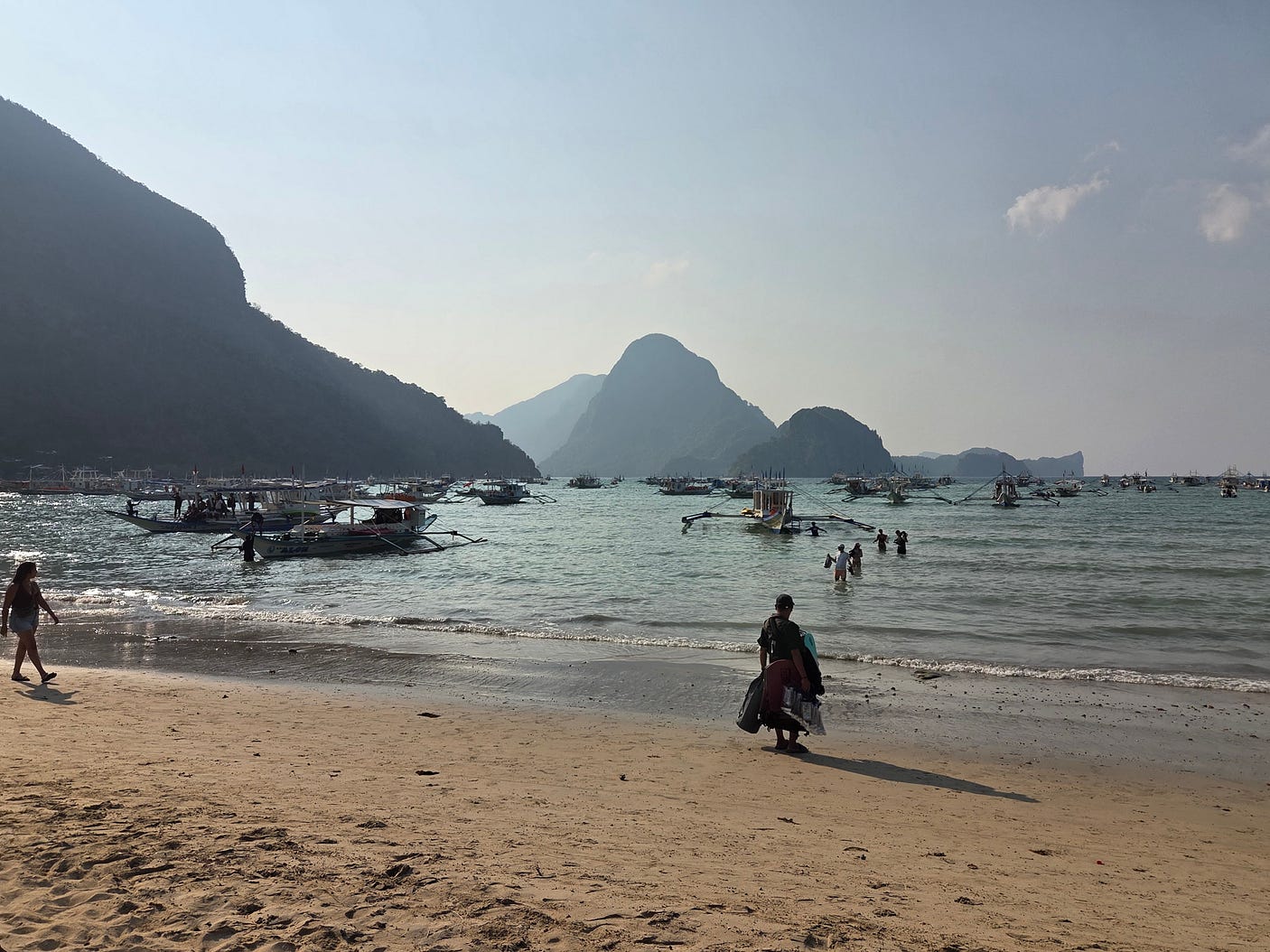
I stayed at the Pugad Hostel, a five-minute walk from the beach area at El Nido. The beach area, early in the morning, was fantastic. The main beach probably had about sixty of the traditional Filipino boats that people went out on.
The streets of El Nido were quite colourful as well:
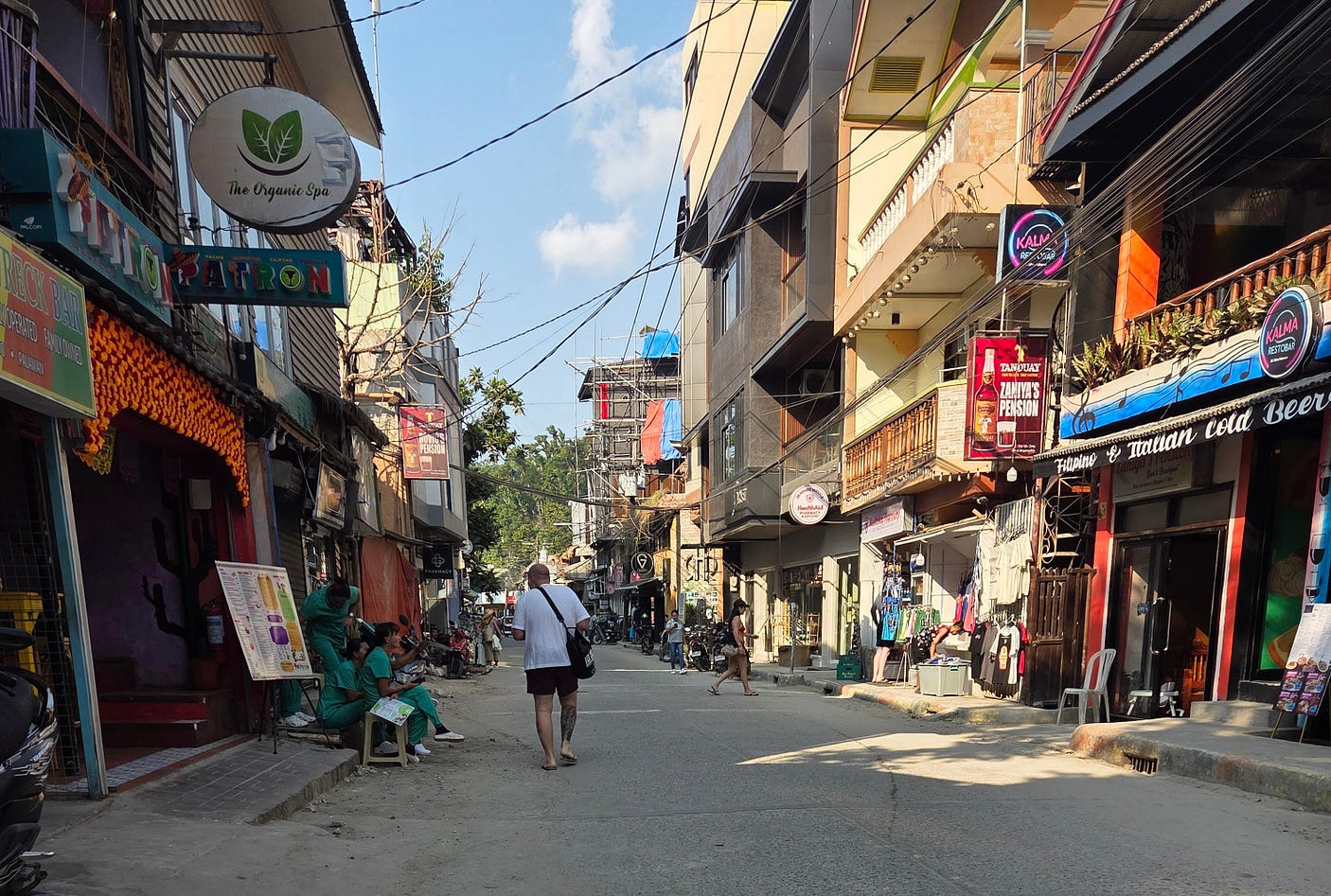
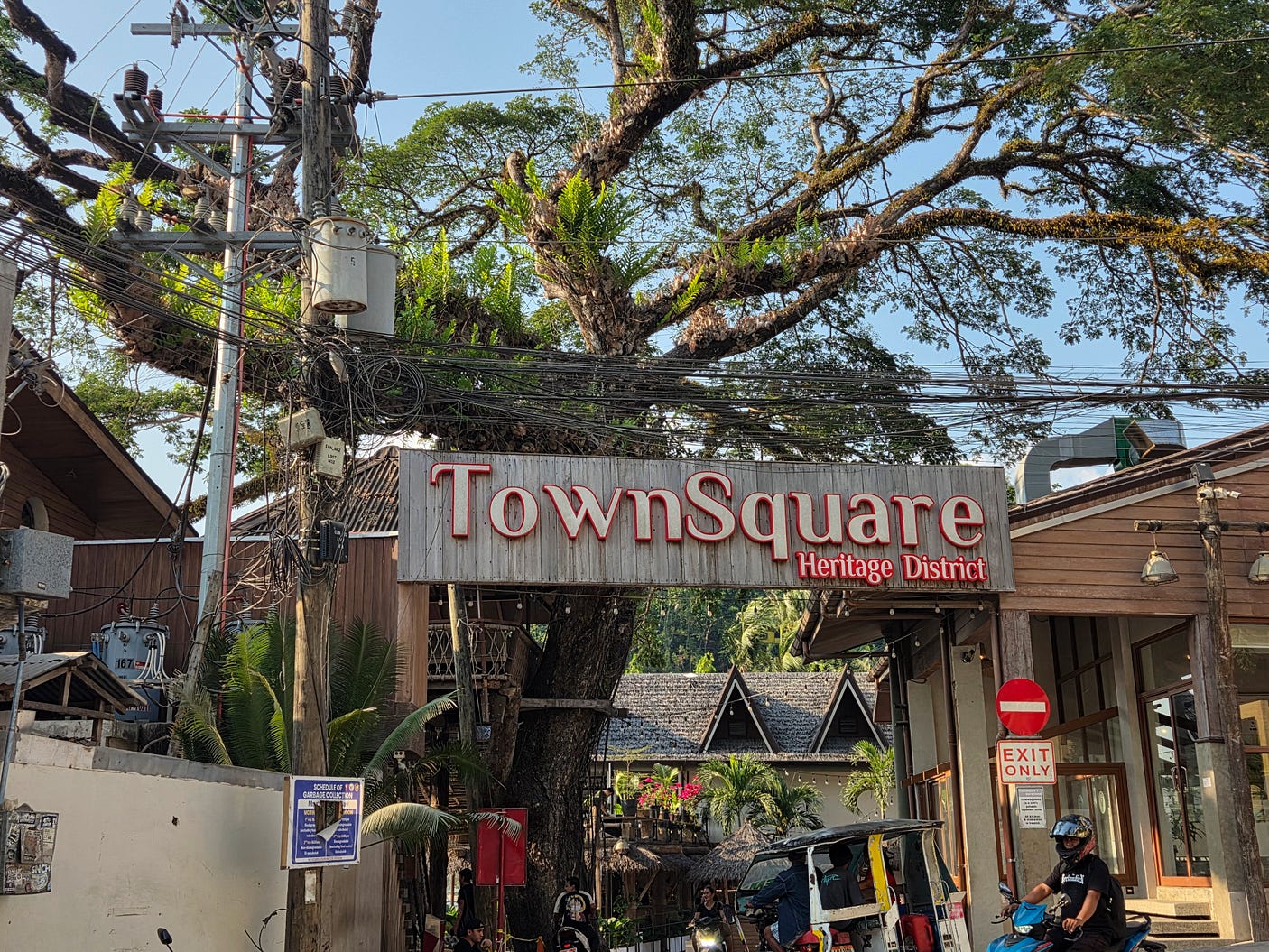
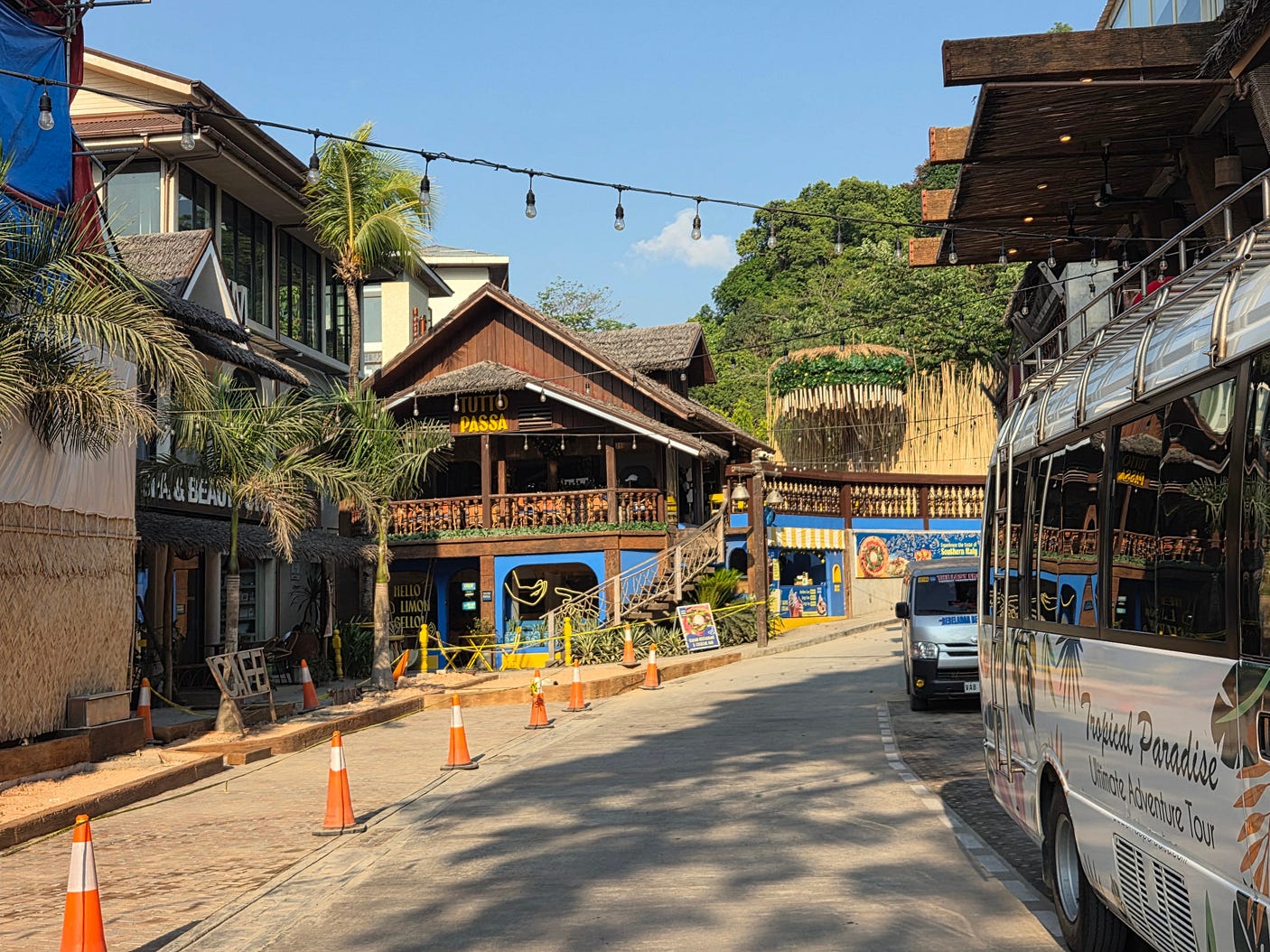
During the day, it was quite hot, and I found that that limited how much hiking around the town I could do.
I could have gone and had Indian food for about 1,000 pesos, that’s about NZ $30 for an entree, a main and a dessert, but I had to think of my bank balance as I had a NZ $23,000 tax bill owing. Next time, I would like to come back with a bit more money.
I really enjoyed staying in hostels. I had an Airbnb in Tagaytay, where I got really sick from food poisoning, and almost slipped on the tiles and fainted. At least in a hostel you’ve got people around, and receptionists; if anything goes wrong, there’s going to be someone there.
At El Nido, I found this amazing shawarma place, and for 250 pesos, which is about NZ $7, I got a generous serving of fresh vegetables, lovely cooked meat, and all these wonderful sauces. So, I had that for two nights in a row.
I can’t get gluten-free bread here, and getting fruit can be quite difficult. Most of the hostels don’t allow you to cook, so you really do have to eat out, or be self-sufficient. Bringing a knife so that you can cut up or peel fruit is quite a good idea.
And as I mentioned before, it does pay to get food early in the morning while it is still fresh. The locals follow this rule as well.
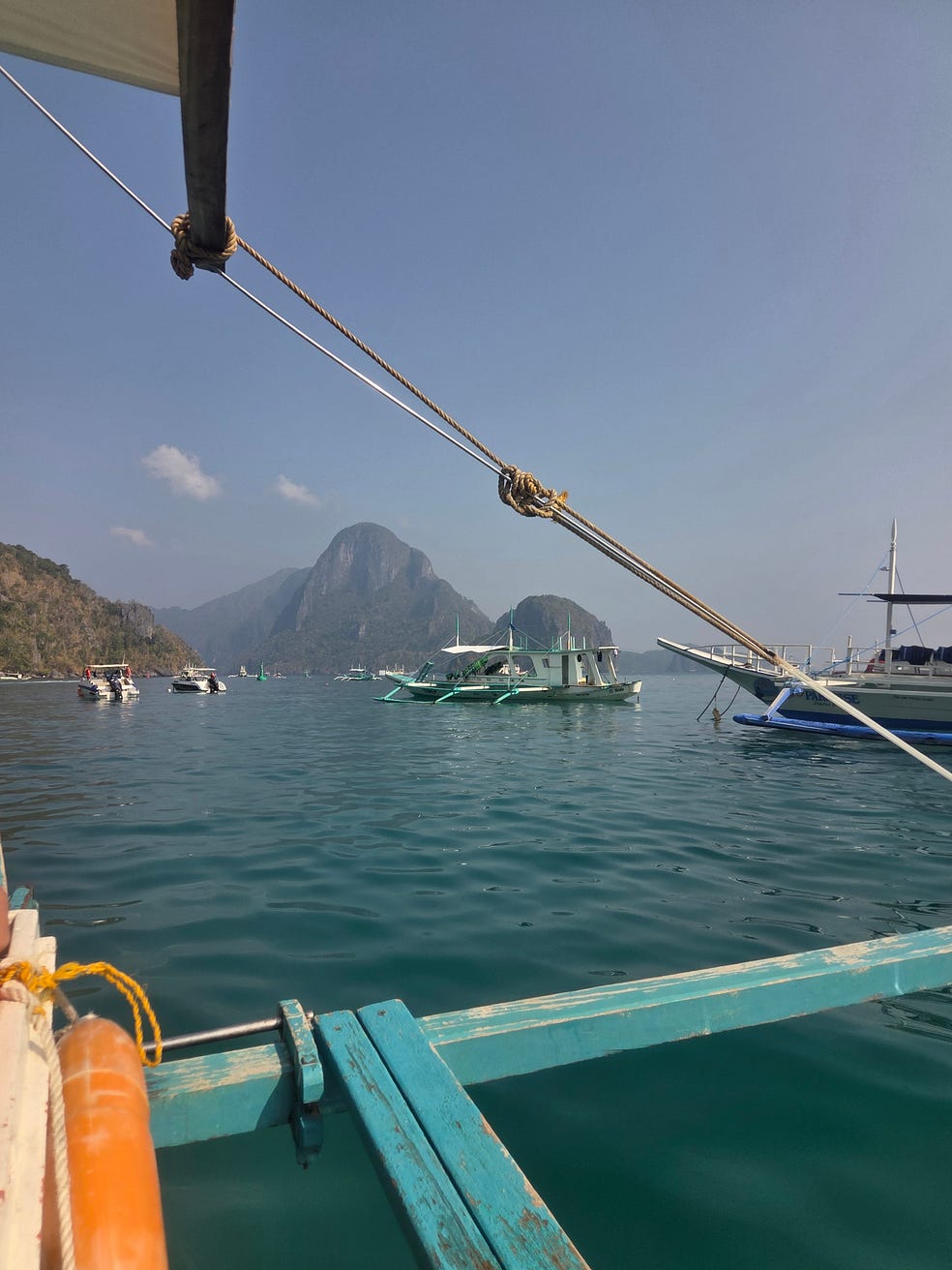
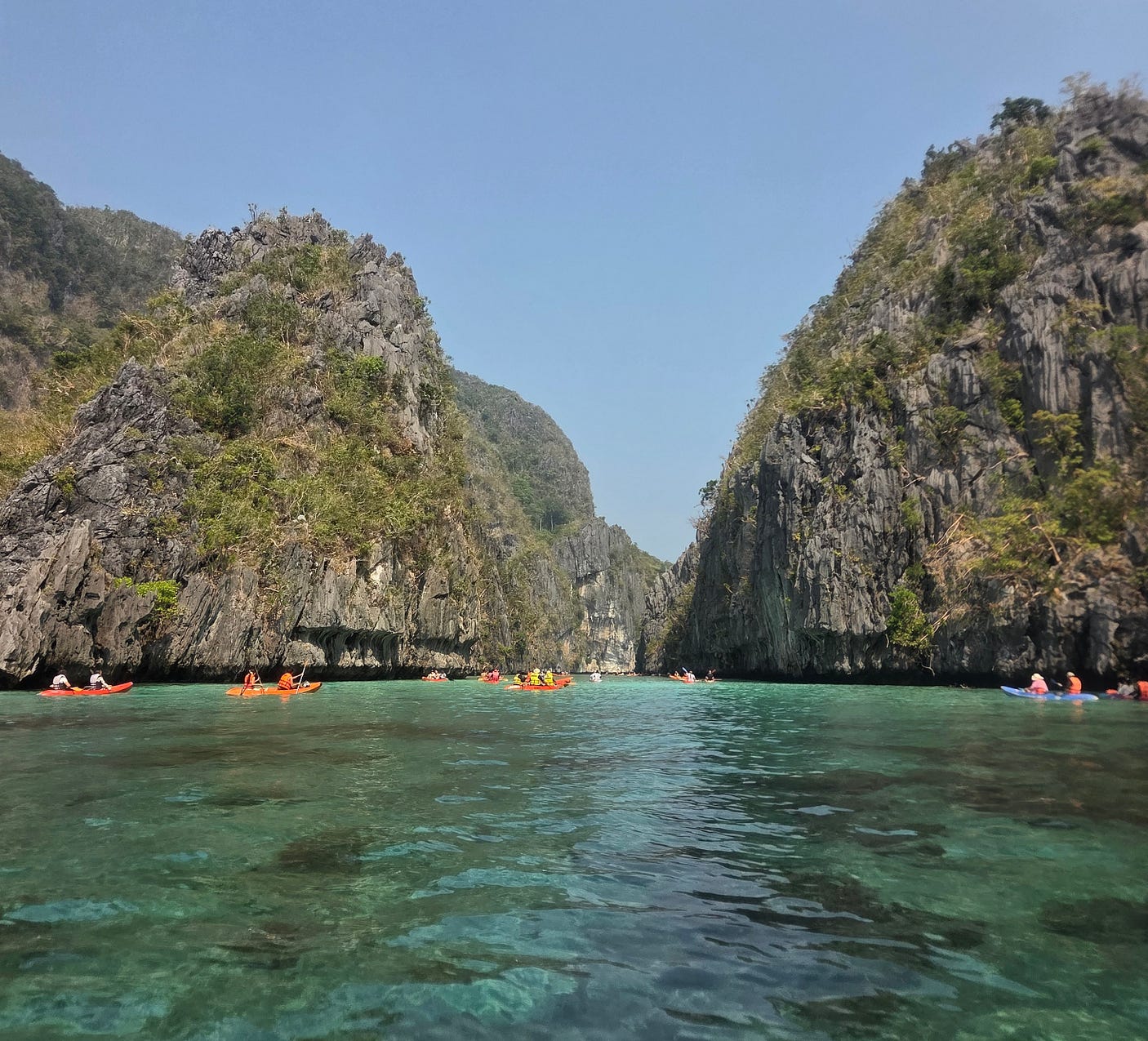
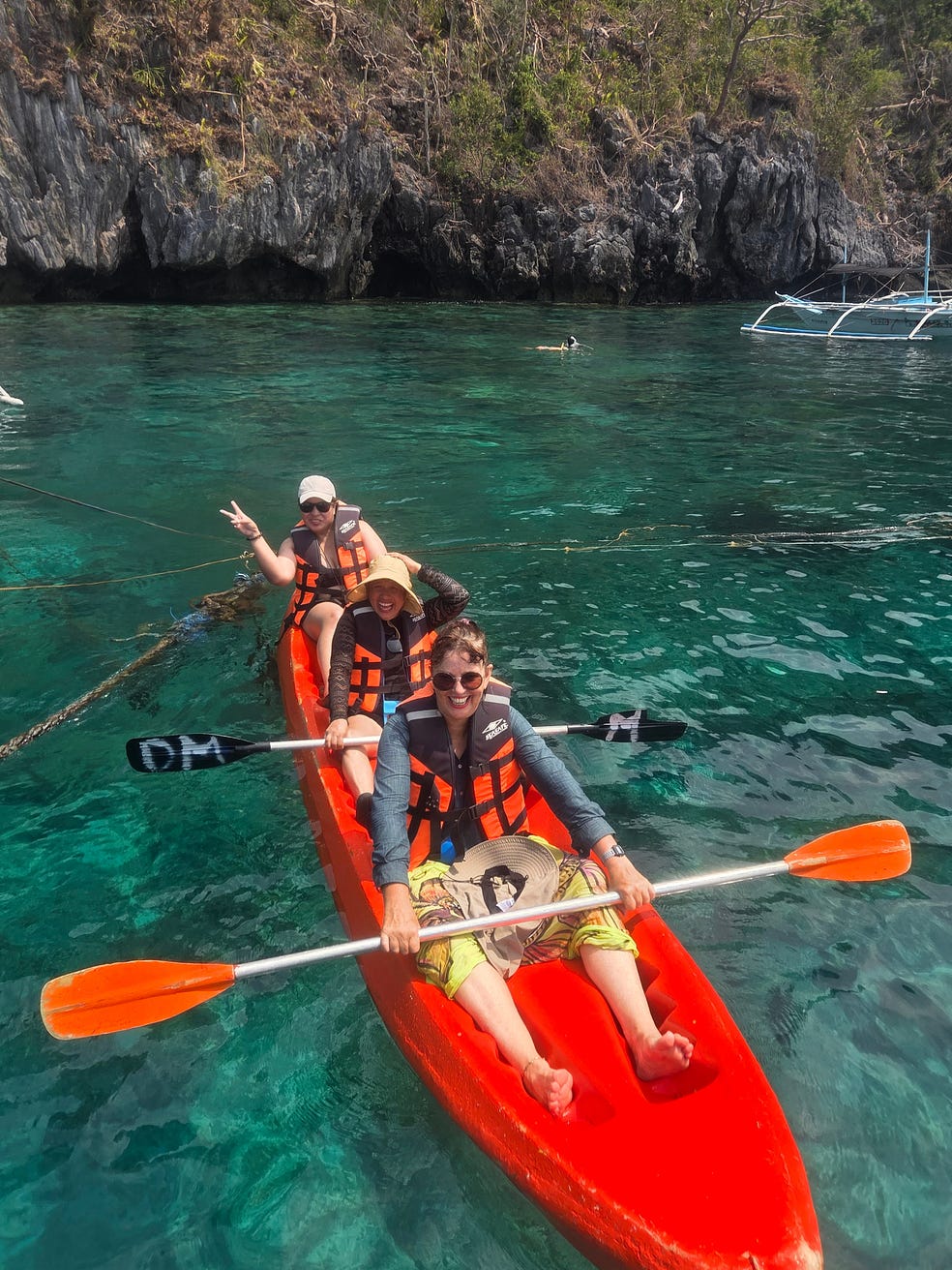
A lot of the cliffs and islands were spectacularly jagged!
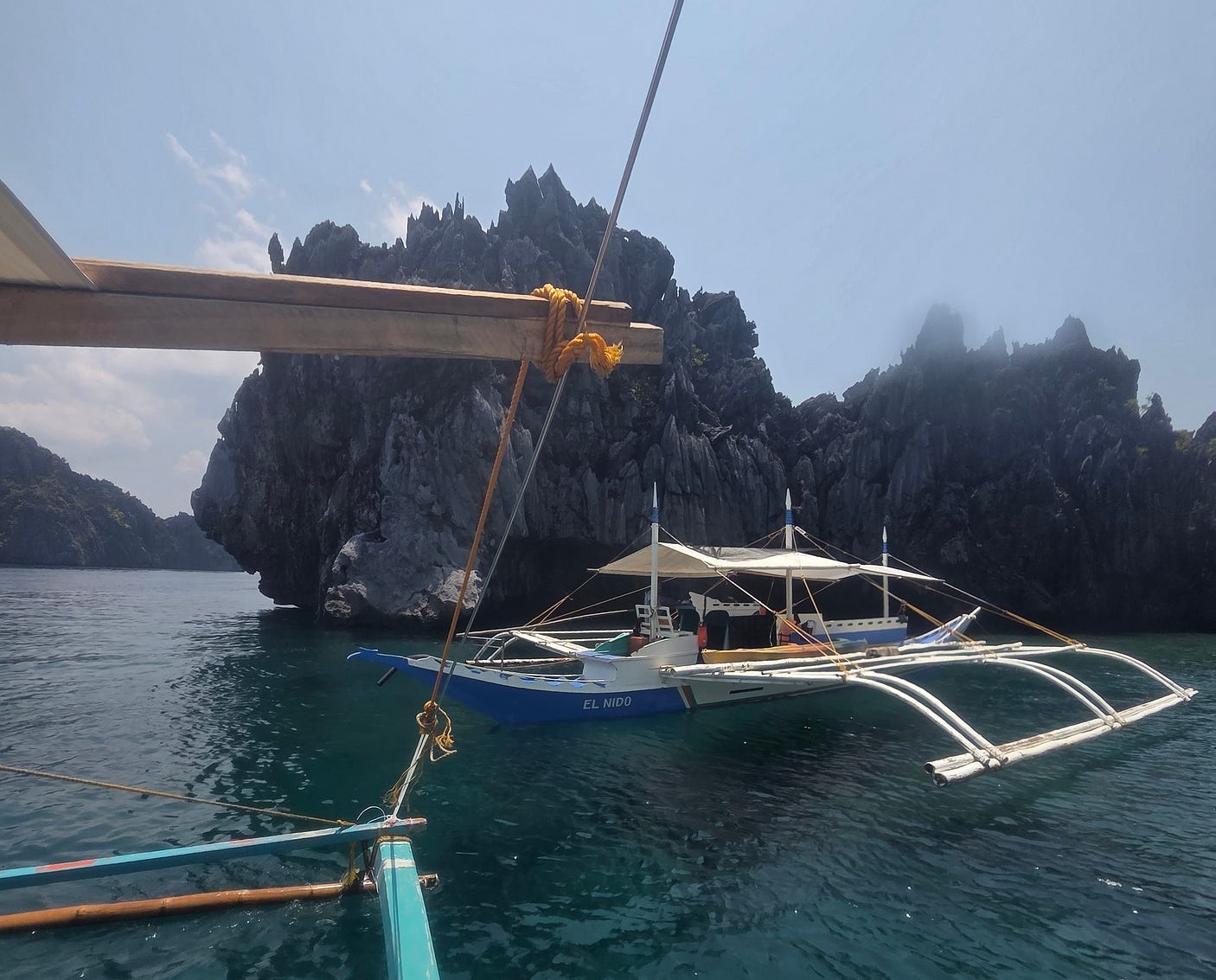
This one looked like an explosion in stone!
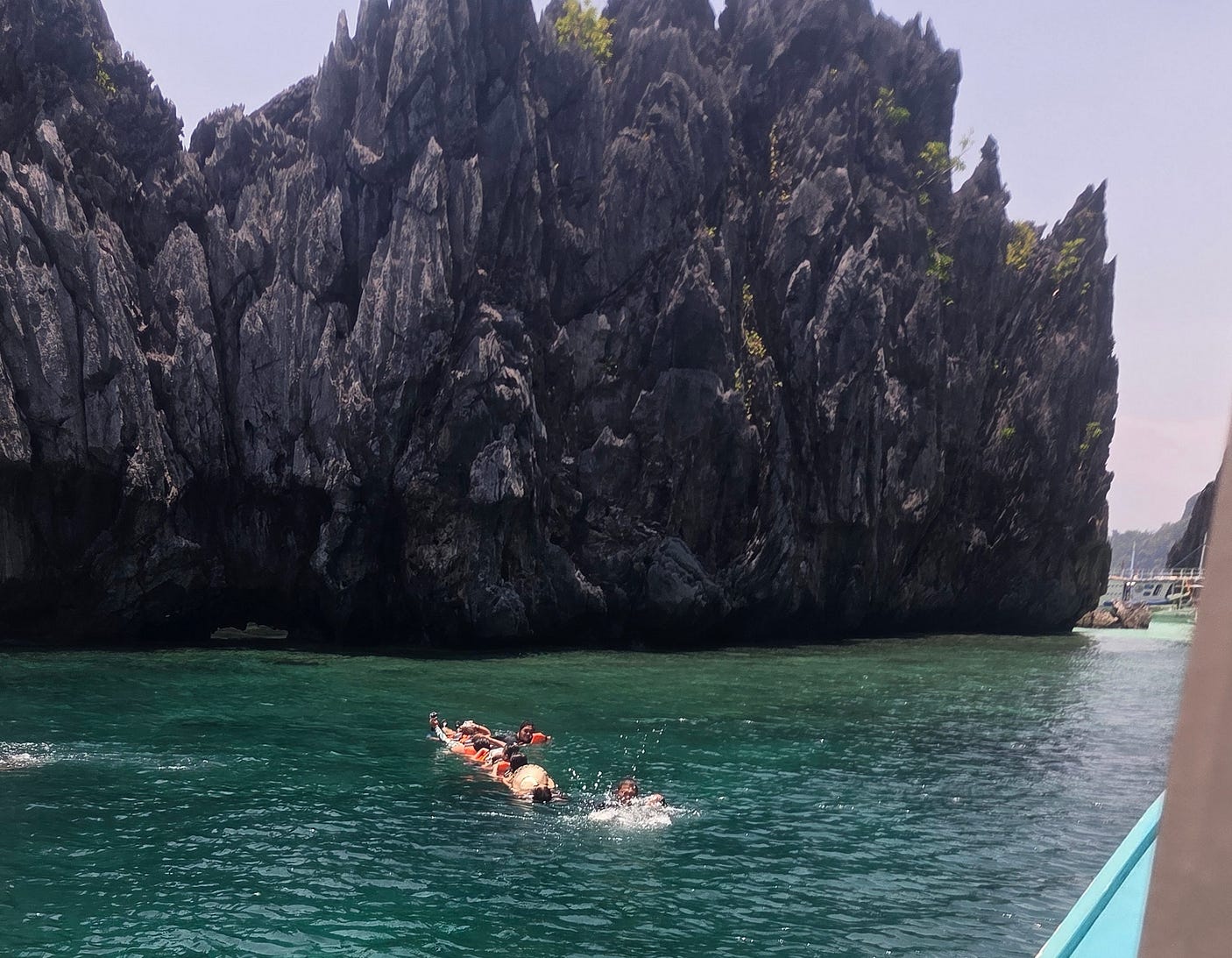
I made a video of some of the highlights of my boat and kayaking trip:
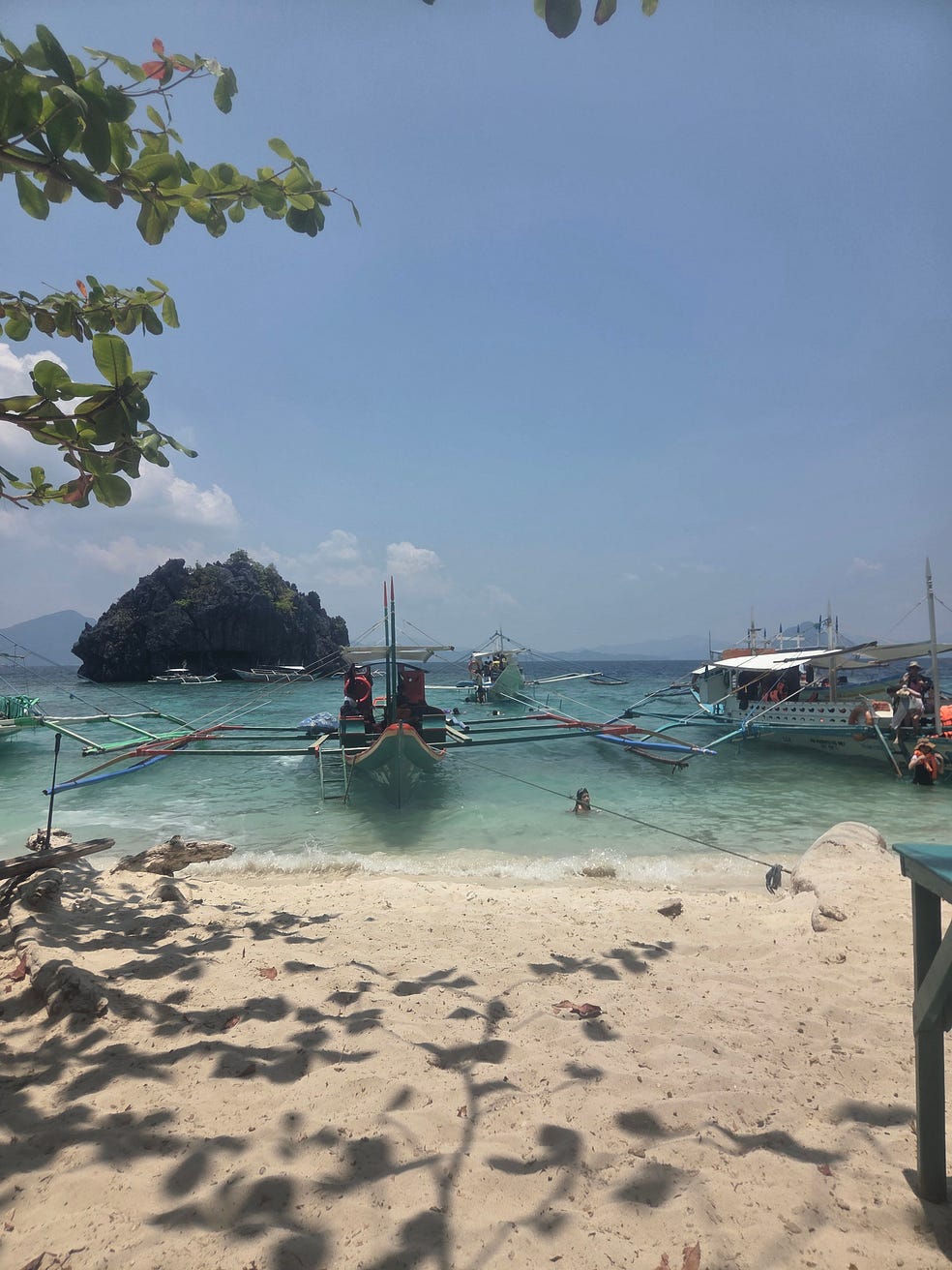
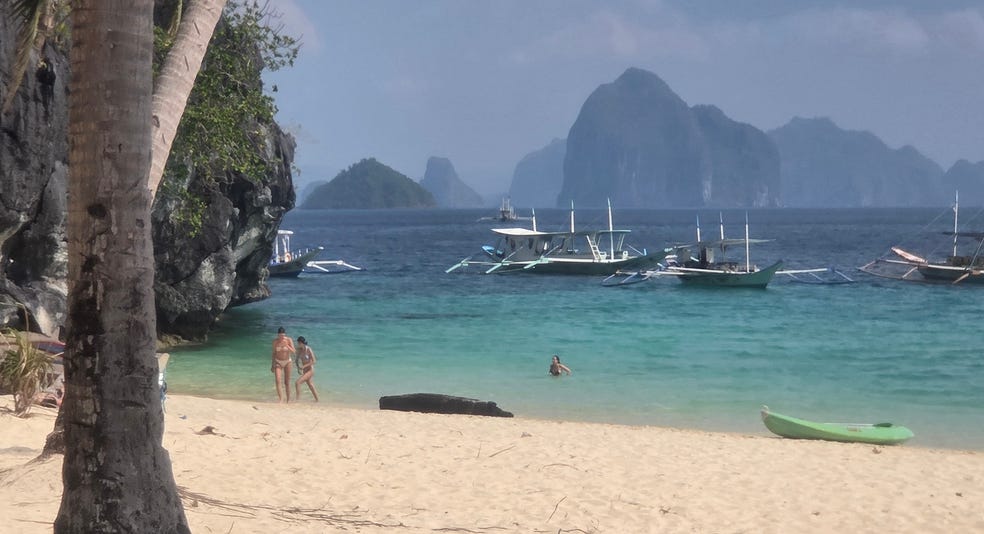
Here’s a photo of outriggers in front of El Nido’s beautiful beach.
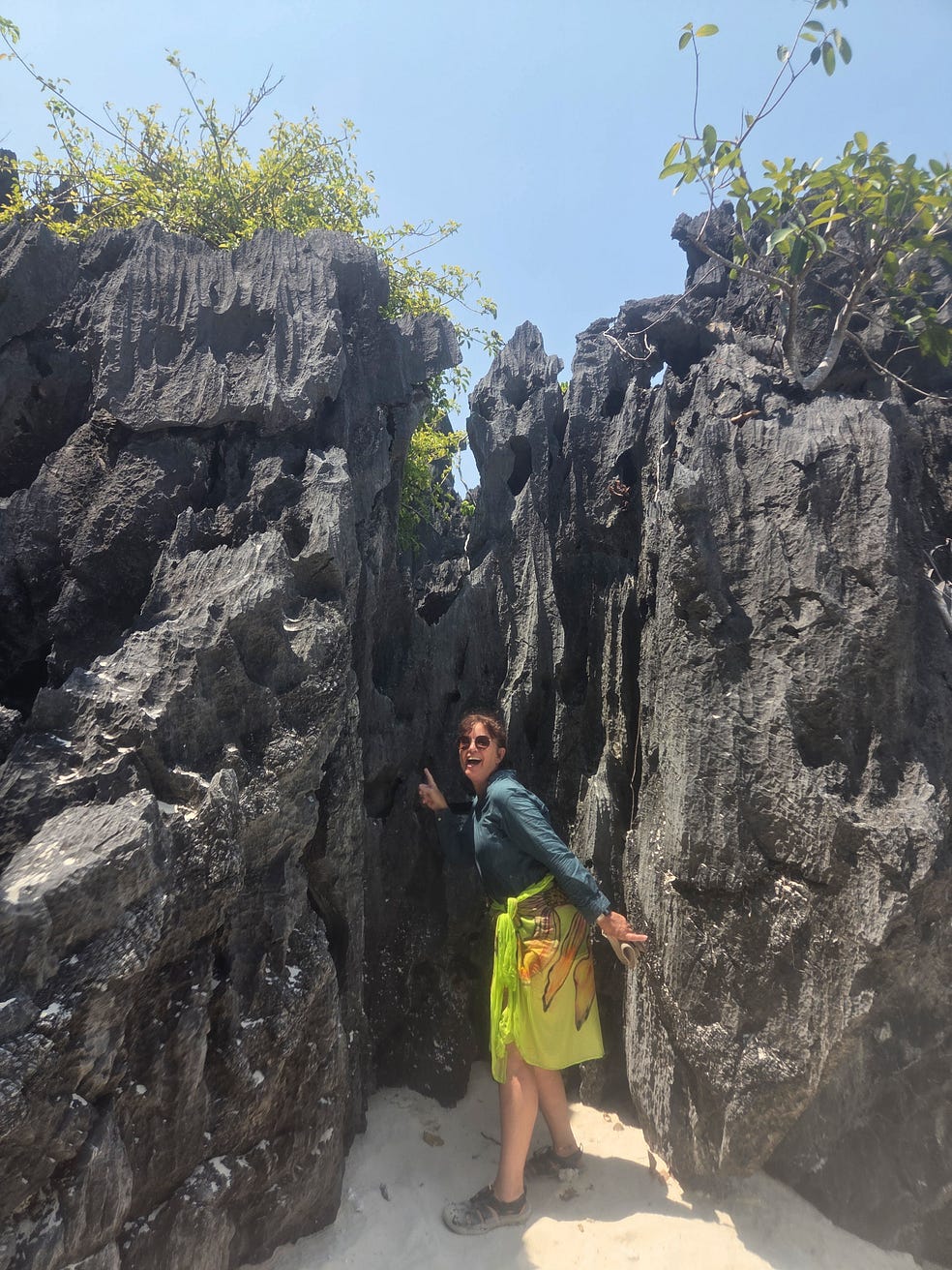
Here’s a photo of the author in a sort of crack in the rocks:
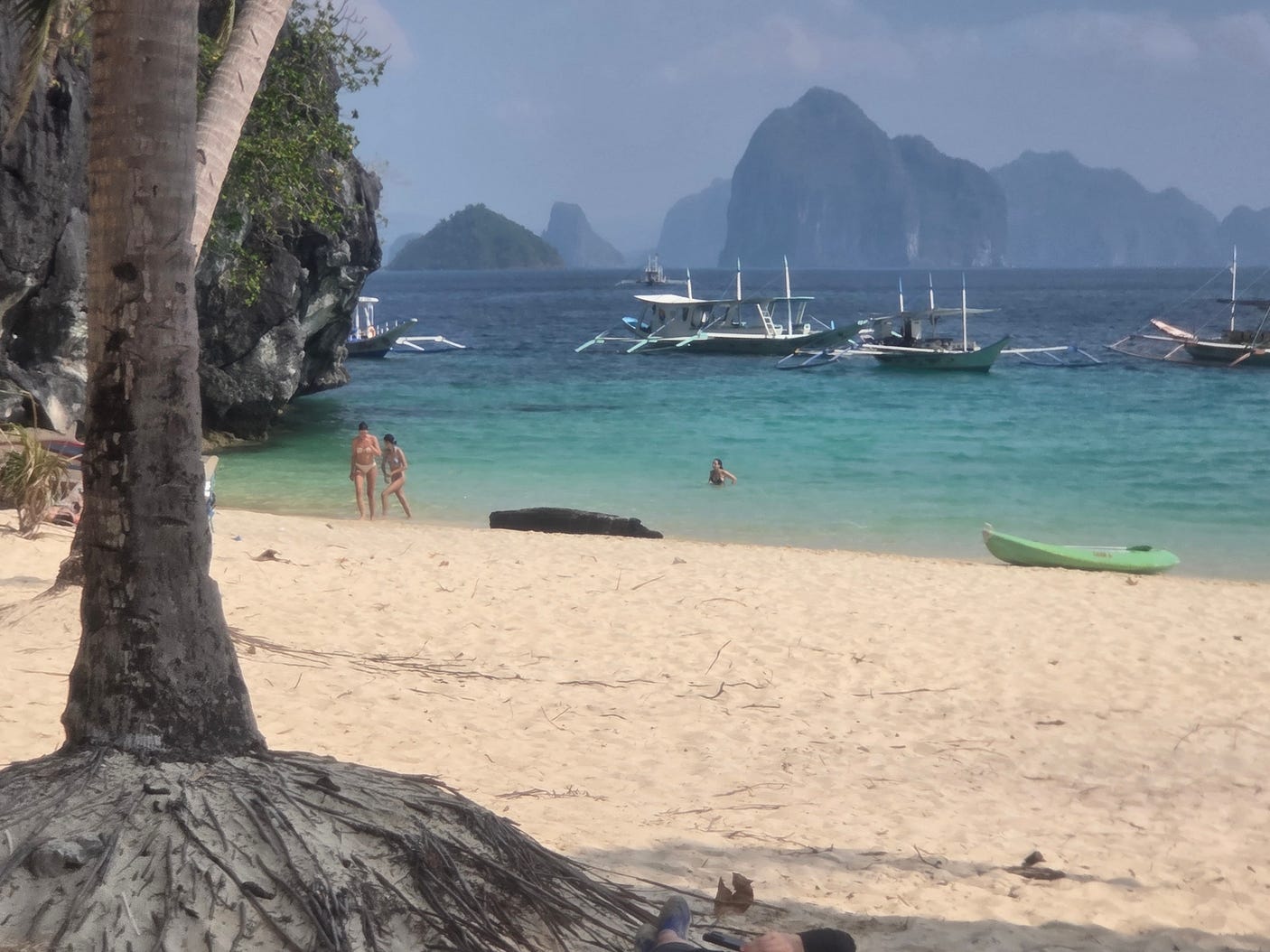
Honestly, it is impossible to overstate how lovely El Nido is!

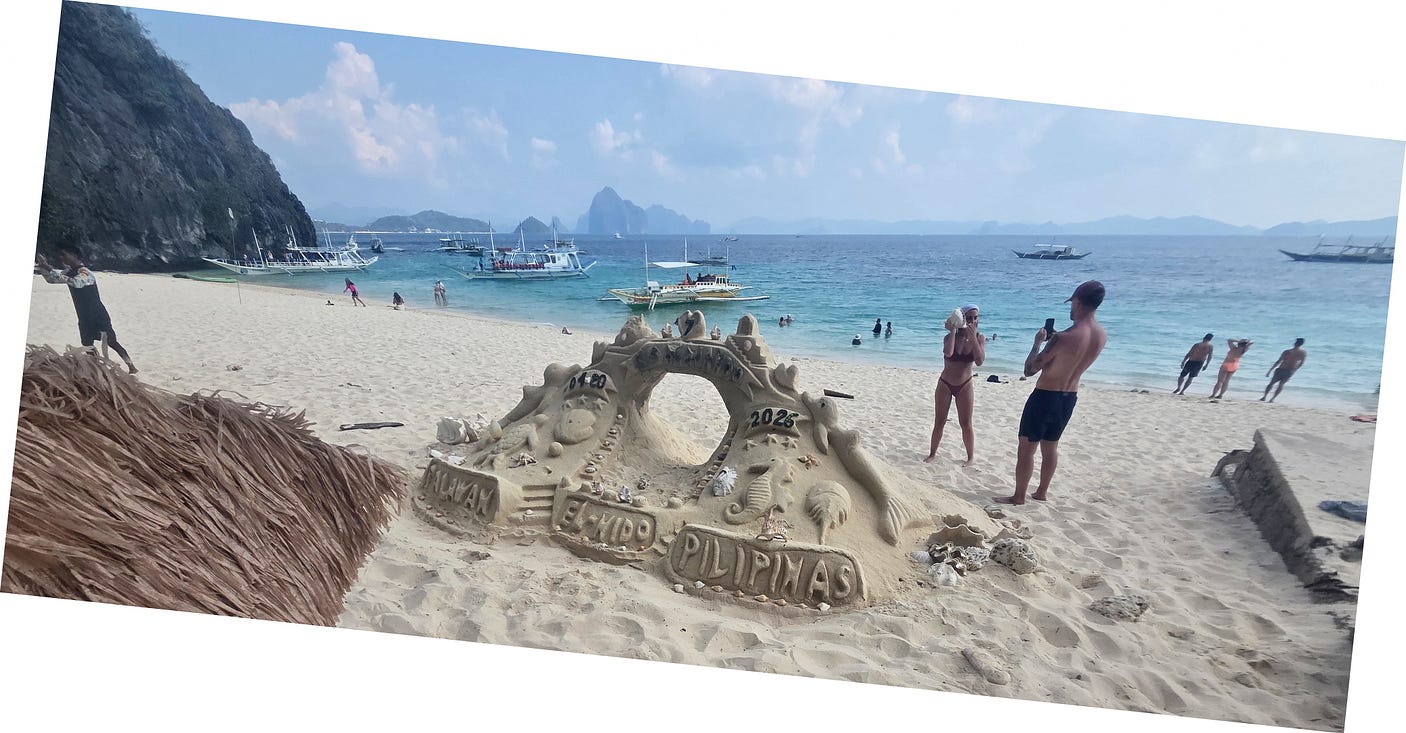
I spotted an amazing sandcastle!
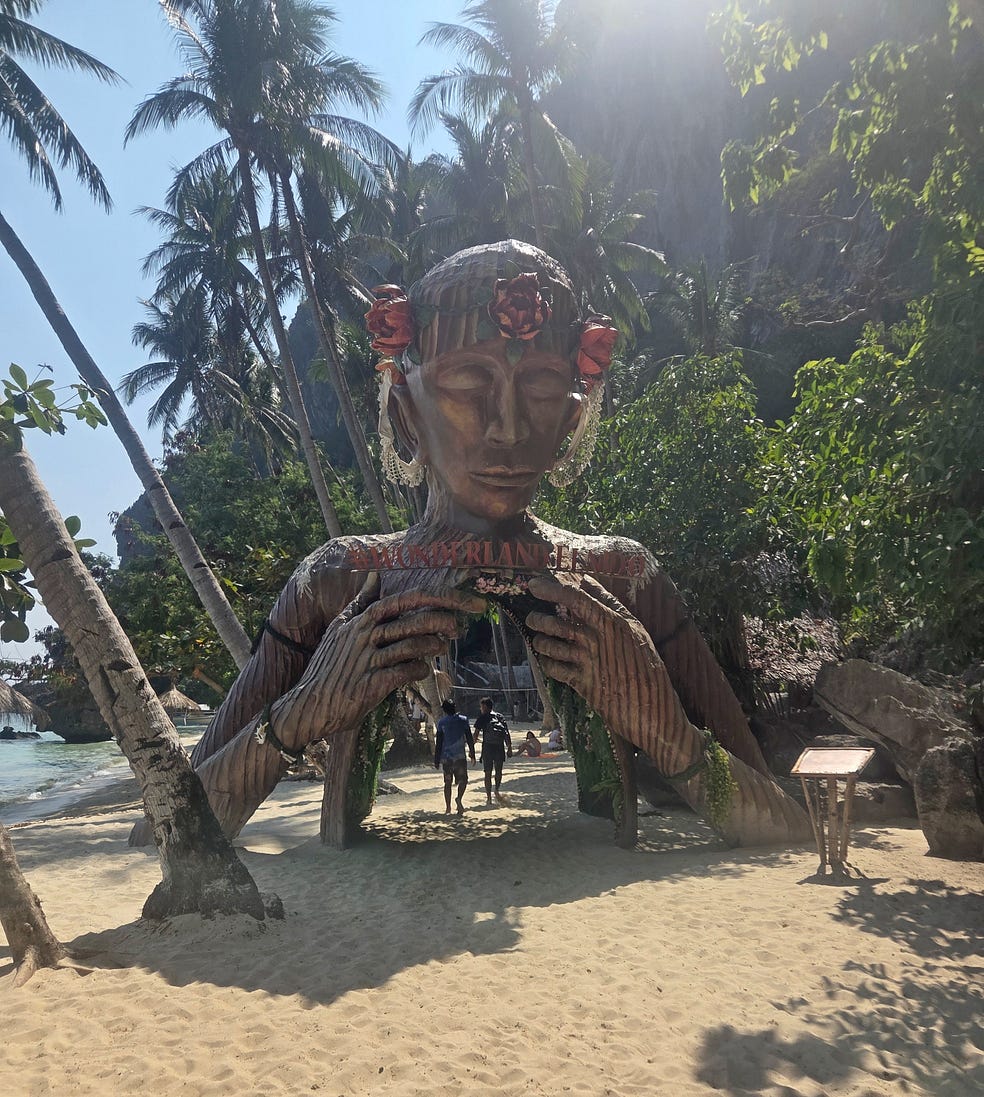
And a strange artwork on the beach, with letters on it that spelled out #WONDERLANDELNIDO:
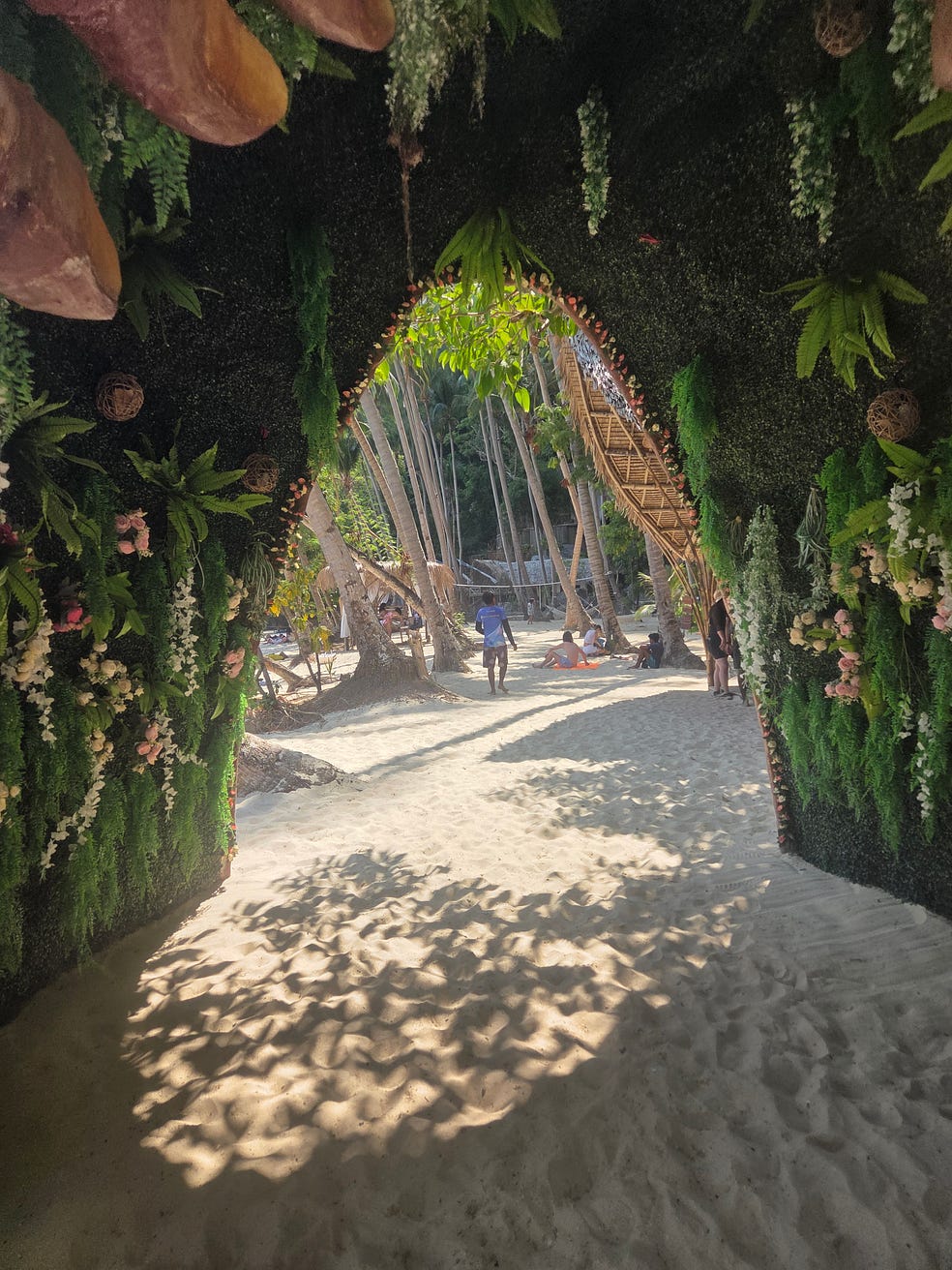
There were really high, vertical cliffs behind the beach, which made it feel cosy and also provided some welcome shade later on in the afternoon.
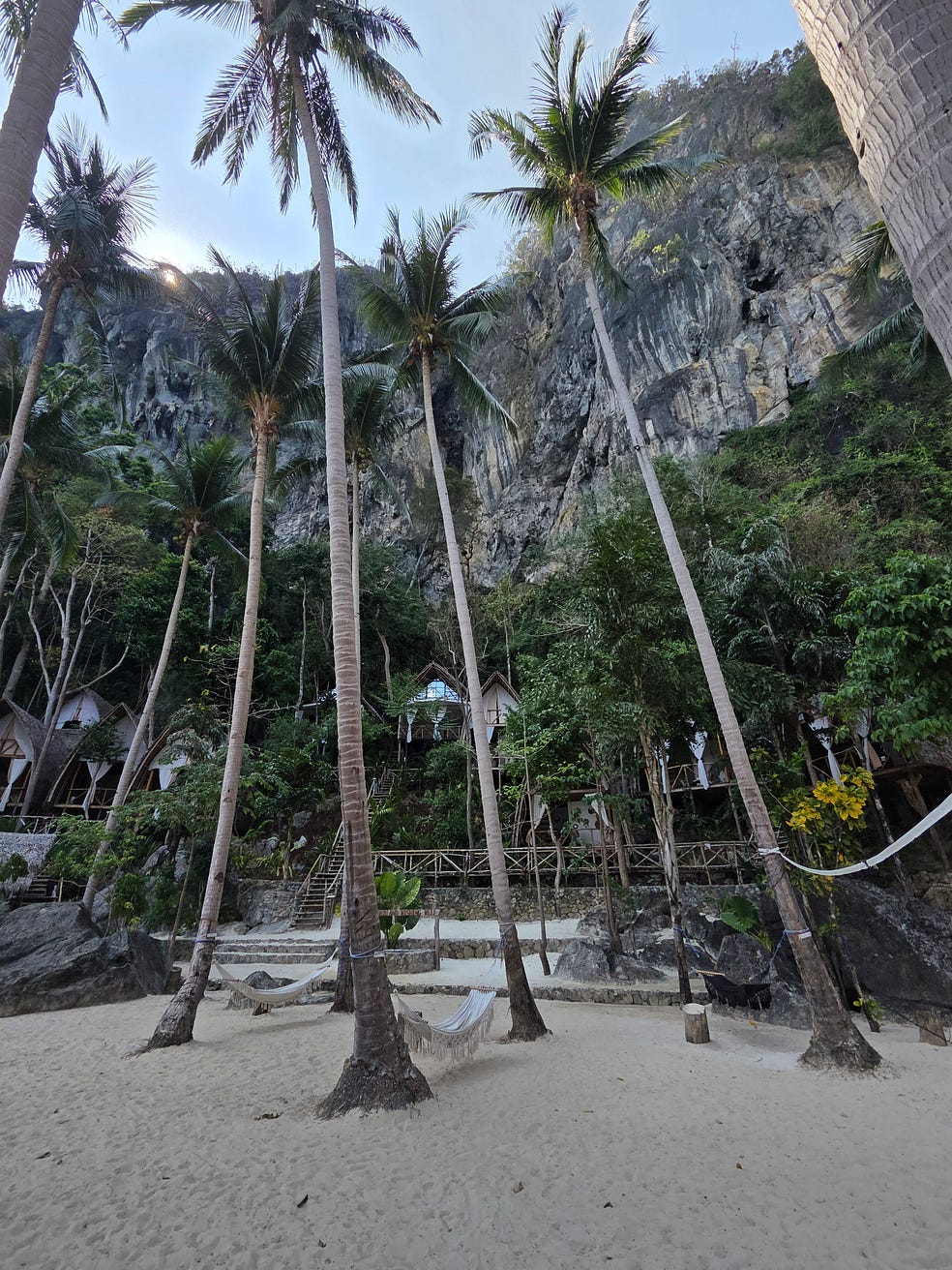
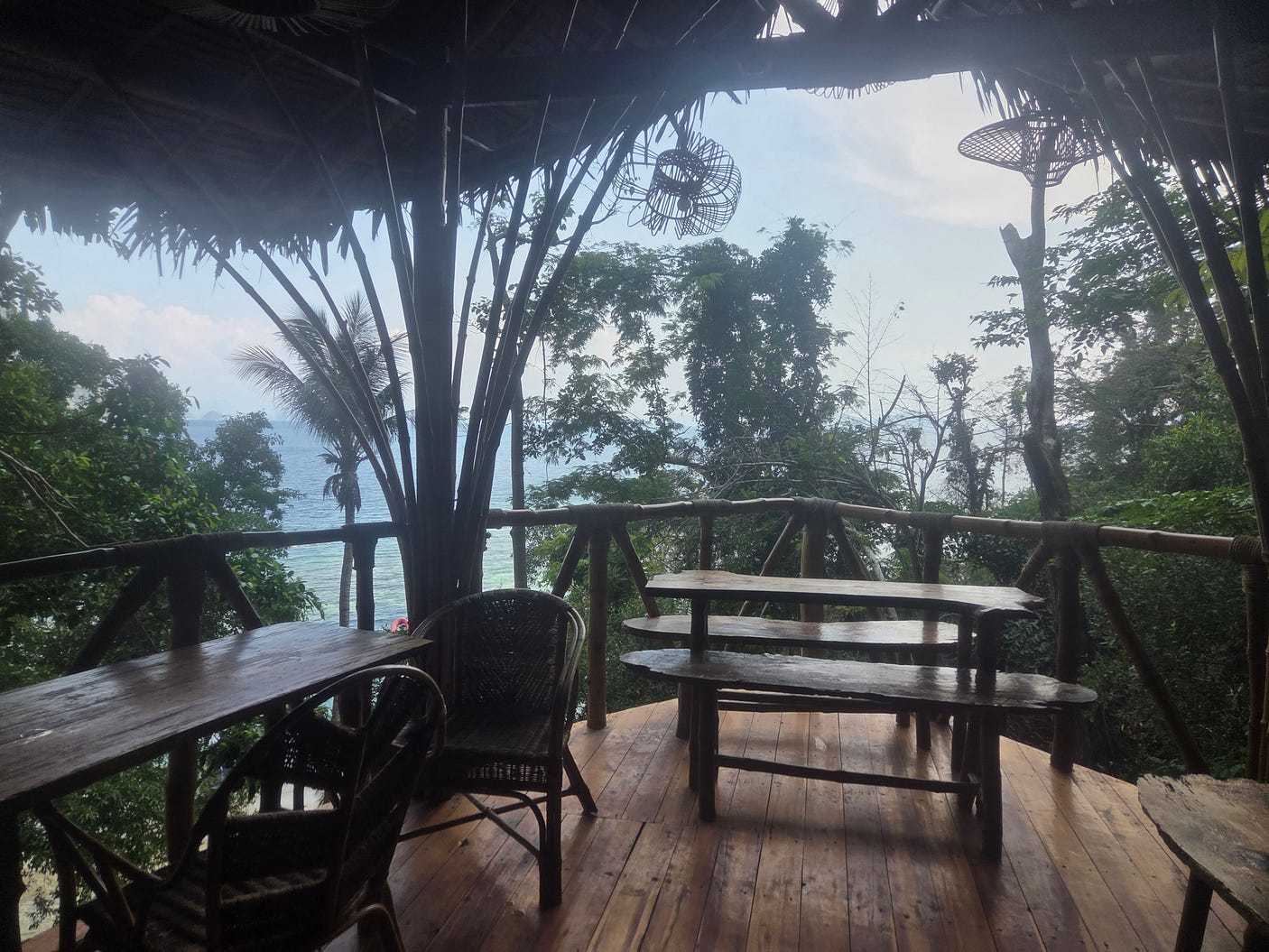
And, of course, beach cafés.
Here’s a short video I made at the beach:
Why am I talking about Moana in the video? It’s because a lot of people think this beach looks like Moana’s home island of Motunui in the Disney cartoon film Moana, as you can see from this excerpt:
El Nido is the prettiest beach resort I’ve seen so far!
It is on UNESCO’s Tentative List for designation as a third World Heritage Site for Palawan, along with Palawan’s two existing World Heritage Sites of the Underground River and Tubbataha Reefs.
You have to pay a 400 peso Eco-Tourism Development Fee in El Nido.
There were four standard boat and boat-kayaking day tours on offer, from A to D, along with a fifth private tour.
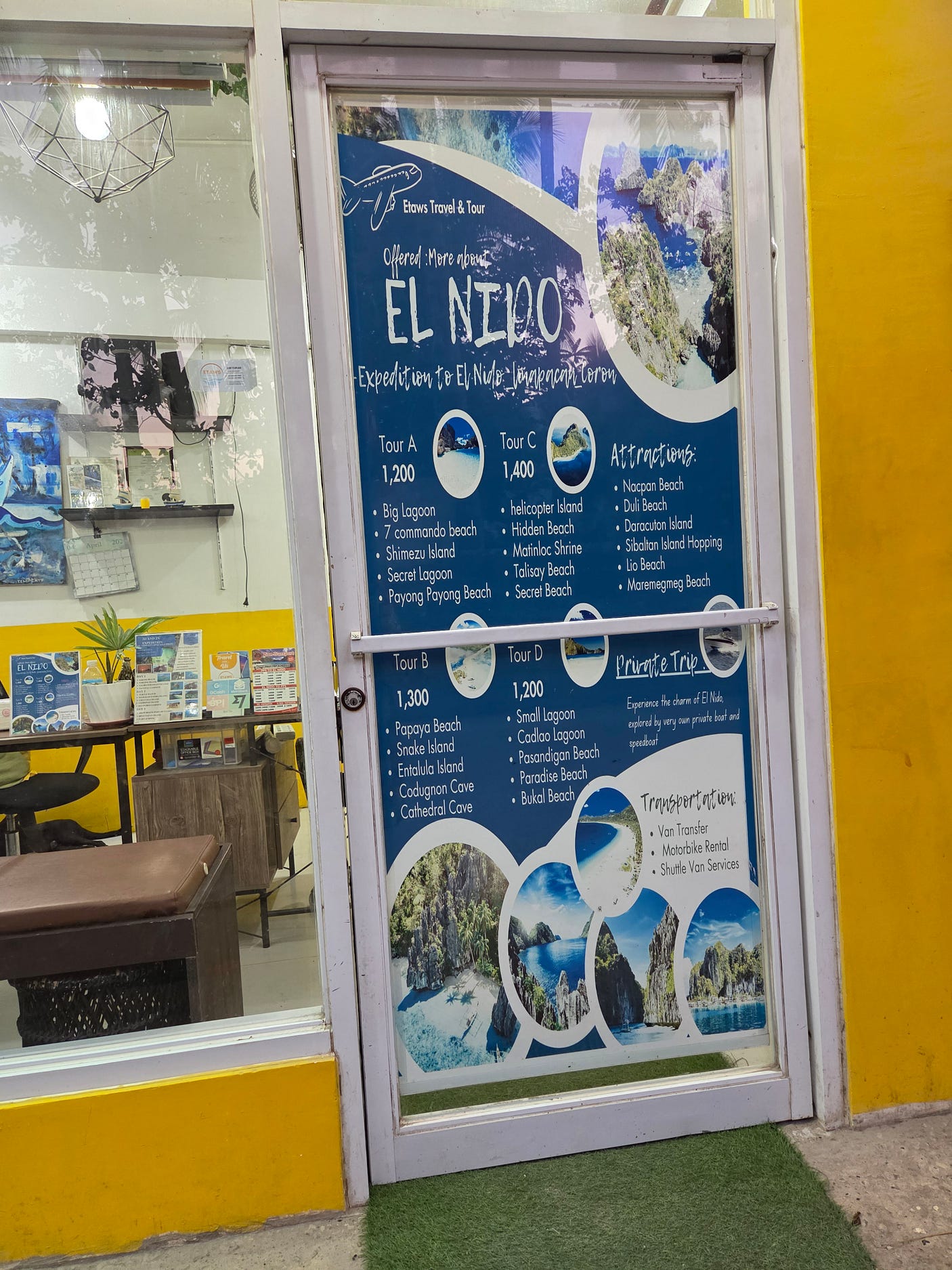
I did Tour A and Tour D on successive days.
I really enjoyed these tours, partly because I interacted with friendly people on the kayaks. But two tours, two days in a row, was a bit much, being up at 6 to head off on each one.
We saw some fish over a sunken shipwreck. That was one highlight. And the islands were idyllic.
There were beautiful rocks, and on the beach you could buy things from the hawkers, such as a waterproof duffel bag, which was really good, and a so-called waterproof bag for holding your phone.
But one traveller’s phone gave out, and I wouldn’t risk it with my iPhone, which cost NZ $2,000 (mainly so I could take better photos).
Sometimes, I wish I’d bought my GoPro but then again, I don’t really want a holiday just taking photos everywhere and the GoPro with the handle is just too bulky. I don’t want to be responsible for two expensive items in my light backpack, only 10 kg in total.
I’m carrying hiking boots, which to me are more important than anything else, and apart from that, mainly, a couple of winter items, two pairs of light trousers, two T shirts, two tops, a swimsuit, and a dress which I don’t wear.
(When I get to Nepal — a further leg of this trip — I will have to get more warm clothing and hiking poles, however.)
A lot of the local employees only get paid 400 pesos a day, and they are really angry about it.
In retrospect, I think the best place to stay at El Nido is on the beachfront so you can get straight into it.
You can go on multi-day boat tours up to the Calamianes as well as the shorter local ones. I heard it was best to go on the more expensive multi-day tours, as the cheaper tours tend to be backpacker booze cruises. But my budget wasn’t really up to any of those.
Next week: I head up (literally) to Baguio City, the former summer capital of the Philippines, in the highlands of Luzon.
Subscribe to our mailing list to receive free giveaways!

