Giveaways
LAST week’s post ended with my arrival at the epic Mount Fortress and its surrounding park!
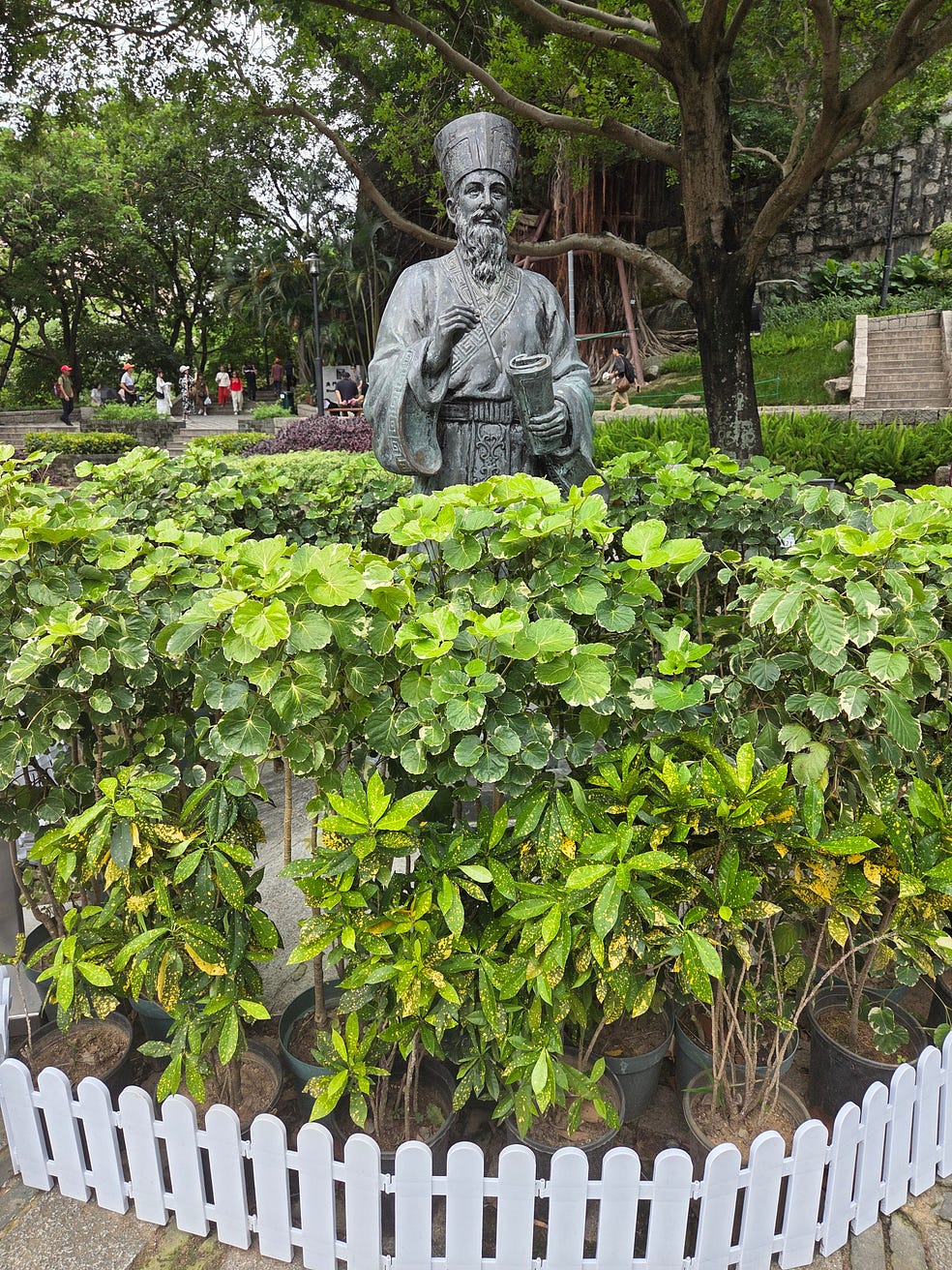
At the Mount Fortress park, I saw a modern statue of the famous Jesuit missionary, scholar, and linguist Matteo Ricci, who arrived at Macao and made his way to the Chinese court at Beijing, becoming, in 1601, the first European to enter the Forbidden City. The statue was unveiled on the anniversary of Ricci’s arrival, in 2010.
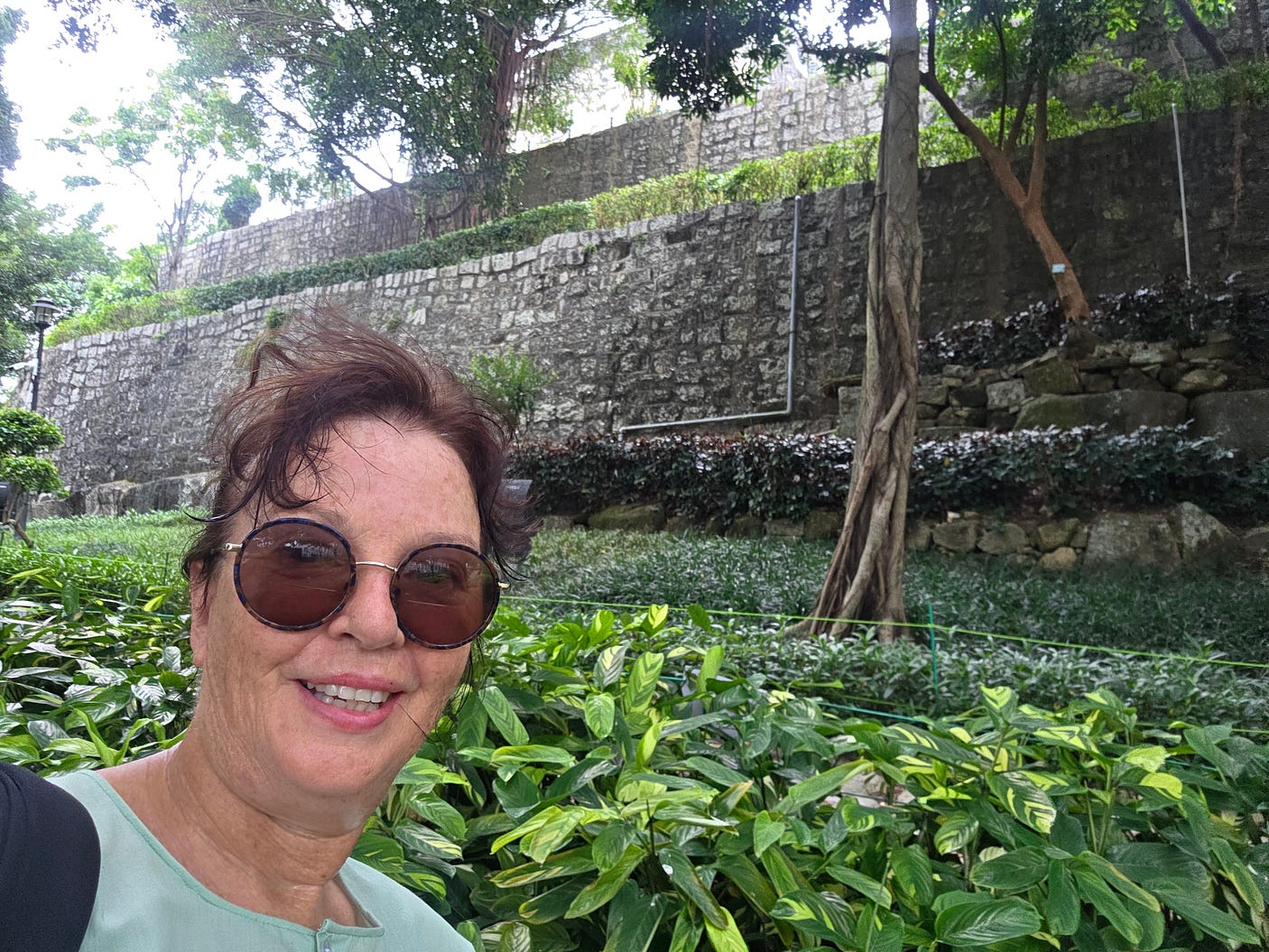
Here’s a photo of myself in front of the fortress walls, which look formidable.
And here’s a photo of a plaque in Portuguese on the walls, below one of the cannons.
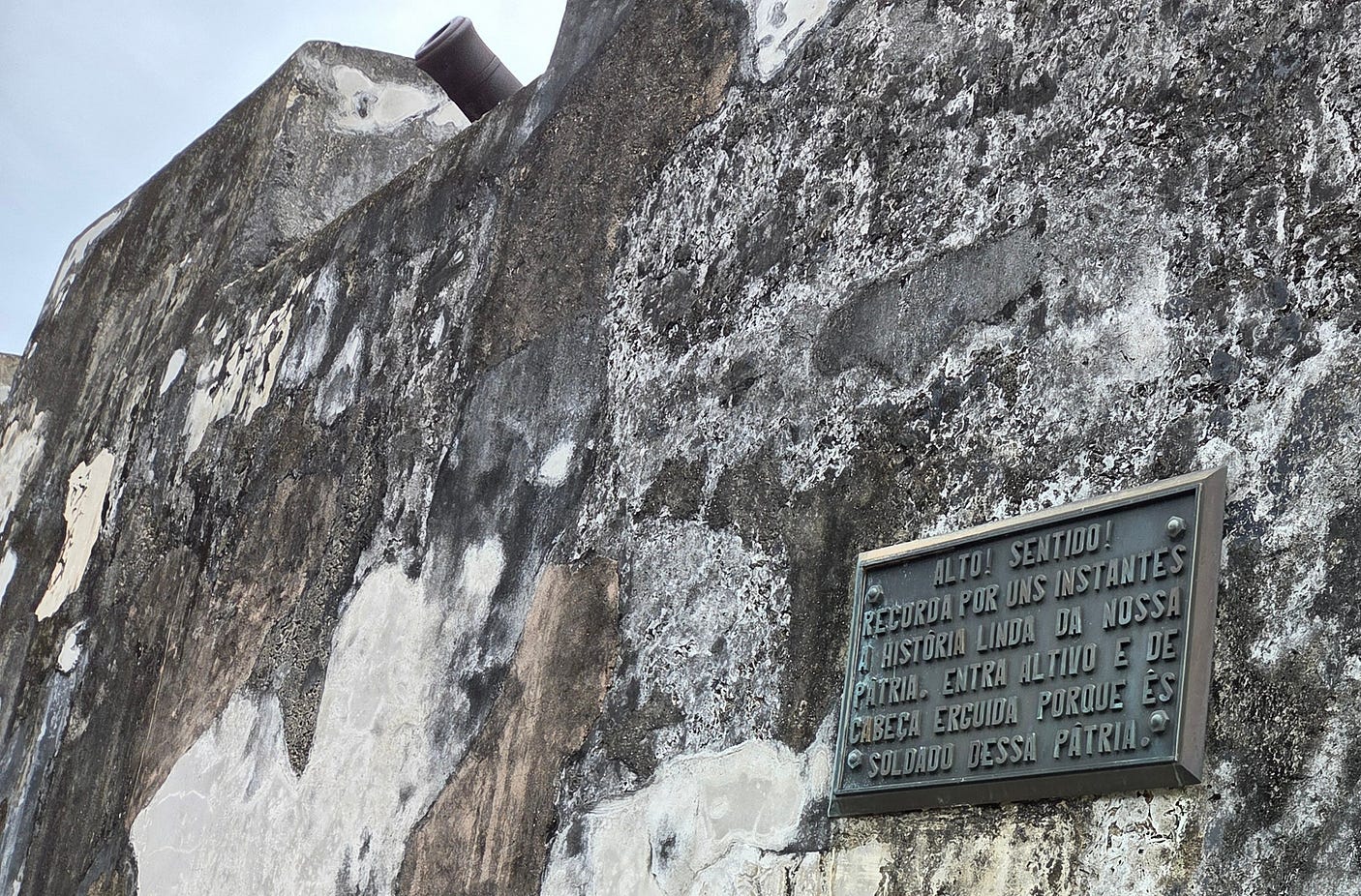
It means:
Halt! Attention! Remember for a moment the beautiful history of our homeland, enter haughty and with your head held high because you are a soldier of this homeland.
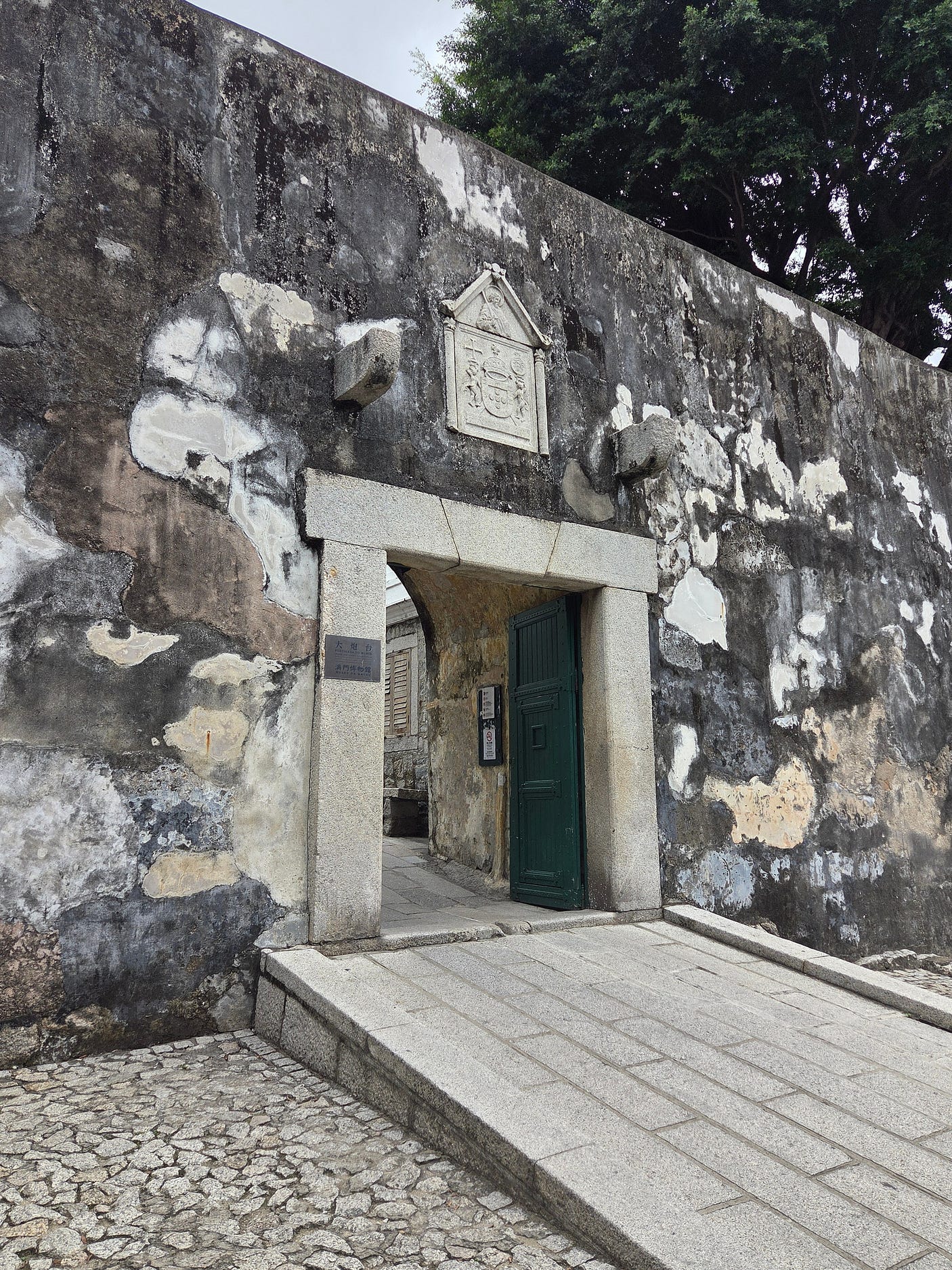
Here is a gate through which the soldiers would have marched, with an old-time Portuguese coat of arms above it.
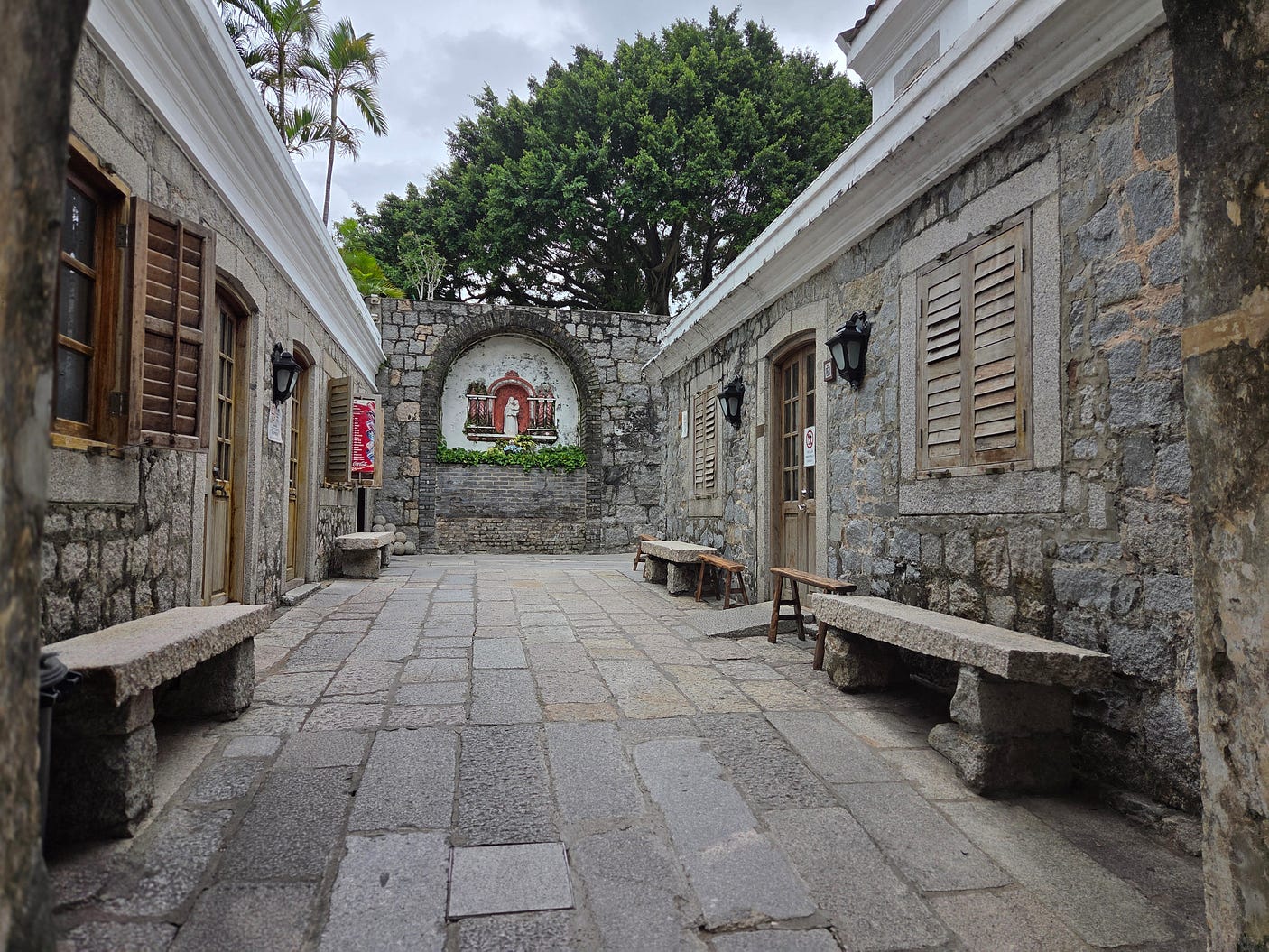
And here is a photo of the interior.
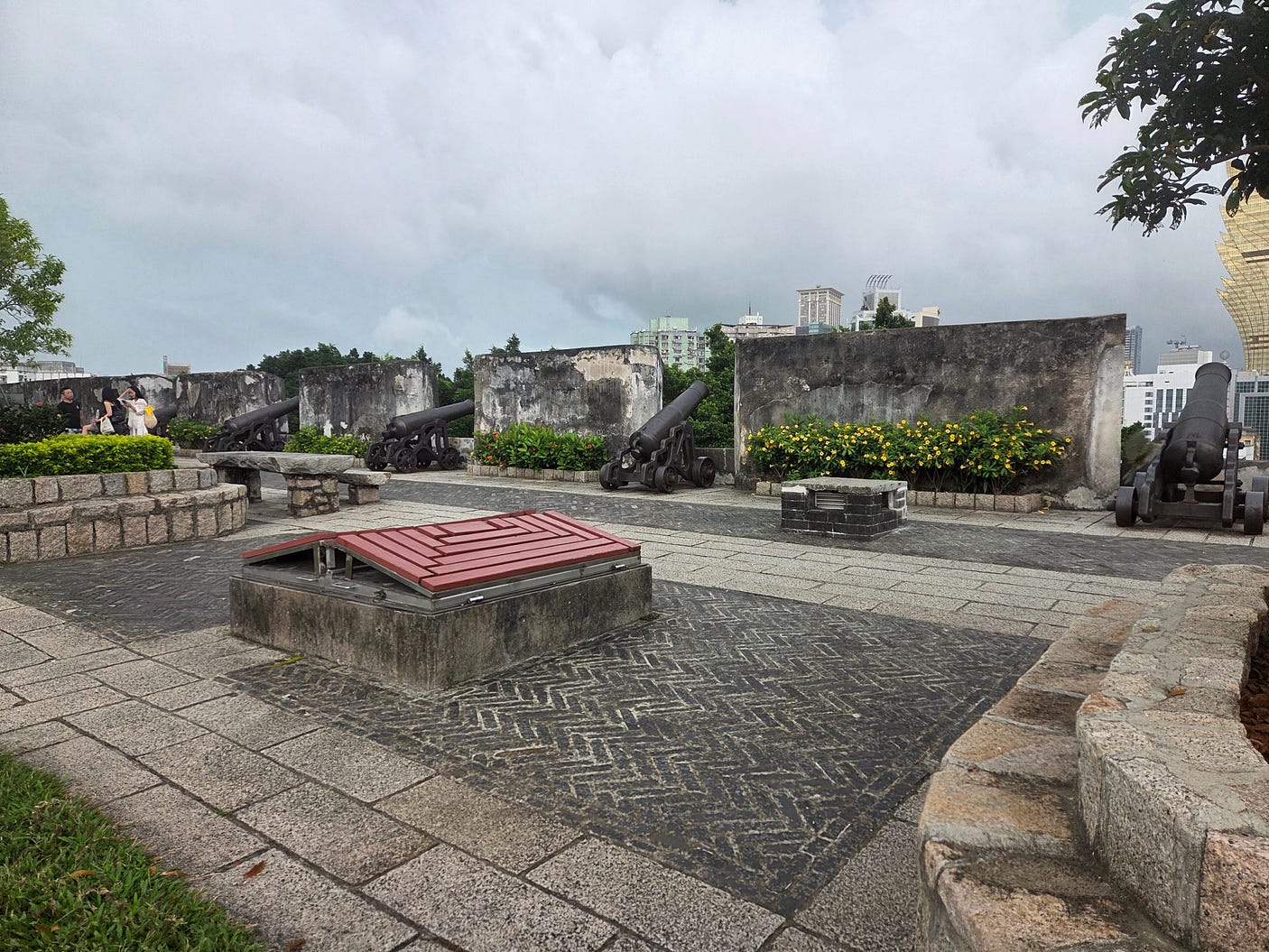
The next photo shows cannons on the battlements, generally pointing out to sea but in ways that now point over reclaimed land on which newer parts of the city have been built.
Macao used to be even tinier than it is now, and much of its present area has been reclaimed from the estuary of the Pearl River.
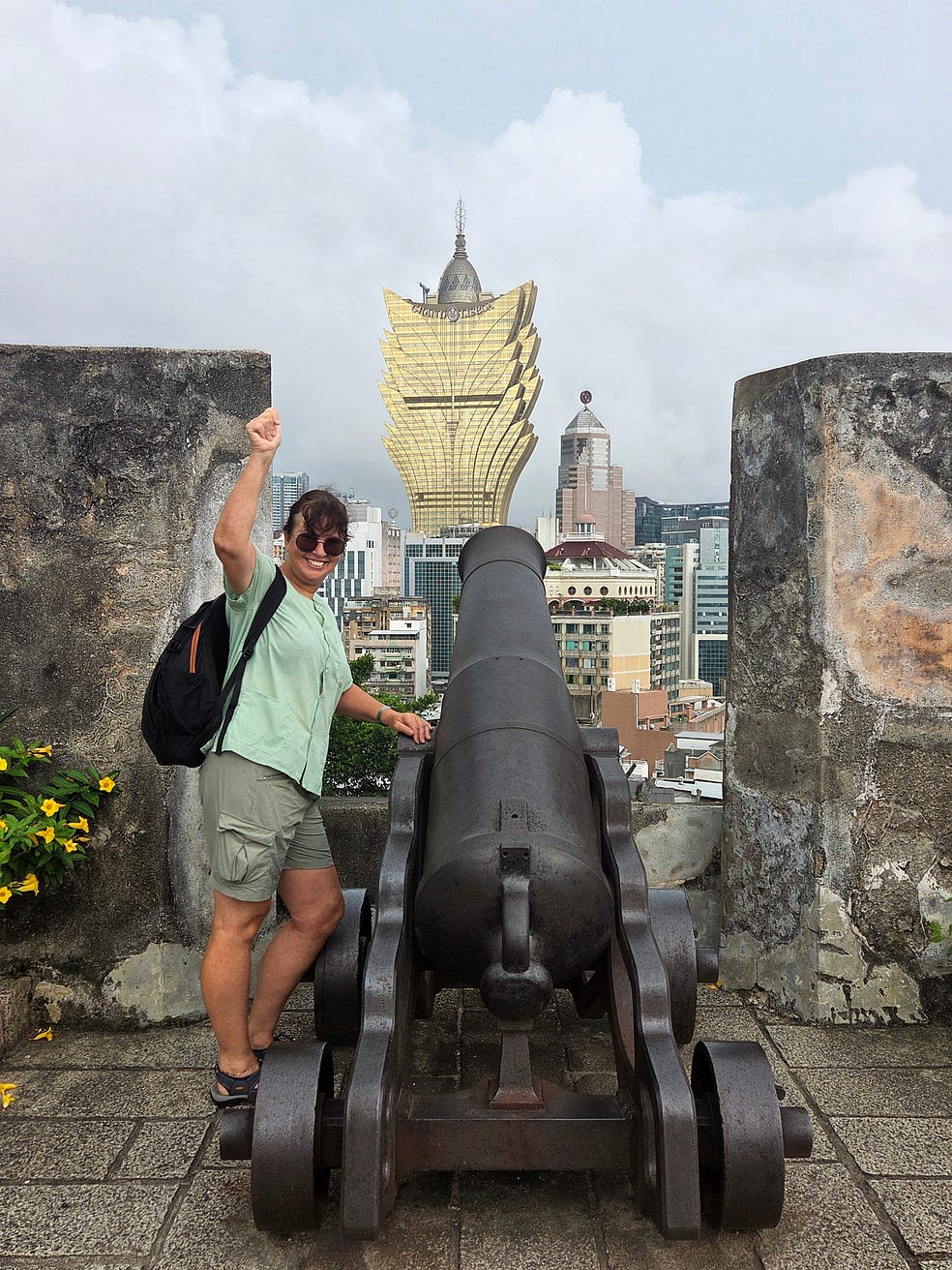
Here I am, getting into the swing of things. As I say, in the old days, the Grand Lisboa Hotel would not have been directly in the gun (of course), nor any of the other buildings around it.
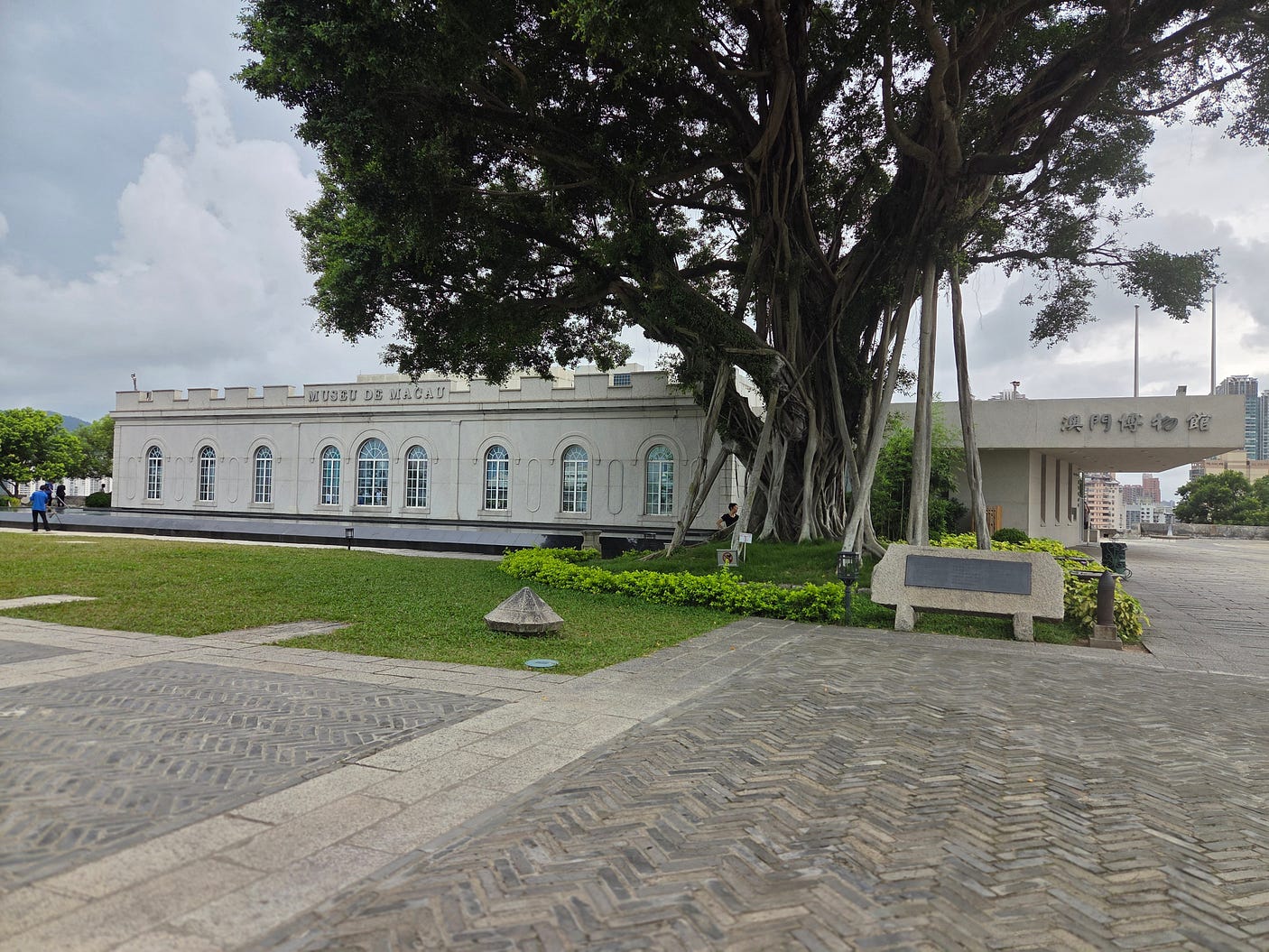
The next photo shows the museum, the Museu de Macau, which has since been erected on top of the Mount Fortress.
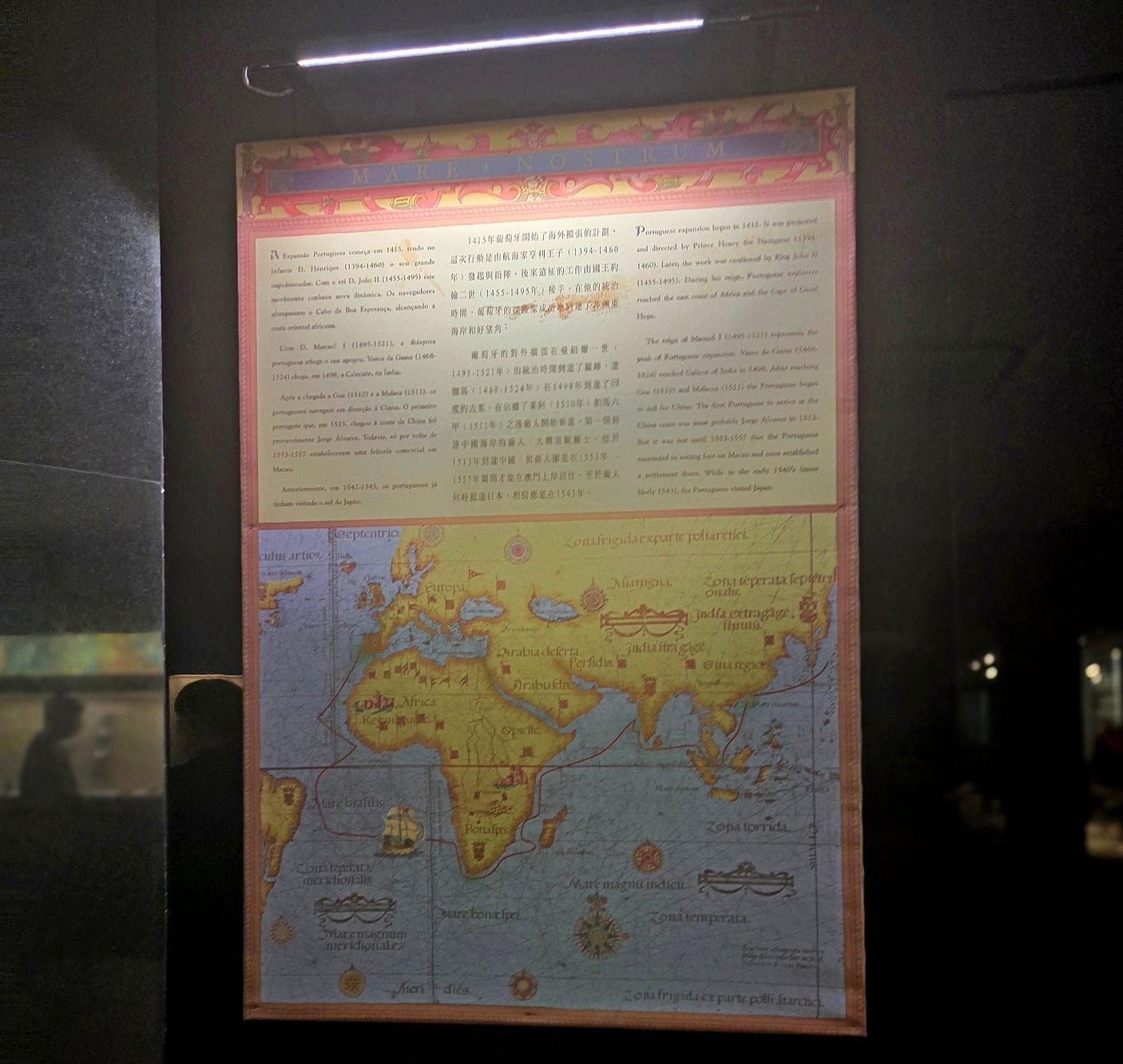
Inside the Museu de Macau, there were reproductions of old maps of trade routes. The next map shows the route of Portuguese explorers who, from 1415 onwards, gradually made it to the Azores, and then southward around Africa, across the Atlantic to Brazil, and, by 1545, to Japan.
And here’s a close-up of an old-timey map which clearly shows India, Southeast Asia, modern-day Indonesia and the Philippines, and China, albeit not with any great degree of accuracy by later standards.
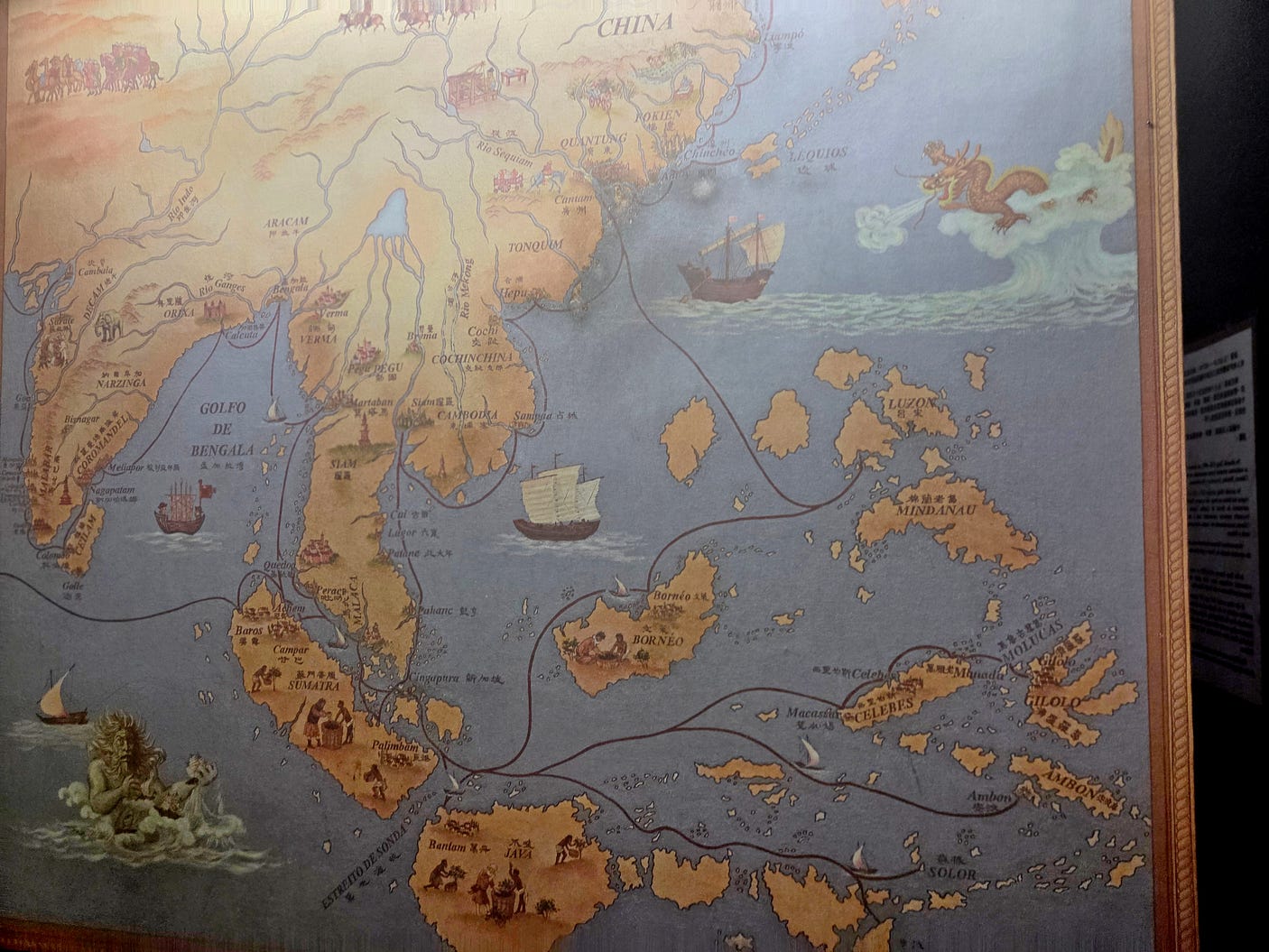
Still, just getting there all the way from Portugal, while, as it seems, avoiding the wrath of King Neptune on the left and the typhoons conjured up by the Chinese dragon on the right, was the main thing!
The more precise sort of mapmaking for which Captain Cook was to become so famous in the 1700s could be left till later.
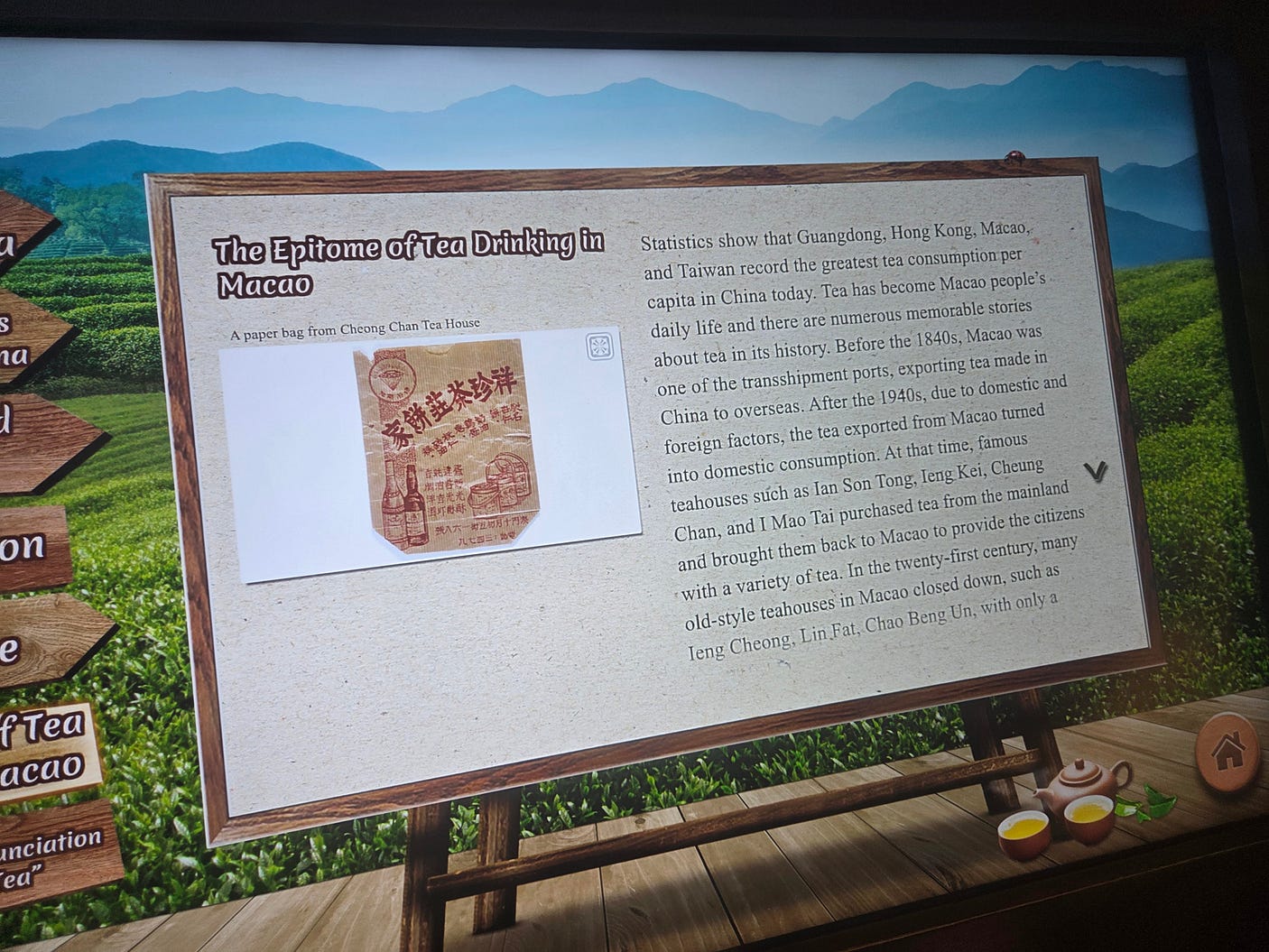
Another poster described the history of tea in Macao: a beverage never far from Chinese culture and one of China’s earliest exports to the West.
And fireworks, themselves invented by the Chinese more than a thousand years ago.
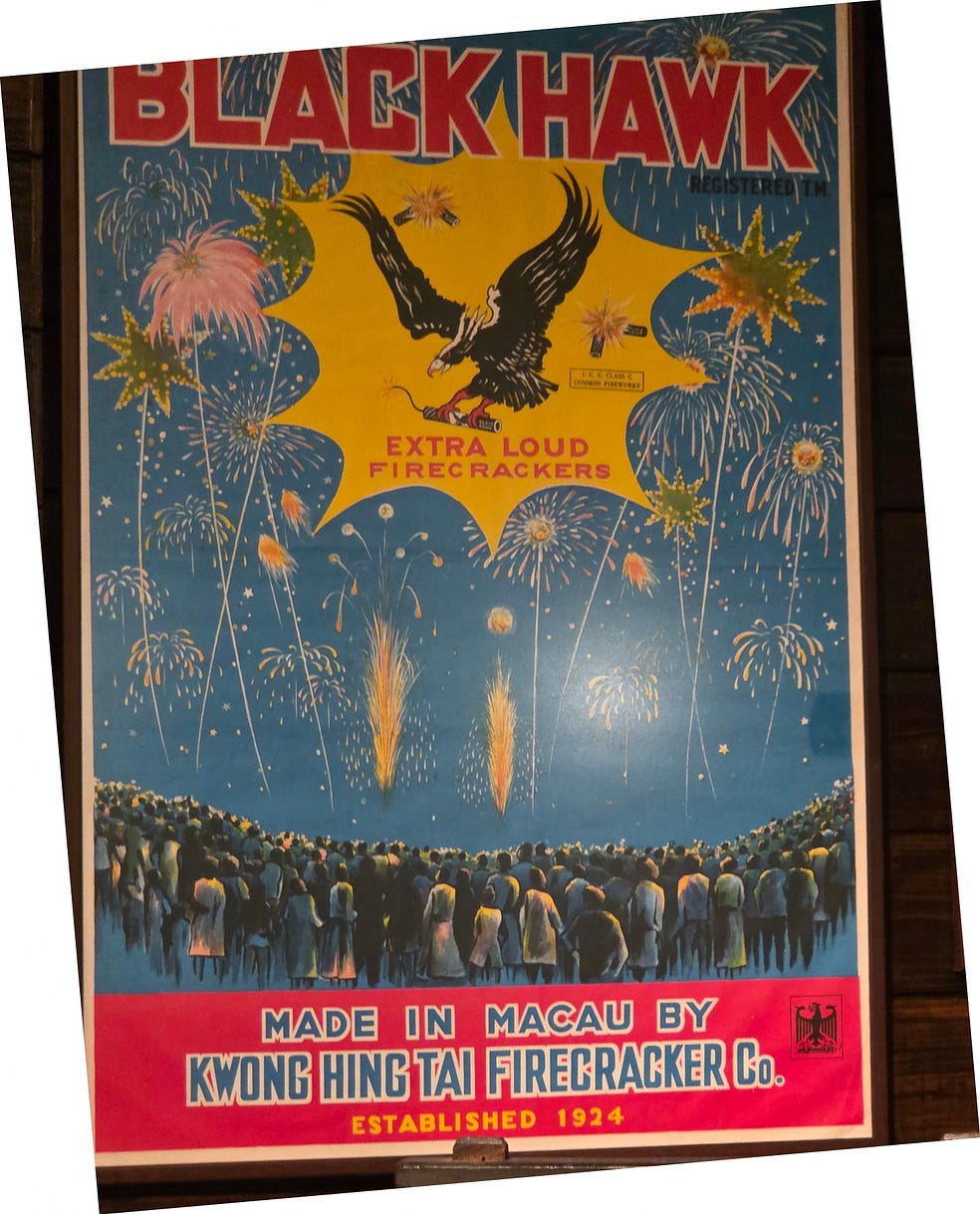
Despite what a lot of people think — namely, that the Chinese only used gunpowder to make fireworks while Westerners used it to make weapons — the Chinese did also use gunpowder to make weapons.
A psychedelic picture of the Buddha on the eve of his enlightenment, painted in Dunhuang in the 900s CE and which I came across online, shows demons at the top right doing their best to distract him from his meditations with a ‘fire lance’ — a sort of Roman candle on the end of a stick — and an early hand-grenade, while, at bottom right, the Buddha is also apparently being tempted by the seductive daughters of the demon Mara, and another demon with a snake in its mouth presumably representing gluttony or booze; and, as one would expect, keeping his cool in the face of all these distractions.
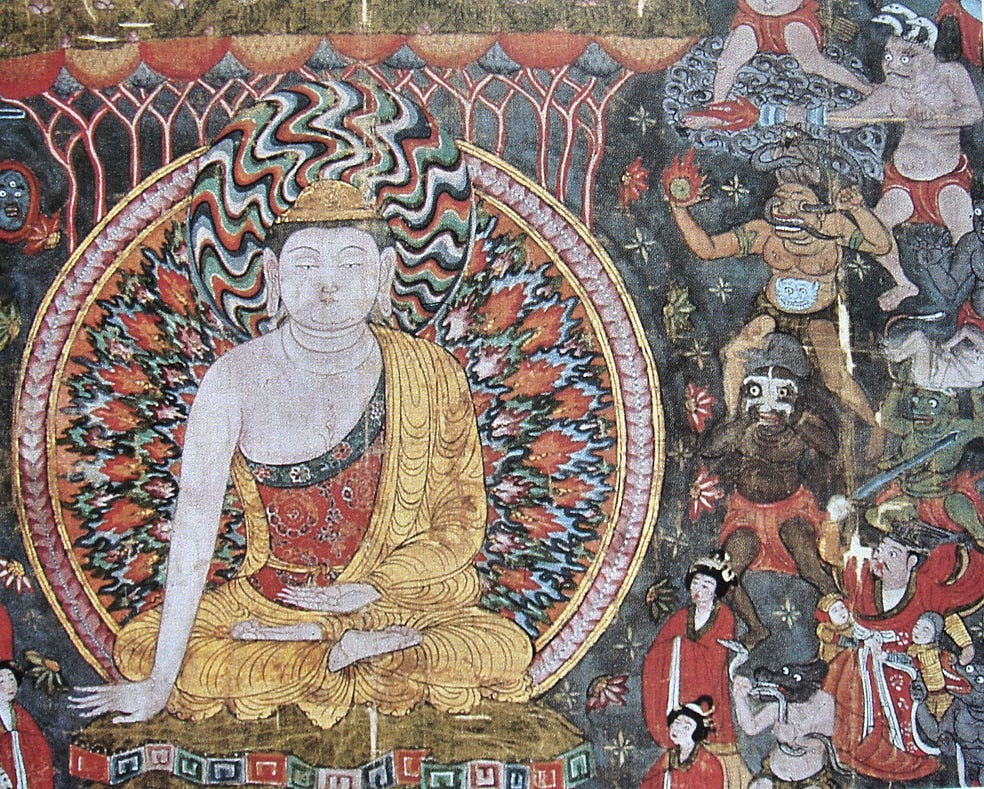
In those days, the fire-lance and even the grenade would indeed have been little more than distractions. However, after further centuries of experimentation, including the abandonment of paper bomb casings for metal ones that amplified the explosion and riddled people with shrapnel, much tinkering with the exact formula of the gunpowder itself, and the development of bullets that fitted snugly inside the tube of a fire-lance and were thus blown out with the full power of the gunpowder rather than just erupted out, the Chinese arrived at bombs and firearms in the modern sense as opposed to just extra-big fireworks.
At that very moment in history, the idea was grabbed with both hands by Westerners who were, just then, coming into contact with Chinese culture on a regular basis, and taken further, to the eventual detriment of the Chinese and everyone else the West eventually conquered with the aid of gunpowder, or tried to.
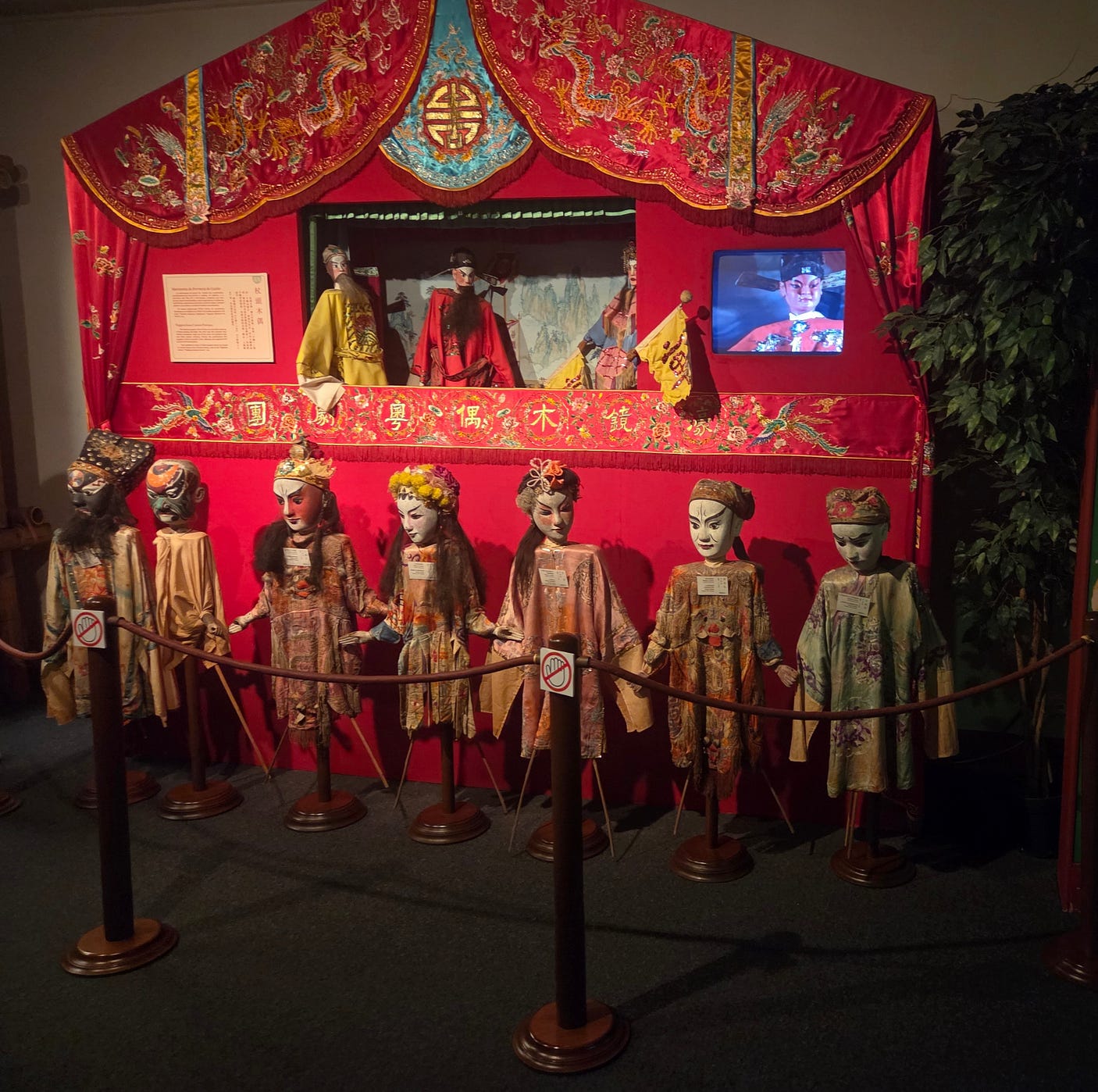
Meanwhile, back at the museum, there was a sort of Chinese puppet theatre or Punch and Judy show.
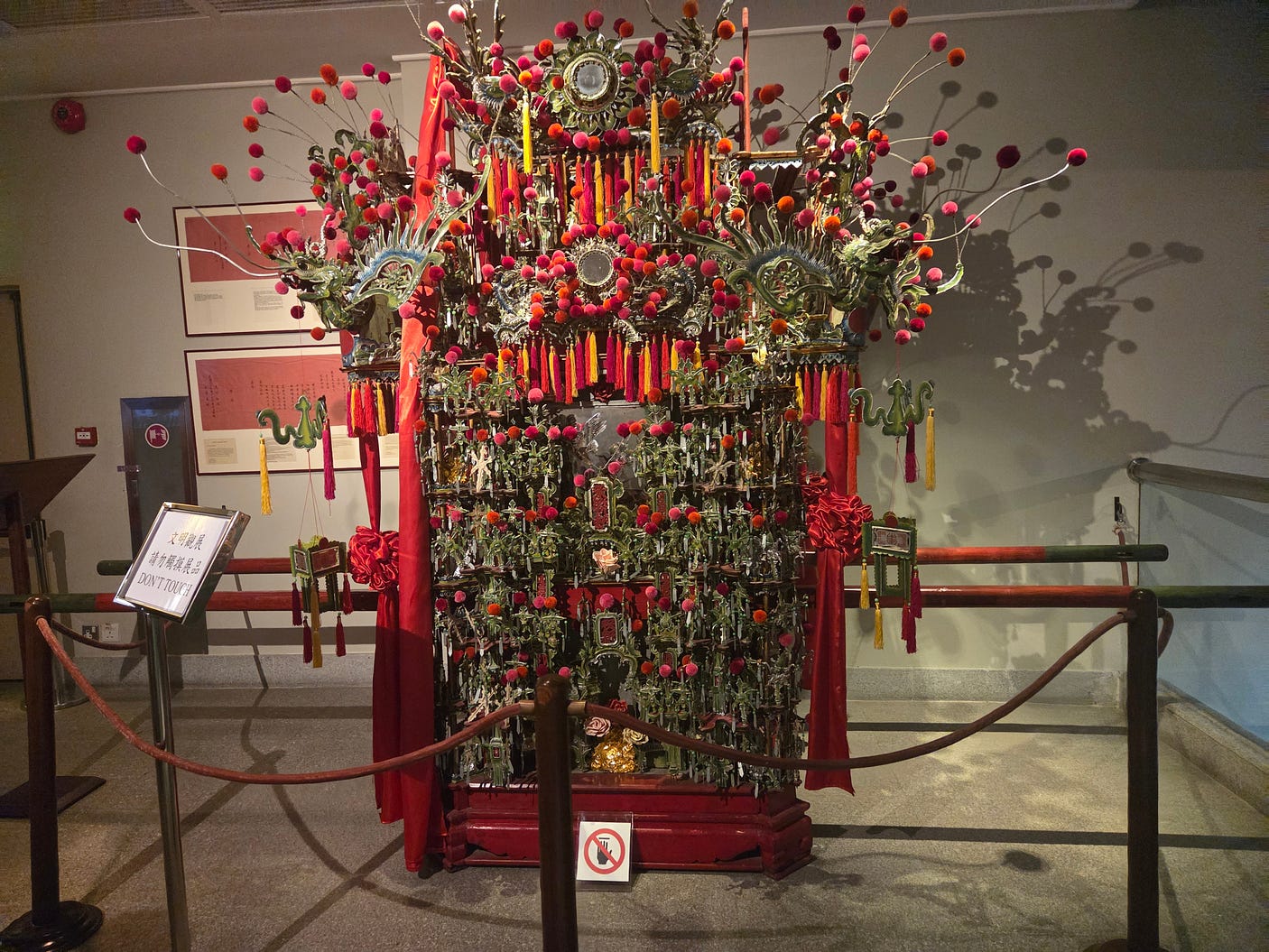
And a bridal carriage in which the bride would be carried at weddings, presumably of a princess or someone like that.
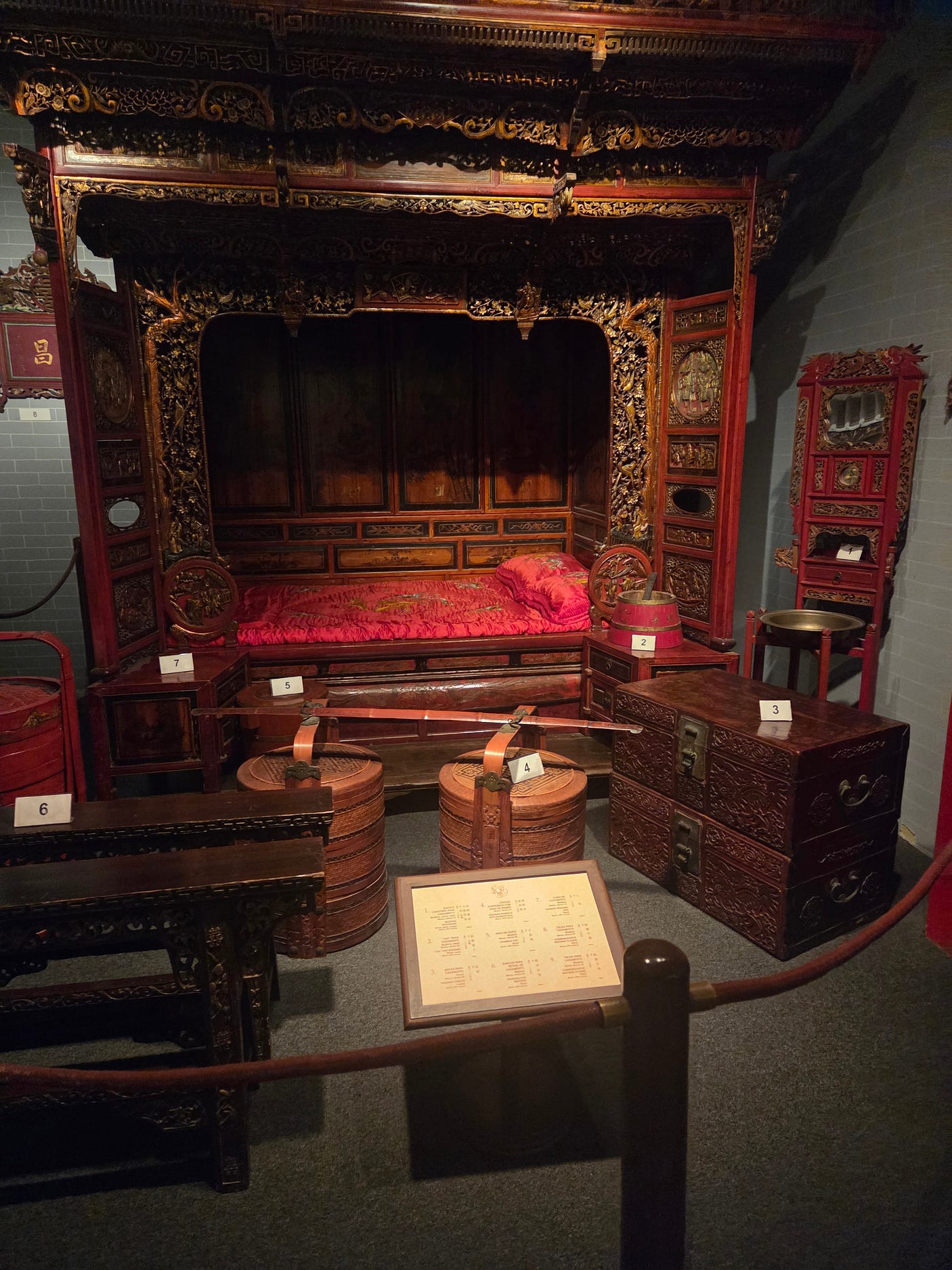
And enormously well-carved furniture.
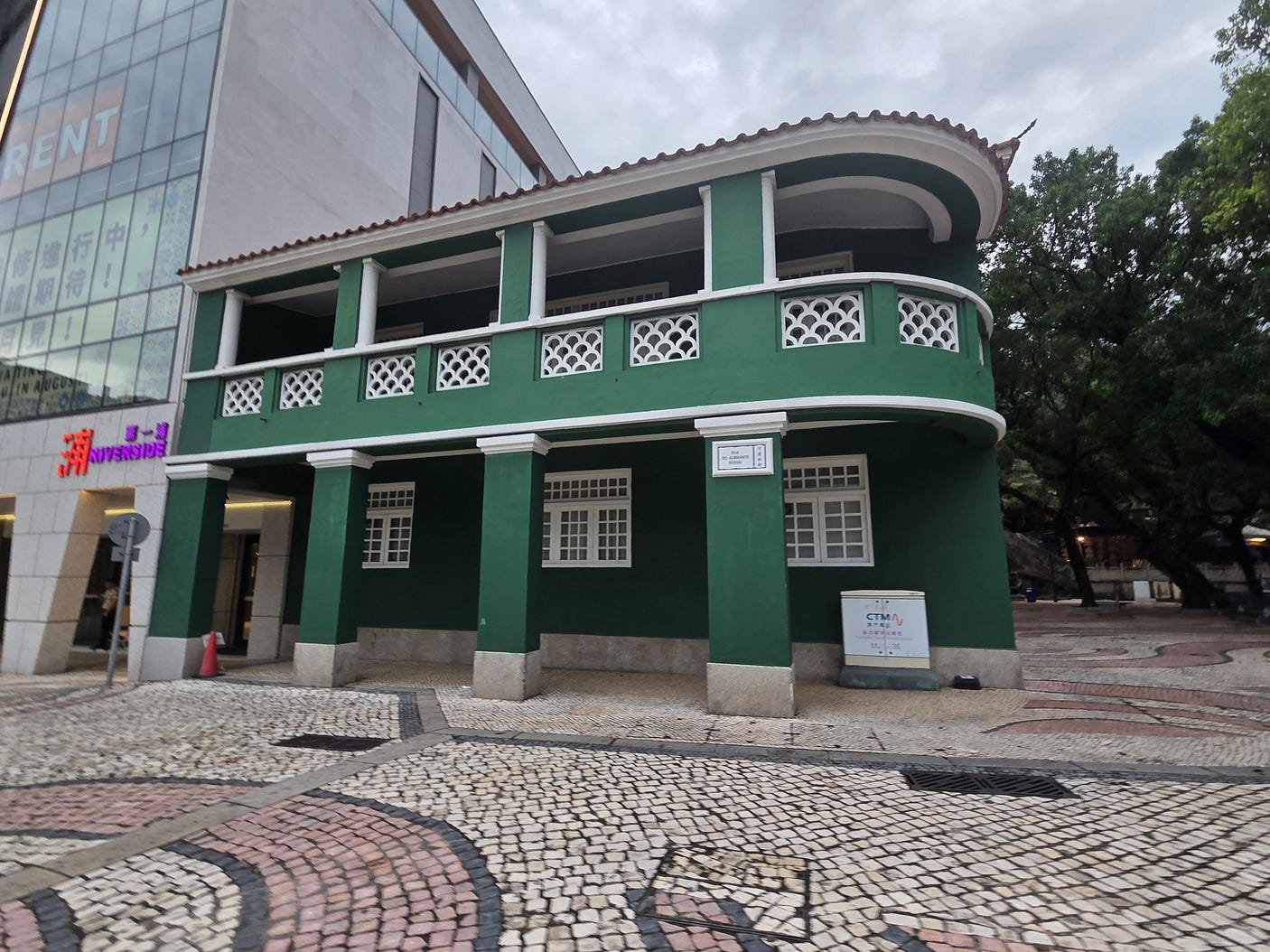
Back in town, I came across this interesting building.
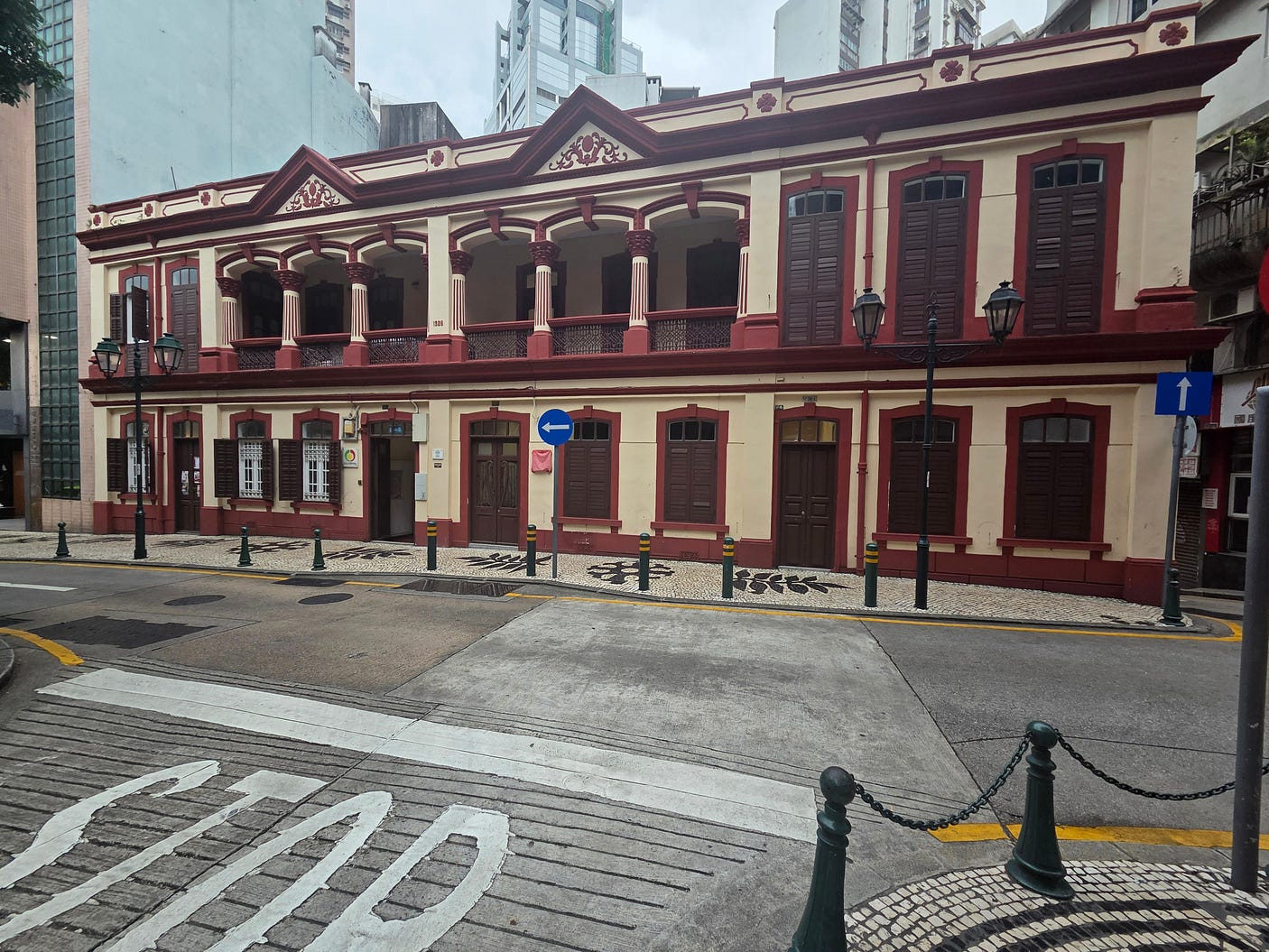
Again, you can see the English-language road markings. I wonder whether the authorities have decided to make these the same as in Hong Kong, now that it is possible to drive directly between the two territories, on the left, via the lengthy connecting bridge and tunnel that was opened a few years ago.
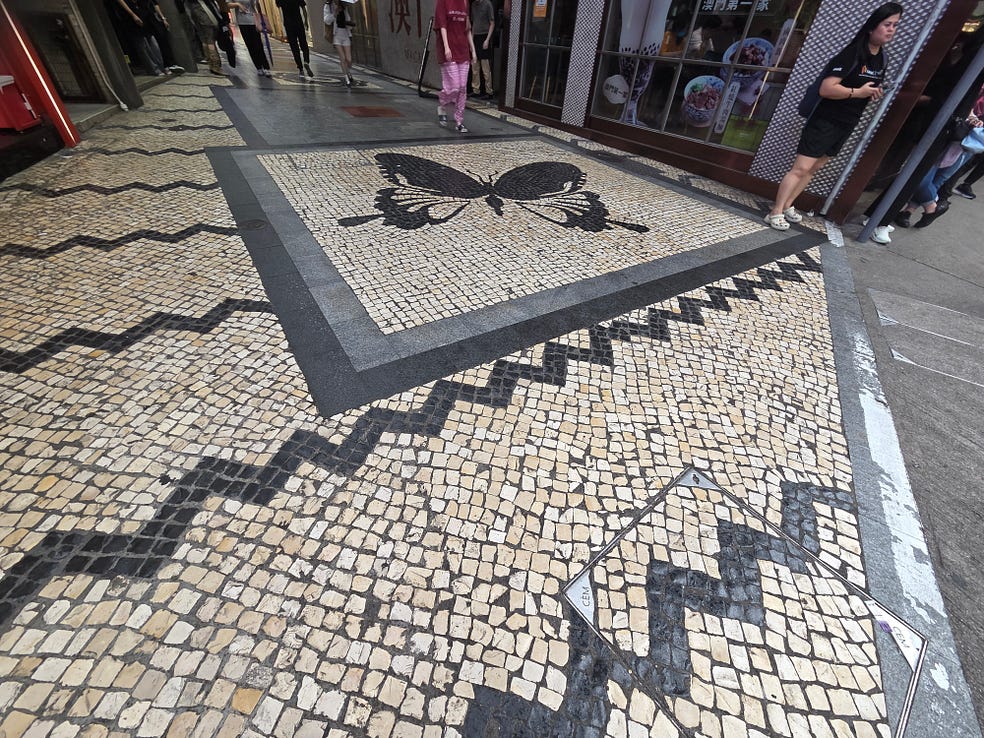
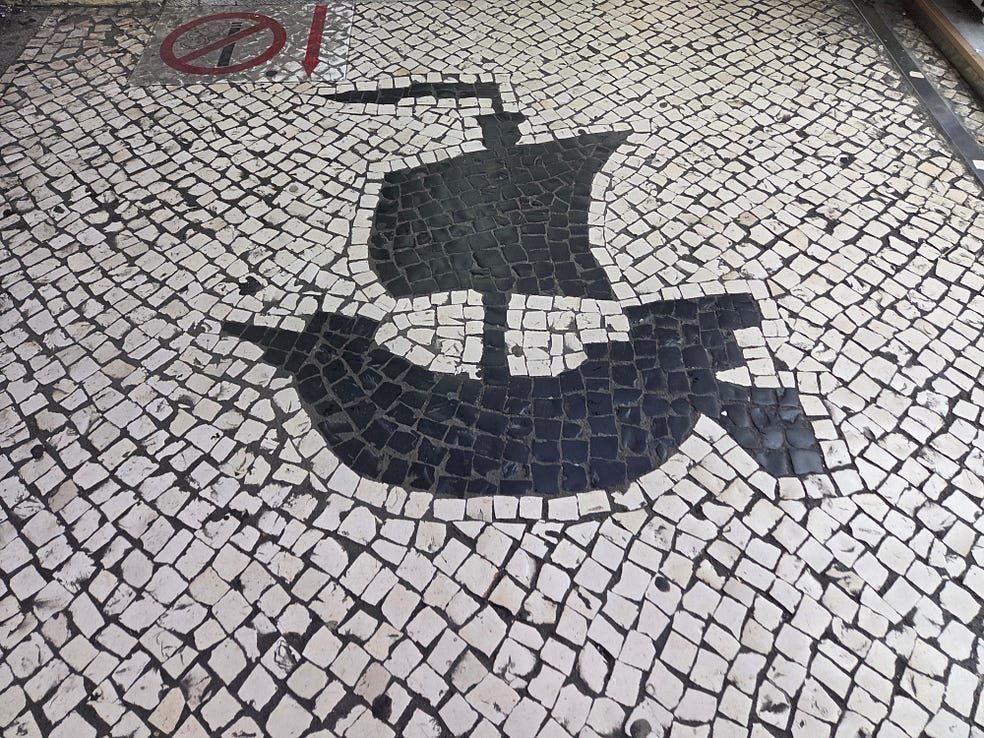
And I saw more of the famous Portuguese black-and-white paving. The ability to make this kind of paving is a skilled trade in its own right.
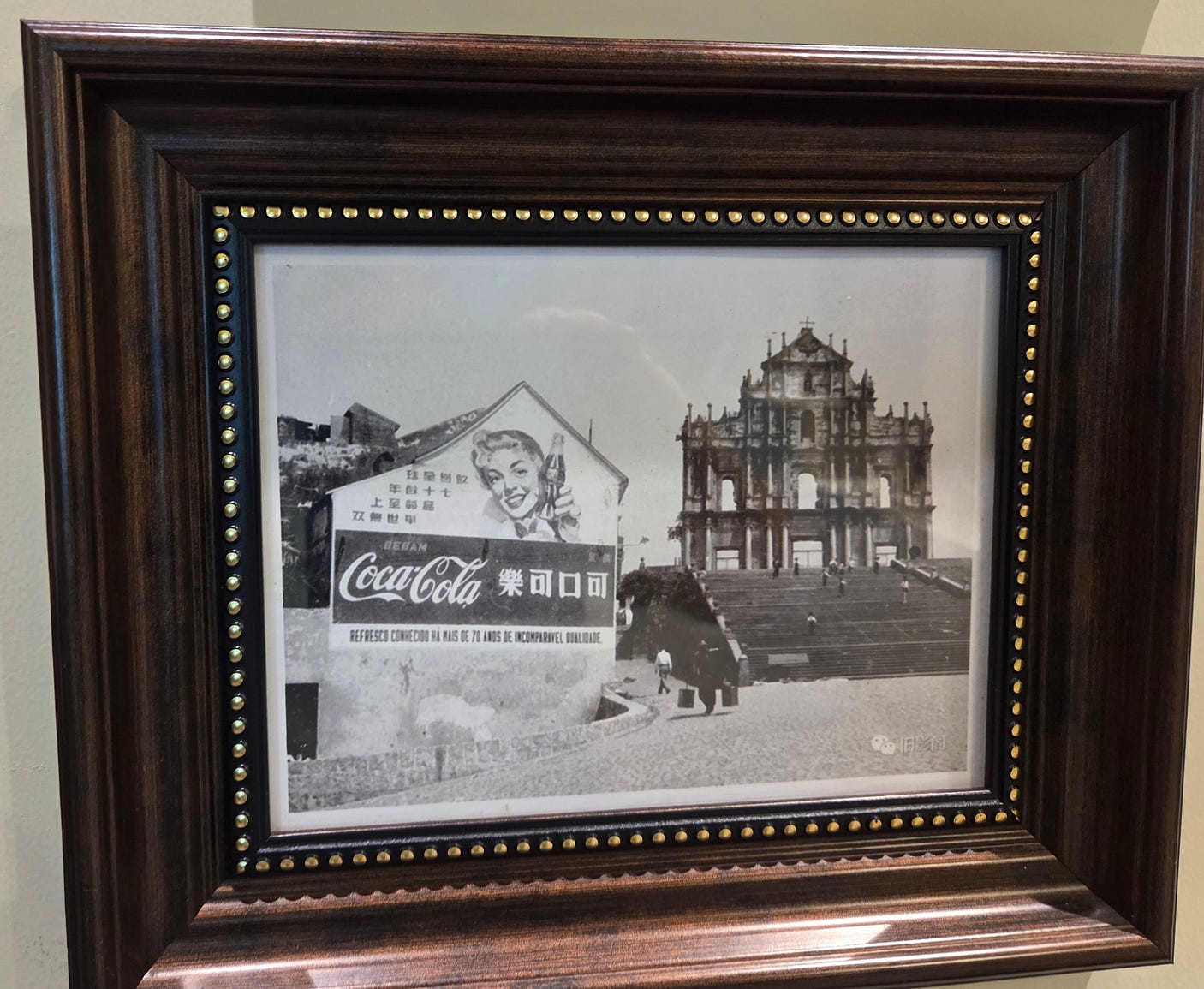
Elsewhere, I saw an old photo of St Paul’s with an ad for Coca-Cola next to it!
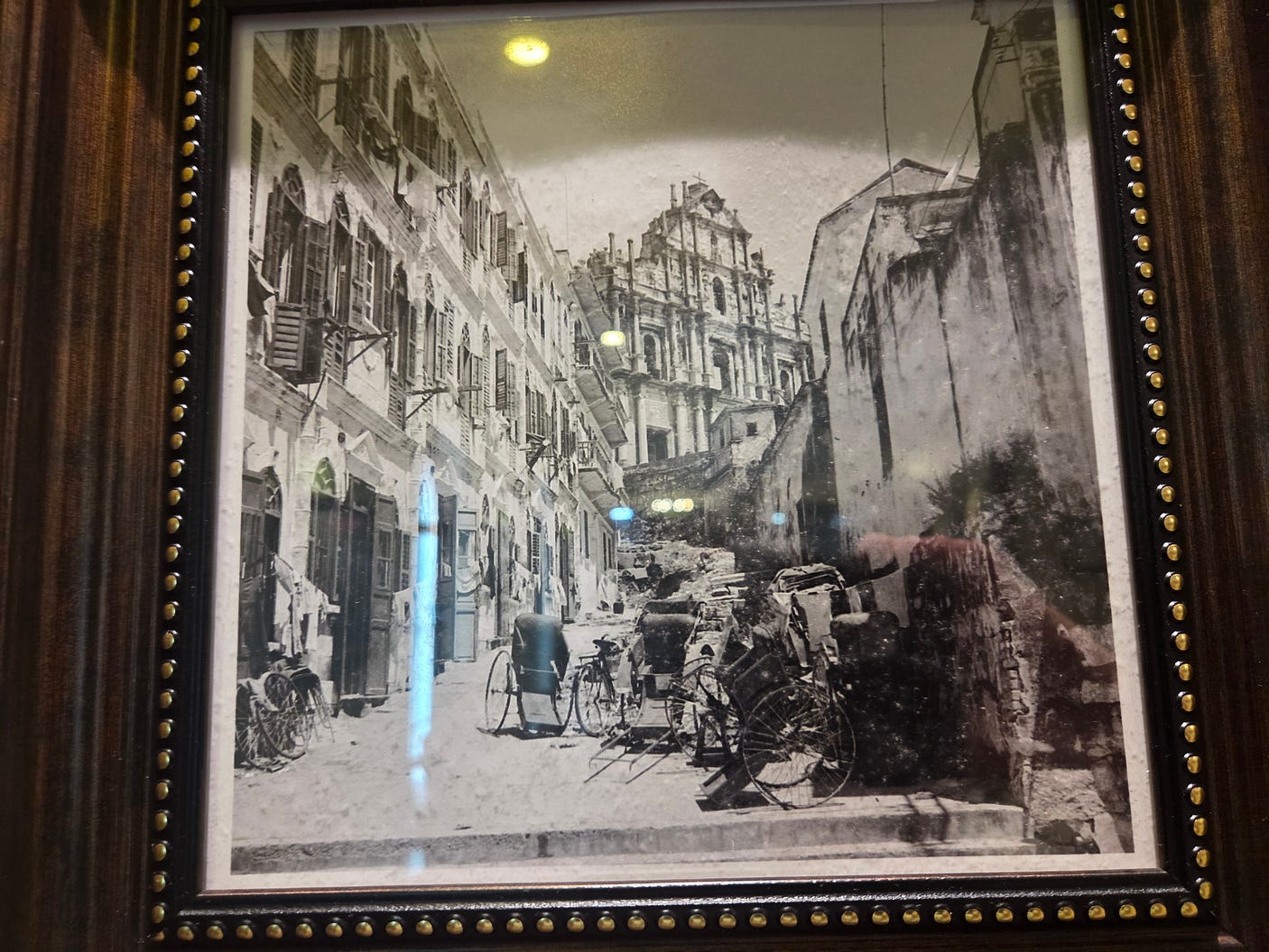
And here is another photo, clearly from the rickshaw era.
And a rickshaw in front of the Macau colonial senate. The Portuguese colony had a degree of self-government, which made sense considering how far it was from Portugal.
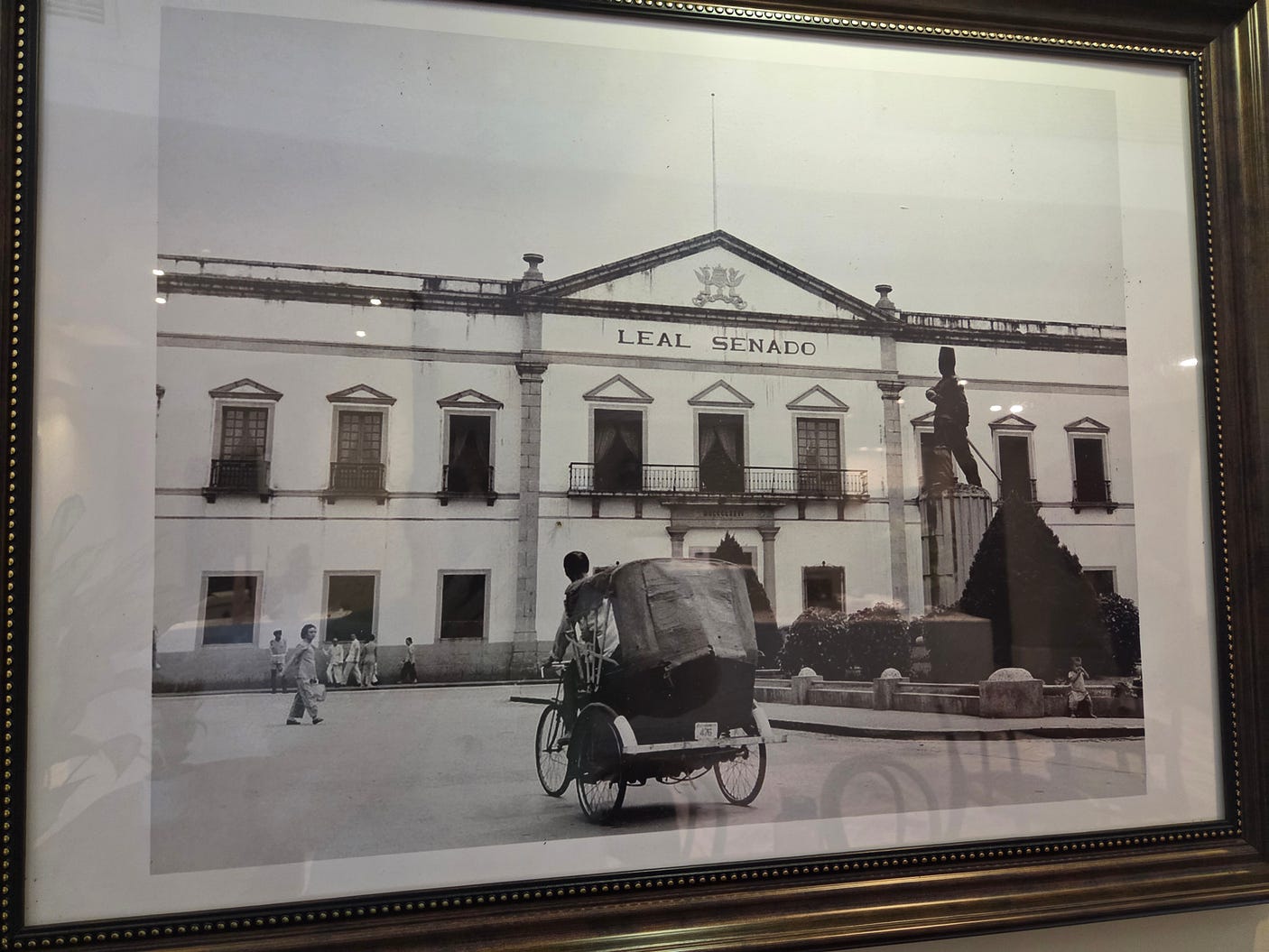
The words Leal Senado mean ‘Loyal Senate,’ the senate’s formal title from 1810.
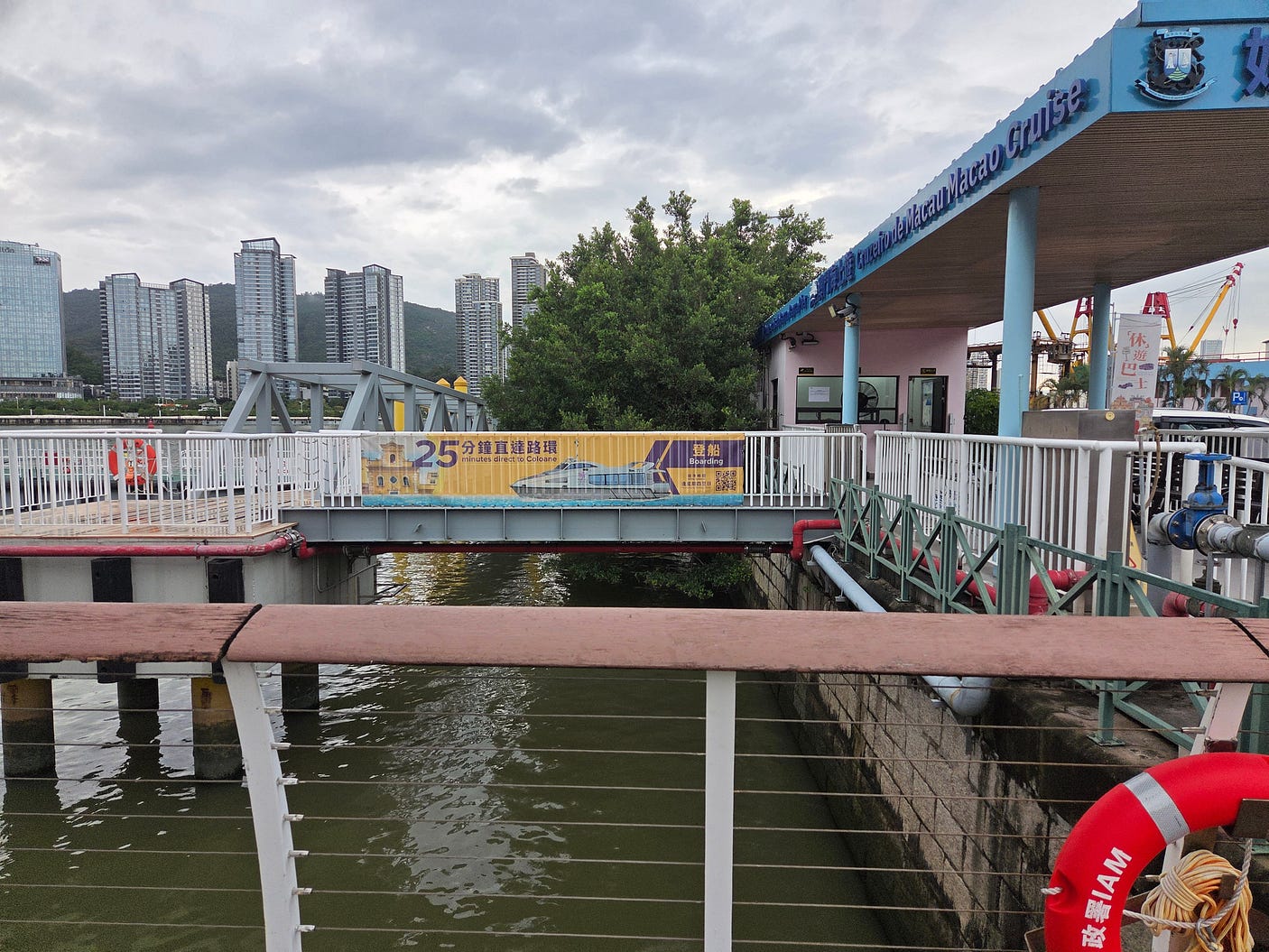
As you can see from the next photo, they do harbour cruises in Macao as well!
Here’s a mixture of old and new on the Rua do Almirante Sérgio, with paving in three colours.
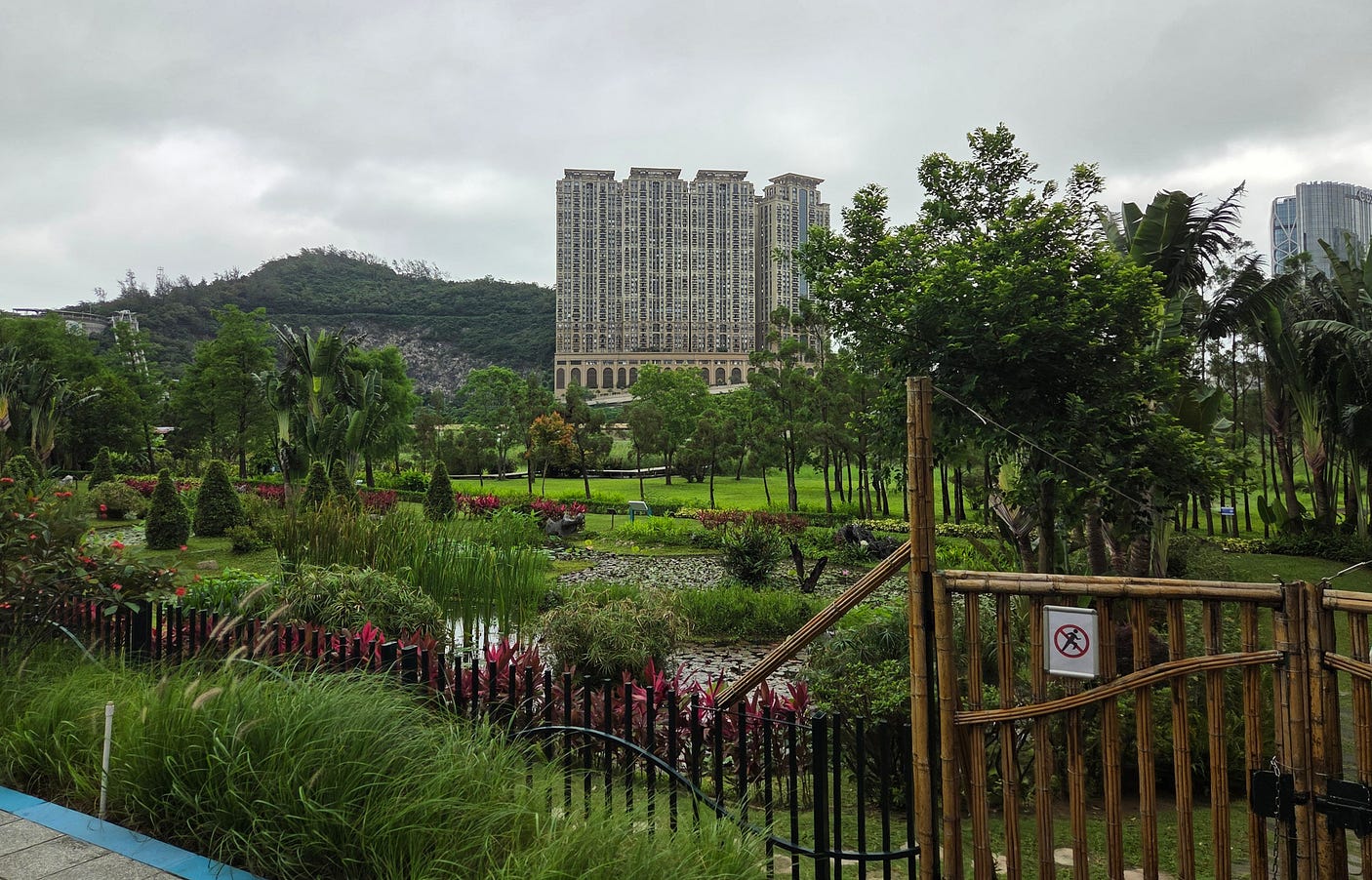
I came across a lovely wetland park in Taipa, on the island part of Macao. This is one of several in the territory.
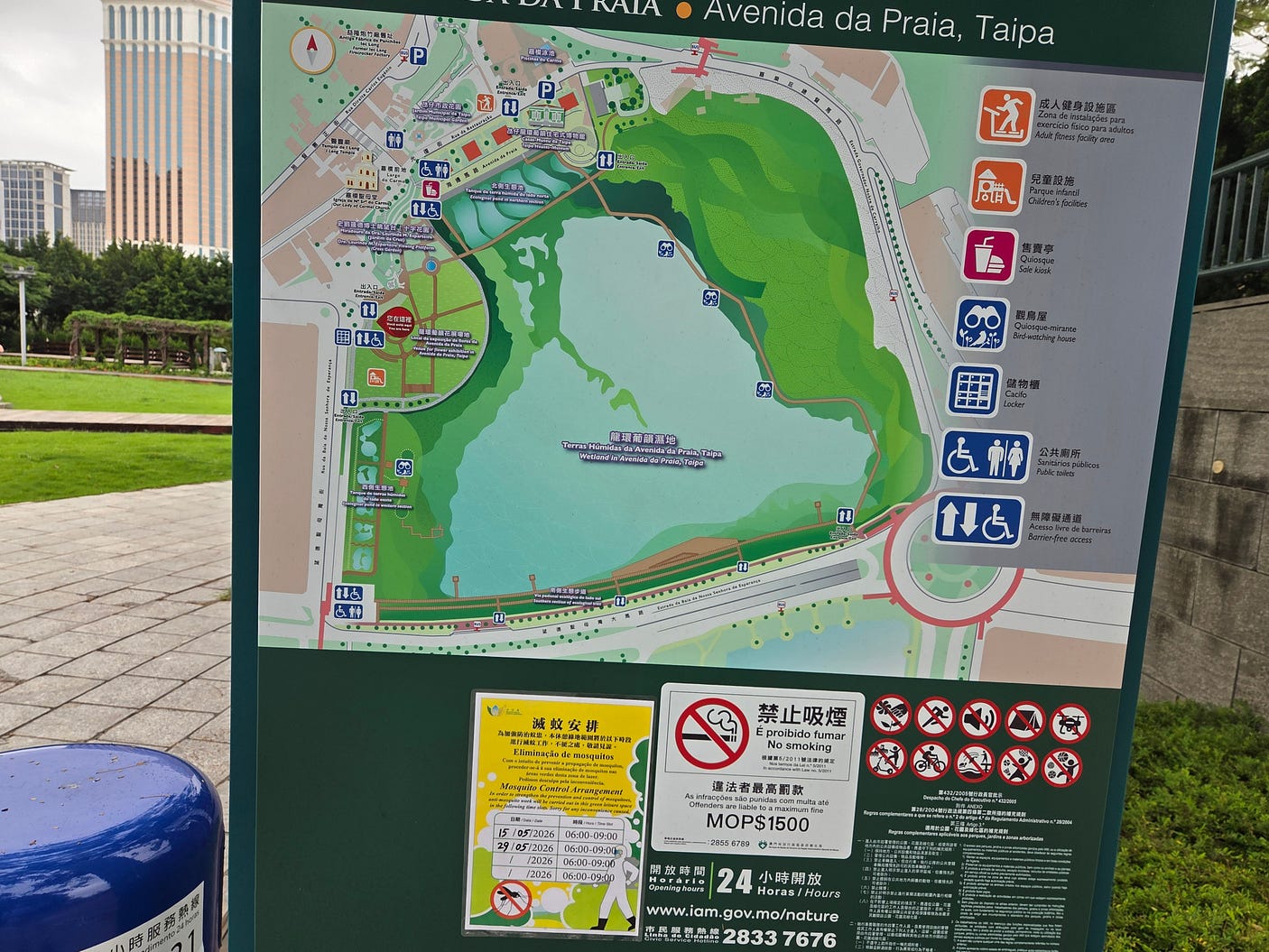
Incidentally, the no-smoking fine of MOP$1500 refers to the cost of the penalty in Macanese patacas, the unusual name of the local currency, inherited from the Portuguese era. Each pataca is worth about 21 cents New Zealand, or a bit over a dime in US currency.
Here are some more photos I took in the park.
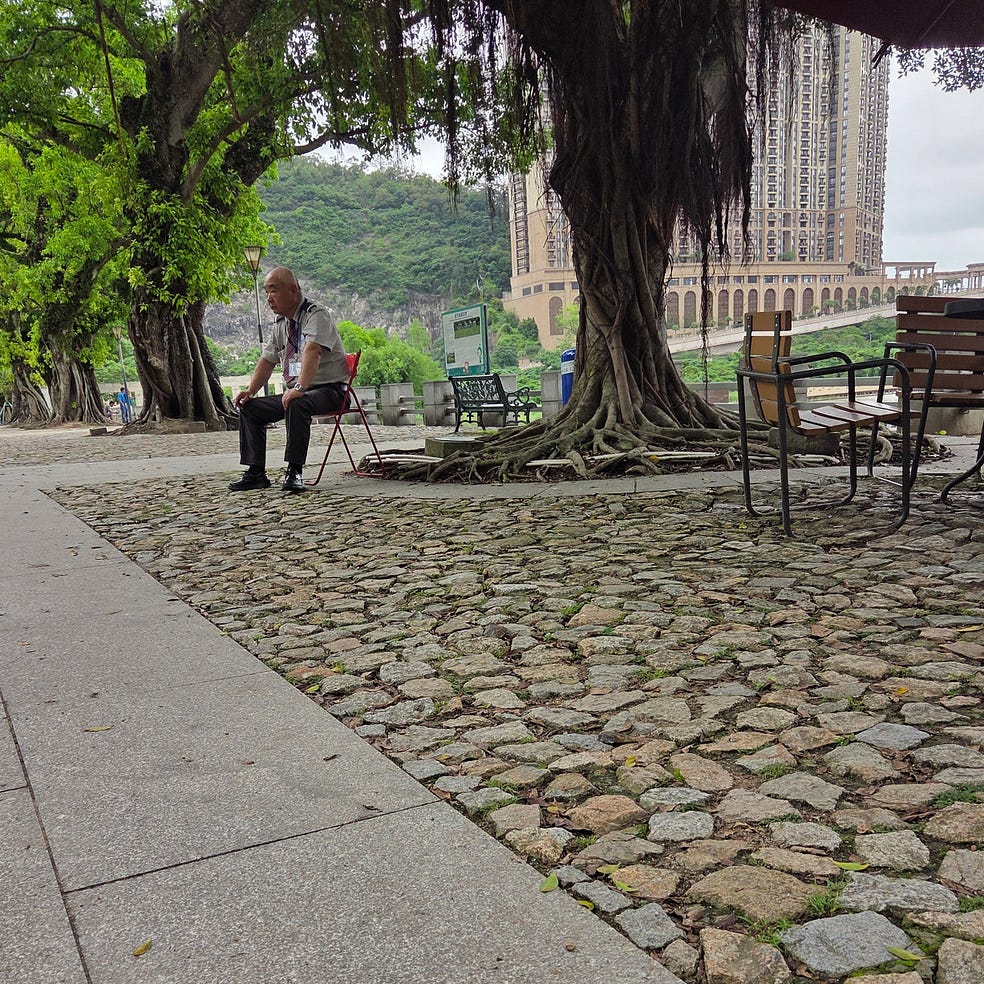
The next photograph shows five houses, built in 1921, that now form the Taipa Houses-Museum. They used to look out over the sea, but the wetland park was formed on a reclamation from the sea. The houses have been restored to look as they would have done in the old days.
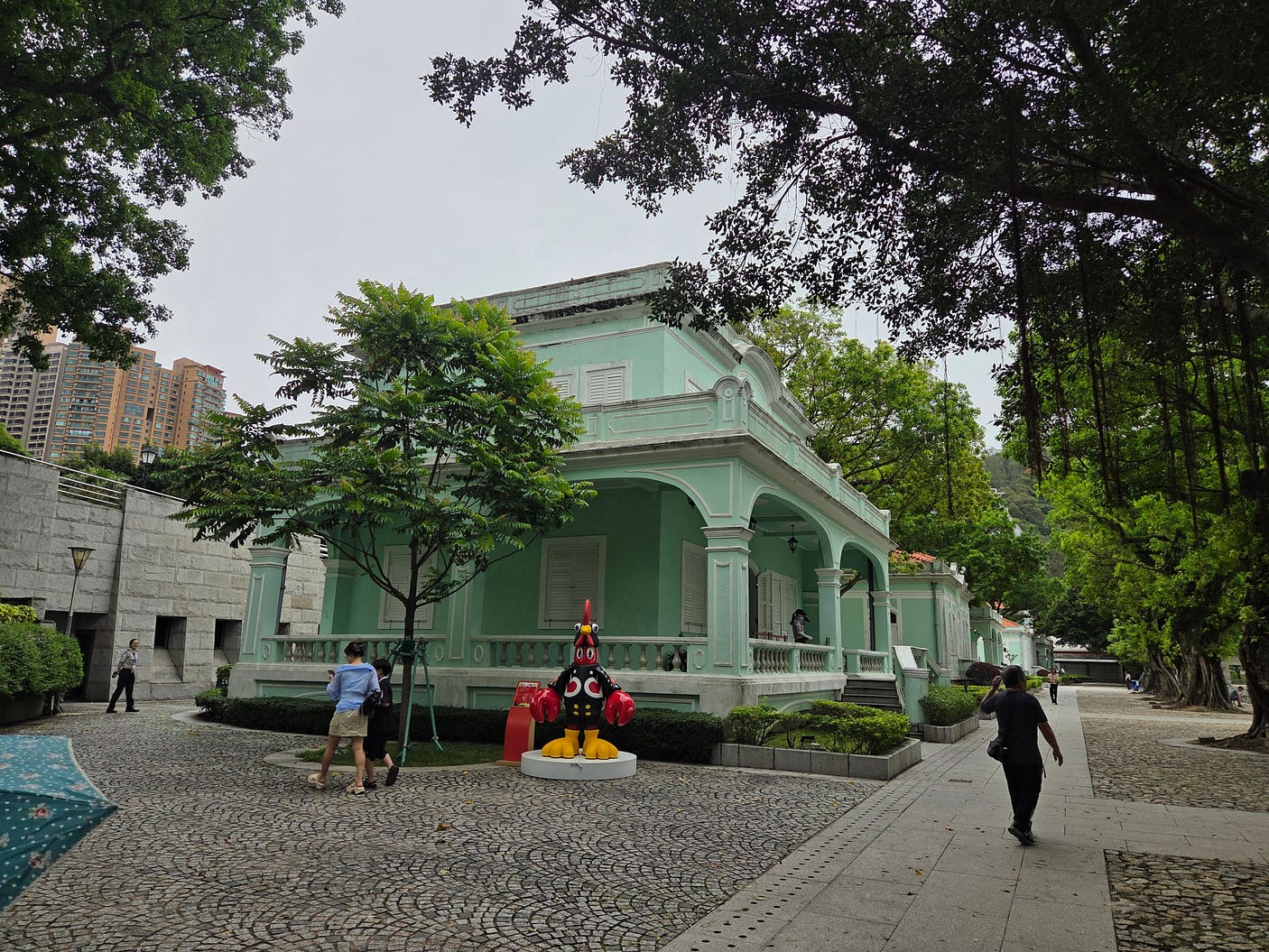
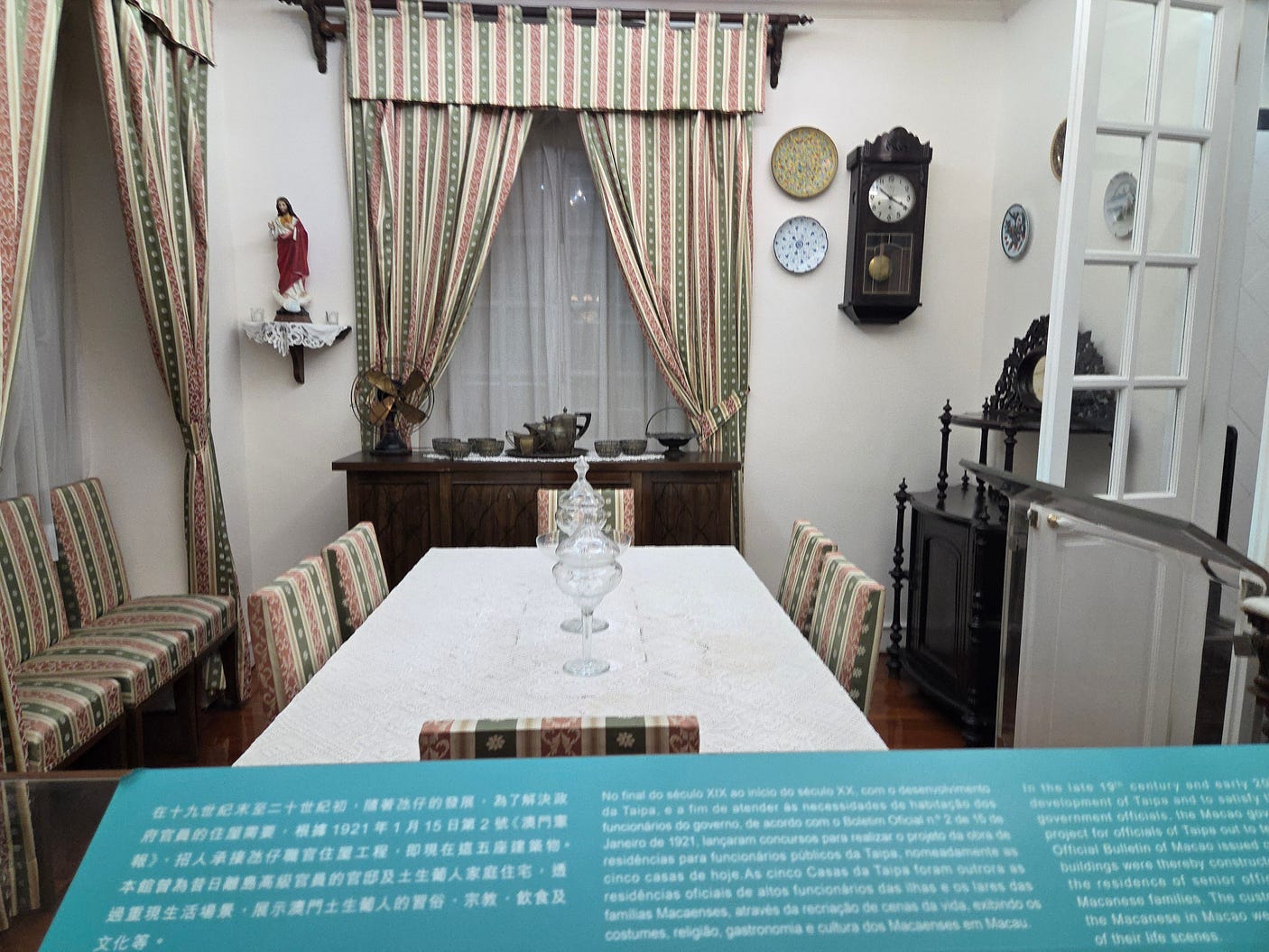
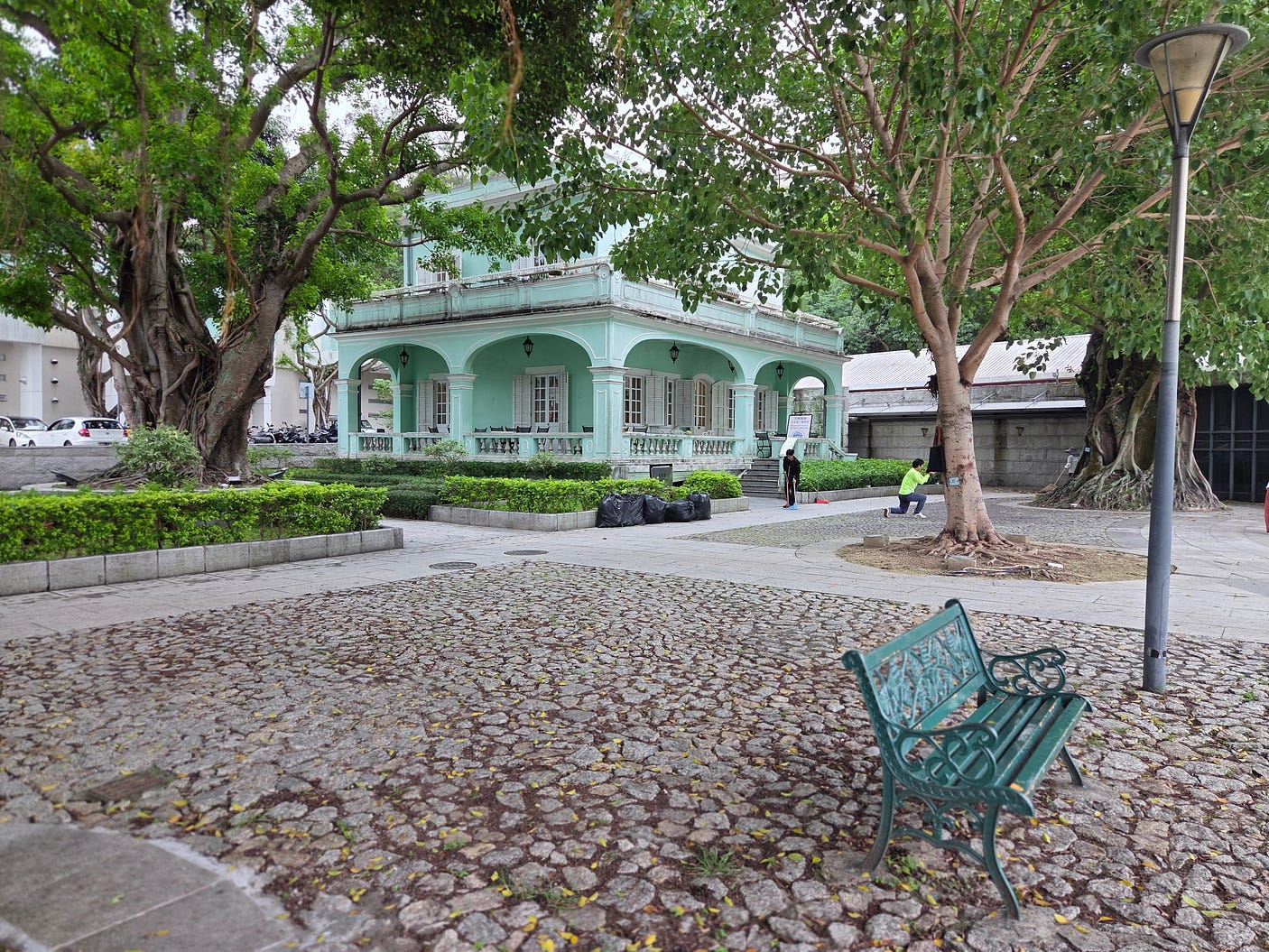
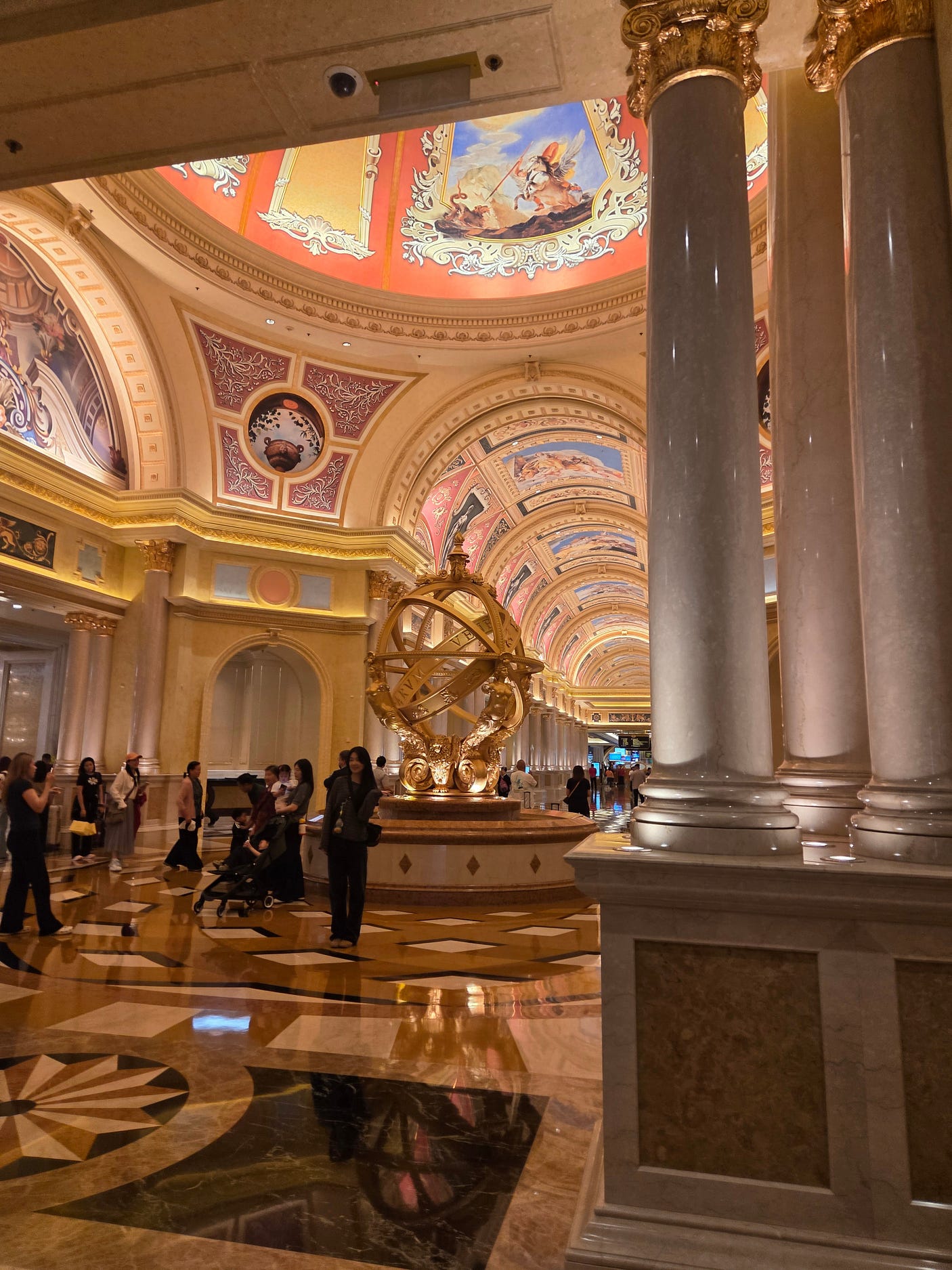
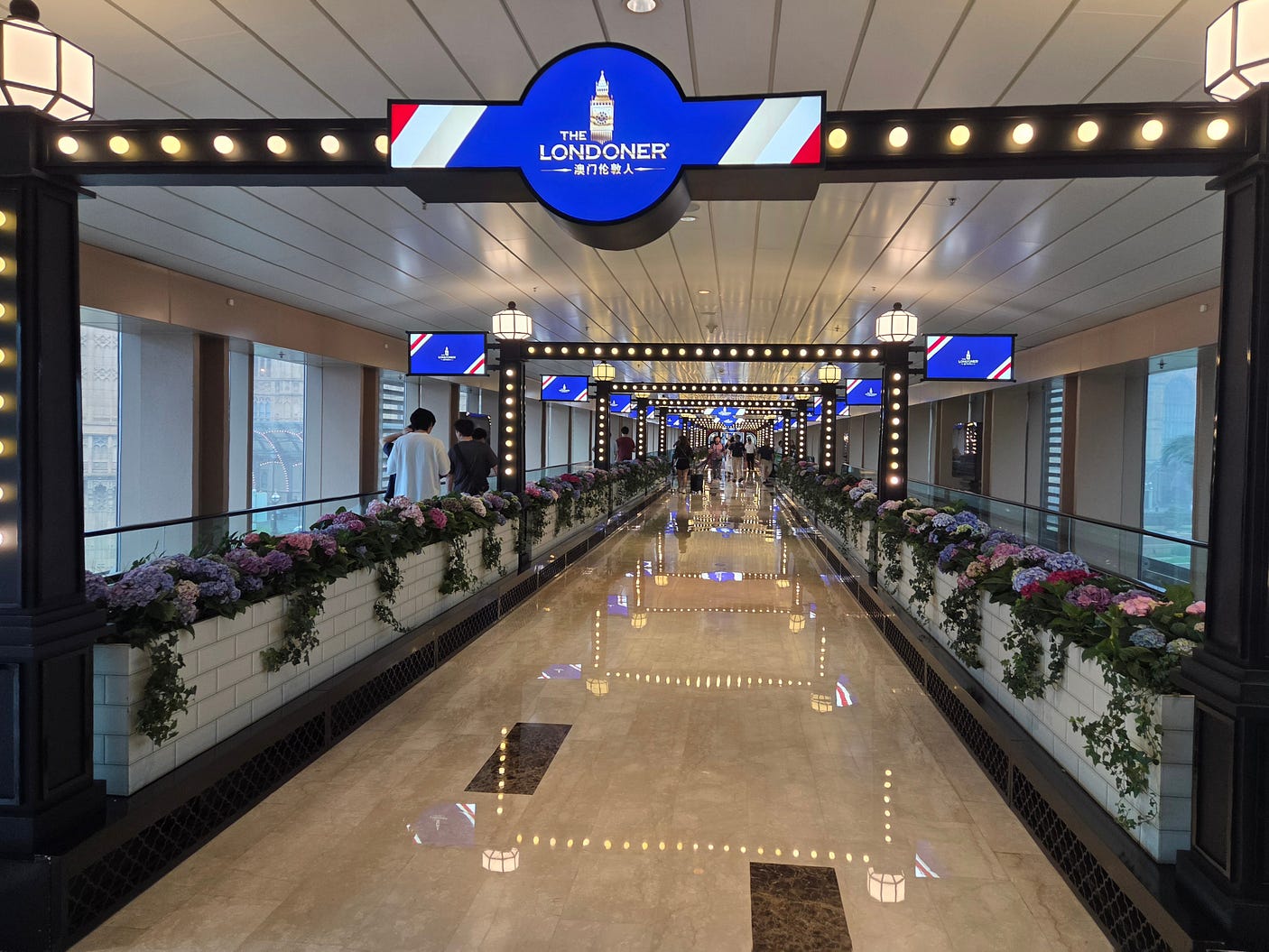
I then returned to the casinos and photographed some more of their amazing interiors.
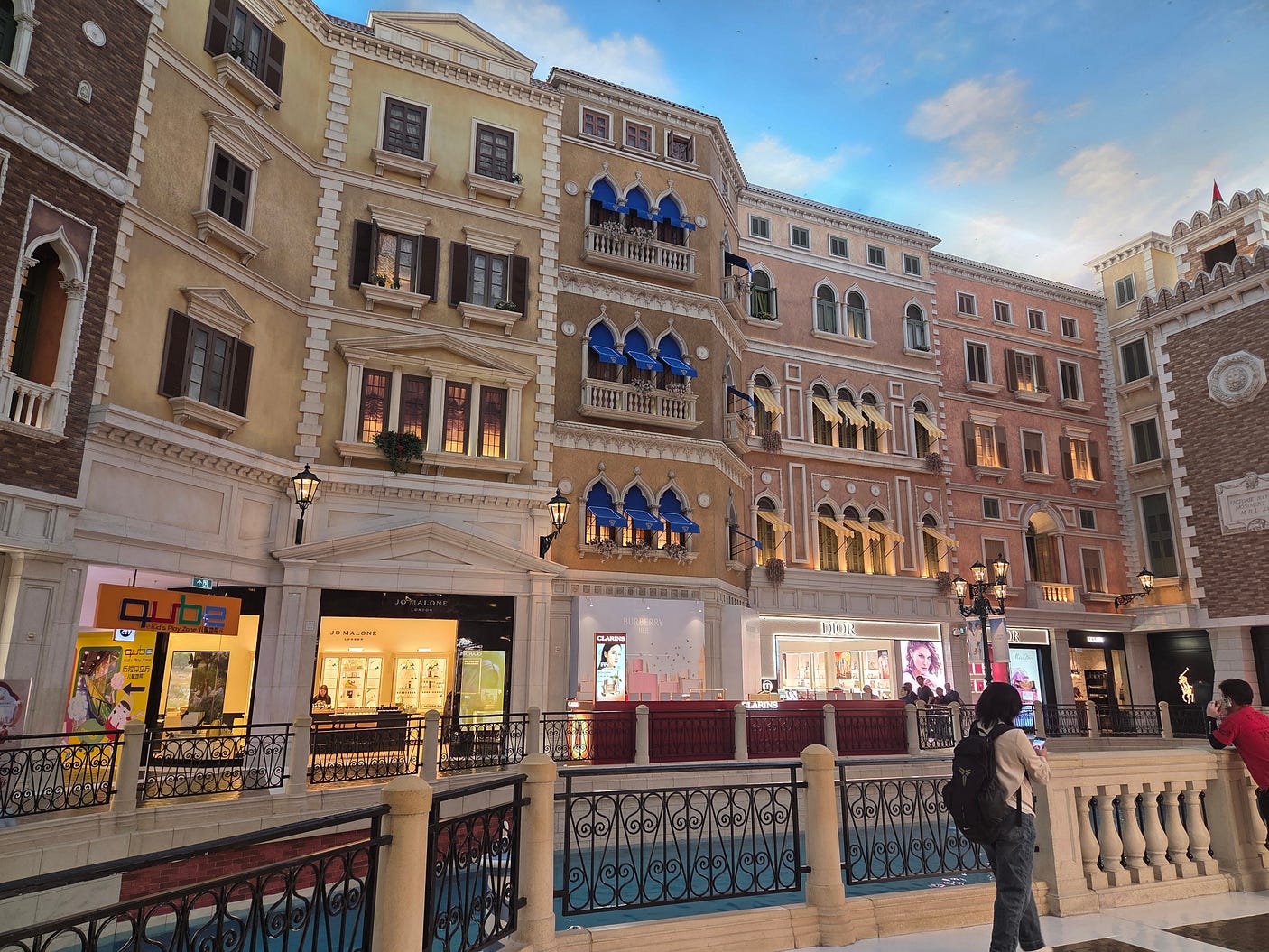
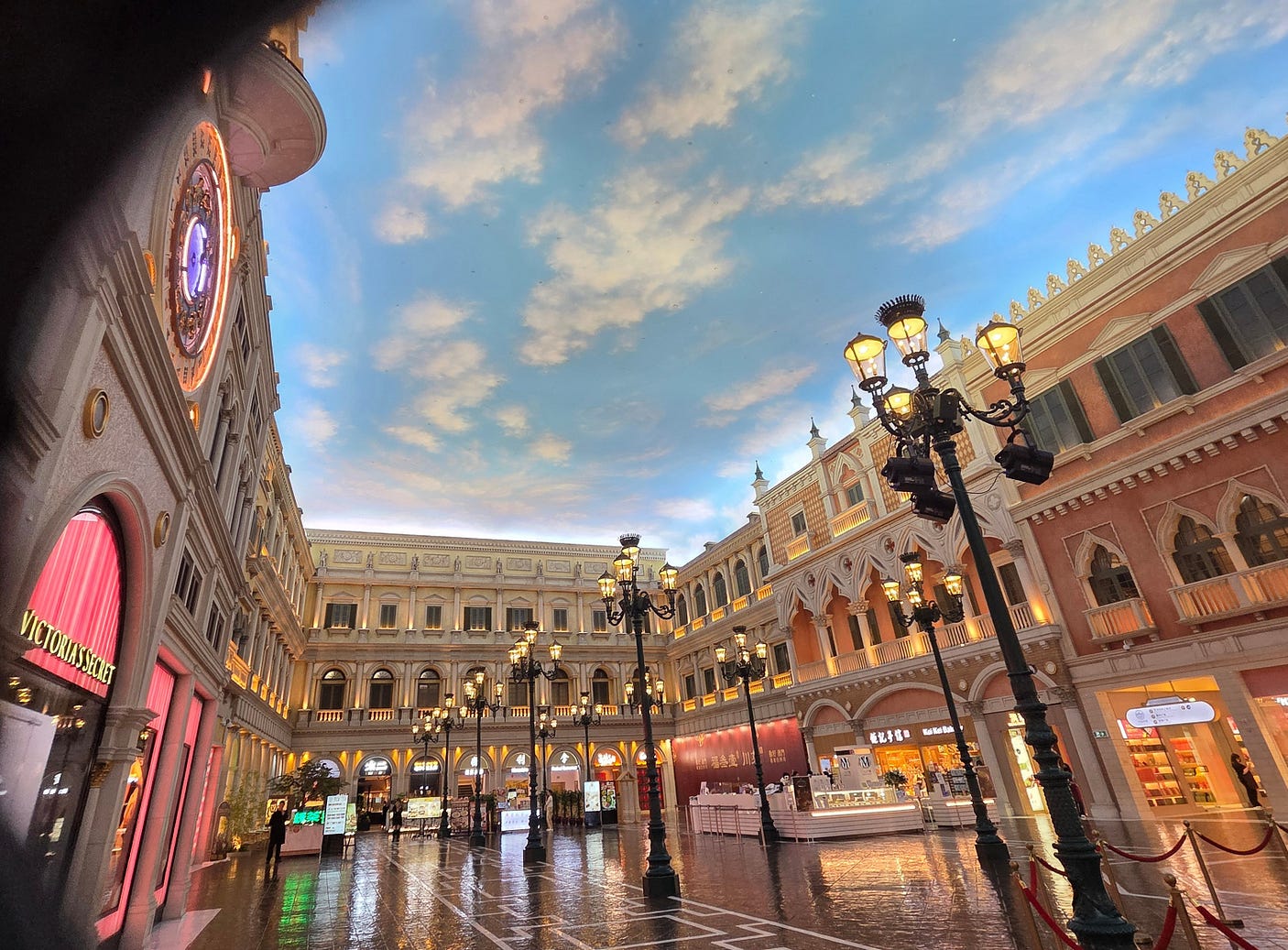
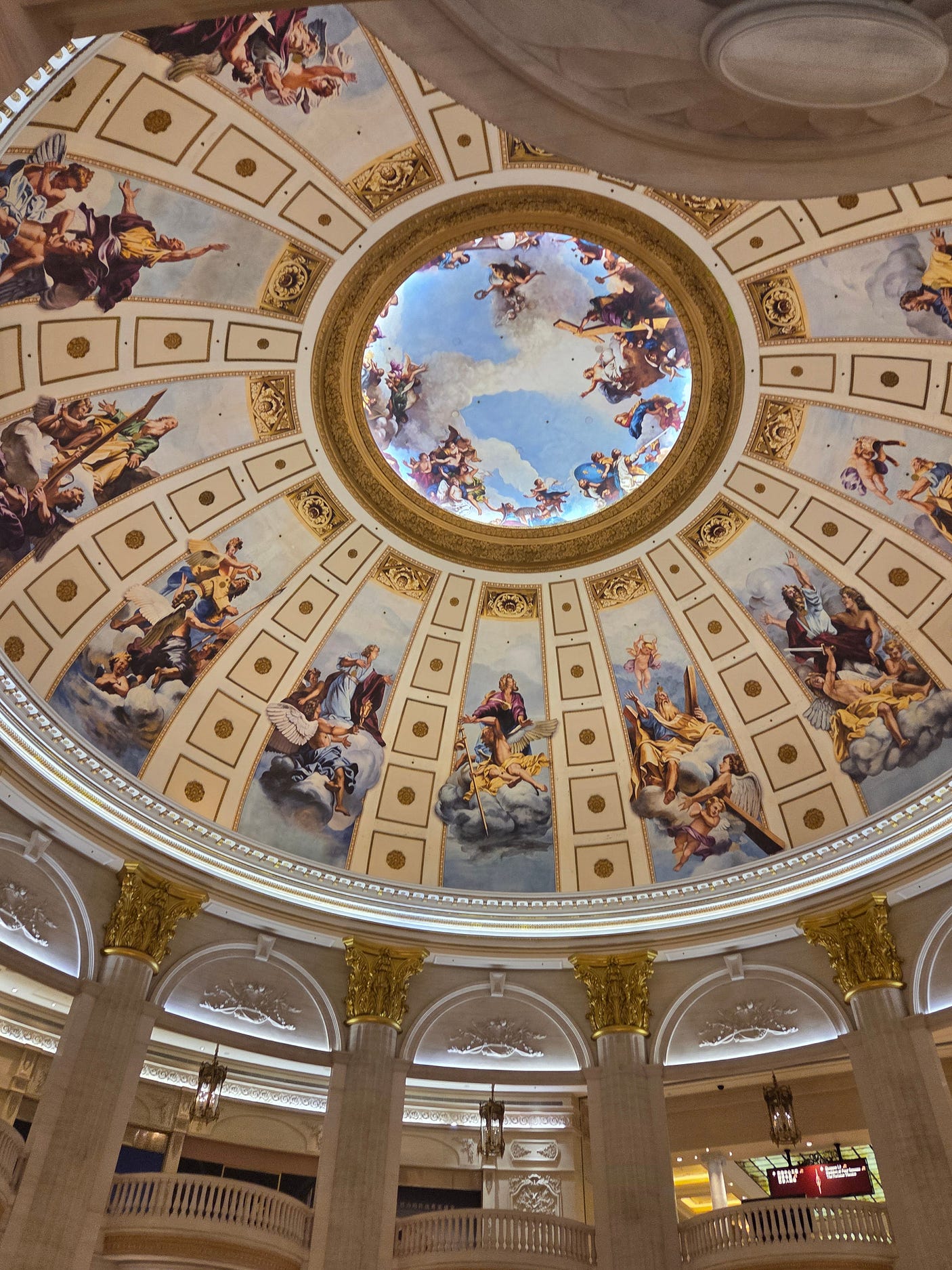
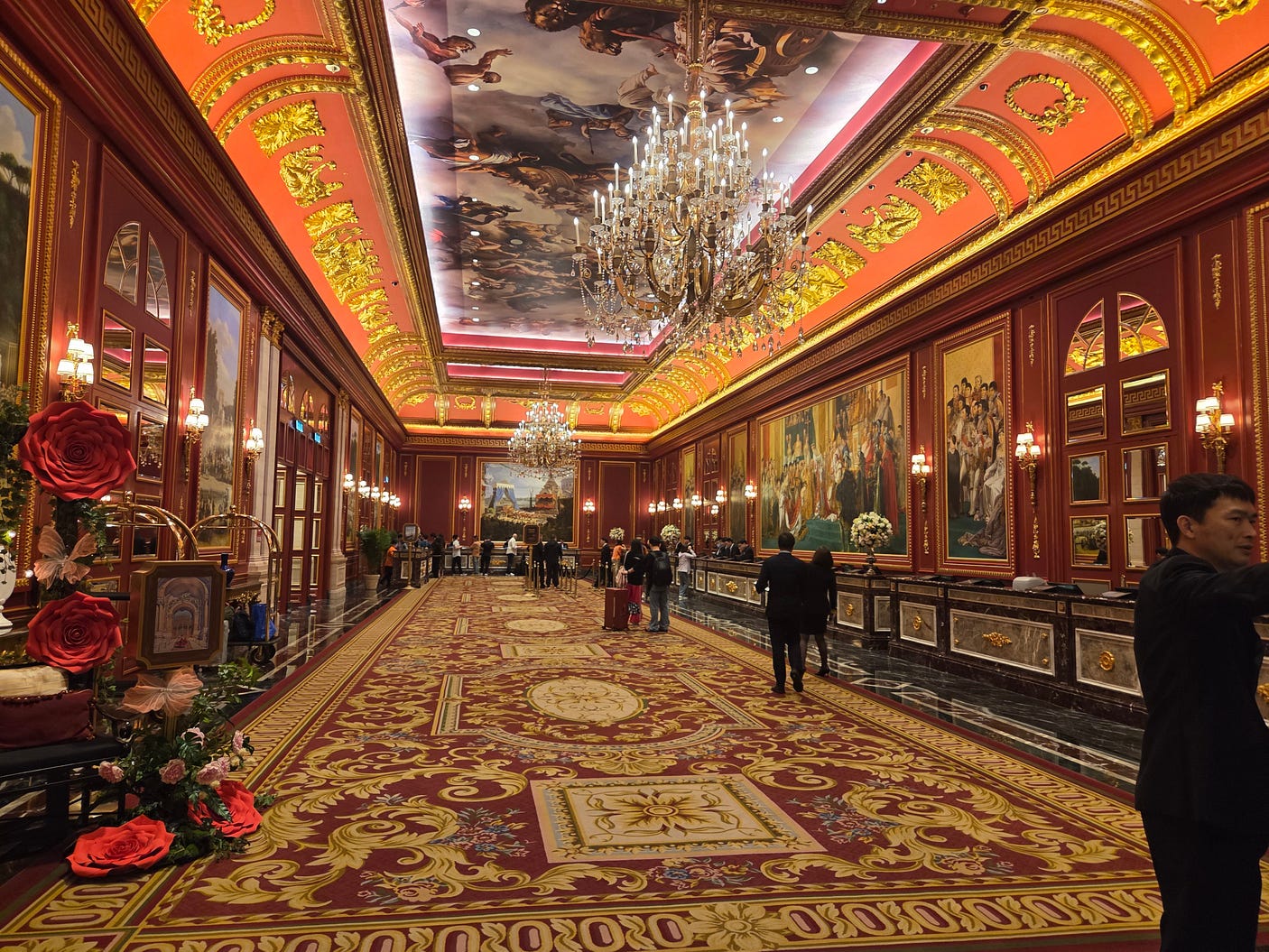
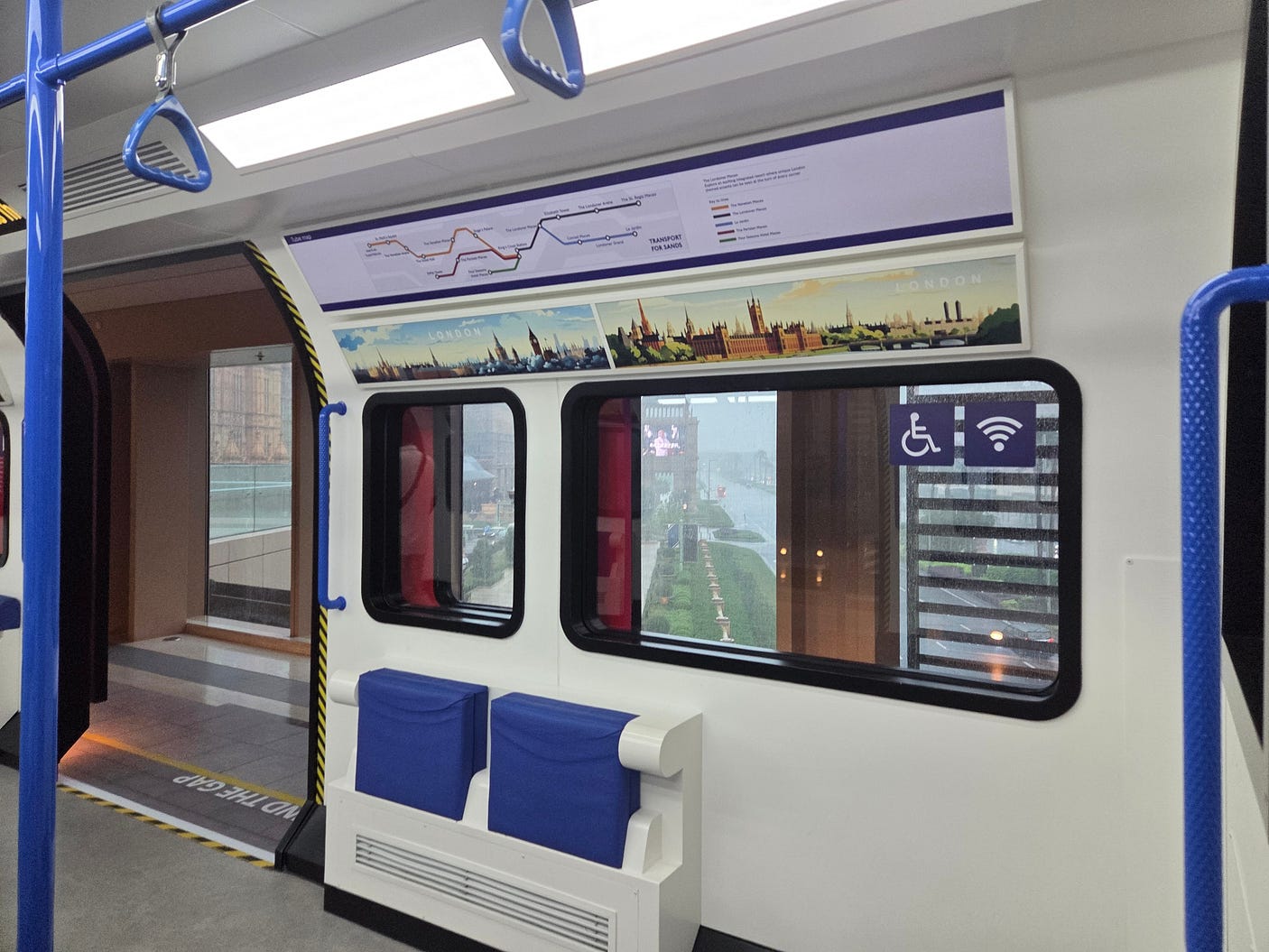
There was also a shuttle with route maps resembling the London Underground.
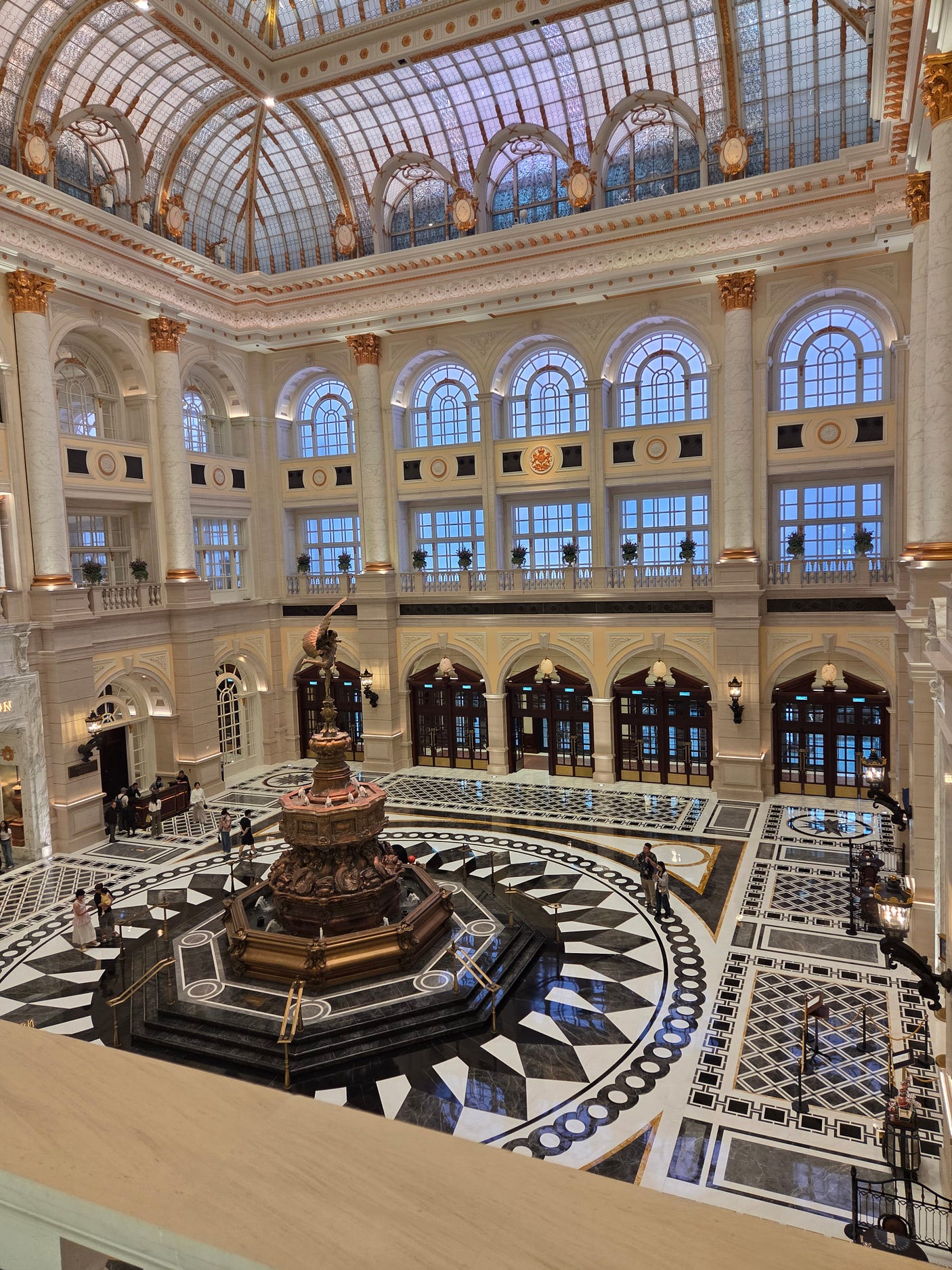
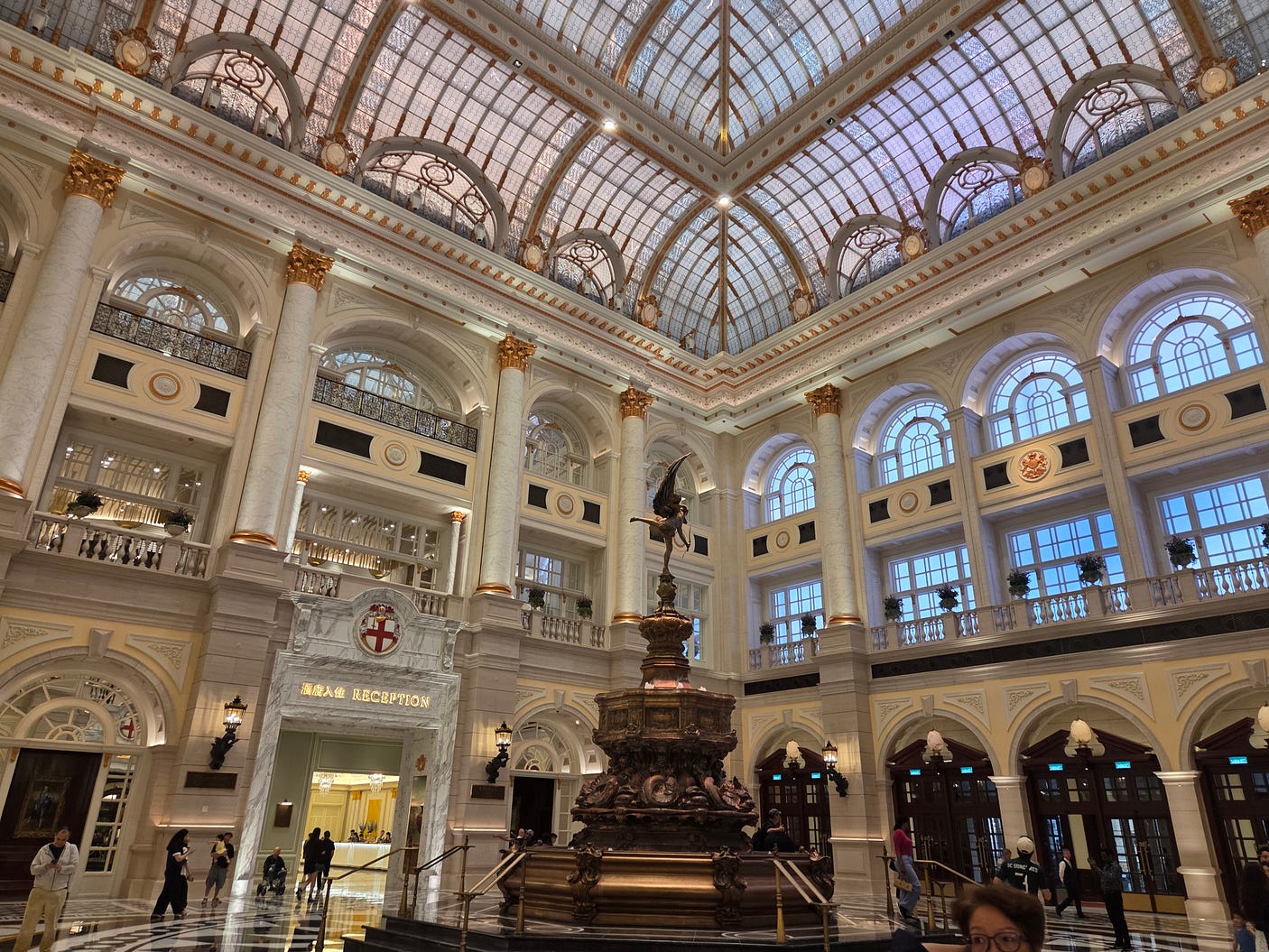
And a replica of the Shaftesbury Memorial Fountain in Piccadilly Circus, the one famously topped by a winged statue of the Greek god Anteros, often mistakenly referred to as Eros (i.e., Cupid) but in fact a different god.
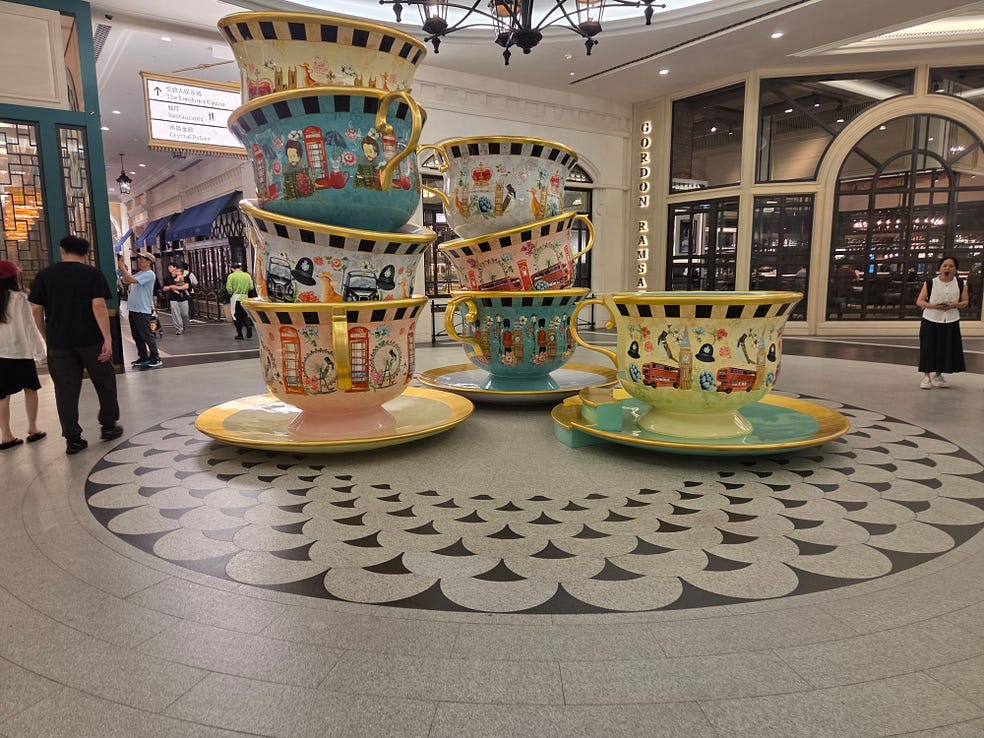
Giant teacups!
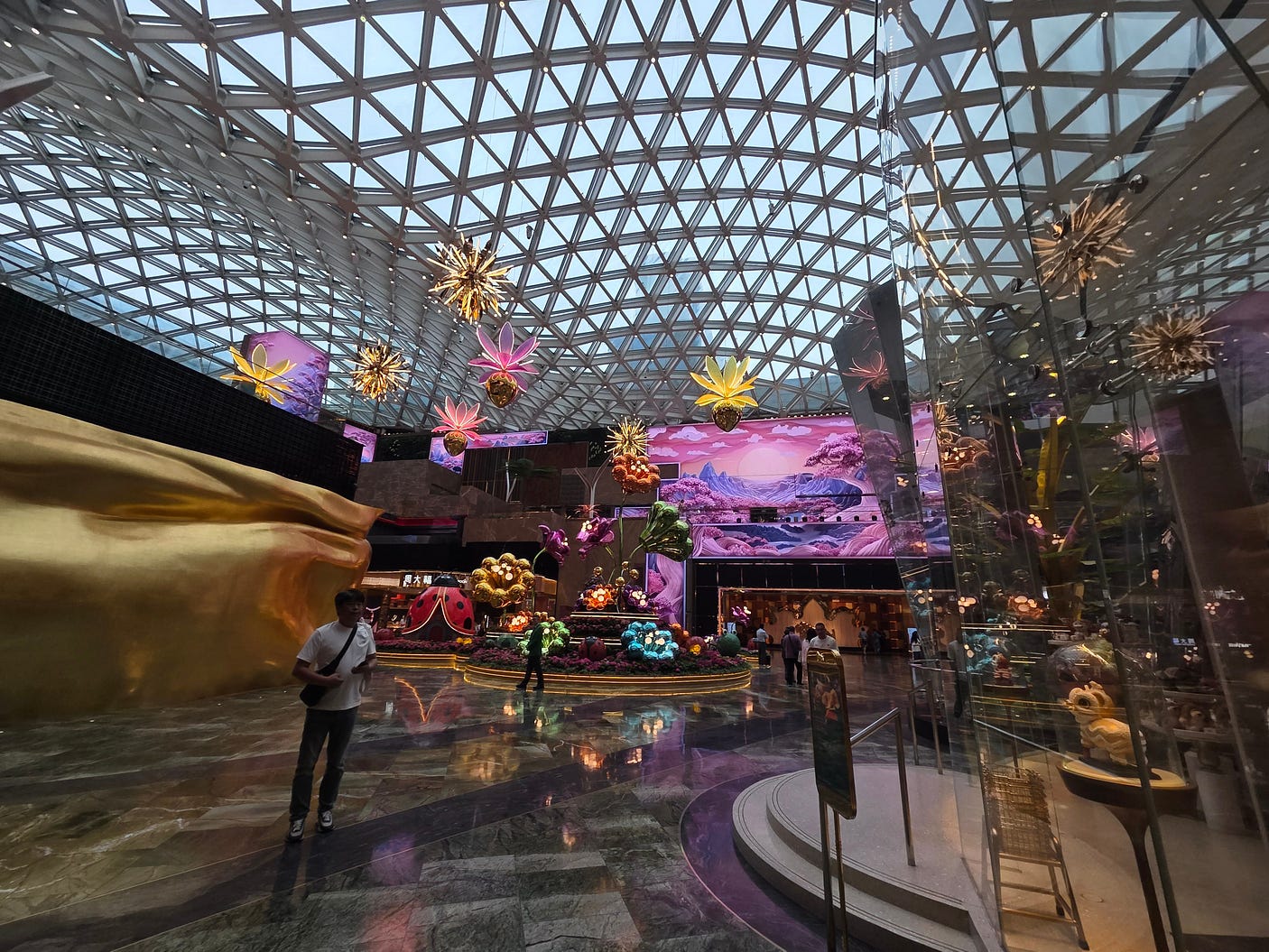
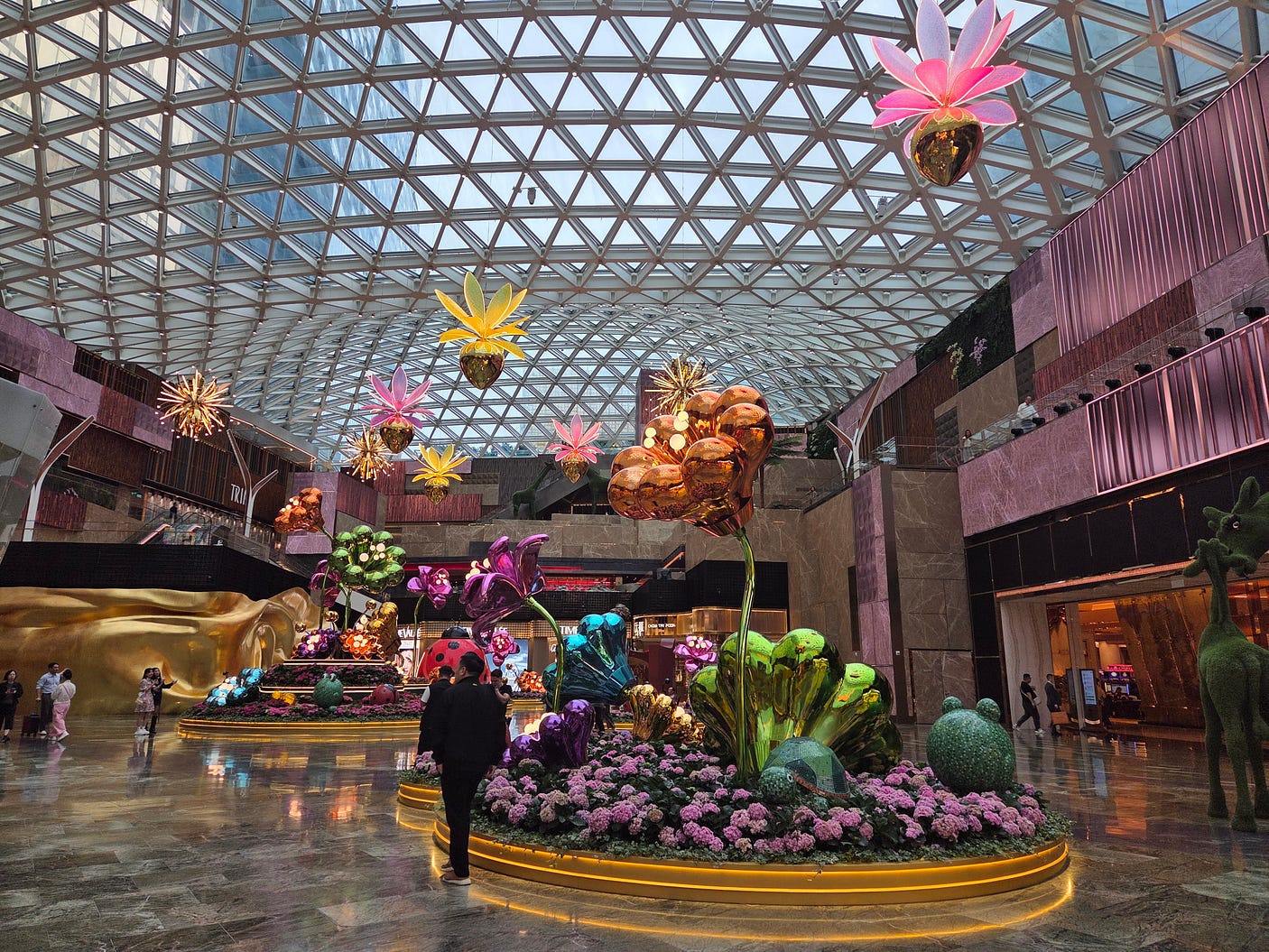
And then the colourful interior of MGM Macau.
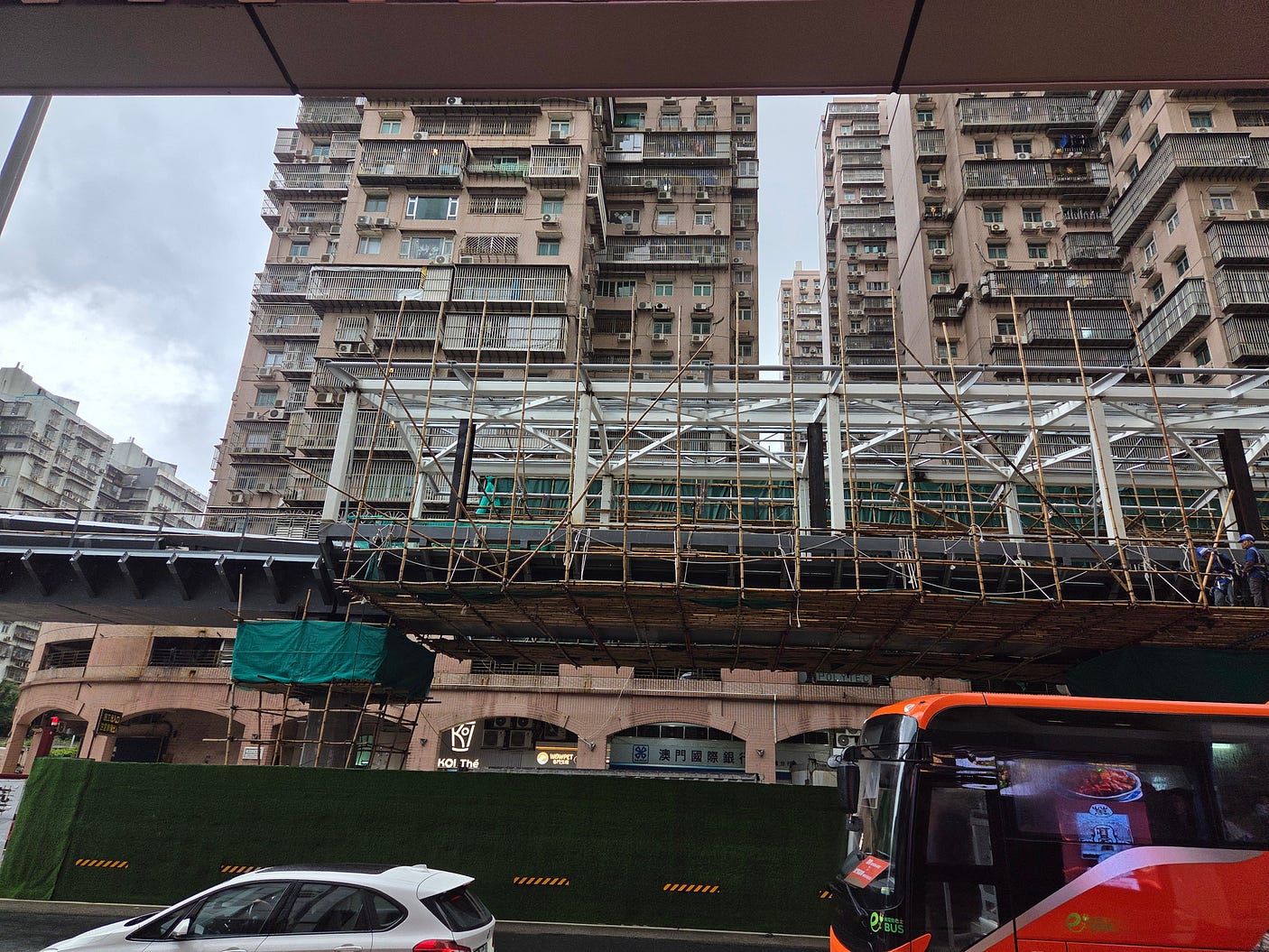
To round off, there were also some poor-ish neighbourhoods resembling Sham Shui Po in Hong Kong.
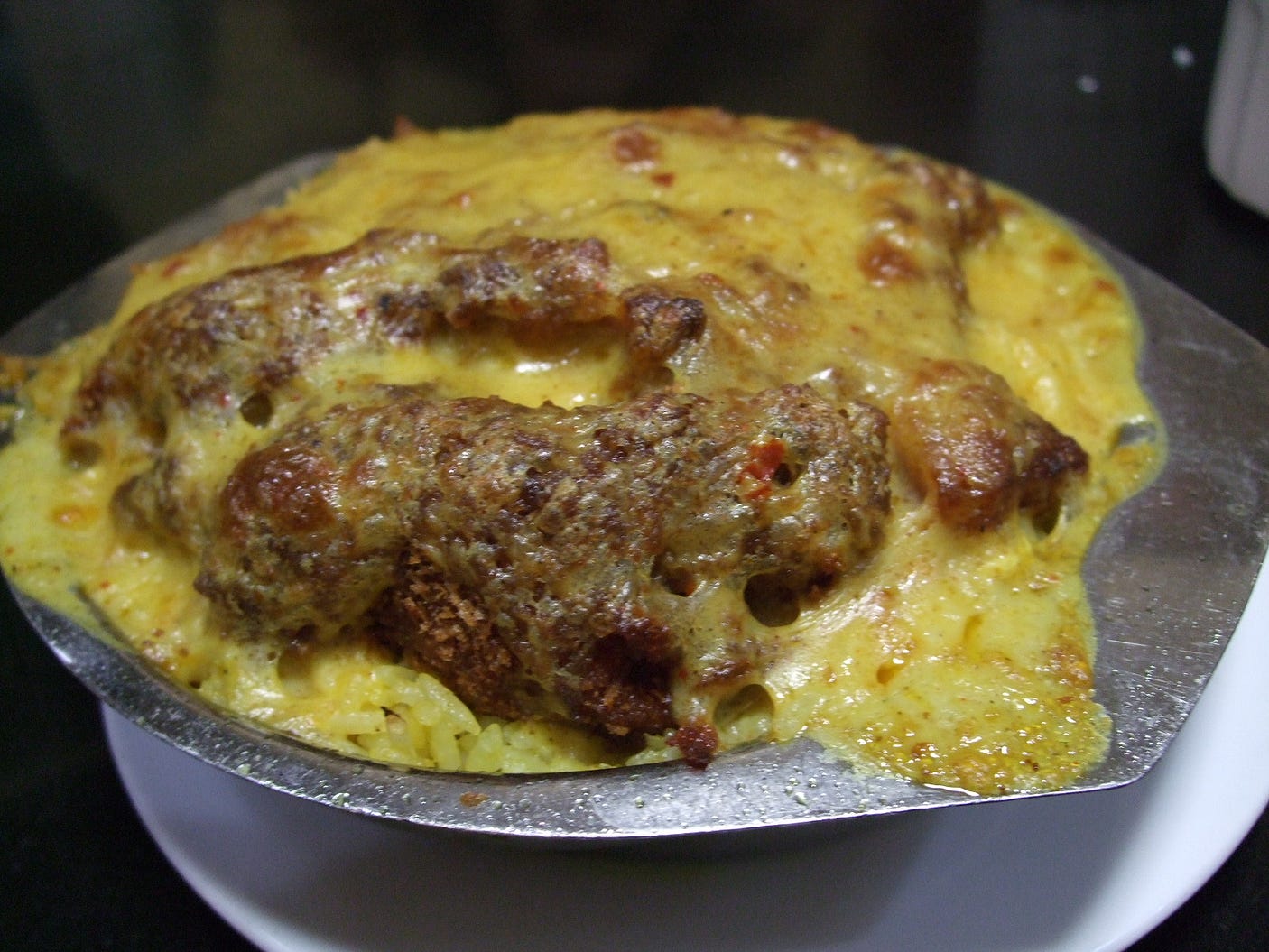
Macanese food is also worth exploring, a mixture of Cantonese and Portuguese styles with many spices and other influences, reflecting Macao’s history as a trading port.
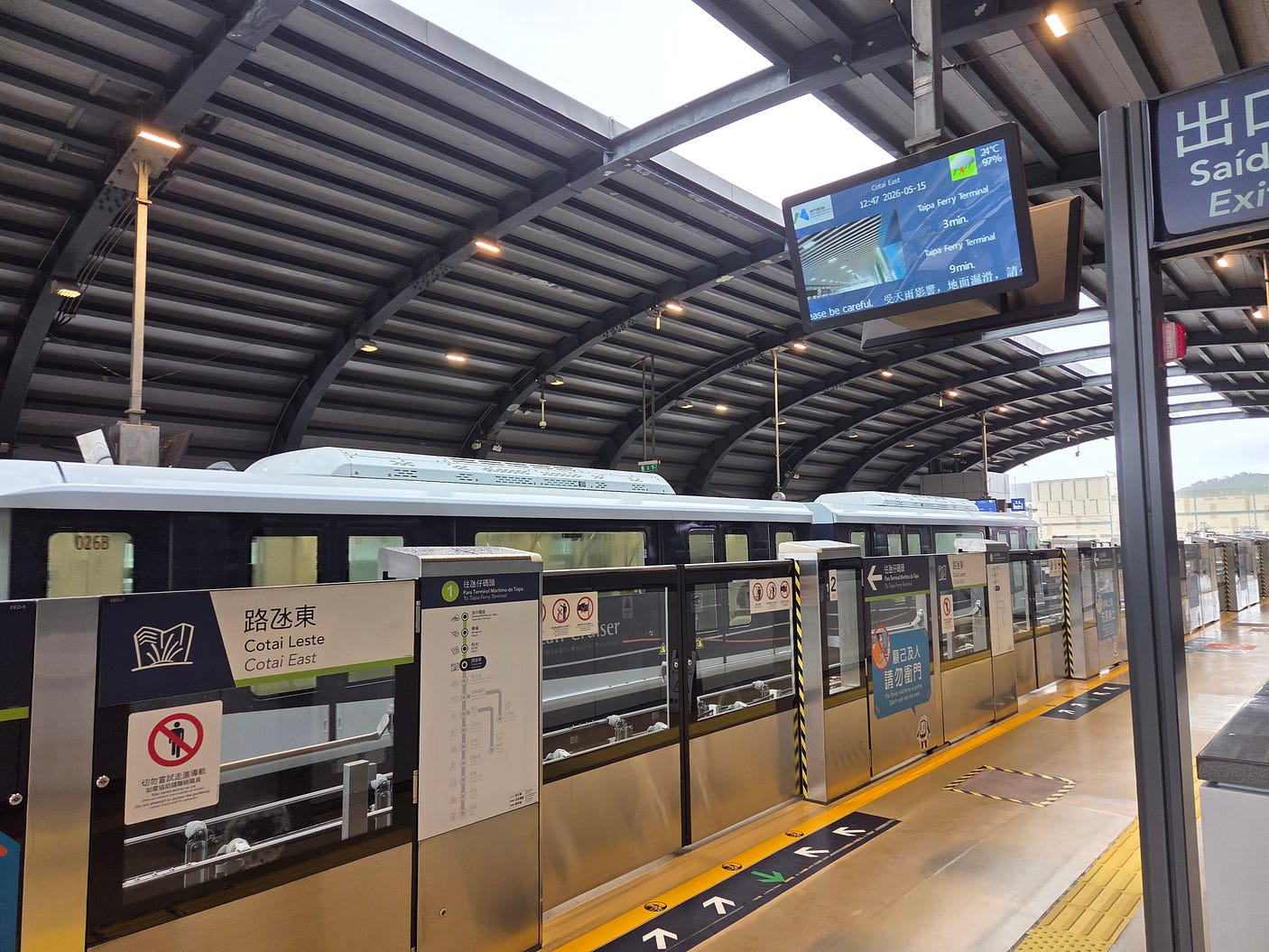
And you can get around on the Macau Light Rapid Transit these days.
Lastly, The Maven of Macau seems to be the most comprehensive guide to Macao’s sights, attractions, and pitfalls, though I only discovered this later on!
Subscribe to our mailing list to receive free giveaways!

