Giveaways
FROM Pokhara, heading back to Kathmandu, I made a special trip to the town of Bandipur, which people had told me I also needed to see.
Bandipur is about a third of the way from Pokhara to Kathmandu via the modern highway between the two cities, the Prithvi Highway, which was built between 1967 and 1974 with the aid of the Chinese government.

Nonetheless, the Prithvi Highway doesn’t go through Bandipur or even right past it. And that is because Bandipur is located high up on a ridge known as the Bandipur Hill.
From the Prithvi Highway, you have to go up a mountainous side road with lots of zigzags to get to Bandipur.
Even that zigzag road was only completed in 1998. Before 1998, Bandipur could only be accessed by a mountain track. Of all modern motorised transport, only tractors could make it up and down the track to Bandipur in the monsoon season.
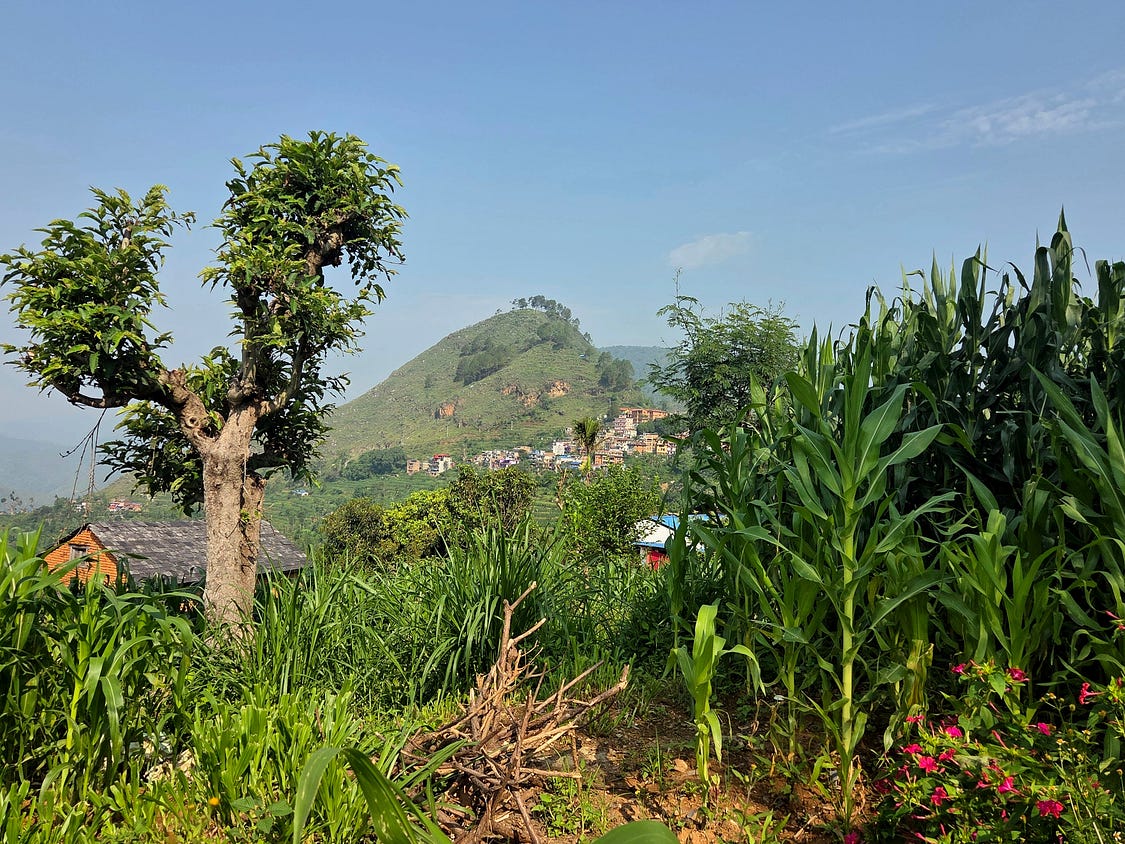
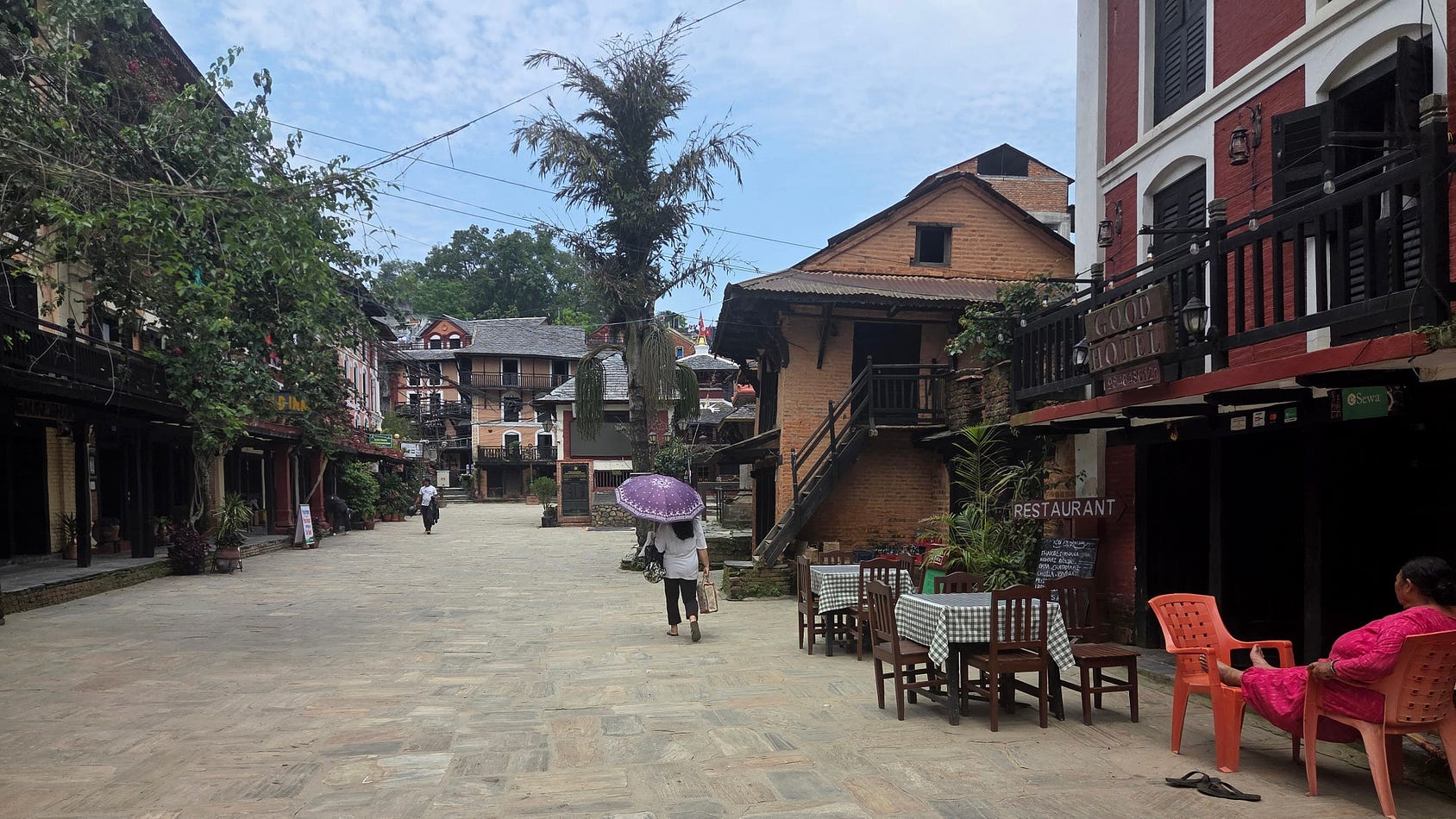
As a result, Bandipur is off the main routes of today’s motorised world, and largely preserved in an old-fashioned and picturesque condition. That’s perhaps why it is sometimes called ‘the Queen of the Hills.’
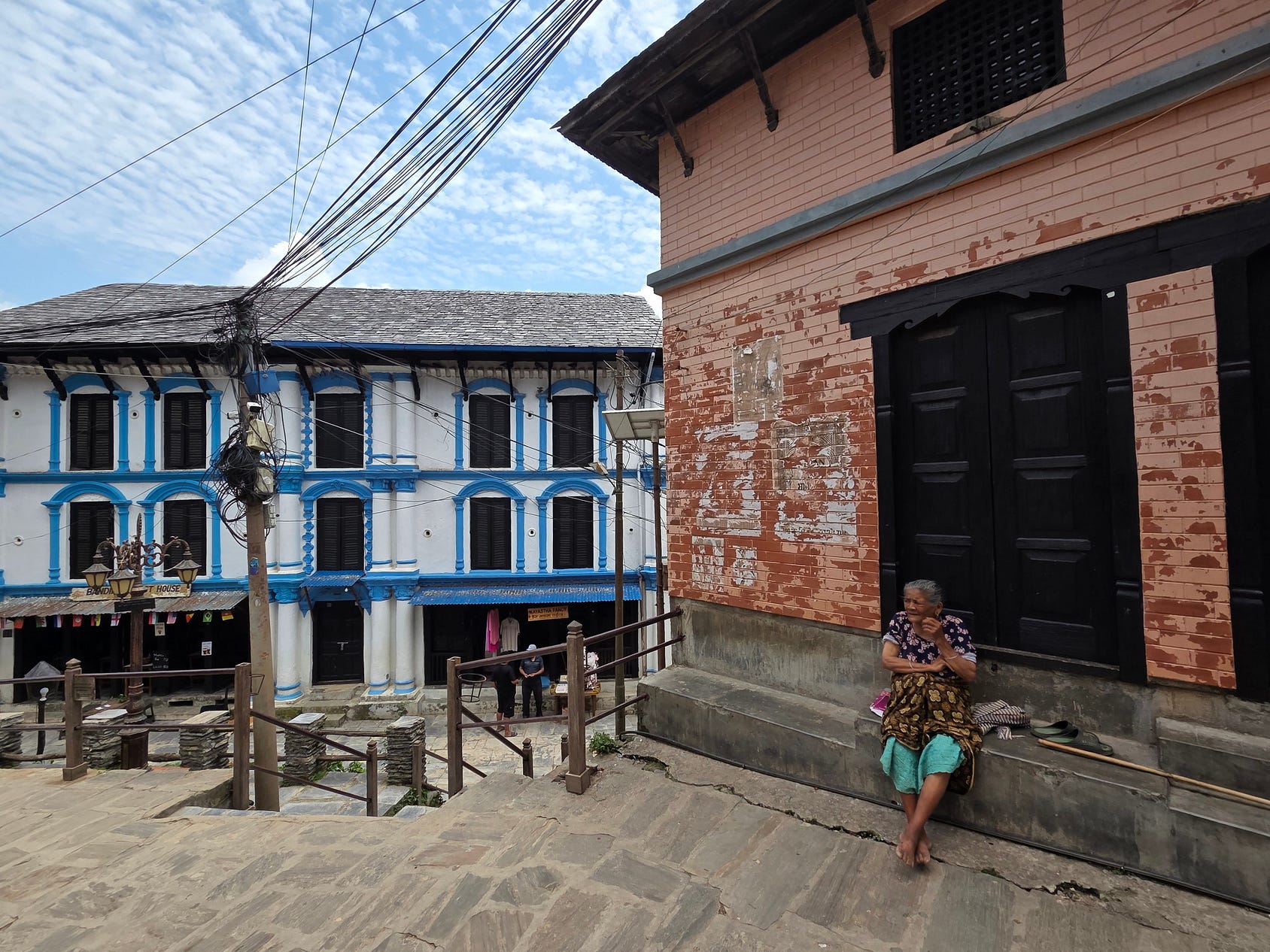
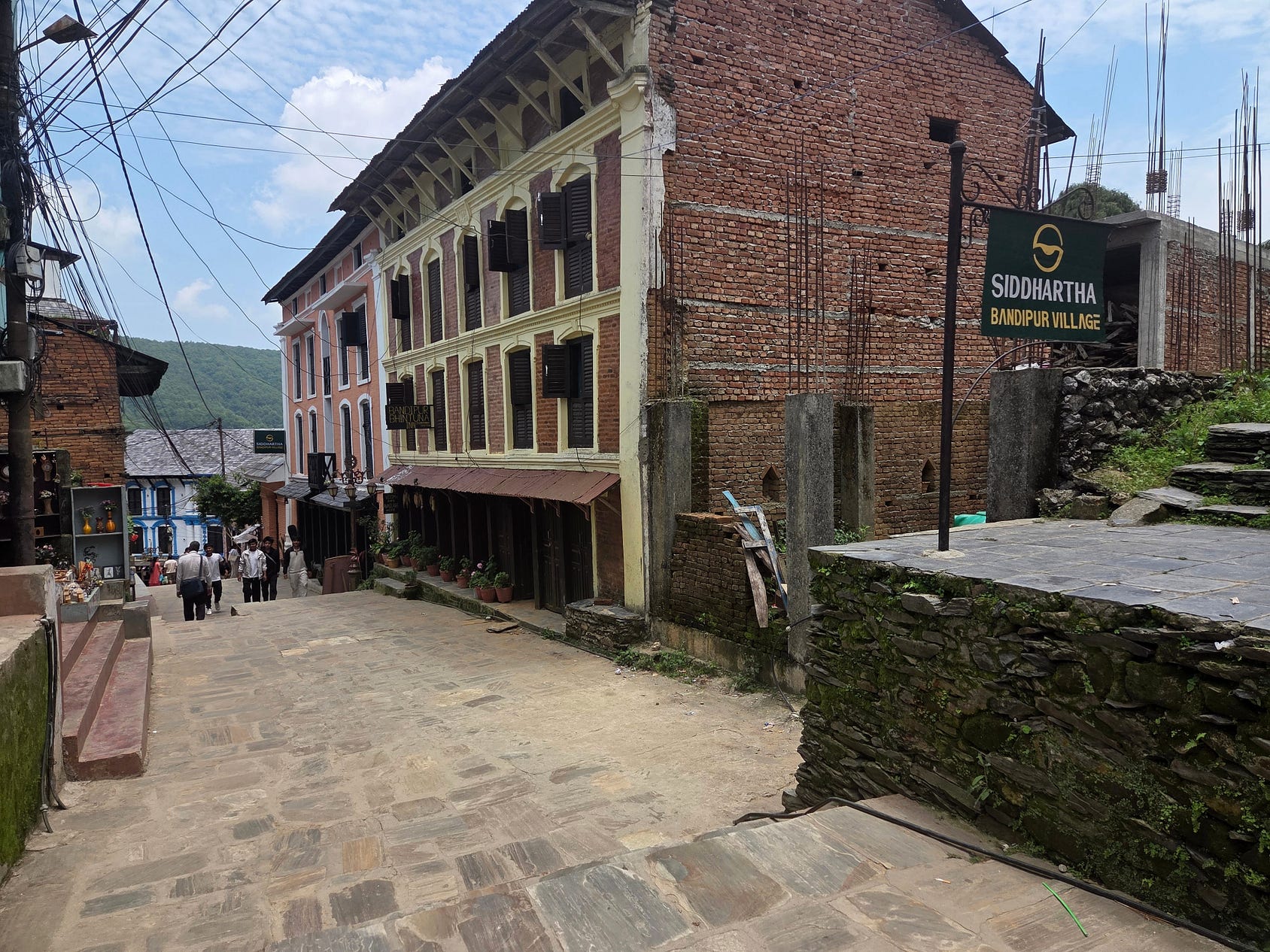
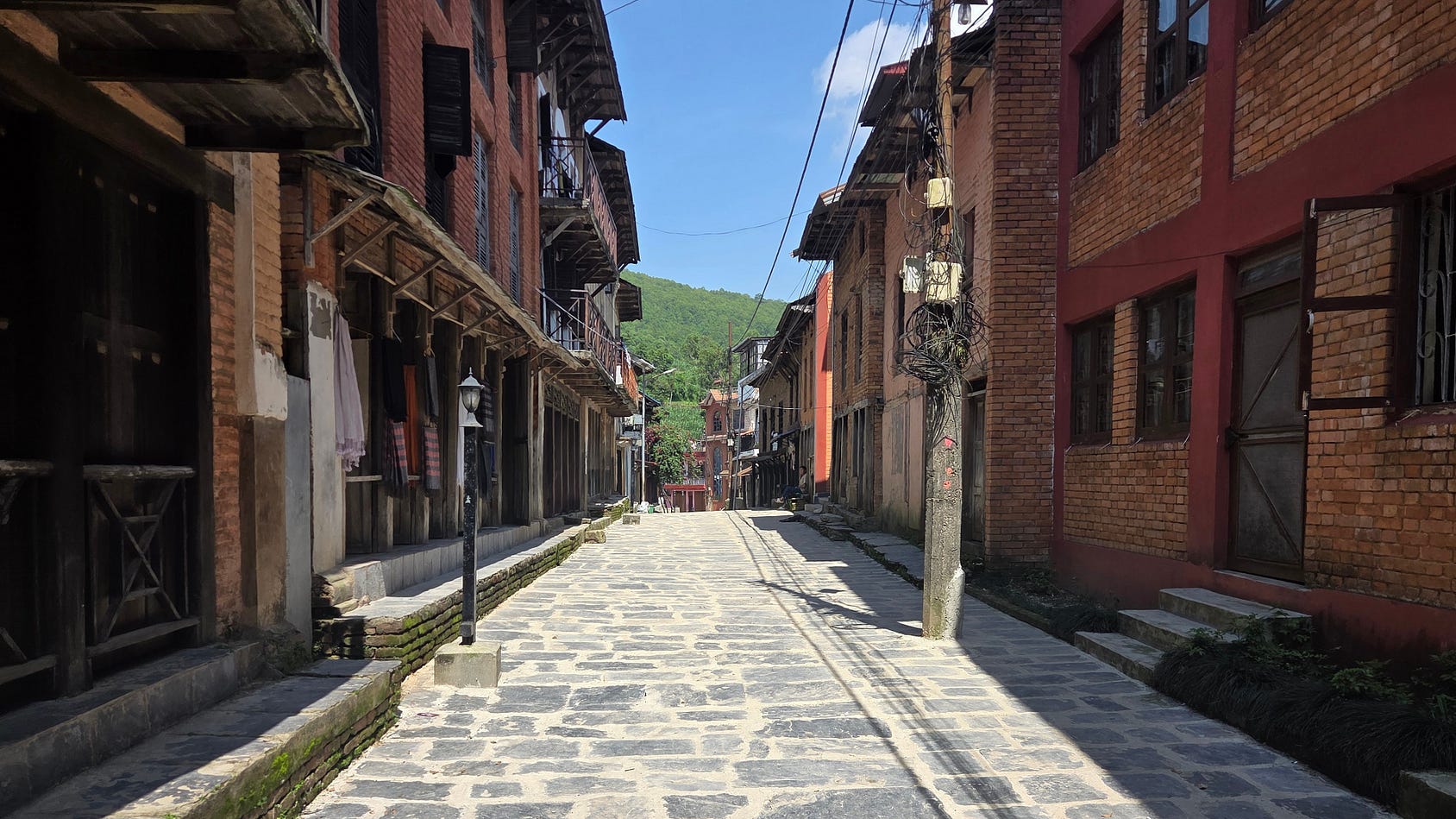
Indeed, the old part of town has been kept in its original car-free state by subsequent regulations: although, as you can see from the next photo, a driver would be hard-pressed to navigate the alleys and stairs of the old town in any case.
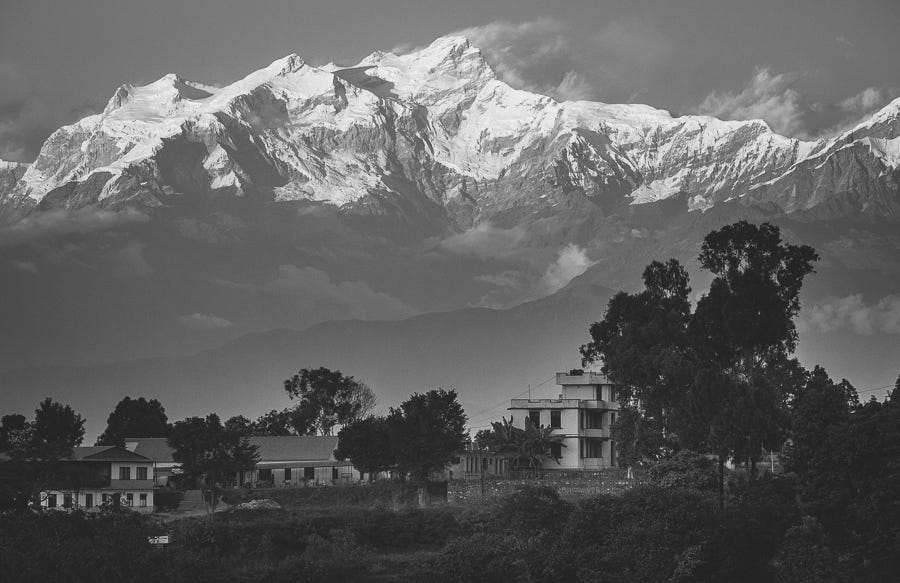
As with many Nepalese mountain towns, you can also see the Himalayas on a clear day.
Though it is off the main road today, Bandipur used to be a very important trading town, lying across an old-time pack track from India to Tibet.
Bandipur was founded on the site of an existing Magar village by Newar merchants from the Bhaktipur district of Kathmandu.
Both the Newar and the Magar are related to the Tibetans. It was the Newar who had filled Kathmandu with Tibetan-style stupas and Chinese-style pagodas.
The Newar traders began moving to the village destined to become Bandipur in 1768. For that was the year in which Kathmandu was conquered by Prithvi Narayan Shah, the king of Gorkha and eventual unifier of Nepal, after whom the Prithvi Highway is named.
King Prithvi also chose Kathmandu to be the capital of his newly unified country.
Even so, the Gorkha, after whom the soldiers known as Gurkhas are named, have more in common with the inhabitants of northern India than with nationalities such as the Newar and the Magar, who look to Tibet. Indeed, the Newar would be somewhat culturally oppressed in their native Kathmandu region until the coming of democracy at the end of the twentieth century.
The site of Bandipur had many advantages for the Newar who quit Kathmandu. Not only was it on an important pack track, but also, its upland site was free from malaria, a major consideration in those days.
Bypassed when the Prithvi Highway was built, Bandipur then became frozen in time, the oldest part of town largely unchanged from when it was built as a trading hub in the late 1700s and early 1800s.
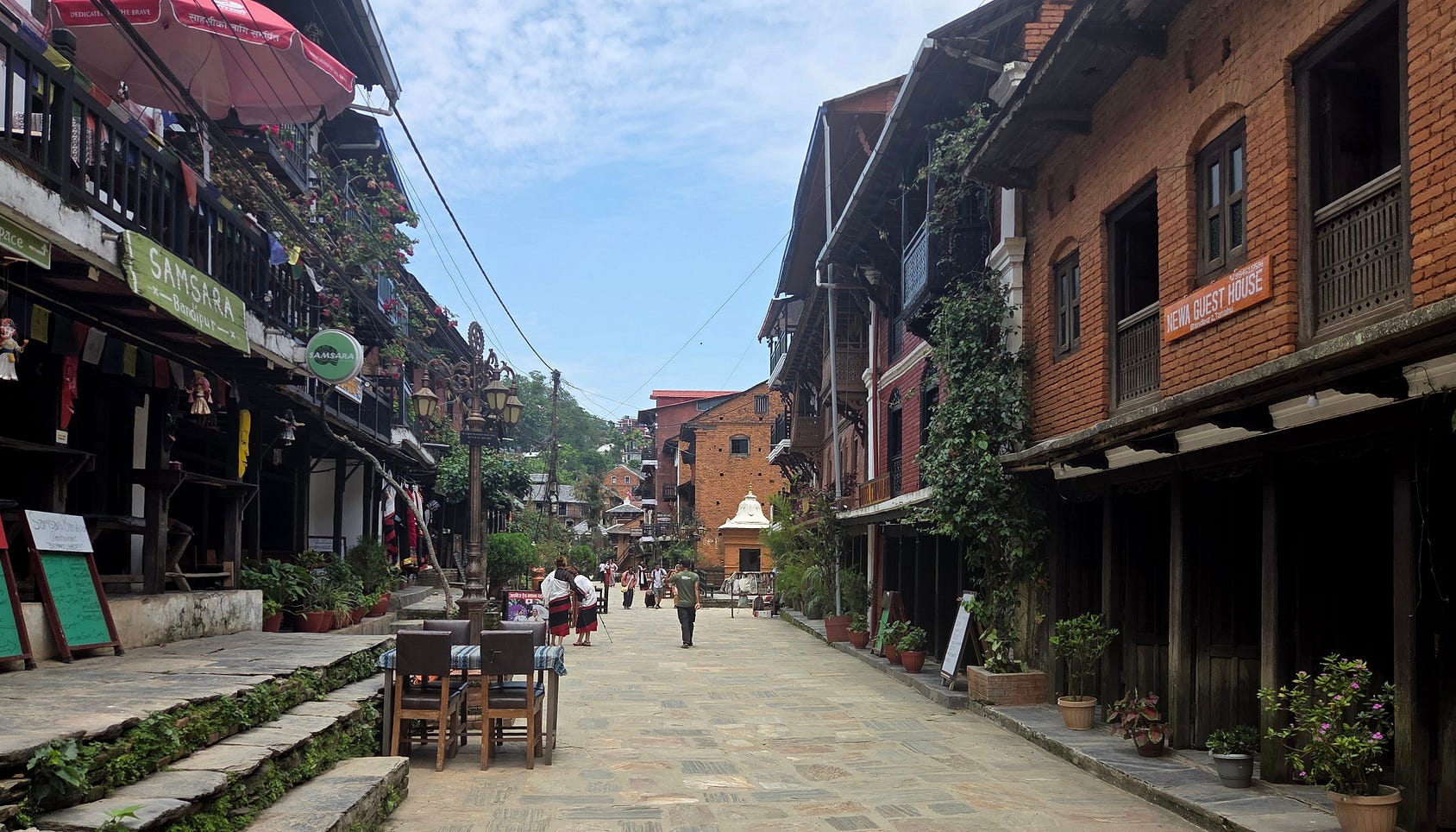

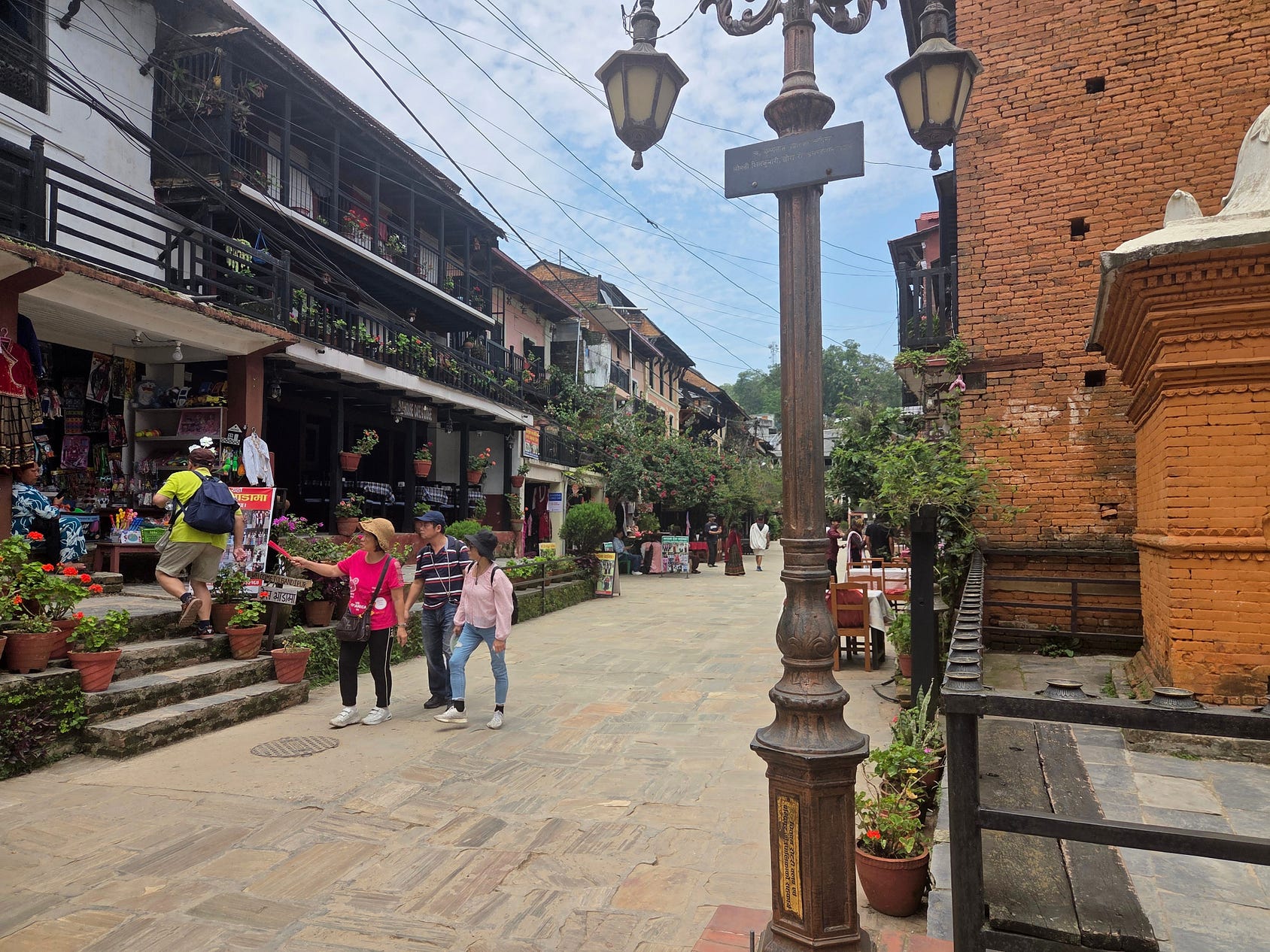
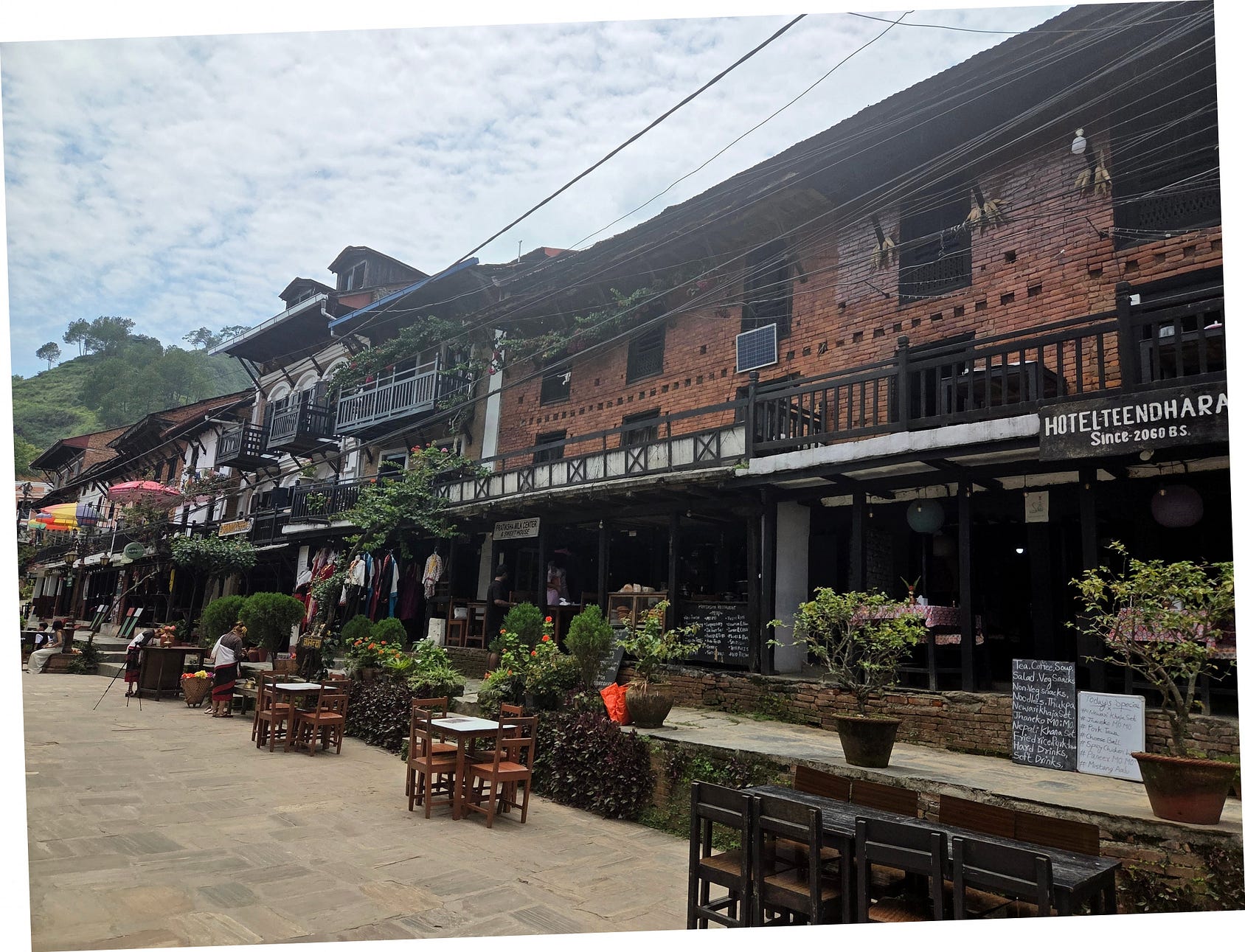
When the Prithvi Highway was built, many of the locals protested about the decision to bypass the Bandipur Hill. But the bypass would later ensure that Bandipur became a special place for tourists.
I stayed very cheaply at the Samira Hotel in Bandipur, for only about the equivalent of US $20 a night, even though it was still a lovely place.
There are heaps of hostels, hotels, and restaurants in Bandipur these days.
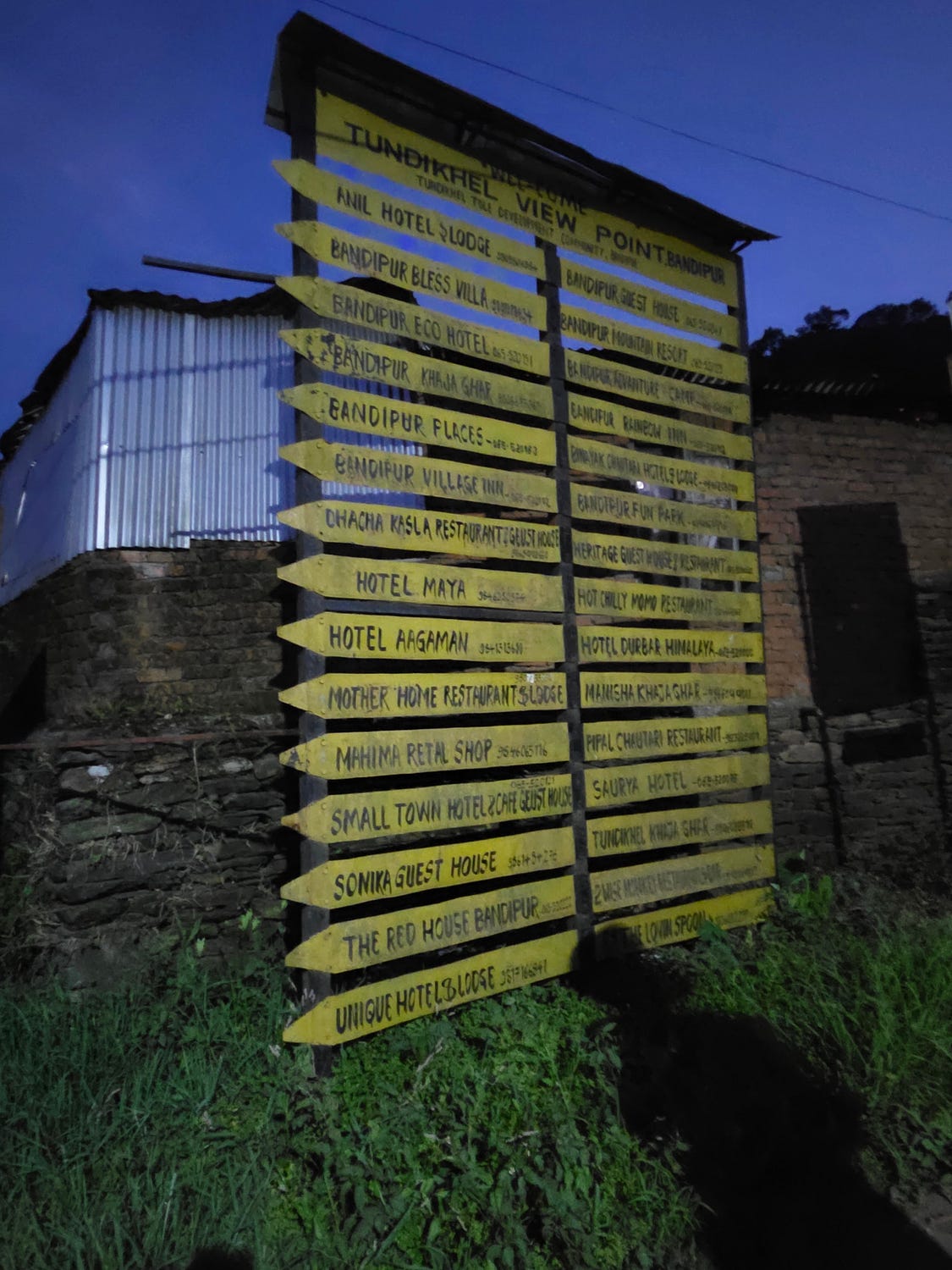
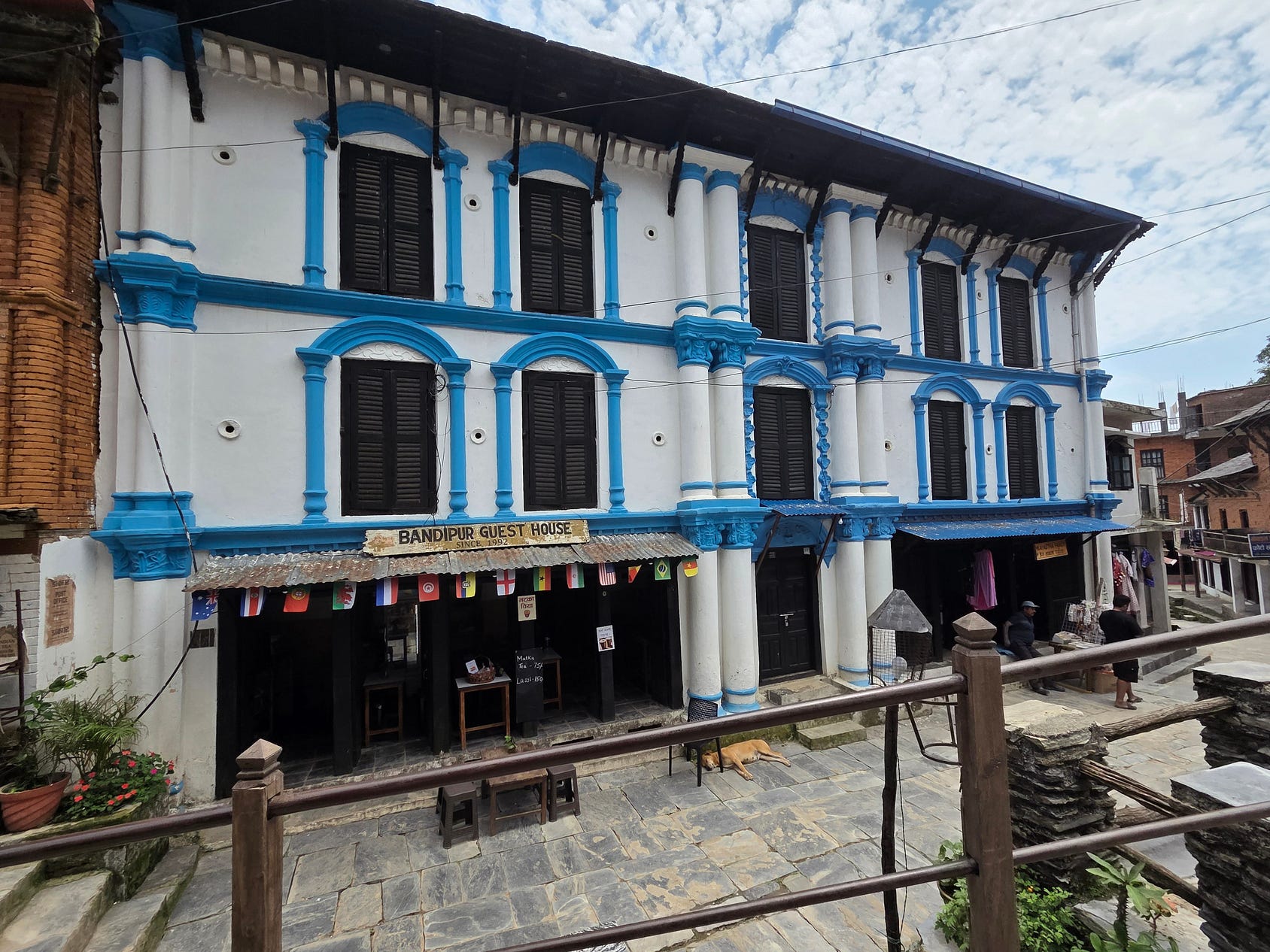

We saw a woman whose job it was to lug bottles of Coca-Cola and mineral water to the hotels and restaurants, on foot, after the fashion of Sherpa porters.
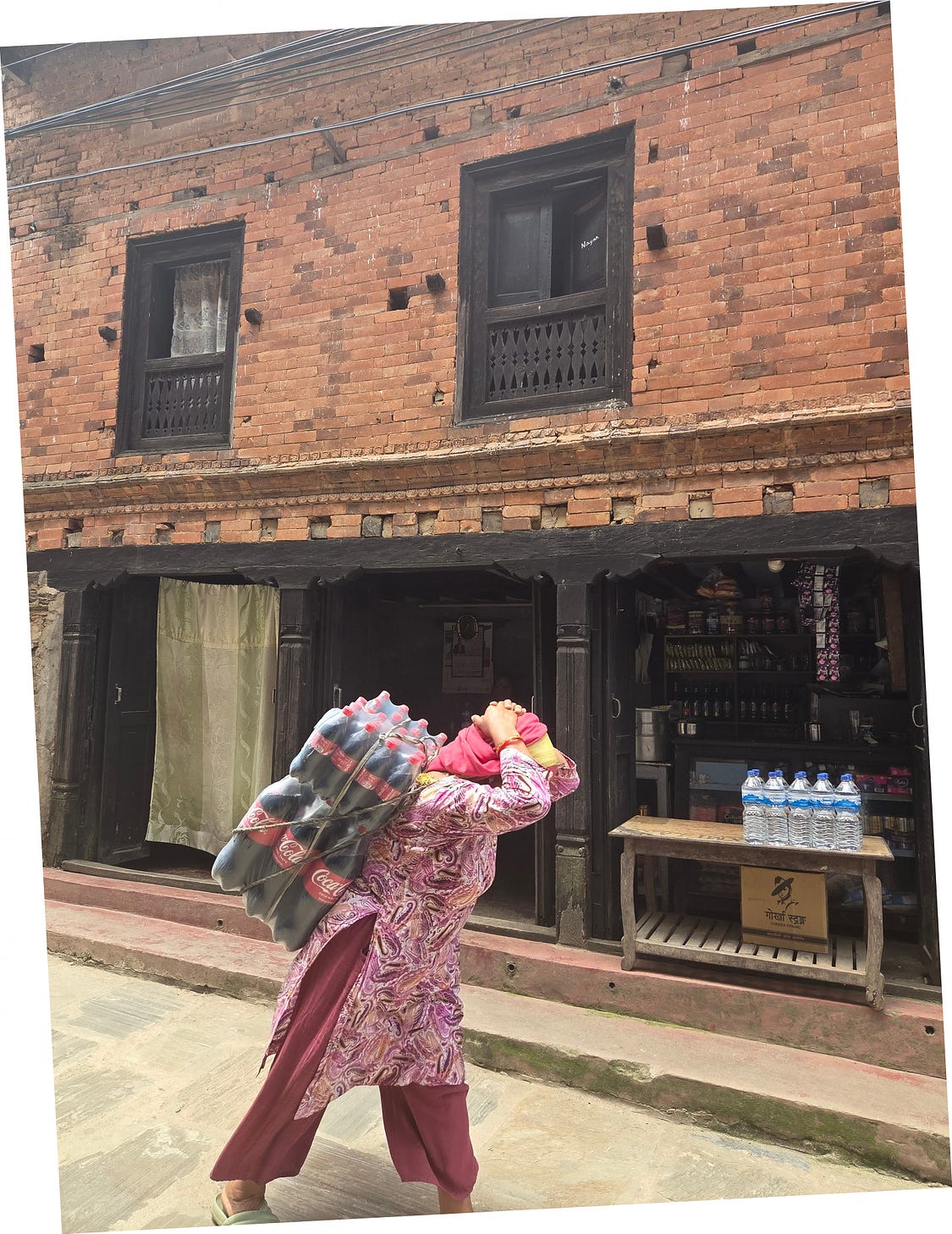
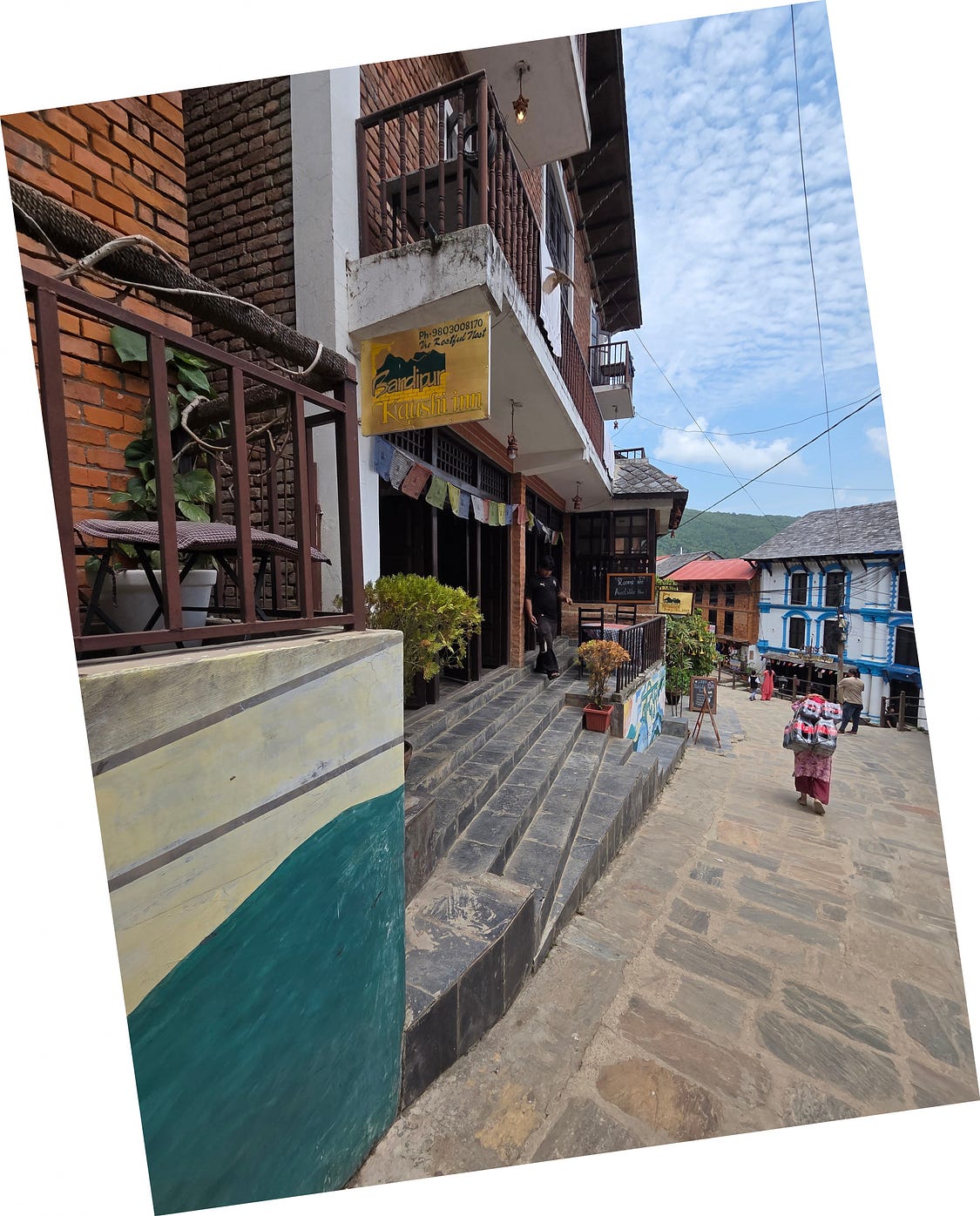

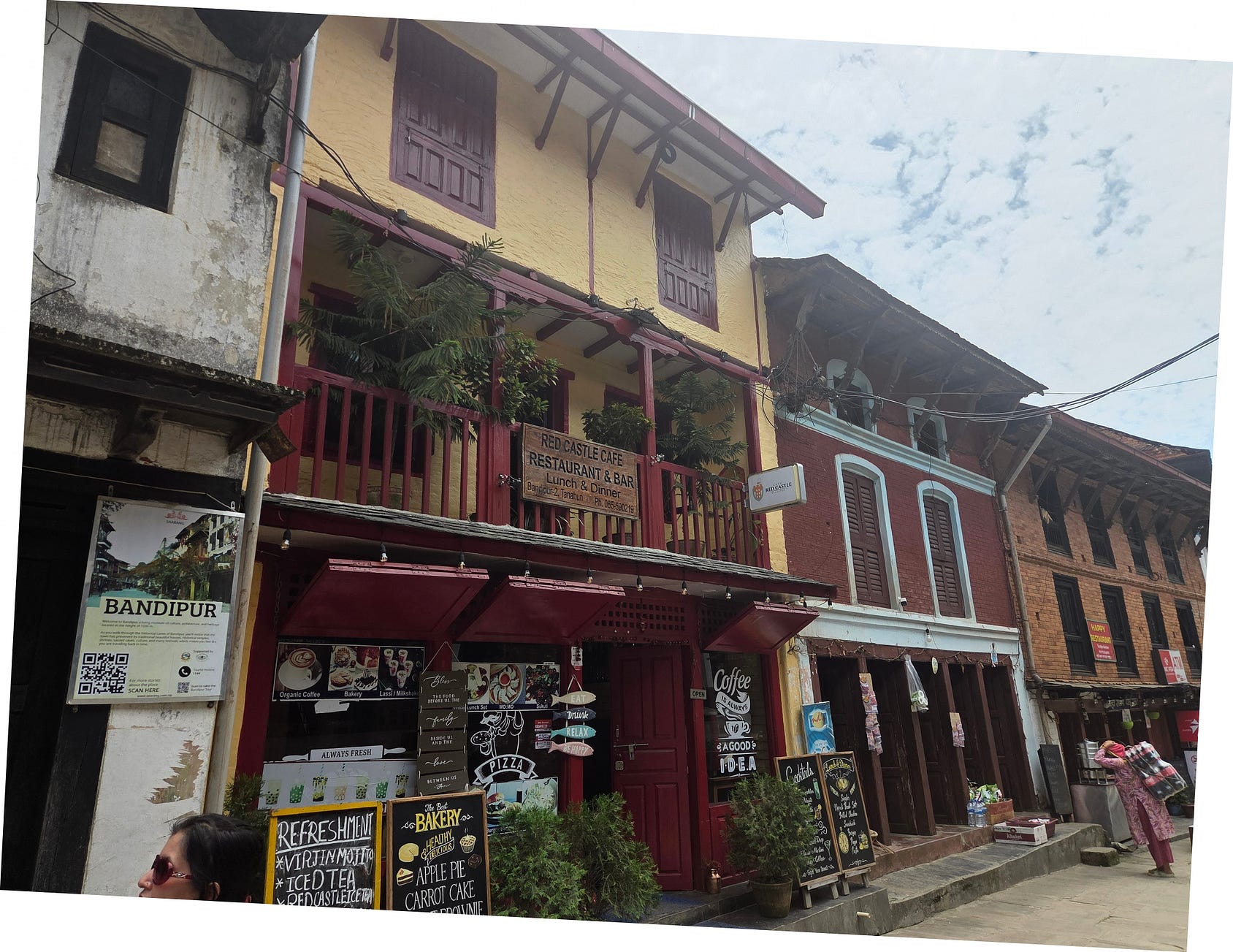
There has to be a better way to organise such things.
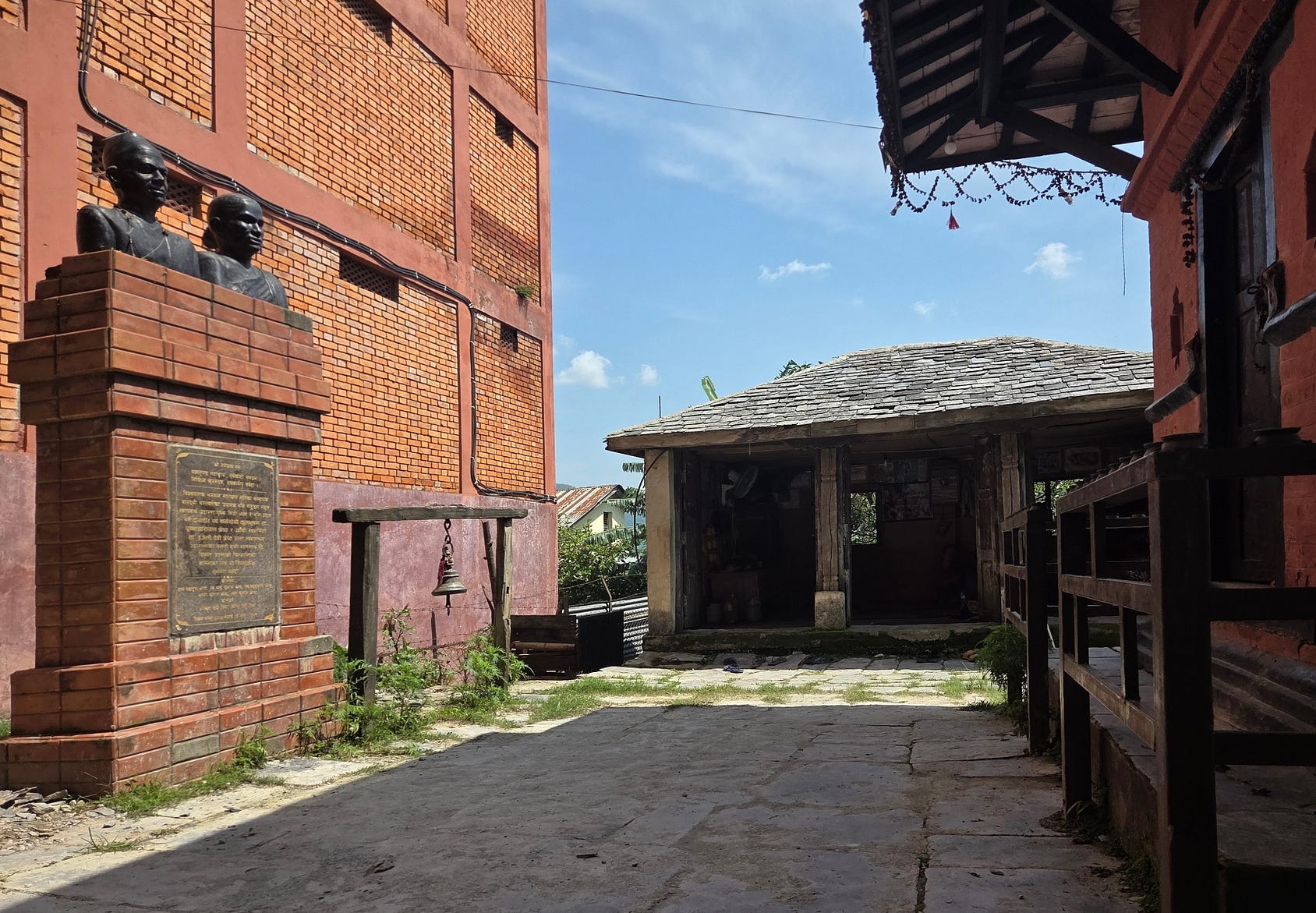
The next few photos show the Bindhyabashini Temple, in what is perhaps the town’s main plaza.
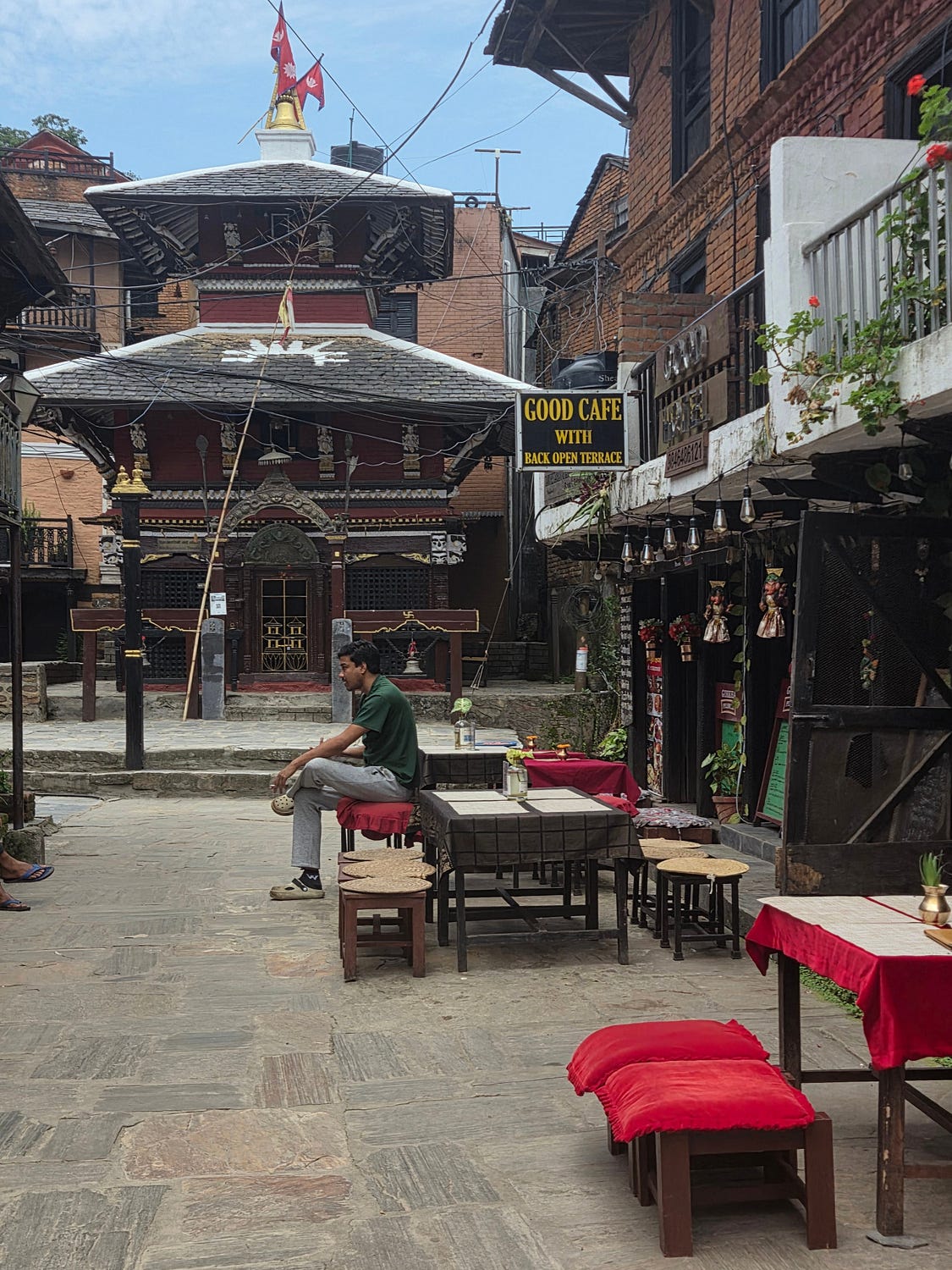
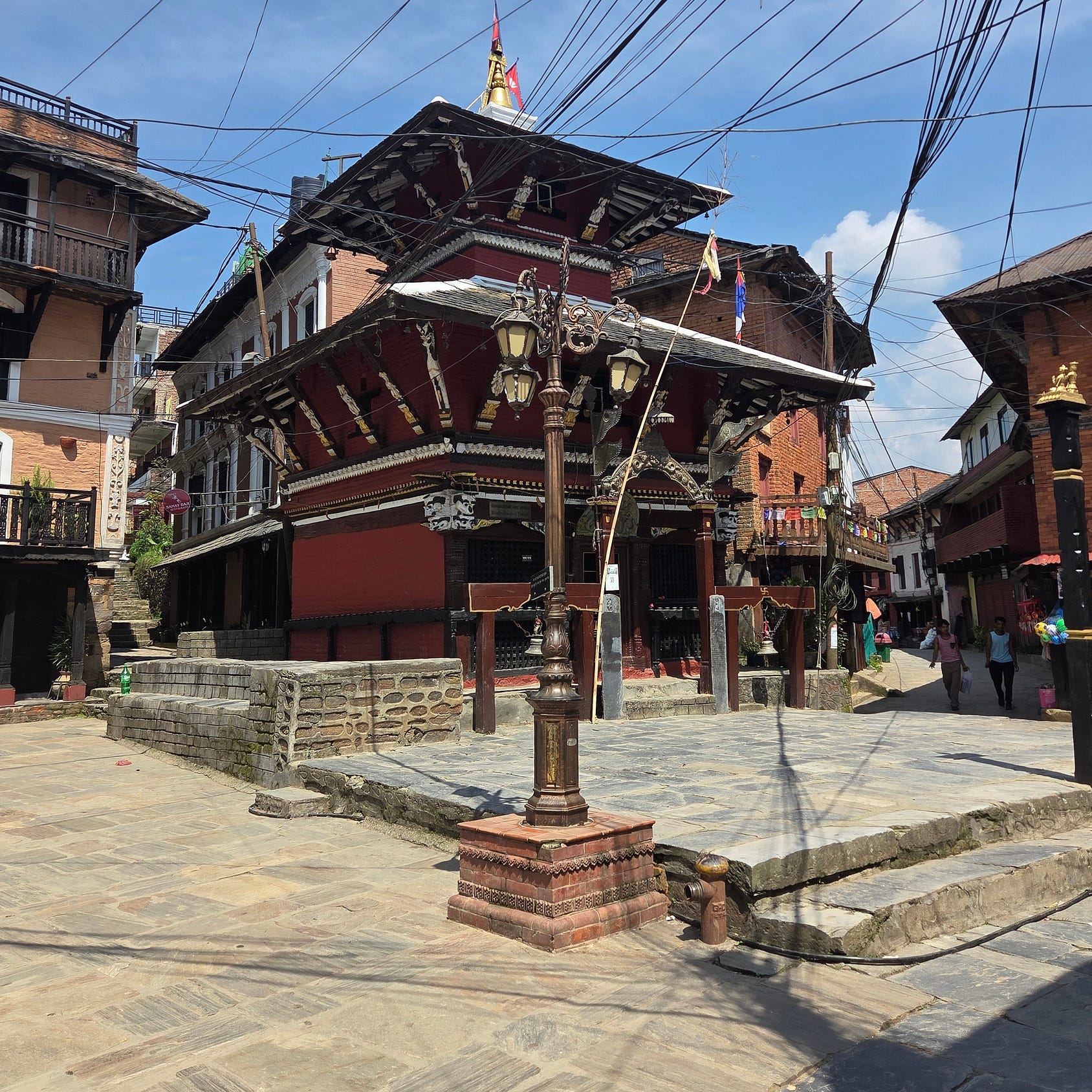
The next photograph is something of an enigma. Is one of these people taking part in a procession?
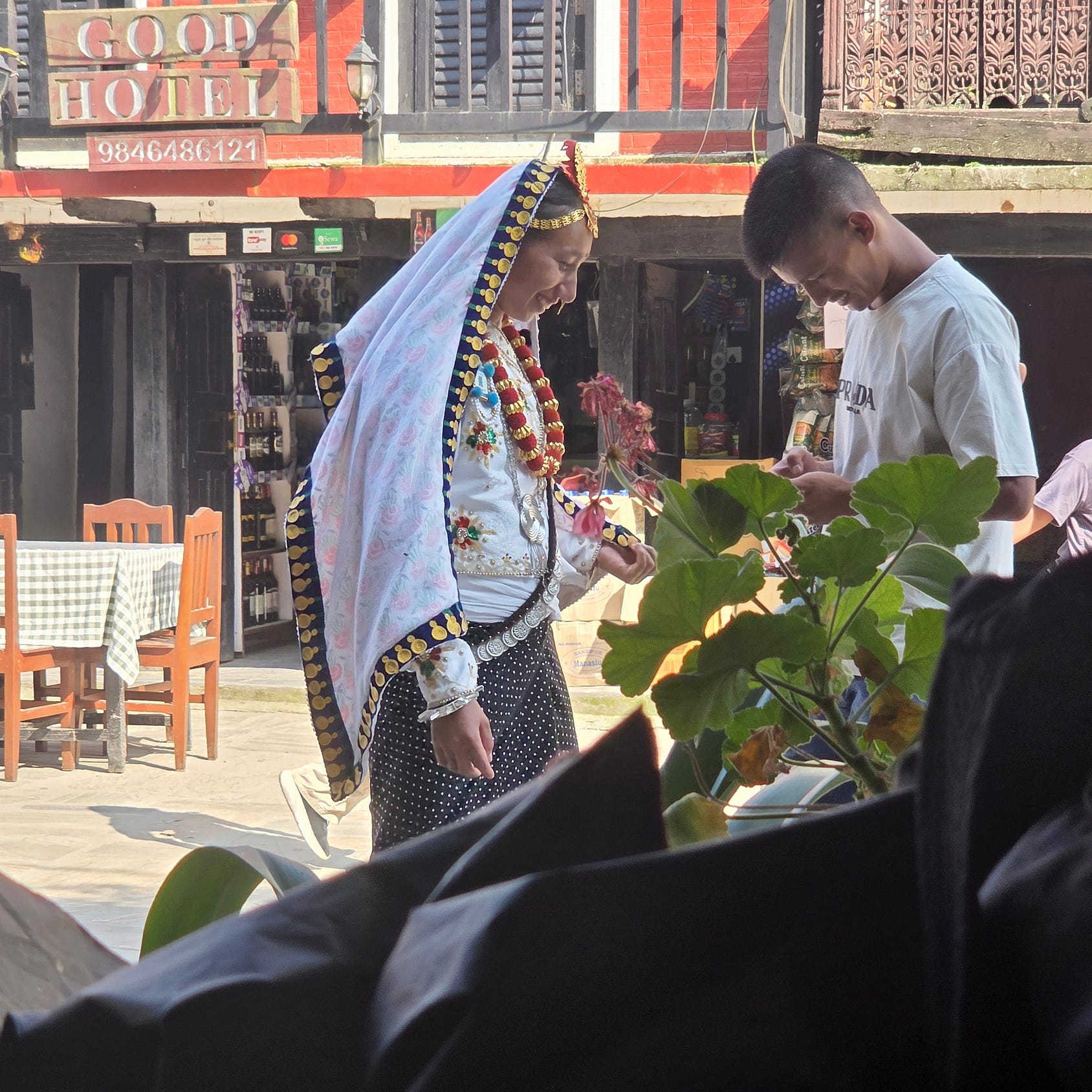
Certainly, there were people in traditional-looking clothes.

Here is another view of the narrow streets.
Notre Dame Secondary School is for the Roman Catholic population of the region: a minority in a mostly Hindu and Buddhist land, but sizable enough to have a school.

There are several monuments, but mostly in Newar or Nepalese, so I wasn’t sure what they commemorated.
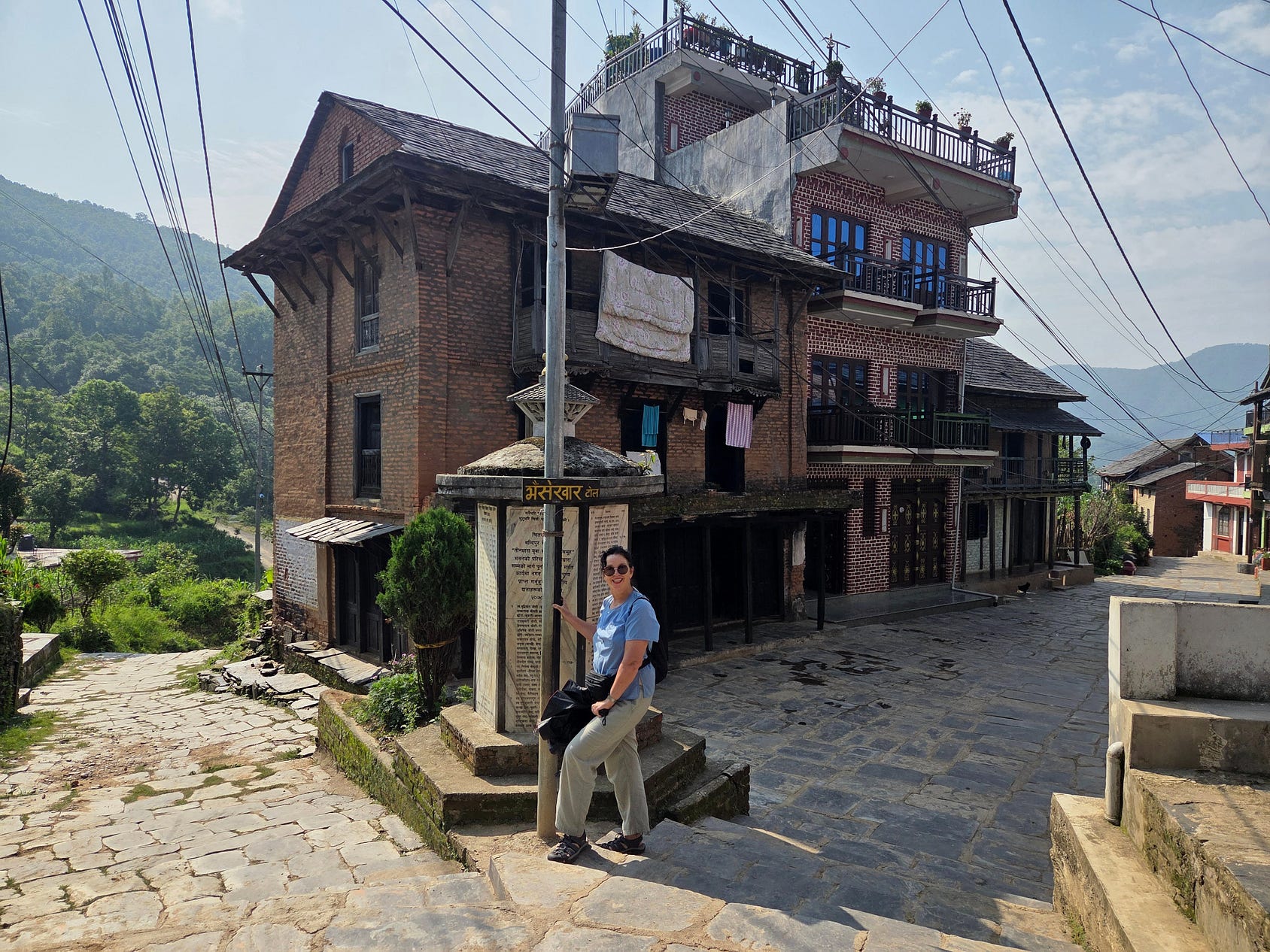
I got some good evening photos as well. Here’s one of another visitor I got to know, named Margaret, at the Bindhyabashini Temple. Margaret hired traditional Newar costume, which is another thing you can do in Bandipur. Maybe that explains the earlier costume sightings!

And the highly rated Nepalese restaurant Samsara, by night.

They have a cable car up the Bandipur Hill as well now, offering great local views and of the Himalayas. Its website is bandipurhill.com.
I wanted to ride on the cable car, but it was closed: it only seemed to run when coachloads of people turned up. Also, I believe the cable car doesn’t accept international card payments: you have to have local currency.
In my next post from South Asia, I head to India and a restricted region in the Indian-controlled part of Kashmir.
Subscribe to our mailing list to receive free giveaways!

