Giveaways
I FIRST visited Nepal in 2014, not long before the April 2015 earthquake, which killed nearly 9,000 people and destroyed much of the city’s ancient architecture.
I wrote up my first time in Kathmandu in a post called ‘Arriving in Nepal,’ which included pictures of temples soon to be damaged or destroyed.
In 2015, there was a lot of pessimism about the possibilities of reconstruction, as we see from this Time magazine article:
‘Hippie-Era Kathmandu’ refers, of course, to the second group of Westerners to discover Kathmandu after Nepal opened itself to the world in 1949. The first were the mountaineers of the 1950s.
And the second were the ‘hippies’ of the 1960s and 1970s.
(Trekkers were also starting to arrive in that era, too. The first Himalayan trekking company aimed at Western travellers was set up in 1965.)
The big draw for the hippies was the fact that marijuana and hashish were legal at the time in Nepal, plus the old-world Hindu/Buddhist culture and profusion of temples.
The temple complexes of the Kathmandu Valley form a World Heritage Site, with seven sub-sites or groups of monuments that include:
As on previous trips, this time around, in May 2026, I was in Nepal mainly for the trekking. But I wanted to see how Kathmandu had rebuilt itself since the last time I was there.
I stayed at the Magnificent Hotel: one of many affordable, amazing value-for-money hotels in modern Kathmandu.
On a guided tour, about one and a half kilometres from the hotel, we came to the edge of the Kathmandu Durbar Square, where I snapped some street photos.

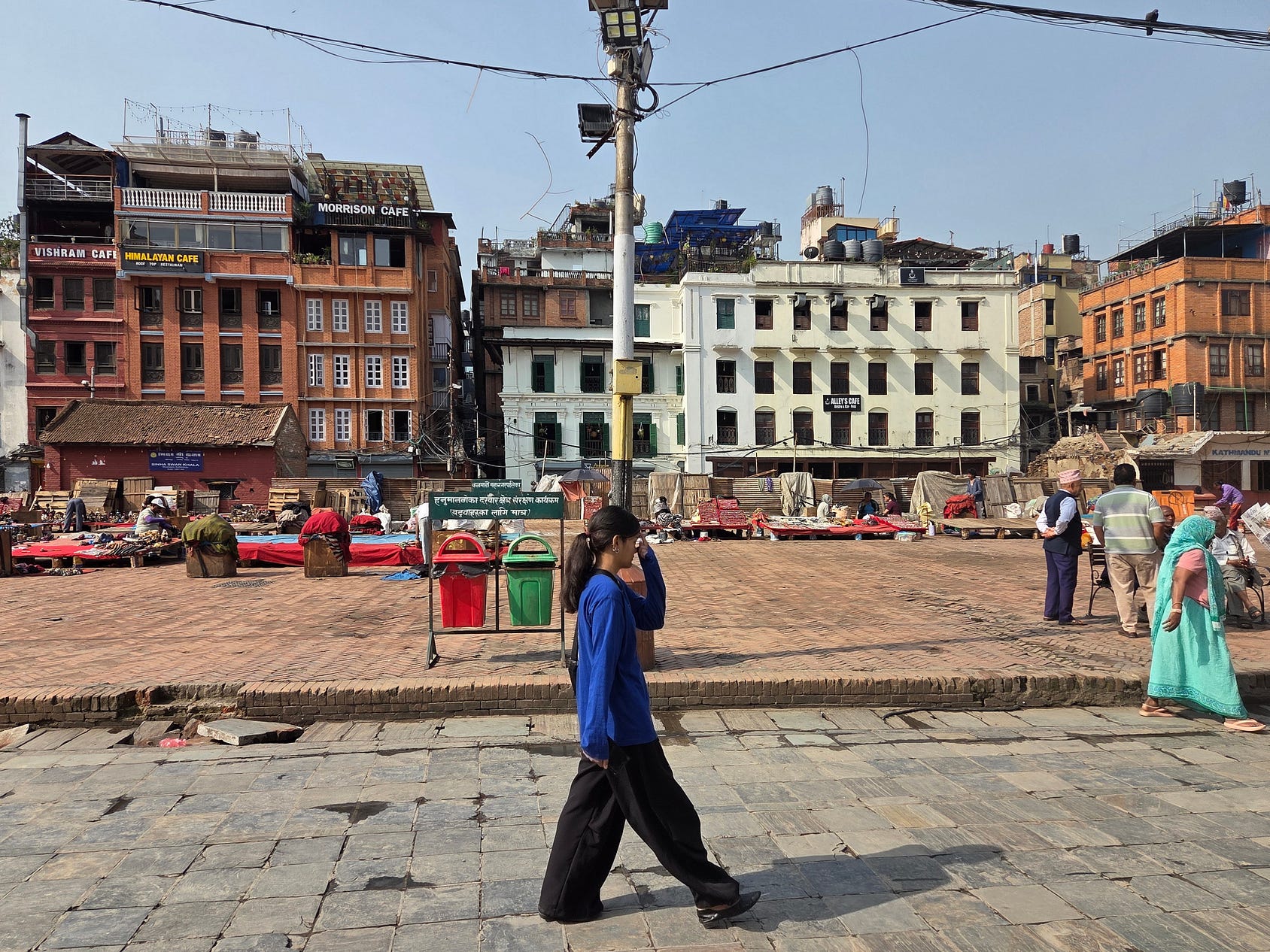
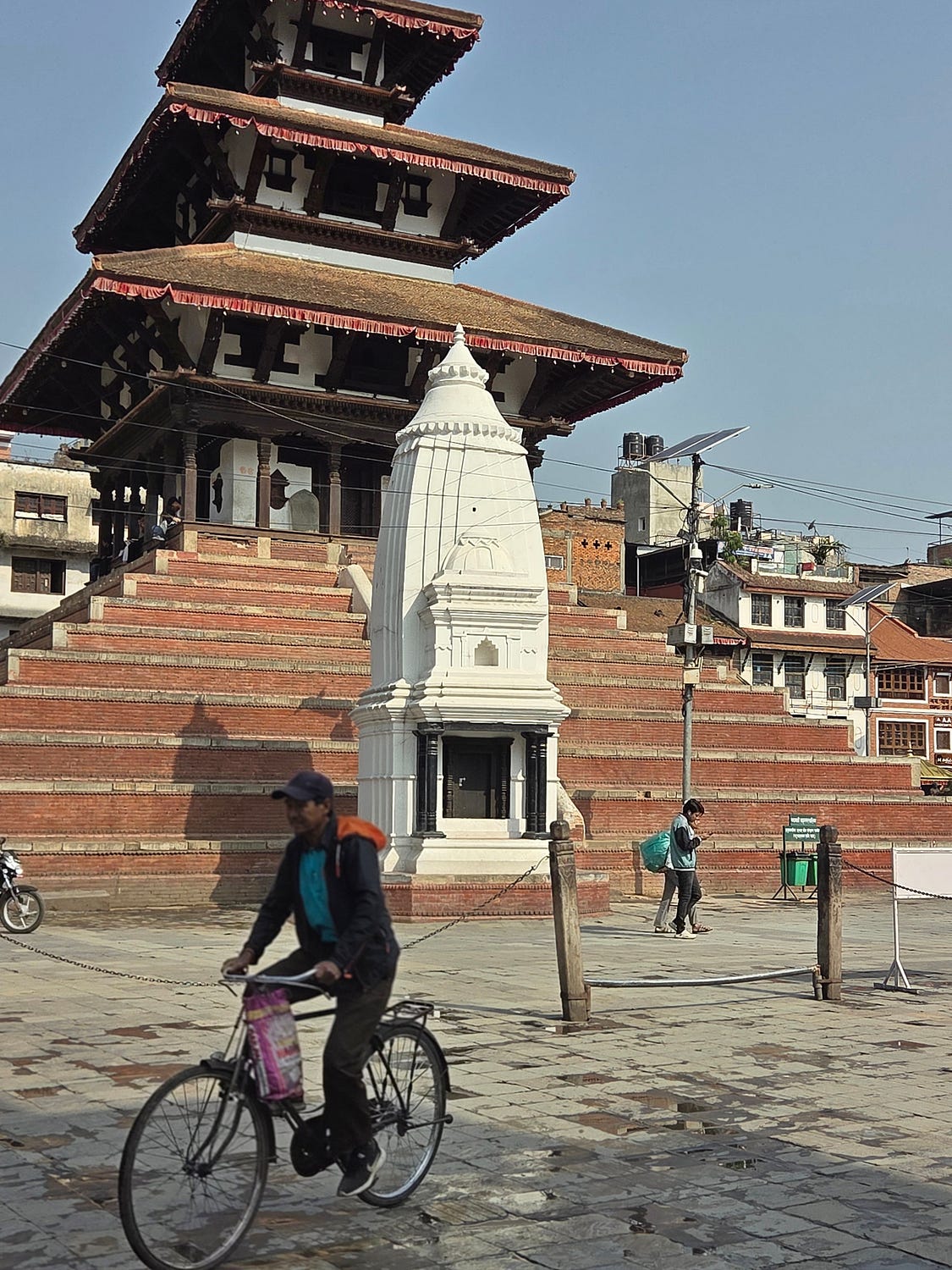
As the 2015 Time article explains, many of Kathmandu’s temples, palaces, and monuments were either ruined or damaged in that year’s earthquake. Fortunately, most have since been rebuilt and strengthened.
(Some are still in scaffolding: it doesn’t look as if the work is quite complete.)
On the course of our tour, I came across a plaque describing how one of the first things the Nepalese did after the quake was to officially gather up all the carvings and other fragments that had fallen to the ground, before souvenir-hunters made off with them.

Here’s a photo of our guide, with Himalayan Social Journey, and a casual-looking stray dog in Kathmandu Durbar Square.
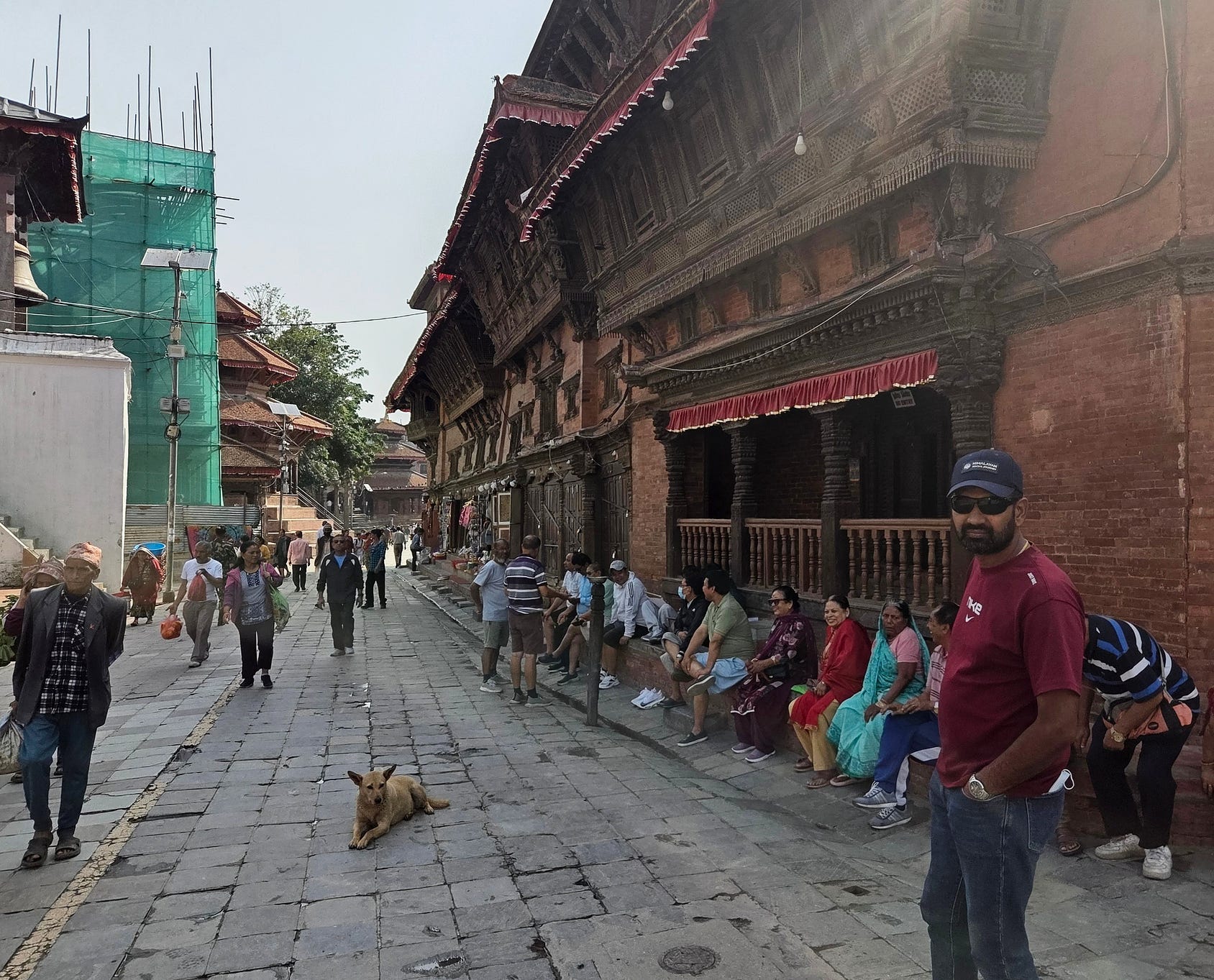
There are apparently some 30,000 stray dogs in Kathmandu, arguably the one drawback of the place, and 100,000 in Nepal as a whole. I made sure to get a rabies vaccination before this trip, which included the Philippines, another stray-dog hotspot.
Here’s a photo of myself in front of another temple, with another casual-looking stray dog in the picture as well.
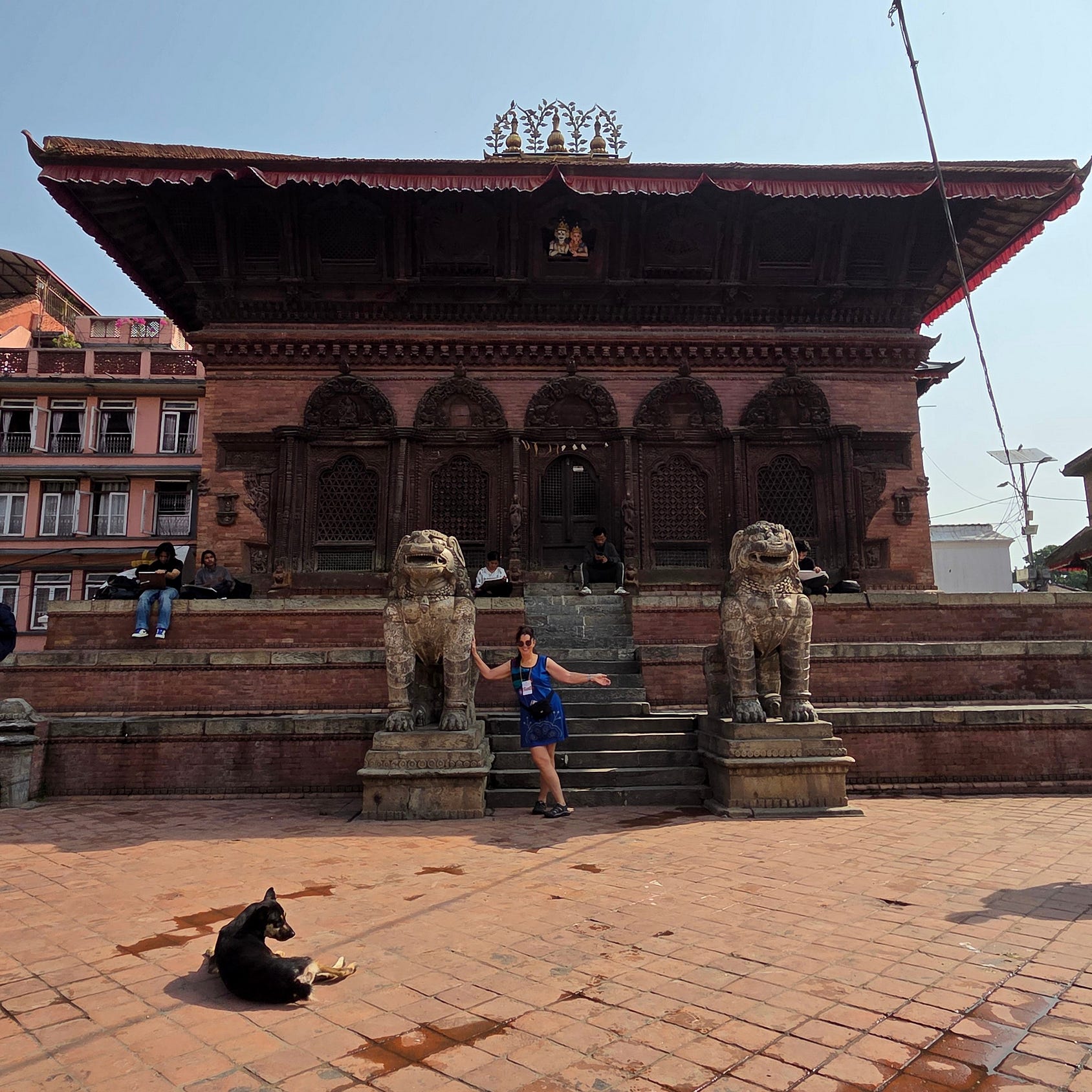
Another issue still to be overcome is a great mass of chaotically disorganised electrical and telephone wiring, which often gets in the way of a good photograph, even if the local monkeys seem to enjoy clambering about in it!

I am sure that, as Nepal develops, this will be tidied up.
In Kathmandu Durbar Square, we also saw the fearsome, ancient image of Kaal Bhairav.

Tourists often mistake this especially ferocious statue, with its Aztec-like garland of skulls, for the Hindu death-goddess Kali.
Kaal Bhairav is actually one of the manifestations of the god Shiva. Although Shiva is normally peaceful, the unjust run the risk of meeting him in the form of Kaal Bhairav.
Anyway, on a more peaceful note, here are some pigeons in the Kathmandu Durbar Square.
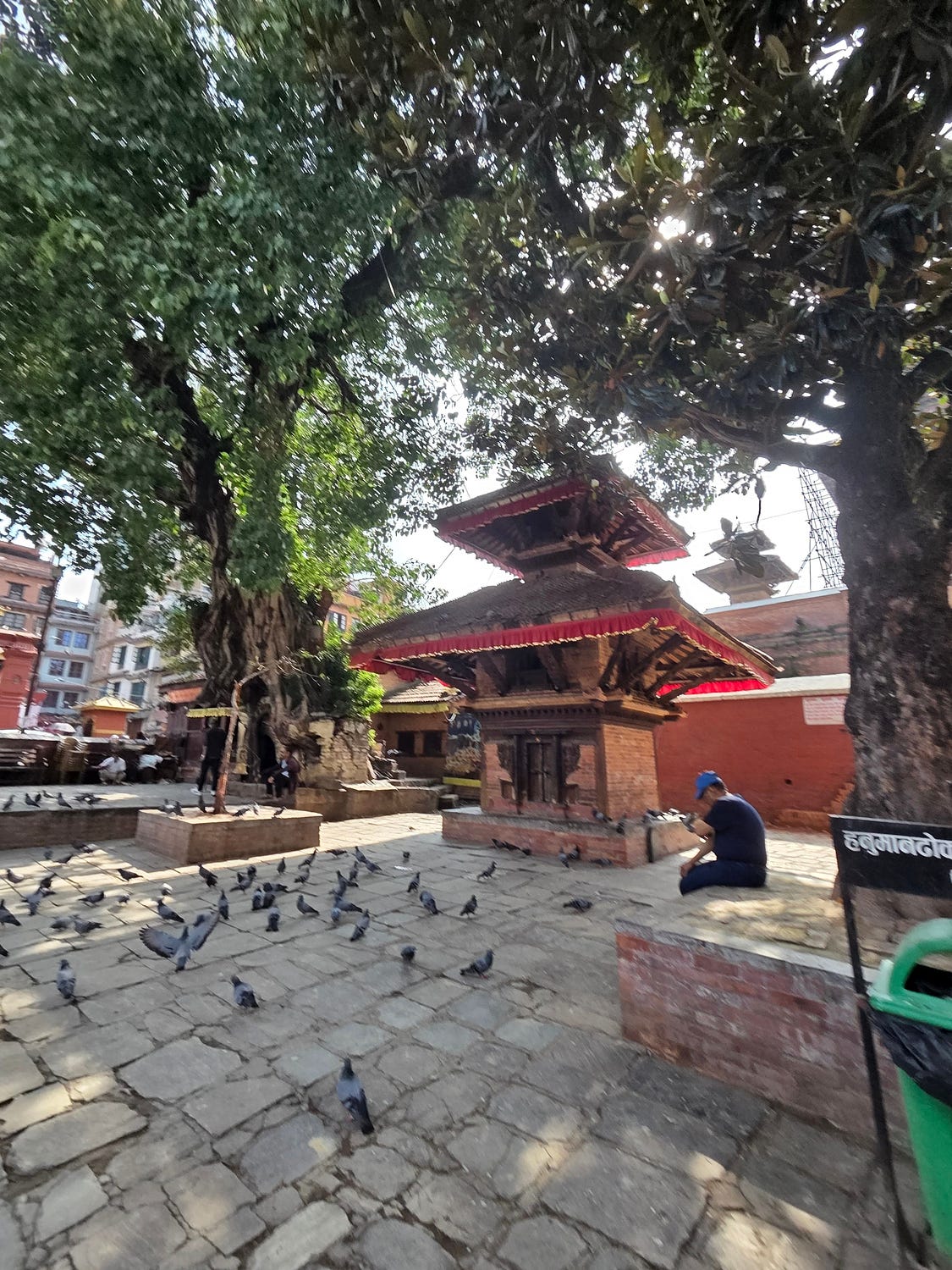
It was still fairly early in the morning, so there were lots of shadows. Here’s an amazing round tower in the square.

This is part of the palace complex, Hanuman Dhoka (‘gate of the monkey god’) that makes the square a durbar square.
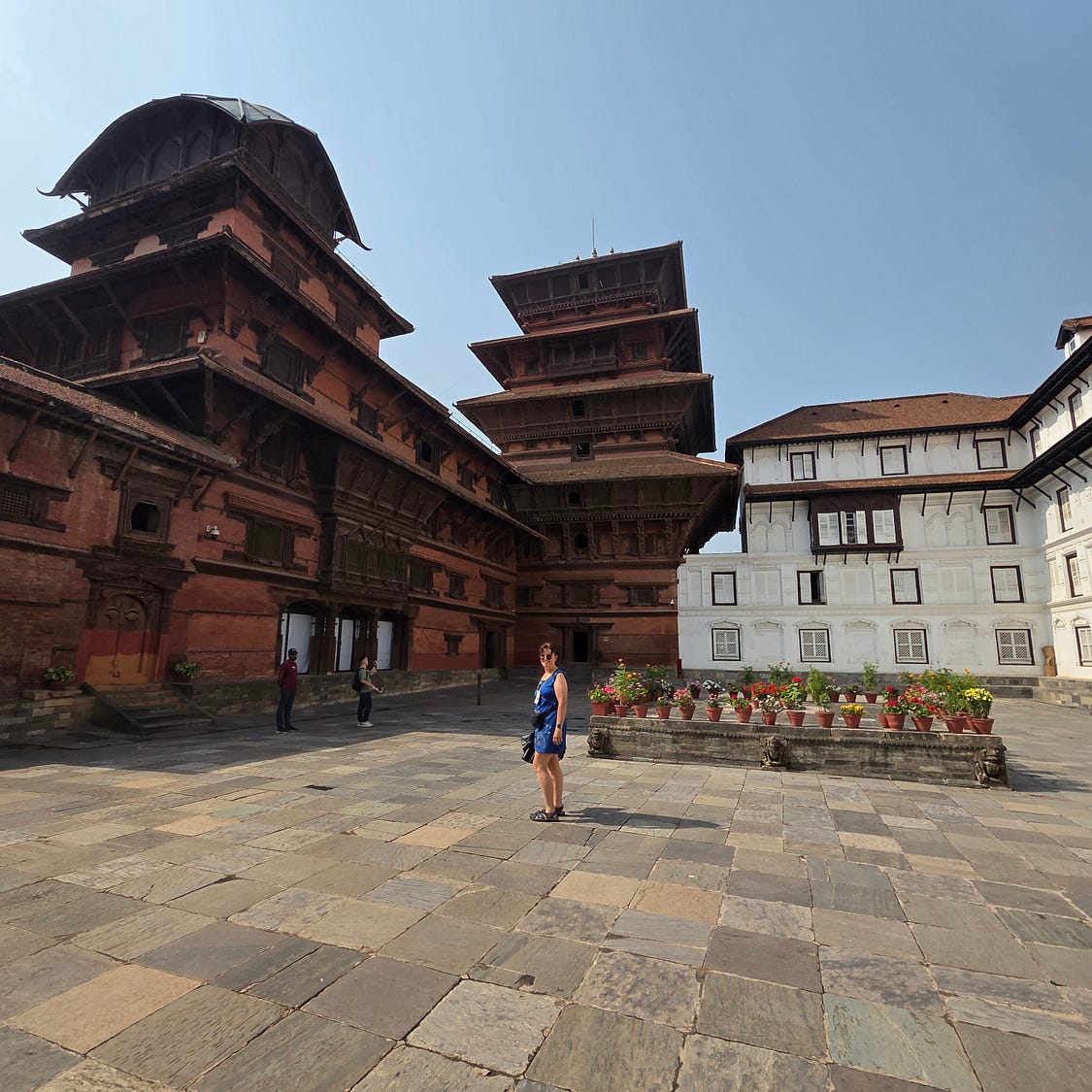
With its many pagoda-like structures, the heritage architecture of Kathmandu often seems more Chinese than Indian. This is no coincidence: these palaces and temples were built by the indigenous culture of the Kathmandu Valley, the Newar, who are a Sino-Tibetan people.
The name Nepal is actually a variation of Newar.
Nonetheless, the 1700s, the Newar were conquered by rulers from lowland Nepal who were of North Indian cultural and linguistic extraction, and whose language gave rise to modern standard Nepalese. These rulers also unified Nepal, which was previously a group of smaller states.
The Newar became somewhat oppressed thereafter, their language repressed from the 1840s, until the coming of democracy at the end of the twentieth century and the beginning of the 21st, by way of two revolutions and a civil war, resulting in the proclamation of a republic in 2008, thus ending the last Hindu monarchy.
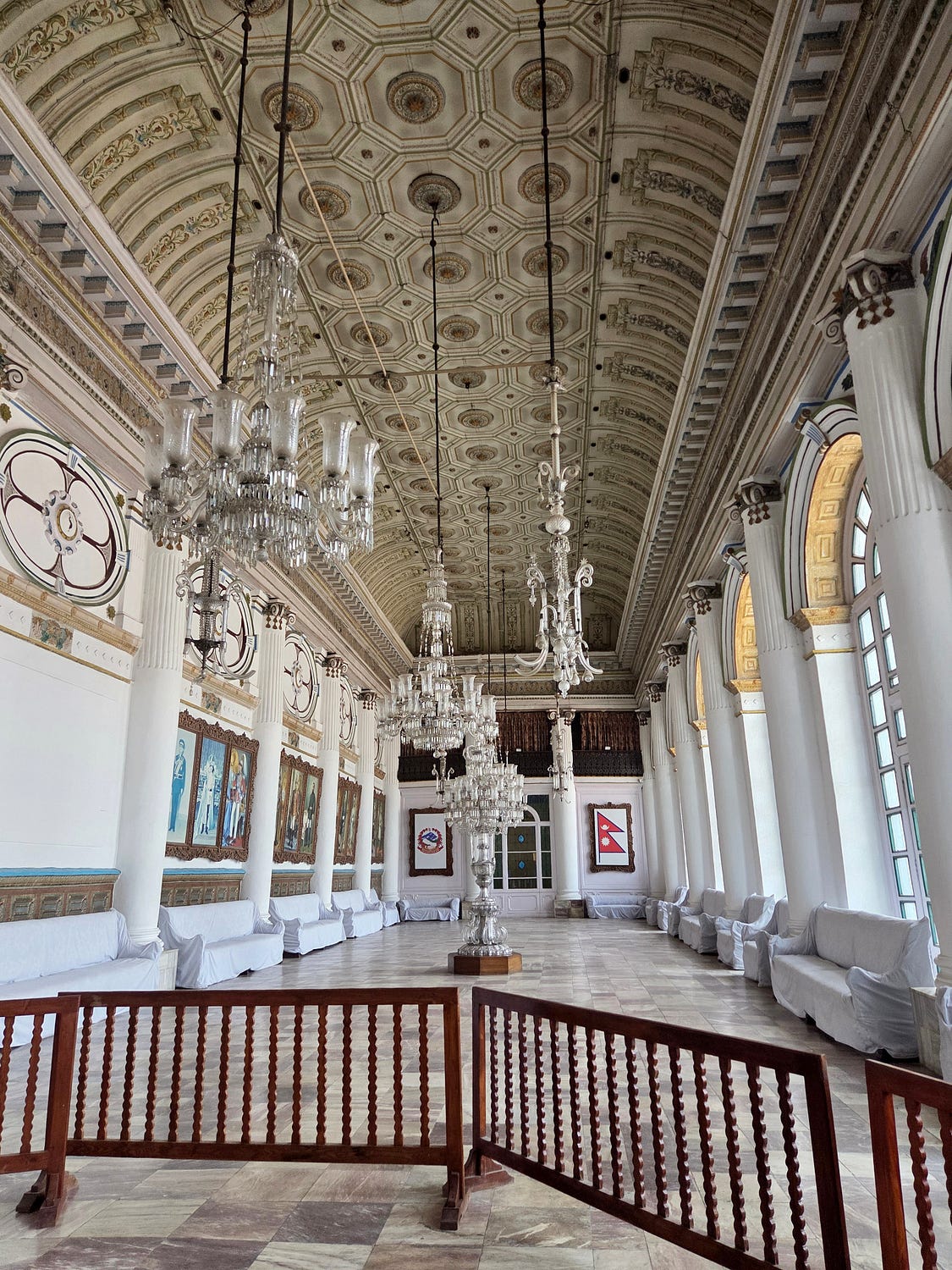
Here are a couple of photos I took inside the palace:
Check out this amazing wood carving!

And here’s a photo of myself sitting on the steps of the rebuilt Maju Dega, the famous ‘hippie temple’ of earlier times, where the hippies used to sit and smoke pot.
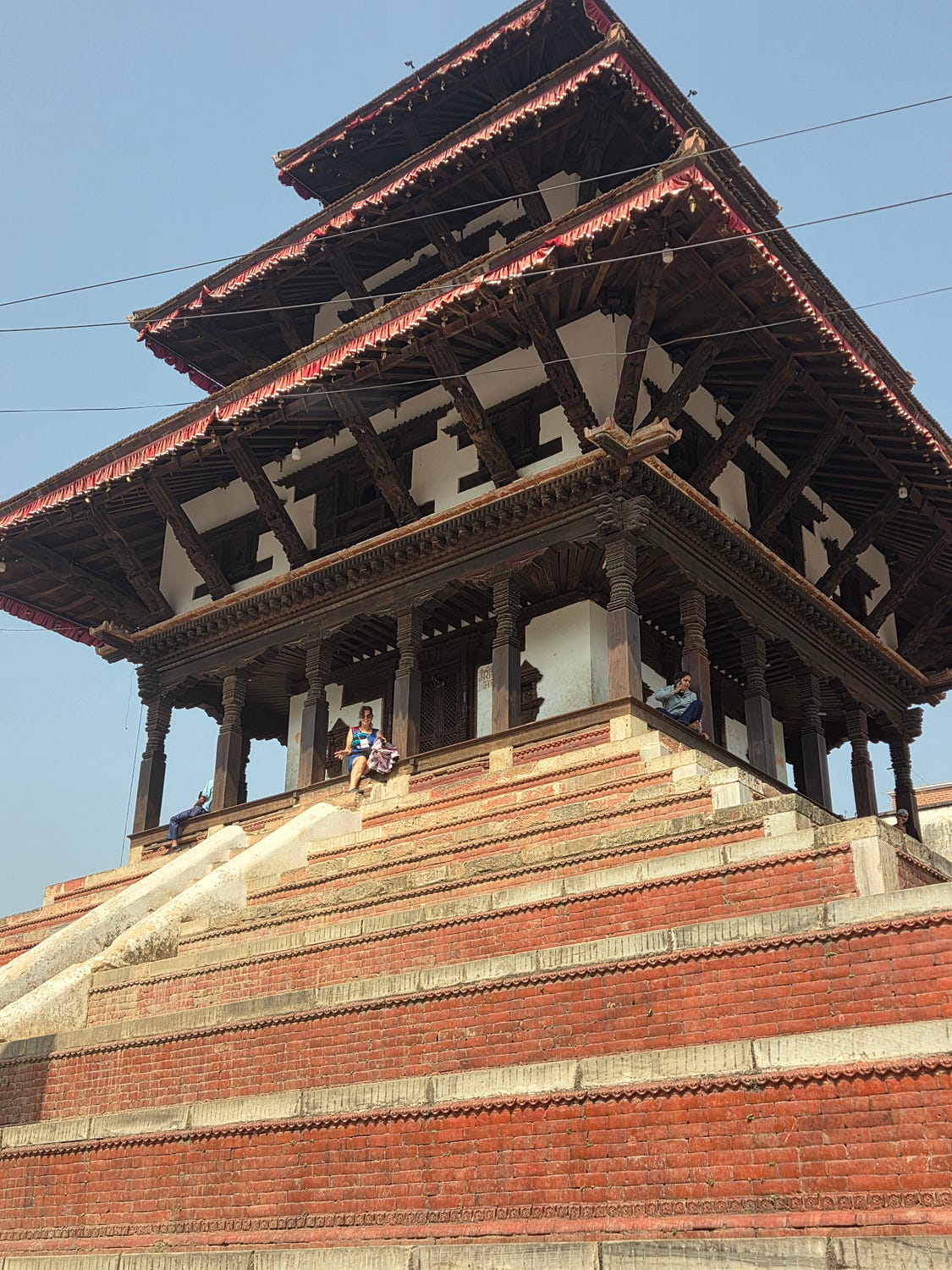
Here’s a video I made of Kathmandu Durbar Square and Maju Dega:
After Kathmandu Durbar Square, we headed to Swayambunath, the so-called ‘monkey temple,’ on top of a hill less than two kilometres away.
Swayumbunath has a giant stupa, one of two that are at the heart of World Heritage subdistricts in Kathmandu.

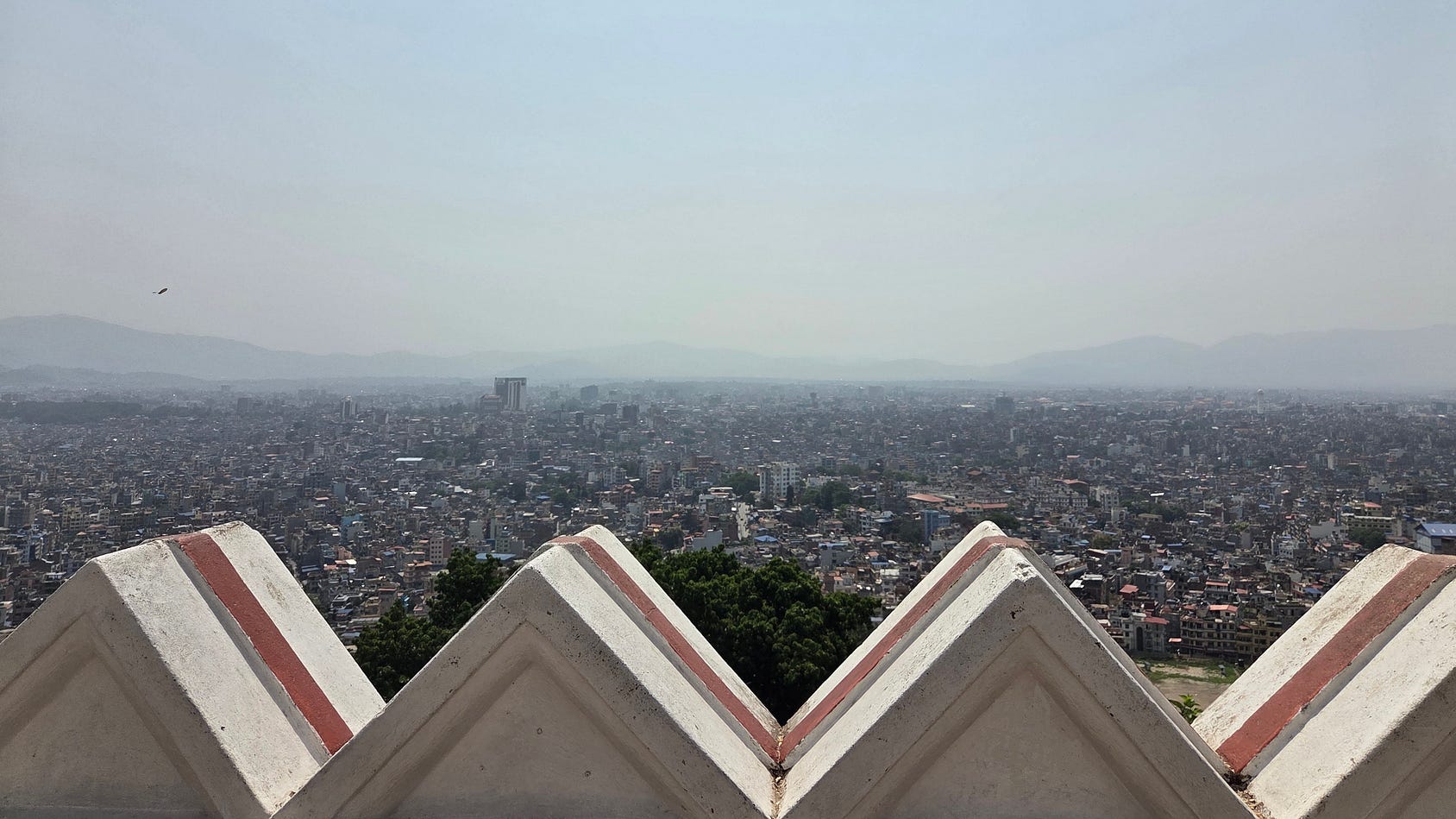
It’s on top of a hill, with amazing views of Kathmandu.
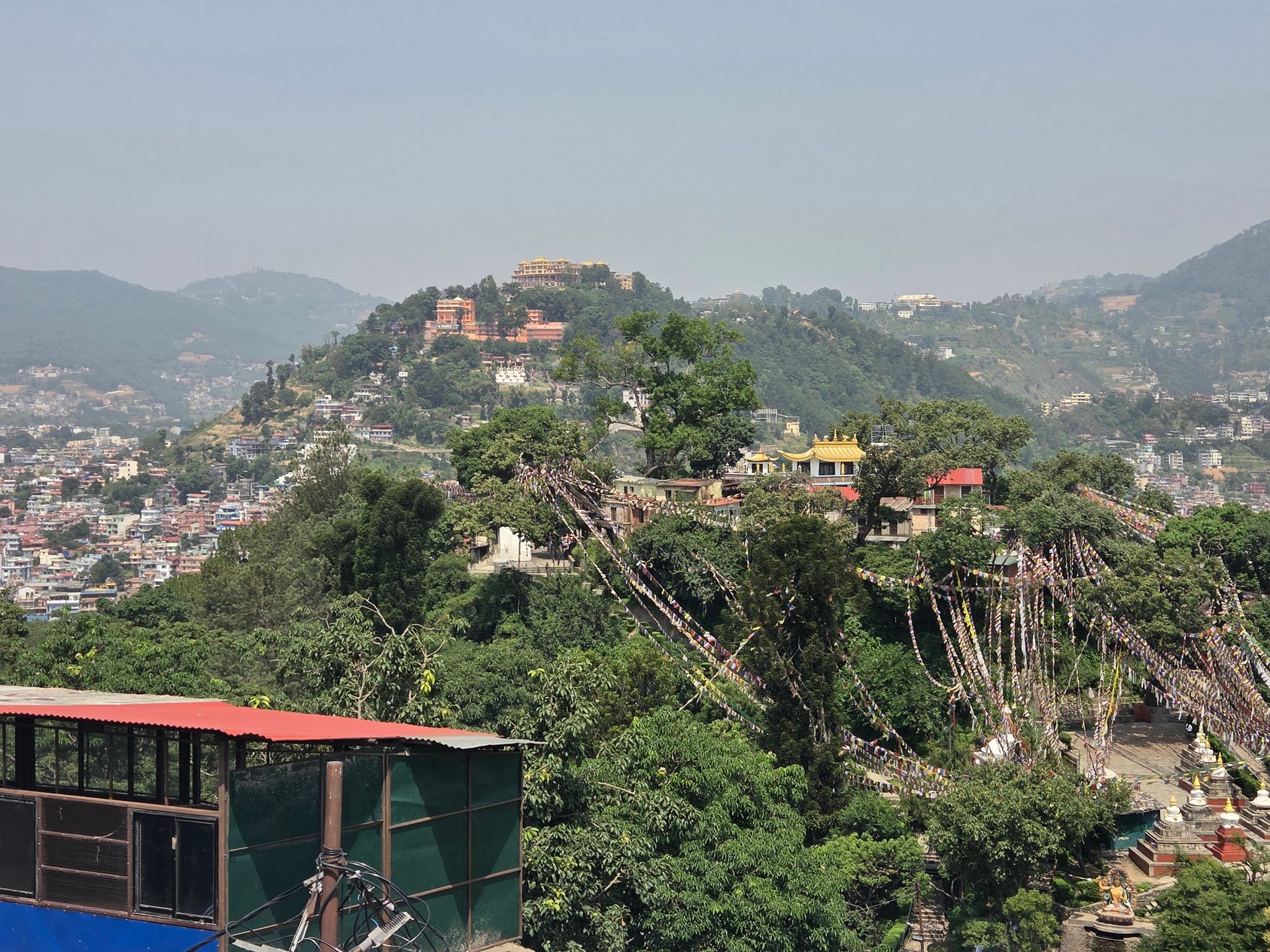
Prayer flags stream to the next hill.
Swayambhunath is the subject of this video:
Here’s another video I made at Swayambhunath, in which the abundant monkeys of the ‘monkey temple’ are the stars!
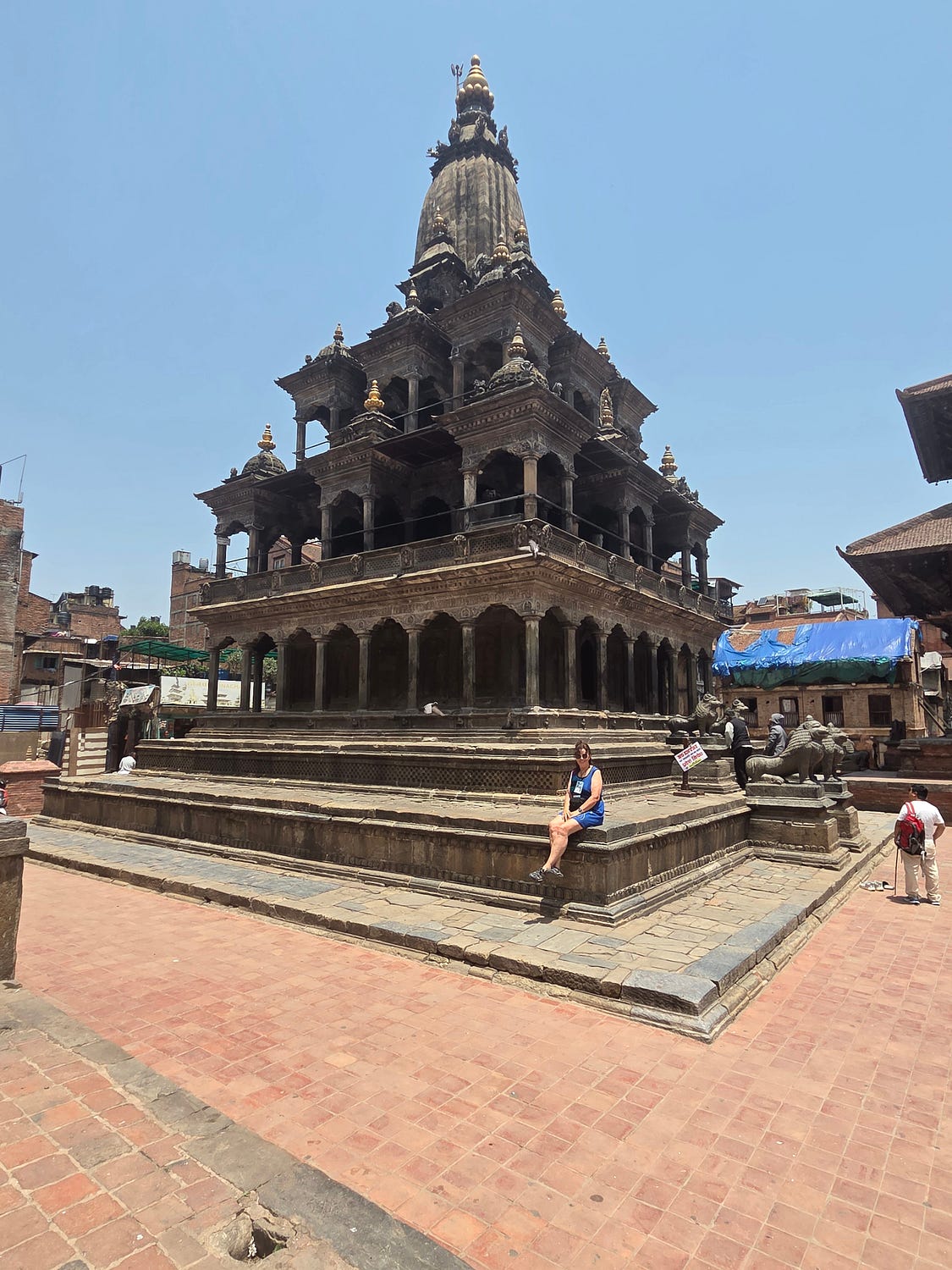
The next stop was Patan Durbar Square, where the famous Krishna Mandir (temple) stands.
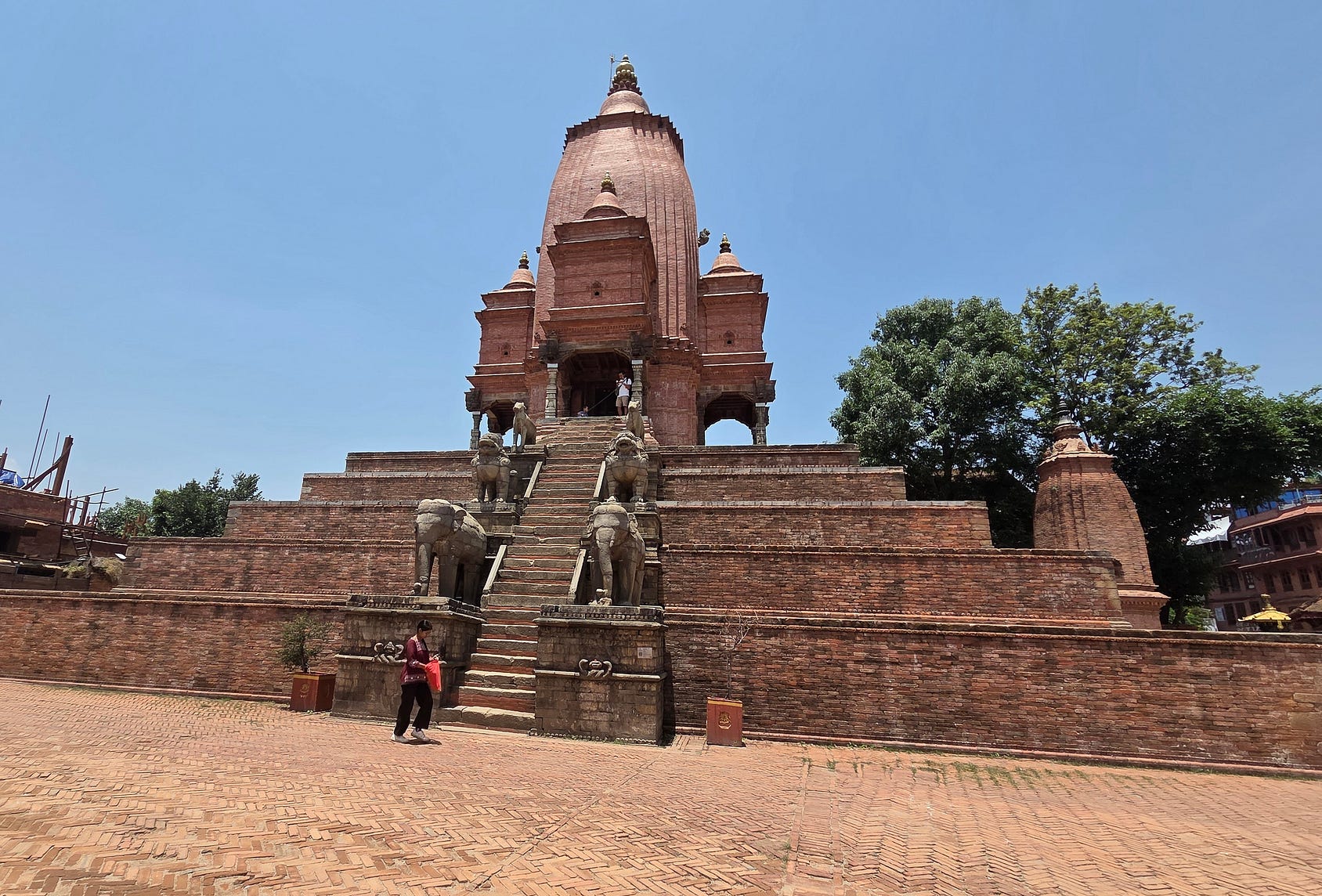
Here we found the Changu Narayan temple, controversially restored in a more highly decorated form than before the earthquake.
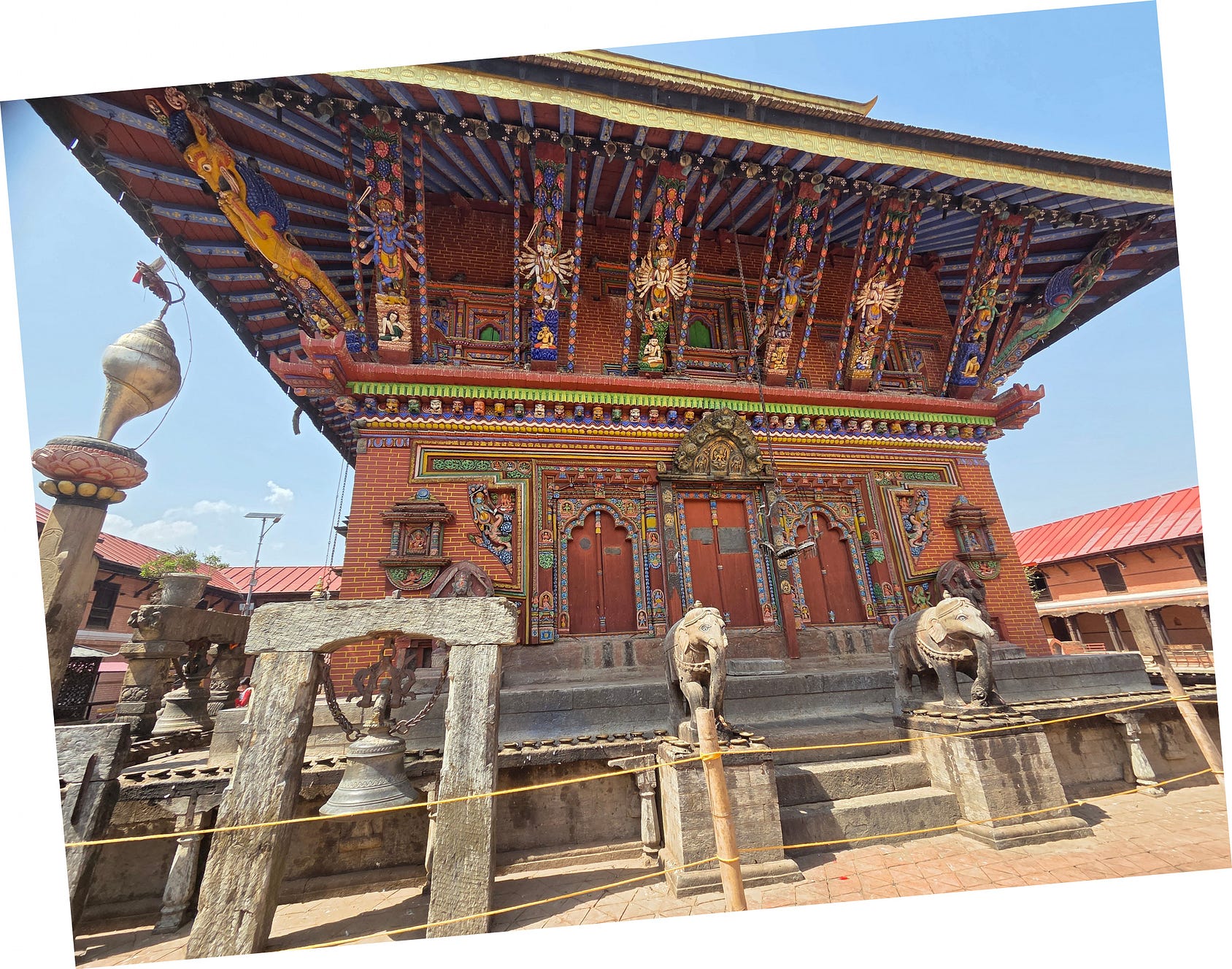
Here is a fourth video I’ve made, about Bhaktapur Durbar Square and Changu Narayan Temple.
From there, we went on to Boudhanath, where perhaps the most famous giant stupa resides
.
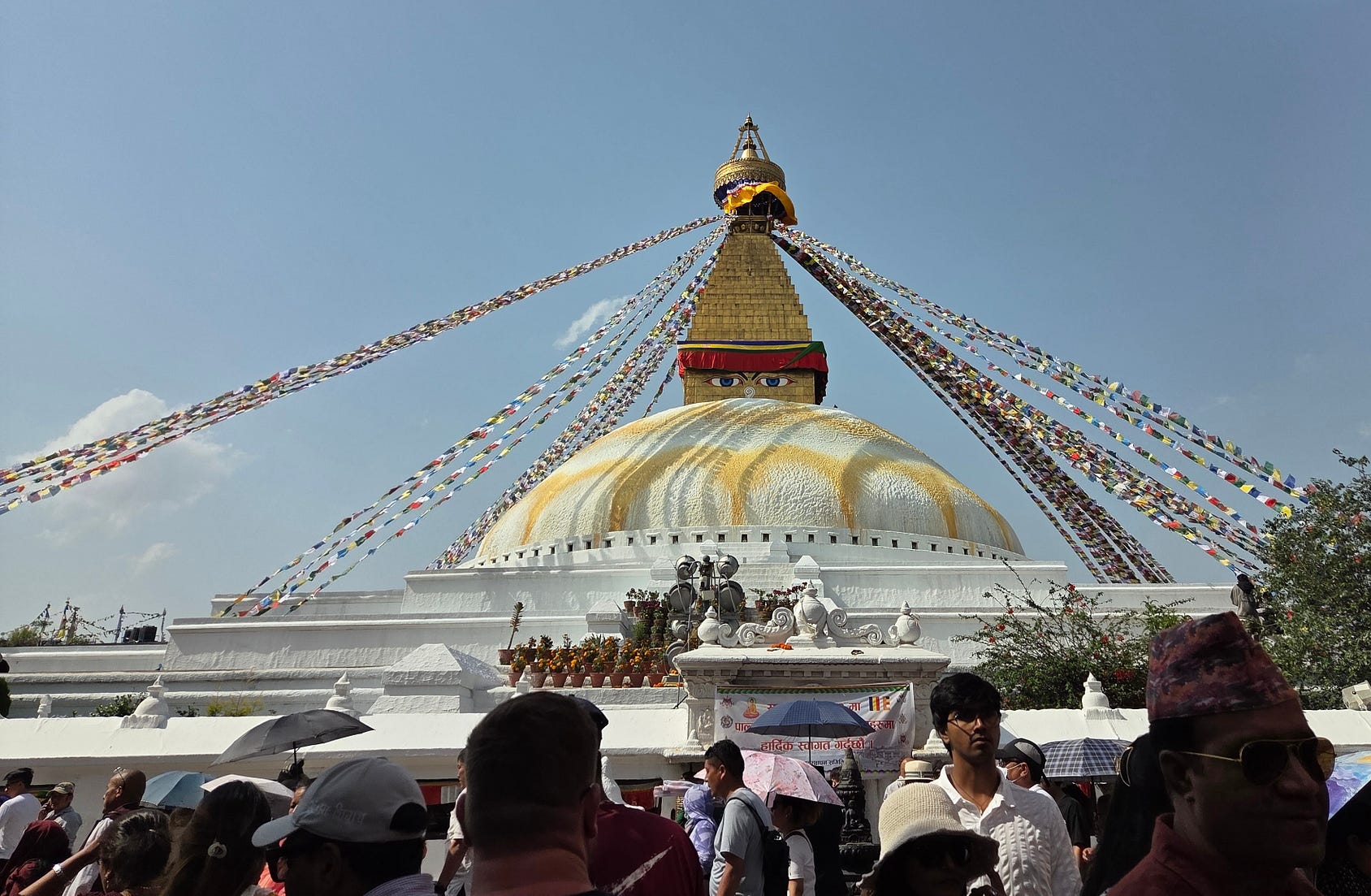
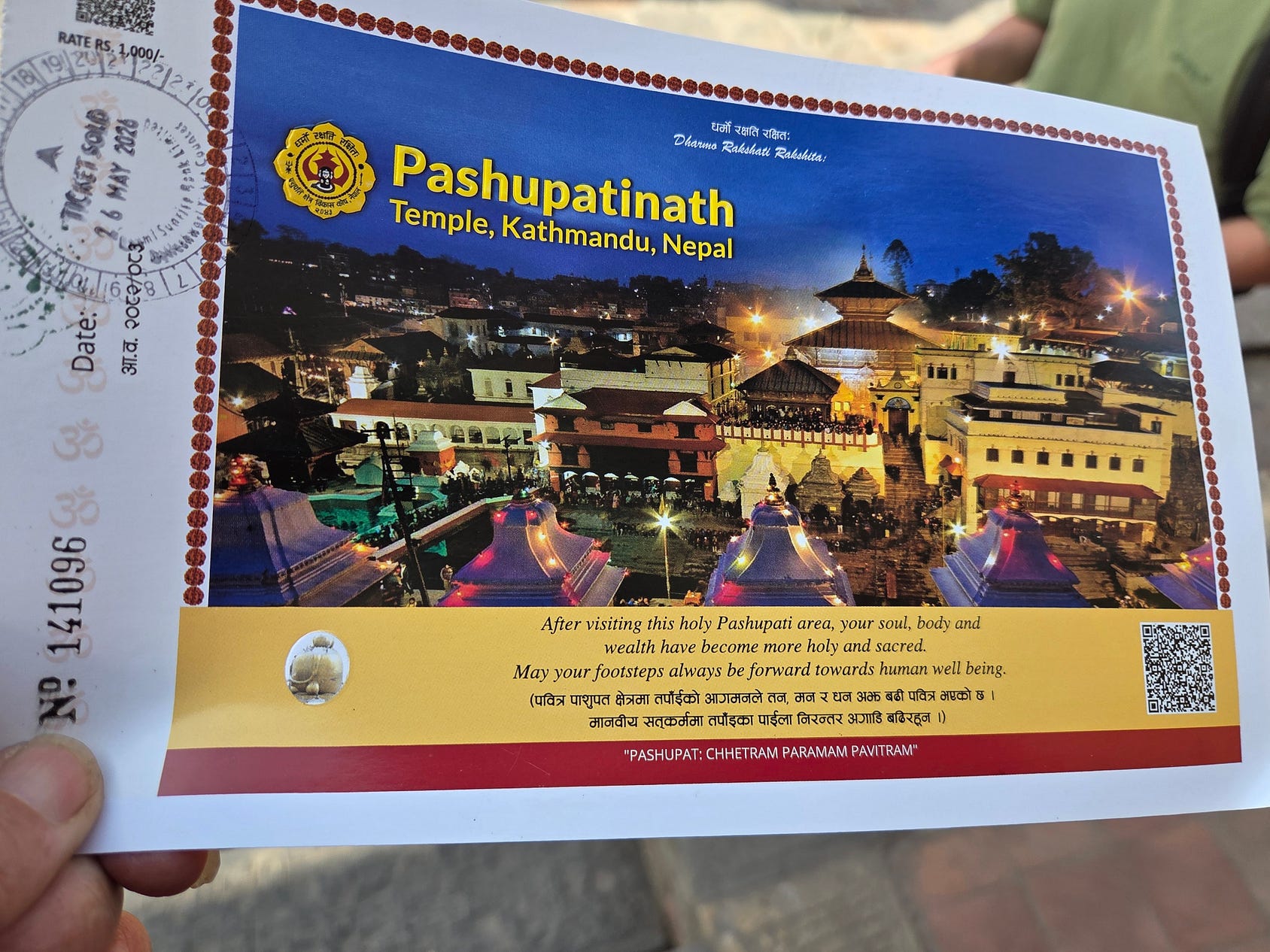
And Pashuputinath:
We also ventured into a khukuri (or khukri) shop, selling the notorious gurkha bush-knife!

And then back into the regular streets.


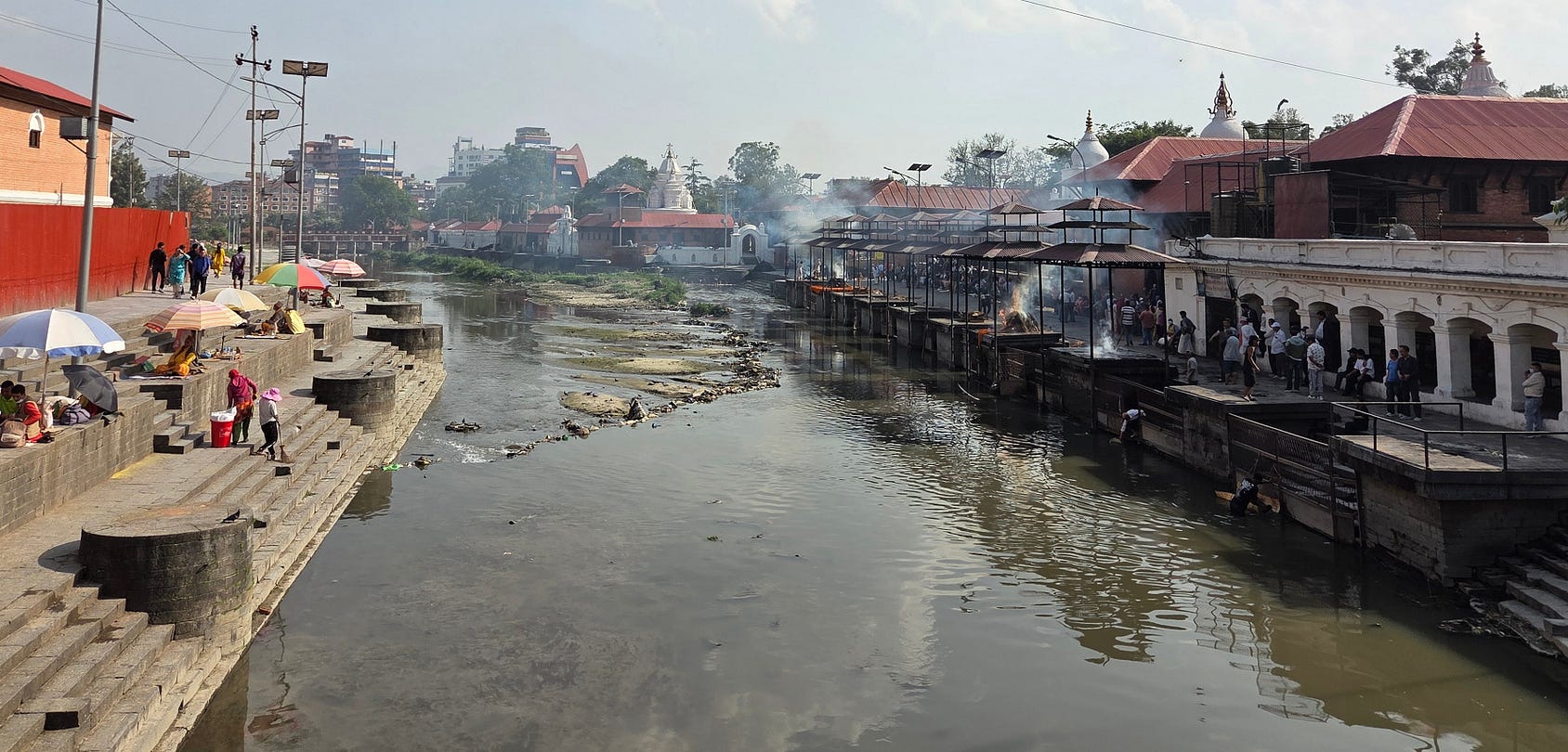
The new prime minister, Balendra Shah, a former rap musician, is pursuing an active programme of slum clearance along the riverfront, which has a degree of sacred significance. This is ostensibly being done to end slumlord encroachment on the public riverbank, although Balendra Shah is also being accused of a ‘war on the poor.’
By way of further notes, for getting around the city on random journeys, an app called inDrive is often regarded as easier and more transparent for tourists than regular taxis, which generally require negotiation and Nepalese cash, and often charge a tourist premium as well.
On the other hand, taxis are also said to be the better option at the airport (Tribhuvan International Airport), as they are right there and you can pay a fixed, official rate at the counter.
Kathmandu’s regular public transport is still entirely based on buses and informal vehicles, even though the population of the metropolitan area is now around four million.
Outside of Kathmandu, it’s also possible to catch the Chandragiri Cable Car into the foothills of the Himalayas.
Next week, I will blog about my visit to Bandipur, another famous Newar-culture town roughly halfway between Kathmandu and Pokhara!
Subscribe to our mailing list to receive free giveaways!

