Giveaways
AFTER arriving at Kaohsiung’s waterfront, I went on a harbour cruise.
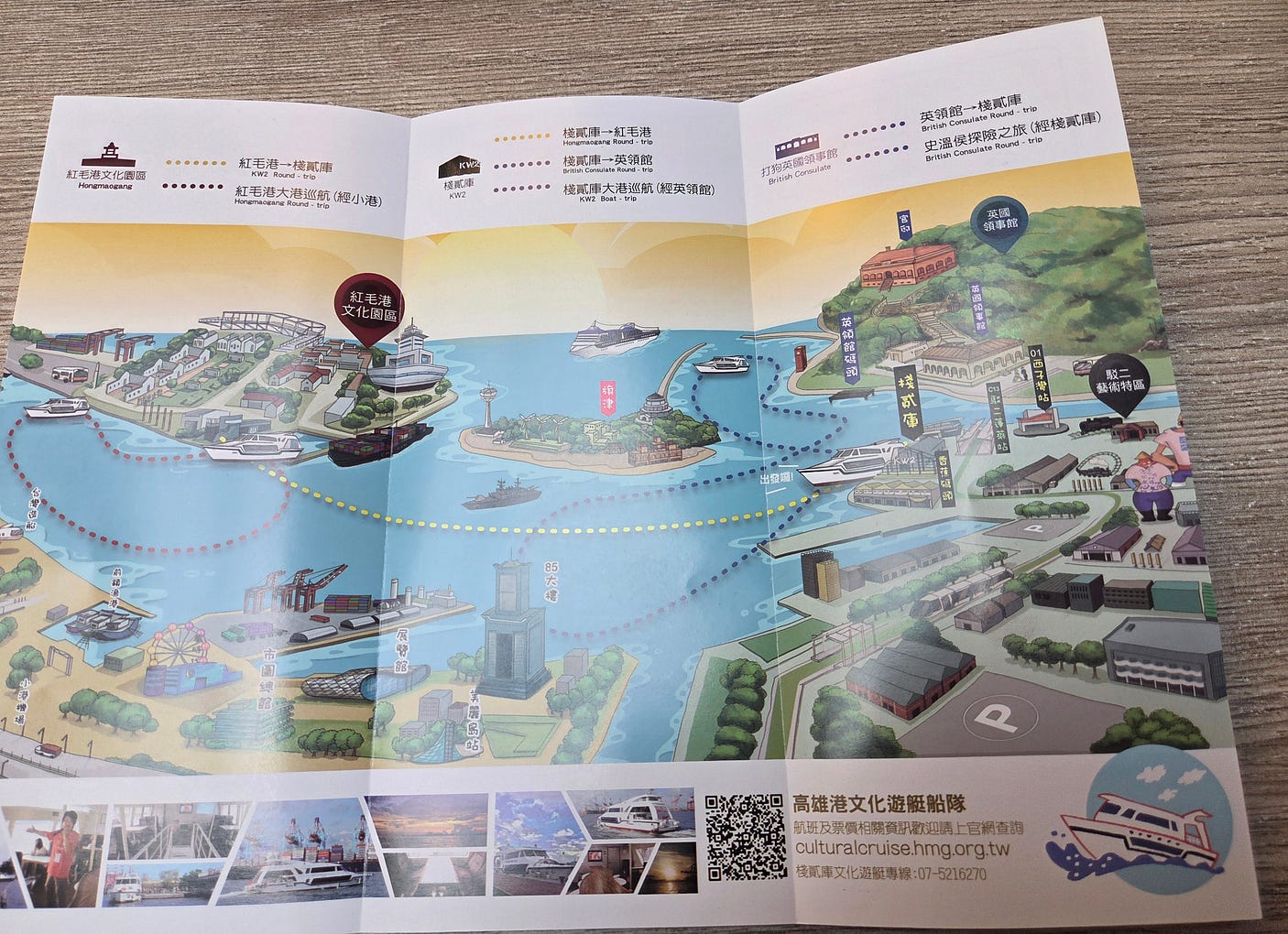
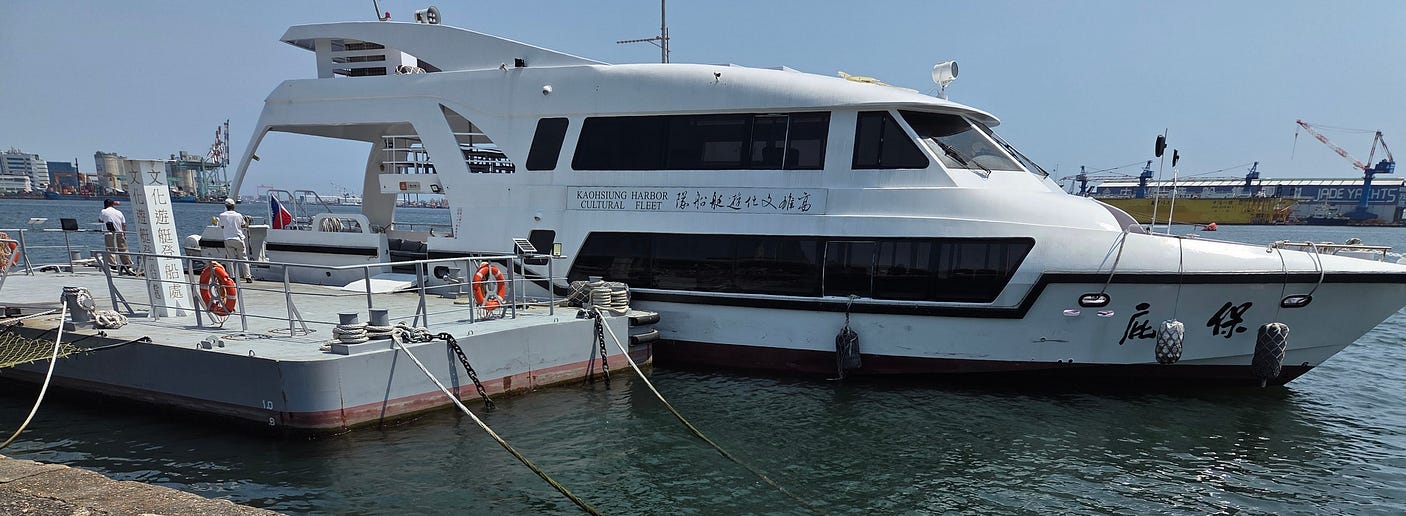
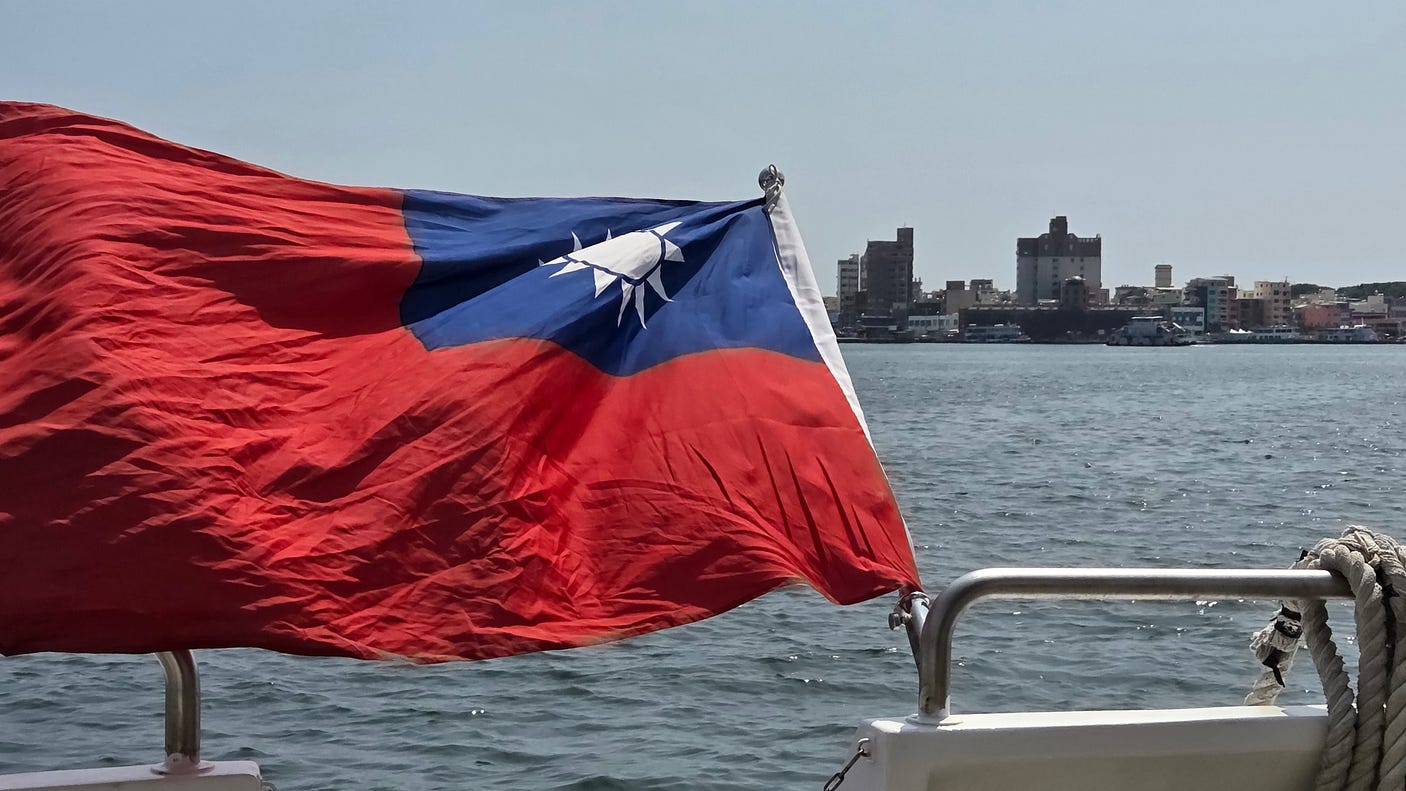
Kaohsiung is a working port and a defence base, as you can see from this rakish Taiwan Coast Guard vessel. The city has two naval bases, including the largest one in the country, an army base and an air force base.
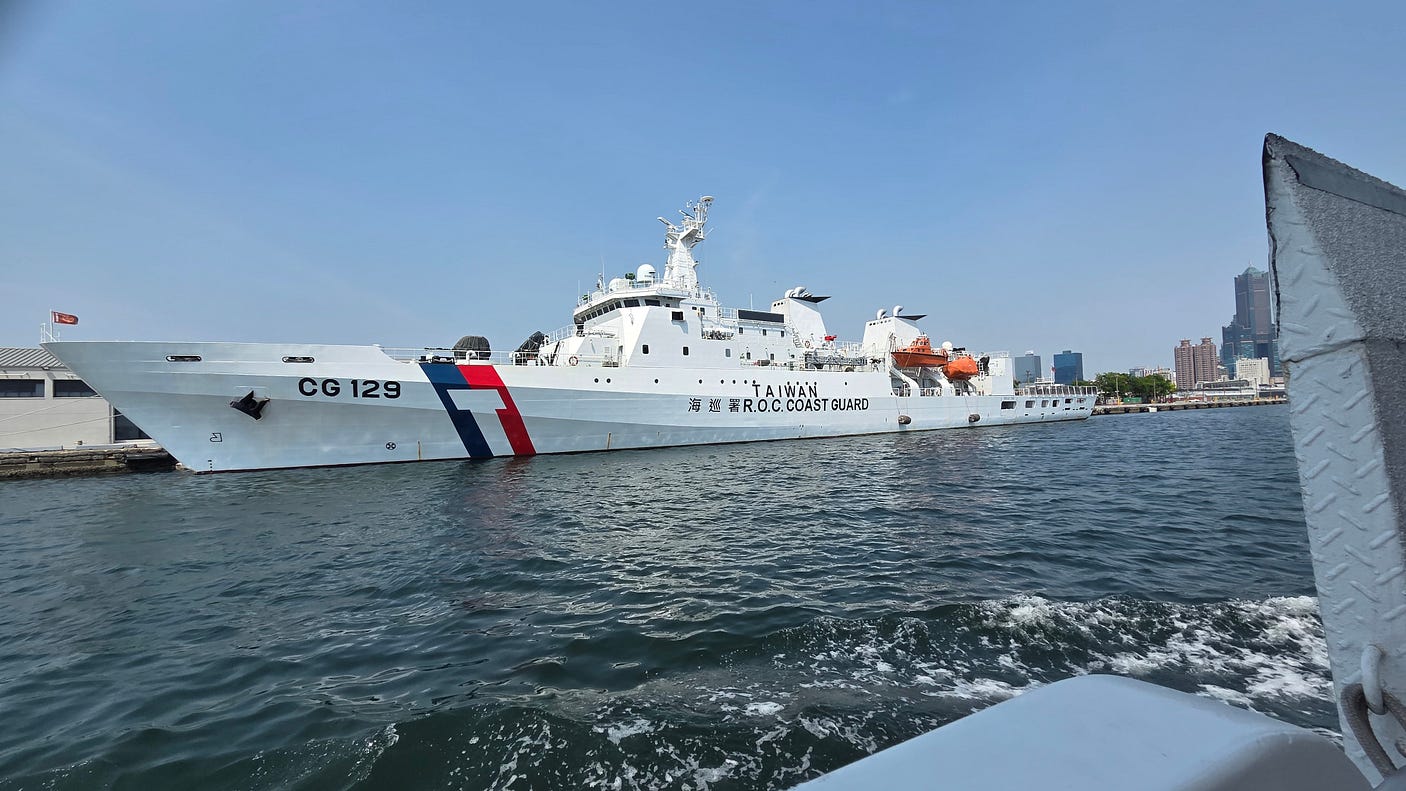
The bases in Kaohsiung guard the southern end of the Taiwan Strait, which is also guarded from the other side for Taiwan by the heavily militarised islands of Kinmen, just off the coast of Fujian. These islands have a resident population of 127,000, plus a sizable Taiwanese garrison.
In the following map, which uses older spelling and names, the biggest of the Kinmen islands is described as “Chin-men Tao (Quemoy Island).”
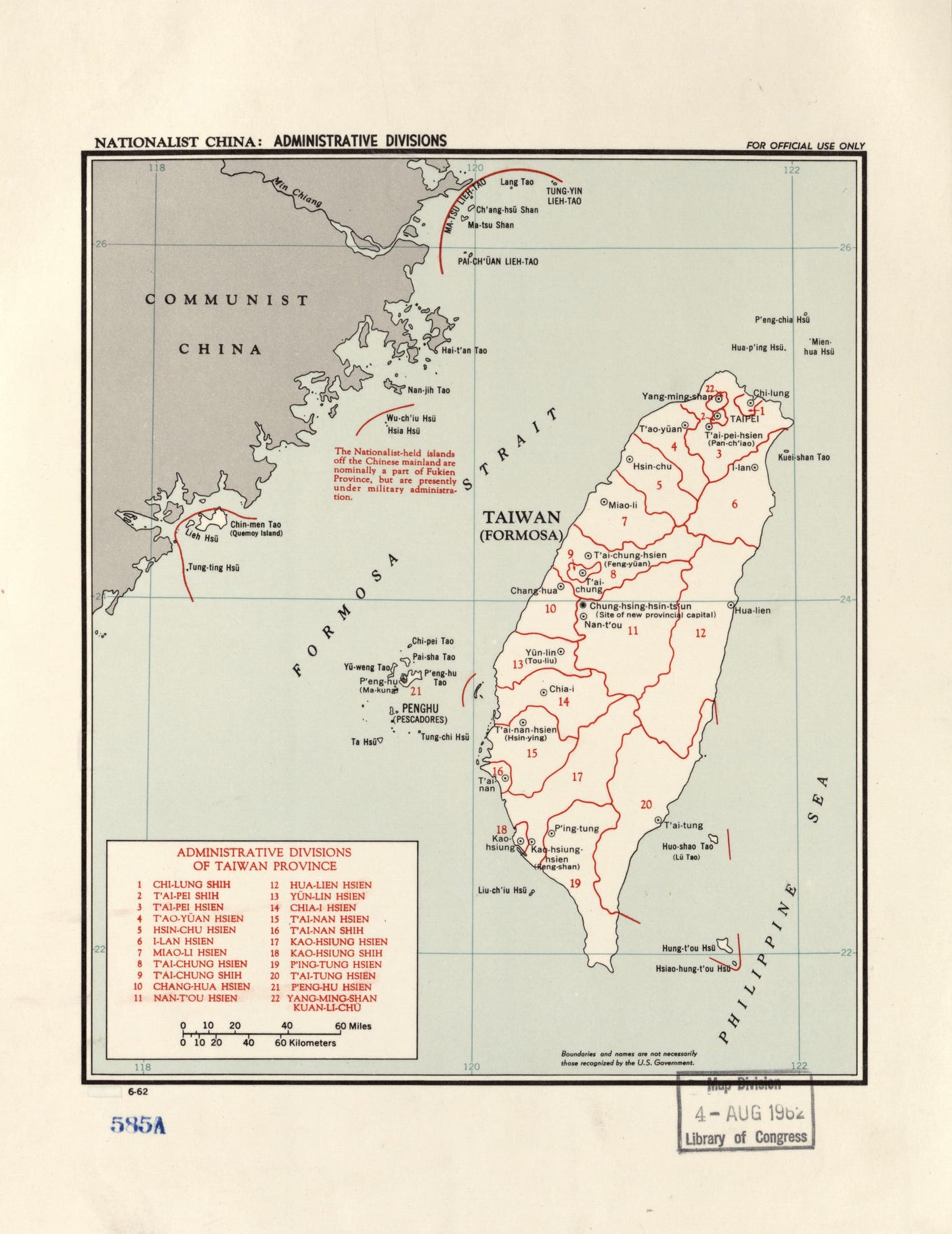
After the Communist victory in 1949, Taiwan still controlled many of the islands just off the coast of the mainland, in addition to the big island of Taiwan and its offshore islands.
This was because the Kuomintang (KMT) retained nearly all of the larger ships of the Chinese Navy.
By the mid-1950s, the Communists did manage to gain control of some of the smaller Taiwanese islands that lay just off their shore.
But the Kinmen archipelago at the southern end of the Taiwan Strait, and the similarly mainland-offshore Matsu Islands at the northern end proved too hard to capture, especially once the Americans let it be known that they might join in to defend them.
(Even the use of nuclear weapons was mooted by the Americans. And Chiang Kai-Shek’s KMT regime also looked at the possibility of developing nuclear weapons of its own, though the Americans discouraged it from doing so.)
Following their last serious attempt to capture Taiwanese territory, in 1958, the Communists would continue to shell Kinmen from the mainland for years to come, in a curiously ritualised manner whereby the Communists only fired their artillery on alternating days, a practice that continued until the 1970s but tapered off after the death of Chiang Kai-Shek in 1975.
There has been no shelling at all for nearly fifty years now. And, in fact, since 2001, there has been a ferry from the mainland to Kinmen. In April 2026, the Chairperson of Taiwan’s KMT, Cheng Li-wun, visited the mainland to meet Xi Jinping.
So, while the mainland is more powerful than it used to be, relations between the mainland and Taiwan also aren’t as bad as they used to be, in the days when Chiang Kai-Shek and his great adversary Chairman Mao, who died in 1976, were both still alive.
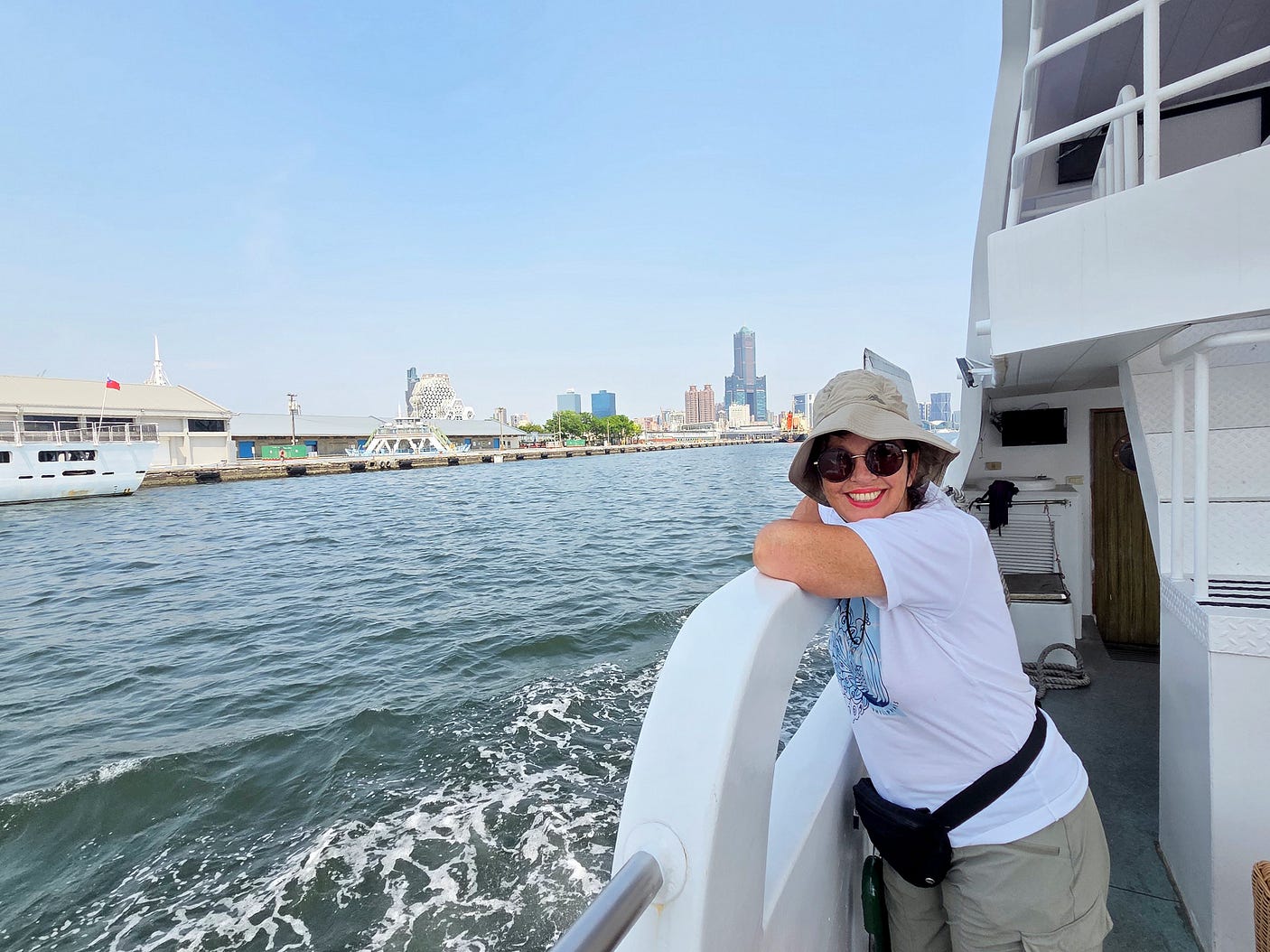
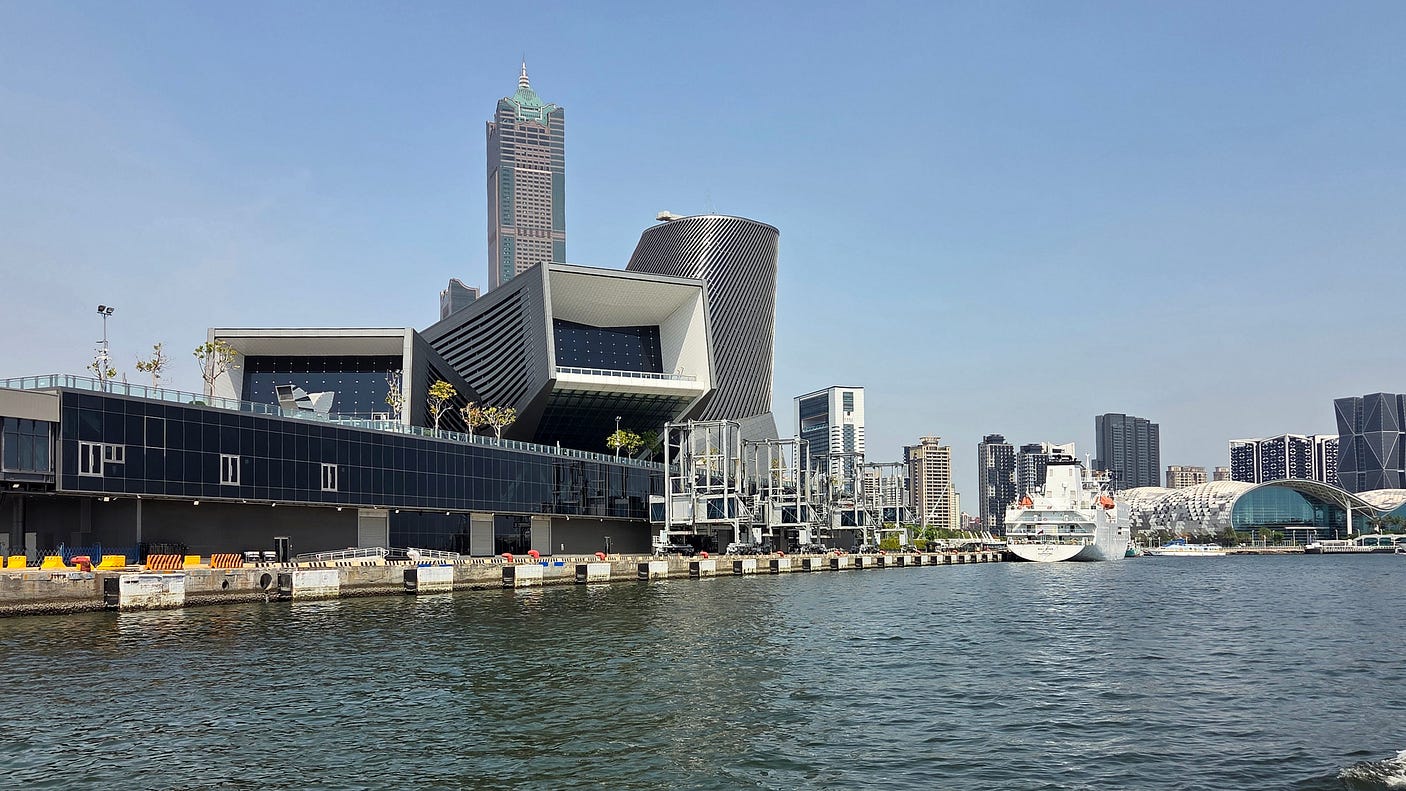
On the cruise, I saw a lot of the amazing architecture of Kaohsiung, such as the 85 Sky Tower, the tallest building in Kaohsiung and the second-tallest in Taiwan, in which the upper section sits on two lower structures with a gap in the middle.
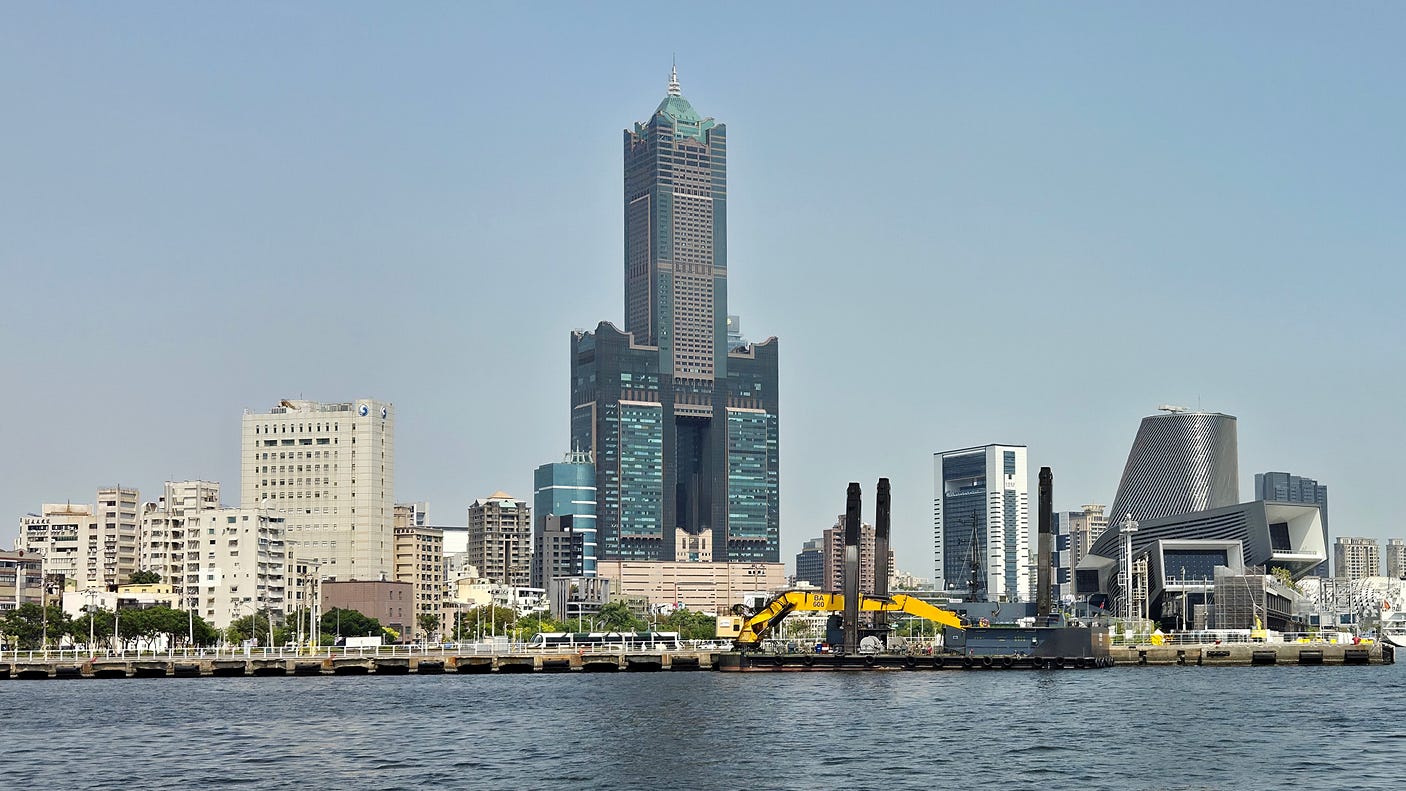
And the Kaohsiung Music Center, with its striking externally framed towers rising up from a lower auditorium.
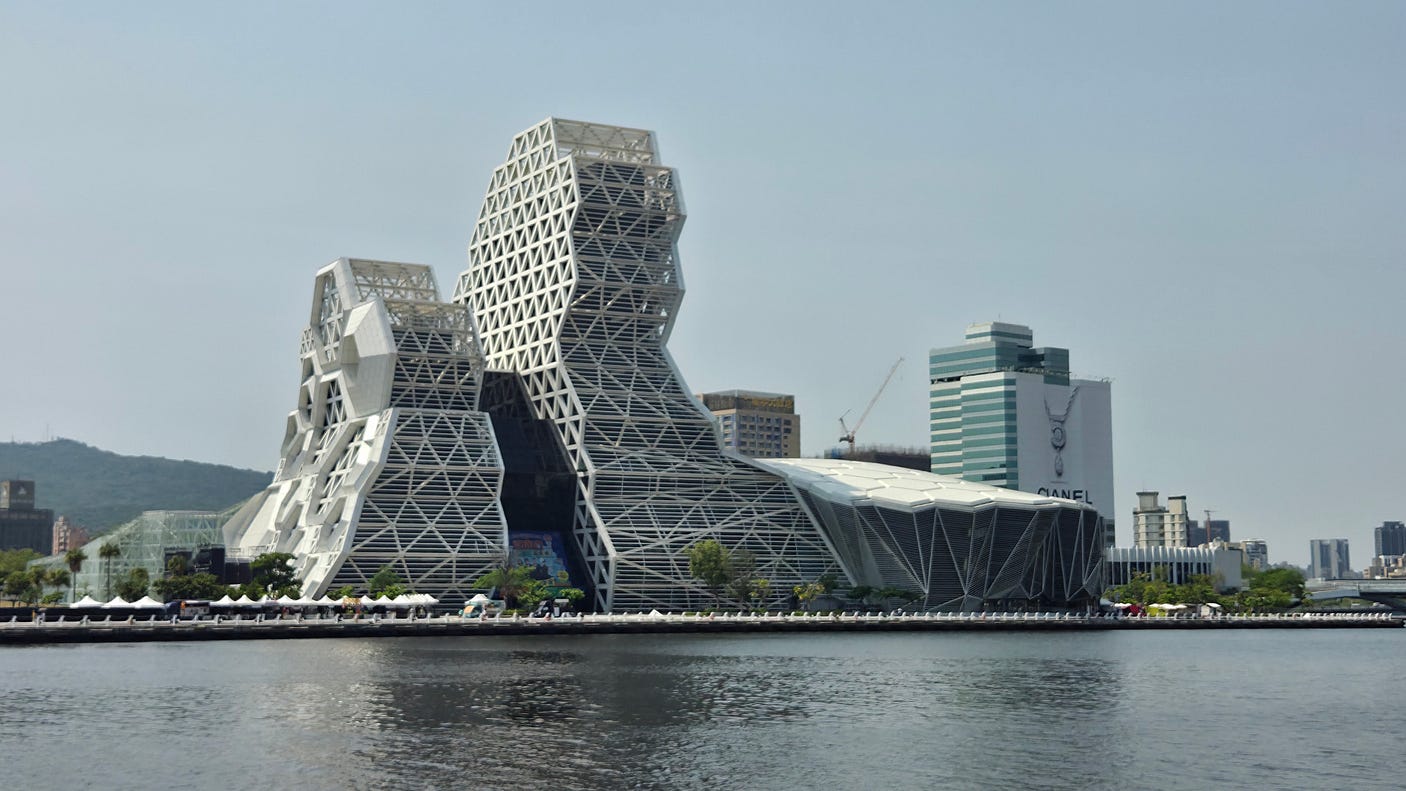
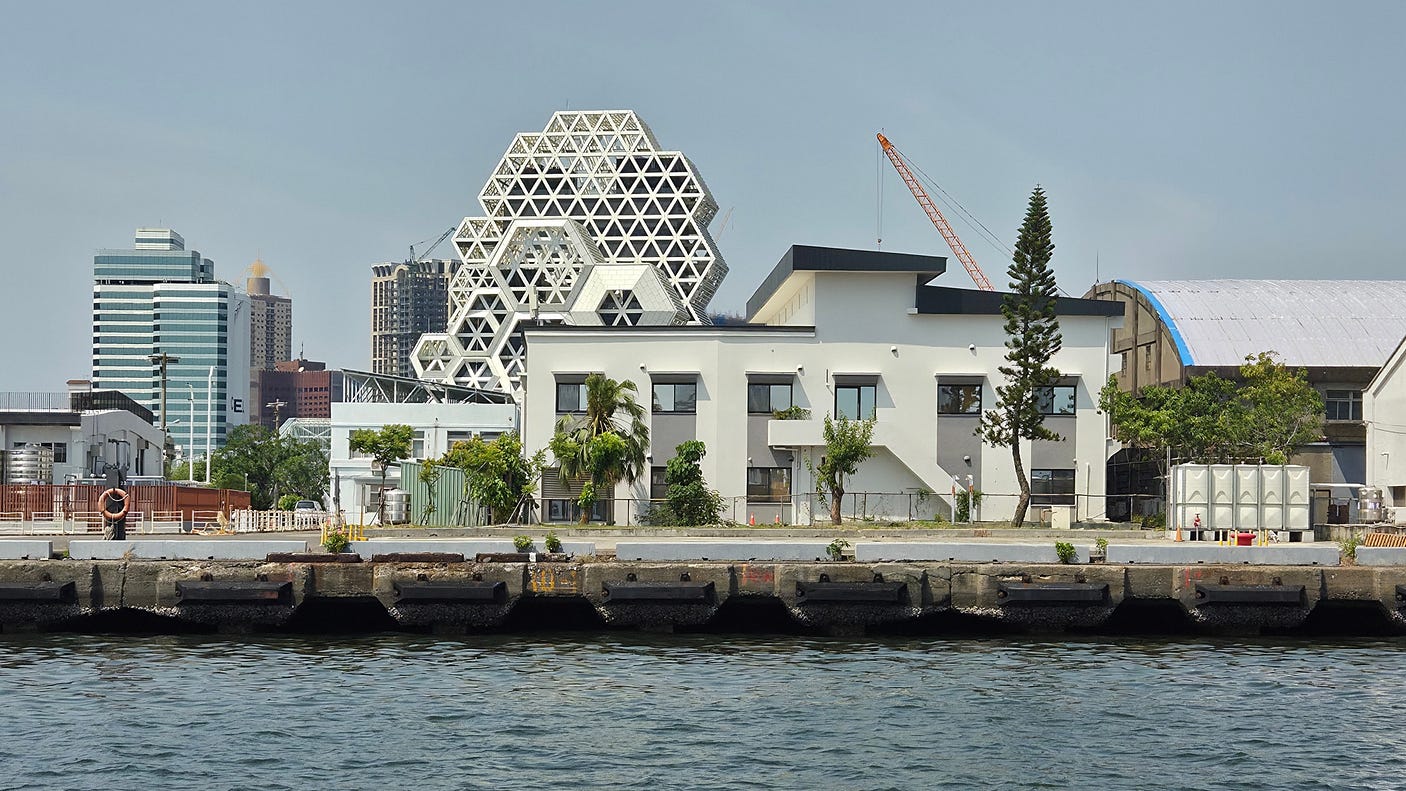
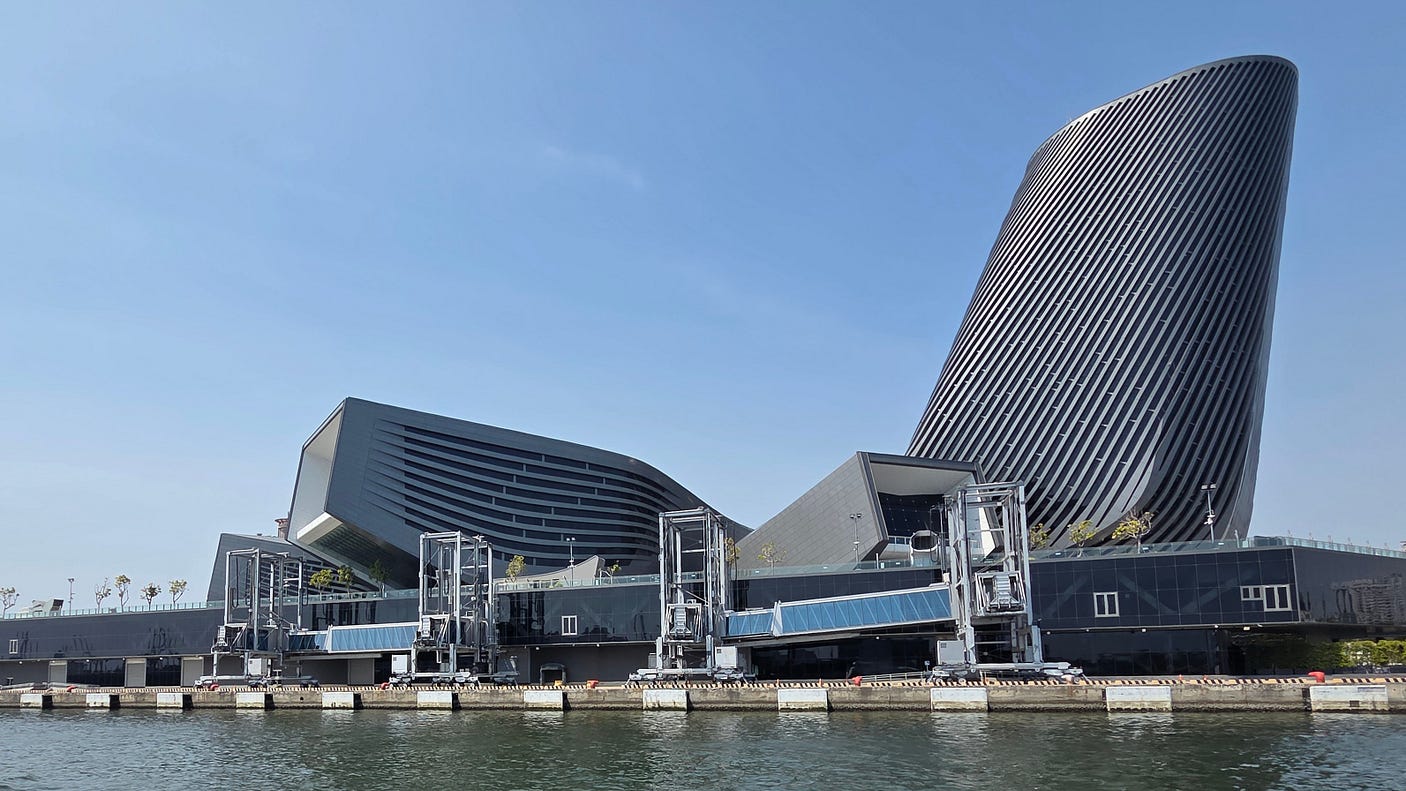
And the Kaohsiung Port Terminal, also known as the Cruise Terminal: an extraordinary collection of structures set at strange angles to each other.
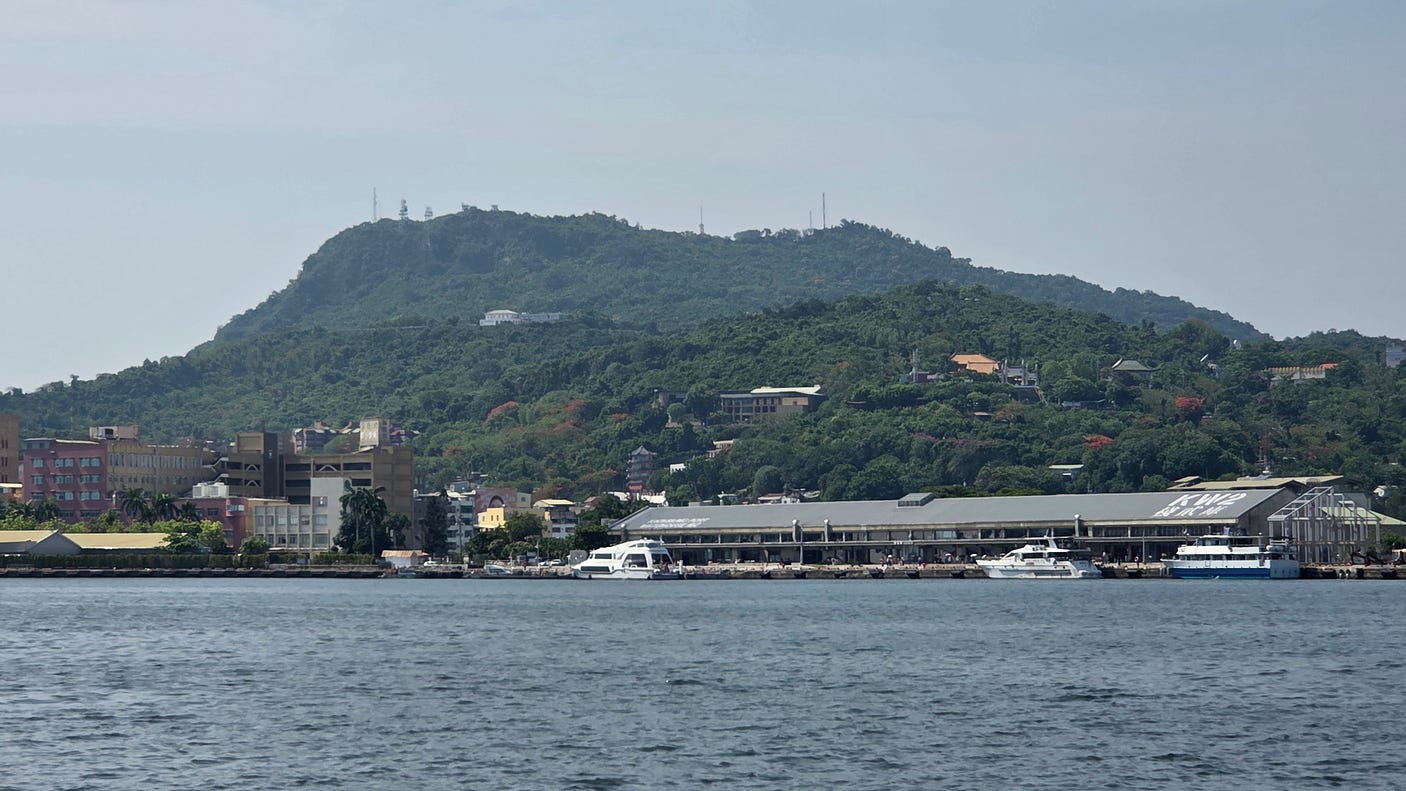
The next photo shows the 356-metre mountain of Shoushan National Nature Park, on the coast just north of the main harbour and south of Zuoying.
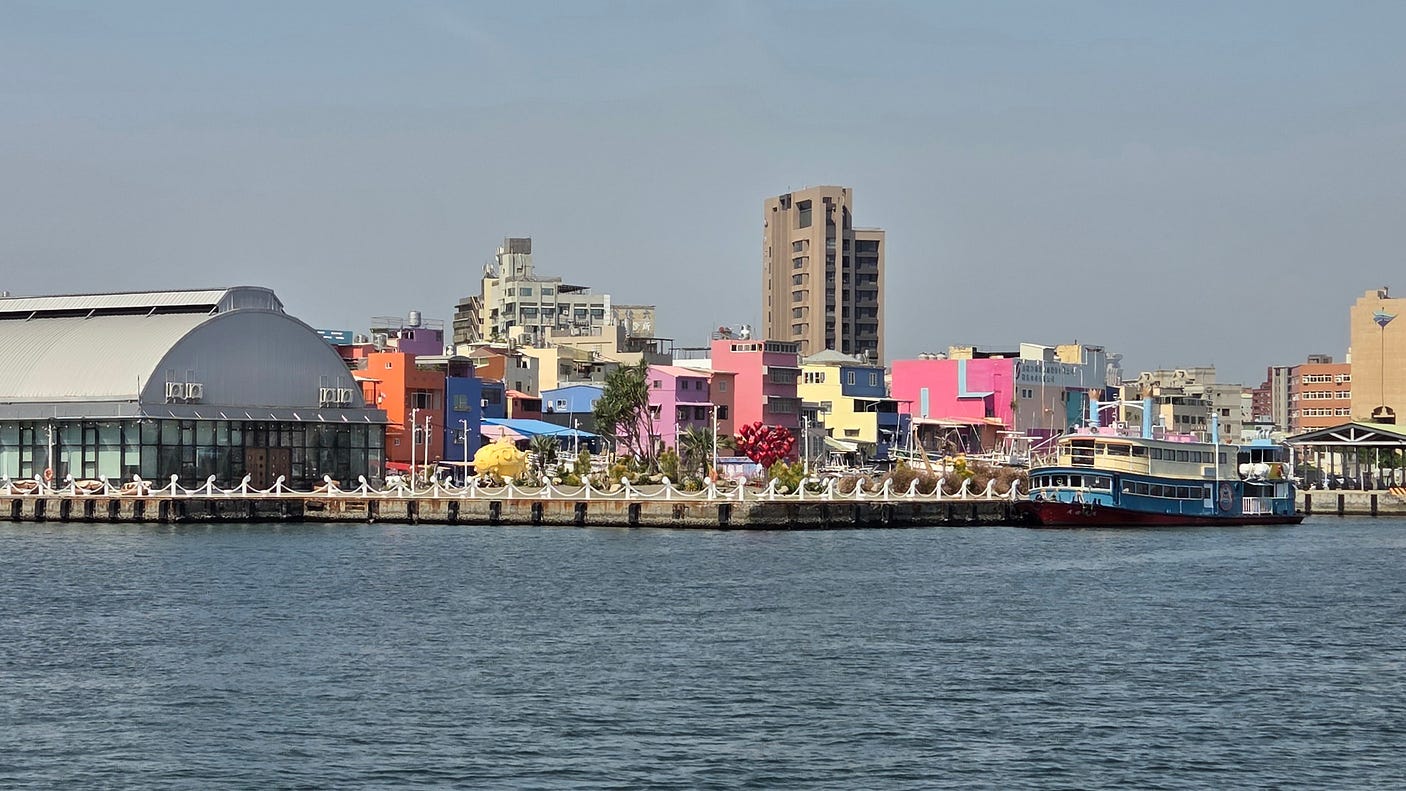
And some amazing pastel-coloured buildings:
I made a short video of my harbour cruise, as well:
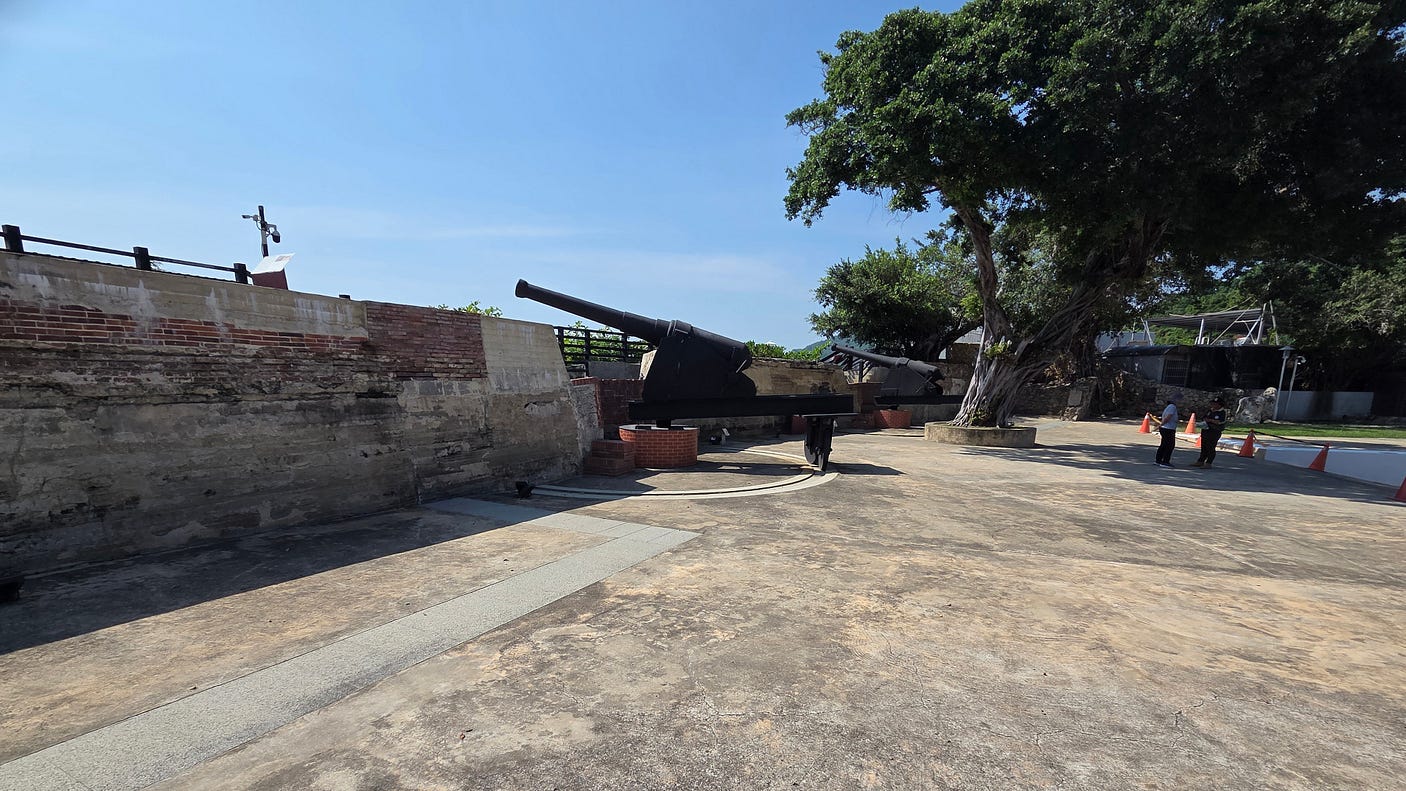
At the mouth of the main harbour, we visited Cihou (or Quihou) Fort, first erected in 1720 and modernised around the year 1880 by the Qing Dynasty.
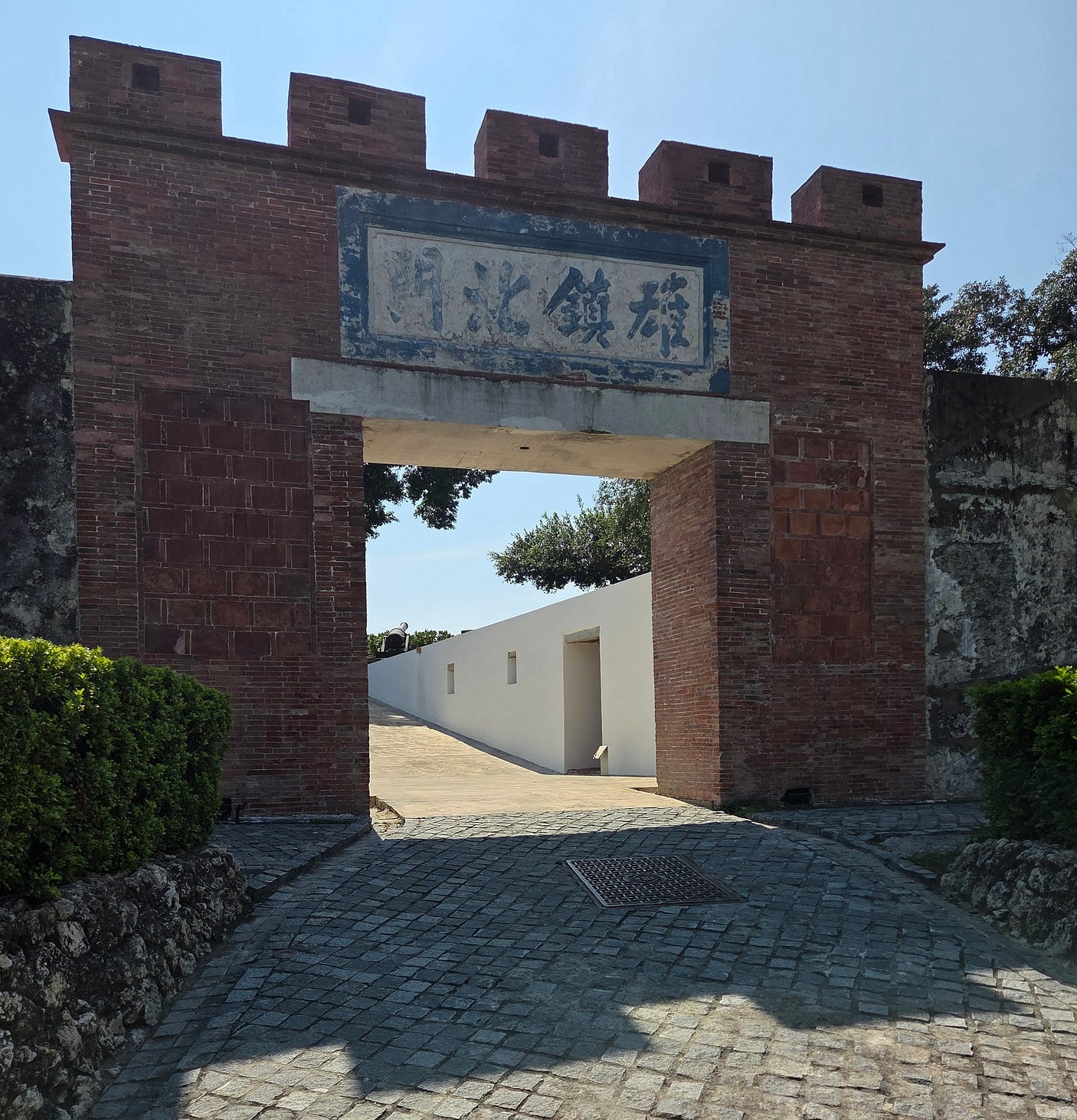
As part of the modernisation effort, Armstrong guns, pretty much the latest thing at the time, were installed.
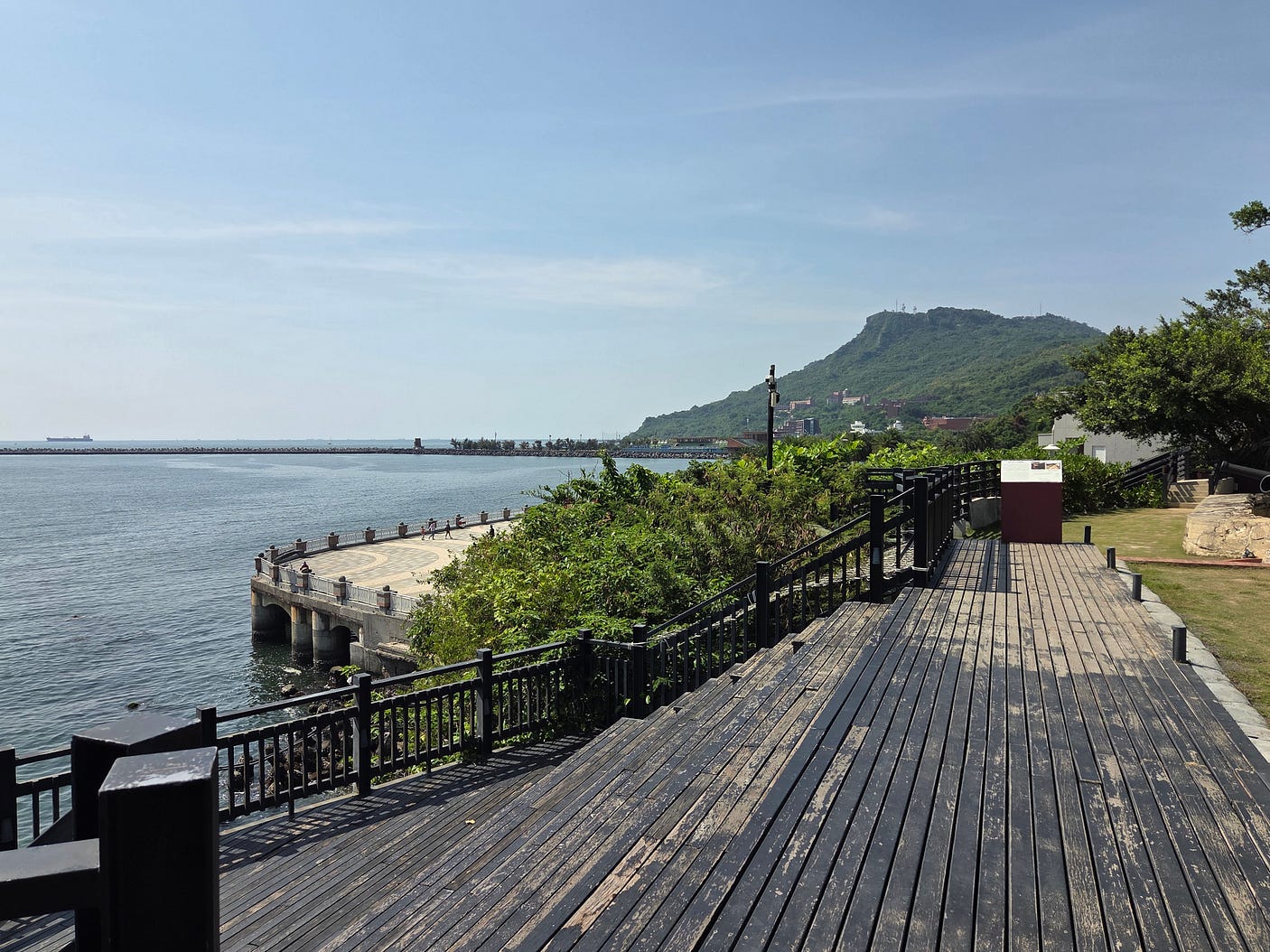
Here’s a view of the waterfront promenade, in the same area.
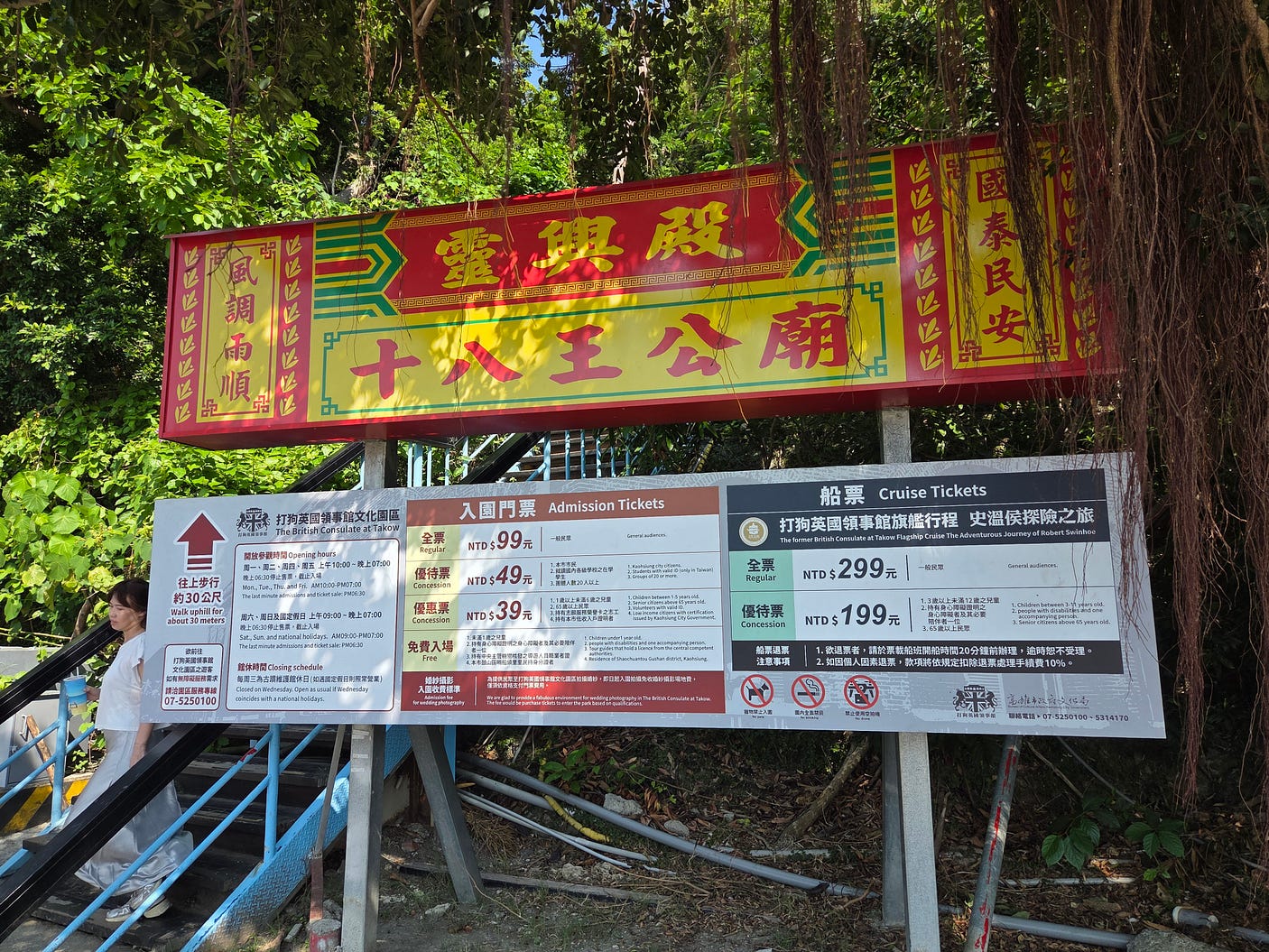
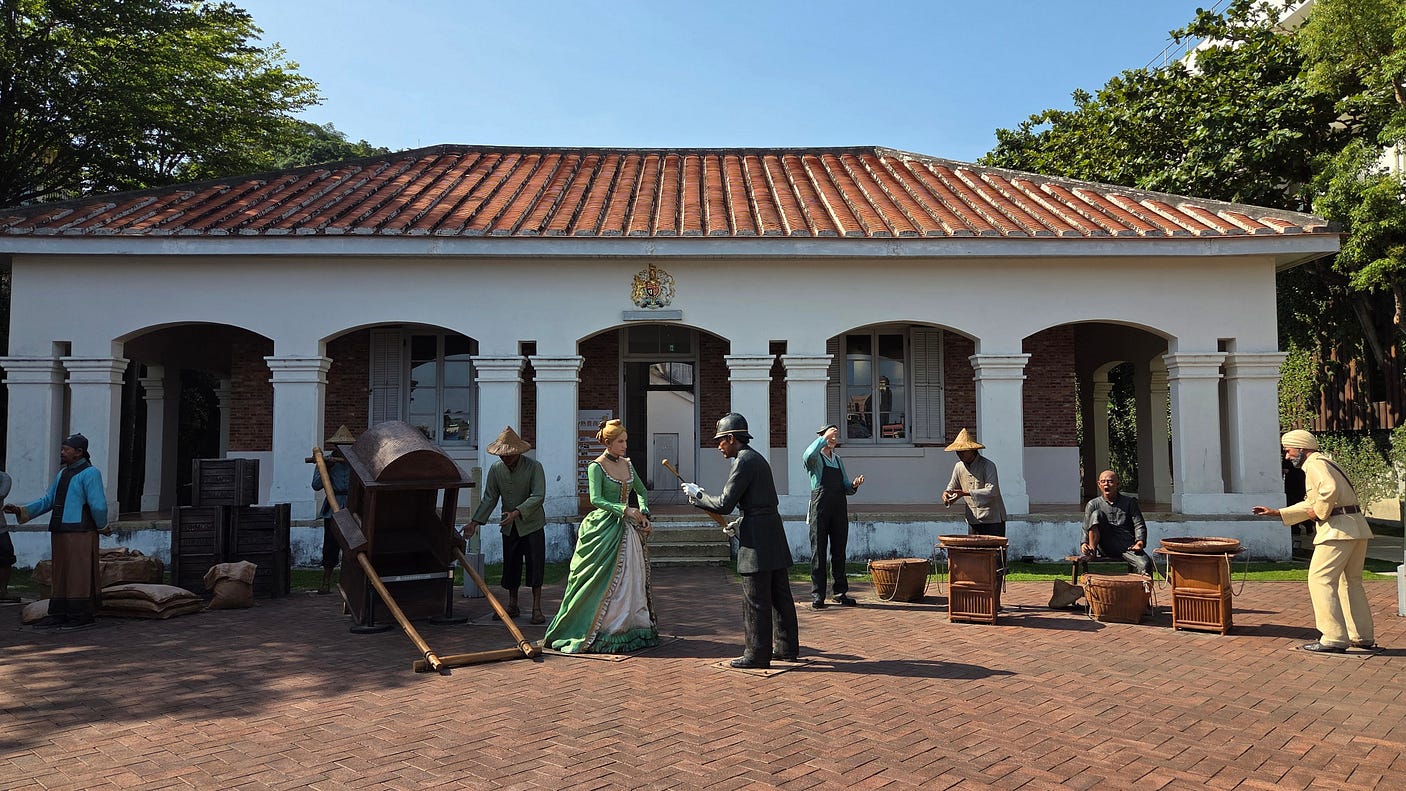
After the Cihou Fort, we went to the former British consulate at Takow, or Tokow, partway up Shoushan on the north head of the main harbour.
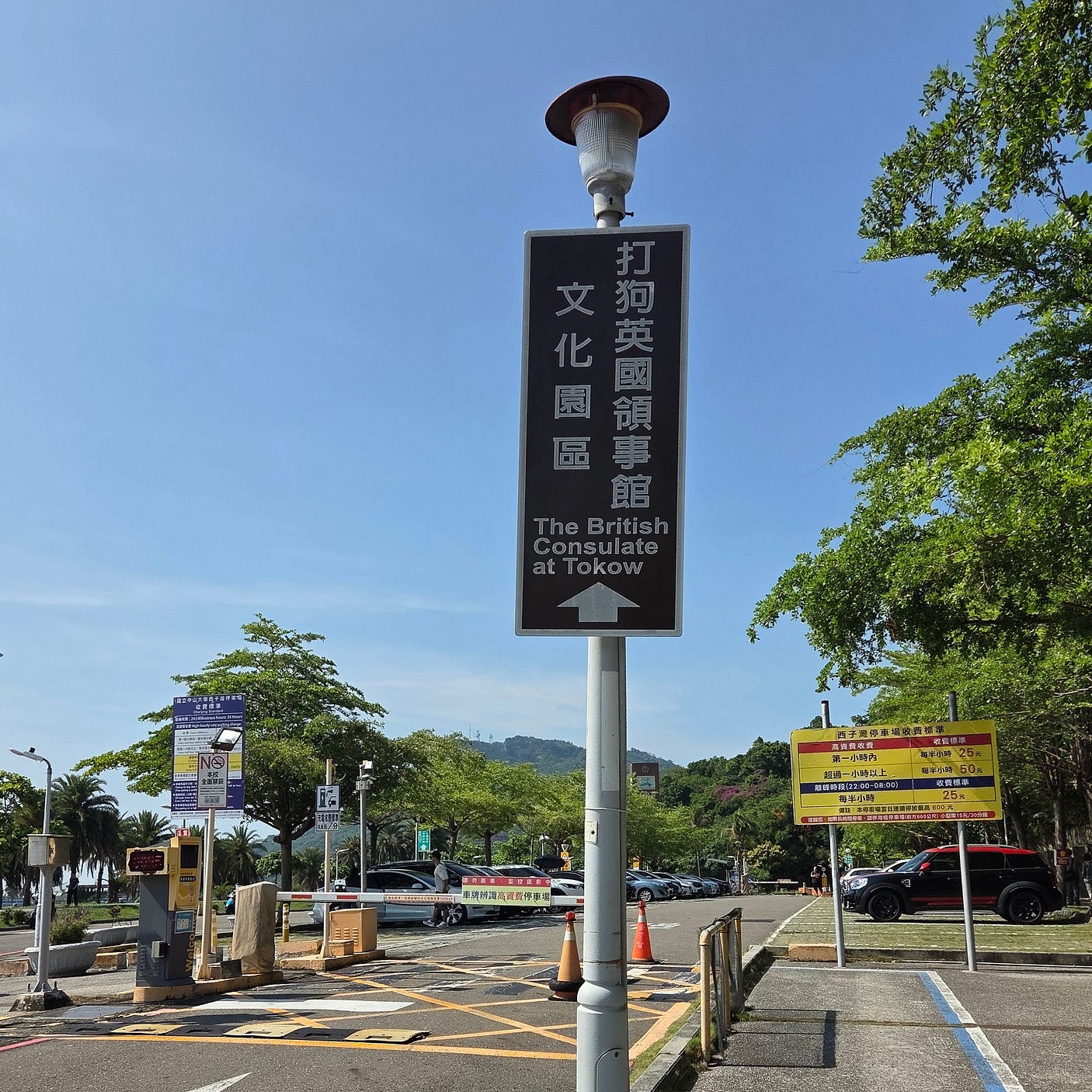
I loved this especially colourful Chinese sign in the same area!
Here’s the former consulate, with mock-up figures from the period.
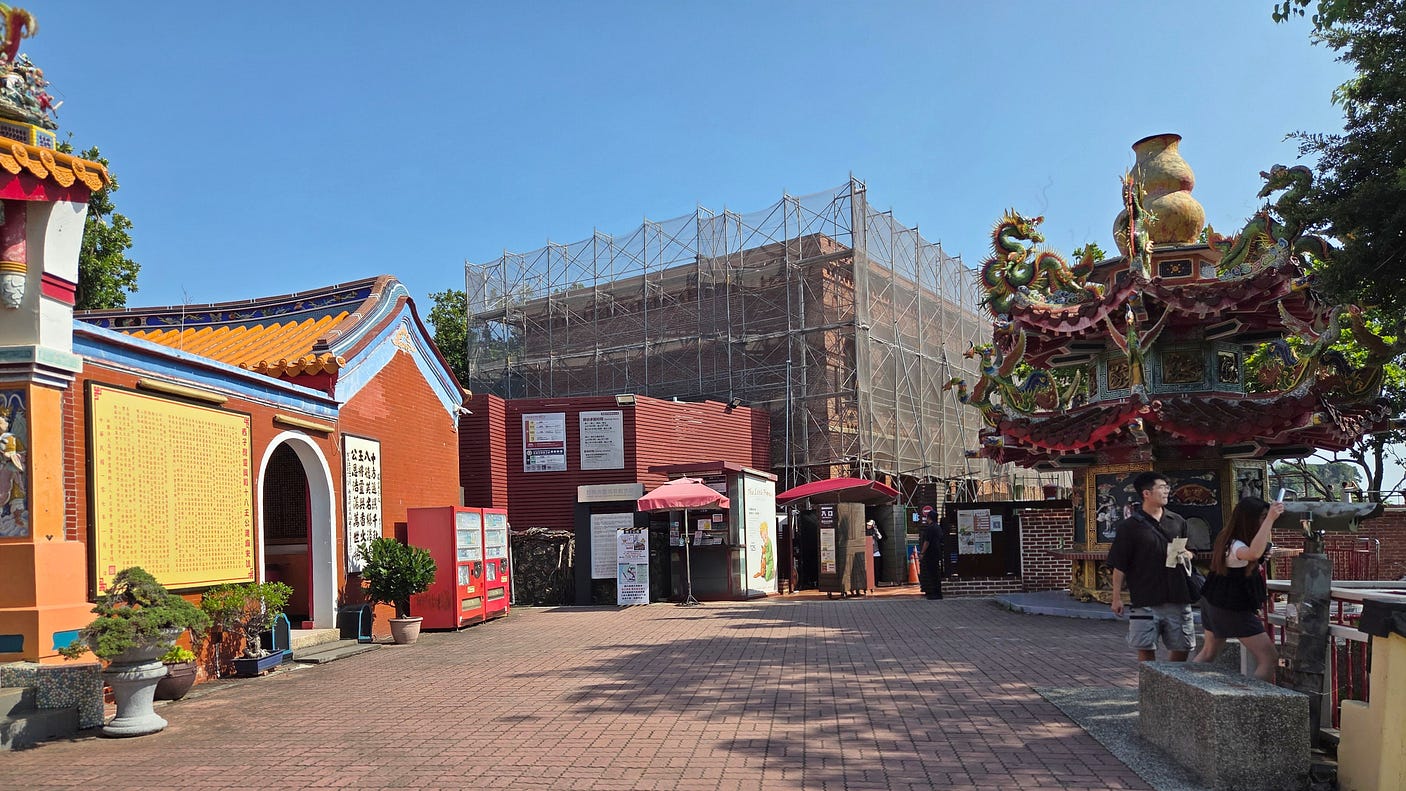
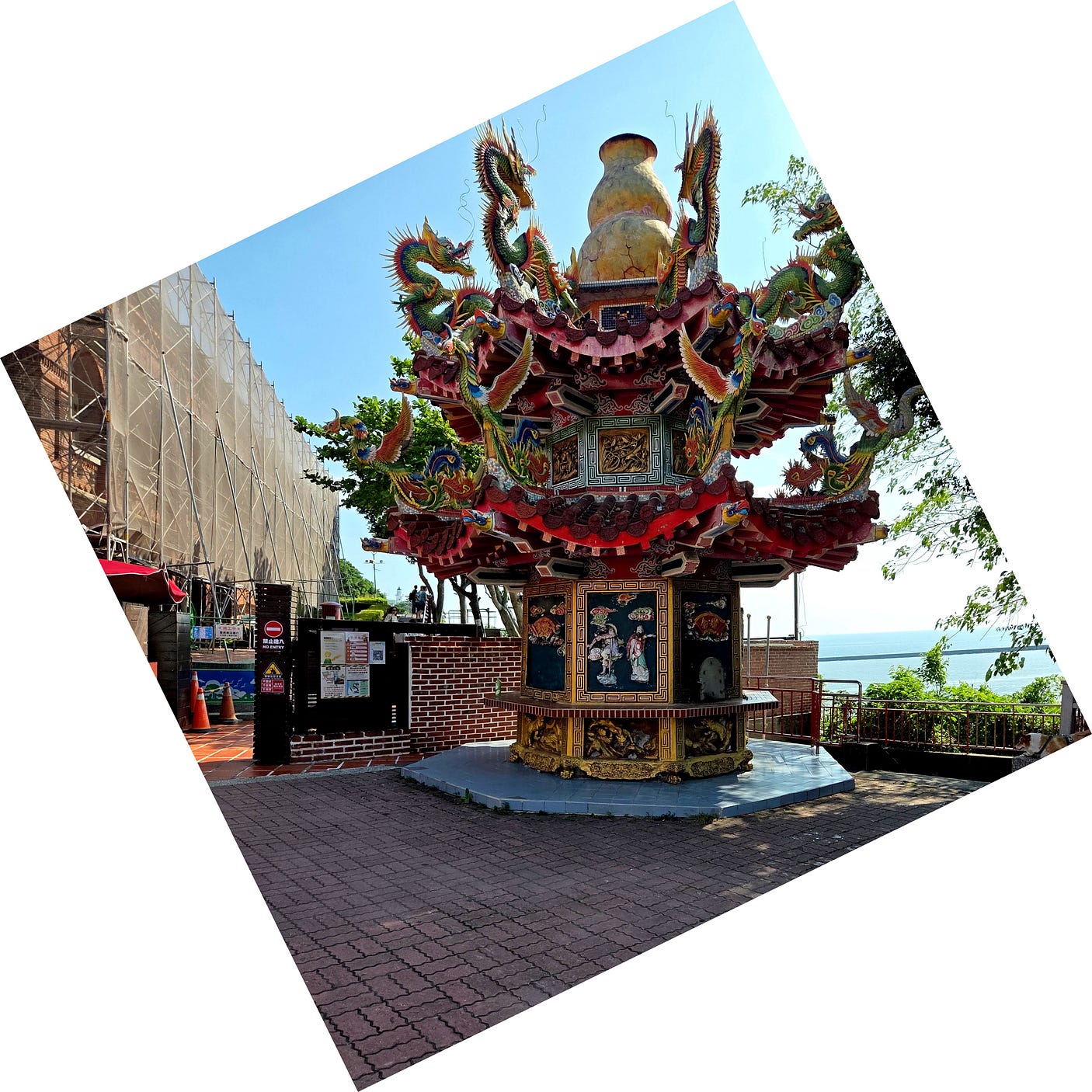
Next to the consulate, there was a temple called the Temple of the Eighteen Kings, or the Sizihwan Temple of the Eighteen Lords, named after eighteen Qing merchants who travelled to Taiwan and were mistakenly executed as rebels, Confusingly, there is also a Temple of the 18 Lords in Taipei, which honours 17 merchants who perished at sea and a faithful dog that jumped into their grave. Are these both different versions of the same story, I wonder?
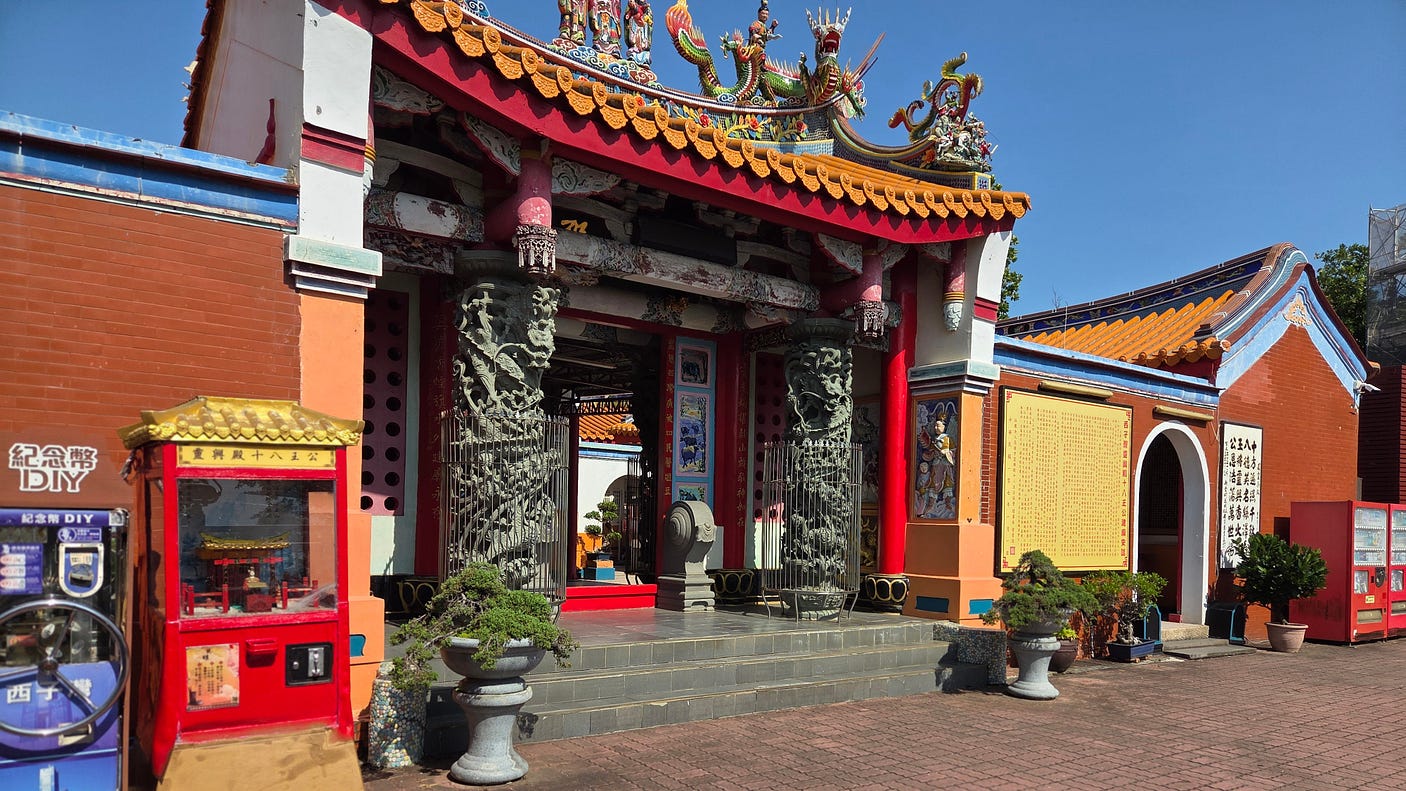
There was an amazing object in front of the temple —
Here’s a closer view!
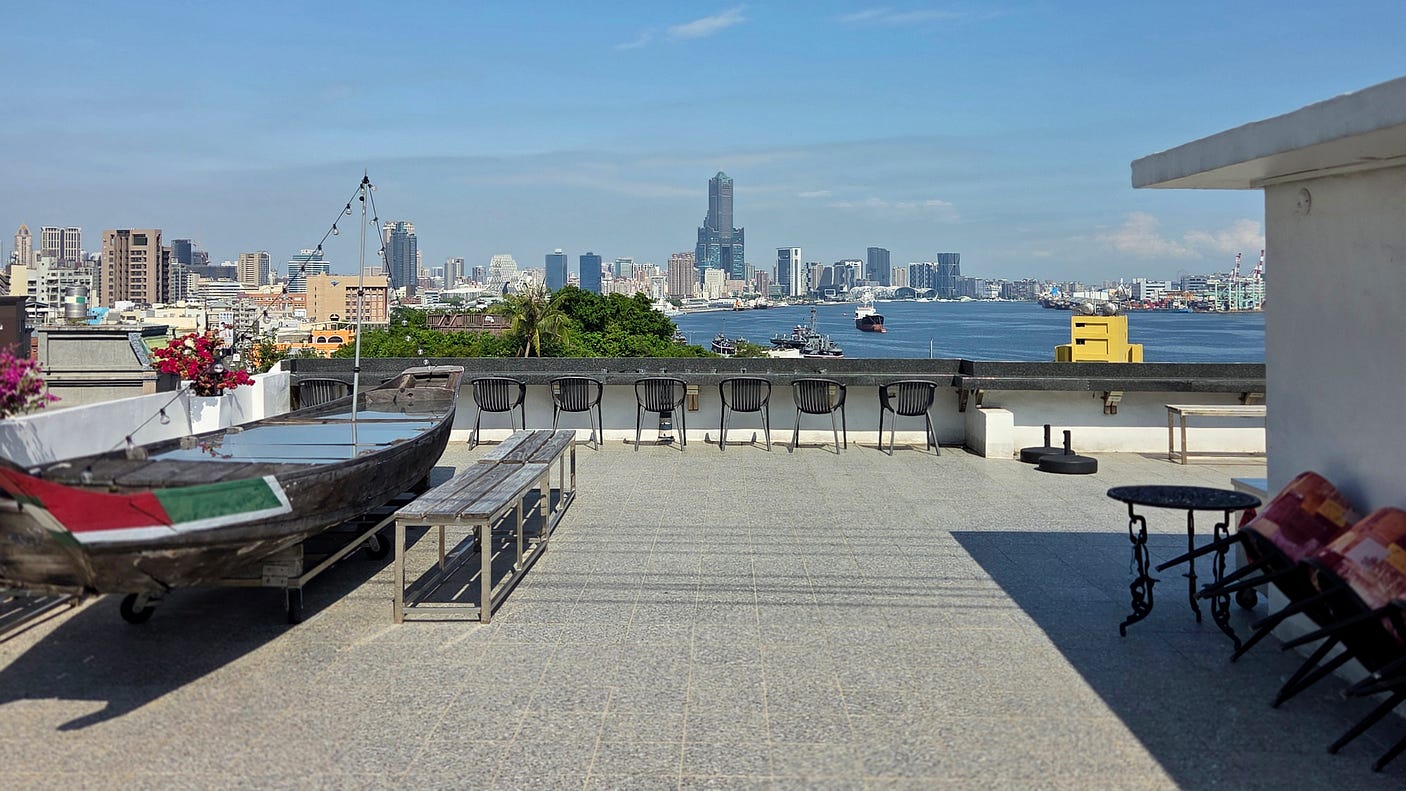
And here is view from a rooftop.
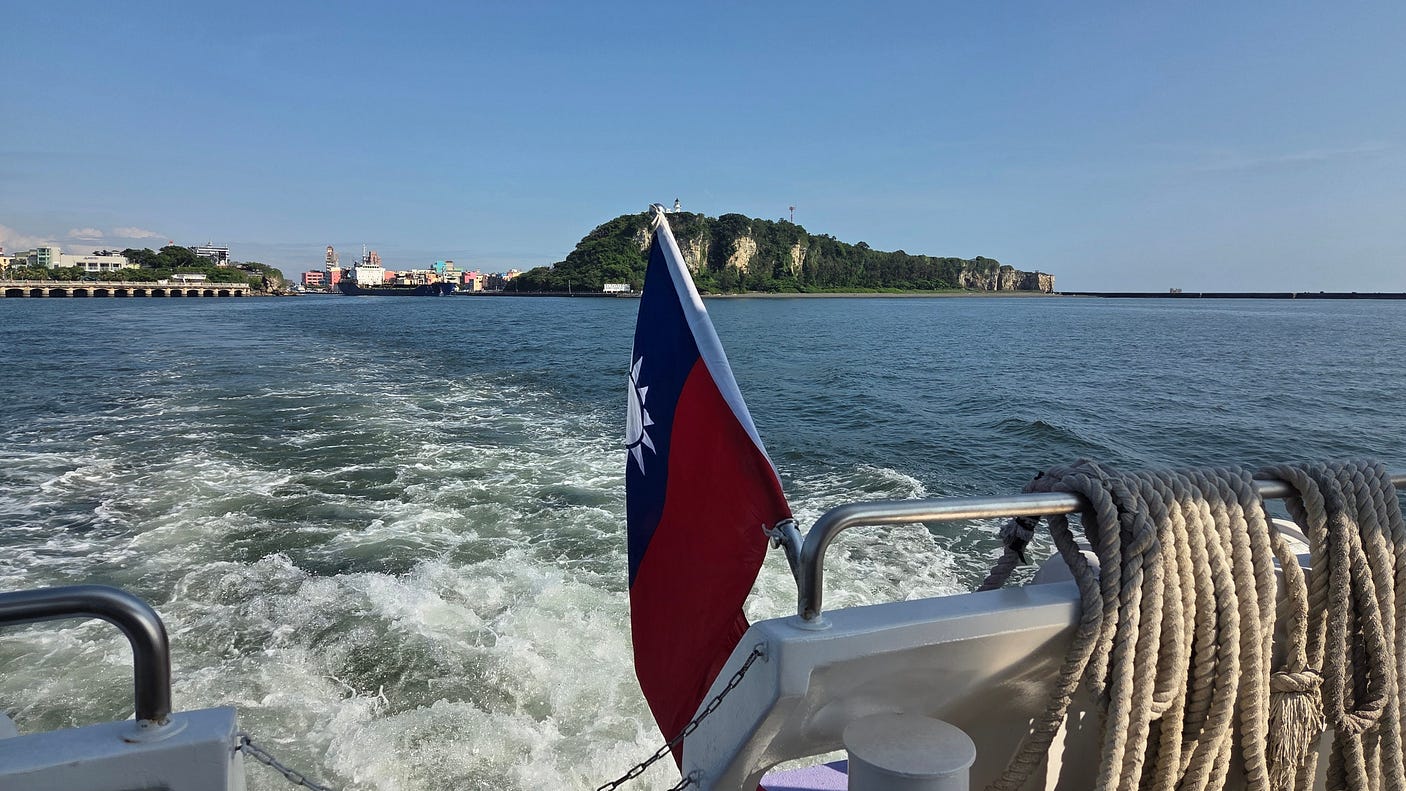
Then back on the boat!
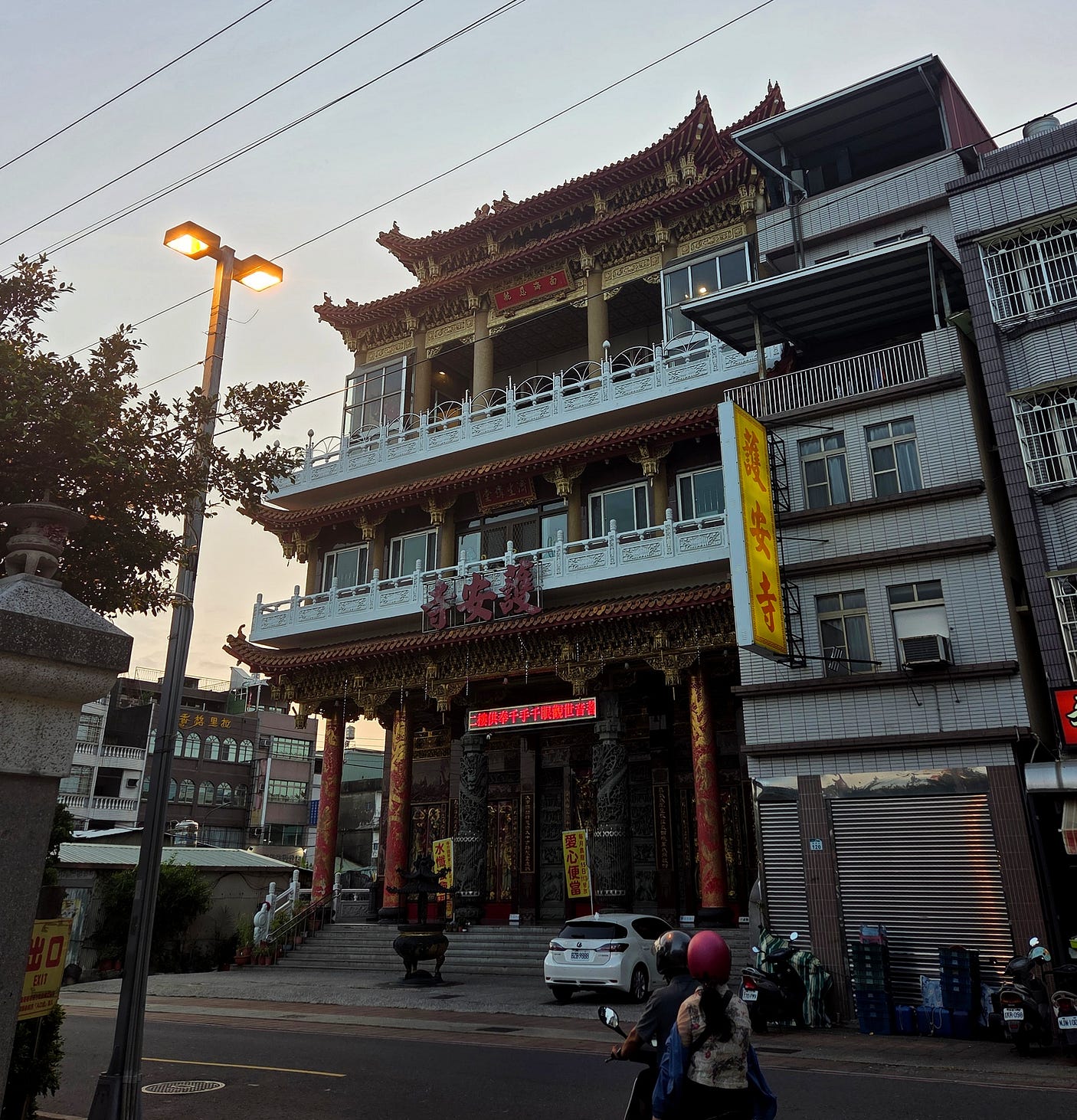
During the evening, I got more views of the temples I had visited before, including the Zuoying Hu’an Temple.
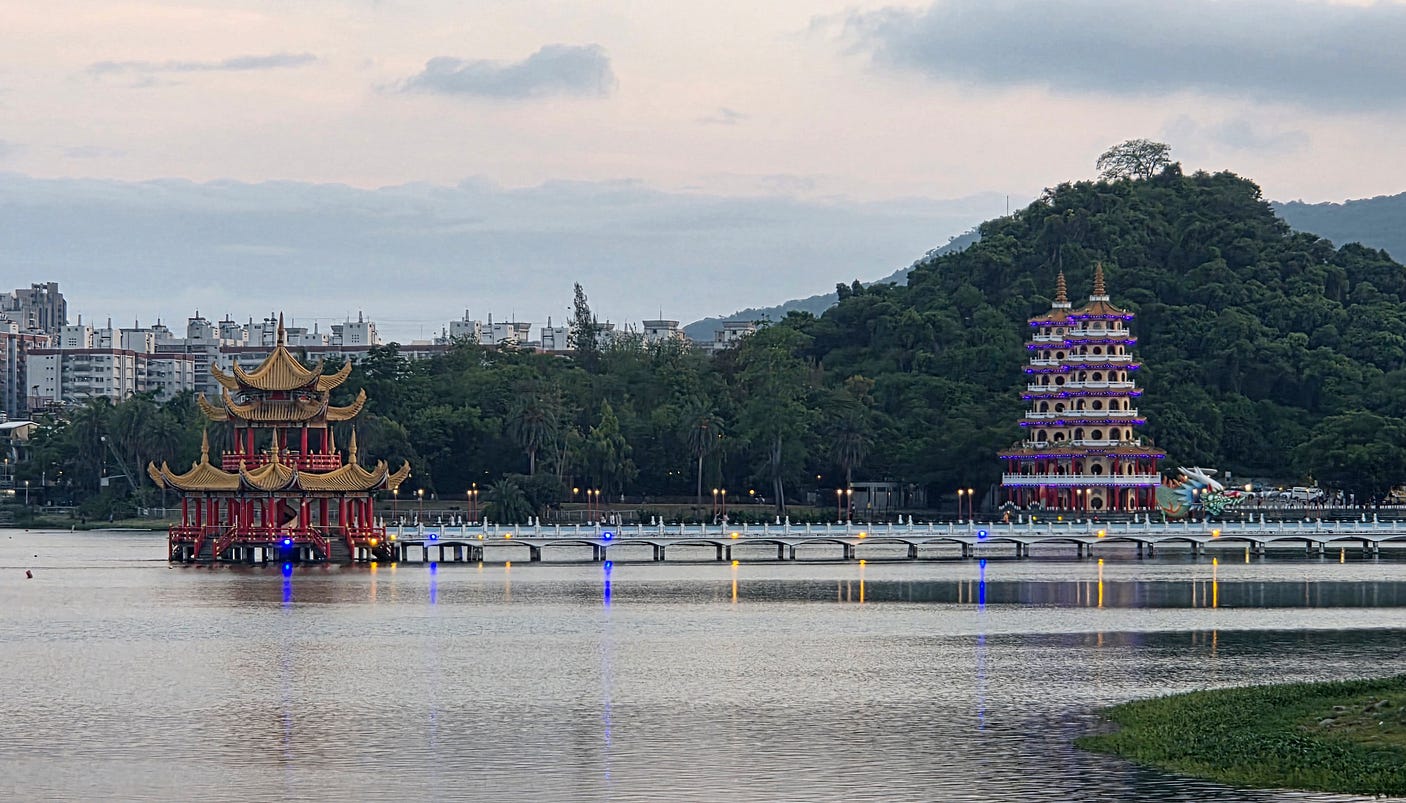
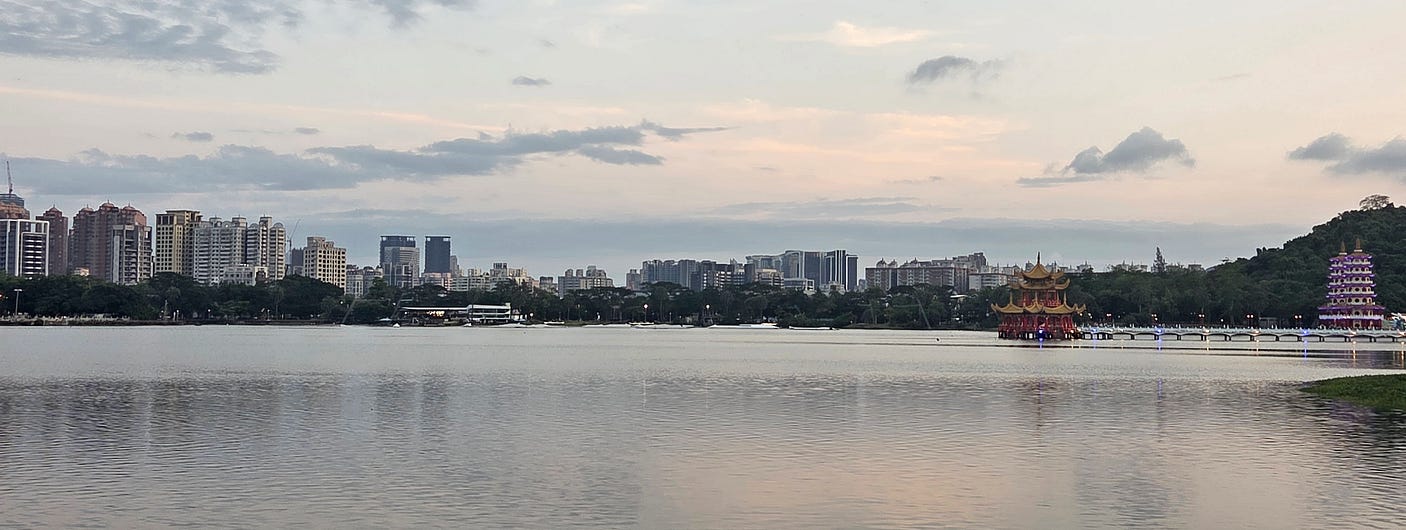
And the so-called ‘floating temples’ on the Lotus Pond, which were all starting to be lit up.
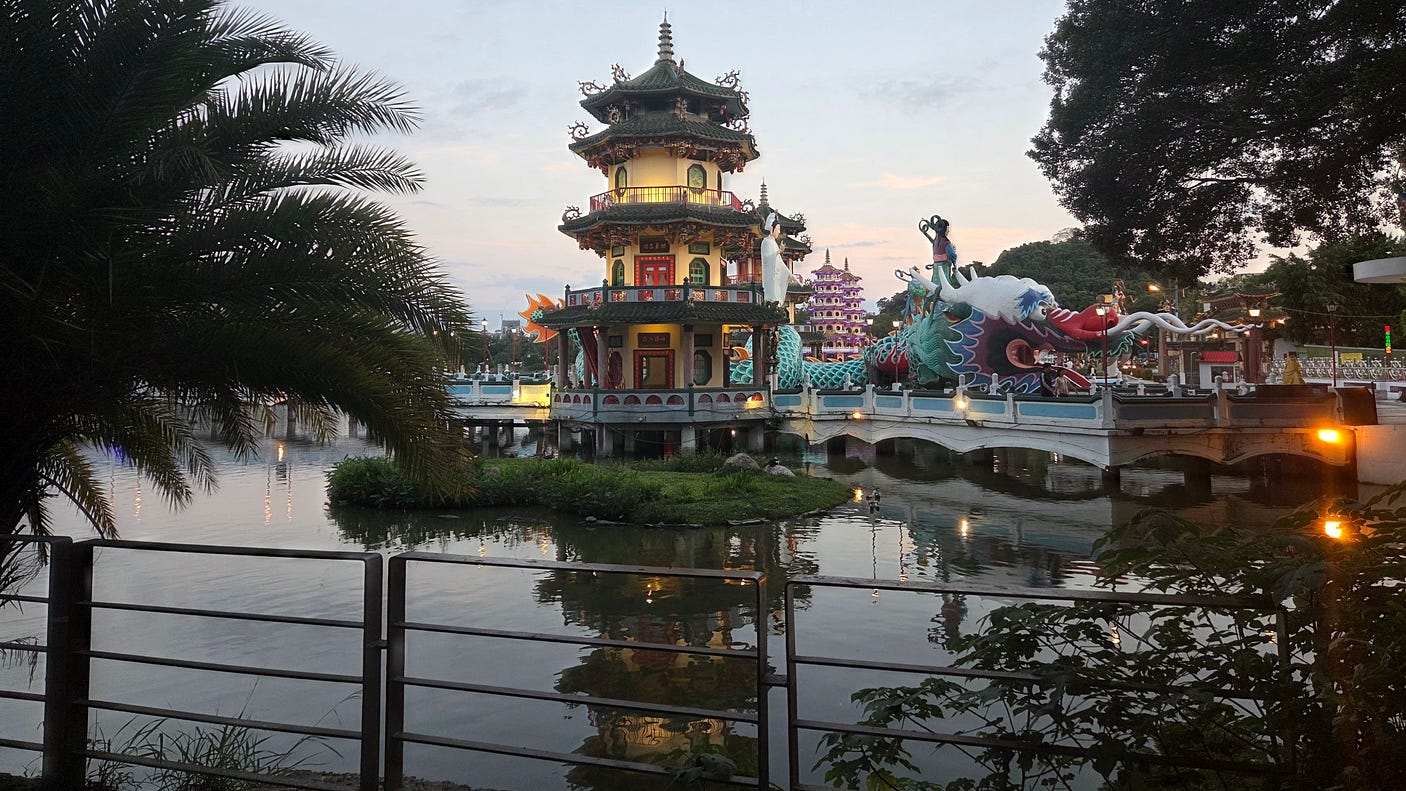
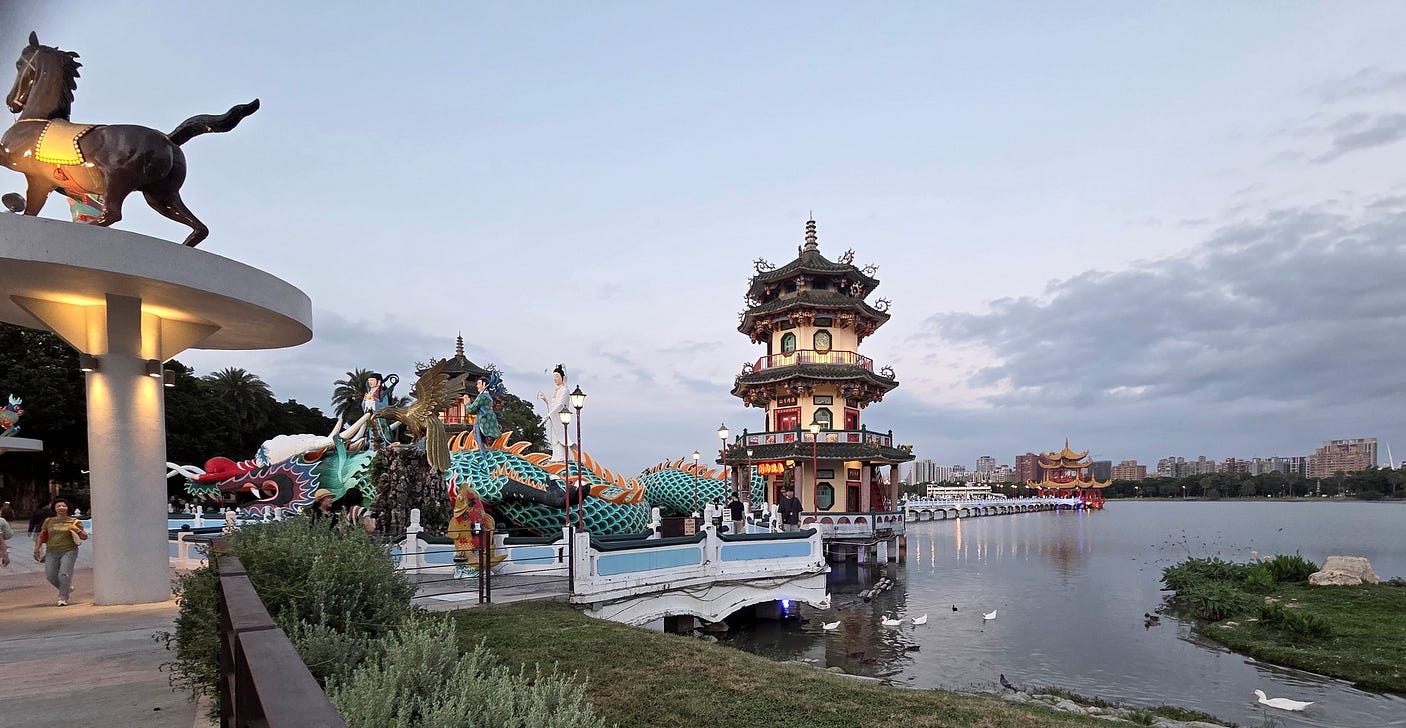
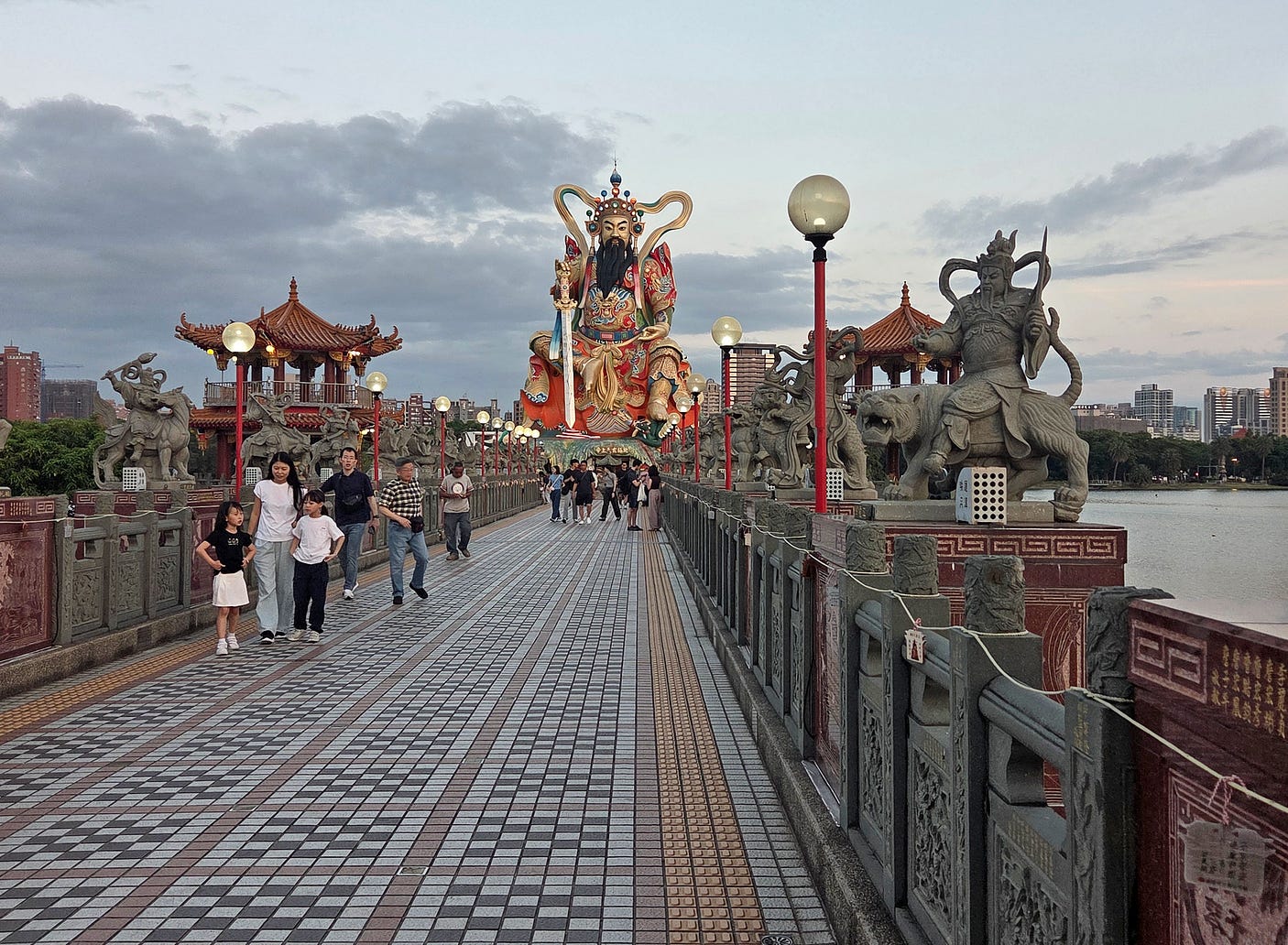
Here’s another view of the pier leading to the Xuantian God, from the side.
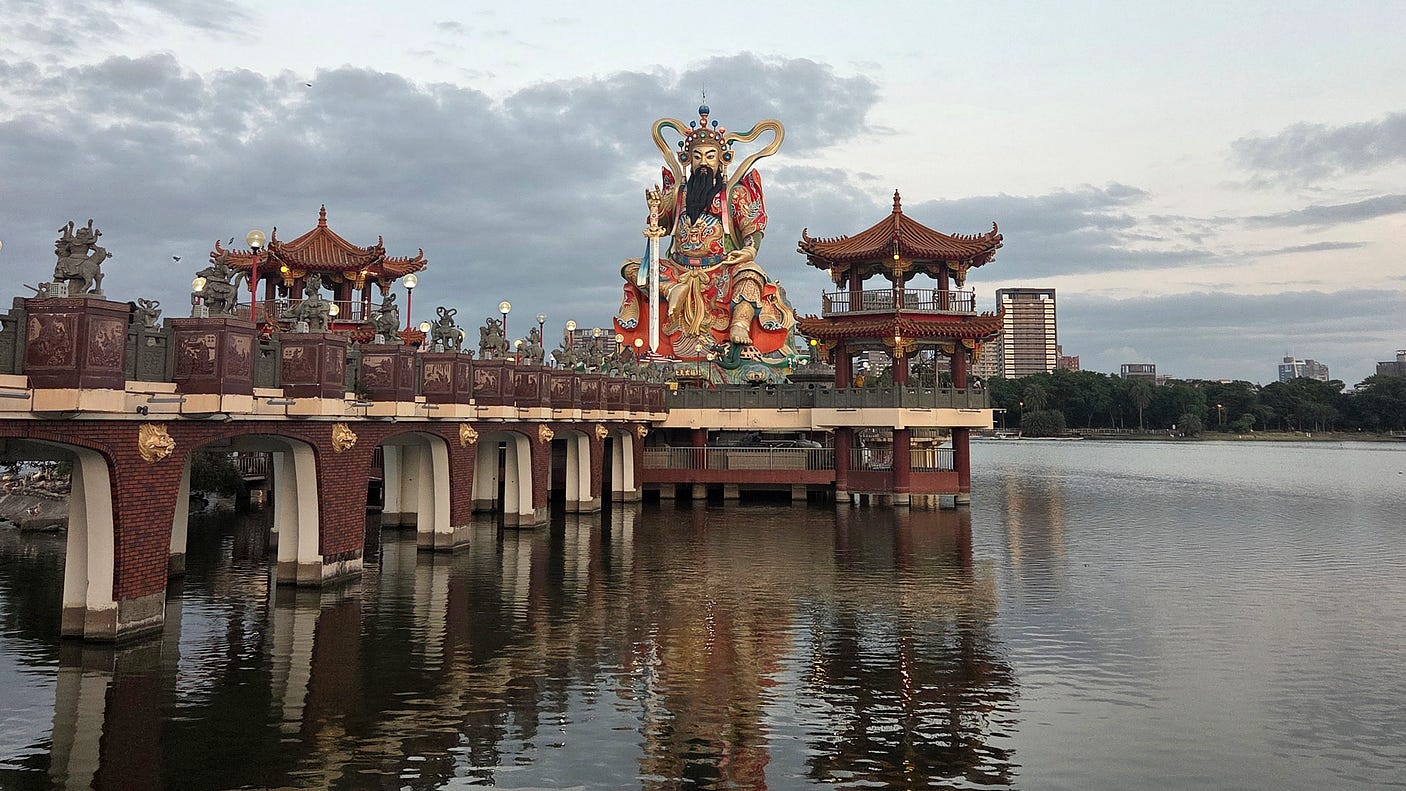
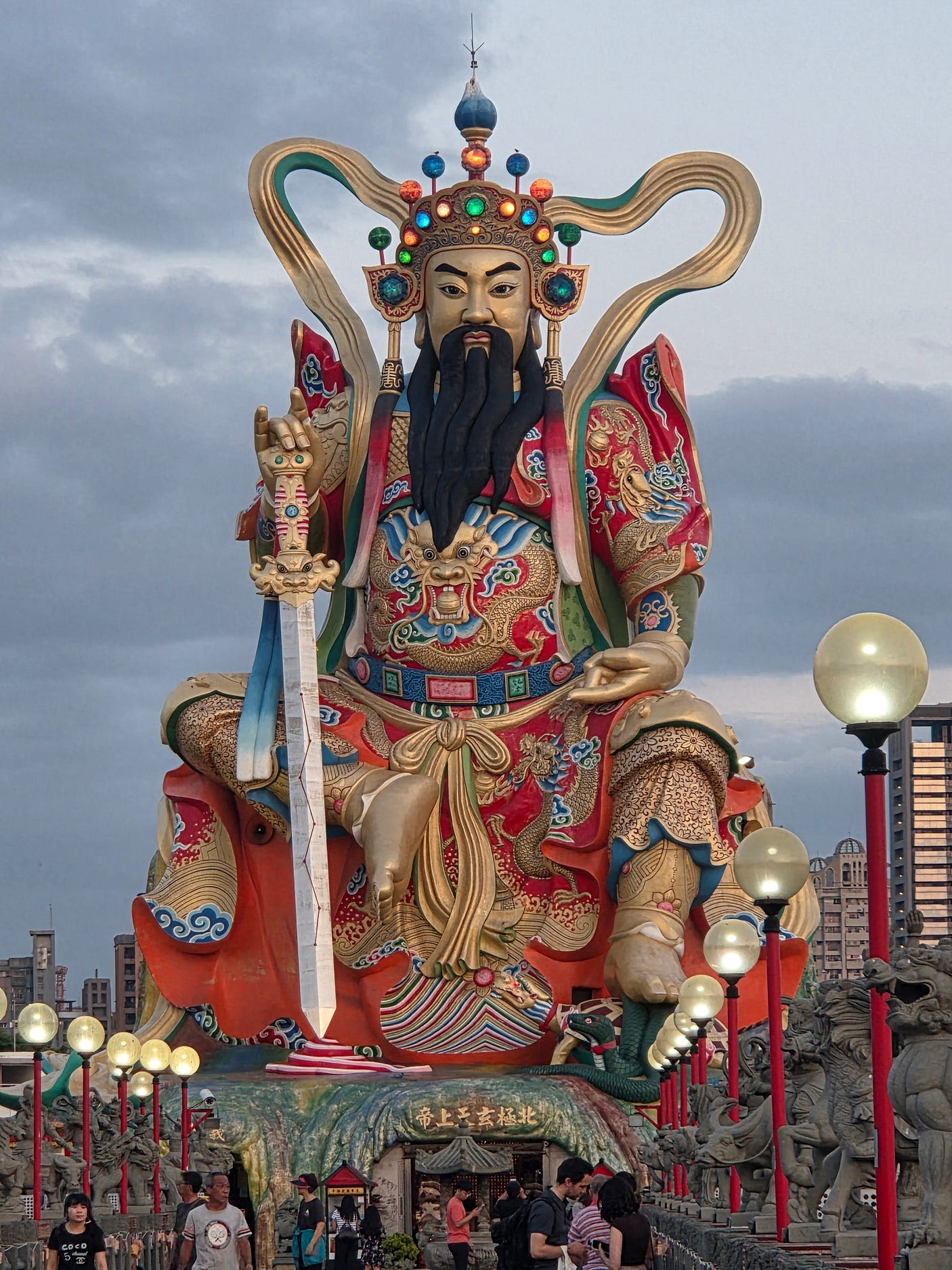
And of course, the Xuantian God himself.
In last week’s post, I included a video that I made when strolling along the same pier early in the morning, when there wasn’t yet anyone there. Here it is, again.
I took another photo of the Chi Meng Palace, as evening fell:
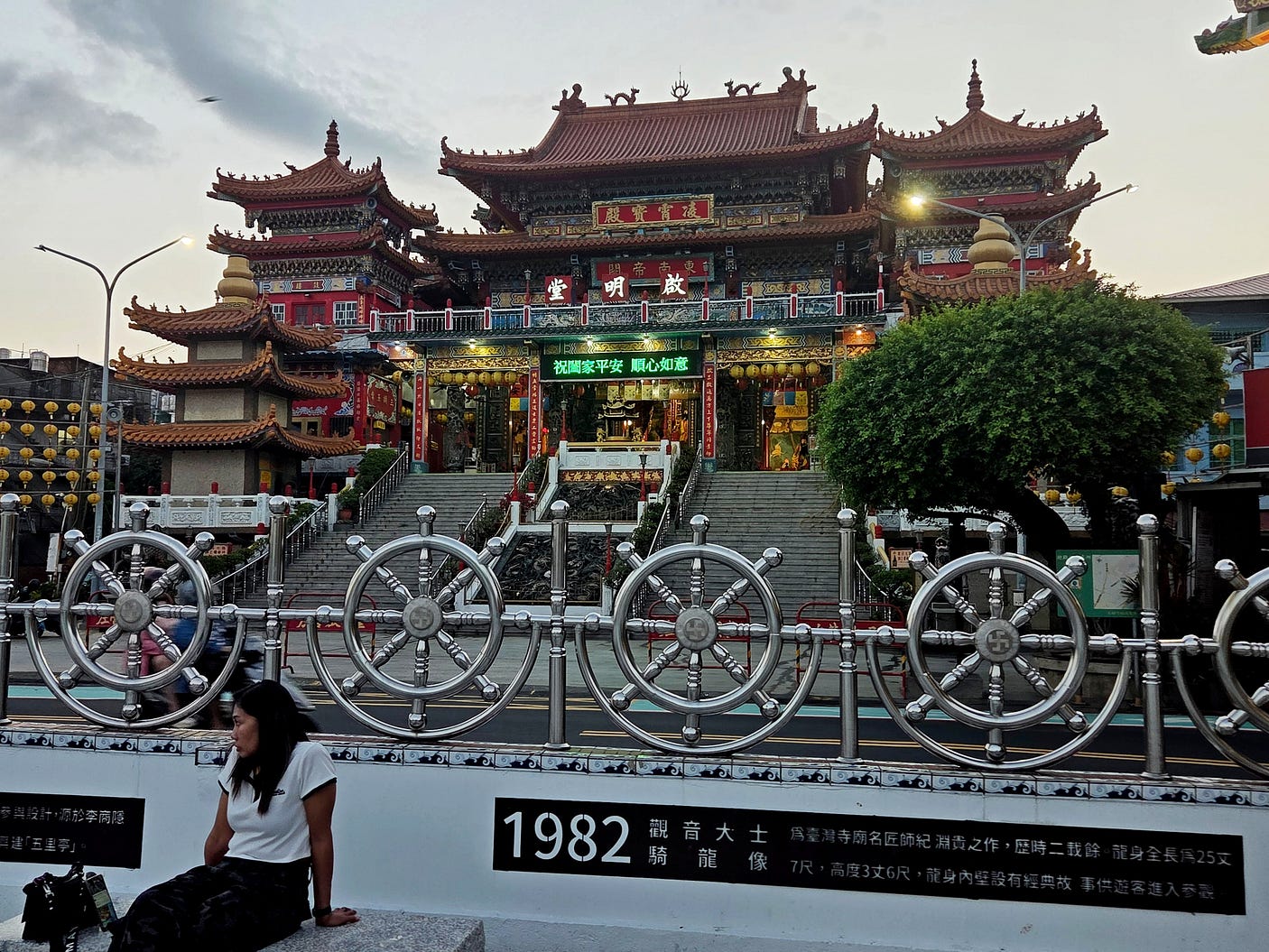
As night deepened, the lights grew ever more impressive:
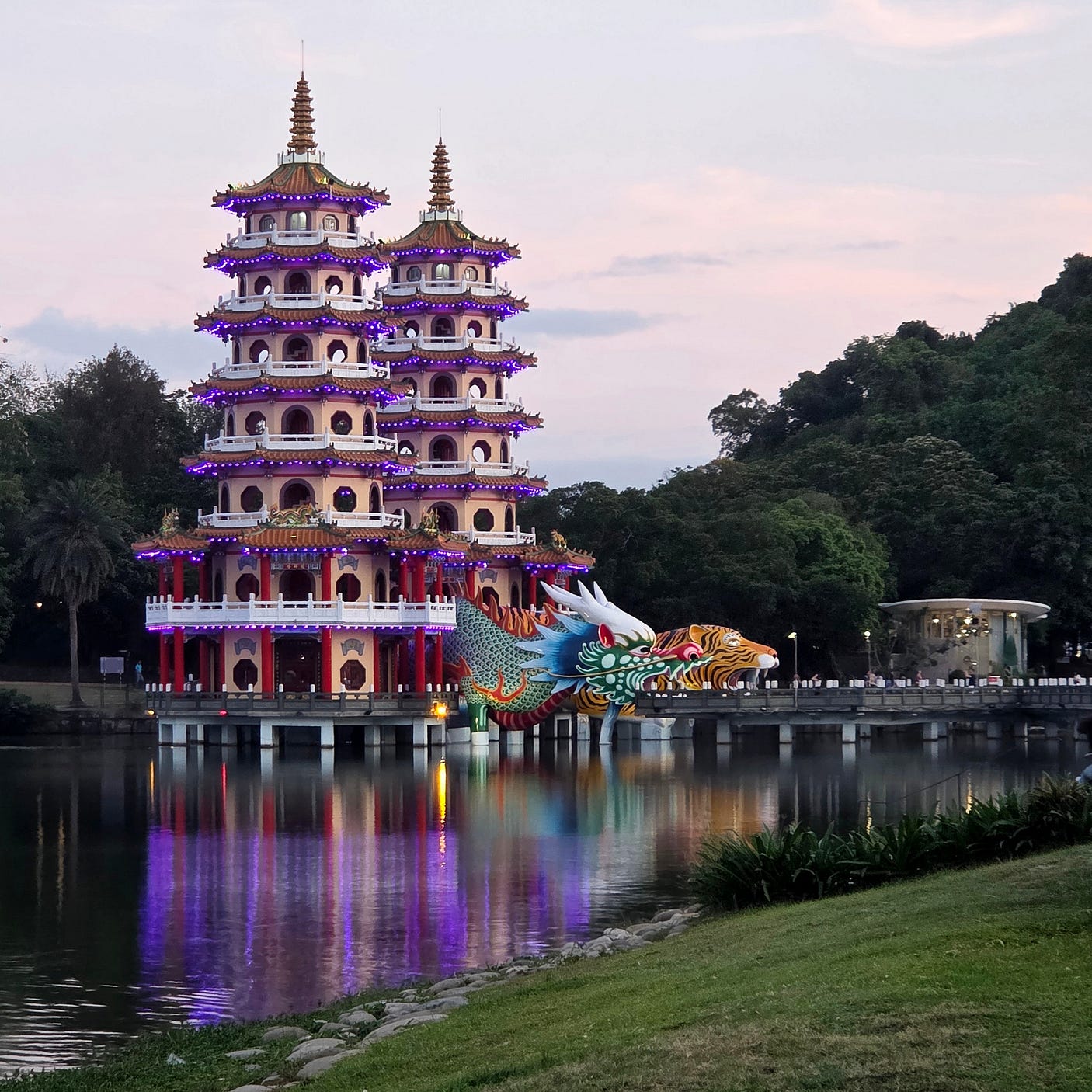
And here is a video I made of the ‘floating temples’ on the Lotus Pond, as evening descended:
Later, I went into town to have dinner. Taiwanese cuisine is very diverse, reflecting the fact that the island has been colonised by so many different cultures, with Austronesian elements as well. Basically, you can get anything!
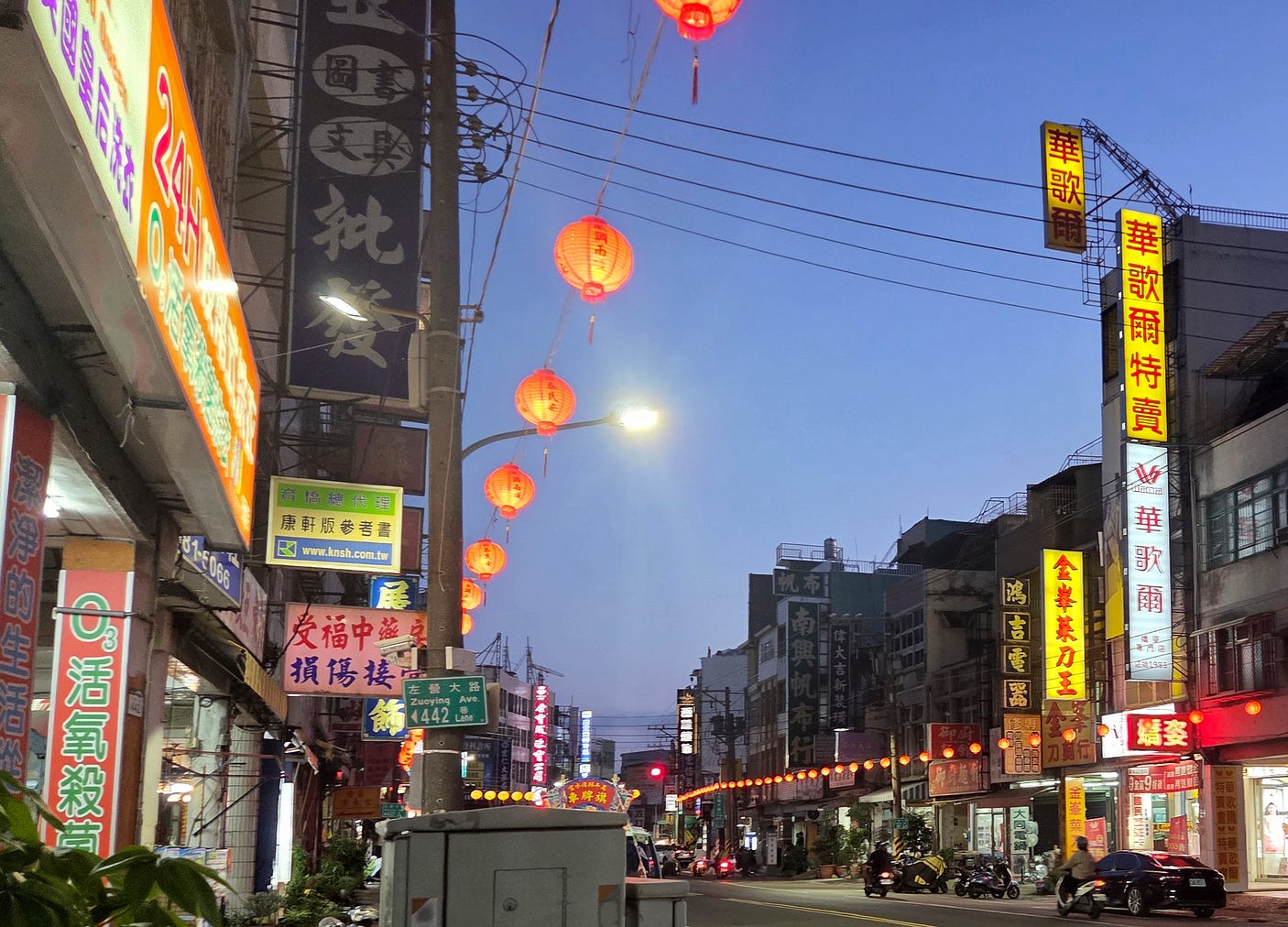
Kaohsiung also has its own lantern festival, though it wasn’t on when I was there. However, the next day, before I left, I did see a Taoist religious procession.
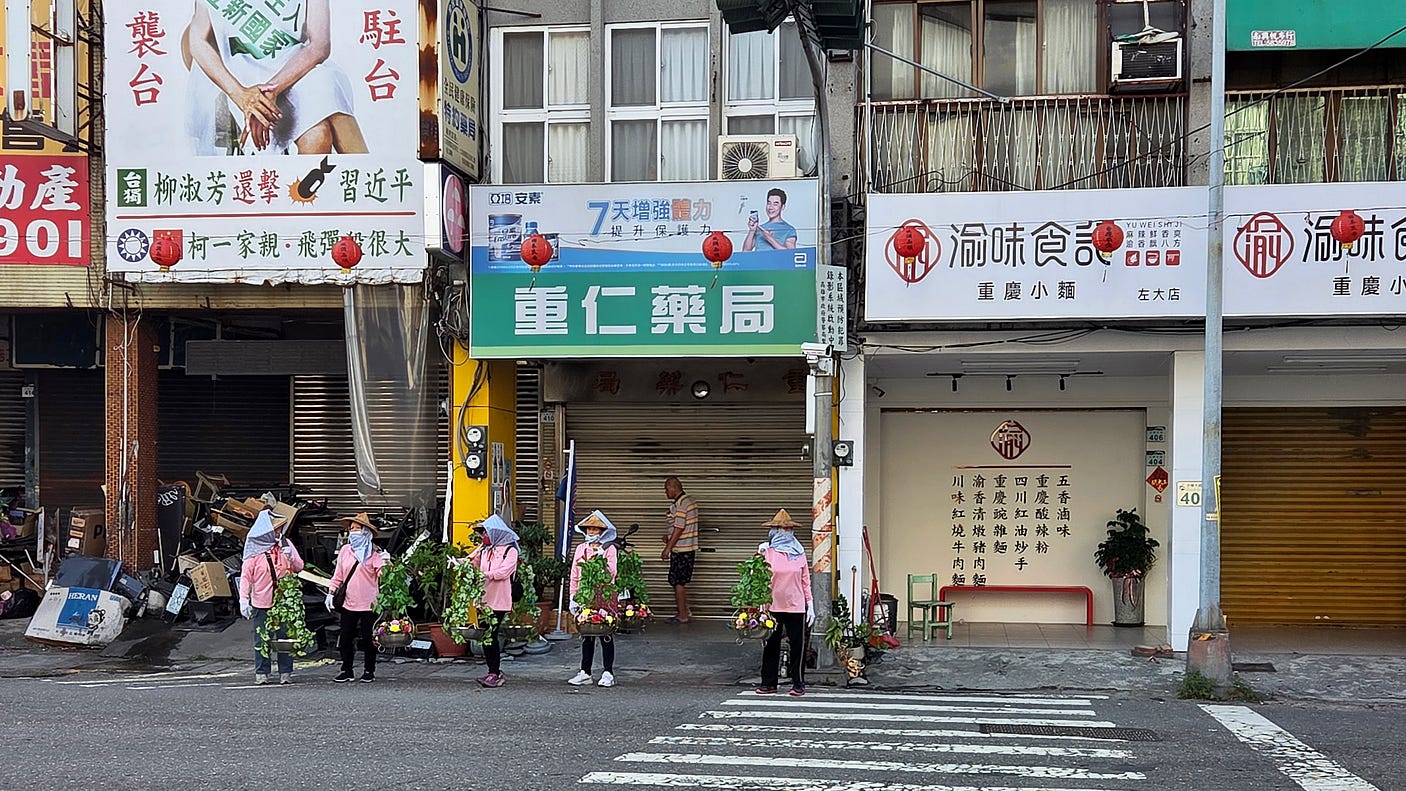
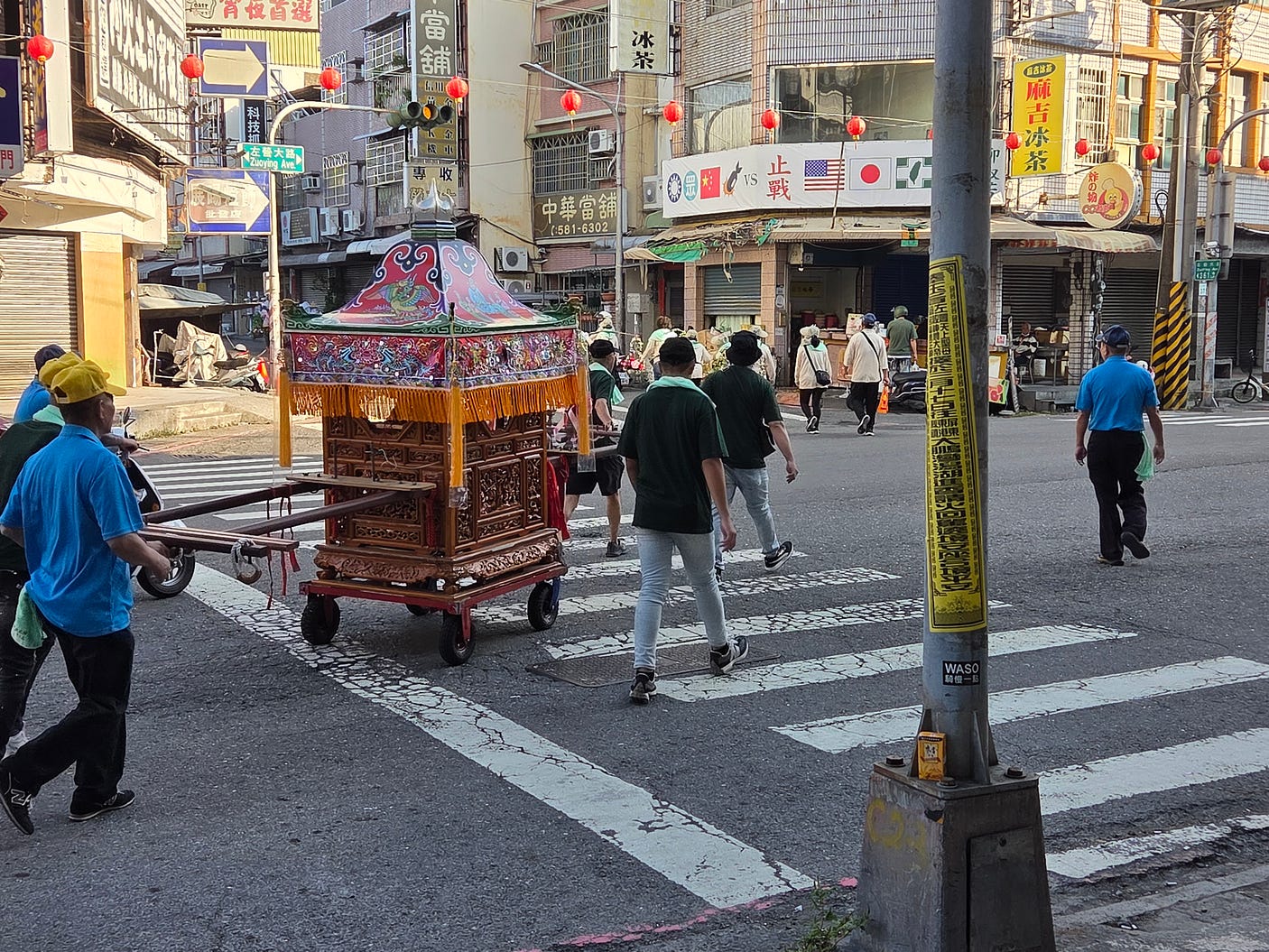
Here is a short video I made of the procession:
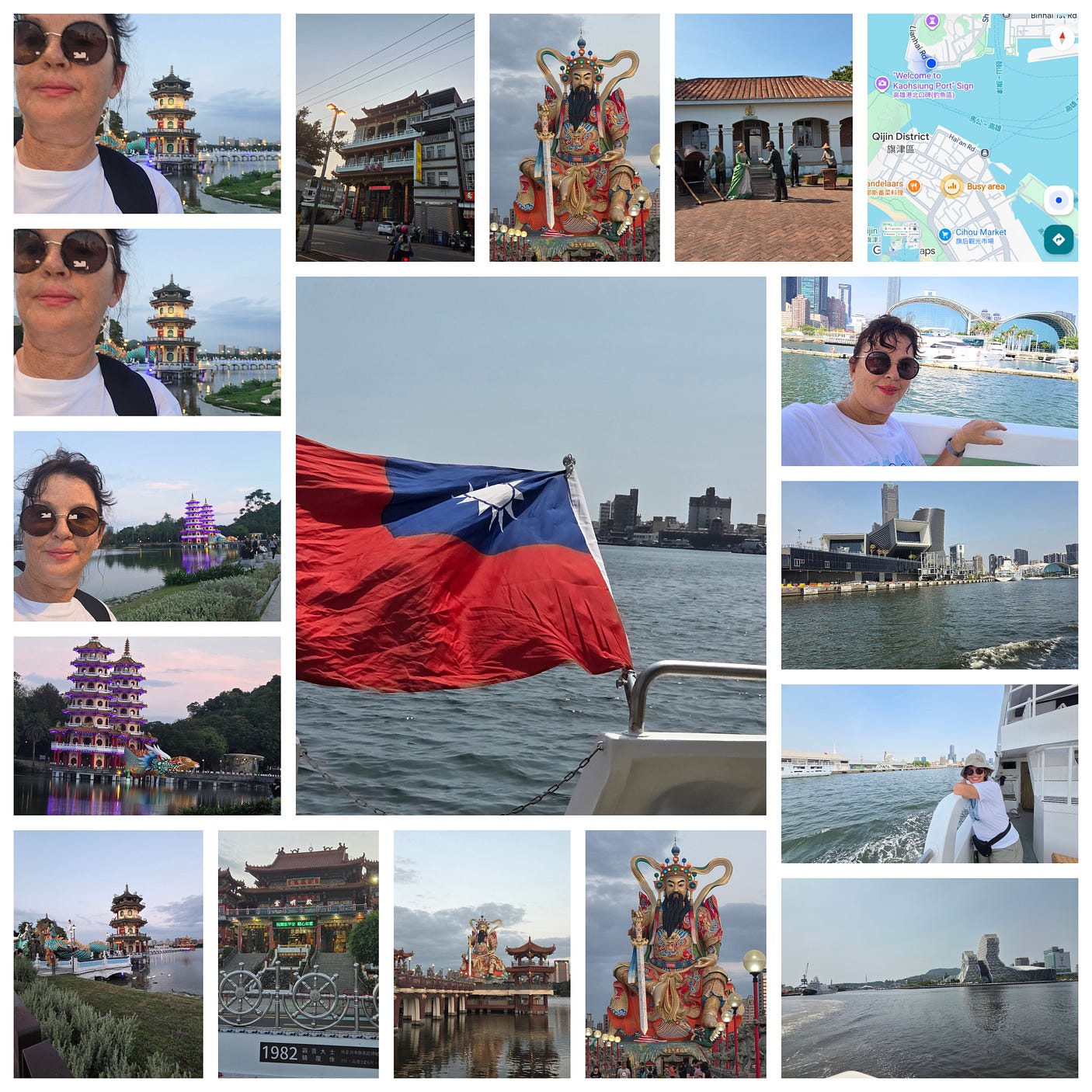
And a collage of images:
Next week, I head to Taitung on the east coast, where the Austronesian culture is strong, and into the mountainous interior!
PS: Since this post was published, I’ve written a book about Taiwan — you can purchase it on geni.us/Taiwan.
Subscribe to our mailing list to receive free giveaways!

