Giveaways
ONE of the things I love about Auckland is the way it is full of cosy little parks, full of subtropical native bush that somehow survived the growth of a huge city all around, that hardly anyone has heard of.
These parks are often located in the rocky hollows of Auckland’s three-dimensional landscape.
I blogged about some of them in a couple of posts called Unseen Auckland and Unseen Auckland (Part 2). And I am always on the lookout for more to visit.
When a friend of mine was in Auckland, just lately, he came across this video while browsing on YouTube, and rang me up, saying he would go and have a look at it himself.
It’s the Withiel Thomas Reserve, described in depth in a 2016 New Zealand Geographic article called Eden in Auckland.
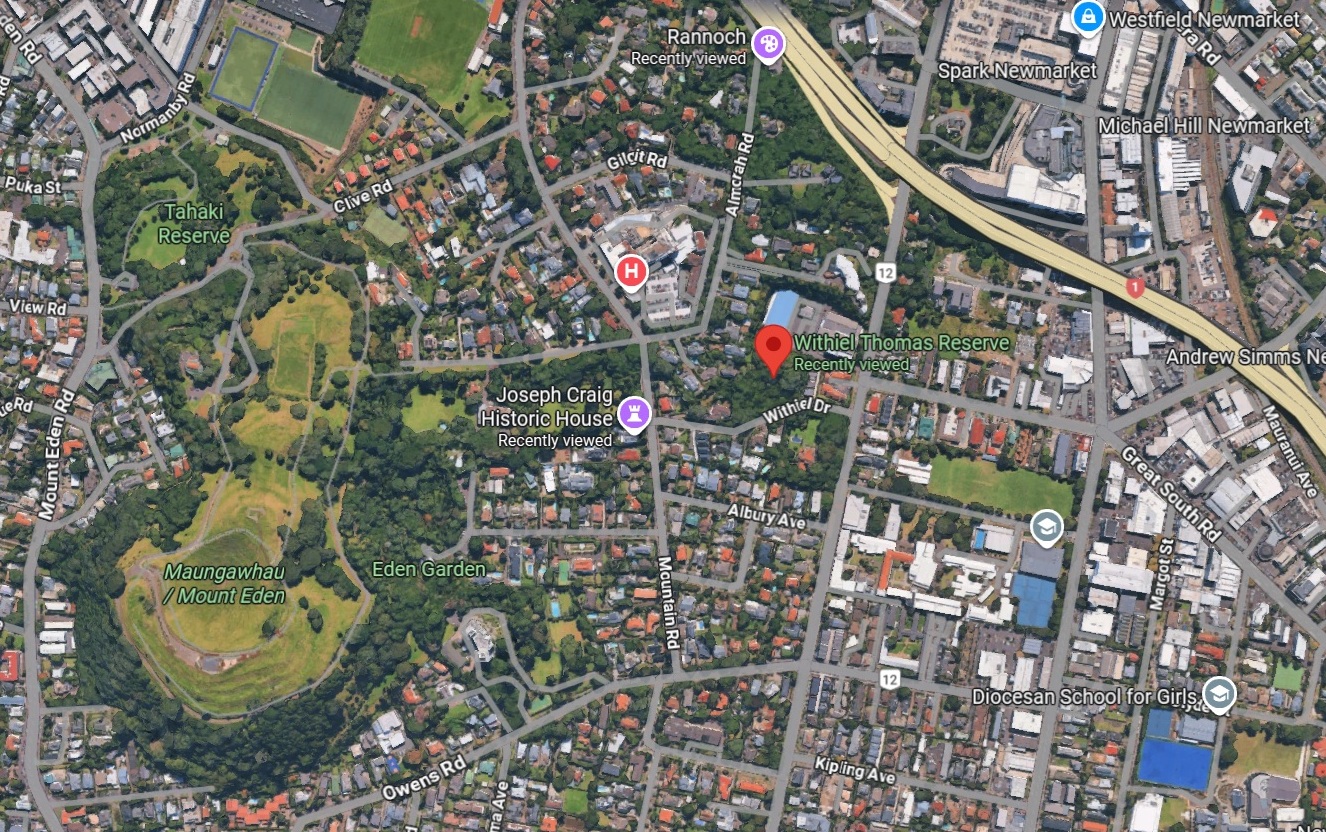
The Withiel Thomas Reserve is one of several surviving relics of a unique forest on the northeast side of Maungawhau/Mount Eden.
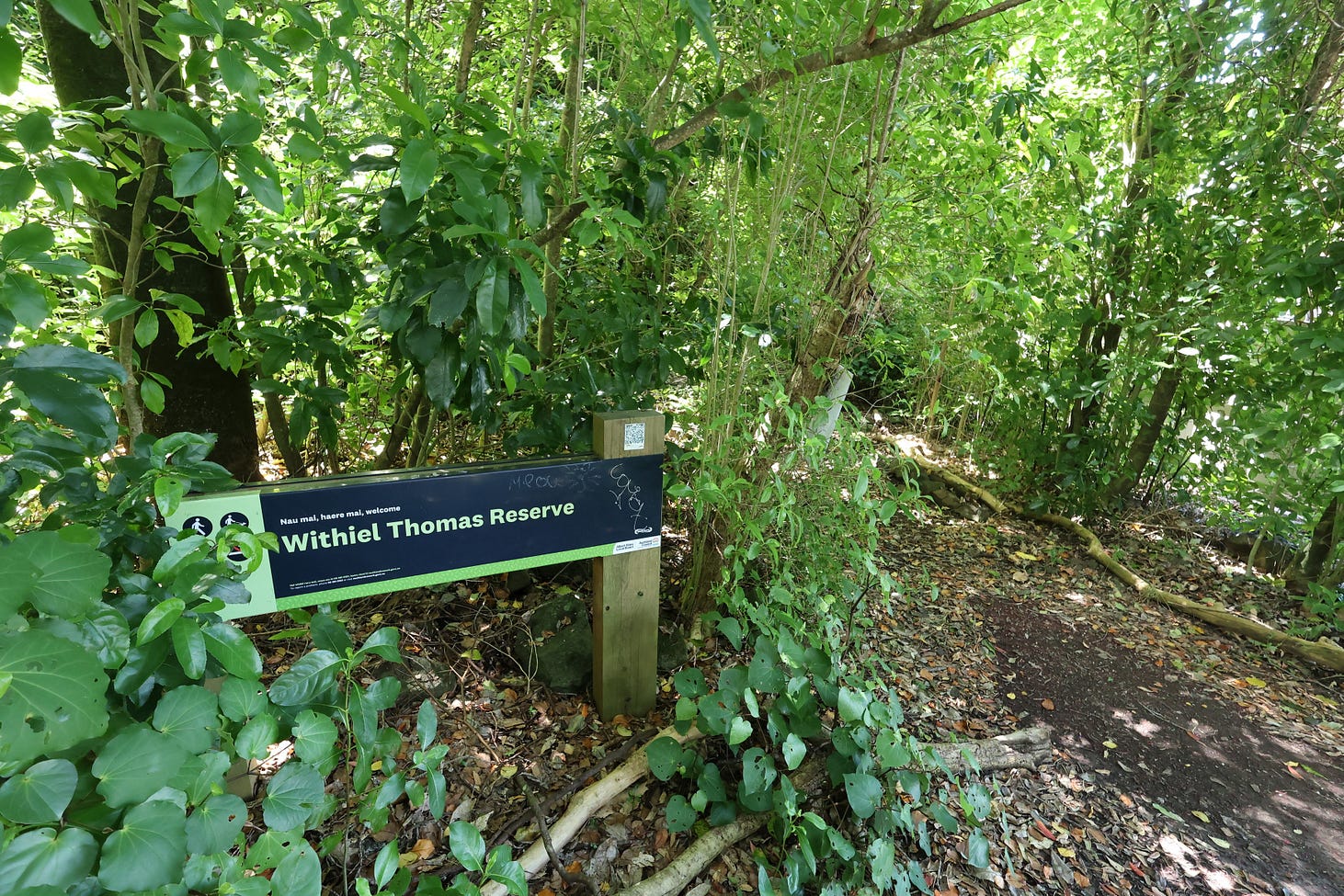
The forest, known as the Almorah Rock Forest, grew all over a rocky landscape that had erupted from Mount Eden about 28,000 years ago.
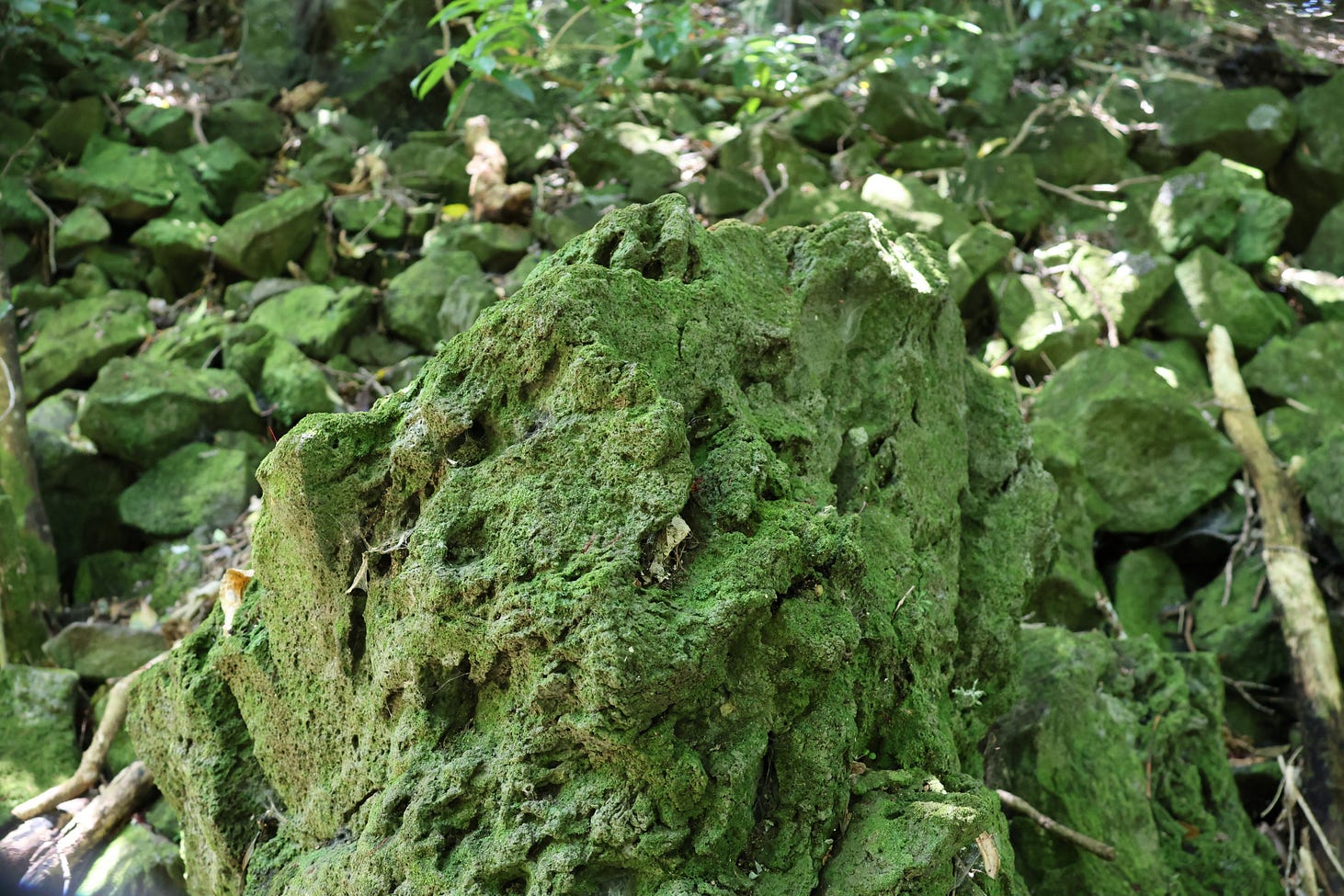
Here is a photo of a mossy boulder in the Withiel Thomas Reserve.
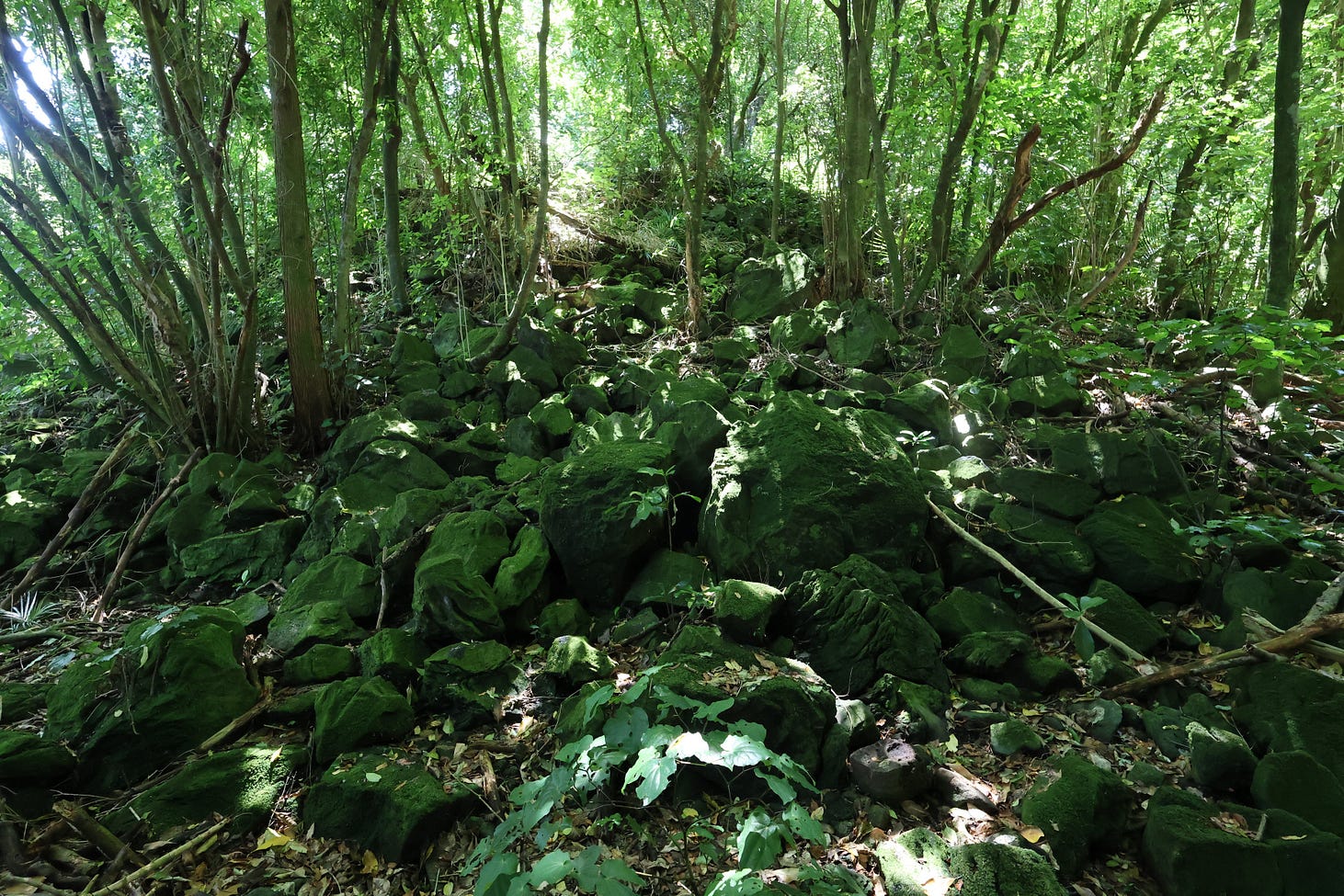
And a sprawling rockfall with young trees growing out of it.
Here’s a photo of a shoot growing up between the rocks.
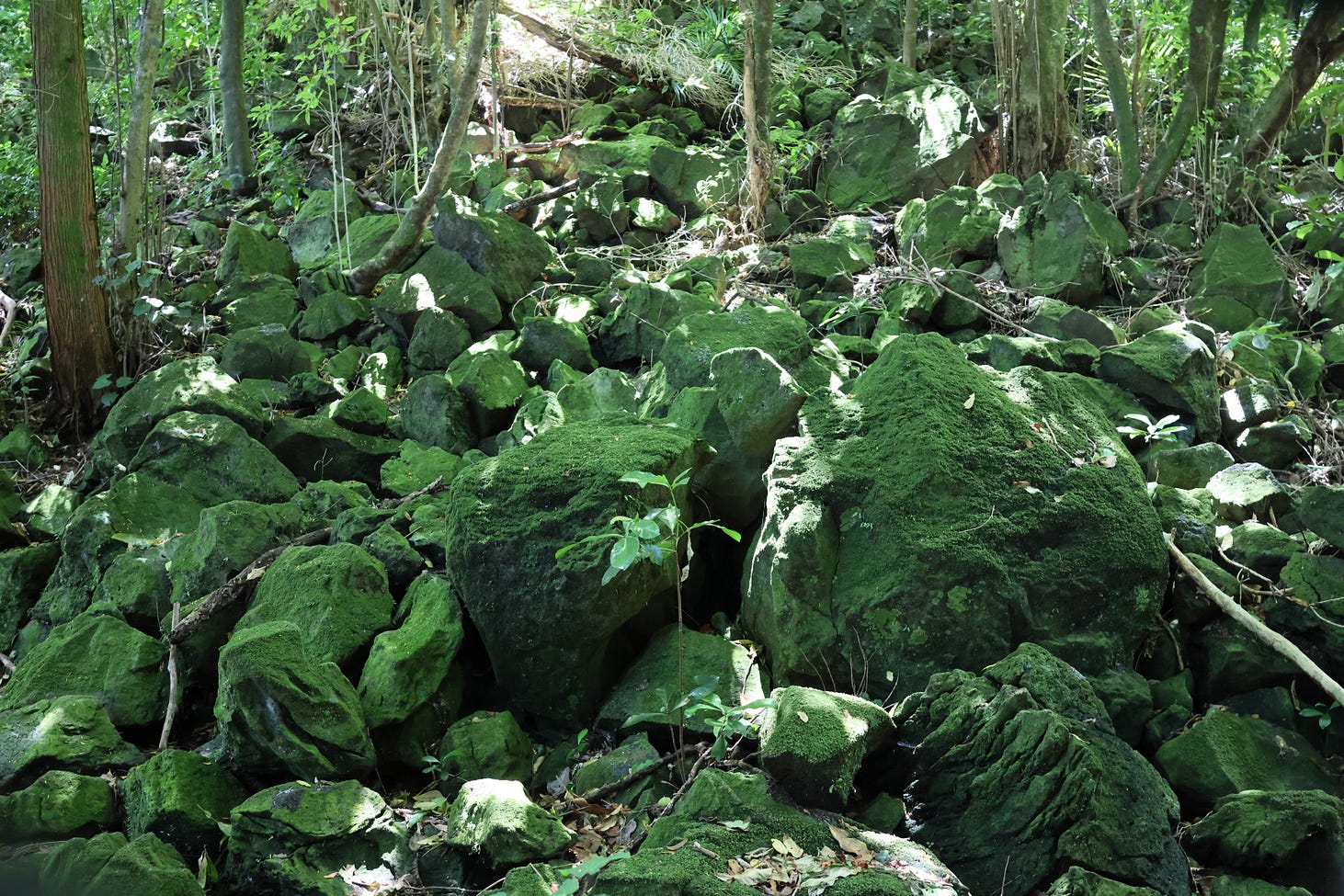
The whole place is really green!
Here’s a video of birdsong in the reserve — though you can hear a bit of construction noise as well:
The reserve is named after Algernon Phillips Withiel Thomas, an early New Zealand conservationist and scientist who lived from 1857 to 1937. The park was originally part of a ten-acre block that he bought in the days when this part of Auckland was still undeveloped, and was gifted to the city by his relatives in 1948.
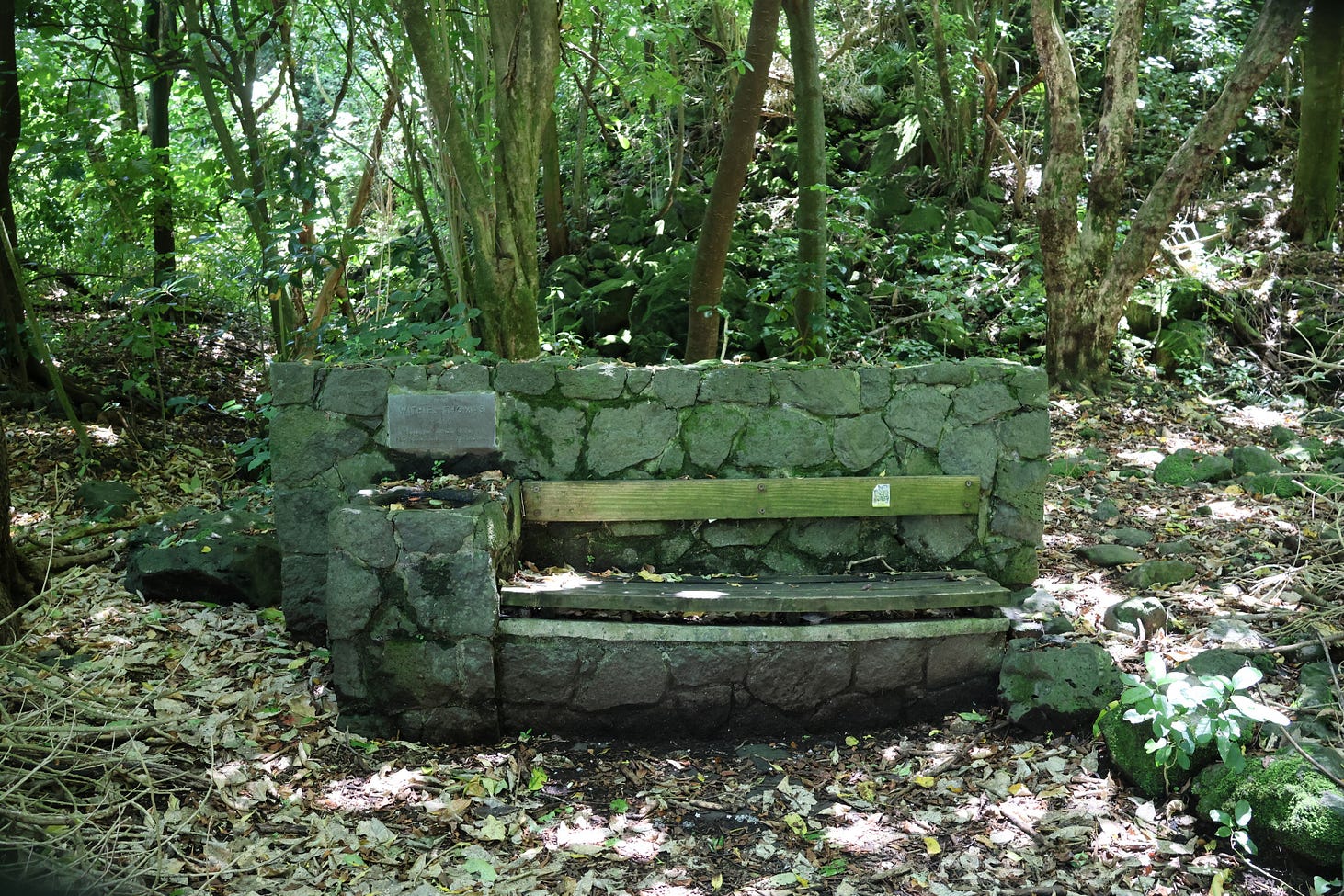
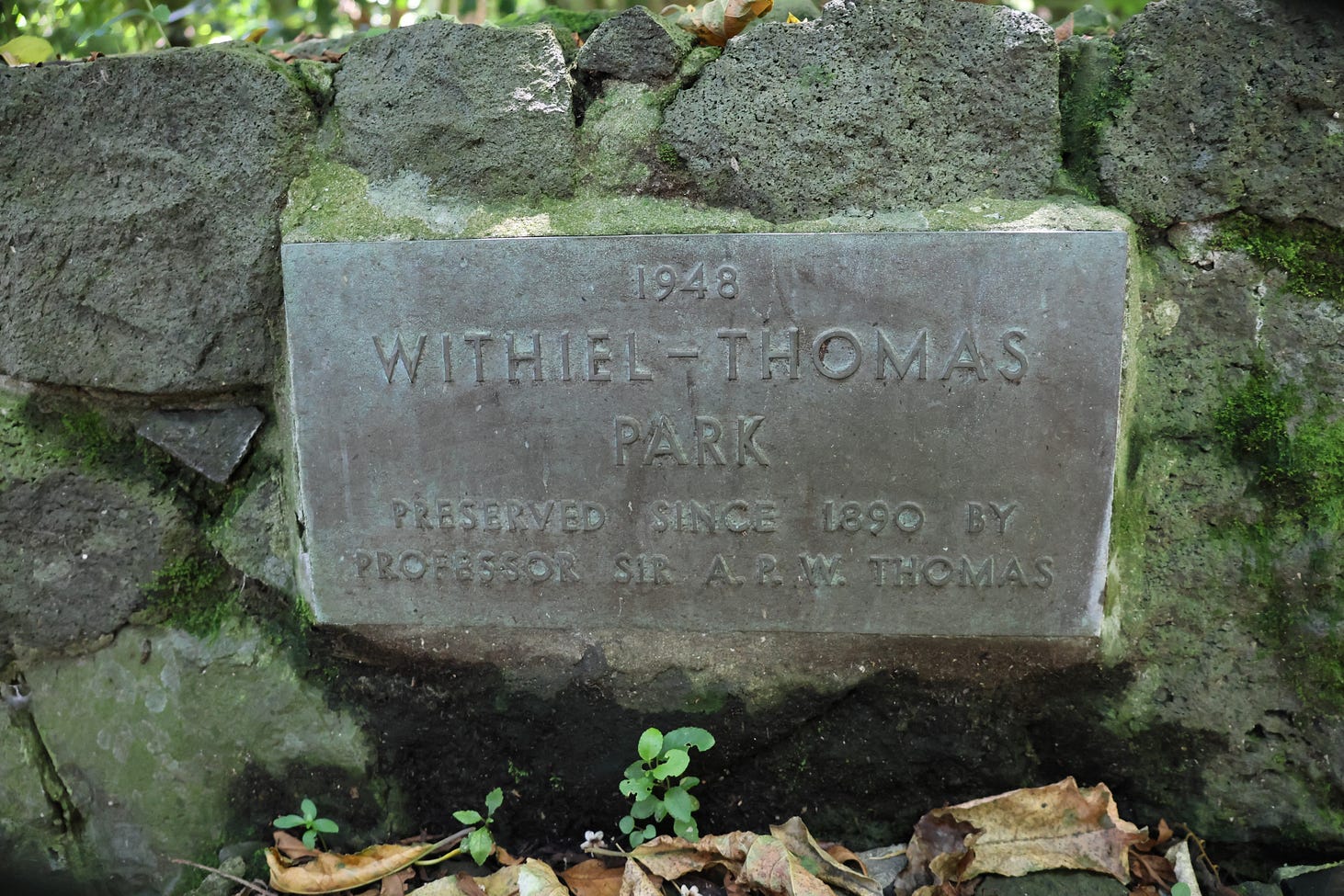

The rest of the former ten-acre block is on the other side of a short street called Withiel Drive, which runs through what was, apparently, the Thomas’ cow paddock.
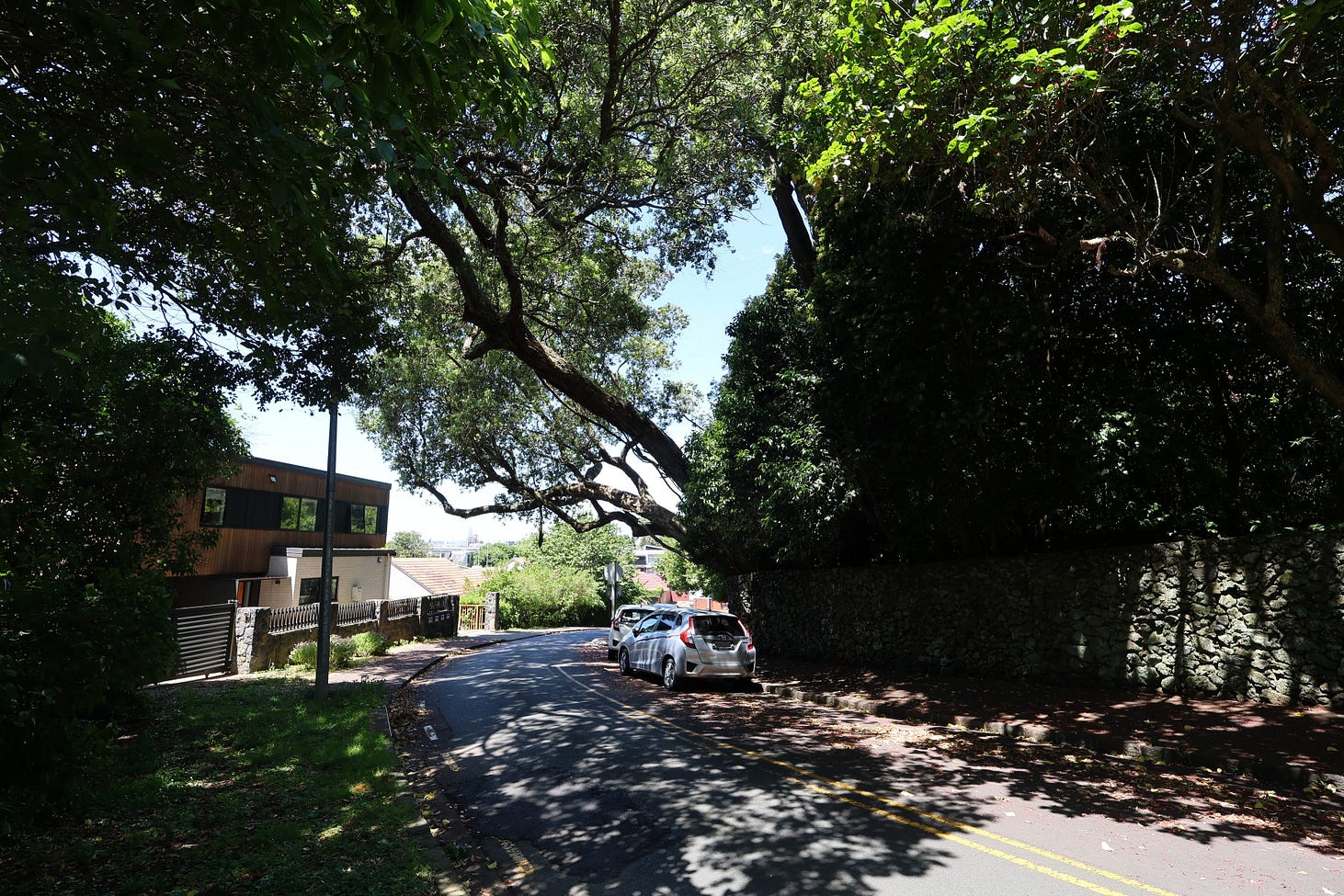
Stone walls seem popular in this part of town. I imagine they were created from the innumerable rocks that would have been lying around everywhere in the old days.
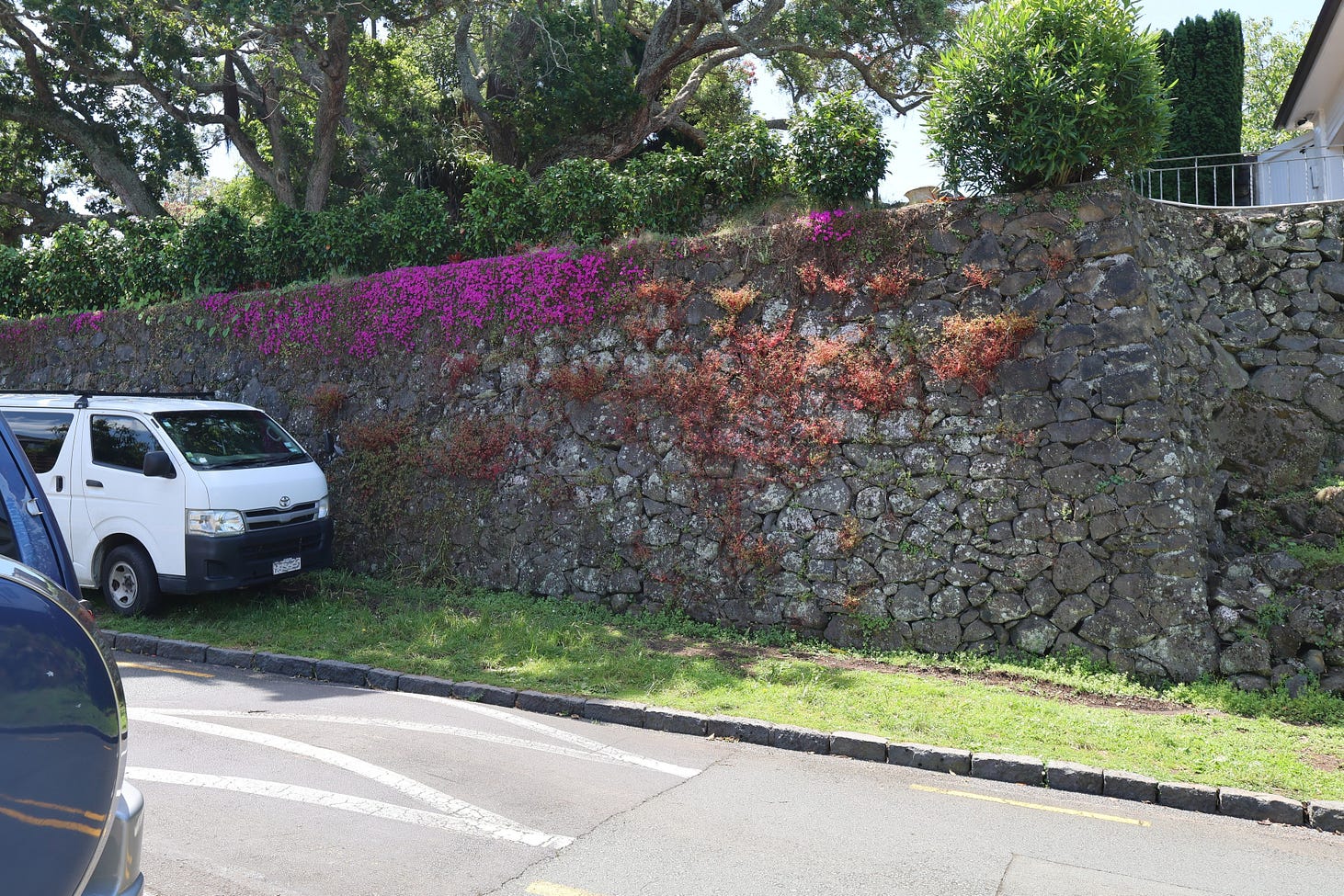
The Almorah Rock Forest seems to have had little Māori population before the coming of Europeans, as there was almost no soil and very little flat ground either. The demands of subsistence meant that pā and kāinga were established elsewhere.
However, some prosperous European colonists, less tied to local subsistence, saw the wild forest as a romantic and secluded place in which to build large homes, and imported soil and fill materials to create patches of flat ground, such as the Thomas’ cow paddock and the lawns of Government House, on the other side of Mountain Road from Withiel Drive.
These early homesteads were soon subdivided as Auckland expanded, and this caused much of the beautiful forest that had attracted the first European settlers to be lost.
Along with Withiel Thomas Reserve, some remnants of the forest survive on larger private sections, on the slopes of Mount Eden, and in the grounds of Government House.
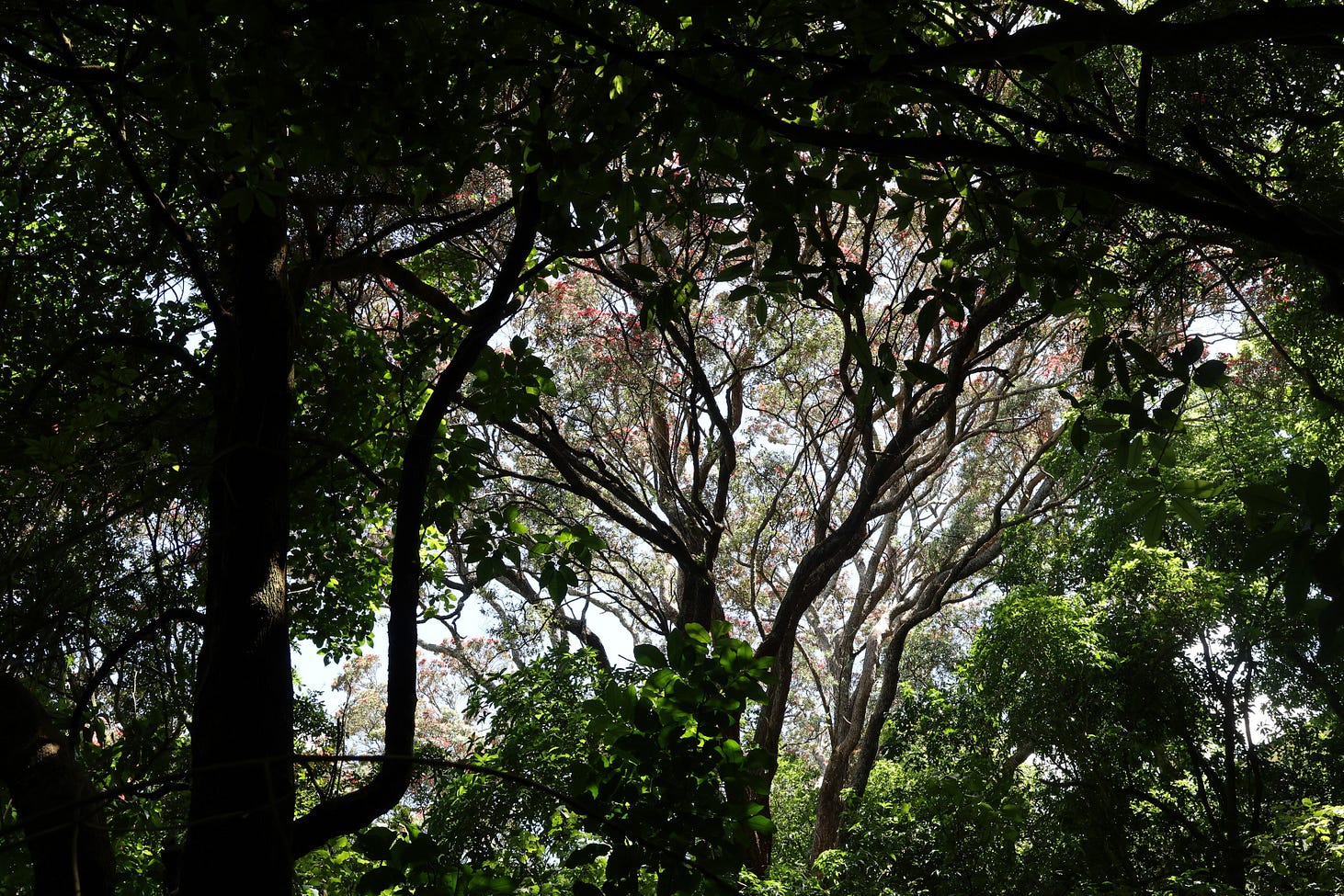
Probably the greatest survival of the forest on private sections is along Almorah Road, especially a narrow, traffic-calmed stretch that is like a country lane lined with stone walls, running past a stately home called Rannoch, now owned by an organisation, also in possession of another stately home, called the Arts House Trust. A few years ago, it was possible to visit Rannoch, shown at the top of the aerial image near the start of this post, though I am not sure if you can right now.
As I say, this is one of the leafiest parts of Auckland!
If you liked this post, check out my award-winning book about the North Island, available from this website a-maverick.com.

Subscribe to our mailing list to receive free giveaways!

