Giveaways
THE Tūātapere Hump Ridge Track, known for short as the Hump Ridge Track, opened in 2001. It was gazetted as New Zealand’s 11th Great Walk on 25 October 2024.
Located near the old logging town of Tūātapere, west of Invercargill, the Hump Ridge Track is managed by Tūātapere Humpridge Track, a charitable trust set up through a partnership between the New Zealand Department of Conservation (DOC) and the local community, anxious to develop tourist attractions after the winding-down of the logging industry on which the town had formerly depended.
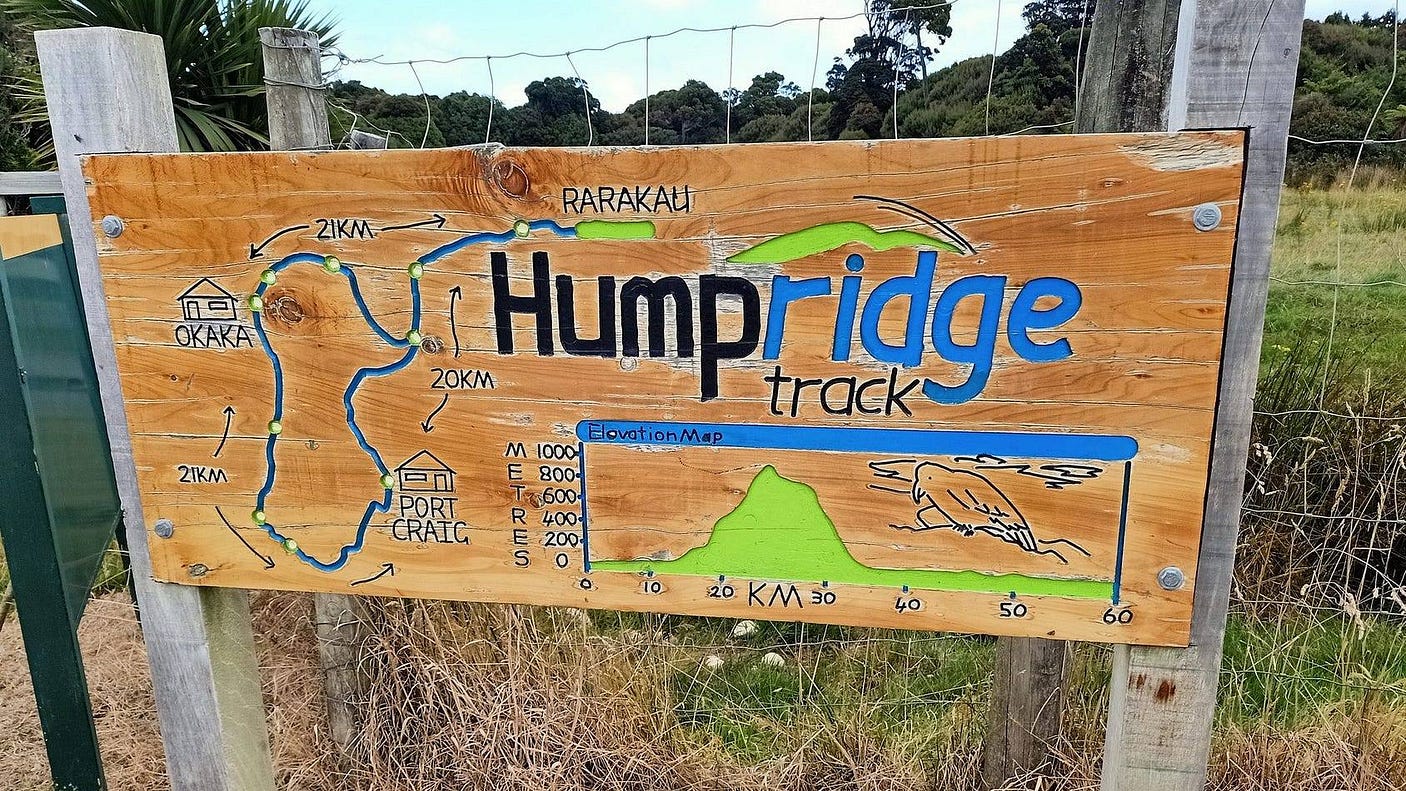
The trust offers a range of tour packages, such as guided tours and helicopter rides. It is well worth consulting its website, linked above, even if you are just a more ordinary sort of tramper.
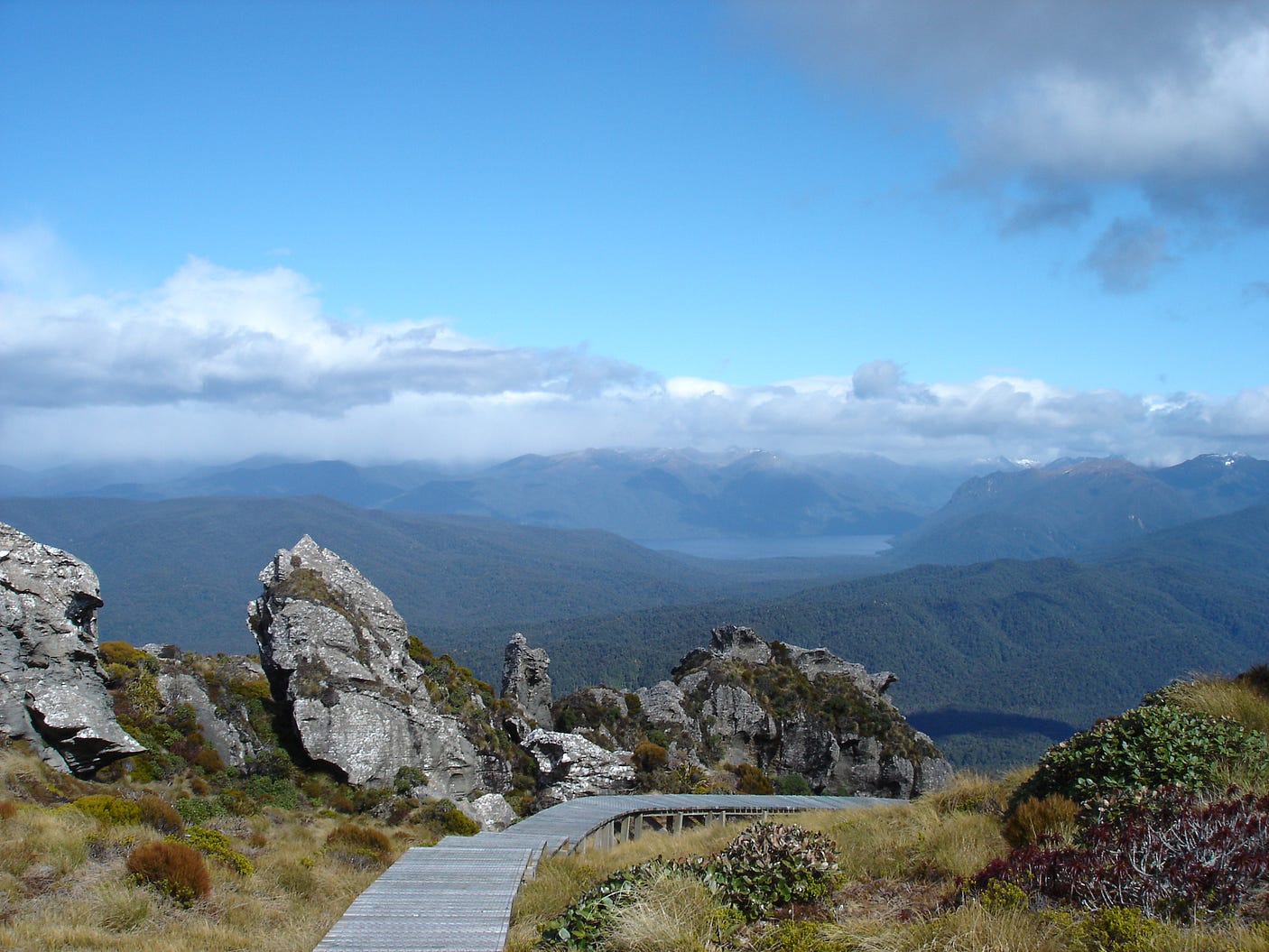
A three-day loop track along the south coast of New Zealand, the Hump Ridge Track (for short) covers fifty-five kilometres of beaches, forests, and subalpine terrain. The track is shown in black in the map that follows.
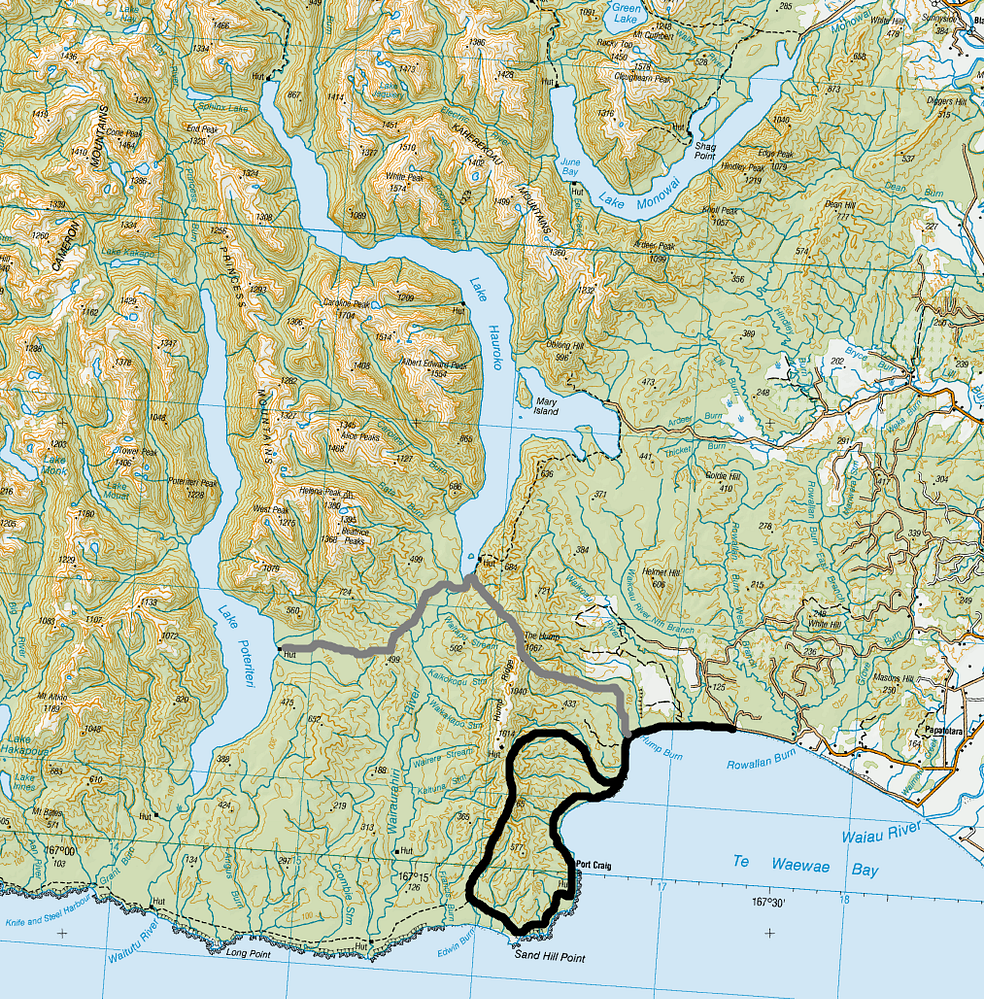
It’s also possible to cross the Hump Ridge by quite a different course, shown above in grey. That course varies from a four-wheel drive road to a poled route. It leads to Poteriteri Hut on Lake Poteriteri.
In the following map, you can see the location of Tūātapere some way up the Waiau River, at top right.
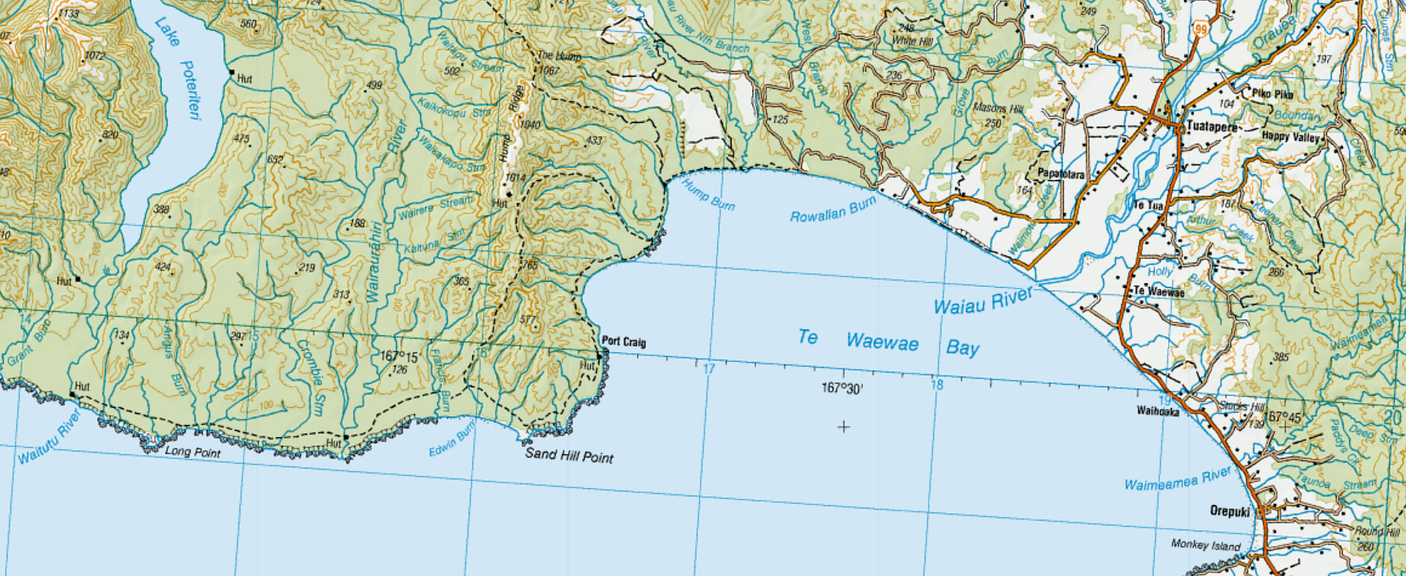
The whole area around Tūātapere is modestly popular for tourism, though strictly of the more adventurous sort, as the roads peter out to the west of Tūātapere.
Lake Poteriteri, at the left of both maps, is the largest lake in New Zealand to which no roads lead at all. The lake is 28 km (17 miles) long. It sits in the vast Waitutu Forest to the sound of no cars: just birdsong.
Between Lake Poteriteri and Te Waewae Bay, Lake Hauroko drains southward to the sea via the Wairaurāhiri River, which drops roughly 157 metres (515 feet) from the lake to the sea in a span of only 27 kilometres. Flowing nearly all the way through native rainforest, the Wairaurāhiri River contains challenging rapids and is sometimes referred to as a ‘horizontal waterfall,’ or as New Zealand’s ‘longest waterfall.’
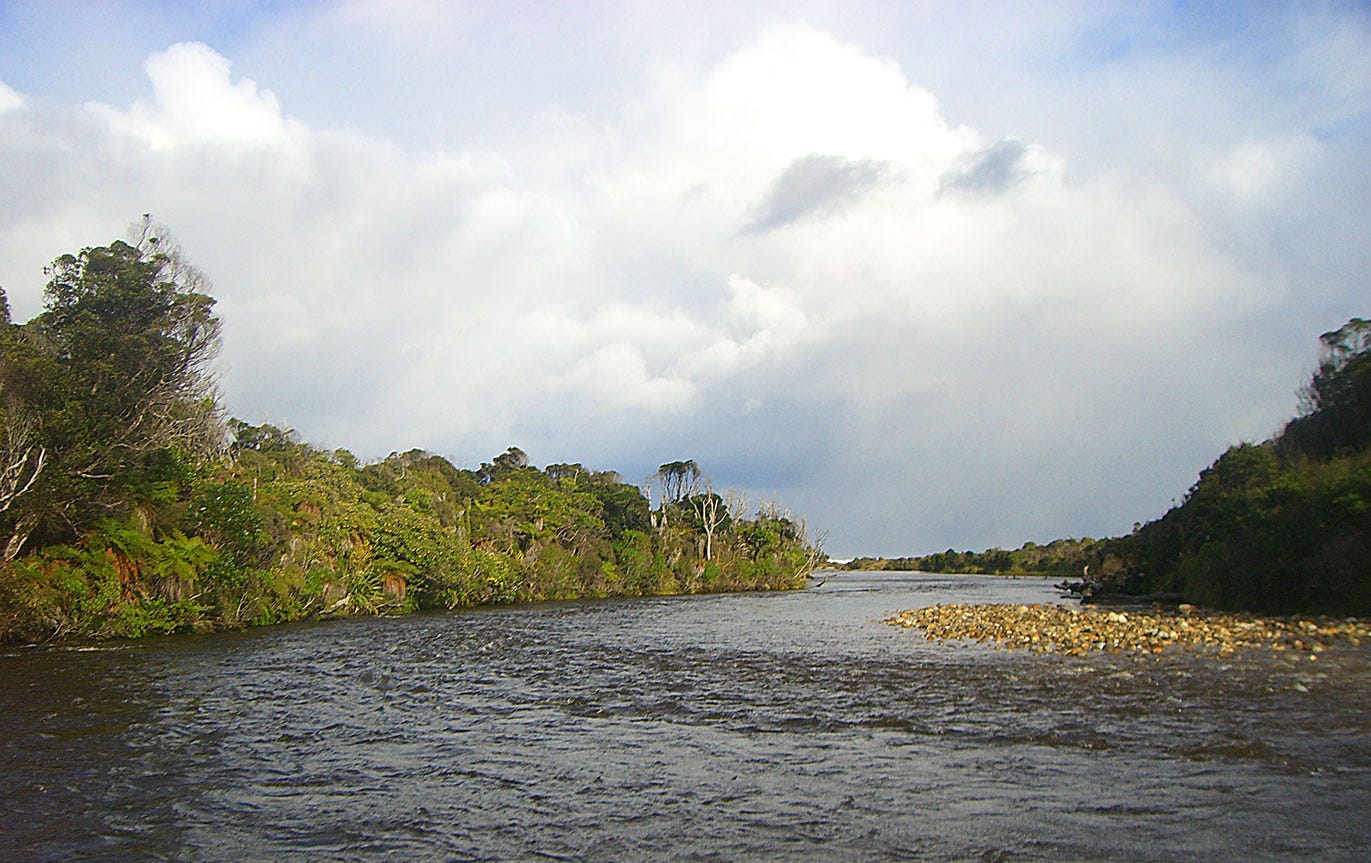
Near the mouth of the Wairaurāhiri River stands the Waitutu Forest Lodge, owned and operated by local Māori via the Waitutu Incorporation, a branch of the business activities of the Ngāi Tahu Iwi (tribe).
Perhaps the most popular way of getting to the Waitutu Forest Lodge is by way of a jetboat down the Wairaurāhiri River from Lake Hauroko, which is accessible by road.
Quite luxurious by backcountry standards, in the sense that it has staff and linen, the Waitutu Forest Lodge is a popular place to get away from things without actually having to rough it too much: though you have to get there by jetboat — or helicopter — if you don’t want to make a multi-day hike via the Hump Ridge Track and/or the South Coast Track, which runs past the equally roadless Port Craig.
The Waitutu Forest Lodge is fairly affordable, but a guided tour in the area can be pricier.
On the second of the two maps above, by the words Hump Burn and Rowallan Burn and above the words Te Waewae Bay, there’s a lengthy beach called Bluecliffs (or Blue Cliffs) Beach.
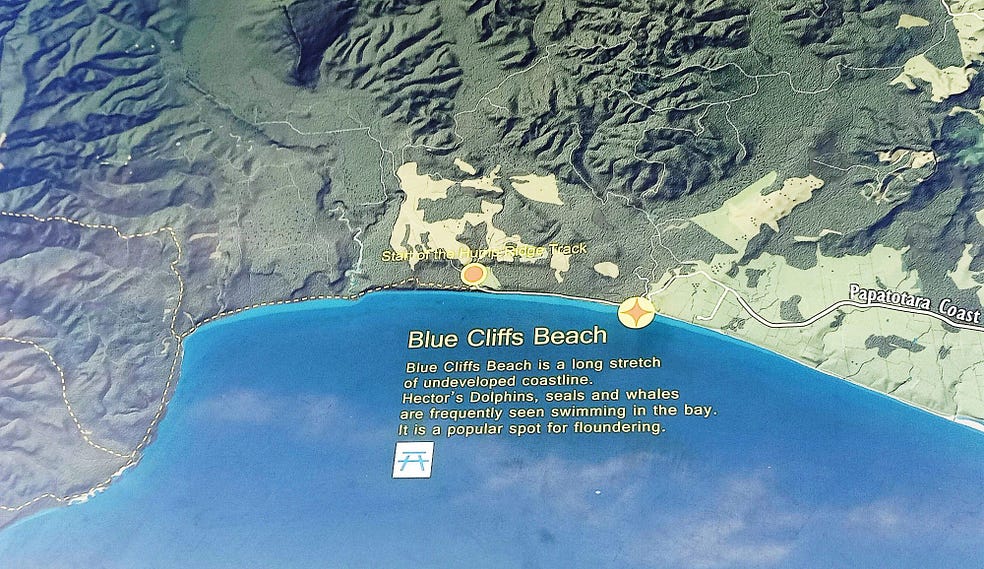
Bluecliffs Beach is known in Māori as Rarakau, which is also the name of a locality toward the end of the Papatotara Coast Road, the only way into this district.
At 27 km or 17 miles wide, Te Waewae Bay has a very high ratio of beach to beachgoers! I describe its attractions in another post.
Getting back to Tūātapere, these days, the town’s logging boom is indeed long gone, as are its railway services.
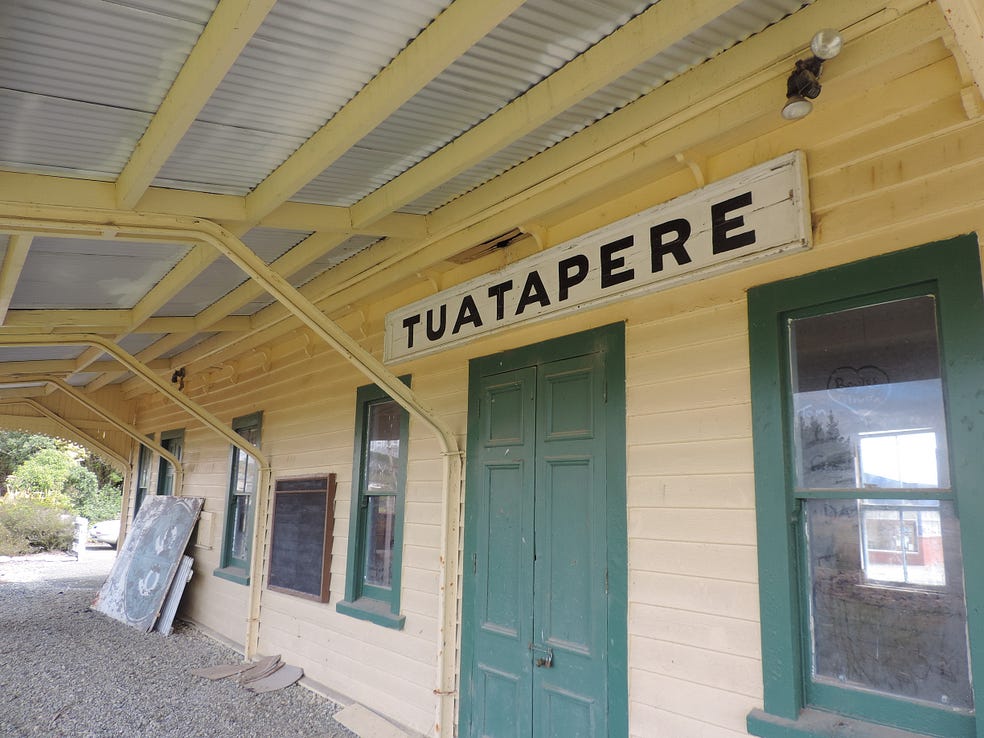
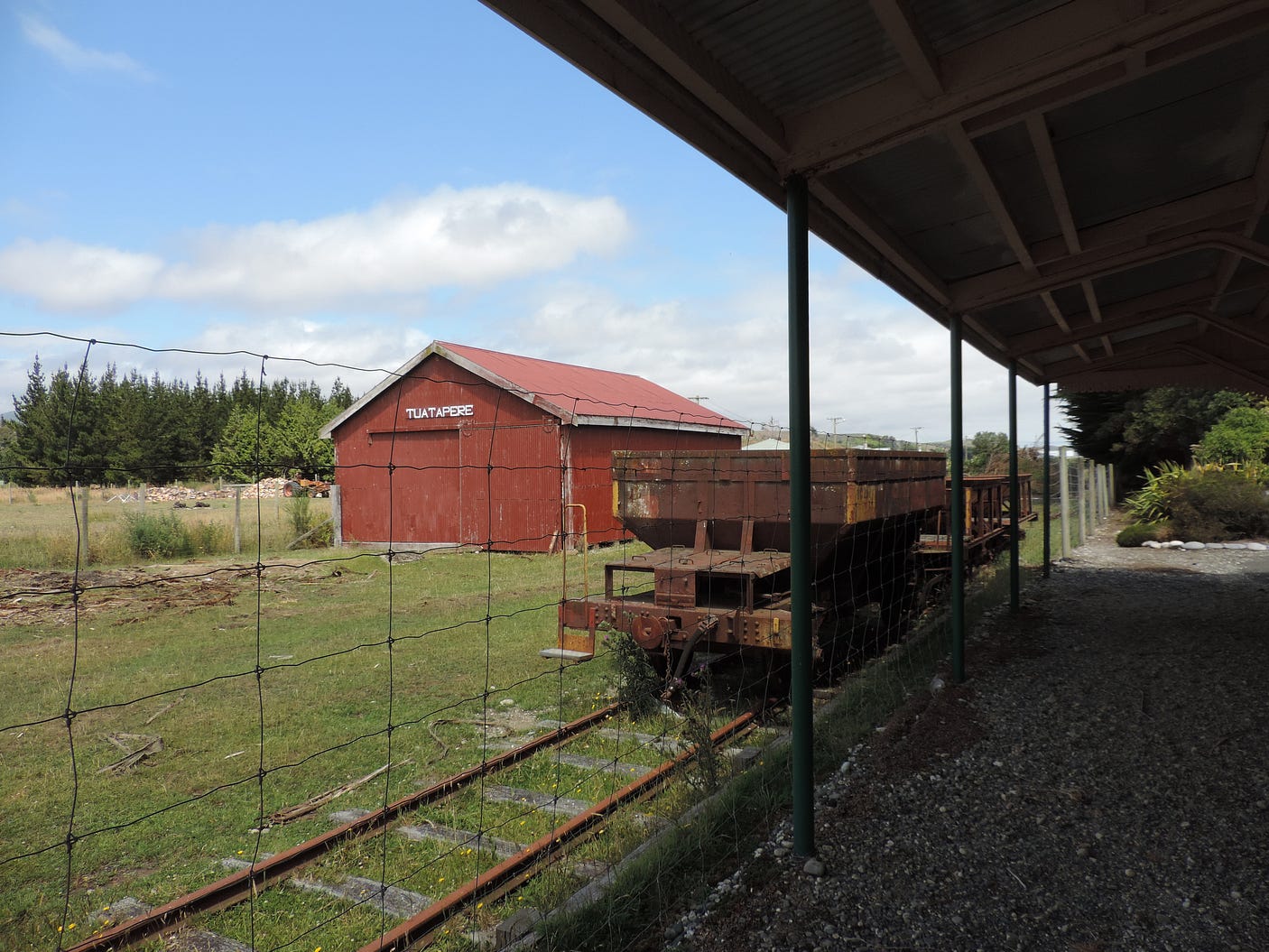
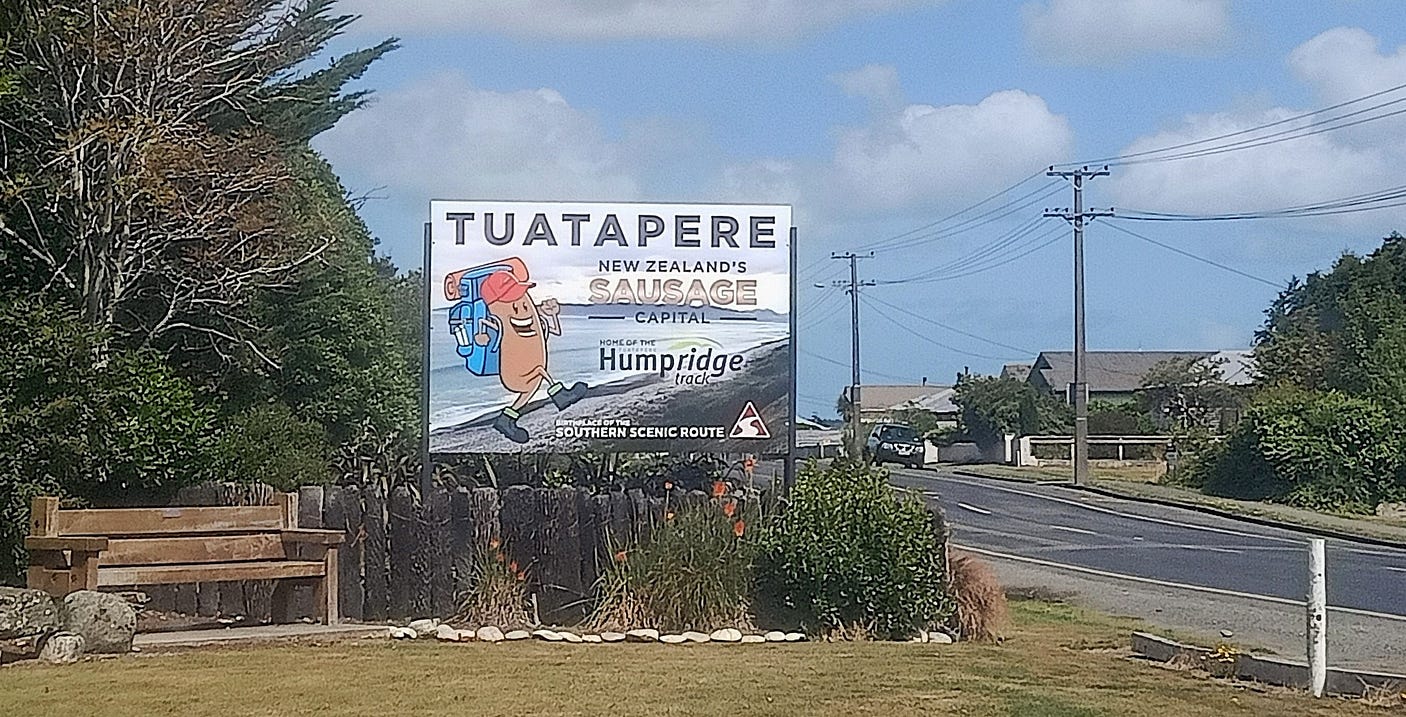
Instead, Tūātapere is now the headquarters of the local tourism industry. It is the starting-off point for the Hump Ridge Track, and it is on the Southern Scenic Route.
Tūātapere is also New Zealand’s self-described sausage capital, a haven of good country food. Even so, this title was threatened for a time in 2015 when the struggling town’s last butchery closed.
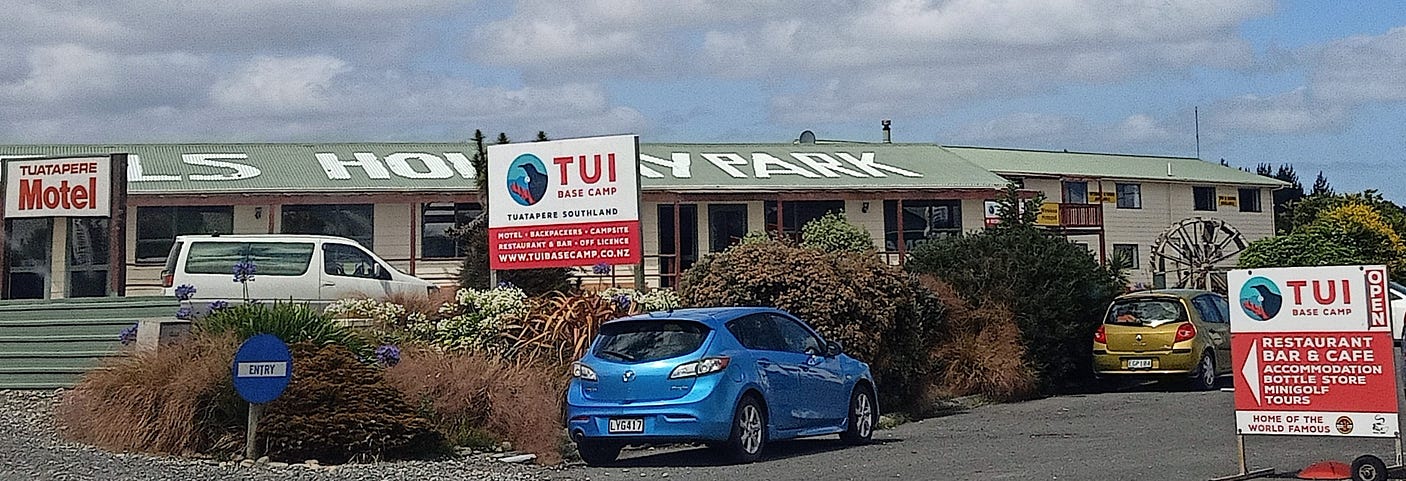
Fortunately, you can still get locally made sausages at the Tūī Base Camp, one of several businesses in the area that cater to tourists and tourism accommodation.
The Waiau Hotel obviously predates the tourist era. When a friend of mine visited it with my father, pre-Covid, it was full of historic black and white photographs, and popular with the sorts of blokes who do up old cars in sheds. You could get a very refreshing pot of tea and world-class fish and chips, along with stronger refreshments.
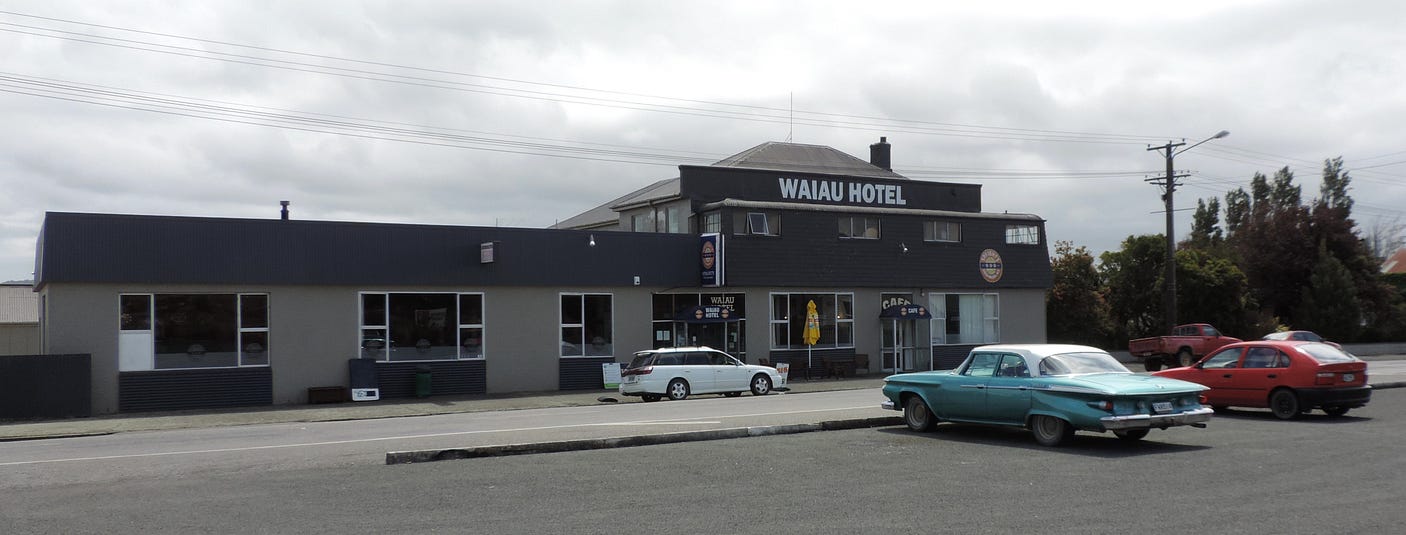
Unfortunately, it seems that the Waiau Hotel has been closed ever since Covid. Maybe one day it will reopen, but time is clearly marching on.
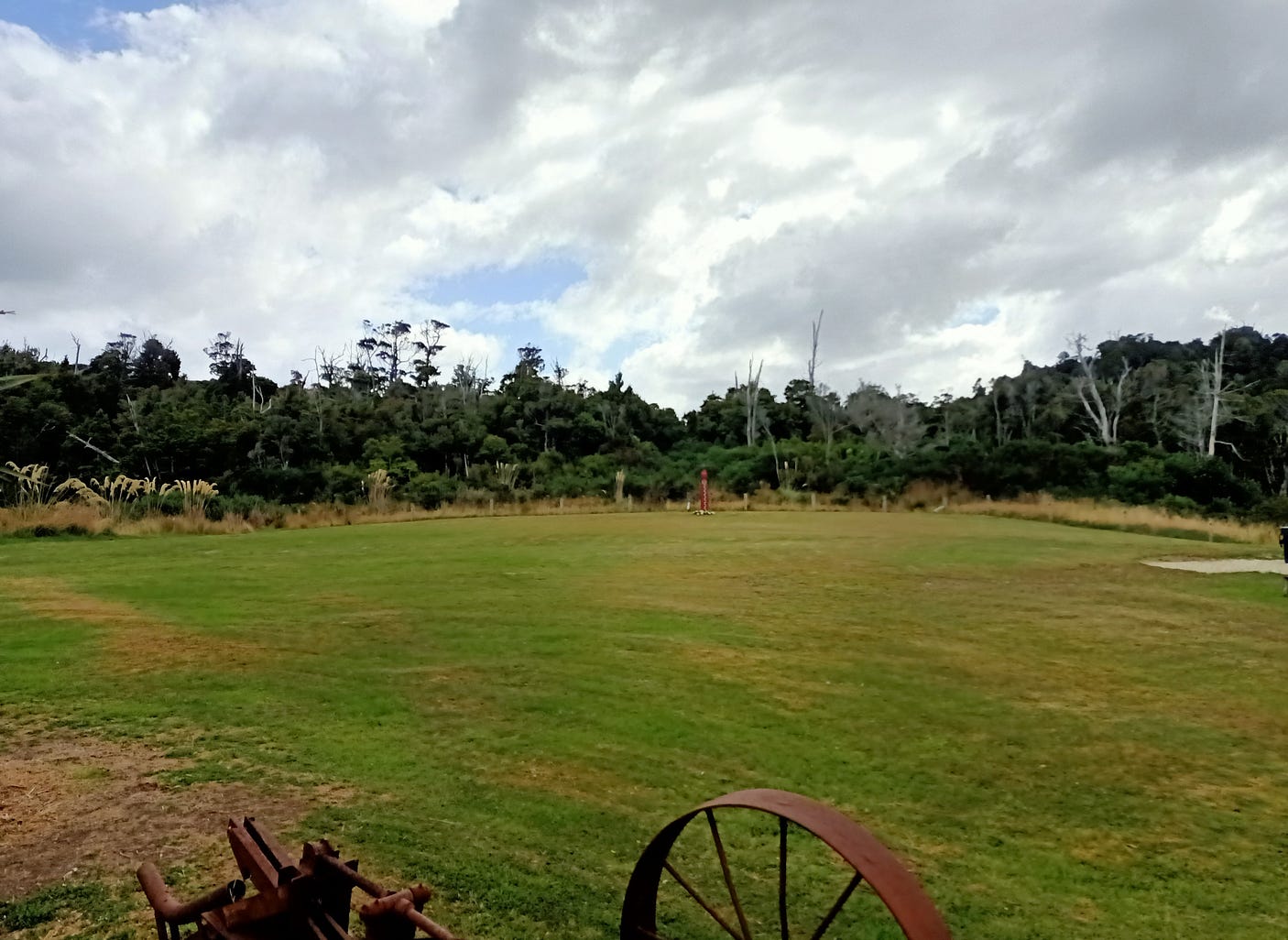
Even today, Tūātapere looks like it has only just been hacked out of the jungle. Actually, this rainforest, as we now call it, has been preserved for conservation purposes. Some of it is in a lovely town domain parkland by the river. Spot the glimpse of antique machinery in this shot, as well!
And these were the people who did the hacking.
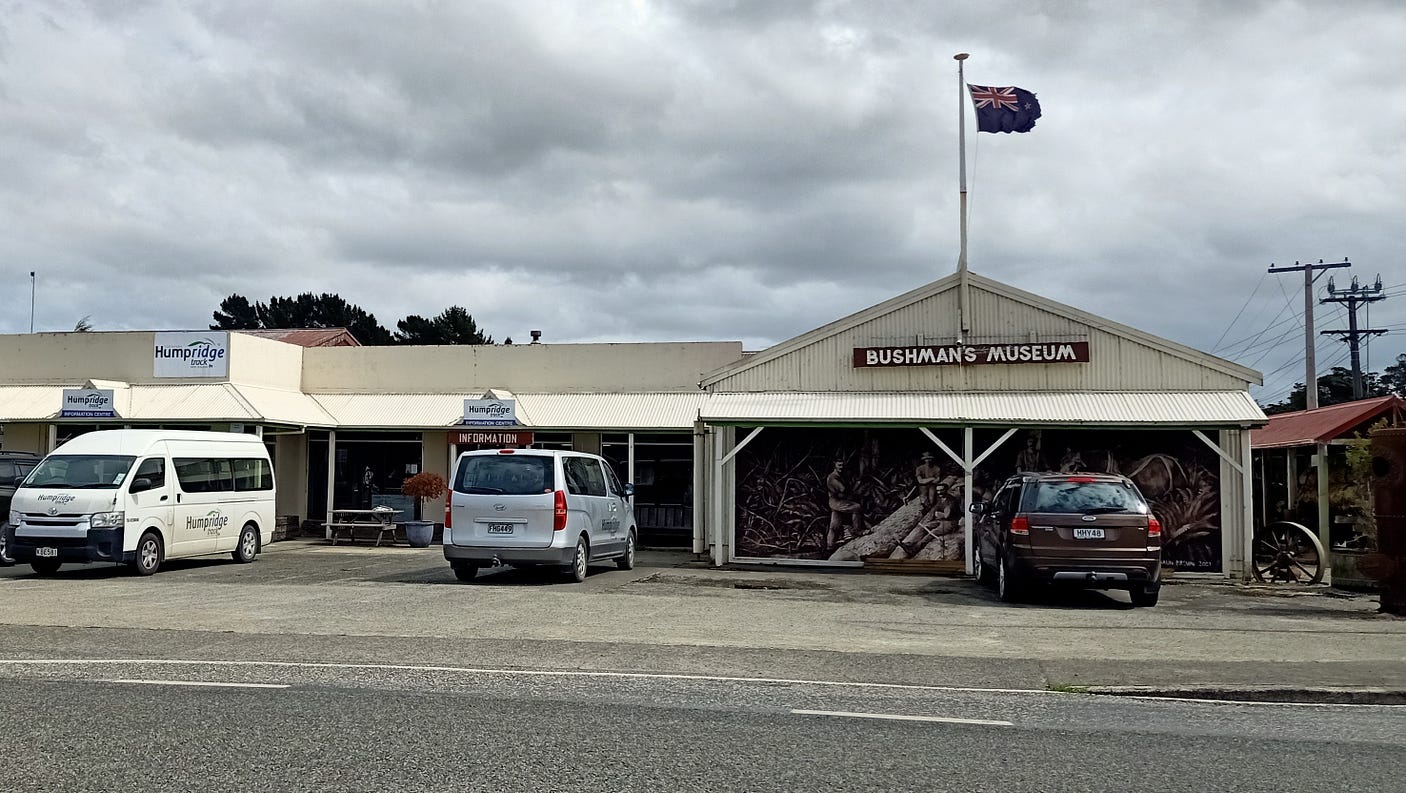
There is also a DOC information centre at Tūātapere, and, in addition to hotels and motels, a caravan park.
As for the name of the town, NZHistory.govt.nz gives its origin, as of the time of writing, thus: “Tūā: a ceremony performed before a gathering begins; tapere: a gathering for singing songs and playing games. Earlier known as Ryan’s Island after a settler of that name. Another name in the early twentieth century was Drummonds Ferry after the ferry operator, Bob Drummond.”
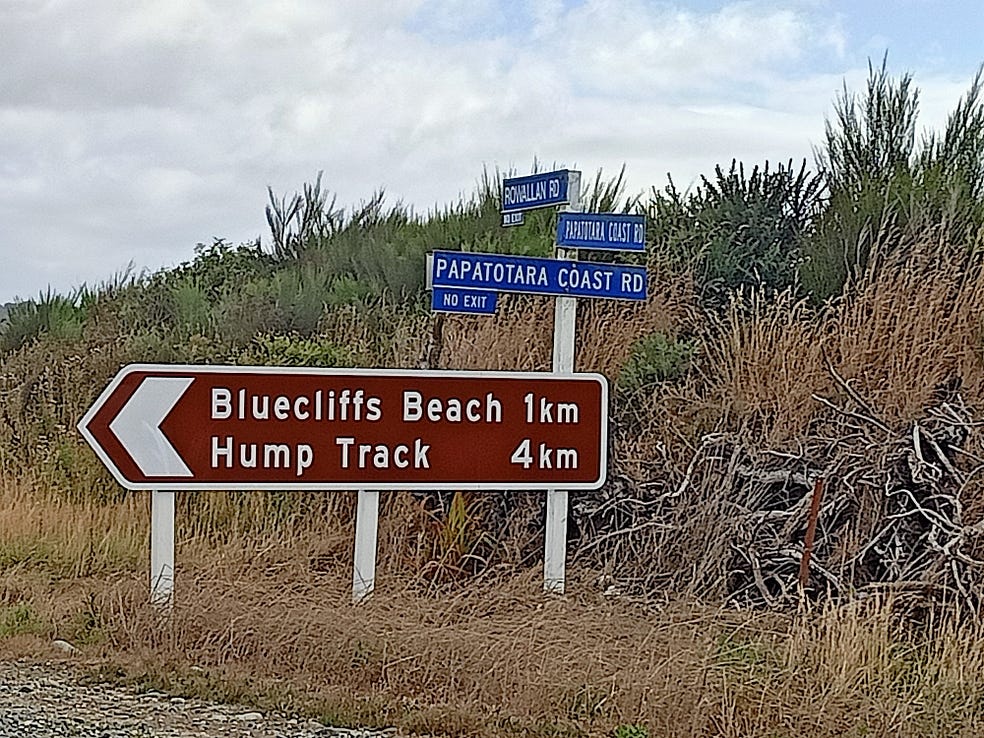
The Hump Ridge Track begins at the locality of Rarakau, at the very end of the Papatotara Coast Road.
The Papatotara Road, from Tūātapere, branches off into the Papatotara Coast Road after about six kilometres. The Papatotara Coast Road, which you then follow all the way to the Rarakau Lodge (of which more below) and its carpark, where the Hump Ridge Track begins, is sealed at first and then turns into a gravel road for its last seven kilometres to the Rarakau Lodge. The road continues on physically after that, but I think it just a logging road past the Rarakau Lodge.
There is accommodation before the track, at a place called The Cliffs, on the sealed section of Papatotara Coast Road.
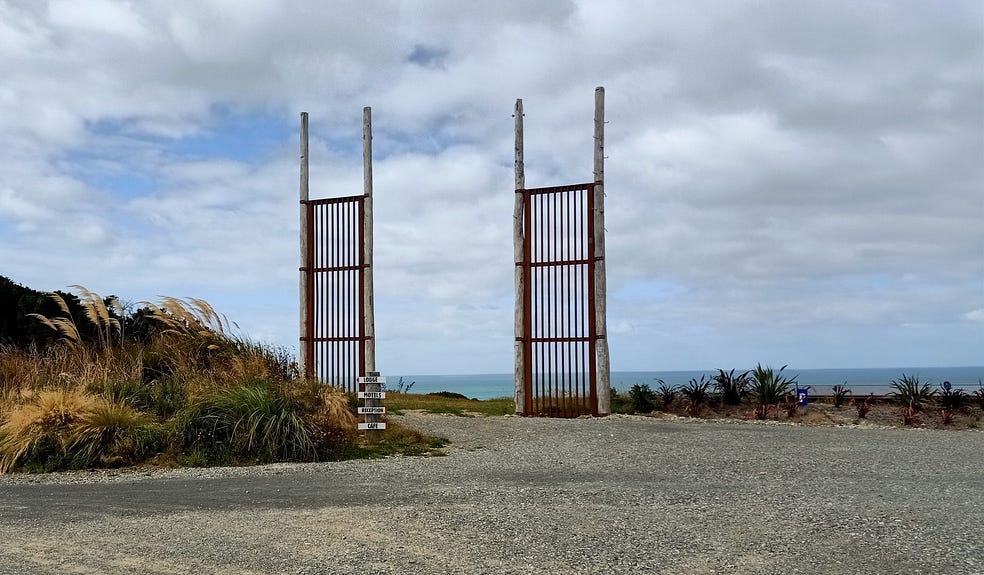
As of the time of writing (August 2026), The Cliffs offers accommodation in a lodge for NZ $280 a night per room, and in a motel for NZ $195 a night per room.
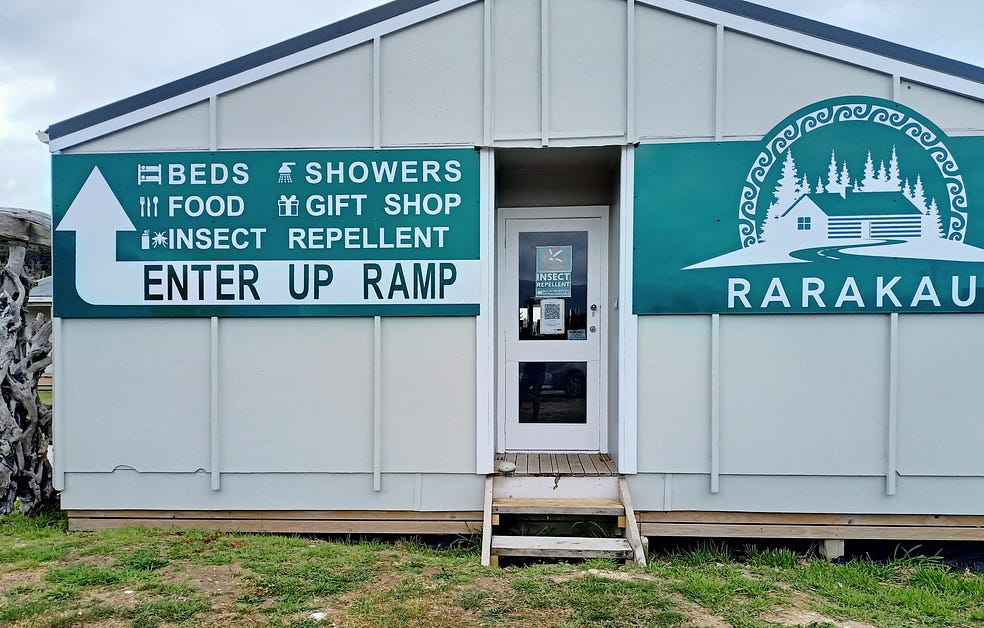
At the very start of the Hump Ridge Track, the Rarakau Lodge is a bit cheaper than the motel part of the Cliffs.
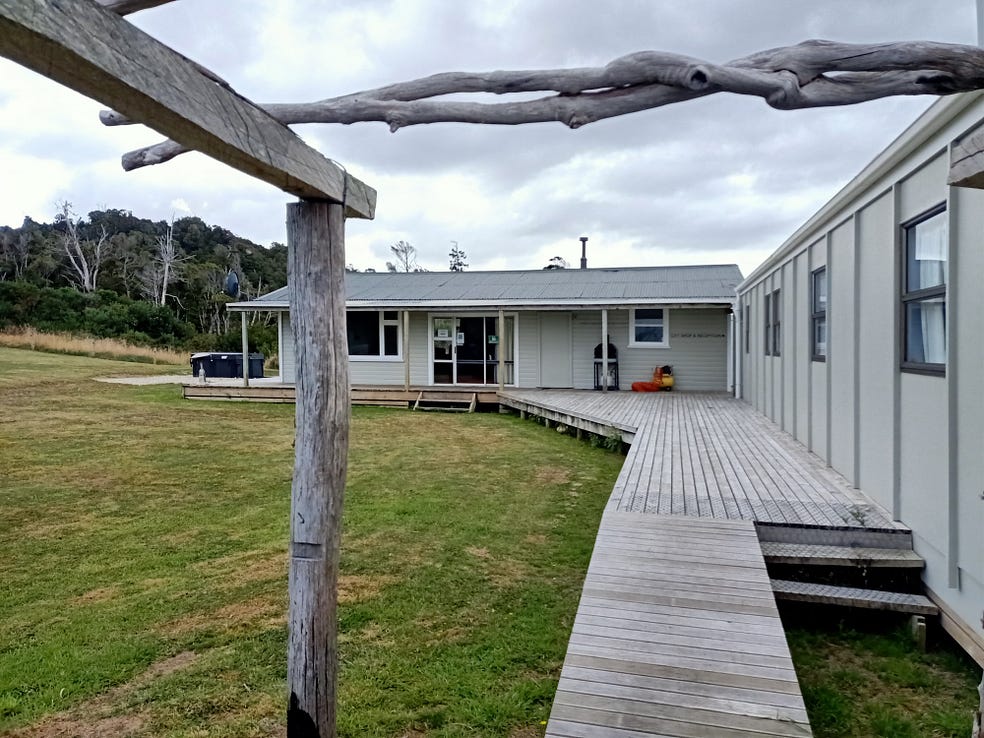
There are other accommodation sites close to the start of the Hump Ridge Track these days, such as the Toi Toi Papatotara B&B, which also looks like a very attractive seaside option.
All three of the places I’ve just mentioned seem to be very highly rated. And it may pay to stay out here at this end of the road, at least if you want a completely undisturbed sleep before going hiking.
The night before I did the Hump Ridge Track, a few years ago now, I stayed in Tūātapere at a backpackers’ hostel. Unfortunately, just as I was trying to get to sleep, the local youth began doing burnouts outside my window in their cars. There were people partying on the street and in the hostel until four o’clock in the morning.
After a patchy night’s sleep, I started the track and soon met a cigarette-smoking businessman from Hamilton who threw his cigarettes in the bush as he was tramping. I also met and tramped with a Dutch girl who had been tramping around New Zealand for four months.
The sunset on the first night was so beautiful, and you could even see Rakiura/Stewart Island in the distance.
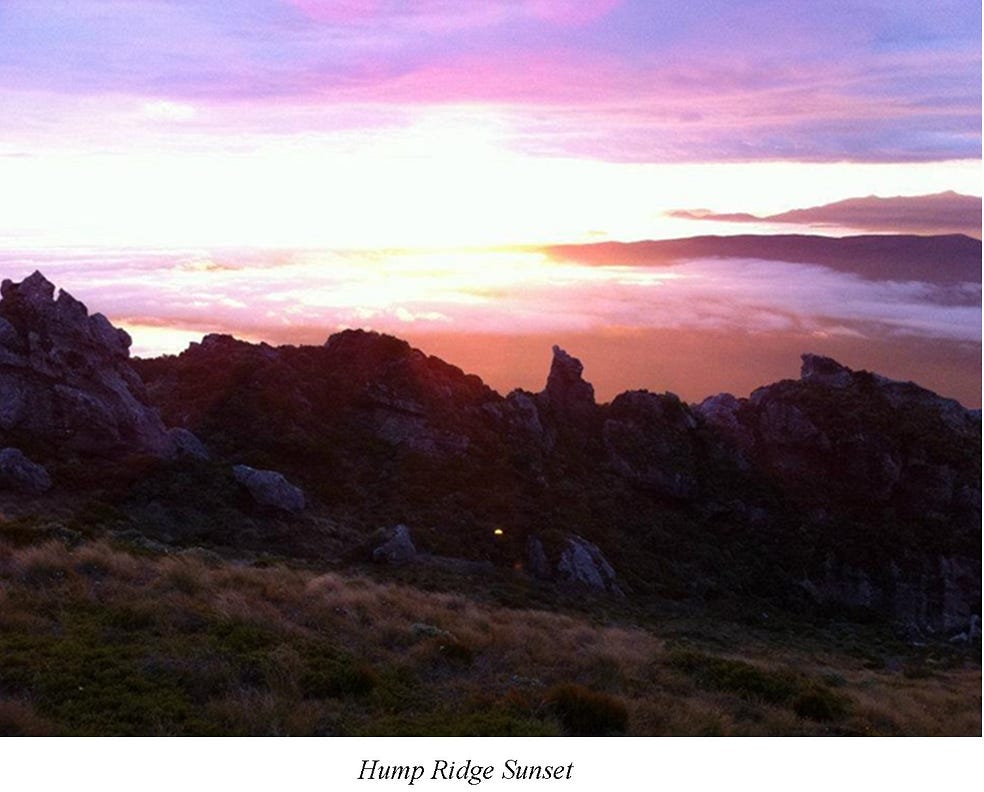
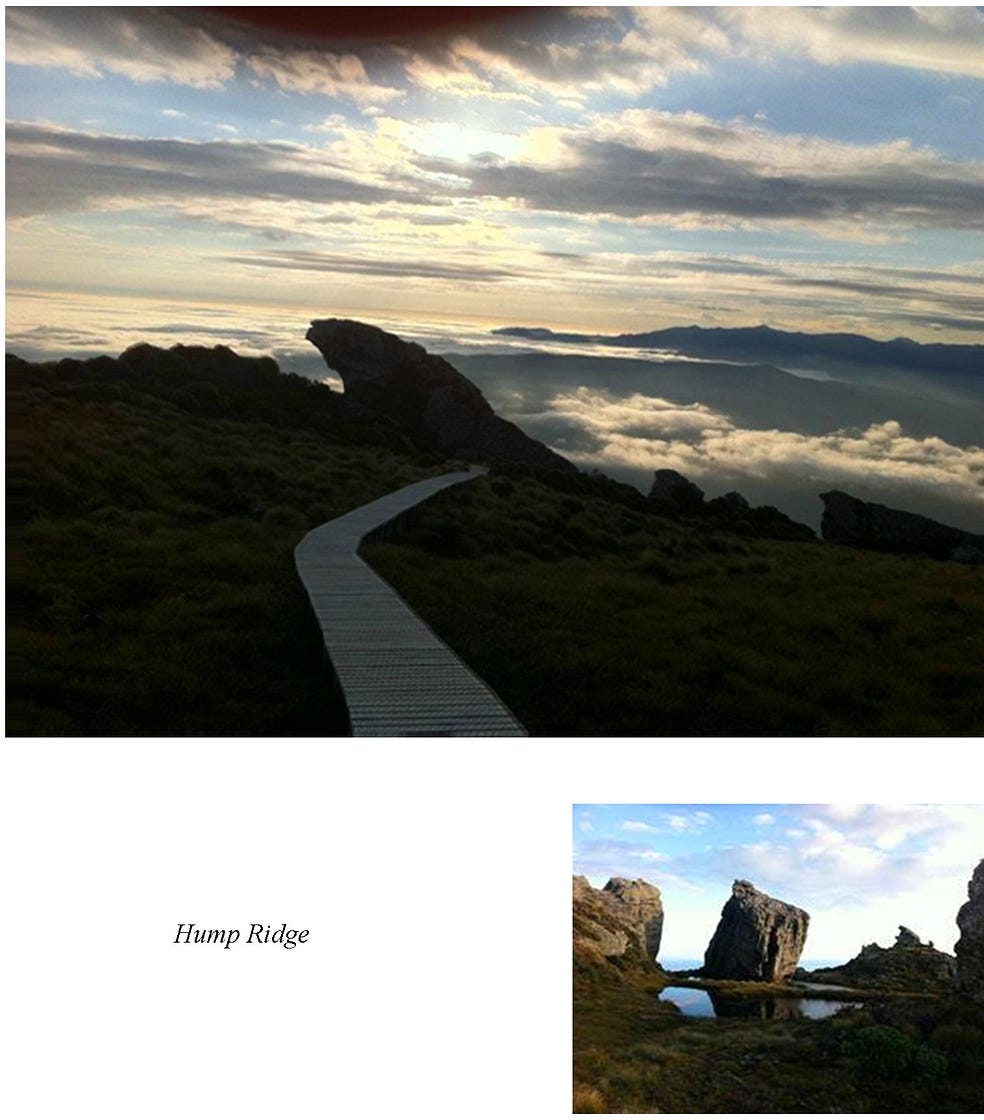
In addition to witnessing the stunning views, walkers on the track can also cross some of the world’s tallest wooden railway viaducts.
After completing the Hump Ridge Track, I returned to the same hostel in Tūātapere. The owner refunded my first night’s fees and then gave me a free night and a lift to Invercargill the next day, which was a great example of southern hospitality and more than made up for my issues on the first night.
Once in Invercargill, I met the DOC manager responsible for volunteer hut wardens, who took me shopping.
Here I was to get the food I needed for my next adventure, also written up on this publication: a two-week stint at the Port William Hut in Rakiura/Stewart Island at the start of the North West Circuit Track.
Currently, the cost of the Hump Ridge Track’s three-day ‘walking packages’ starts, in season as of 2026/27, at NZ $495 for the most basic ‘Freedom Walker’ option, sharing accommodation with eight others, or NZ $575 for a four-person room. The price goes up with better accommodation, including the option of a single room for NZ $150 extra per night, through NZ $1,105 for the ‘Prime Package,’ and the option of a guide, on to NZ $2,395 per person for the most upscale walking package. There are also other deals that include jetboat and helicopter rides.
Lastly, on a quirky note, somewhere in these parts, I also once came across a place owned by a bit of a character, with driftwood art, an official sign saying to watch out for penguins, and old signs apparently retrieved from tramping tracks such as the Hollyford Track (which is where the lower one mentioning Martins Bay must have once stood.)
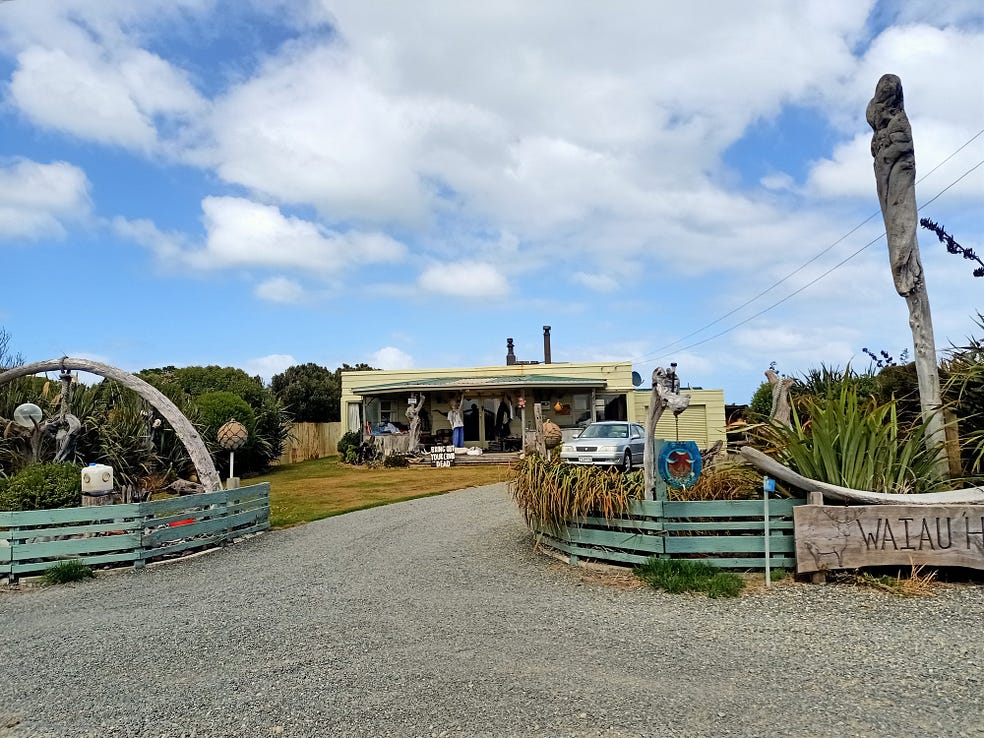
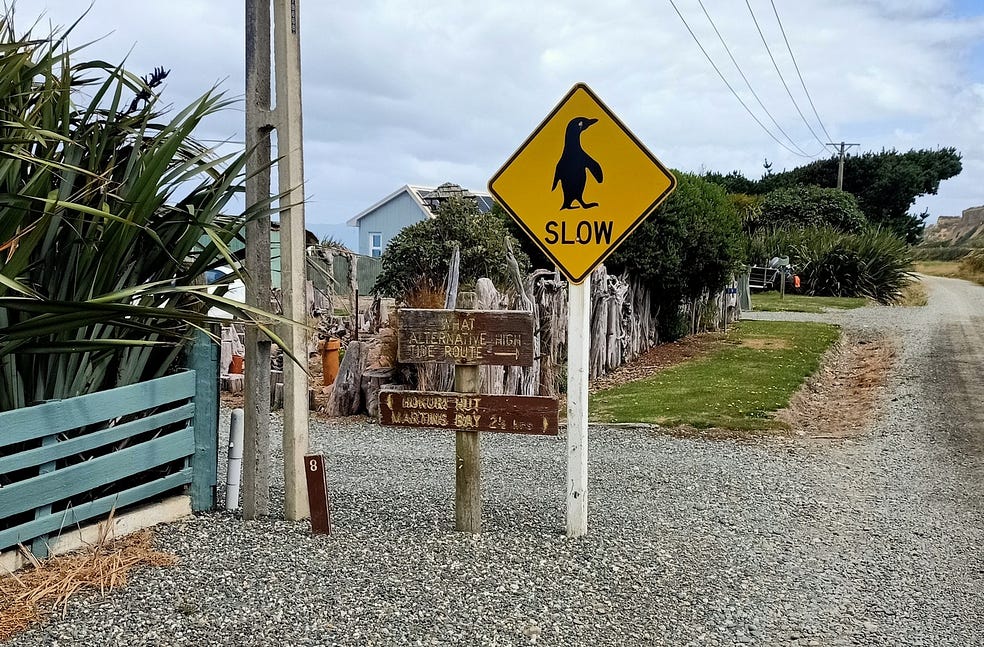
Hopefully, this person is still in business!
Additional Resources:
Tūātapere Humpridge Track homepage: humpridgetrack.co.nz
The Southland App, by AdvocateCommunications

Subscribe to our mailing list to receive free giveaways!

