Giveaways
AT the end of last week’s post, I described how, after Jiufen, where I attended the Pinxi Sky Lantern Festival, and the Beitou Hot Spring Museum and Ketagalan Cultural Centre, I found myself in the wet, rainy hills that overlook Taipei from the north: the Yangmingshan National Park.
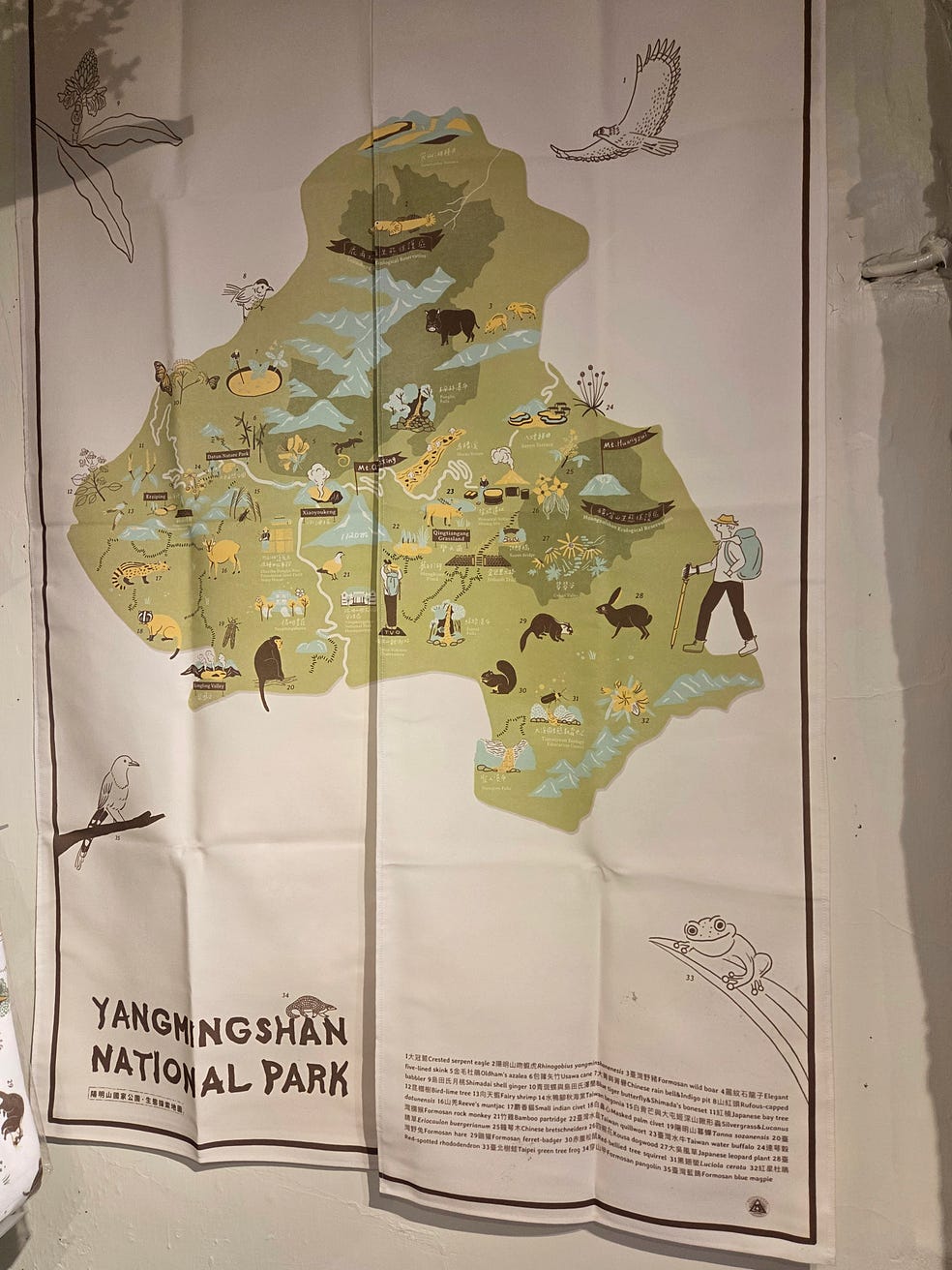
The Yangmingshan National Park is famous for its hiking trails and a mixture of natural and cultural attractions tucked into the rainforest. It was the first of Taiwan’s national parks, established under Japanese rule in 1937.
Here are some more photographs of the wonderful trails.
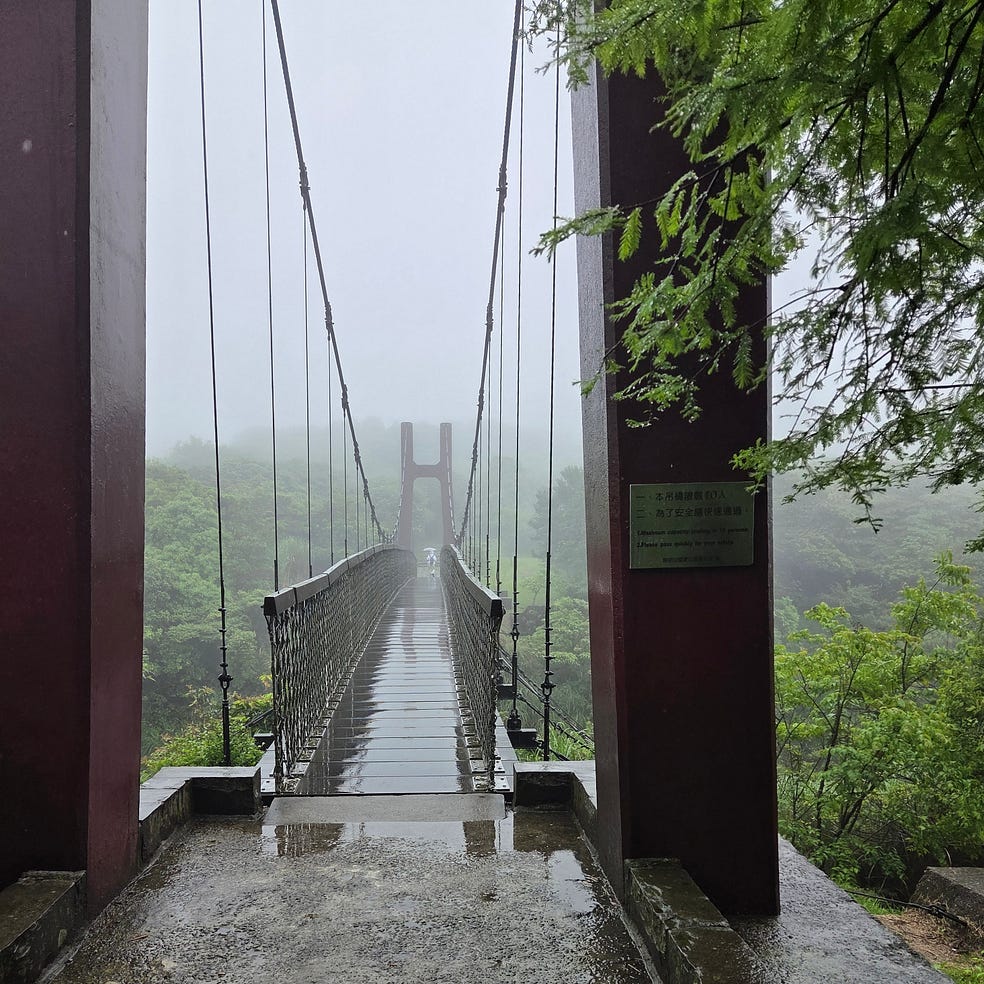
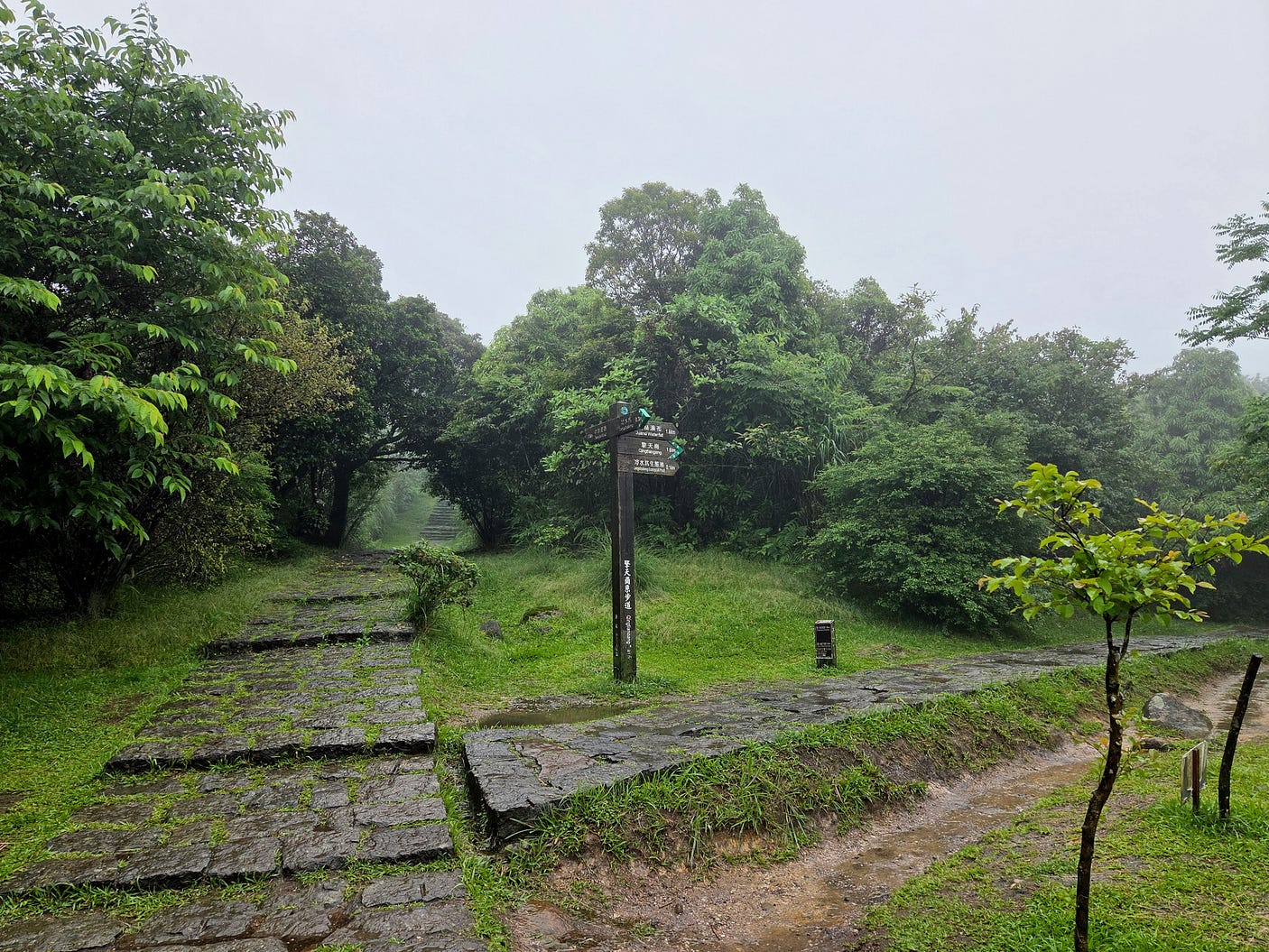
The park really is very rainy. Apparently, its climate is cool and drizzly in winter, while in summer it is warm but torrential.
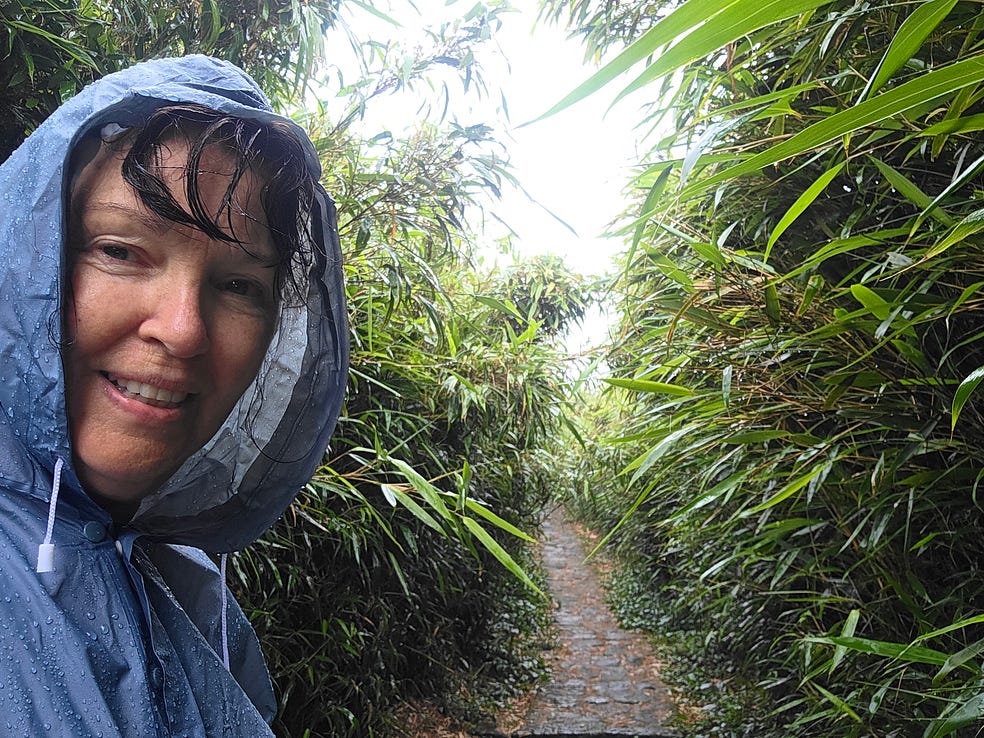
Here’s a video I filmed on a path that leads past volcanic sulfur fumaroles, which only add to the misty atmosphere:
On clear days, which is to say not when I was there, you can apparently get great views of Taipei from many spots.
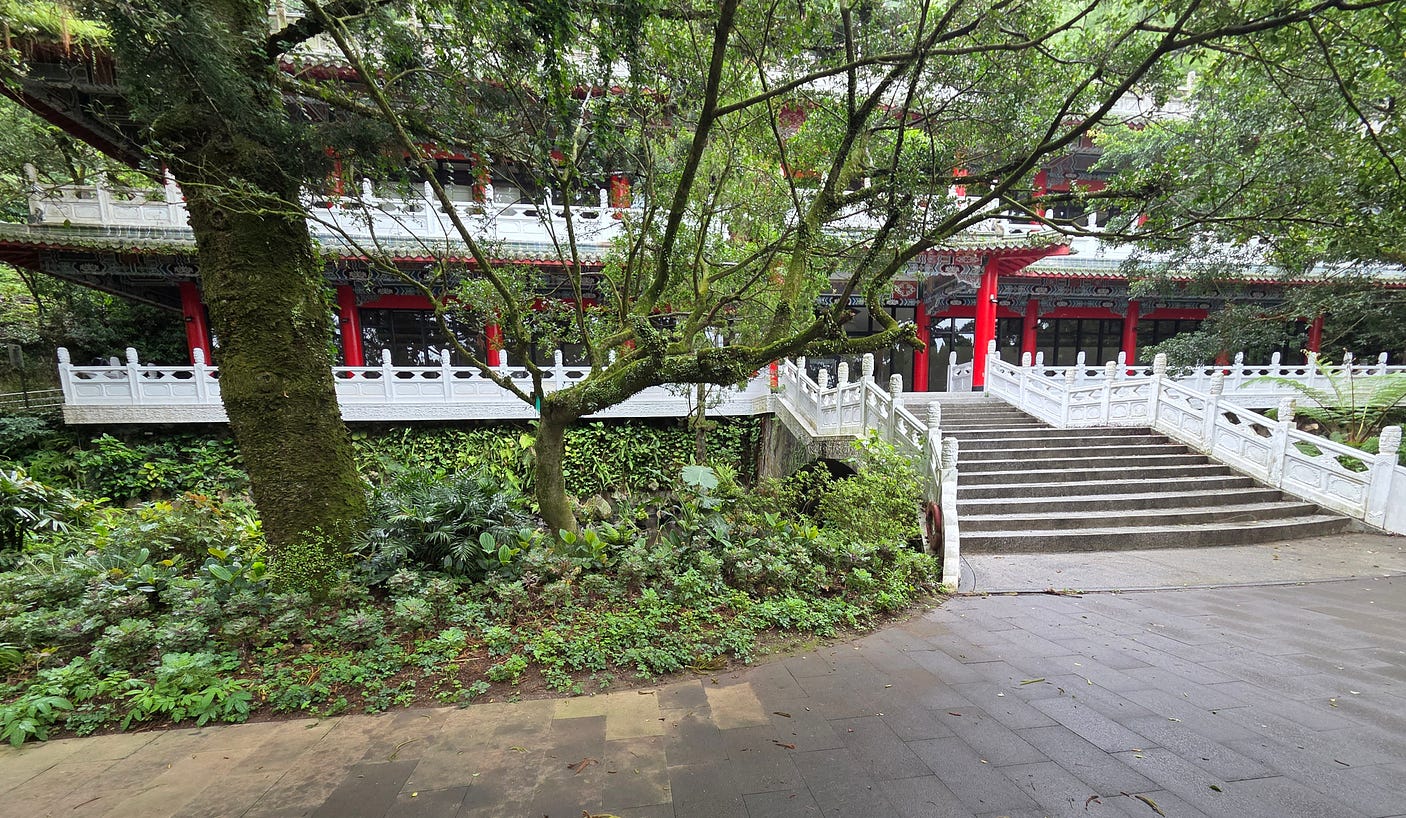
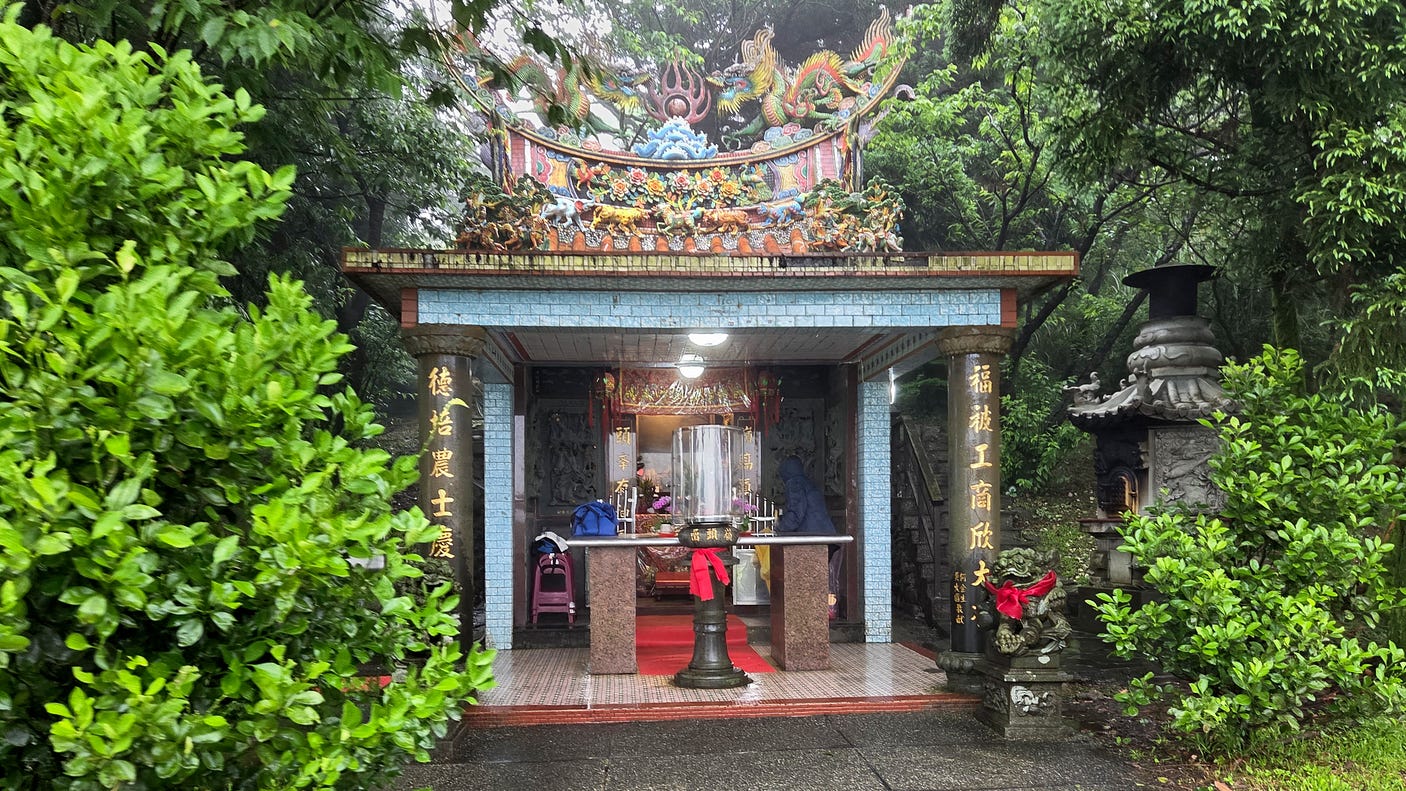
There are some buildings in the park, such as the ancestral shrine of the Wu family, itself a notable viewpoint. The Wu Shrine is surrounded, Japanese-style, by cherry trees that blossom wonderfully in spring, though again, sadly, not when I was there.
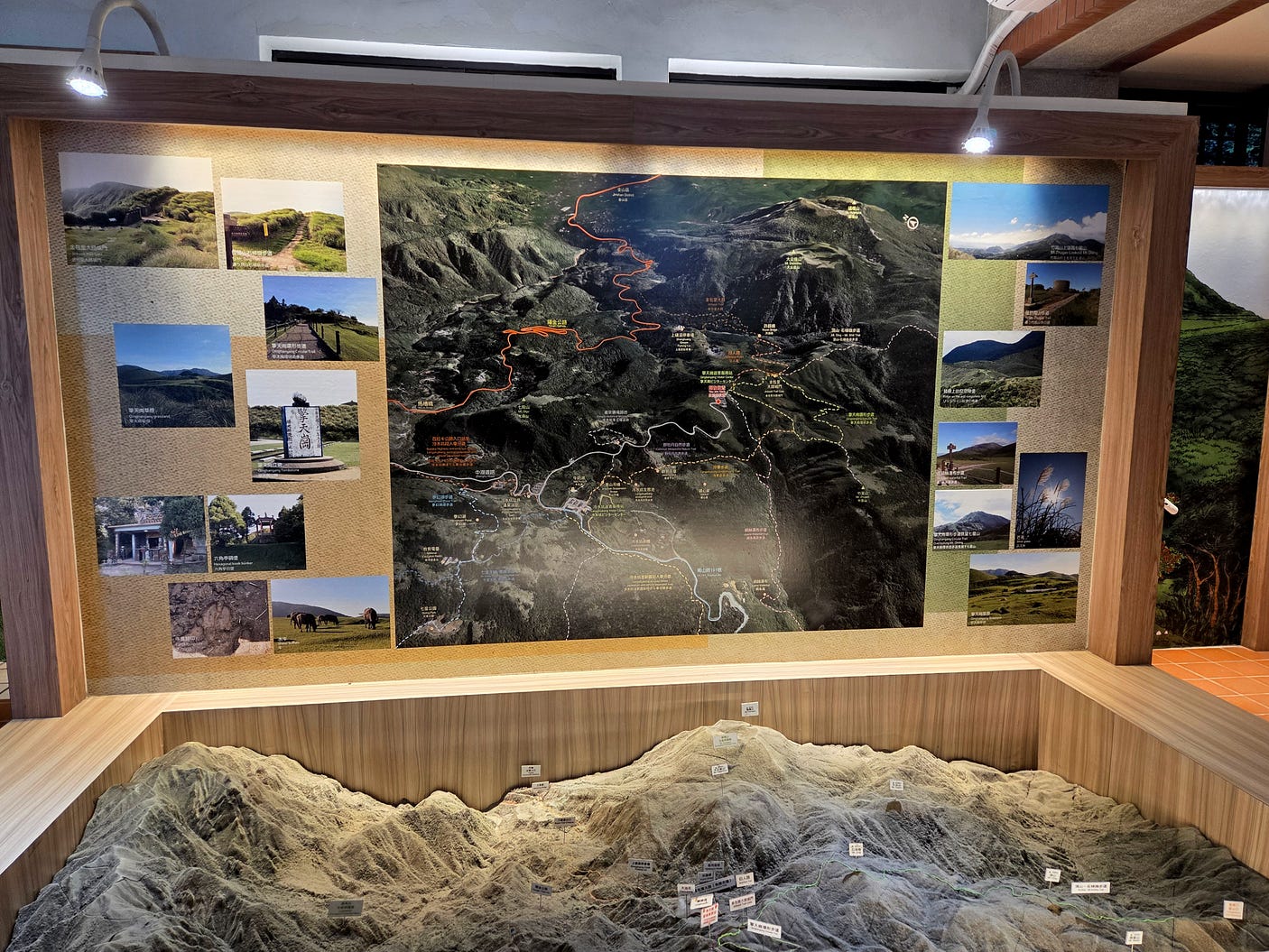
There were lots of signs and exhibits describing the hiking trails, such as this one:
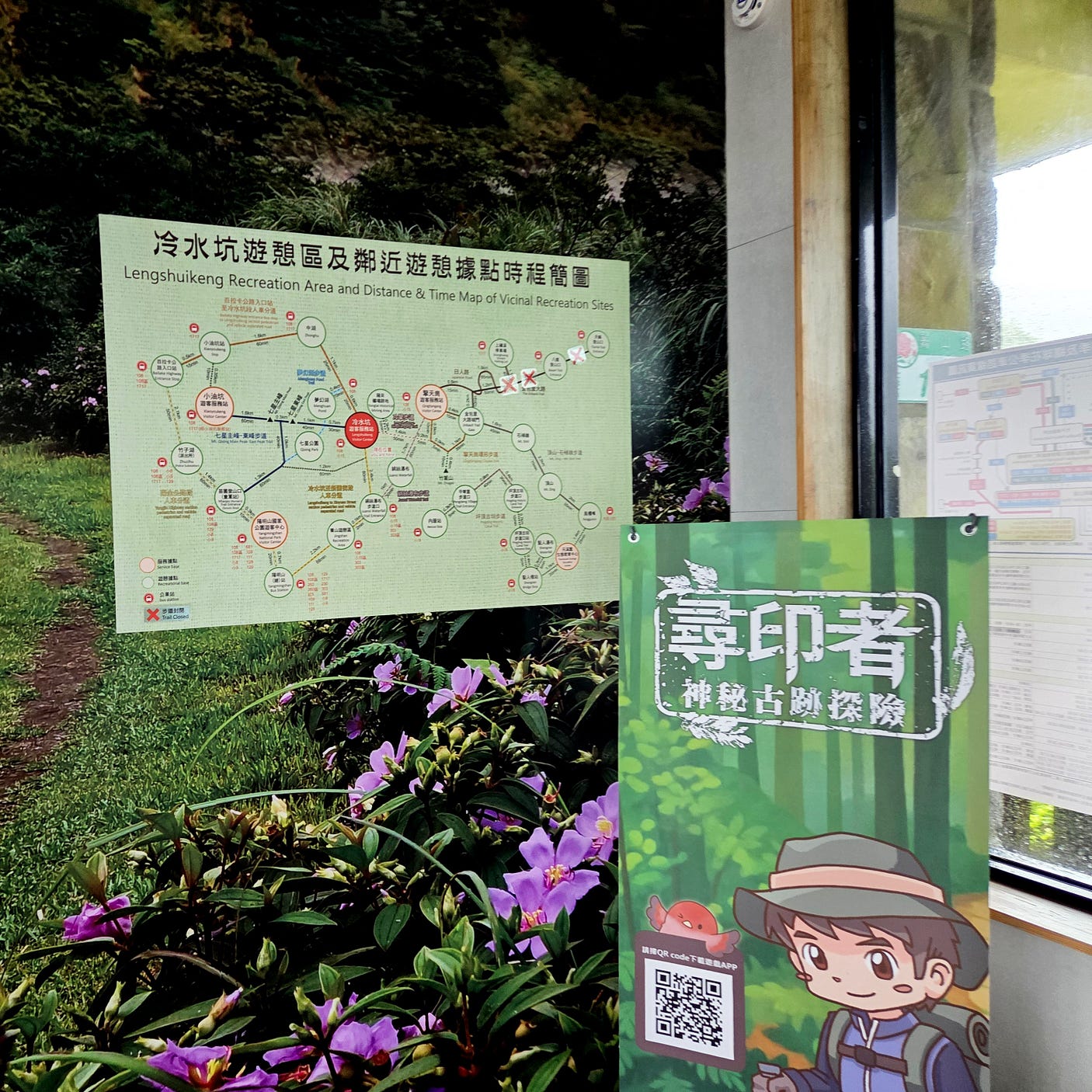
Here is a guide to Lengshuikeng, another hot spring area, within the park.
By the way, I found out that Beitou, the name of the other hot spring area I blogged about last week, comes from a local Austronesian word for witch: whence the logo!
I dropped into a mountain restaurant with the most mouthwathering selection of herb-rich food on display:
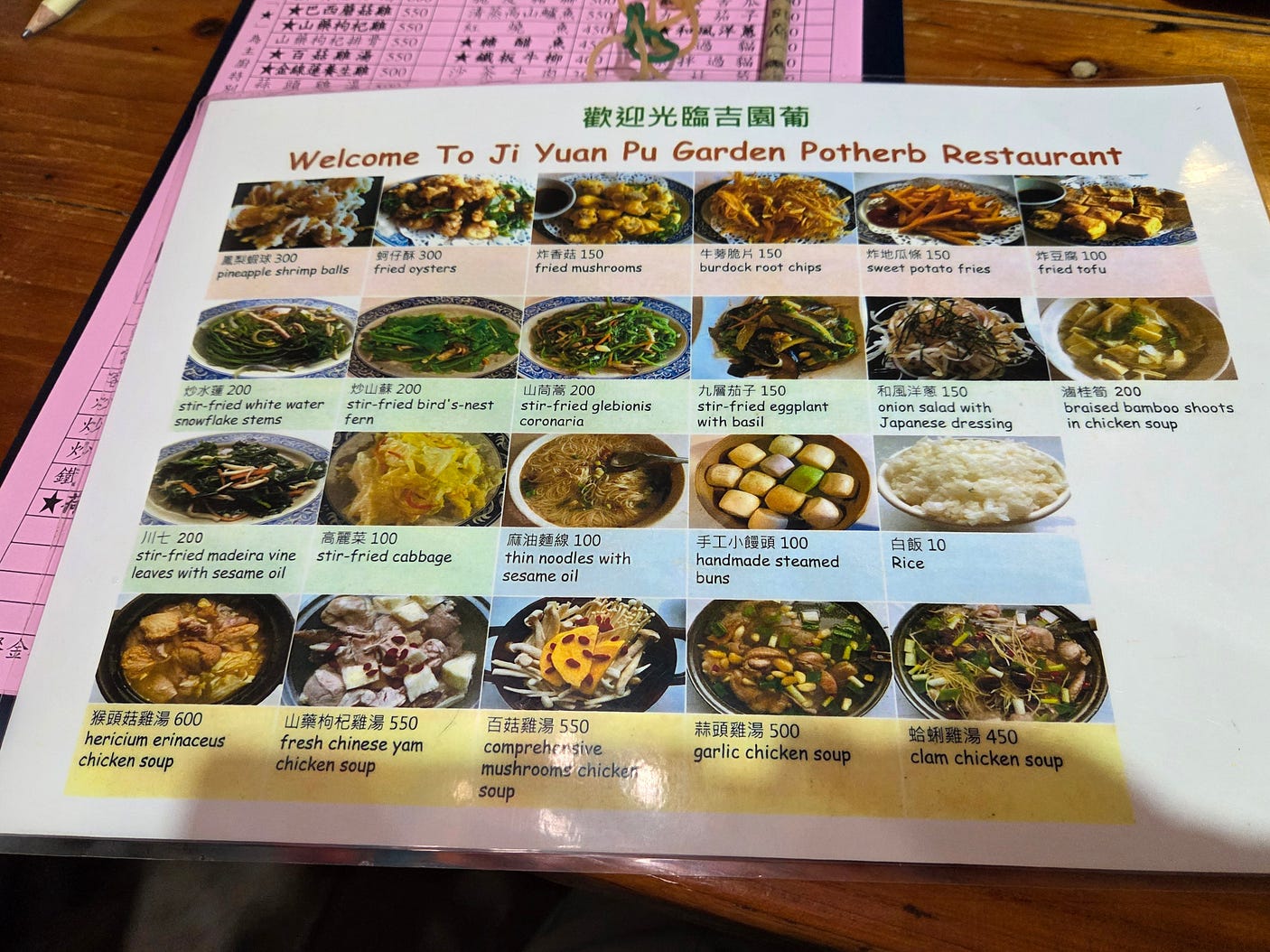
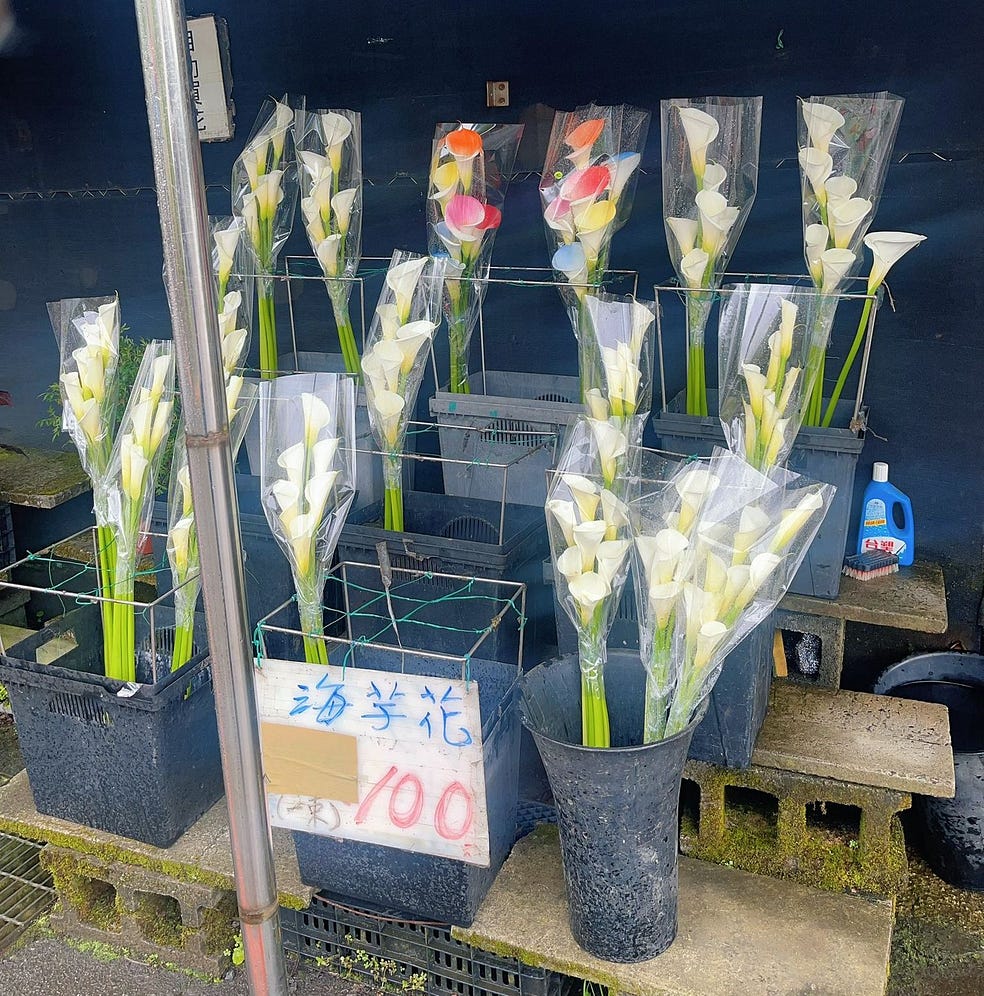
The restaurant is next to Bamboo Lake, famous for its arum or calla lilies and other flowers that grow in profusion there, along with the herbs I presume. I saw some of the lilies on sale at a stall.
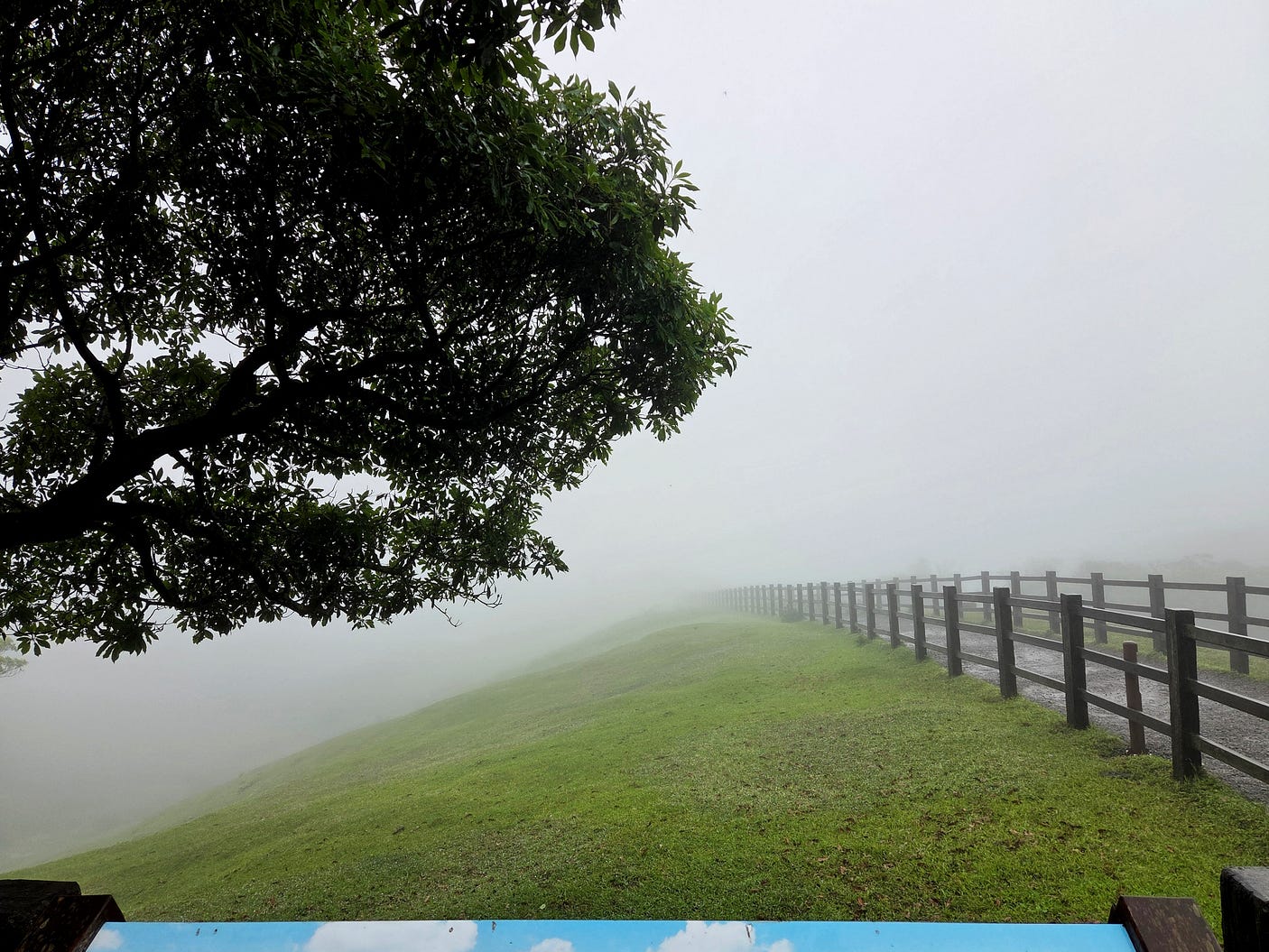
Here are a couple more photographs of misty sights in the hills of Yangmingshan.
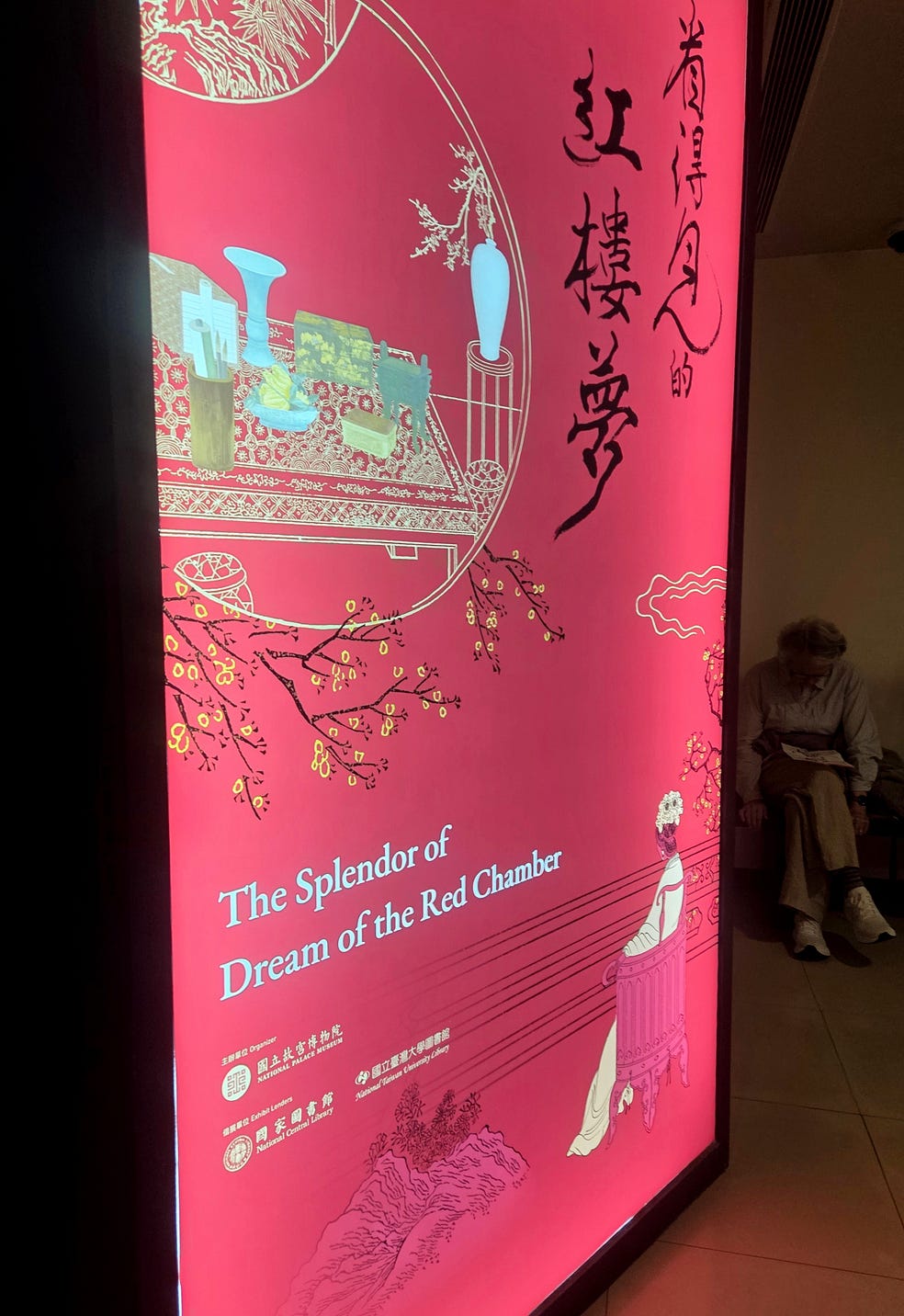
Back in Taipei, I decided to visit the National Palace Museum of Taiwan, one of three National Museums in Taipei, and a great many others.
One of the three is the small but highly regarded National Museum of History. Another is the National Taiwan Museum. Built under colonial rule, the National Taiwan Museum is an interesting example of Japanese neoclassical architecture, owing almost nothing to anything we might think of as traditionally Japanese.
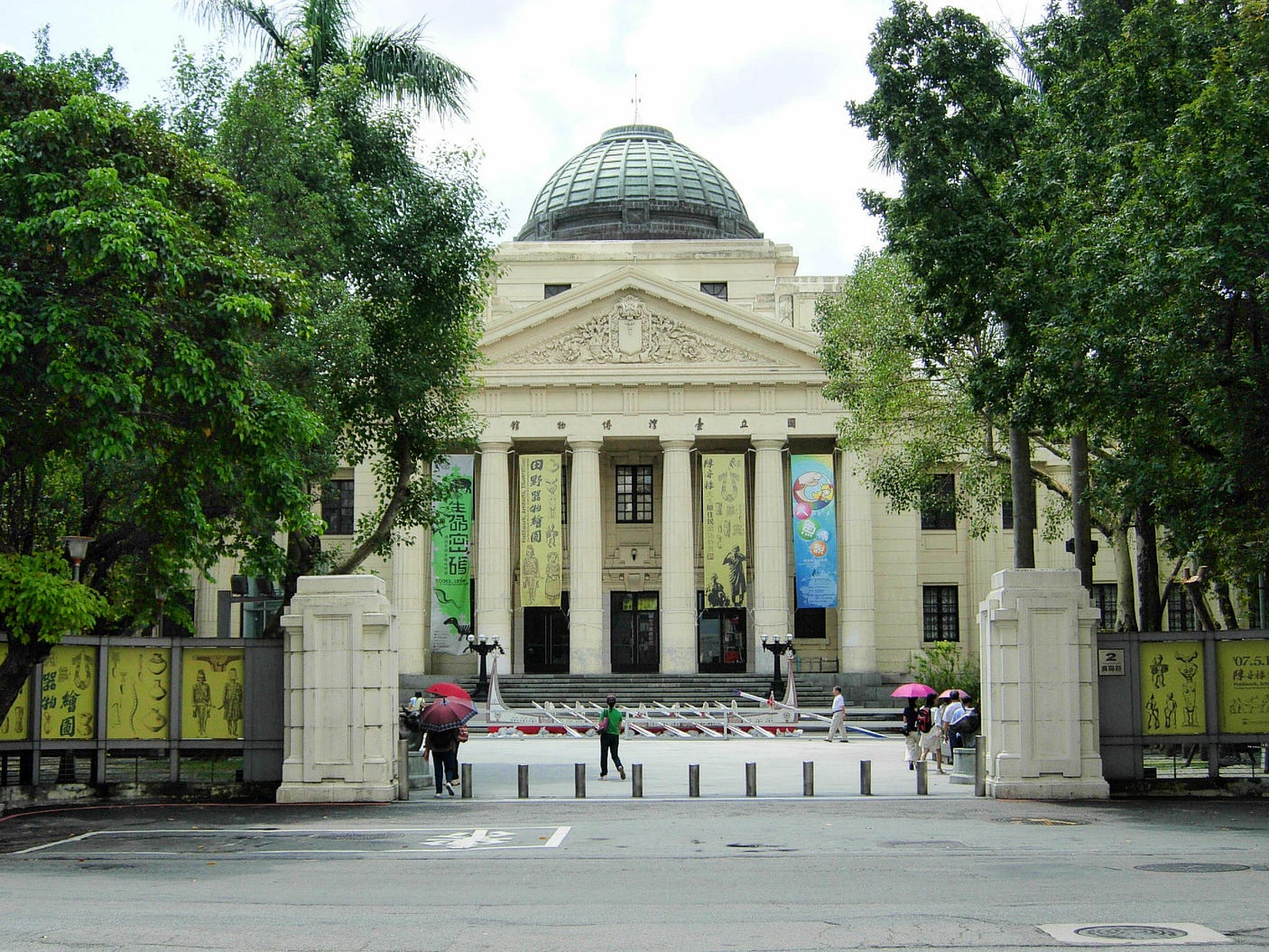
The National Palace Museum, in a more traditional Chinese style, also appears to be considerably more colossal than the other National Museums.
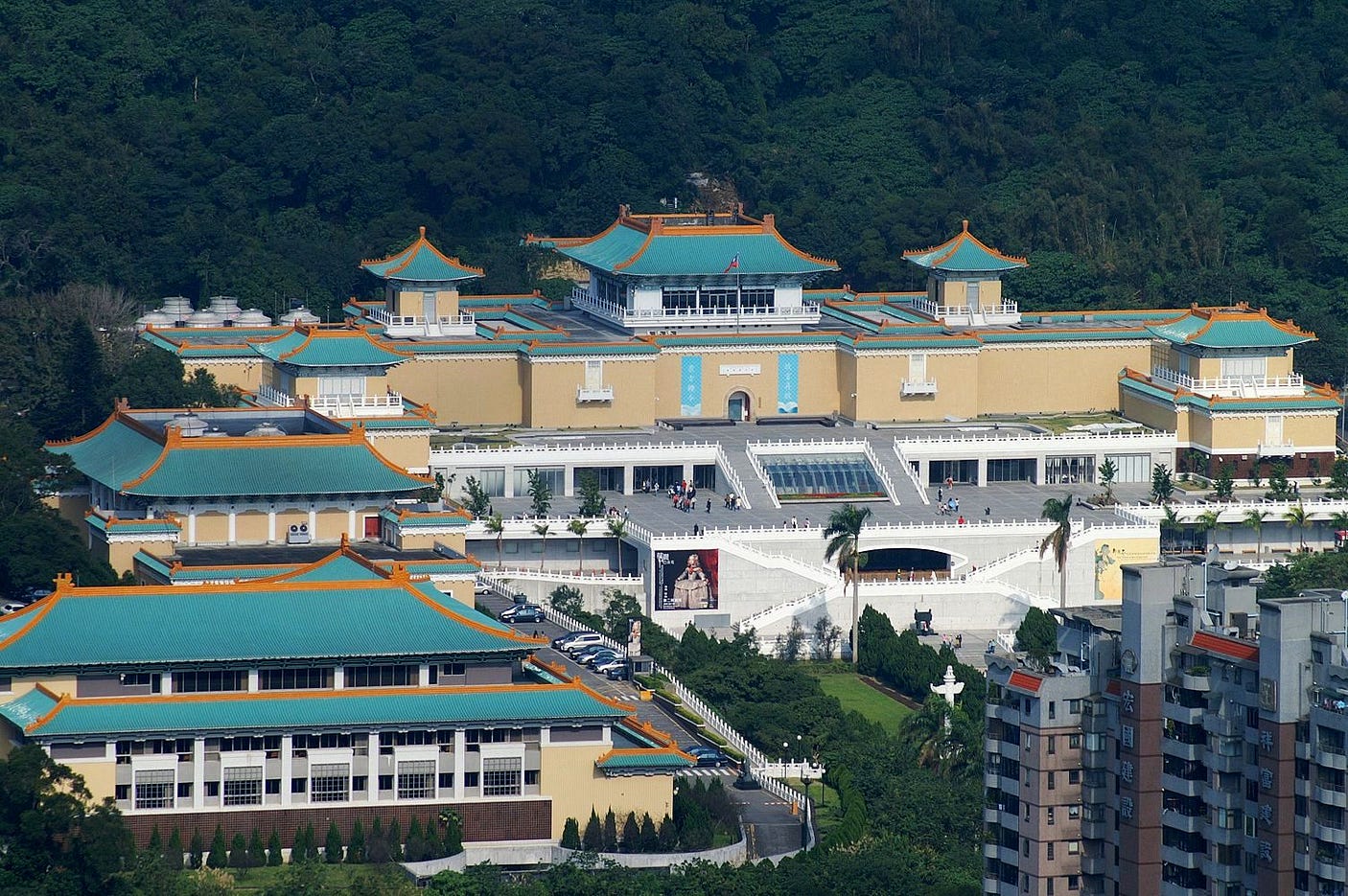
If so, it has to be, because the National Palace Museum contains no fewer than 700,000 historical artefacts brought over from mainland China by the Kuomintang (KMT) as it became clear that the Communists were going to win on the mainland.
The contents of Taipei’s National Palace Museum were mostly in China’s original National Palace Museum, in Beijing.
The KMT were afraid that the Communists would destroy these artefacts, either deliberately or amid the general chaos of revolution.
The exhibits at the National Palace Museum describe the entire history of China, which apparently starts, in written form, with the so-called oracle bones that appear around 1300 BCE, on which various divinations were scratched. Amazingly, many of the characters on the oracle bones are sufficiently similar to modern Chinese to be read, or at least deciphered, today. (The following example actually comes from a mainland museum.)

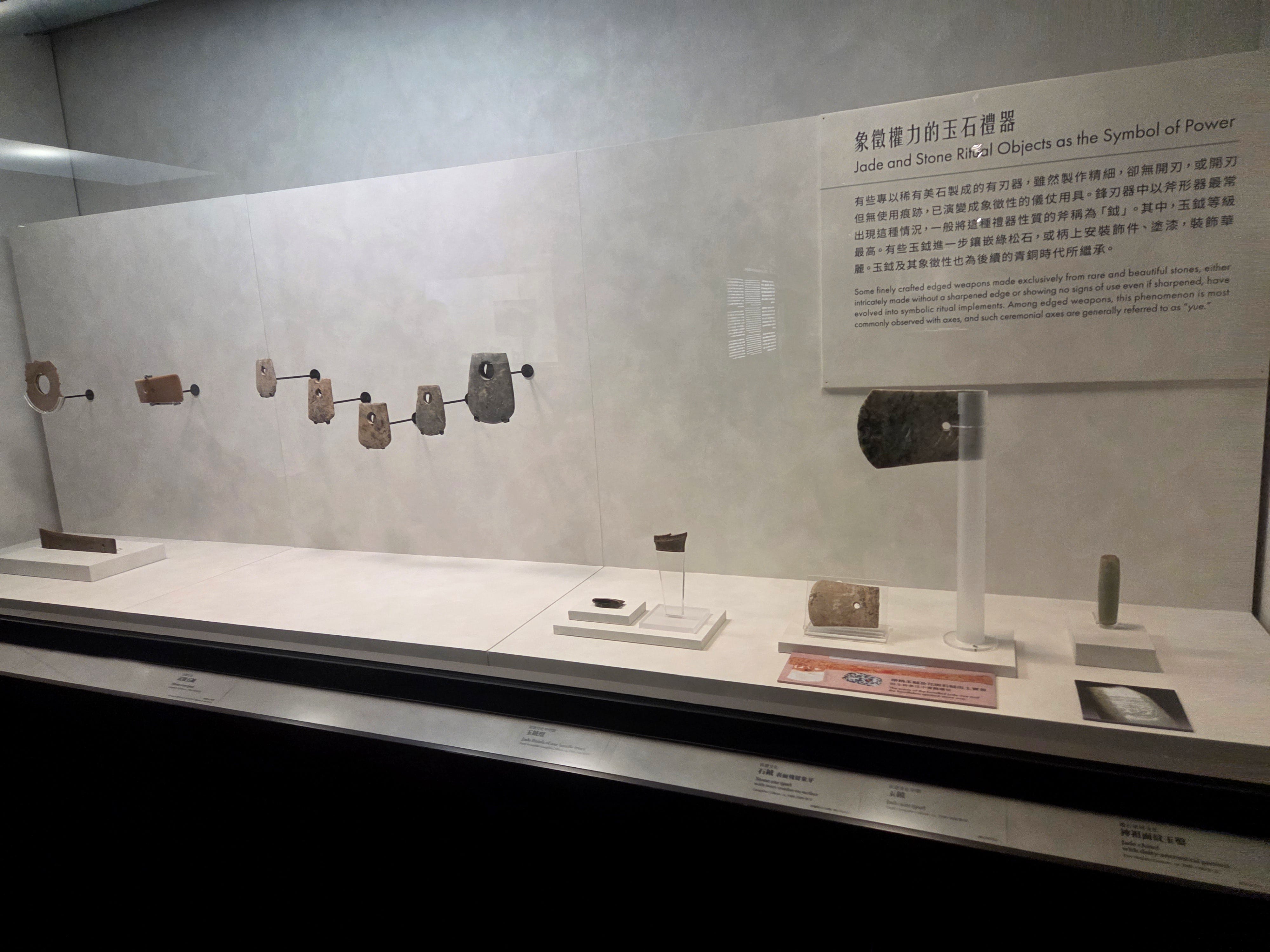
In the earliest days, the material culture of the Chinese was a bit like that of the old-time Māori, with a premium being placed on jade and on jade axeheads, known as yue, which had a ritual and gift-giving significance like that of Māori mere made from pounamu, the New Zealand form of jade.
The making and exchanging of ceremonial or ‘cult’ axeheads, of yue and mere, was widespread across the whole of Eurasia, and was presumably transported to New Zealand by the ancestors of the Māori, who came from Asia.
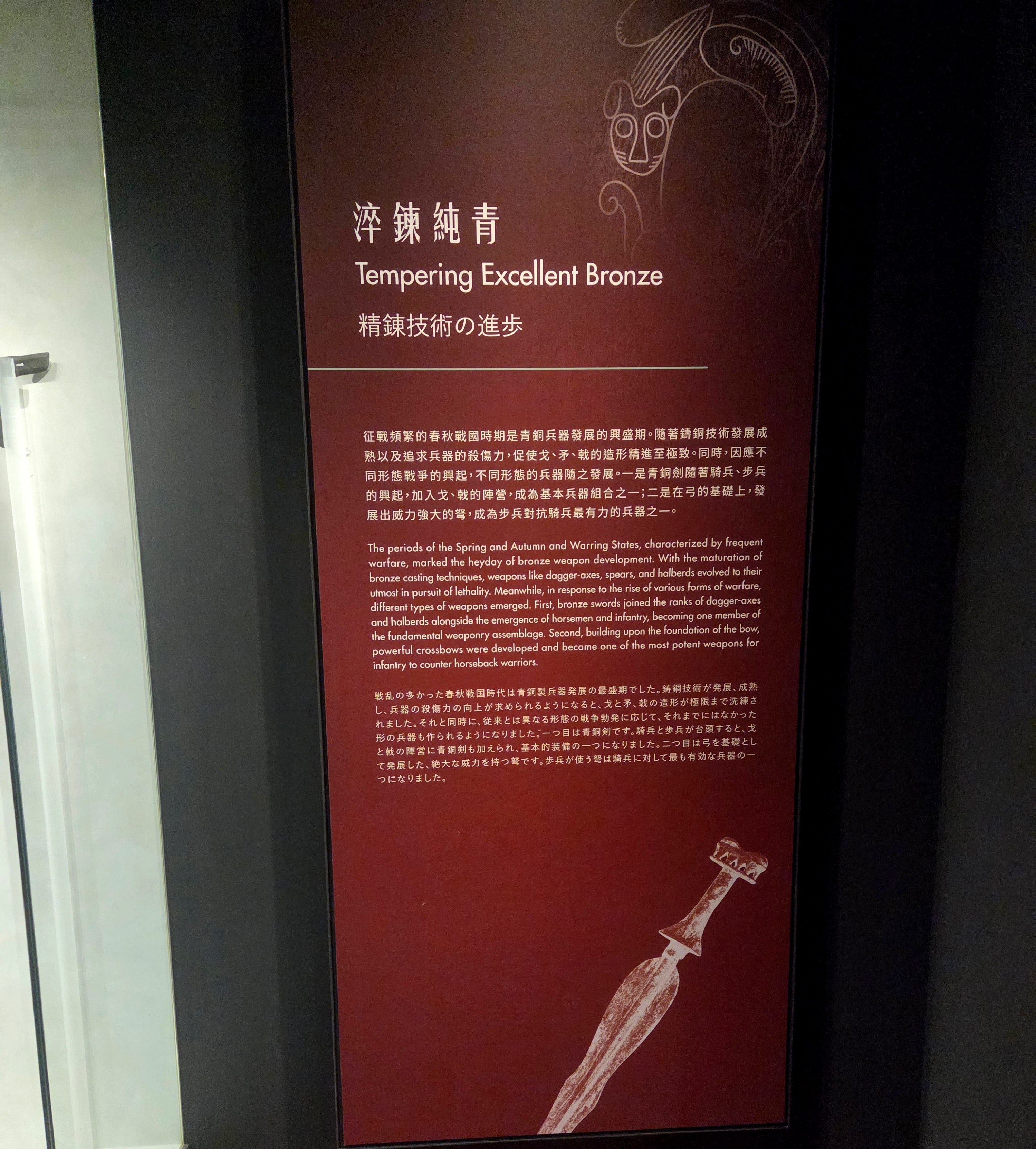
After a while, the Chinese figured out how to make bronze, and there was a display on that topic.
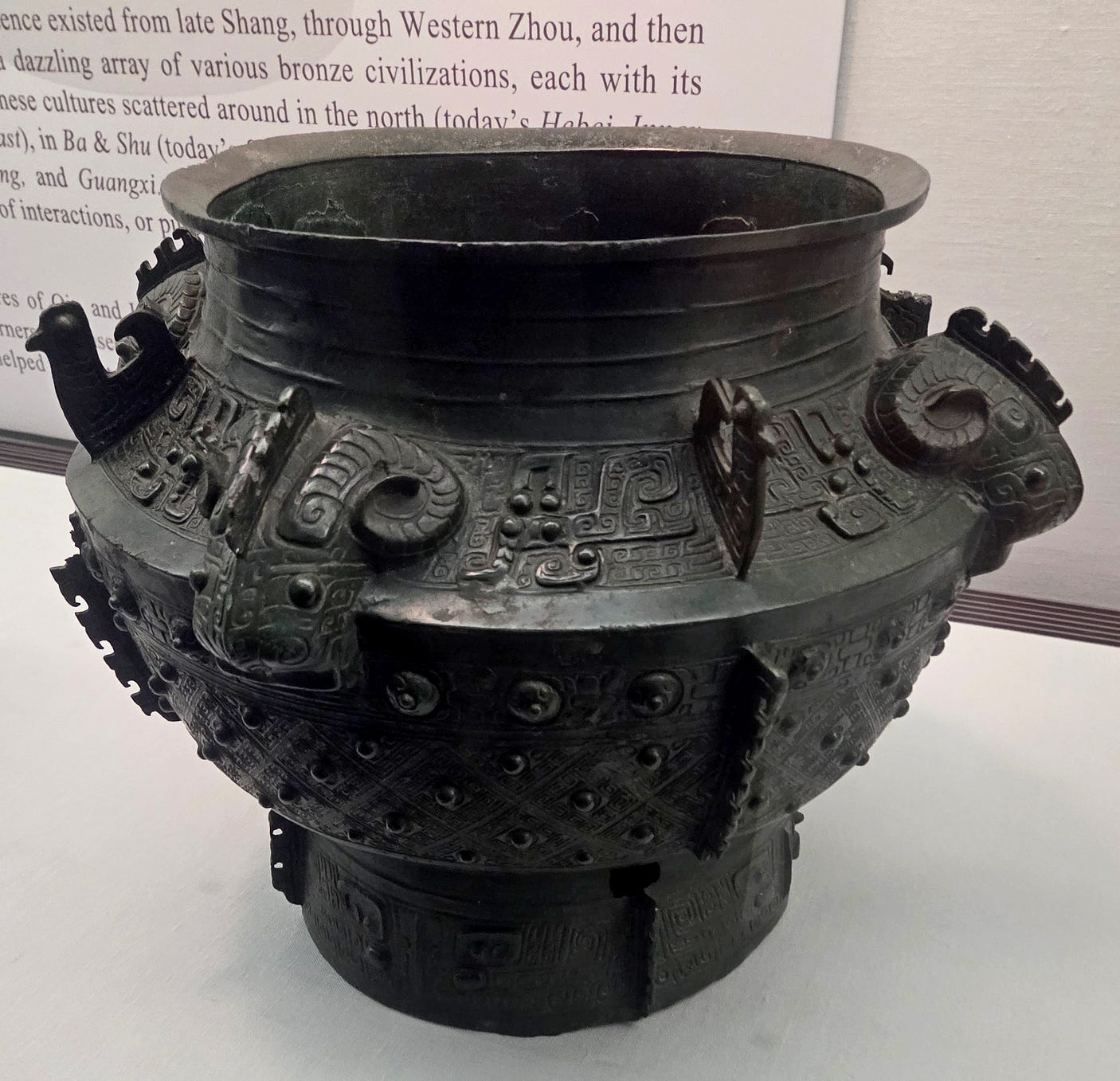
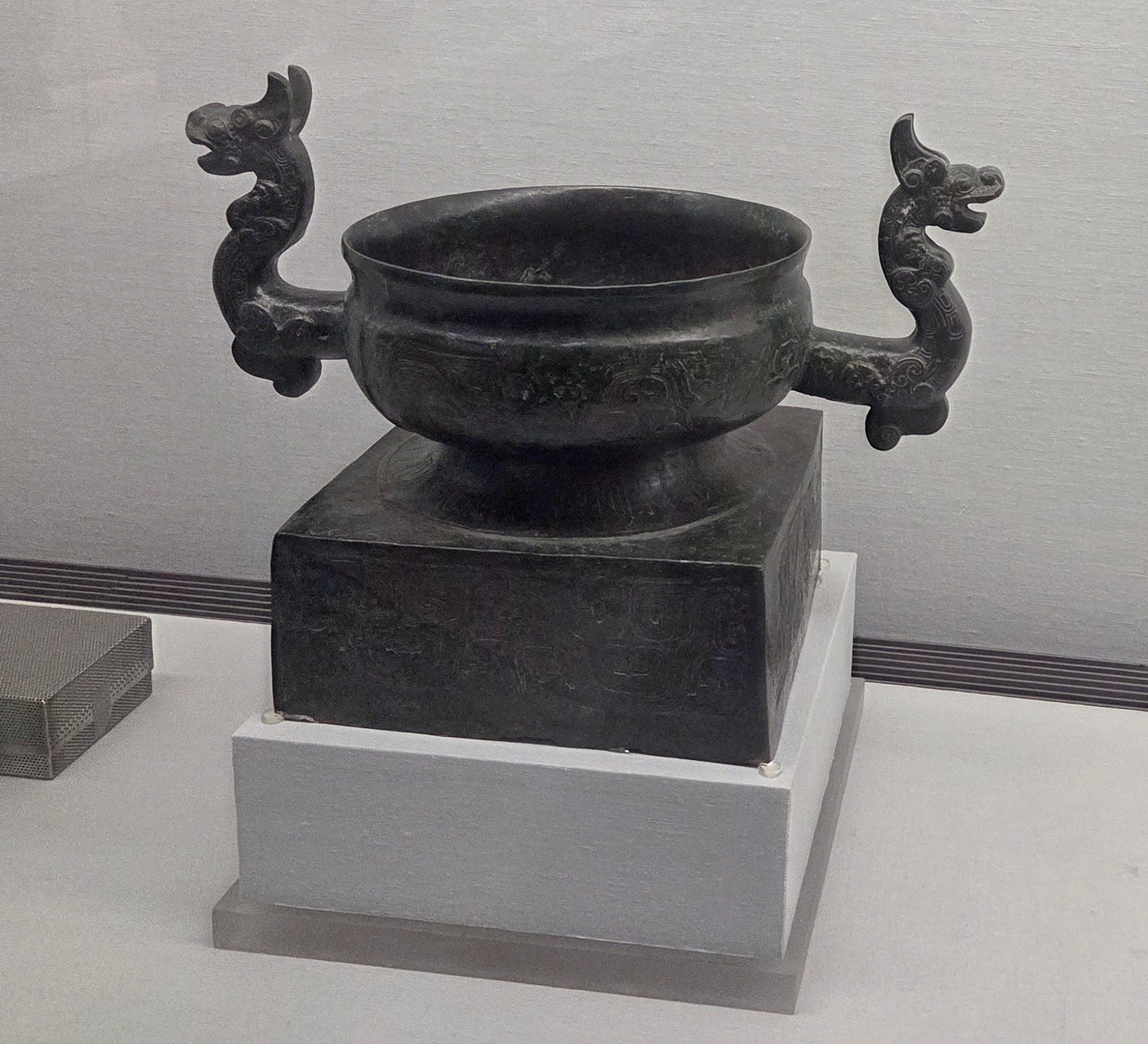
Swords and other pointy things aside, bronze was also used to make pots and urns. For instance, this example from the Middle Western Zhou Period, 977 to 878 BCE, one of the earliest Chinese dynasties for which really good records exist.

Even to this day, pots resting on tripods — perhaps to make it easier to light a fire underneath — have a huge cultural significance in China, representing the idea of a communal potluck feast and the authority of whoever was in charge of it.
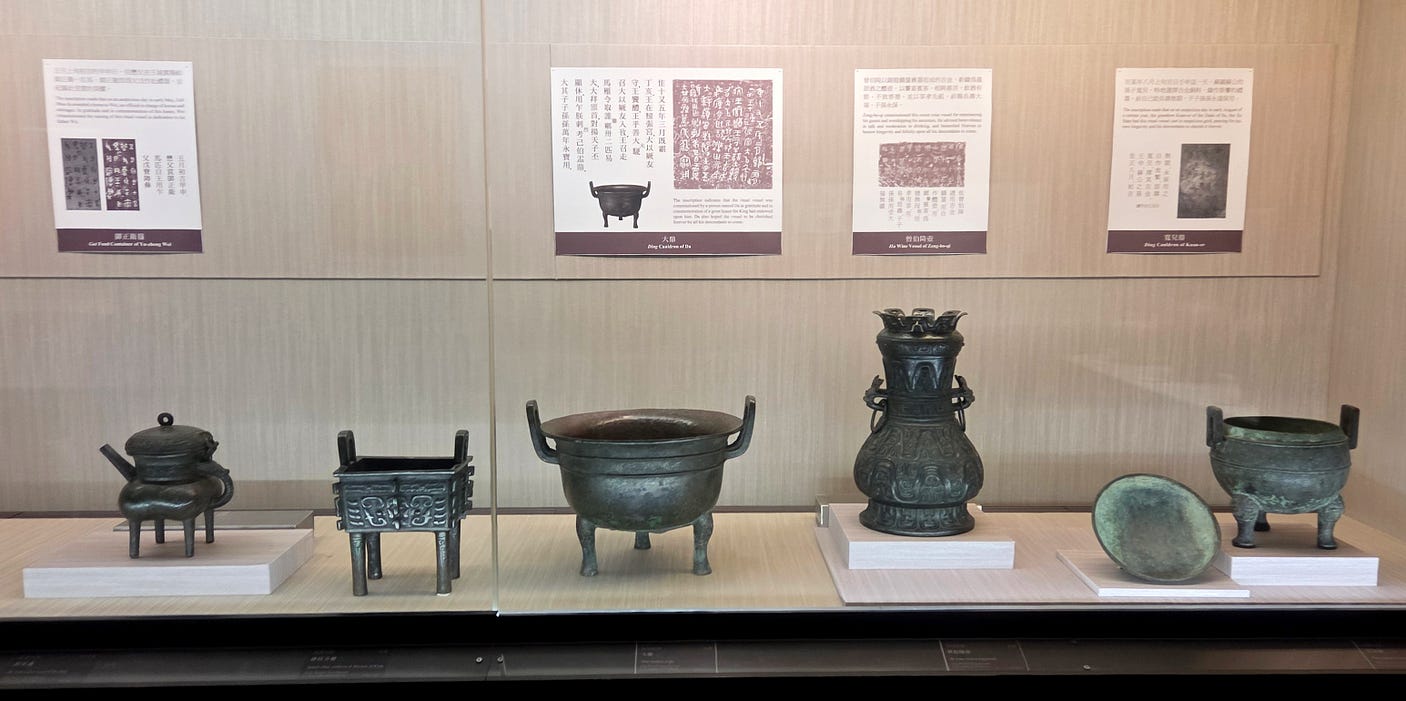
Here are some more bronze pots and urns in the National Palace Museum in Taipei, most if not all of them from that early and vigorous era. The spiralling patterns of decoration are worth a close look:

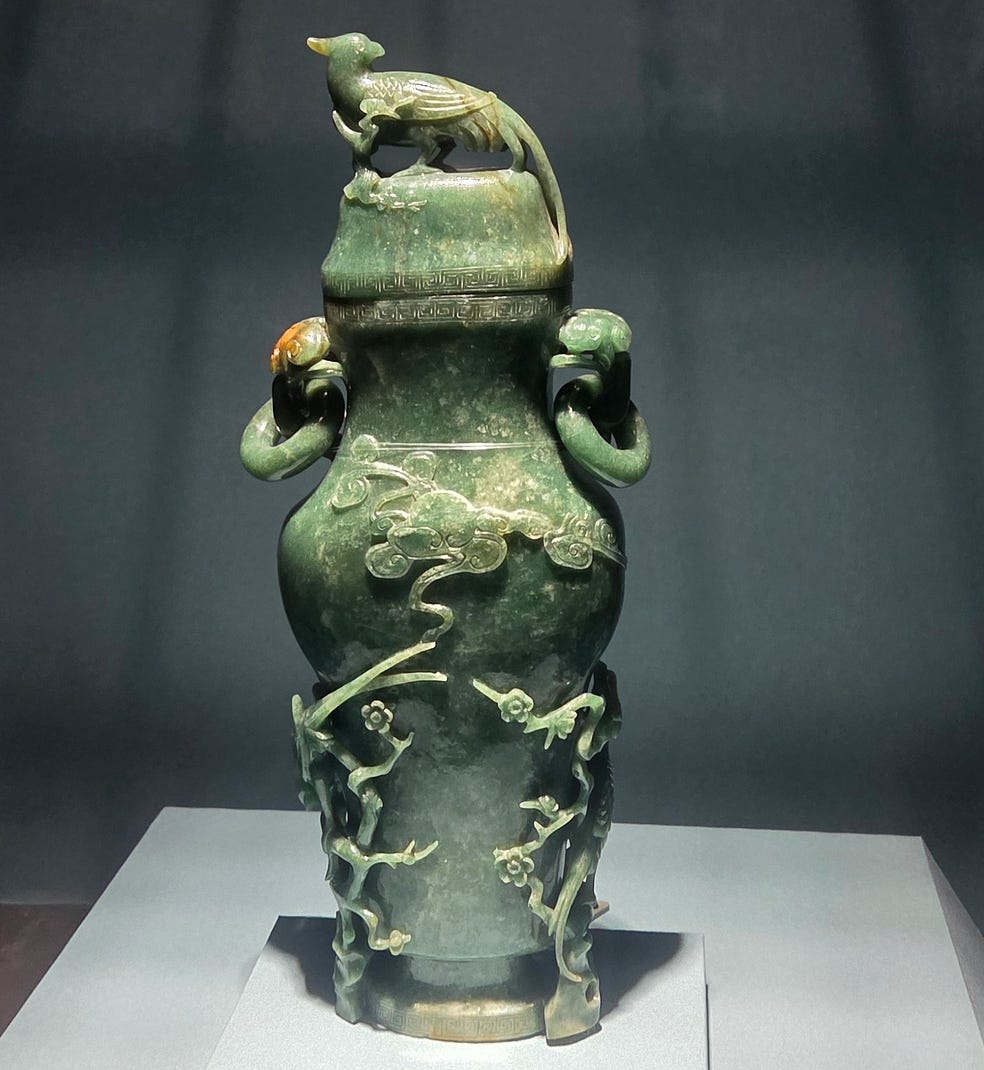
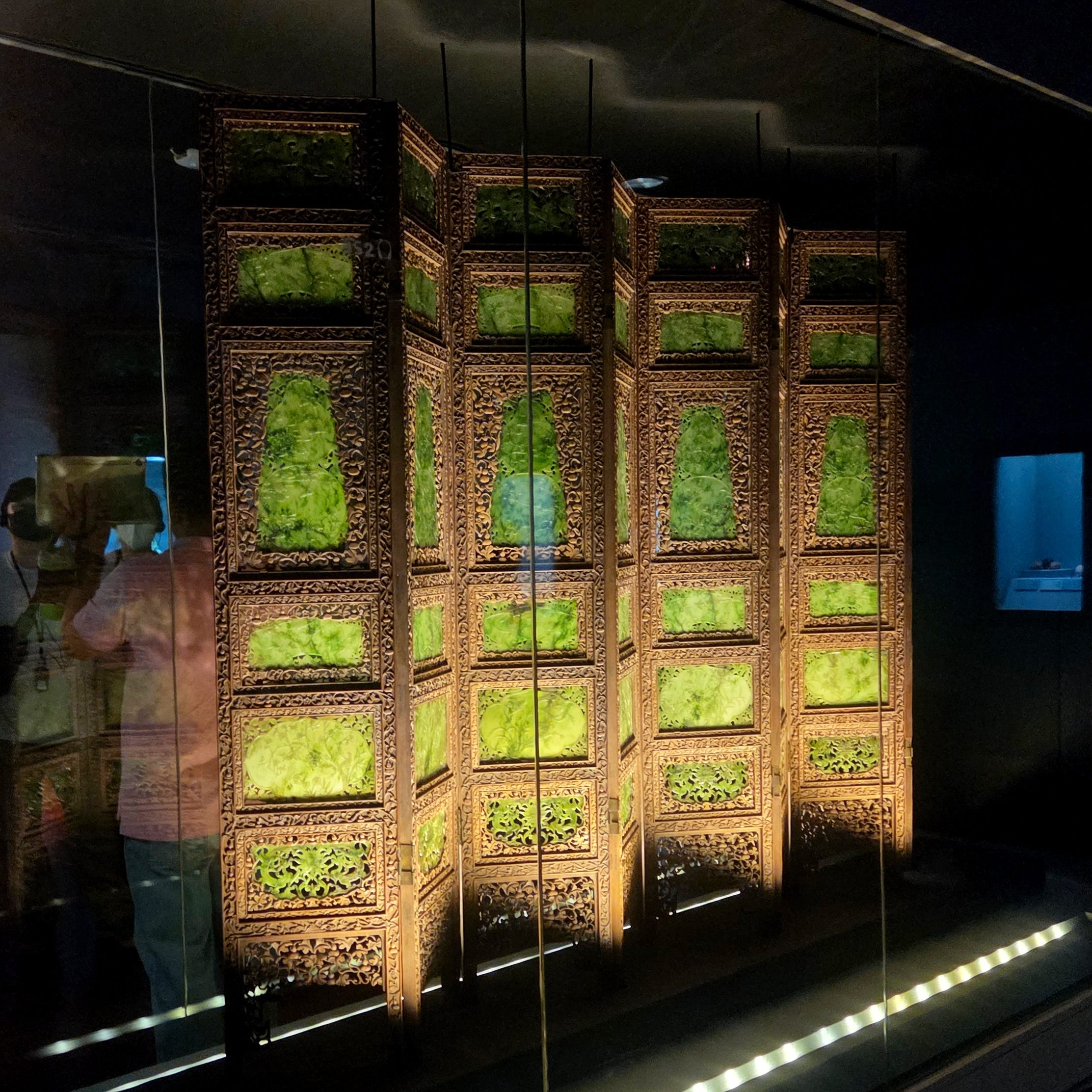
The museum displayed many exquisite jade carvings of the more elaborate sort, as well:
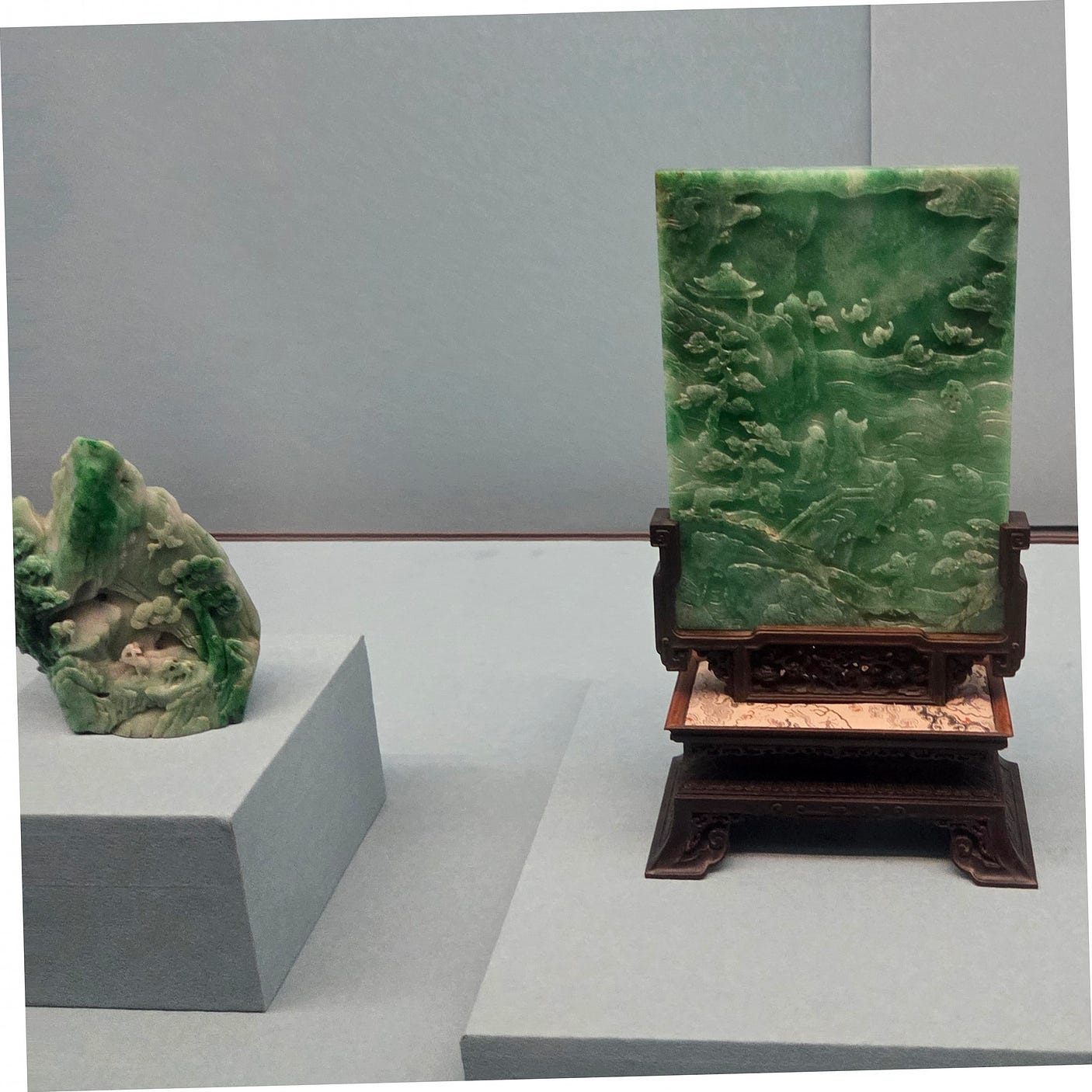

There was even a cabbage carved in jade, with a whitish part of the original boulder made into its stalk and the greener part into its leaves!
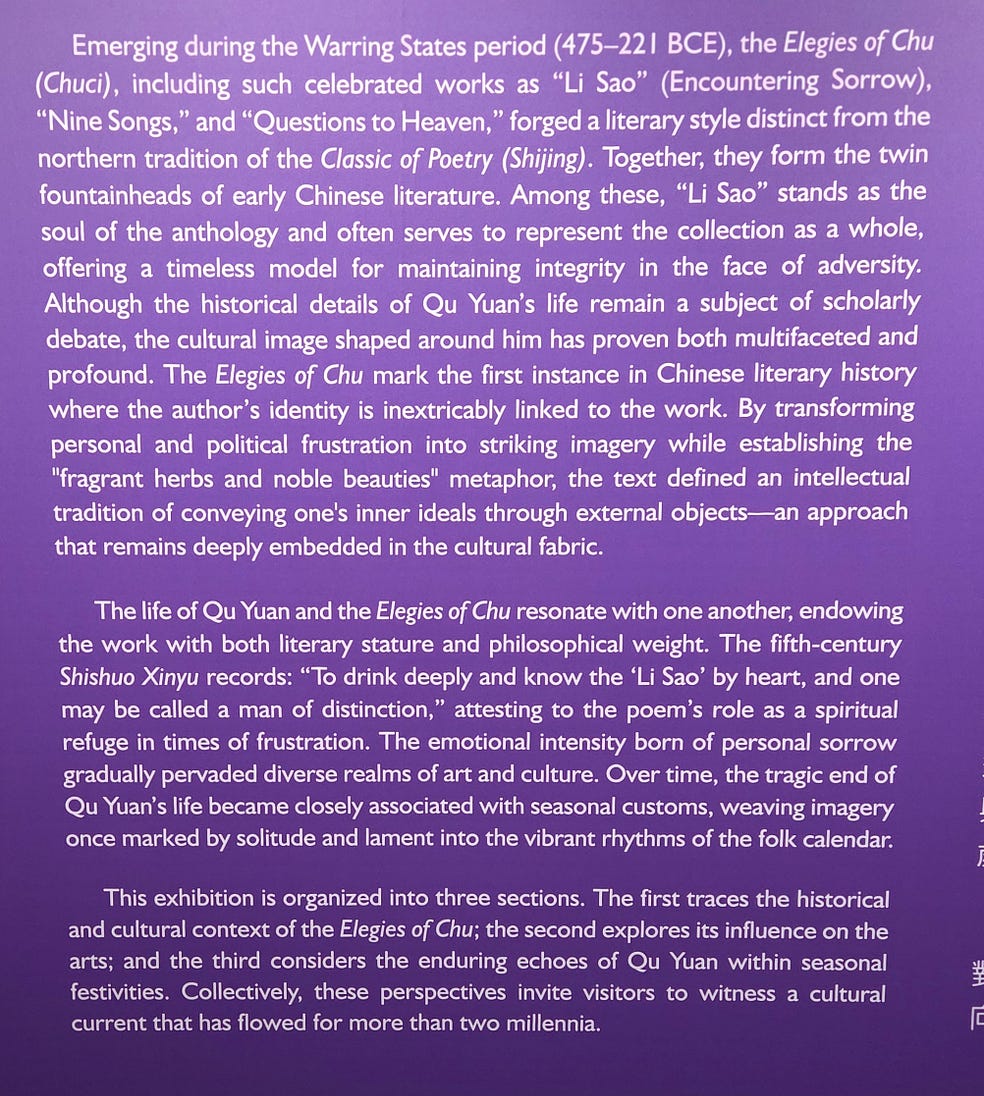
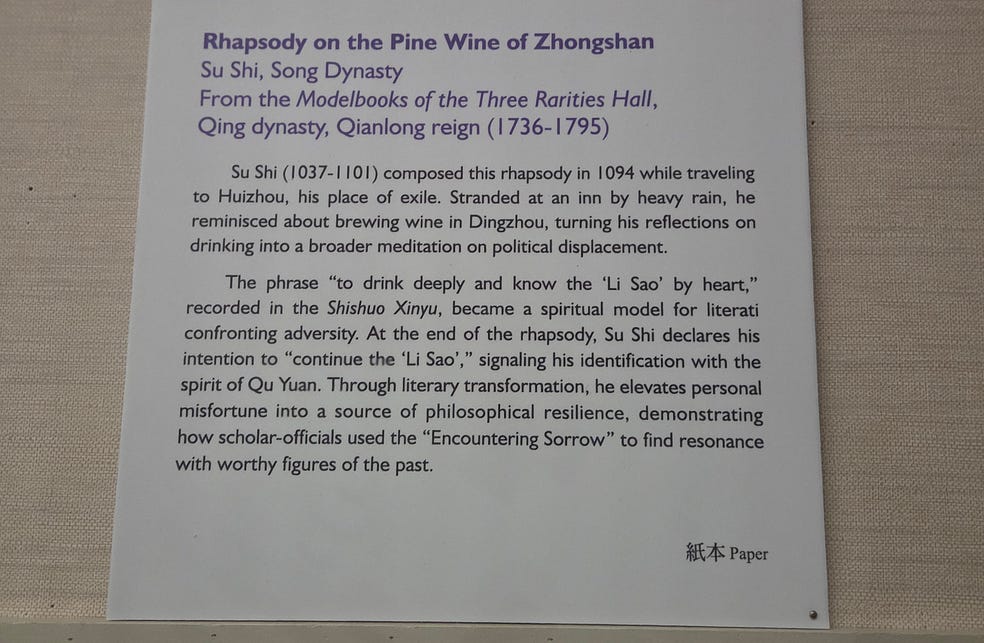
The museum also had many exhibits about the literature and philosophy of old-time China, which was really marvellous.


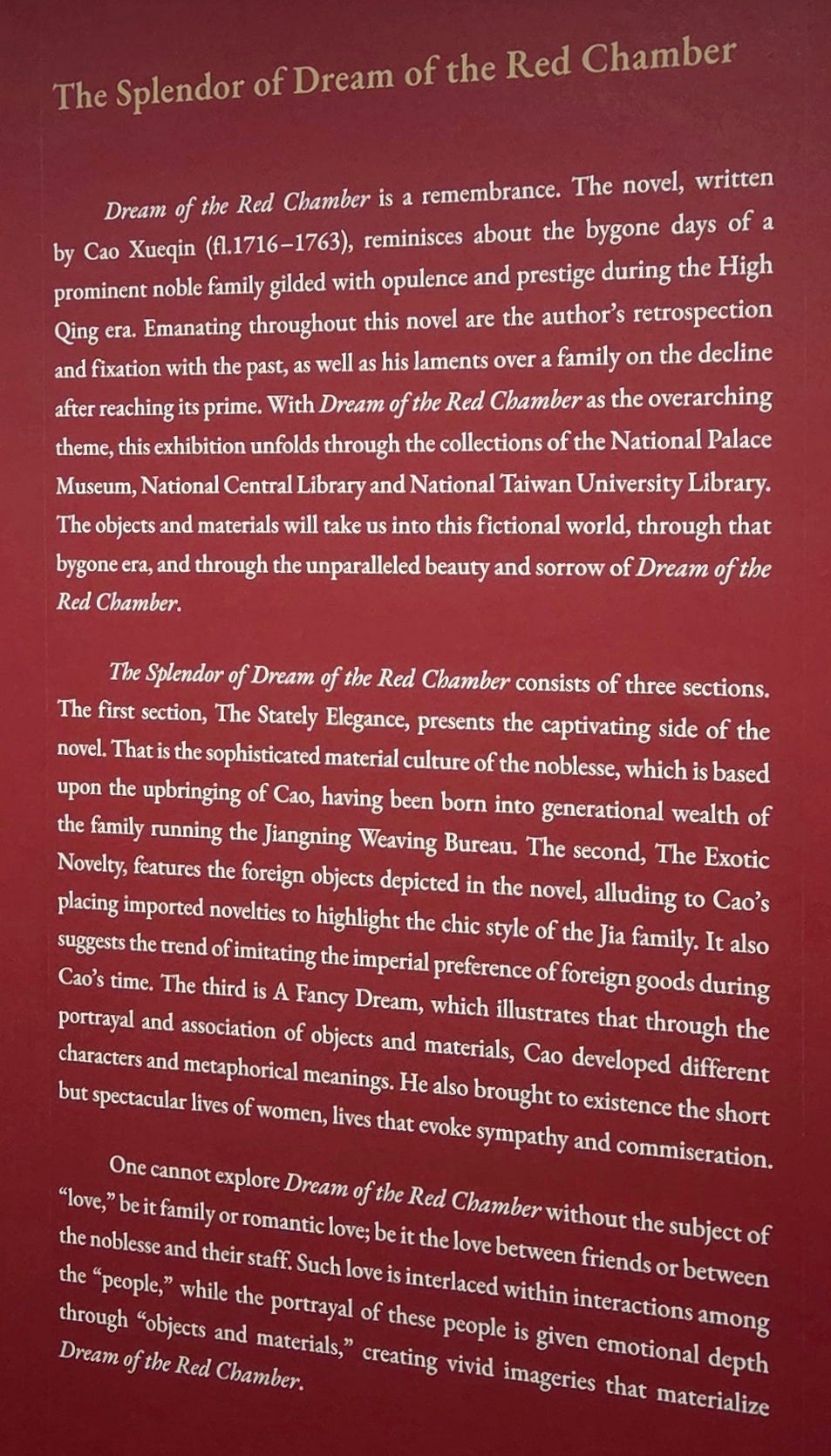
And links to Buddhism:
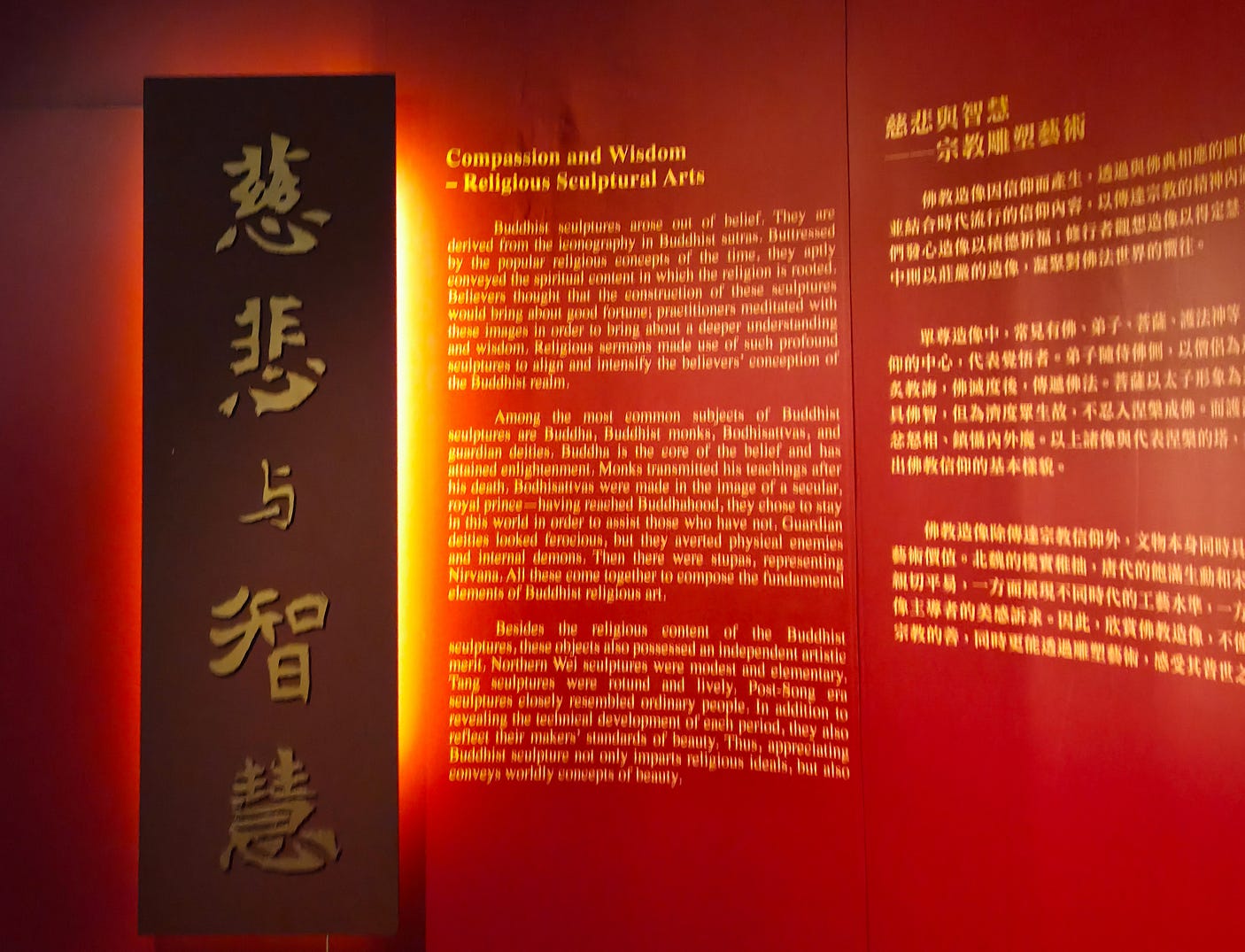
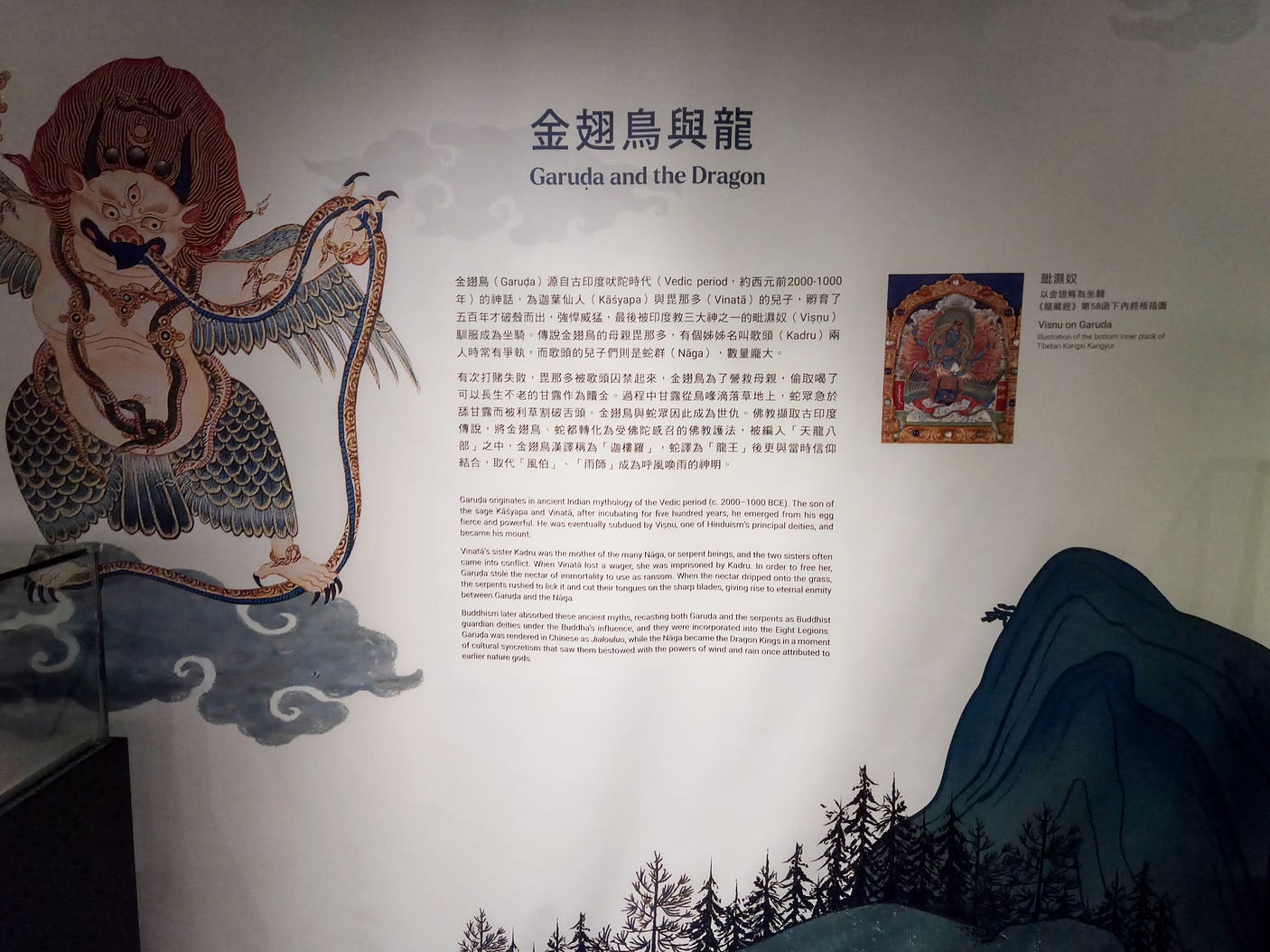
Finely carved objects of every kind, even down to hairpins:

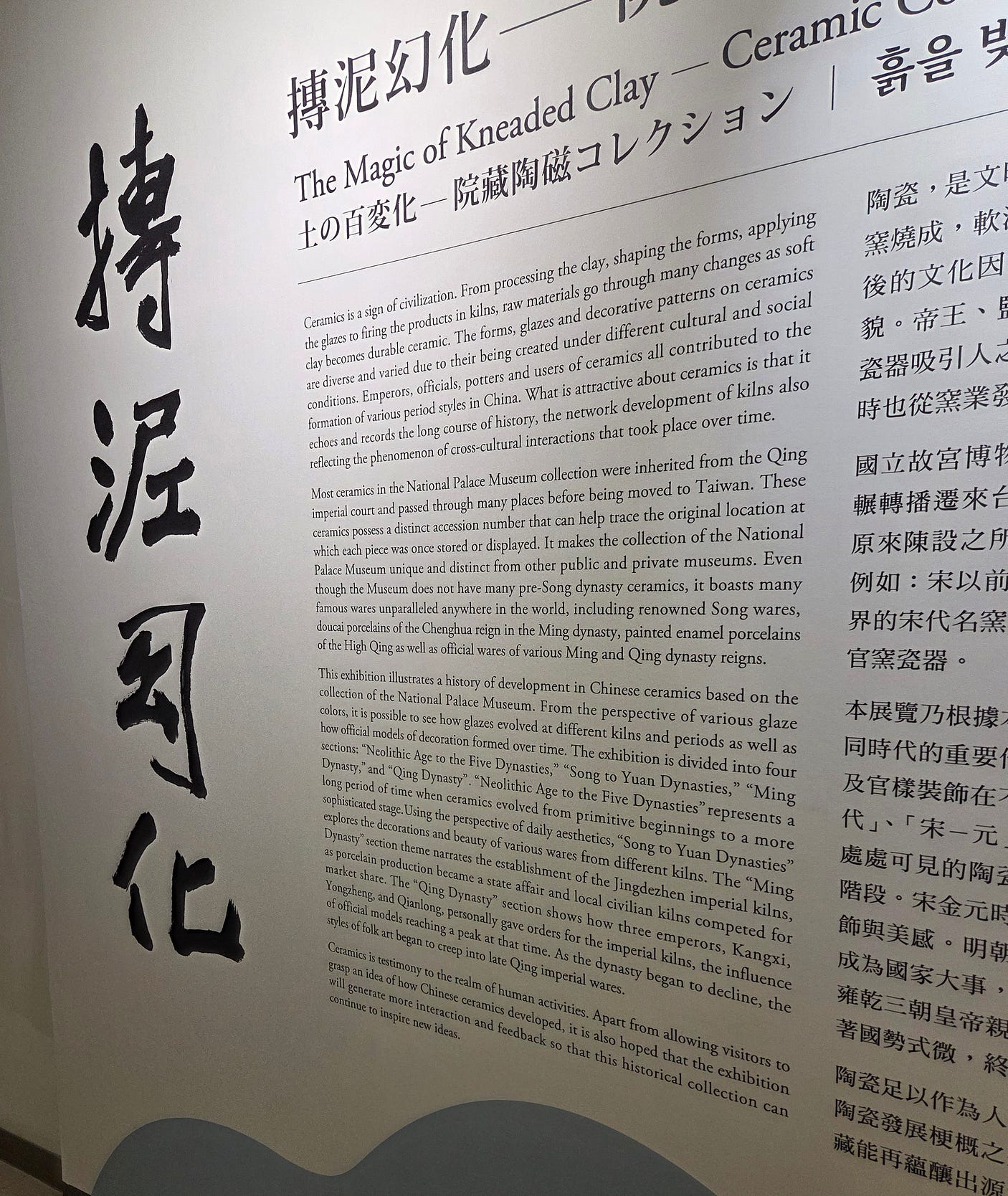
And pottery and ceramics, at which the Chinese excelled so much that we still call fine porcelain, which they invented, ‘China.’
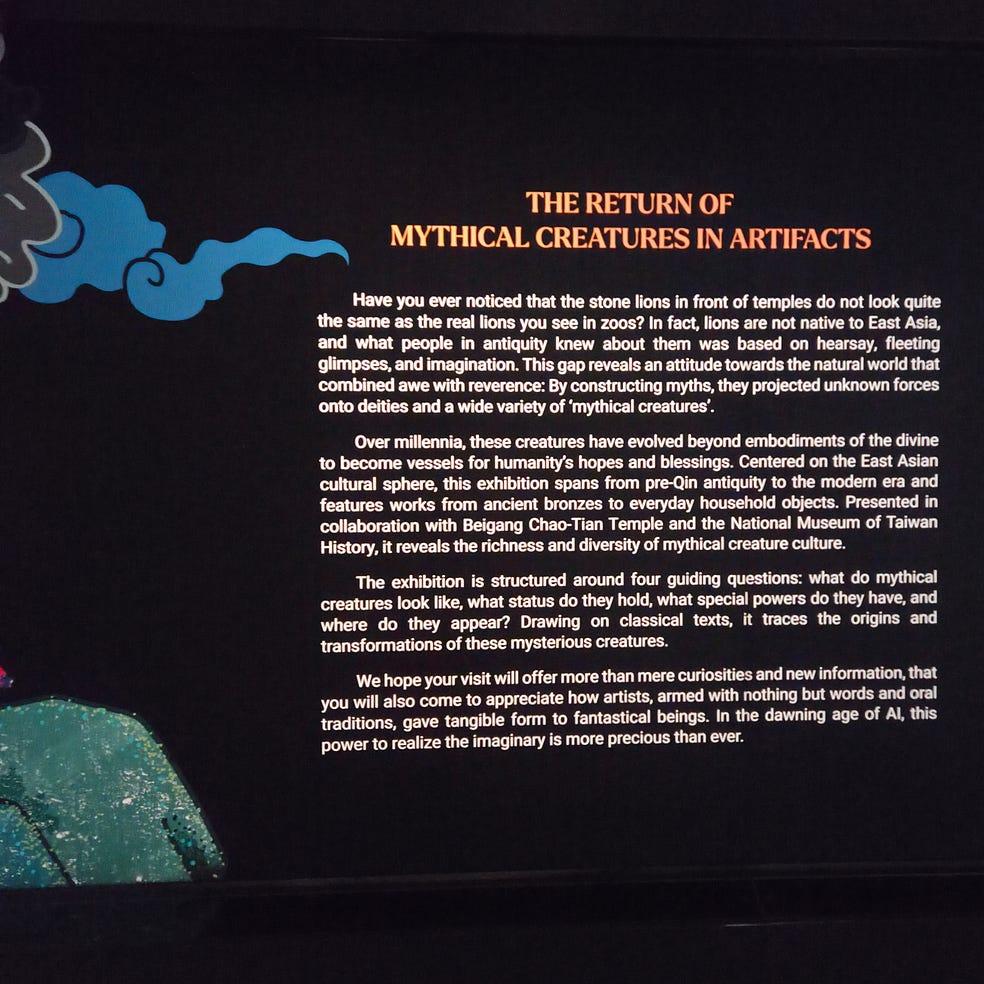
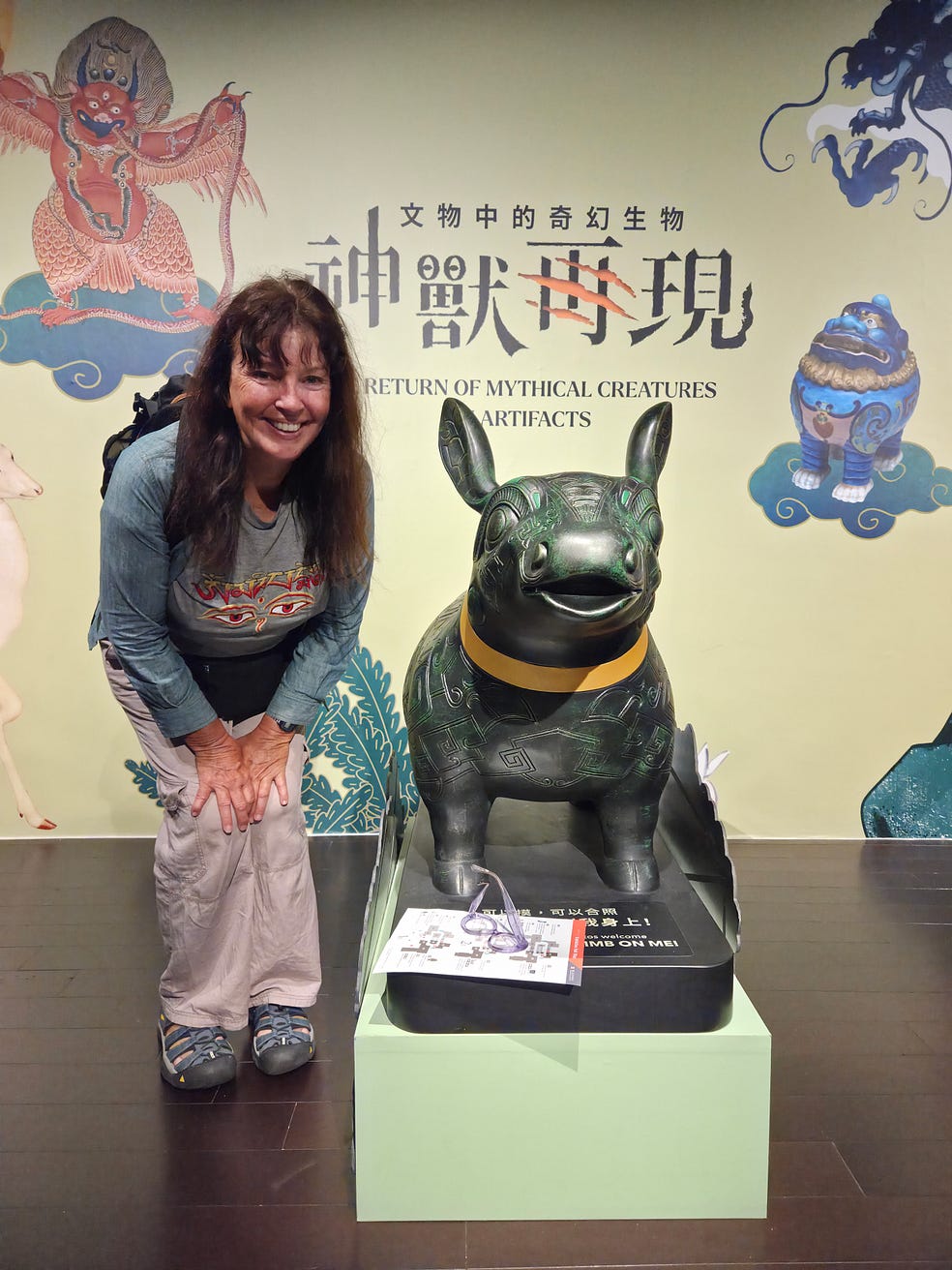
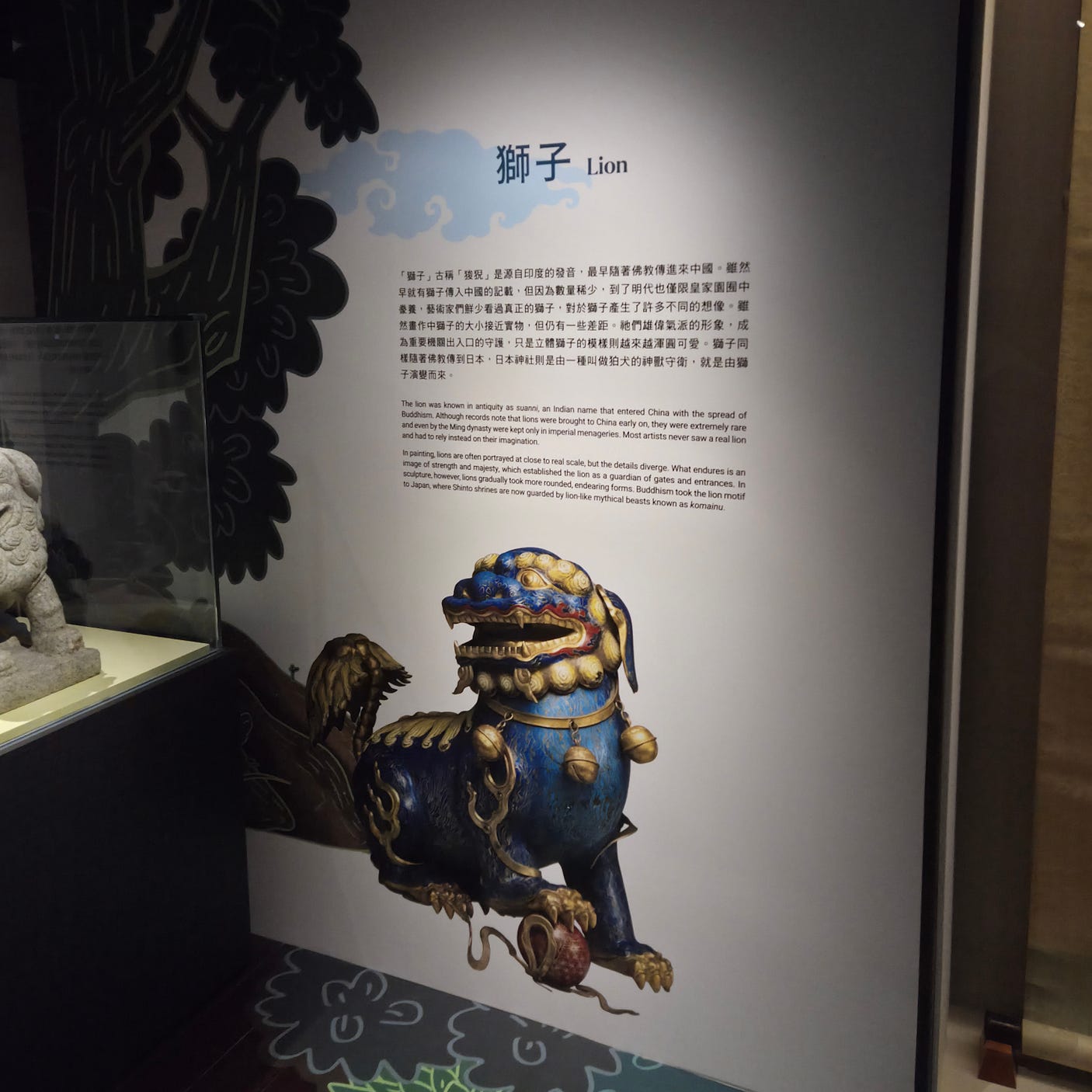
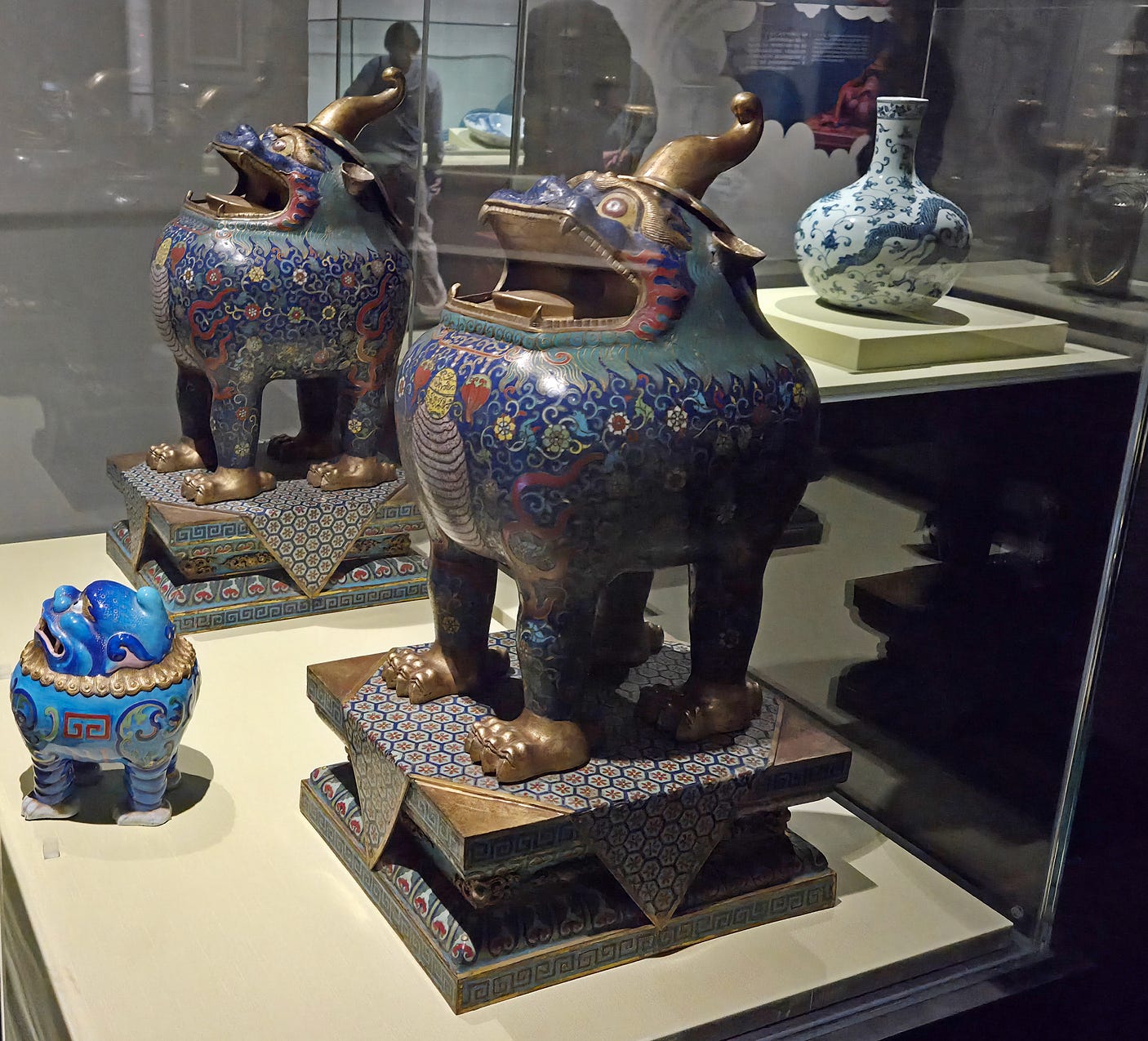
And a display about fanciful images of lions and other such creatures, which the old-time Chinese had heard of but which hardly any of them had ever seen.

The museum also had modern interactive displays:
And it also had information about important historical figures such as the Quianlong Emperor, the ruler of China for most of the 1700s.

I can’t help adding this rather charming group of the Quianlong Emperor being given a bath at the age of three.
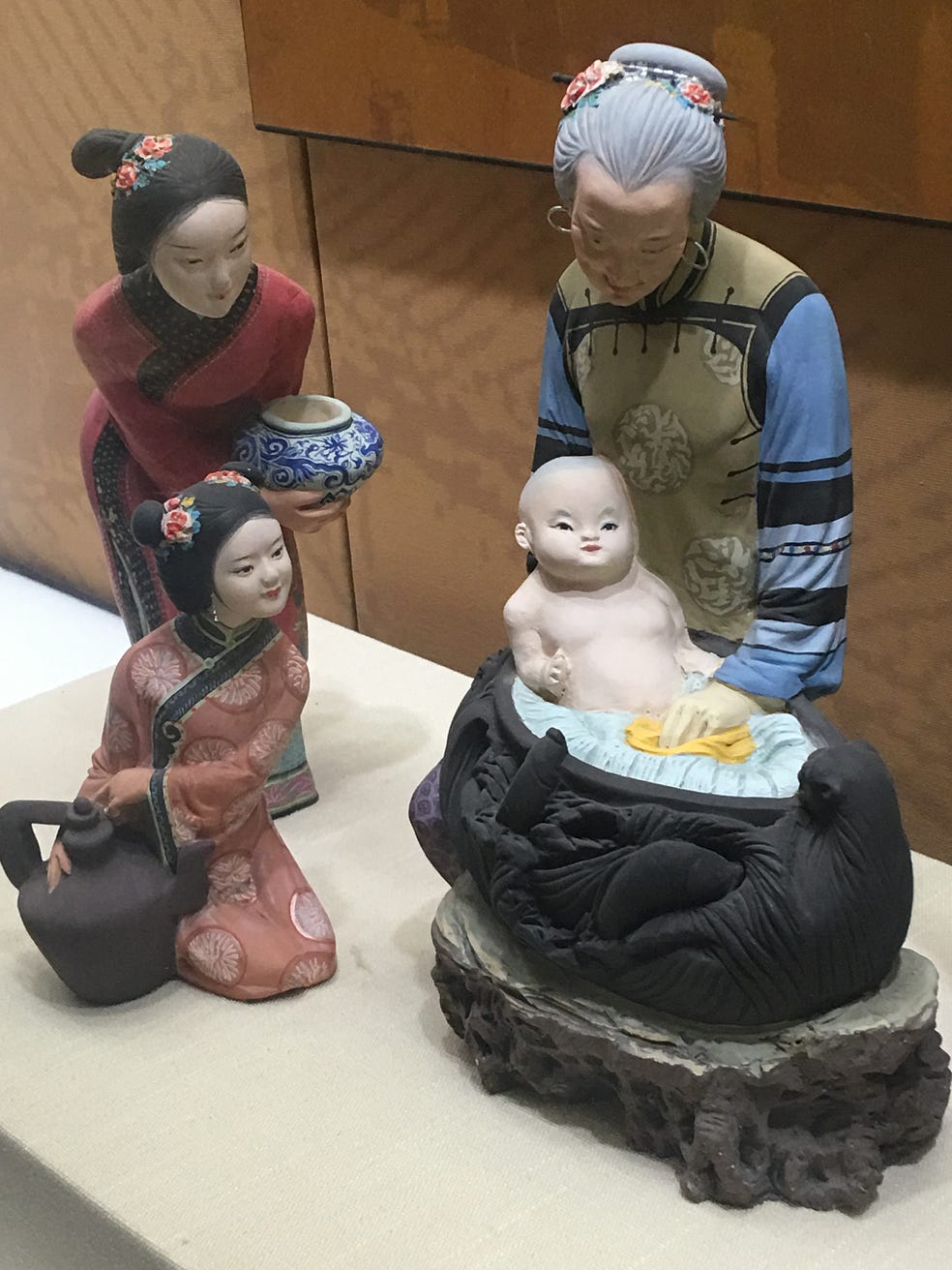
The 1700s were perhaps the high-water mark of old-time China and of Quianlong’s dynasty, the Qing. But already, a cold wind was starting to blow, one that would eventually blow down the tree of an old-time China that had otherwise stood for more than 3,000 years.
This cold wind took the form of a growing sense of backwardness relative to Europe, which was just then pulling ahead in science and industry. The recollection of a British diplomat named George Macartney, sent to China in 1793 by King George III, is telling:
The Empire of China is an old, crazy, first-rate Man of War [large warship], which a fortunate succession of able and vigilant officers have contrived to keep afloat for these hundred and fifty years past, and to overawe their neighbours merely by her bulk and appearance. But whenever an insufficient man happens to have the command on deck, adieu to the discipline and safety of the ship. She may, perhaps, not sink outright; she may drift some time as a wreck, and will then be dashed to pieces on the shore; but she can never be rebuilt on the old bottom.
The 1800s would come to be known as China’s ‘century of humiliation,’ and the twentieth century as its century of revolutions, starting with the overthrow of the last emperor in 1911. The idea that China had to be modernised ran through all these revolutions like a red thread. As one article notes, for all the faults of Mao’s revolution, it did lay the foundations for the glittering technological modernisation that would follow Mao’s death in 1976, in terms of health, education, and literacy, as well as the breaking-up of landed estates on which much of the population had formerly led a serf-like existence.
For instance, for all the refinement of courtly culture, only a minority of men, and virtually no women, could read Chinese characters on the mainland in 1949.
On the surface, Taiwanese culture seems more traditional than that of the mainland, with regard to things like public and outdoor worship at temples, which is largely unknown on the mainland.
Nonetheless, Taiwan, too, modernised in its own way, resulting in high levels of education, health, and literacy, plus a modern economy with a higher average standard of living (Purchasing Power Parity) than New Zealand, though wages outside the tech sector are low, with many people on only about NZ $500 per week.
Ironically, the relocation of so many of China’s cultural treasures to Taiwan might be one reason why China’s government wants to reintegrate Taiwan into China.
Most Taiwanese, such as a guide I discussed this with when I was in Taipei, now identify as ‘Taiwanese,’ rather than Chinese. Indeed, when Taiwan was under Japanese rule, Mao argued that the island should be given independence, rather than be retaken by China.
Communist attitudes became more nationalistic, however, after the KMT decamped with so much of China’s treasures (gold bars included), and as it became clear that the island had effectively changed from being a Japanese outpost into an American one.
What else can I say? Well, I also noticed that they are very eco-friendly in Taiwan. You get prosecuted if you leave your engine on for more than 3 minutes. There are bikes everywhere, and you can hire bikes to get around. The Taipei Metro is also cheap as chips.
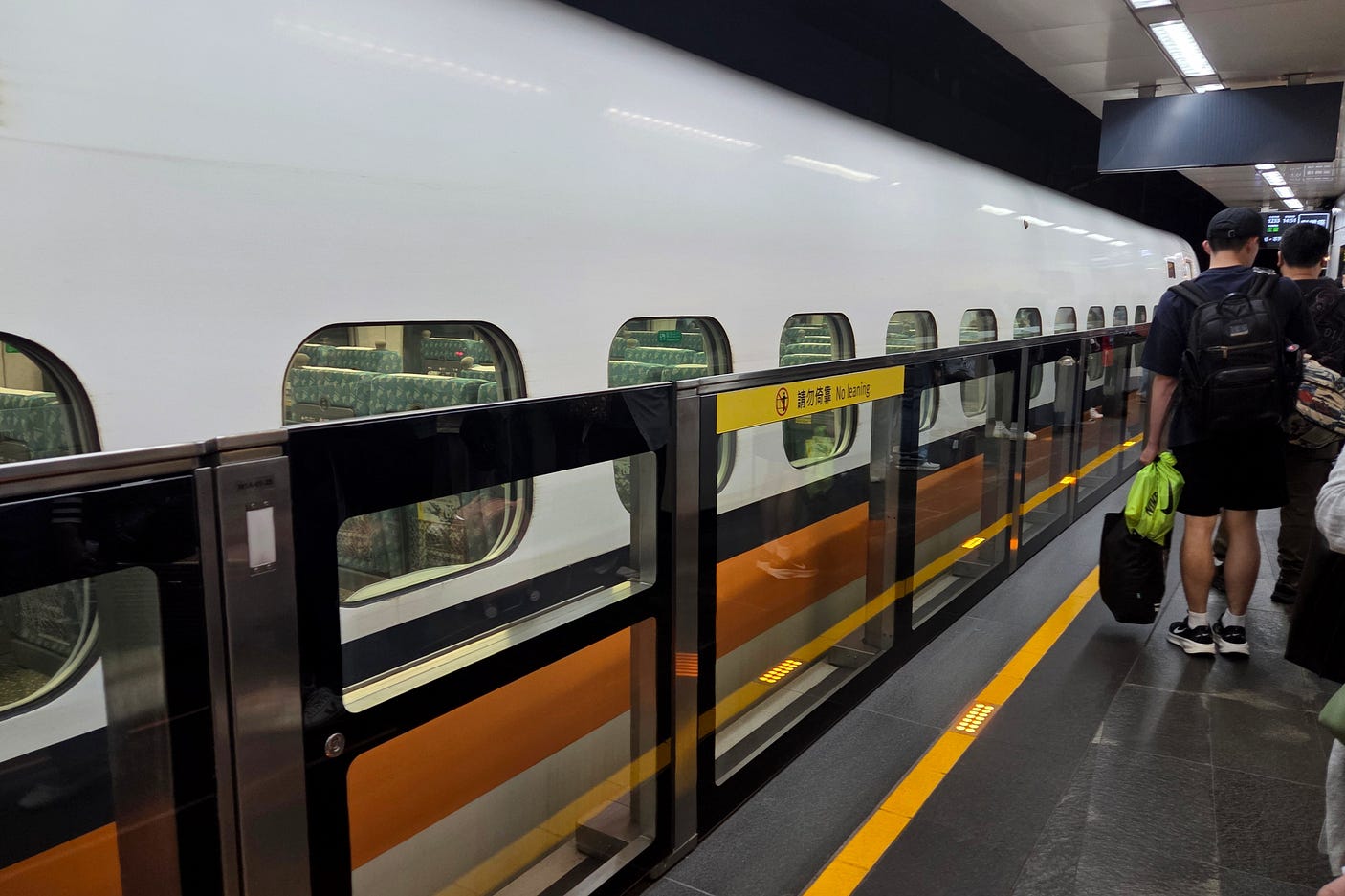
They use Uber. Grab does not work here. But with the high-speed trains between the cities and local public transport, you can get to most places.
The food is healthy: tofu soaked in chili, sweet potato, and teriyaki tofu.
When I was on one of my Taipei tours, I went to an ice cream store called Snow King, a family business, and it had pork and rosemary flavoured ice creams! There were 73 different varieties, both sweet and savoury.
I should add that, while I got tired of tours in the end and needed to do my own thing for a while, I thoroughly enjoyed them at the time!
After Taipei, I headed south on the train to Kaohsiung.

The regular inter-city lines form a loop around the island, and, even though it isn’t very big, there are high-speed trains down the western corridor as well.
Next week: Kaohsiung!
Subscribe to our mailing list to receive free giveaways!

