Giveaways
IN Taipei, the first thing I visited was the city’s vast plaza, Liberty Square, and its Chiang Kai-shek Memorial, dedicated to the erstwhile ruler of China from 1925 to 1949, military Generalissimo as he was known in the World War II era, and founder of the de facto nation of Taiwan after he was exiled there by the Communists in 1949.
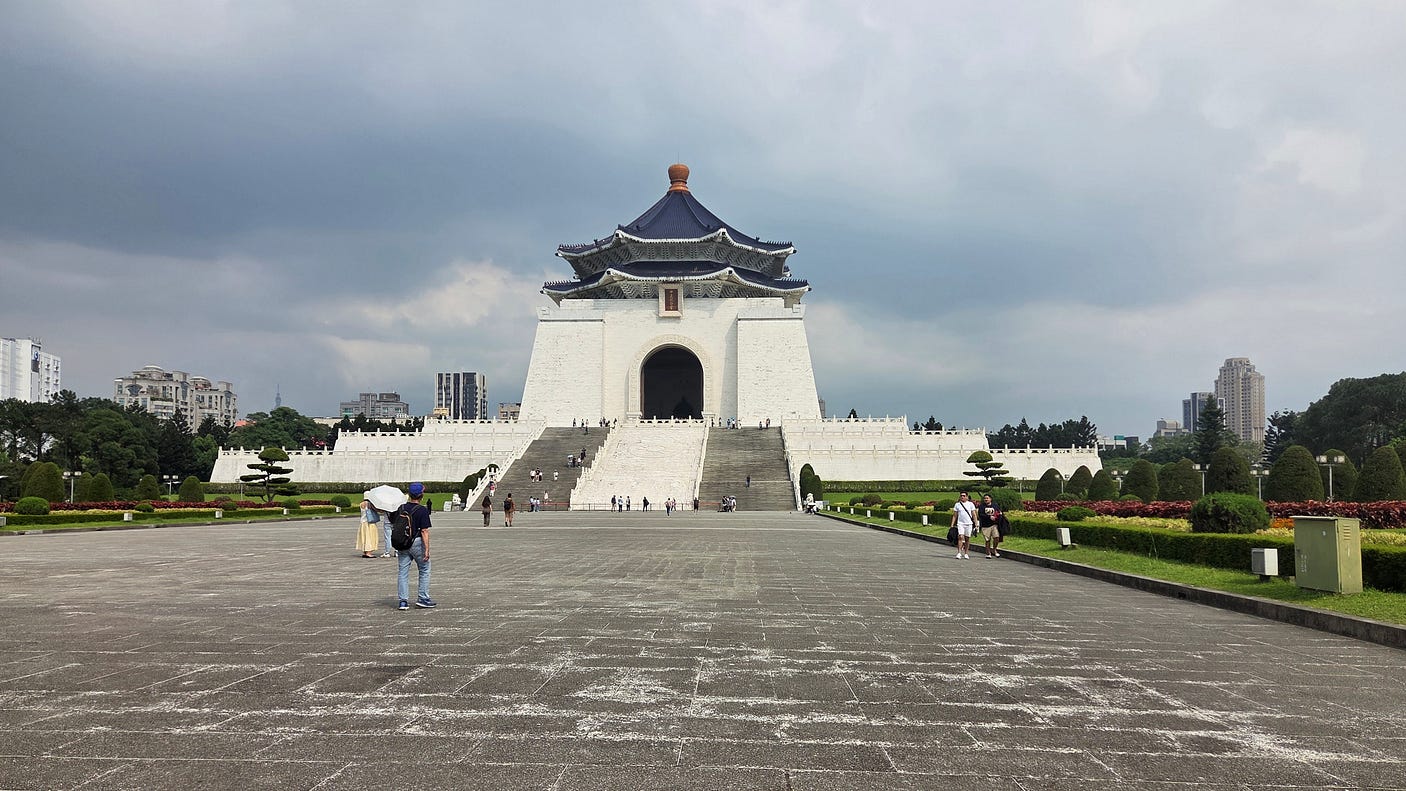
As I explained last week, Chiang only saw Taiwan as a sort of Elba, an island of temporary exile before a glorious return (which, of course, never happened). No matter: he is now seen as the founder of modern Taiwan.
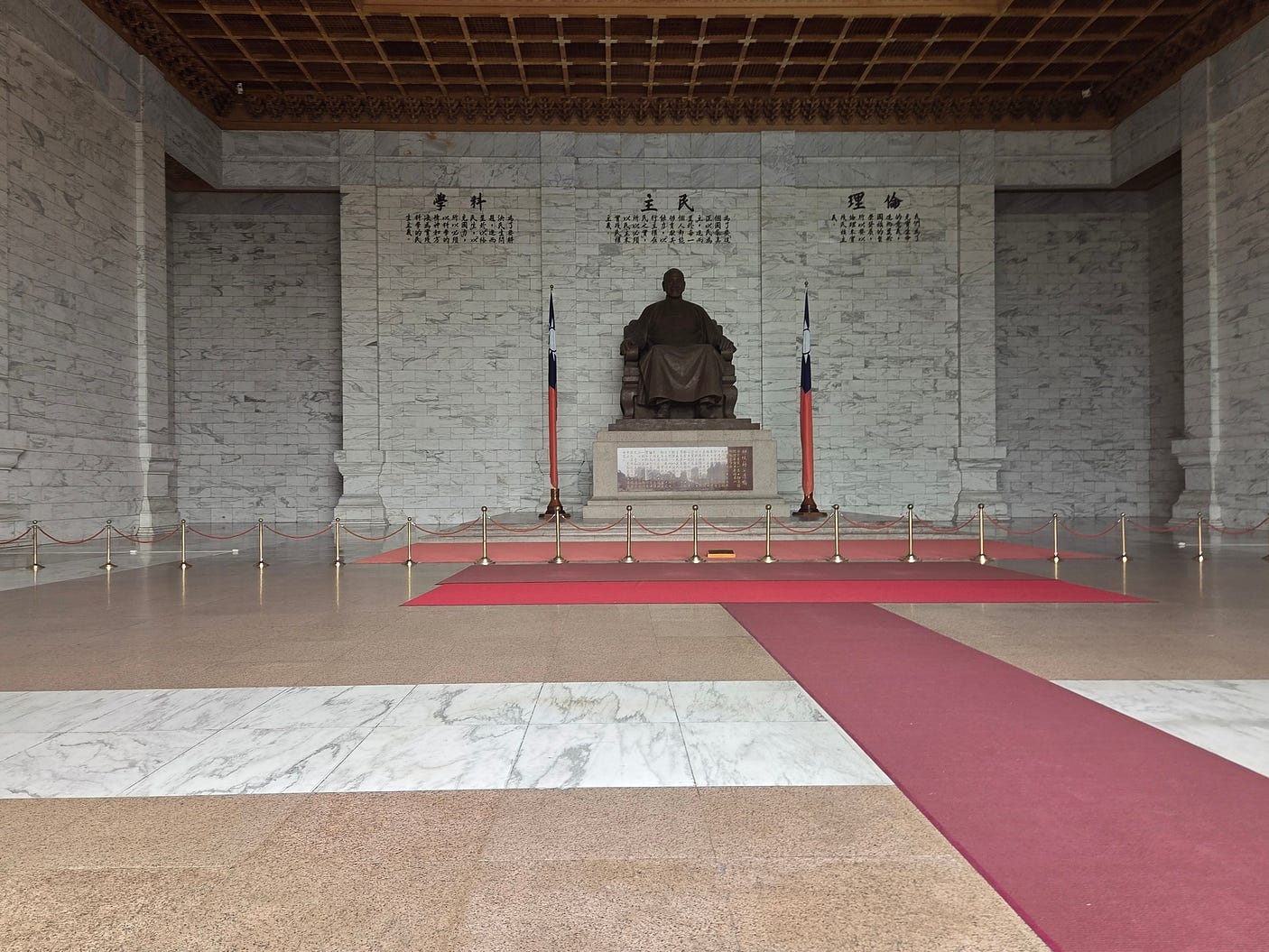
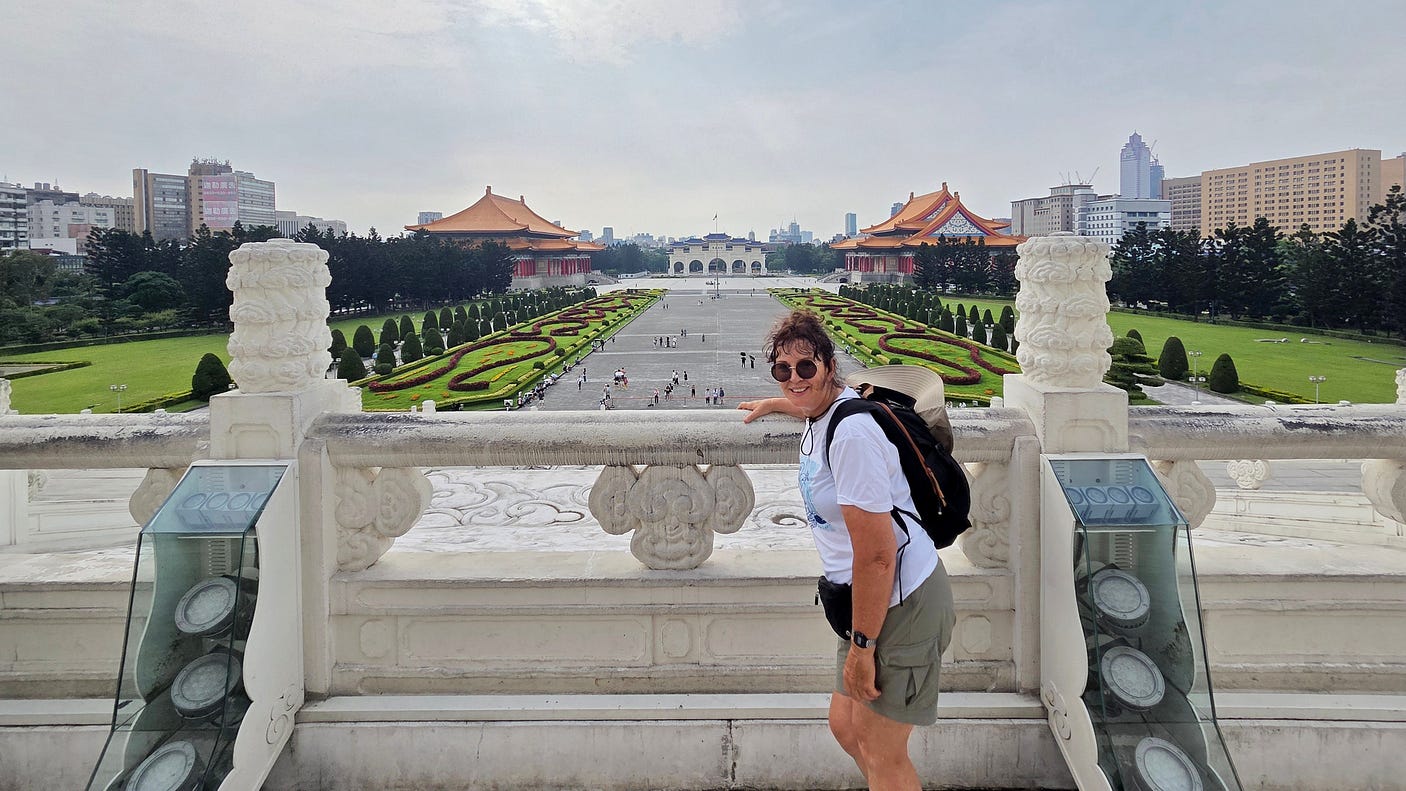
Here’s a video I made at Liberty Square, which includes the changing of the guard at the Chiang Kai-shek Memorial.
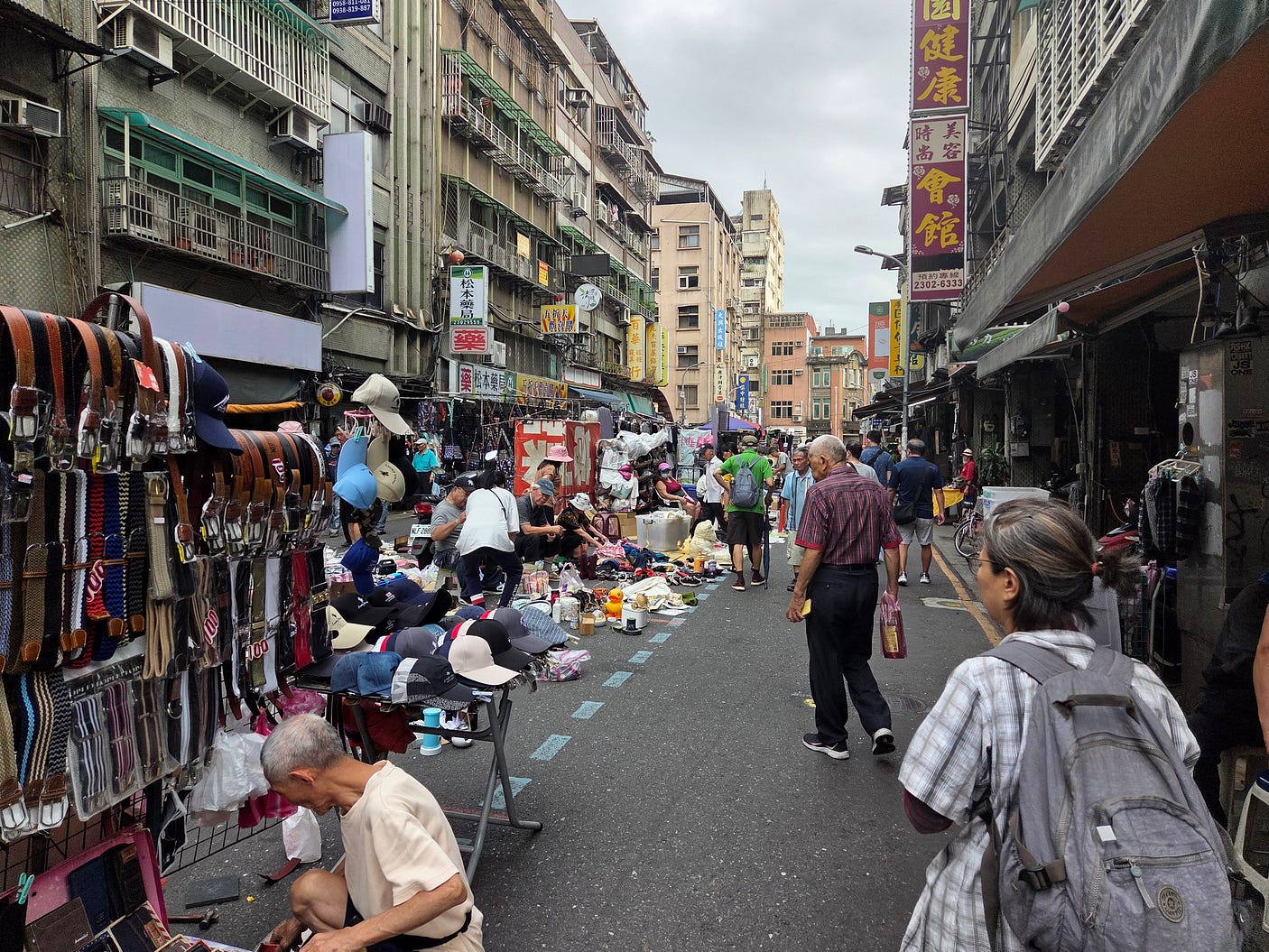
Taipei is both modern and traditional, with bustling old-fashioned market streets like this one in Taipei City, which strictly speaking only covers the inner part of metropolitan Taipei.
And traditional temples:
The Taipei Old Town, in the western part of the downtown area, is full of old Chinese-Empire and Japanese-colonial architecture.
And then there is the new, in the eastern part of the downtown area and the surrounding suburbs of New Taipei City: a colourful LED-illuminated skyline of new buildings, including the famous Taipei 101 or Taipei tower, the tallest building in the world from 2004 to 2010:
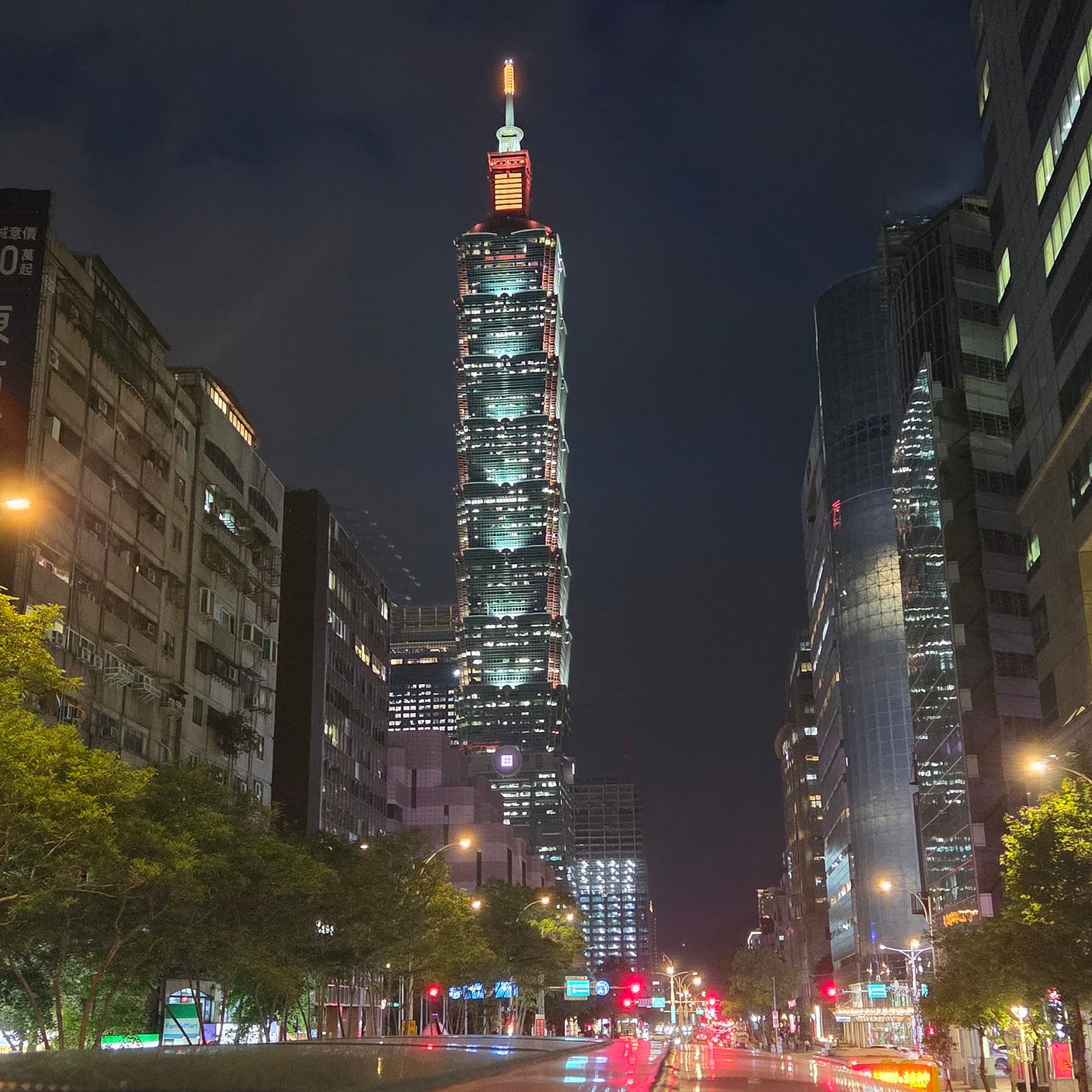
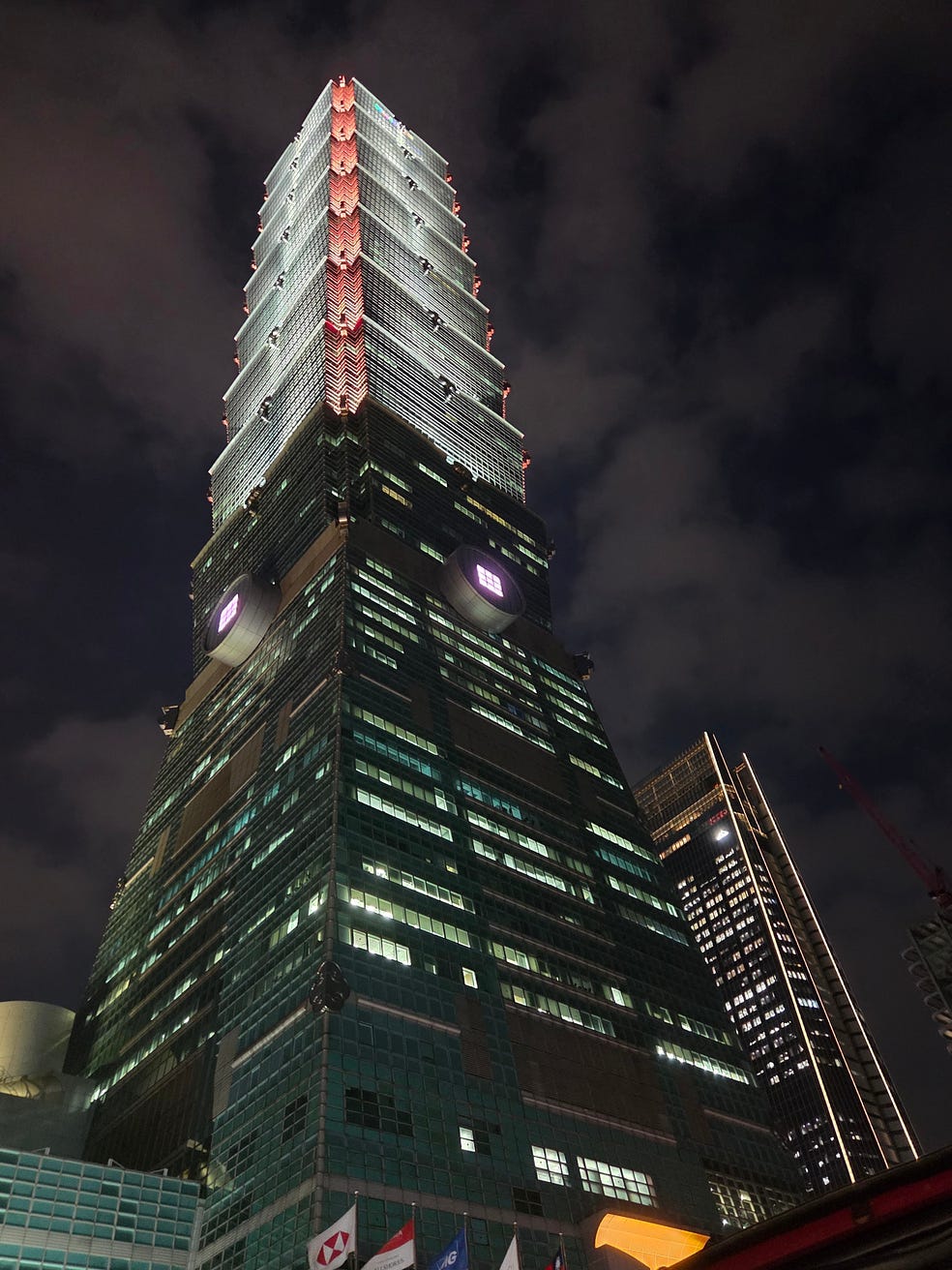
Taipei, which has a metro population of more than 7 million, mostly sits, like Mexico City, in an old lakebed.
In Taipei, the old lakebed is called the Taipei Basin.
The Taipei Basin is surrounded by mountainous areas and coastal towns, to which it is easily possible to escape from the city.
From Taipei, I set out for the Yeliu, or Yehliu Geopark, on a coastal peninsula 20 km northeast of downtown Taipei.

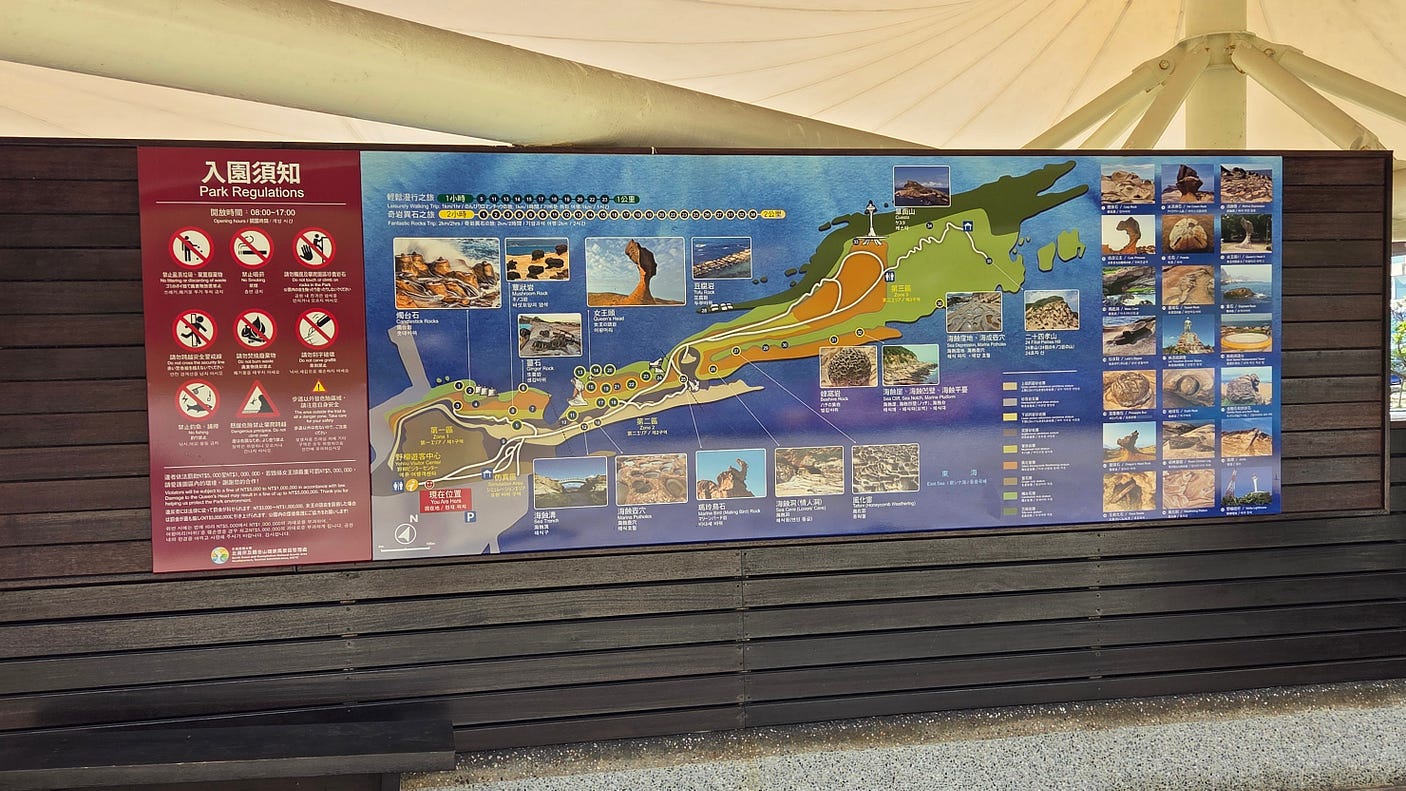
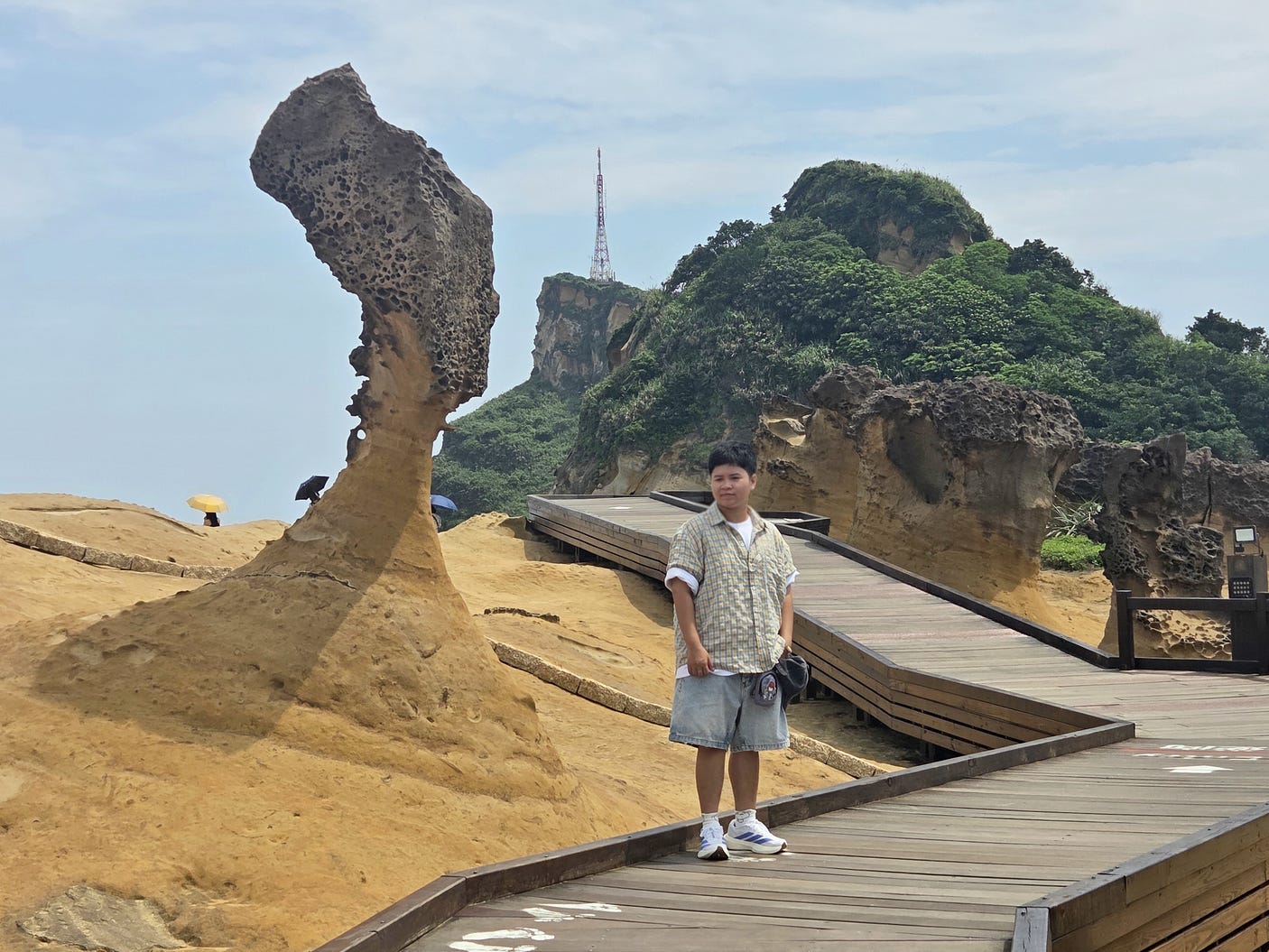
The Yehliu Geopark is famous for the most amazing rock formations, some of which have now been incorporated into a built up area.

It is quite strange to think of a rock like that existing for thousands of years, and then civilisation and paved roads suddenly growing up around it.
Here’s another freaky natural rock formation at Yehliu:
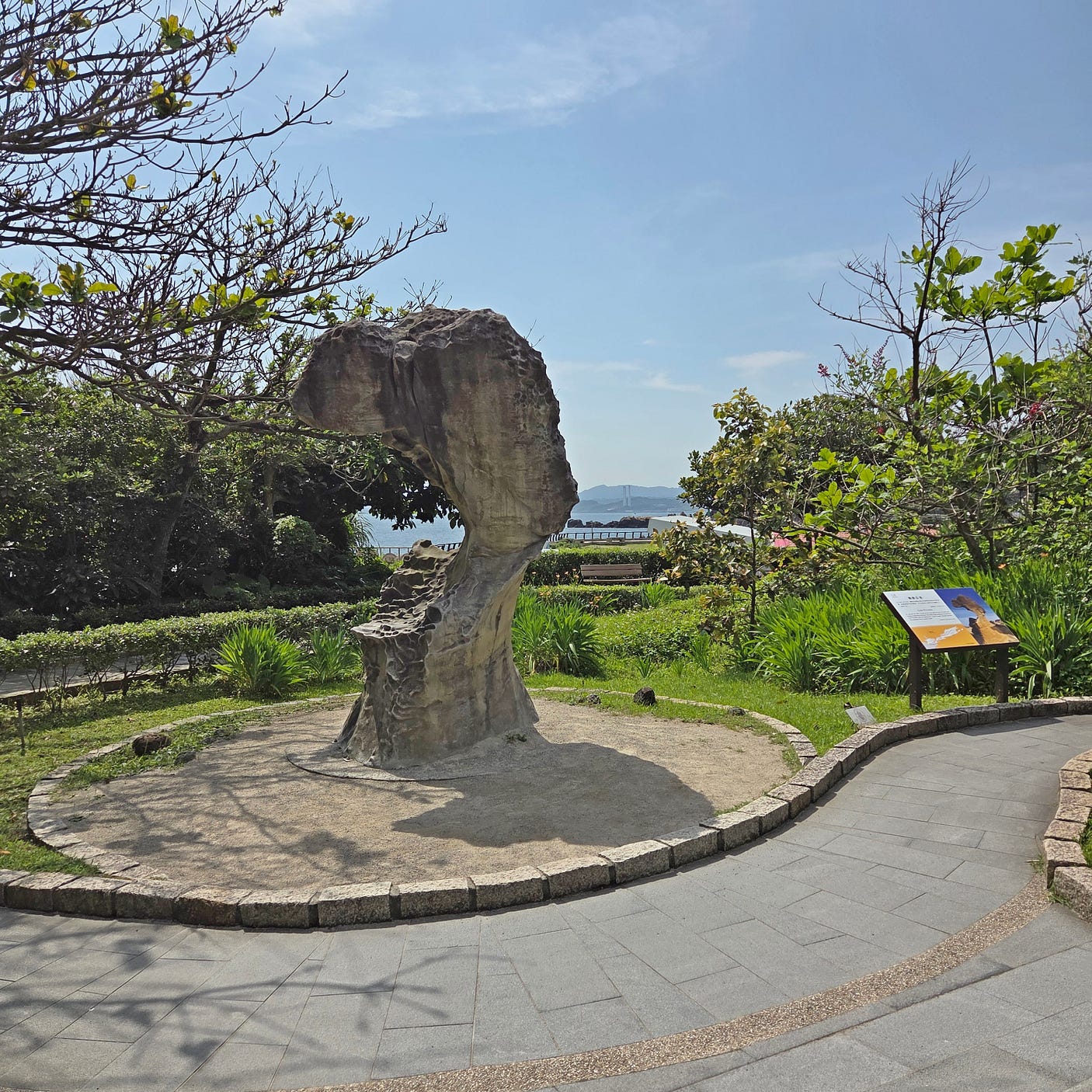
And the most famous of all, the Queen’s Head, in an unpaved area.
I filmed the following short video at the Geopark, and at a location a little further along the coast as well, I believe.
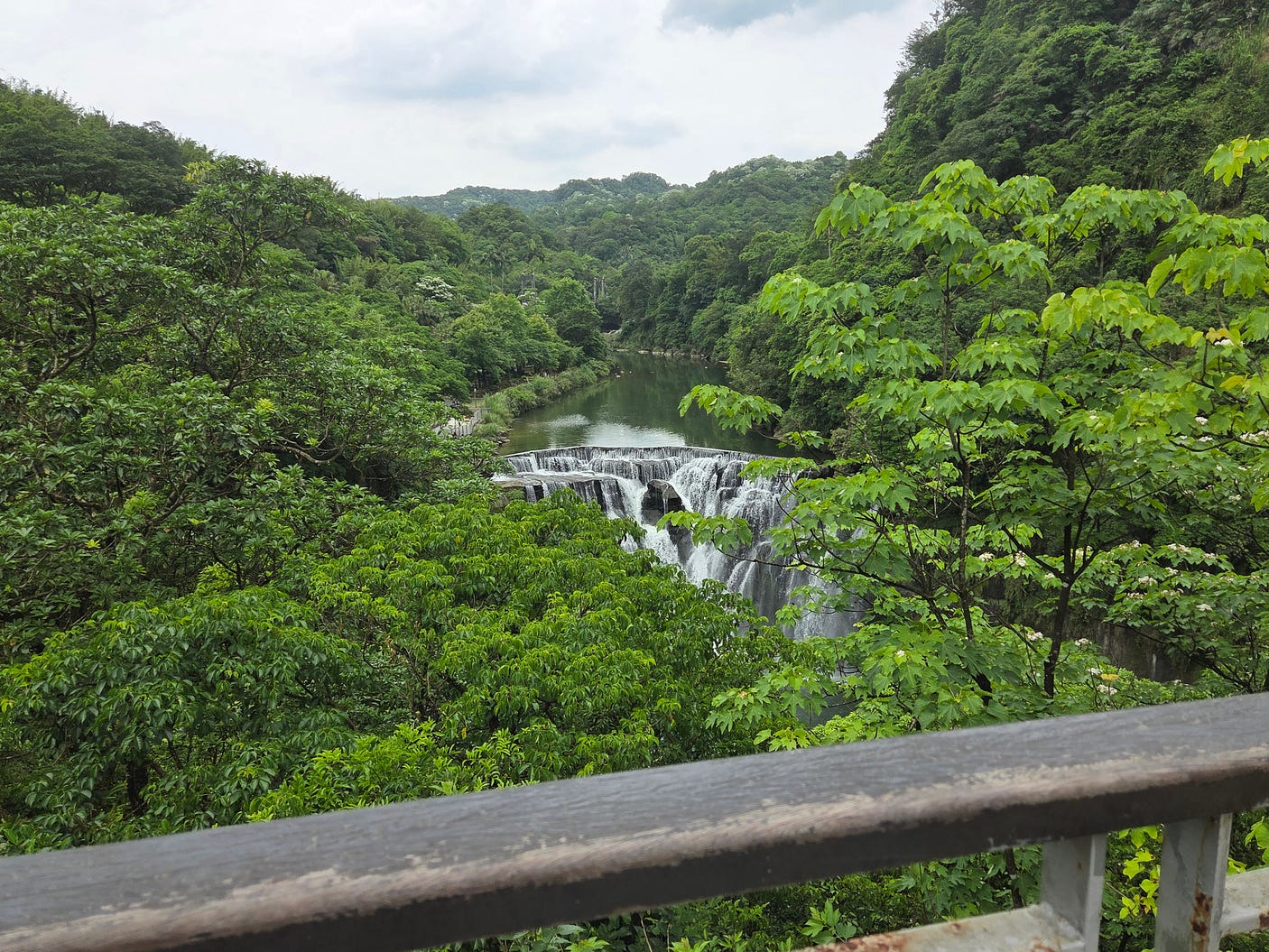
From the Geopark, we headed southeast through Keelung City to Shifen Waterfall, the so-called mini-Niagara of Taiwan, still a respectable 20 metres high and quite broad.
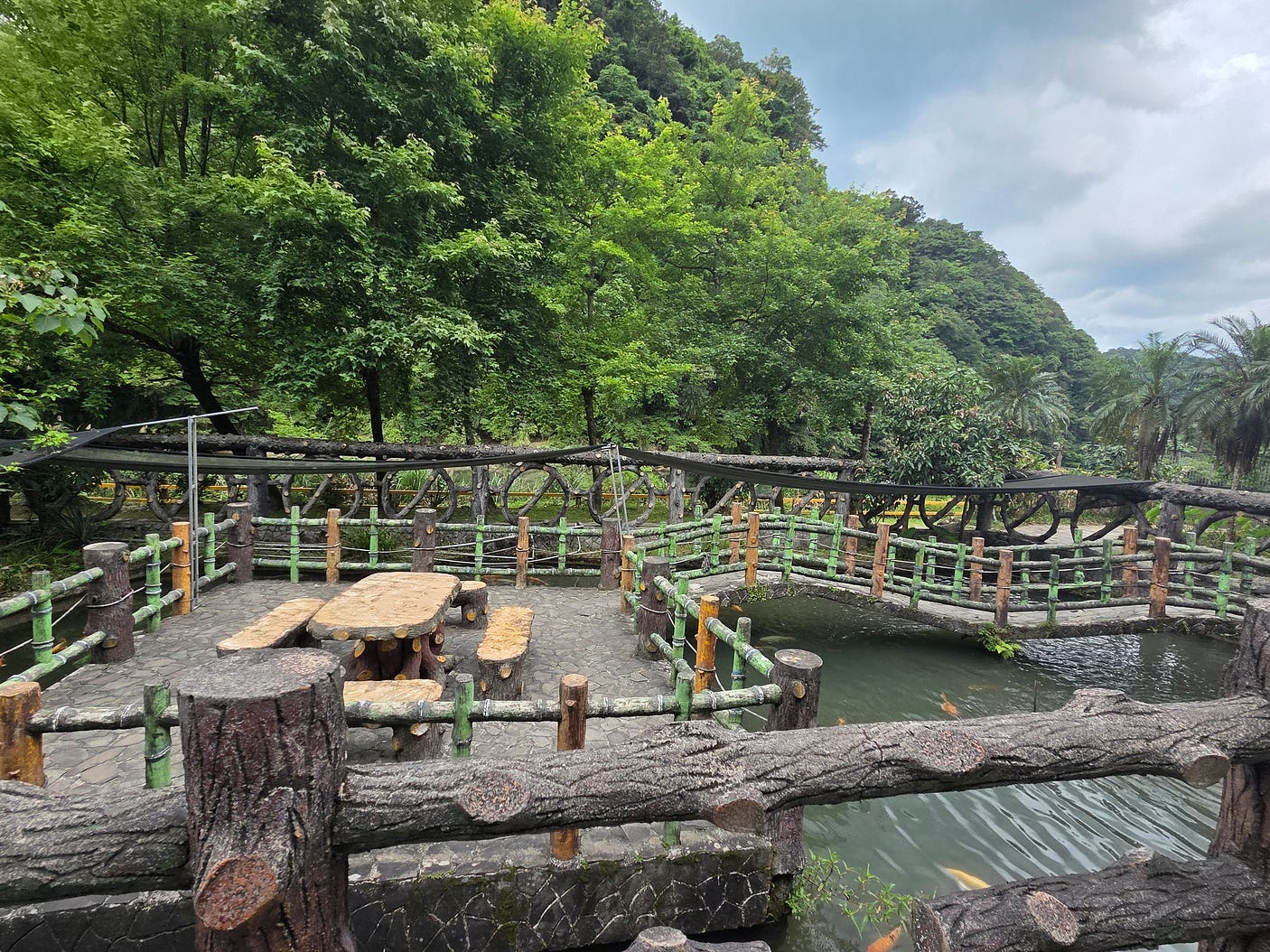
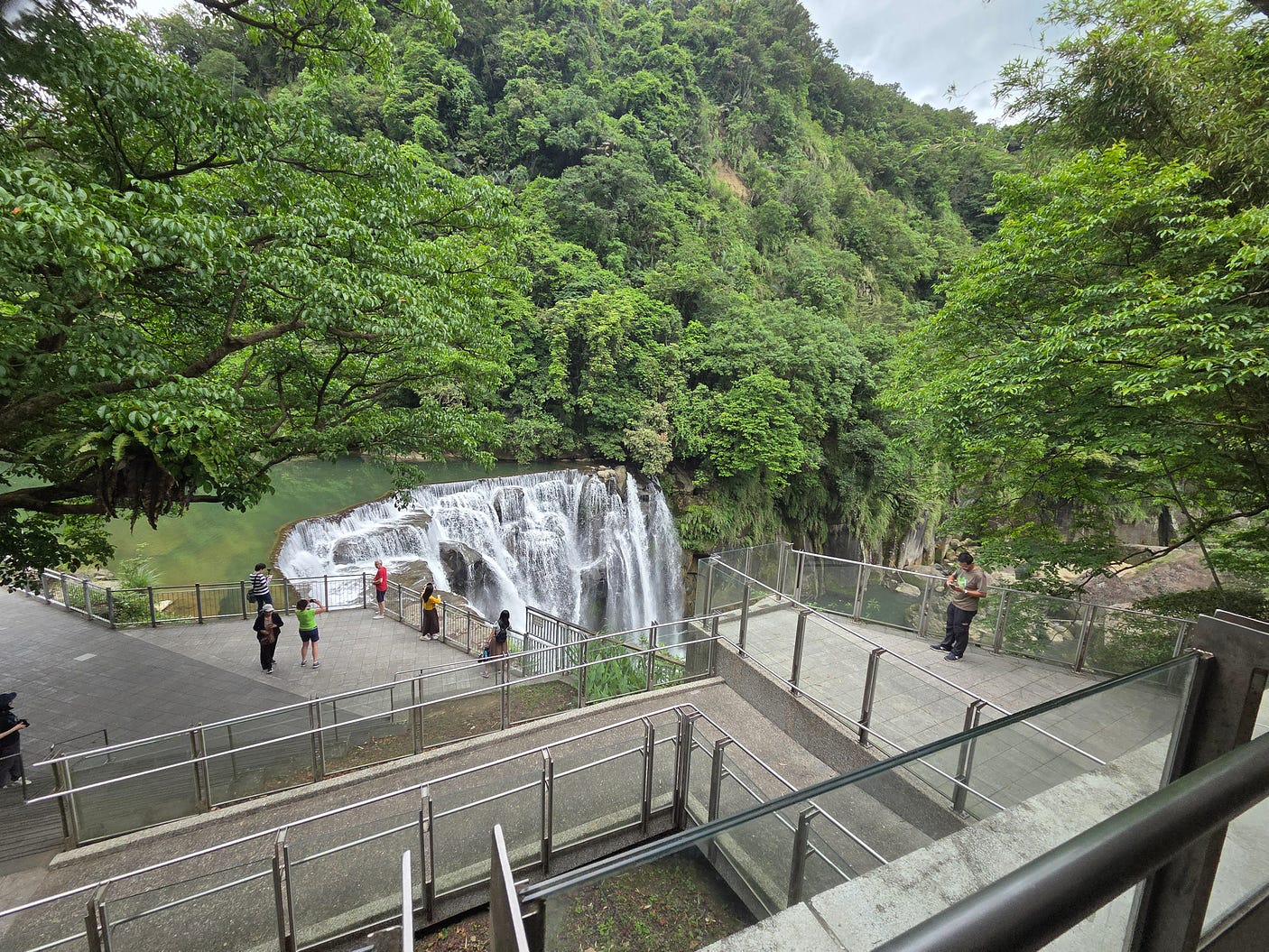
One thing they have a lot of in Taiwan is incredibly green rainforest. Here is another photo of Shifen Waterfall, as seen through the trees.
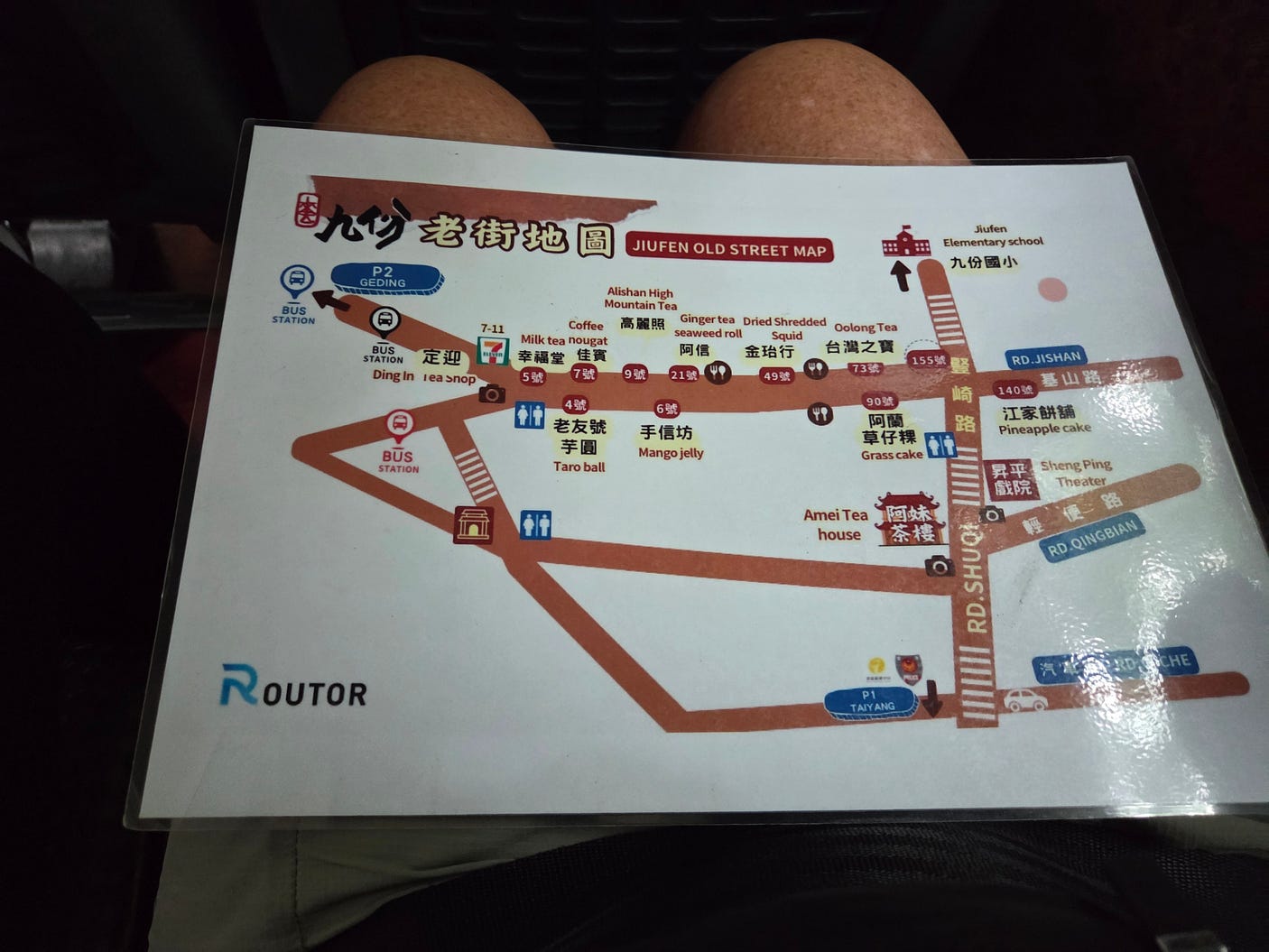
I was visiting all these places on organised tours, as otherwise I wouldn’t have known where best to go. After Shifen, on this tour, we went to the historic goldmining town of Jiufen, on steep hillsides overlooking the sea.
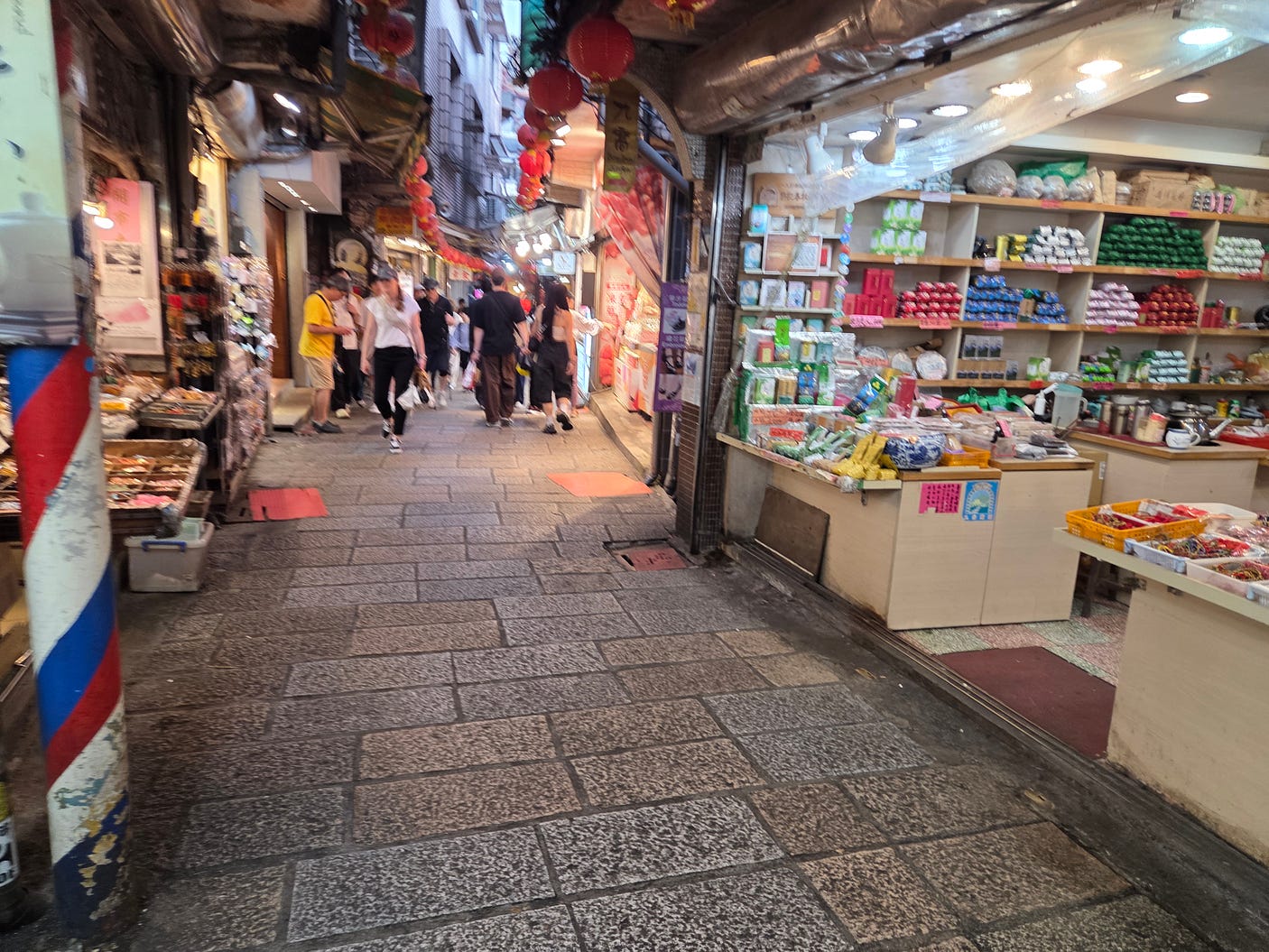
To this day, Jiufen, which prospered mainly under the Japanese administration, has a bit of a Wild West-meets-Tibet quality, full of narrow alleys along the ‘Old Street,’ zero concessions to automobile accessibility and, indeed, as all those images of steps suggest, accessibility of any kind other than on foot.
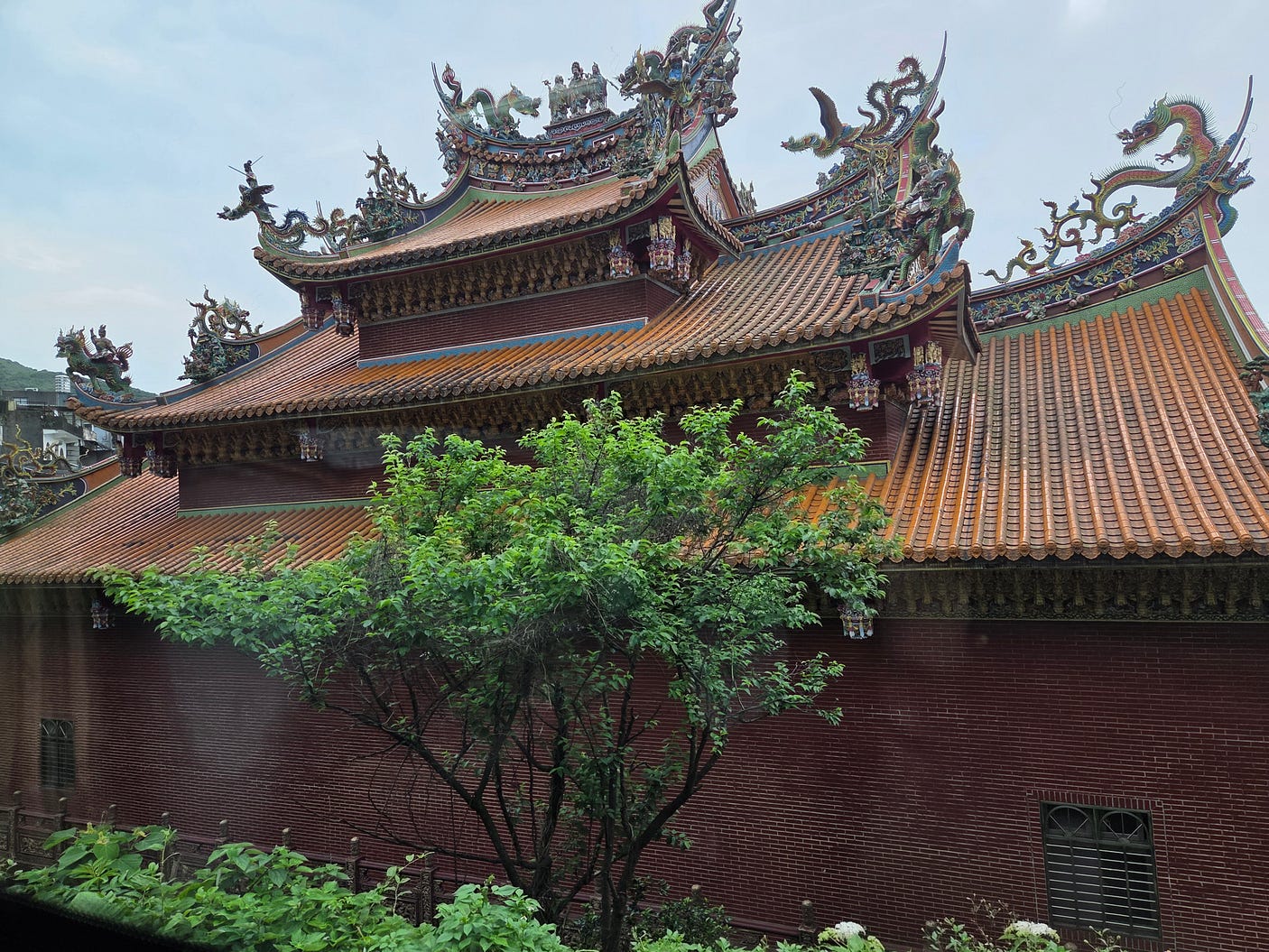
Jiufen has some spectacular temples, which aren’t the sort of thing you normally tend to associate with a goldmining town! These add to its charm and its ‘Tibetan’ qualities.
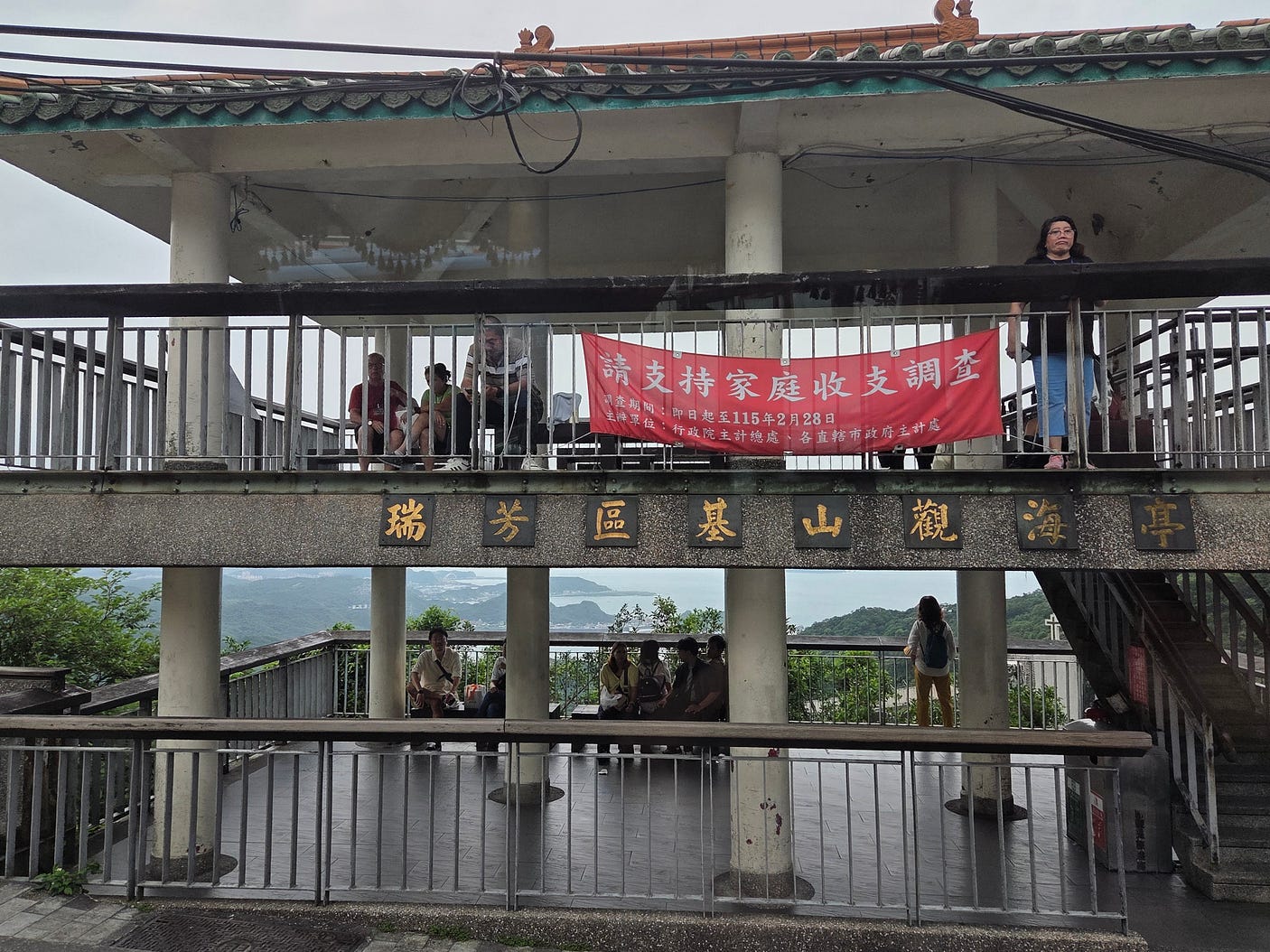
A famous film about the 2–28 massacre, which I also blogged about last week, was set in Jiufen, and I think that that is what this banner is about. Behind the building, you can see the amazing view of the sea that you get from Jiufen.
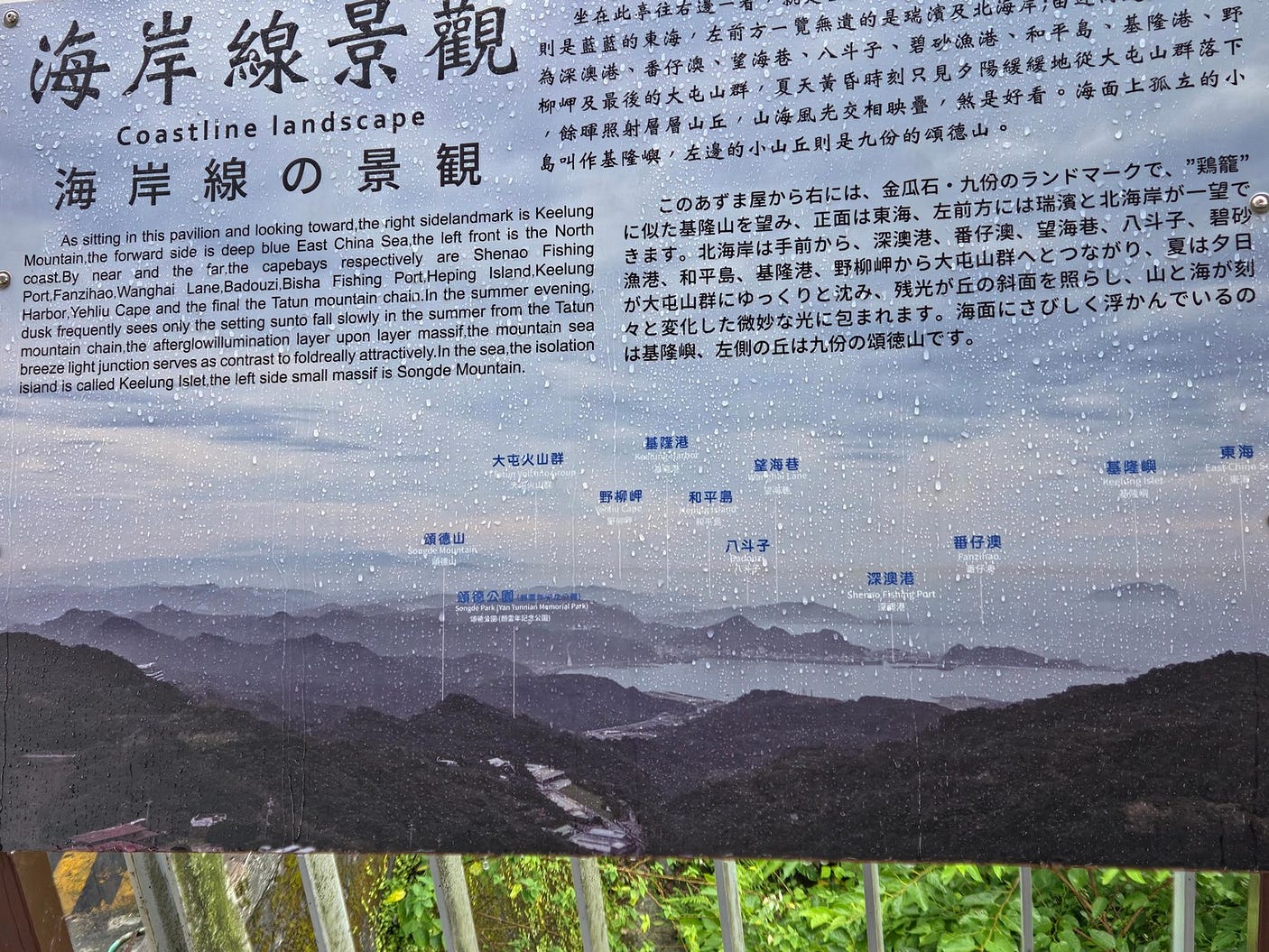
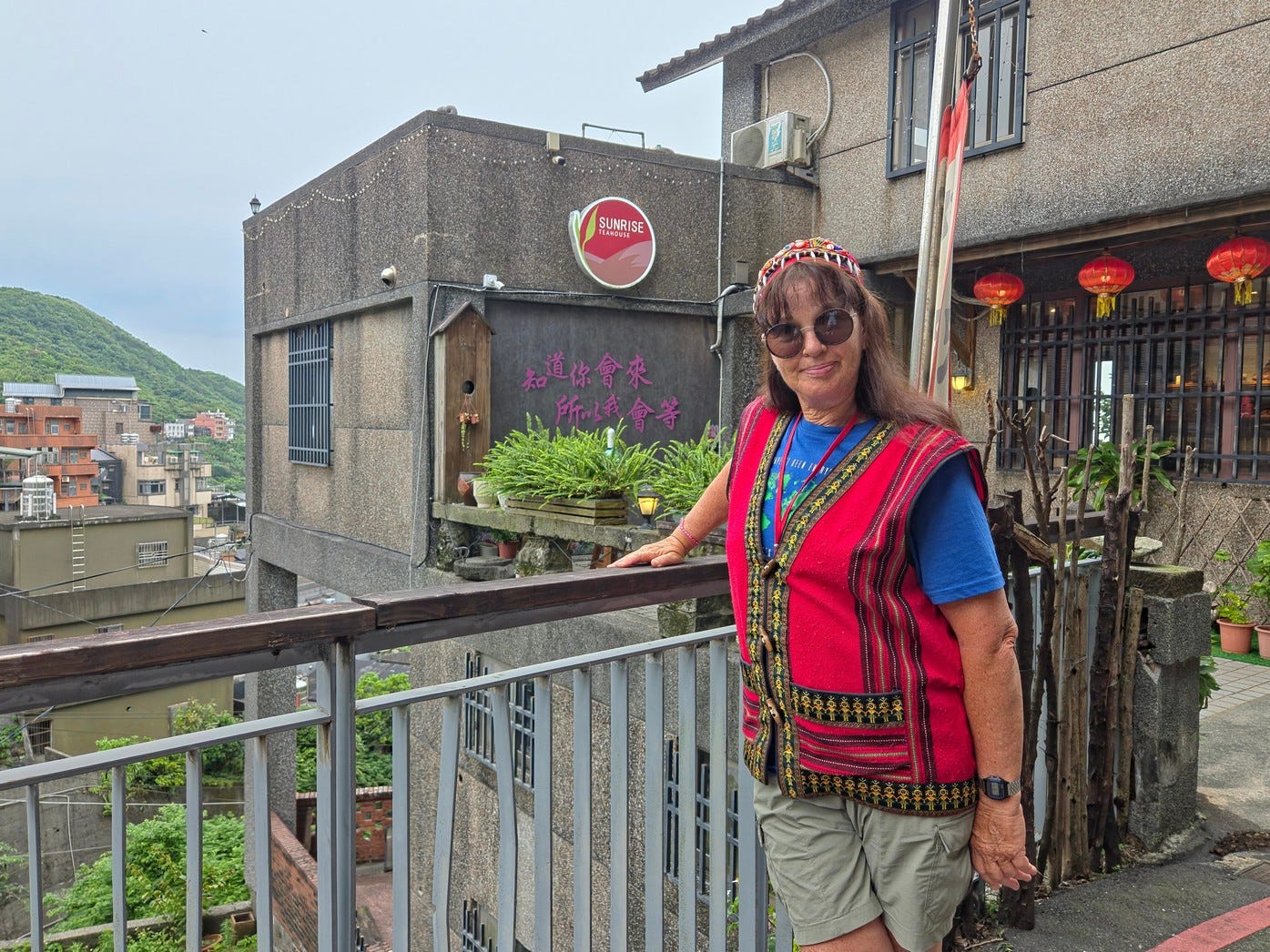
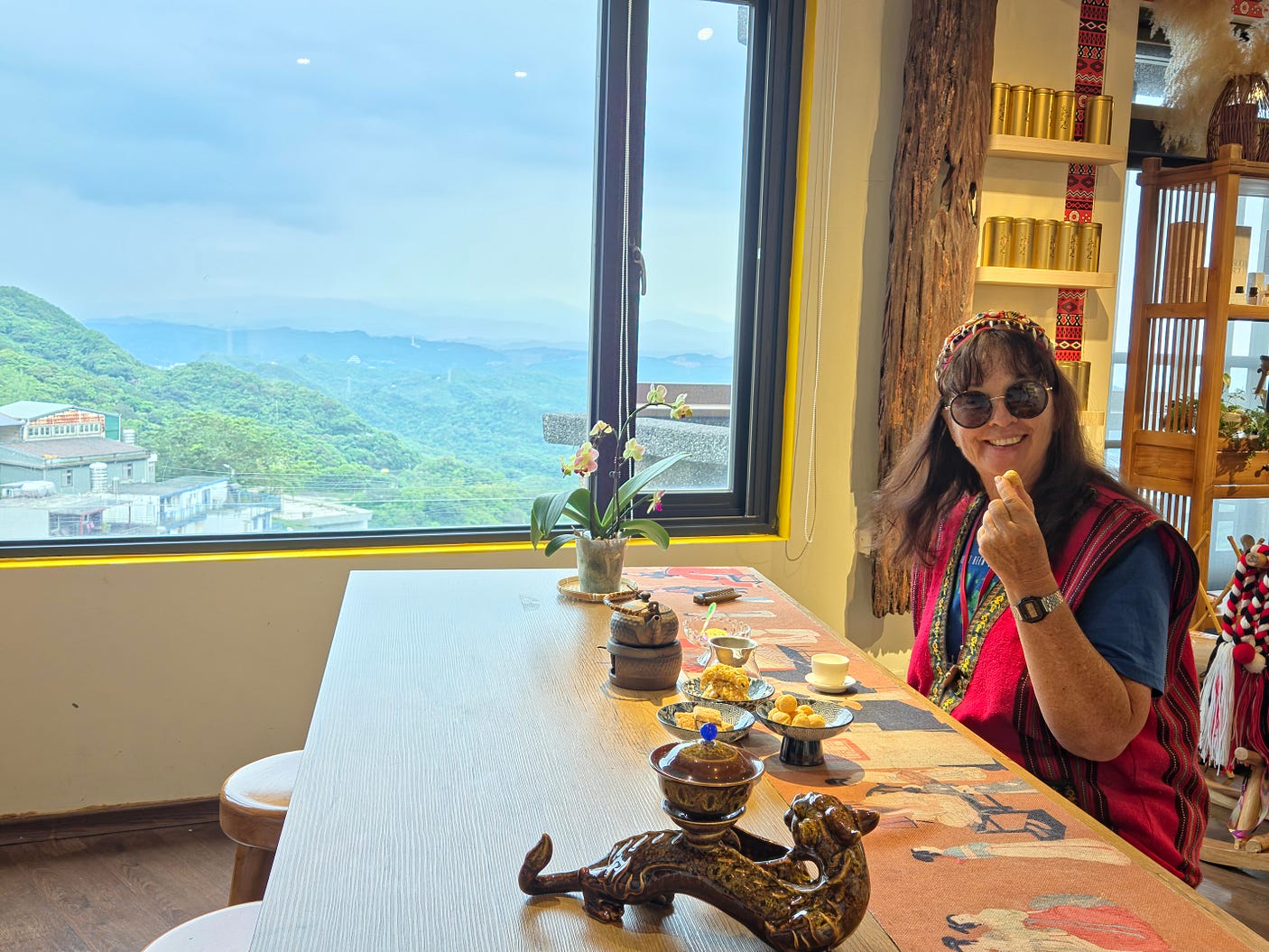
I bought a traditional Fujianese jacket and hat, and visited the Sunrise Cafe, which has picture windows with stunning views.
And here is a video I made in Jiufen, including the Pinxi Sky Lantern Festival, which was on when I was there. The people are releasing balloons on the railway tracks but, as it would seem, the train wasn’t running at the time.
In Jiufen, and earlier on the coast, we also managed to get in some birdwatching. The first scene in this video was filmed at Jiufen, in the pelting rain.
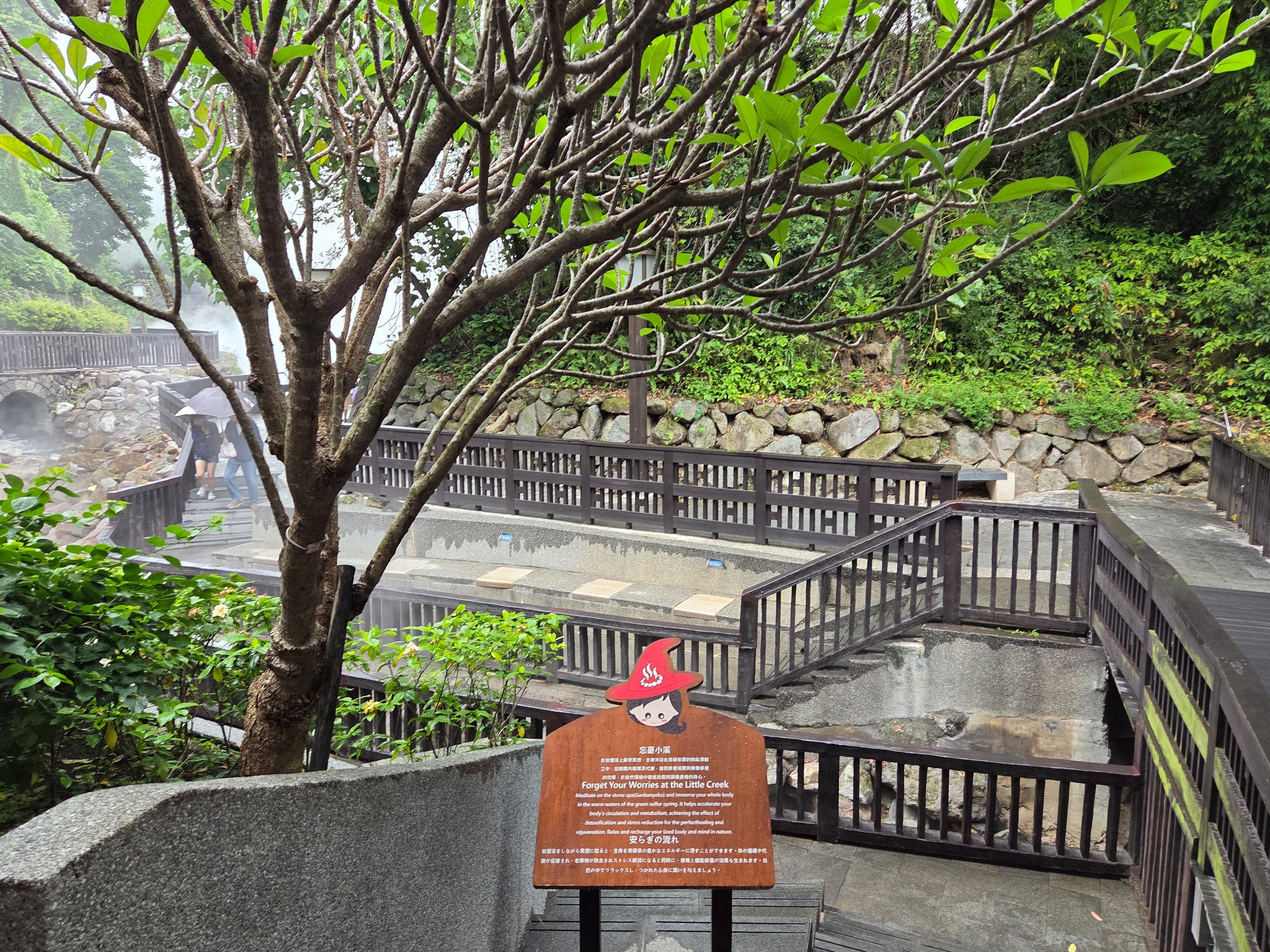
After Jiufen, we headed to the Beitou Thermal Valley, closer to Taipei once more.
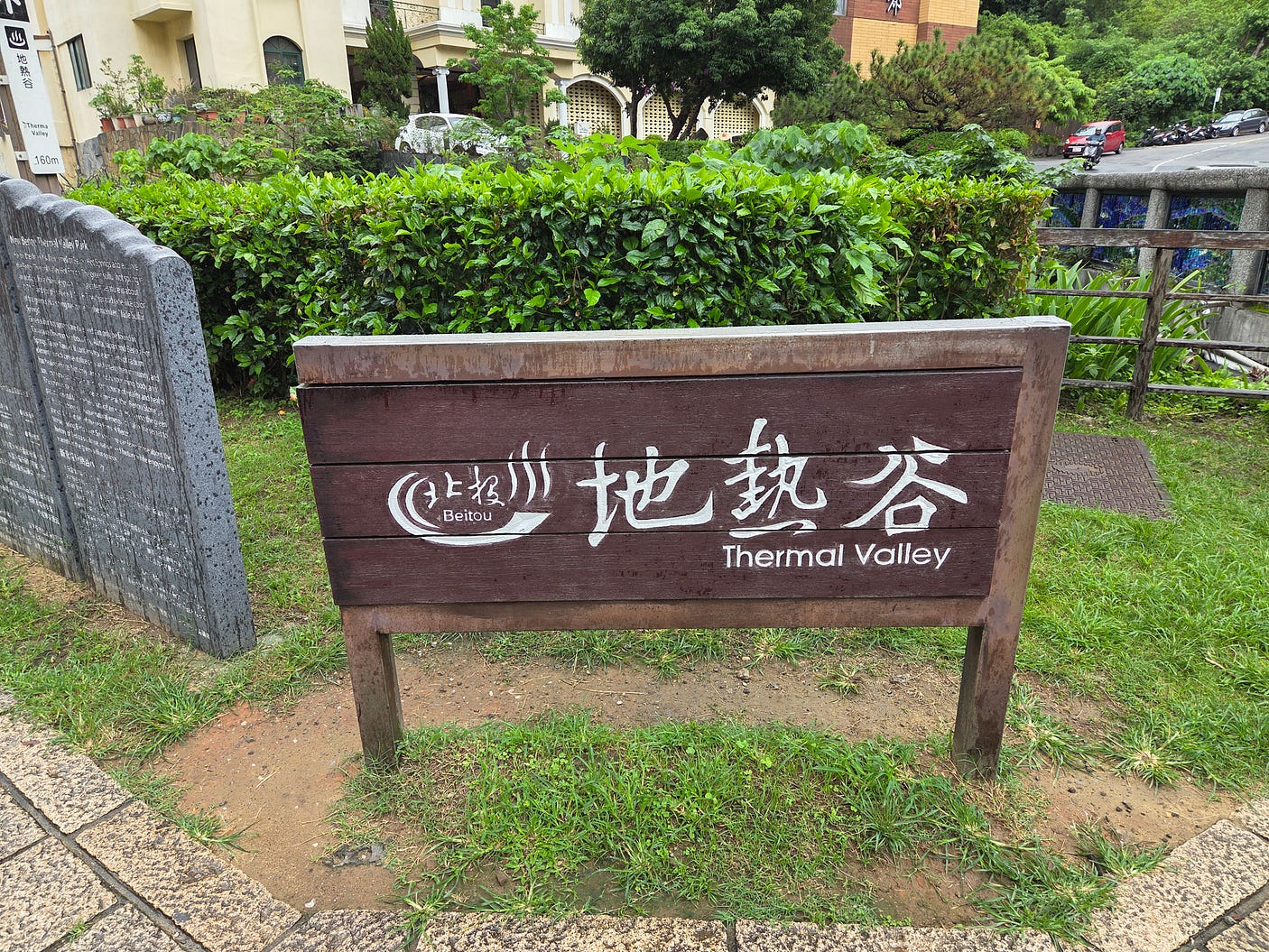
The local hot springs also served as a museum, the Beitou Hot Spring Museum, organised around a public bathhouse built by the Japanese more than a hundred years ago in a style similar to the older buildings at Rotorua in New Zealand, which were erected at around the same time. In those days, the Beitou baths were known as the Hokutō Public Bathhouse.

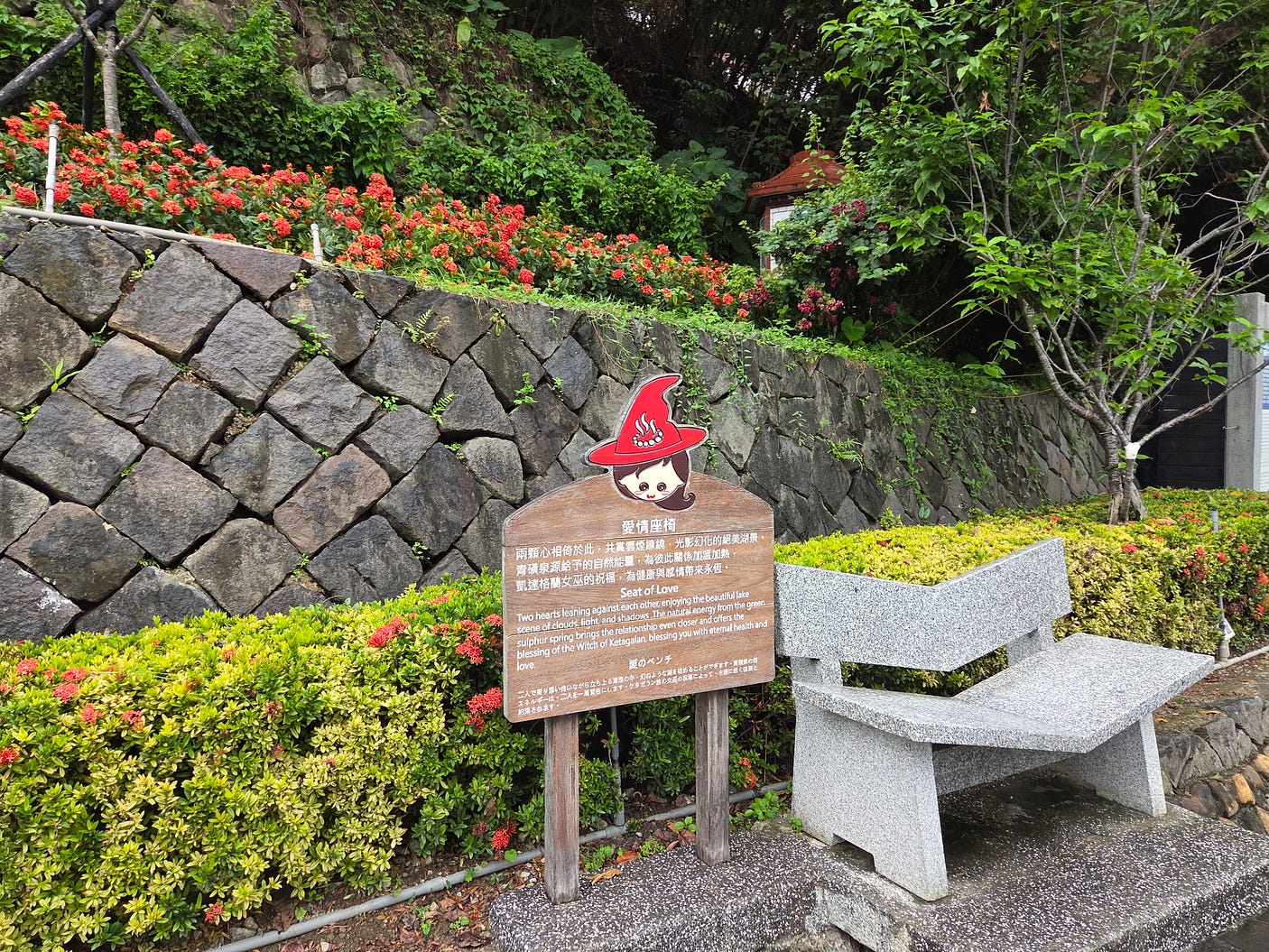
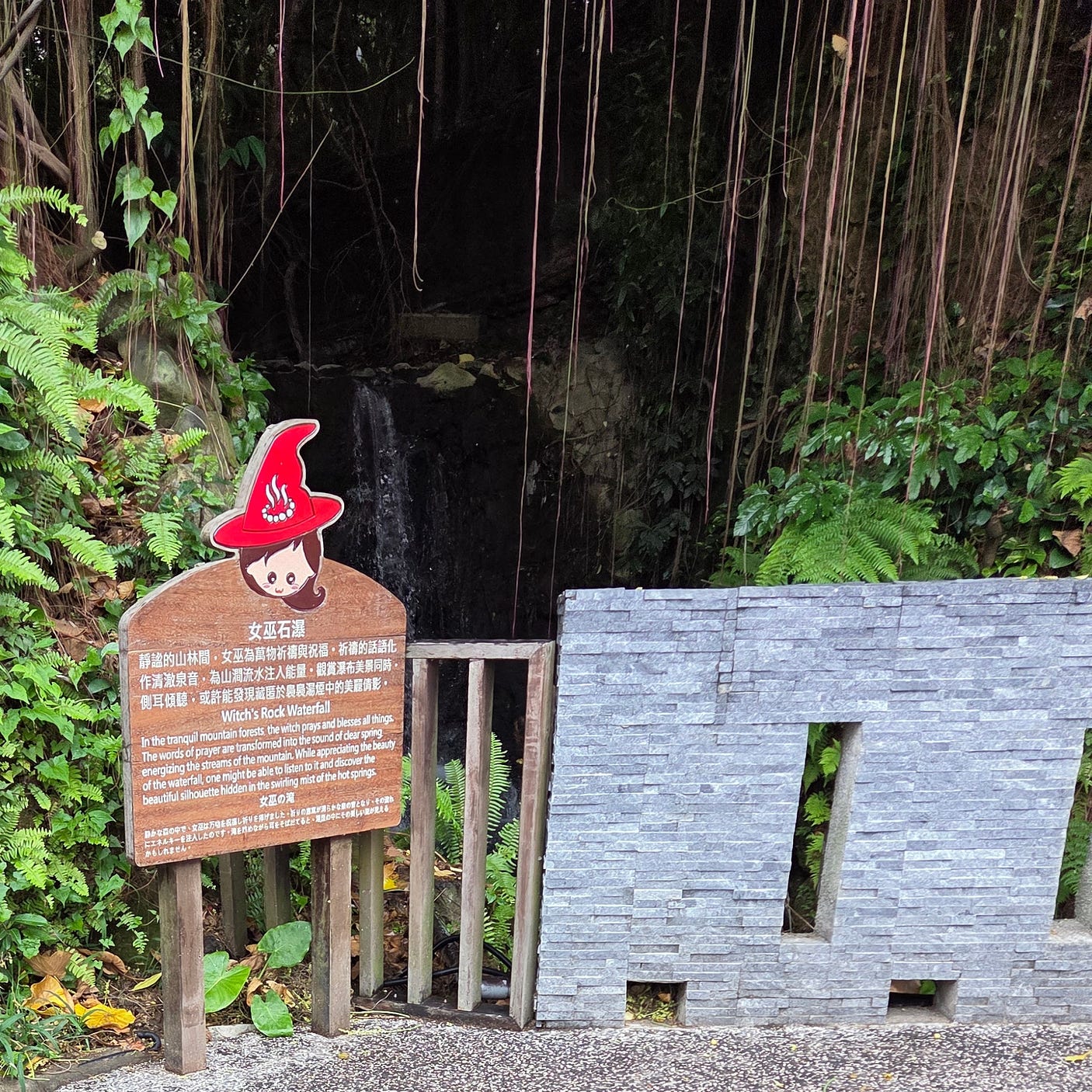
The modern signs show an image of a rather cute-looking witch in a red hat.
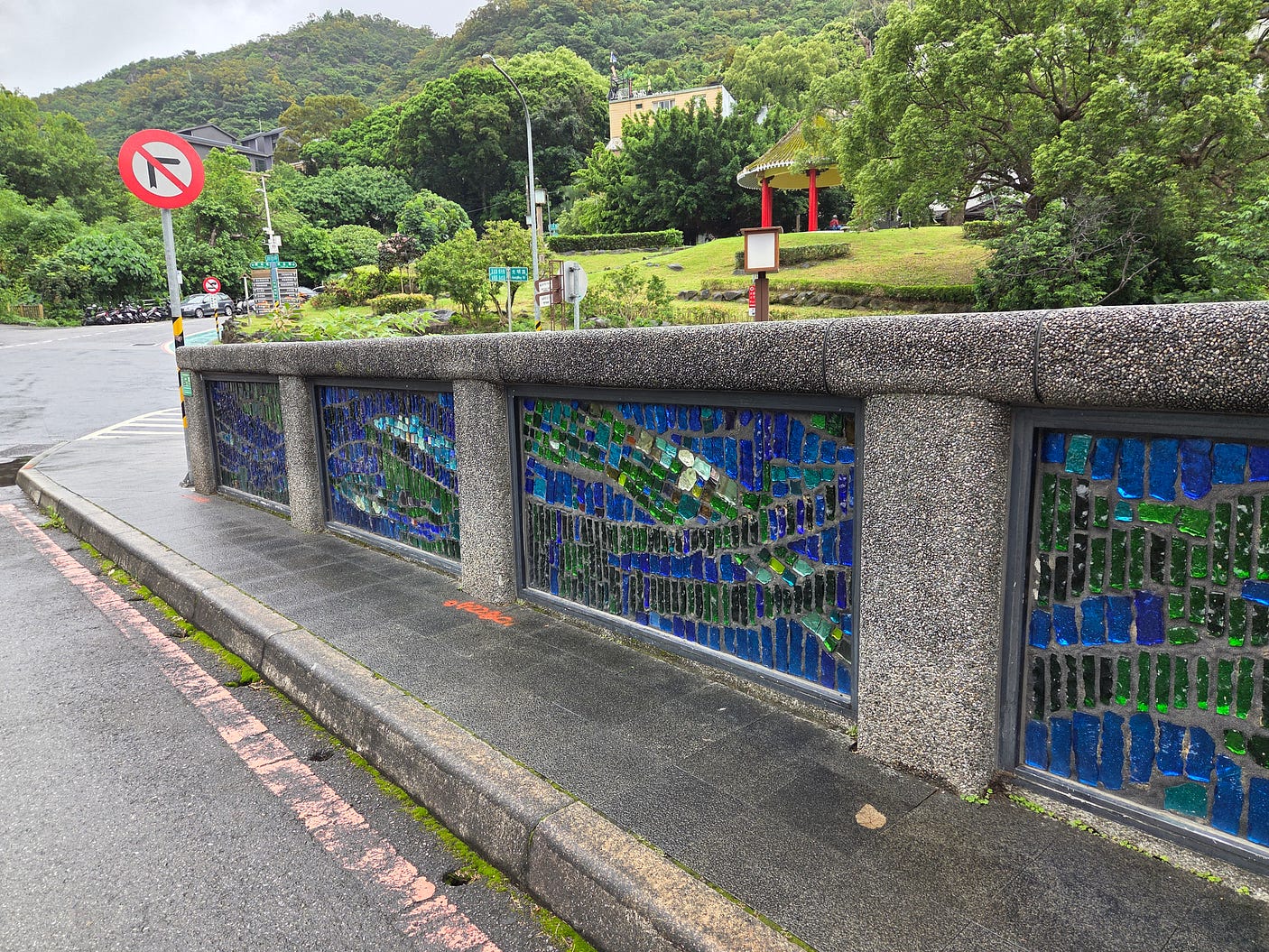
And then we visited the Yangmingshan Floral Clock, in Yangmingshan National Park. Here’s some attractive contemporary art on one of the bridges nearby.
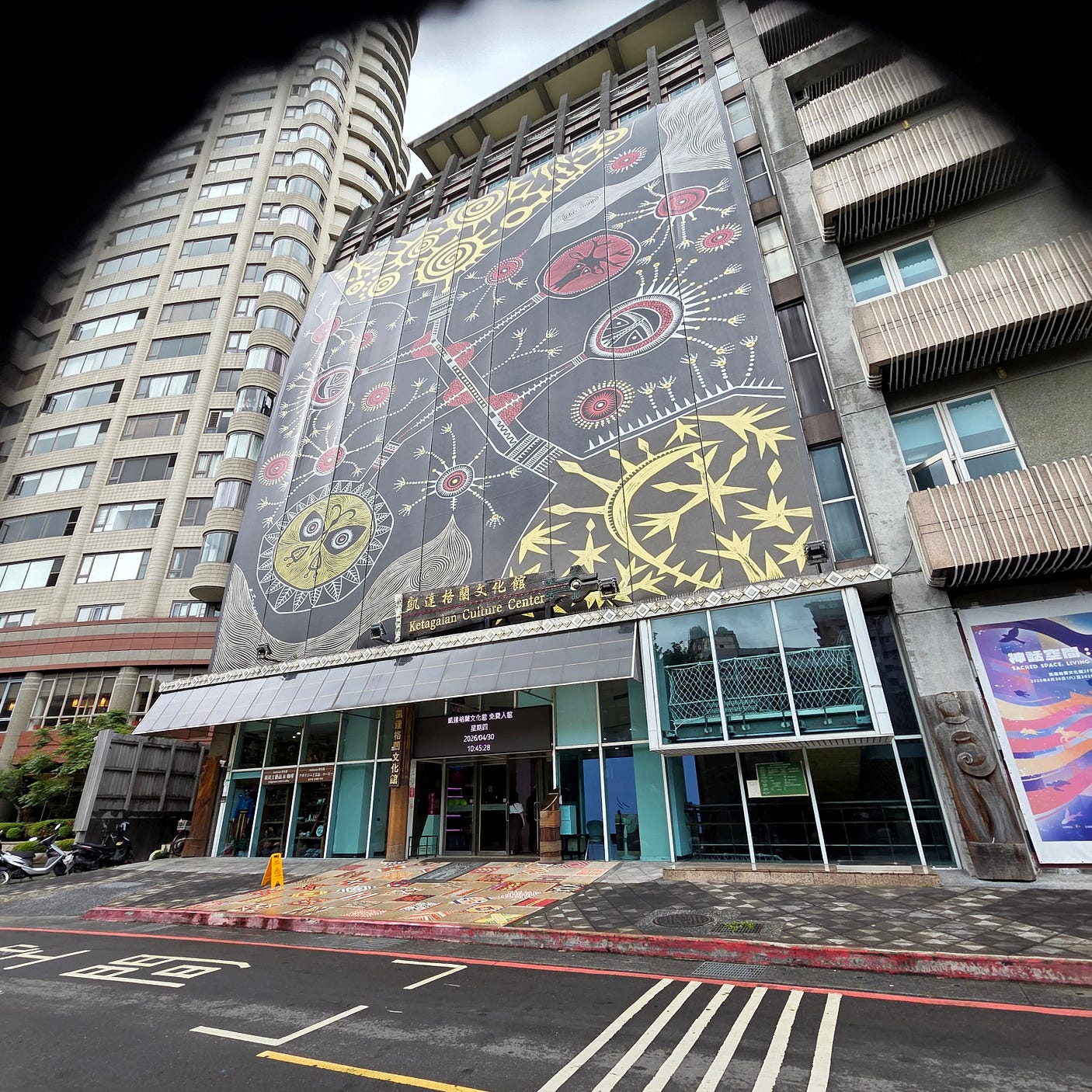
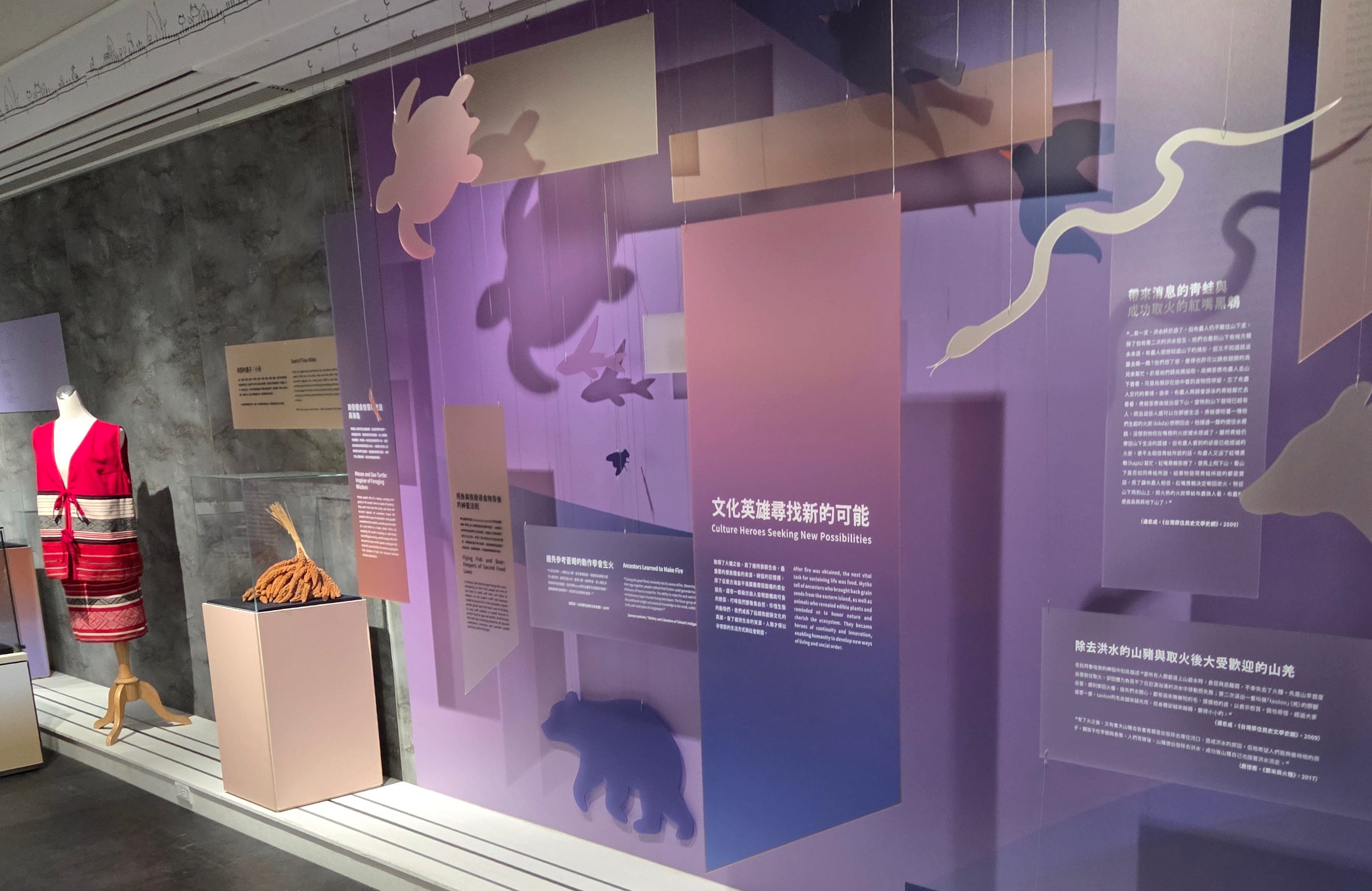
And the Ketagalan Culture Center, which is named after the indigenous tribe of the Taipei Basin, whose language is unfortunately now extinct.
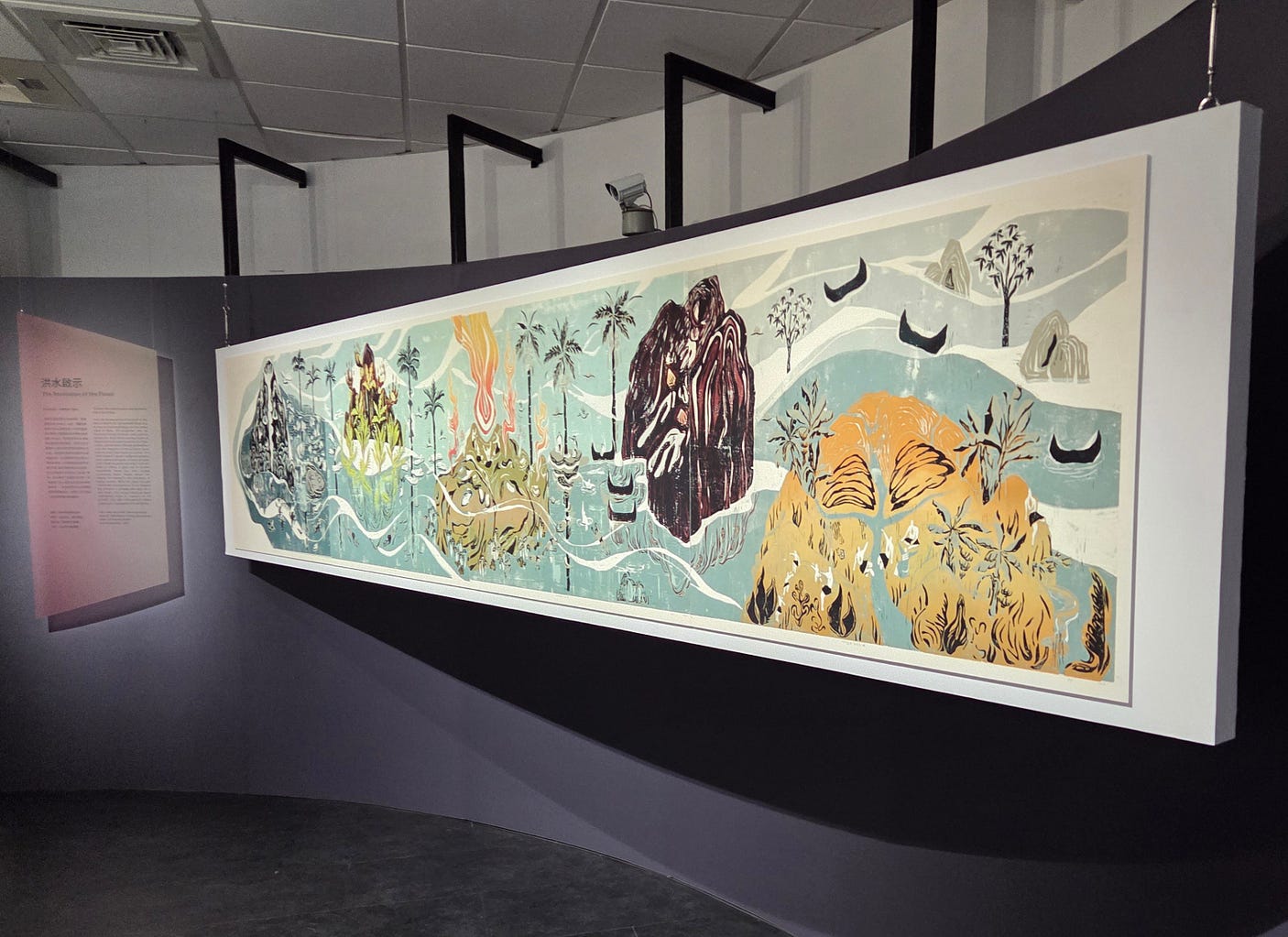
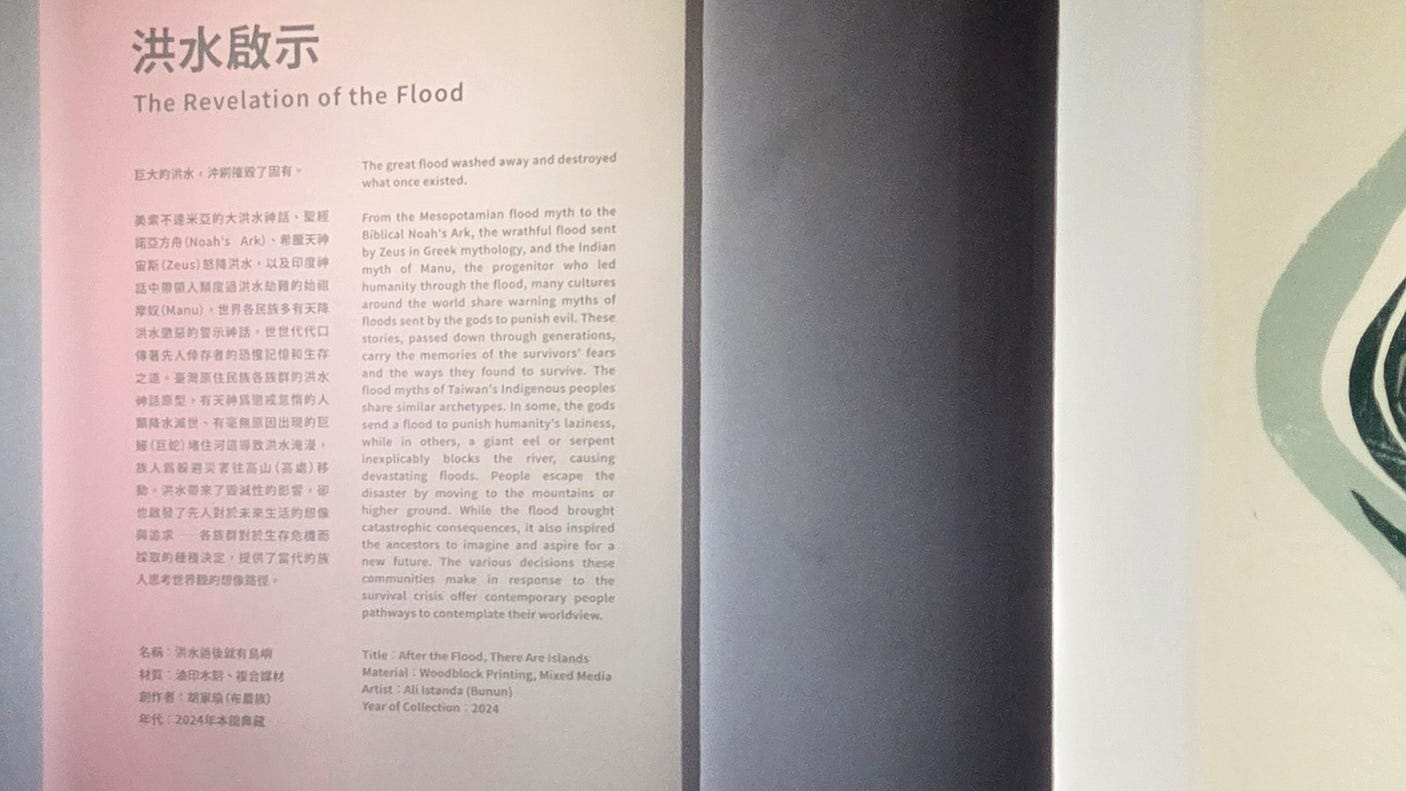
Interestingly, the Ketagalan, like so many people around the world, have their own version of the biblical legend of the Flood:
Several groups of indigenous Taiwanese engaged in guerilla warfare against the Japanese colonisers of the island until 1933, when the last resisting tribe, the Bunun, laid down its arms.
Hence, the red line down the middle of the island in the 1901 map that I reproduced last week, a line the Japanese called the “guardline,” a sort of de facto partition of the island that eventually ran to electrified fences and guard towers.
Despite all that, the Japanese were tolerant of the indigenous tribes’ right to exist and practice their old ways. Presumably, that was because, as long as the Austronesians survived as a distinct group, their survival strengthened the case for the argument that Taiwan wasn’t really part of China.
Only with the arrival of Chiang Kai-shek’s Kuomintang regime, in 1945, did the indigenous tribes face strong pressure to assimilate into the Chinese-majority society under a policy the Kuomintang called “one language, one culture.”
Only in more recent times have the indigenous Austronesian cultures been allowed to revive, sadly too late to save the Ketagalan language other than in books.
Here’s another interesting display, ‘Culture Heroes Seeking New Possibilities.’ In other words, local forerunners of the later legends of Māui, Kupe, and all the other explorer-heroes of Polynesia.
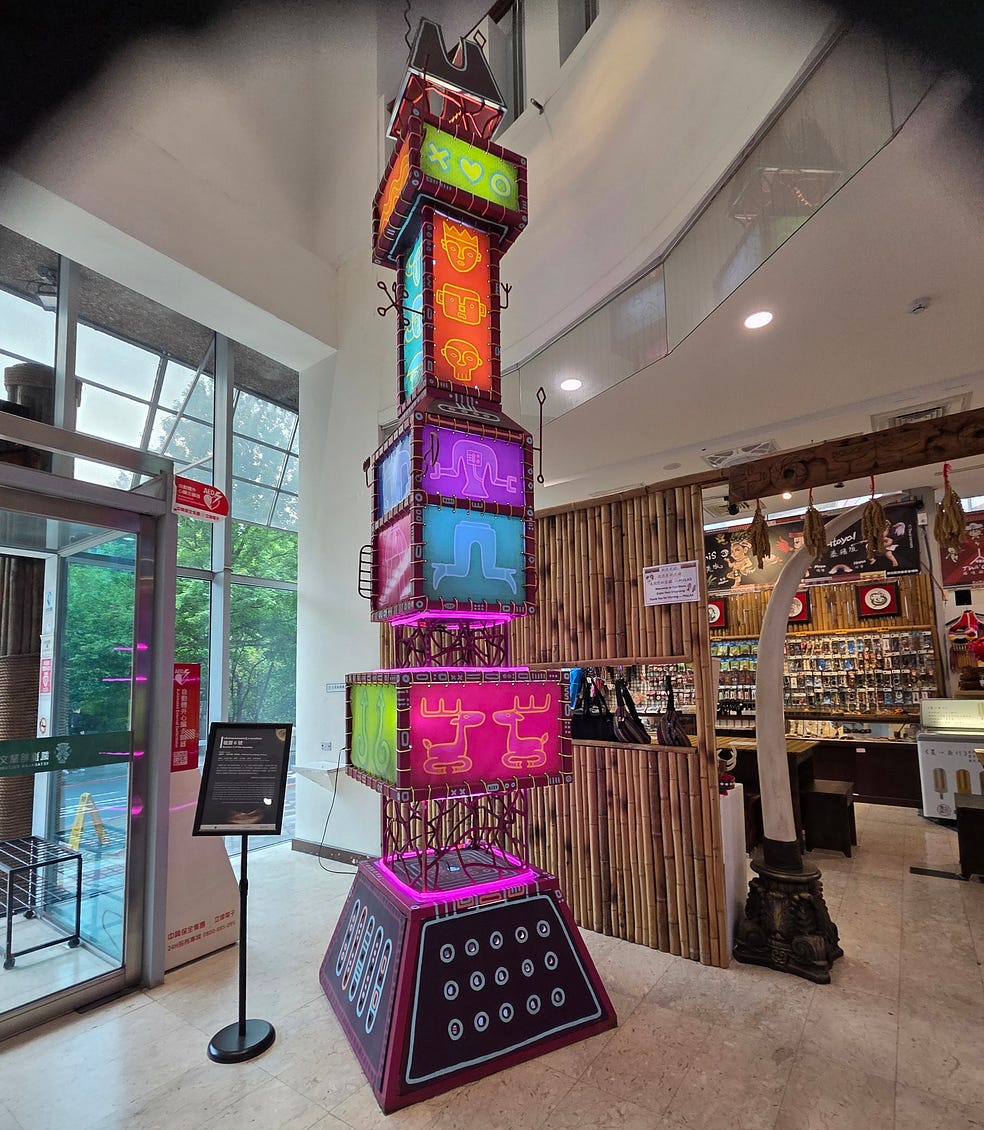
I saw this colourful tower with Austronesian motifs in the museum, as well.
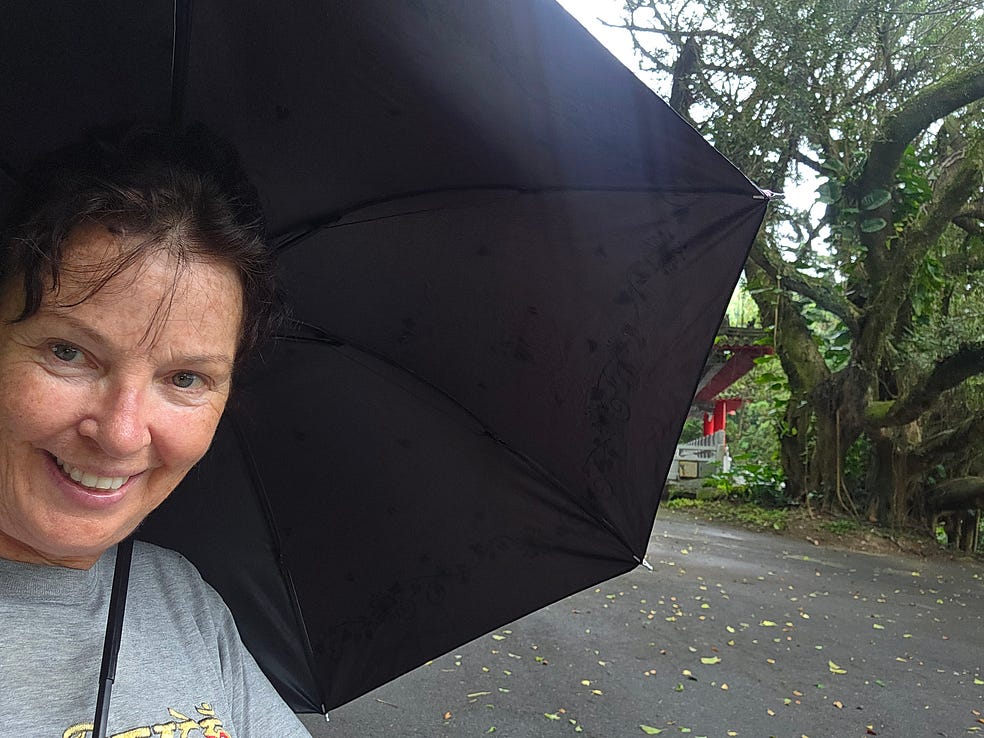
But honestly, to wrap up, on these local city-forest tours, it was fair to say that Taiwan put the rain into rainforest for me!
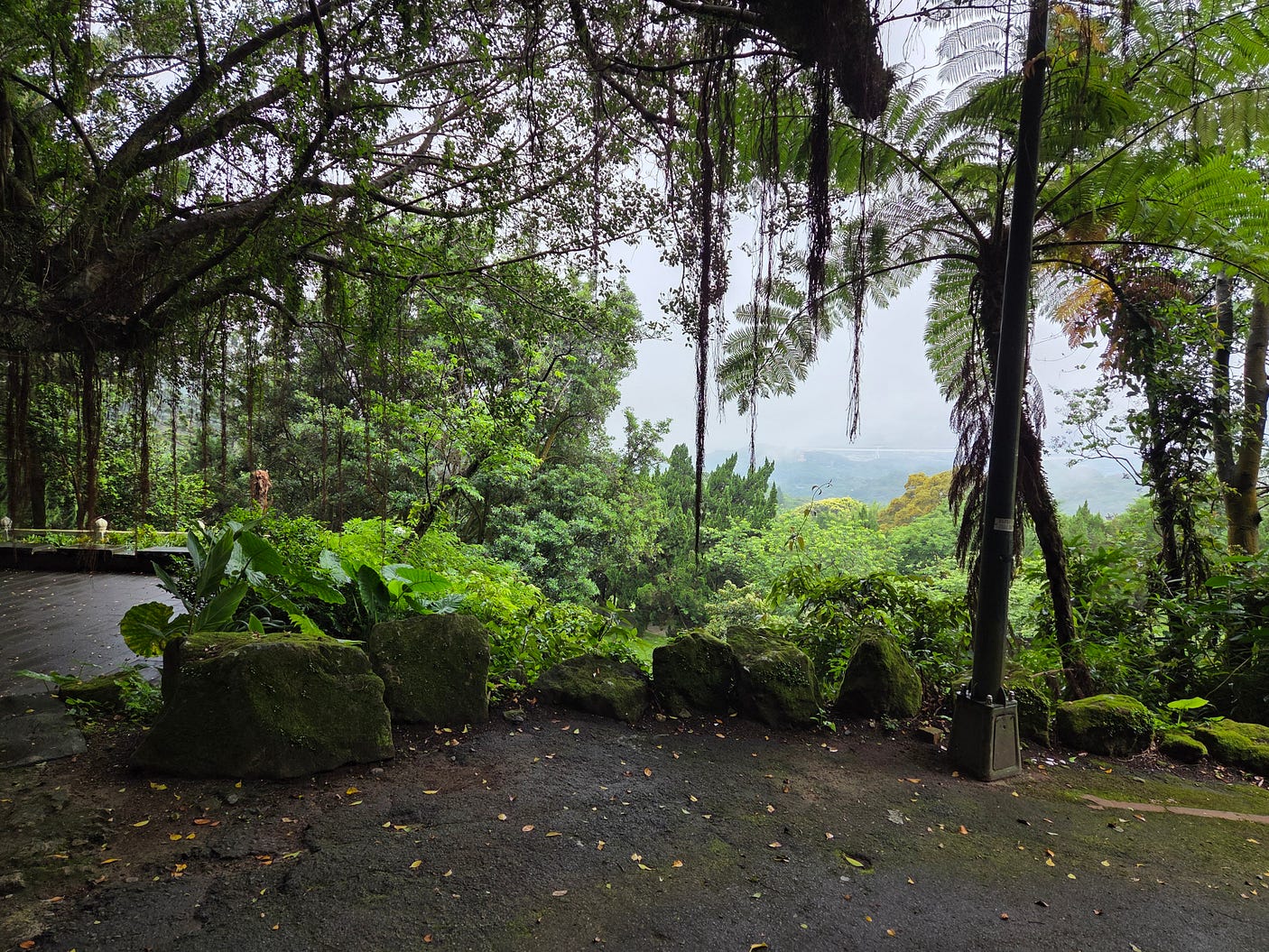
The place was so soggy, and so mossy, and so much of the vegetation almost the same, that I could practically have been in Auckland, or its own Waitākere Ranges.
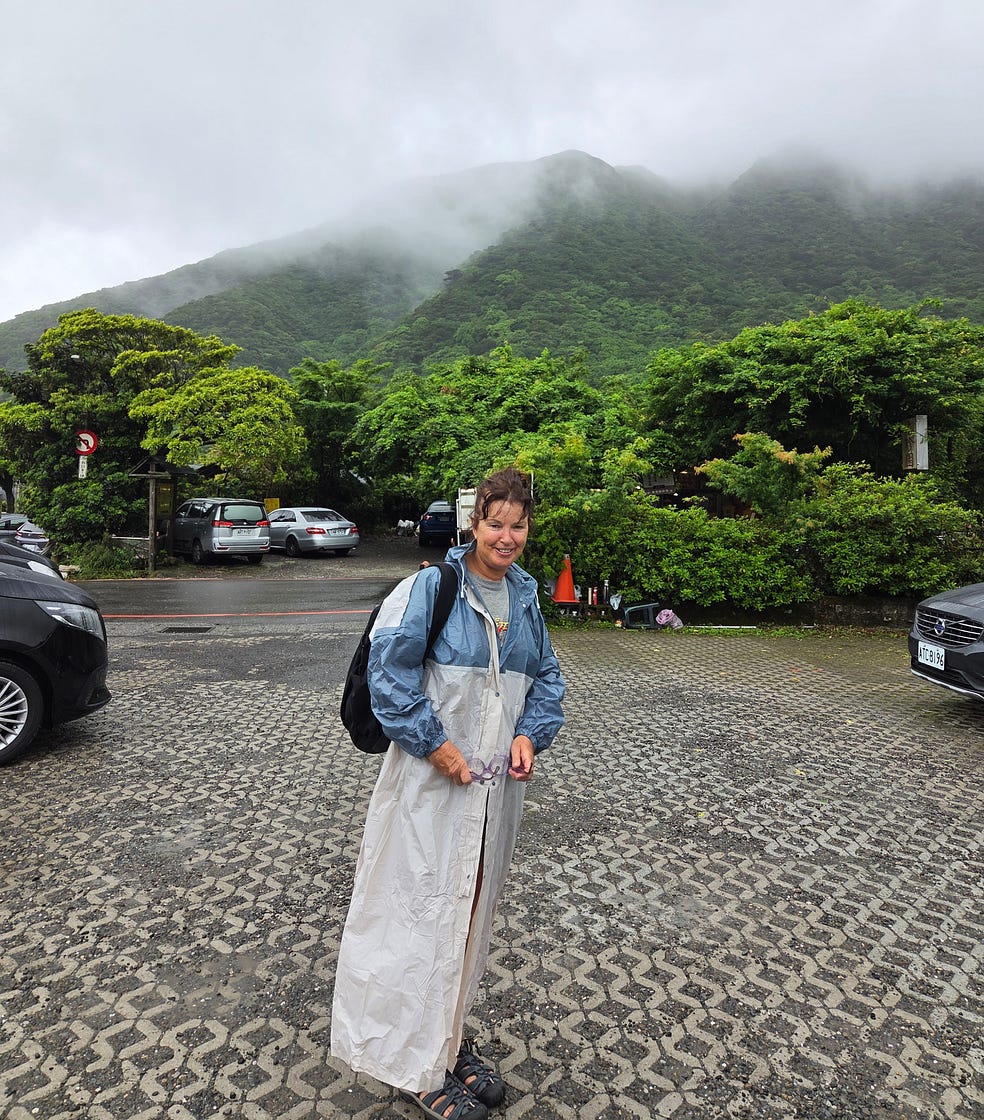
I made this video, in which I conclude that I am done with tours, which can be tiring, and just want to get on a bus and do my own thing!
Finally, as a traveller’s tip, you can translate Chinese characters on your smartphone with Google Translate, Pleco, or HanYou, each downloadable for iPhone or Android.
To be continued . . .
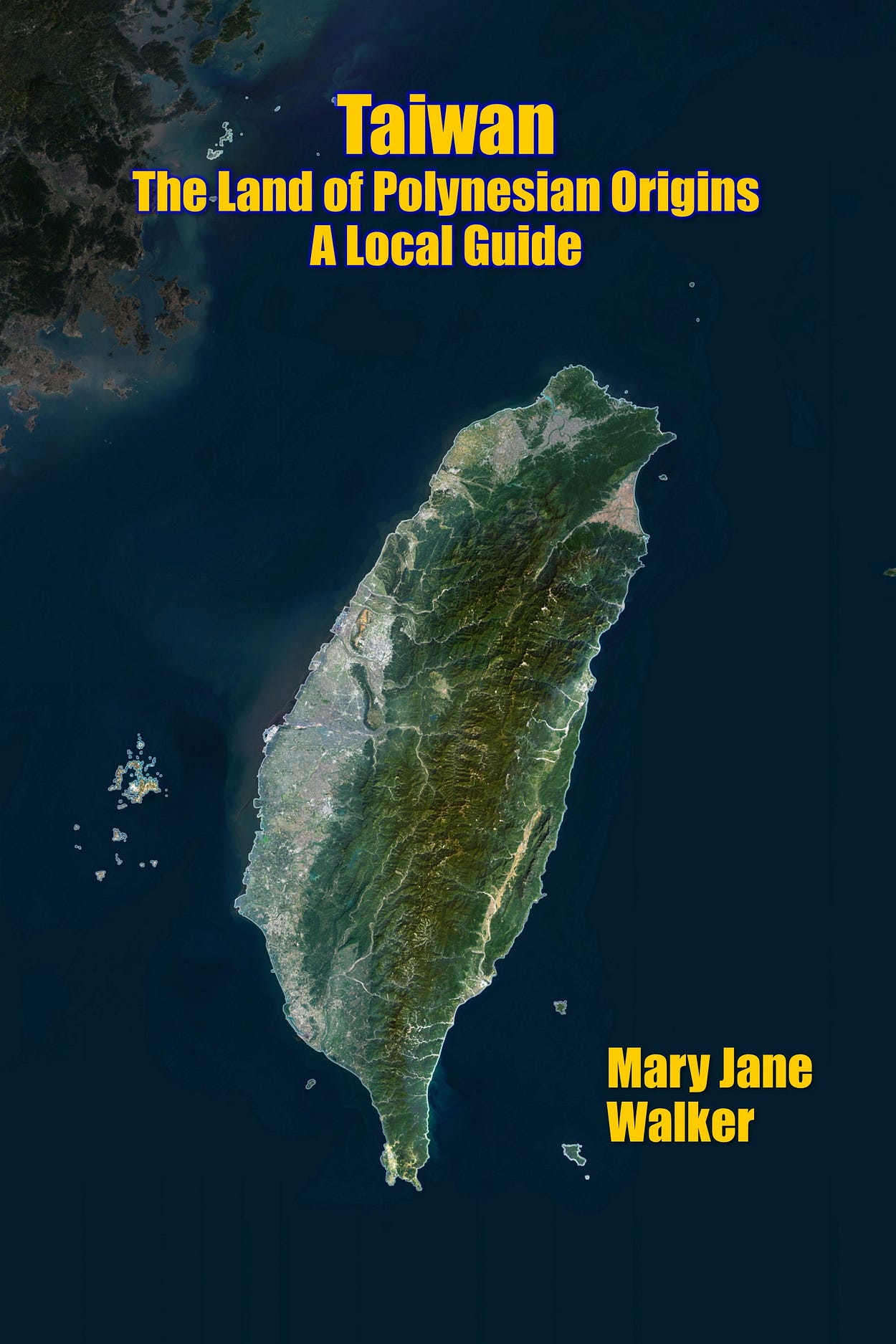
PS: Since this post was published, I’ve written a book about Taiwan — you can purchase it on geni.us/Taiwan.
Subscribe to our mailing list to receive free giveaways!

