Giveaways
AT the heart of the region called Hawke’s Bay, though the bay itself is called Hawke Bay, lies the city of Napier, a town that has literally risen out of the sea.

Napier is famous for a massive 1930s rebuild in the Art Deco style, following a calamitous earthquake and fire on the 3rd of February 1931, an episode of similar local significance to the 1906 San Francisco earthquake and fire.
A floor of the Hawke’s Bay Museum, downtown, is dedicated to remembrance of the 1931 disaster and its aftermath.
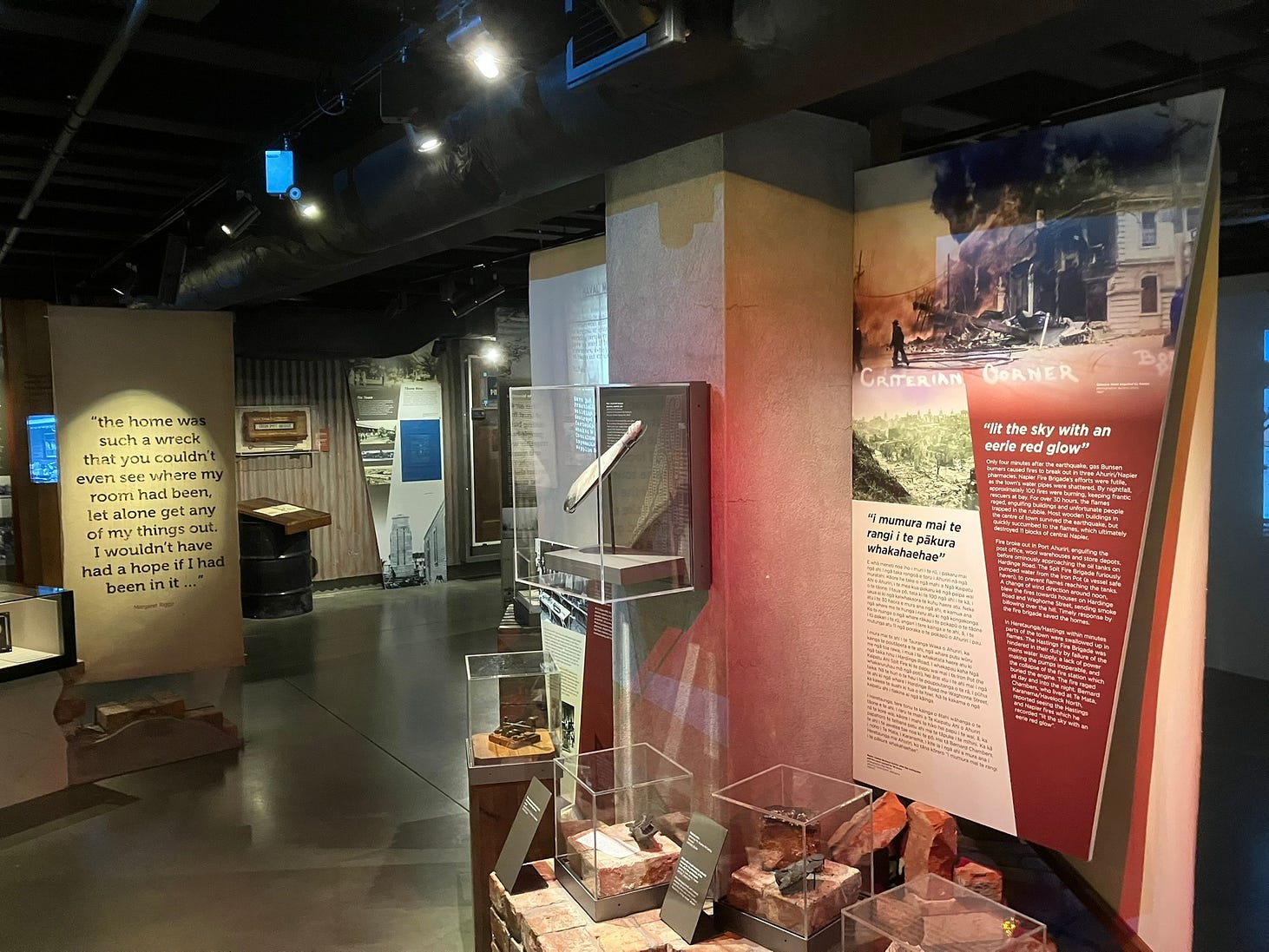
There was a replica of part of a house on a shaking table, to show what it was like:
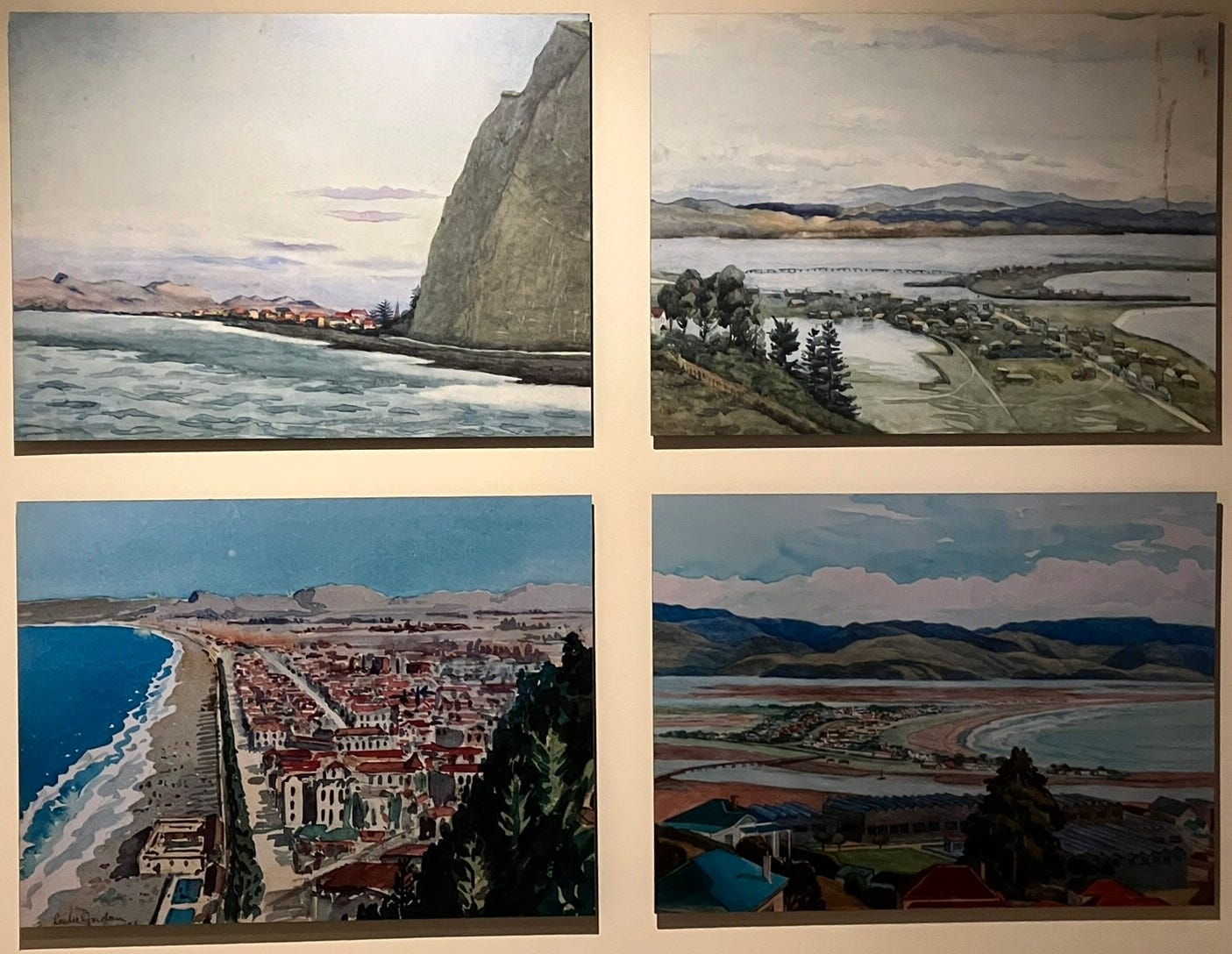
And some paintings of the aftermath:

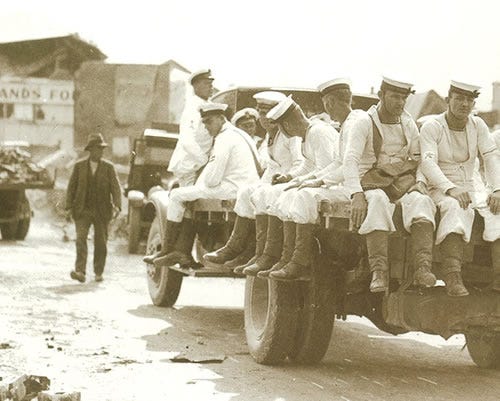
Photographs from the time reinforce the message of the paintings, by showing near total devastation in the commercial downtown area, along with images of sailors helping out.

A small British warship called HMS Veronica was in Napier’s harbour at the time, and its crew was soon joined by the crews of two larger warships based in Auckland, HMS Dunedin and HMS Diomede.
About 256 people were killed, a rather surprisingly small number considering the level of destruction.
As in San Francisco, much of the destruction was caused by the post-earthquake fires, which ravaged the city’s wooden buildings. Ironically, provided they were not consumed by the fire, wooden buildings otherwise came through the earthquake quite well.
The buildings that actually fell down were nearly always the ones that were made of brick; a fact so noticeable that construction in unreinforced masonry was banned throughout New Zealand soon after the earthquake.
However, the earthquake also uplifted the city, creating a large amount of additional land.
Much of the reclamation from the sea that can be seen in the following maps, of Napier in 1865 and then of Napier in 1965, was the doing of the 1931 earthquake, which transformed the city built on an outcrop known to Māori as Mataruahou and to the colonists as Scinde Island, and its attendant sandspits and tombolas, into a city that now has a room for new suburbs and an airport.
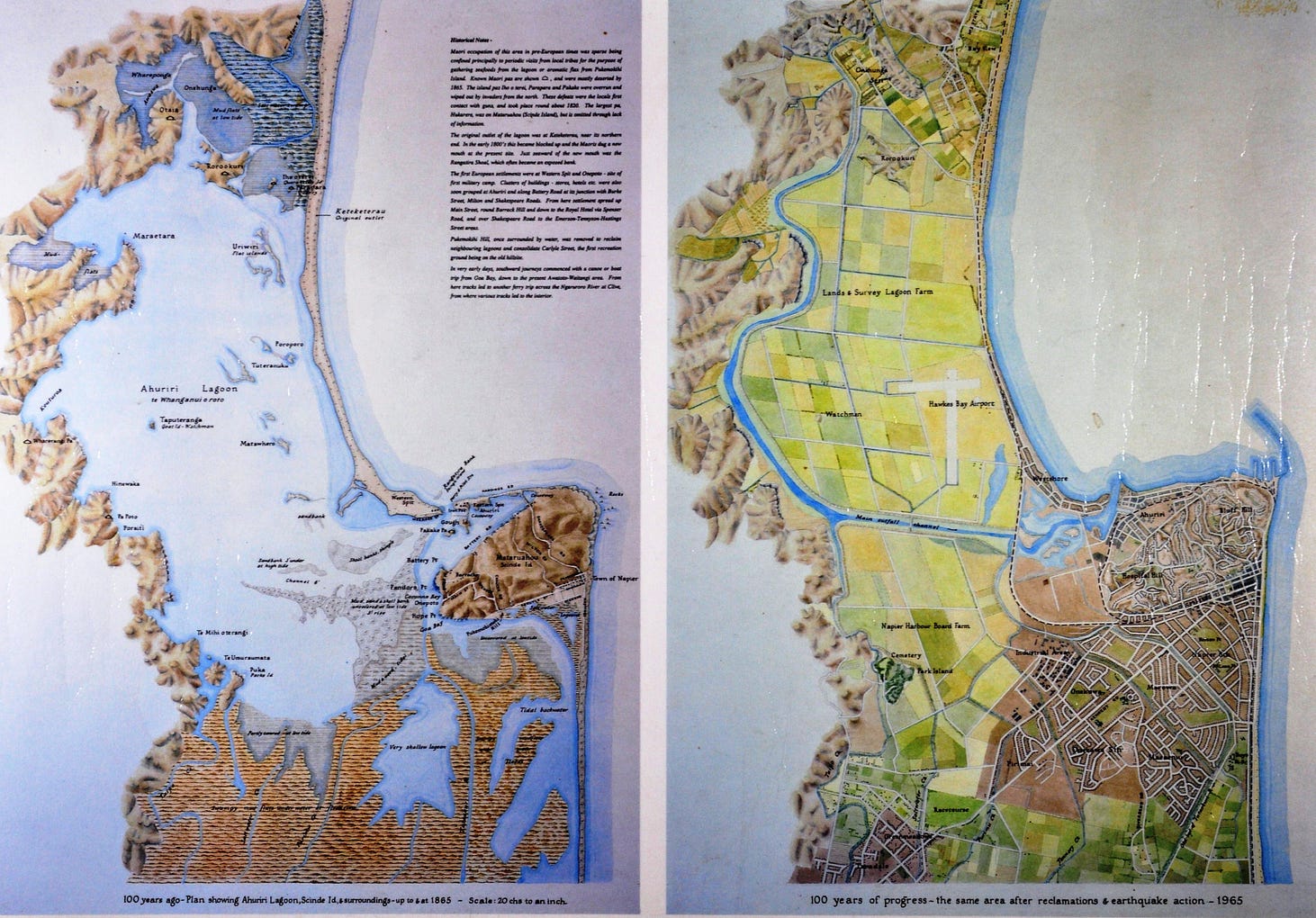
In English, Scinde Island is now called Bluff Hill, since it is no longer an island.
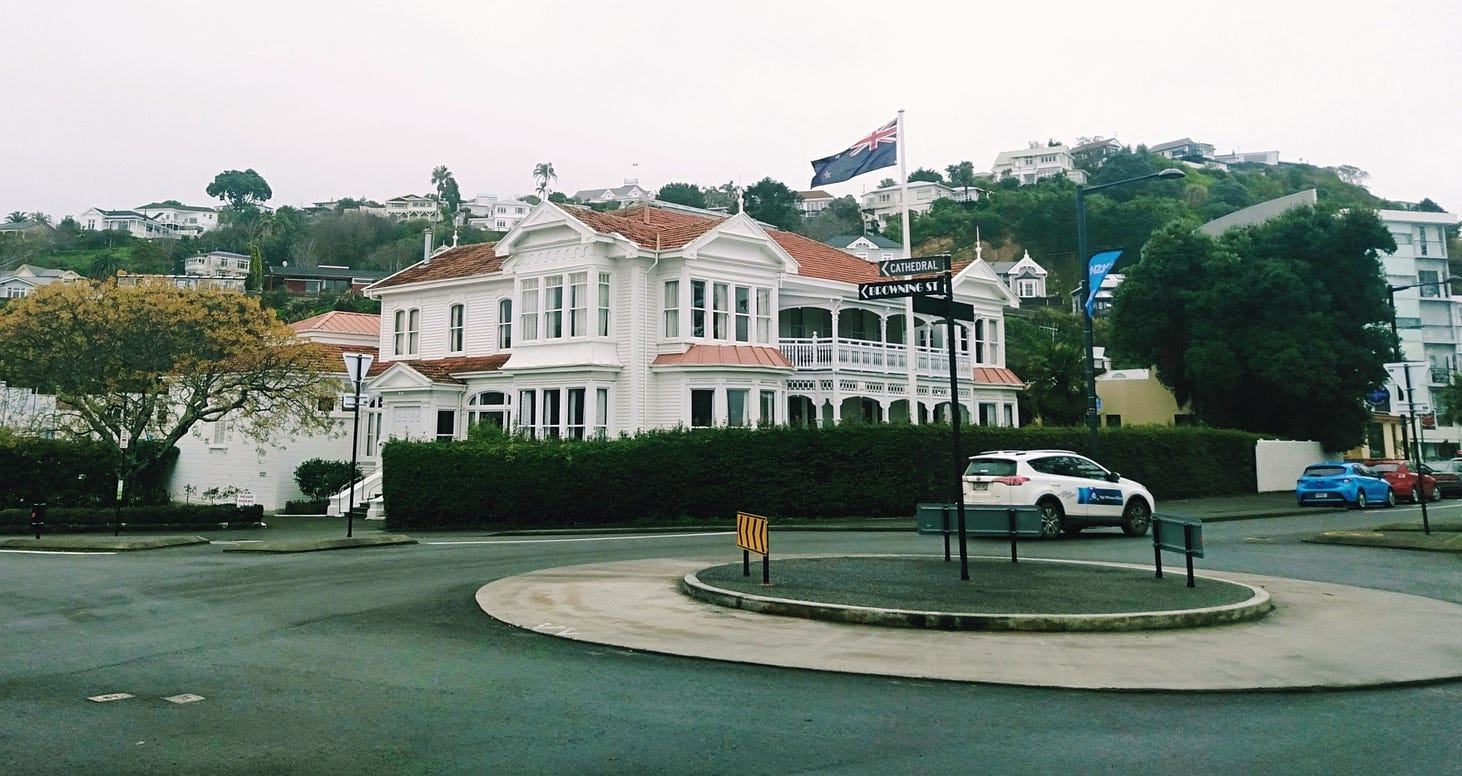
A great many of the older wooden buildings survive on Bluff Hill, or just beneath it, as this area was spared both the worst effects of the shaking — usually stronger on muddy ground — and the fires that followed.
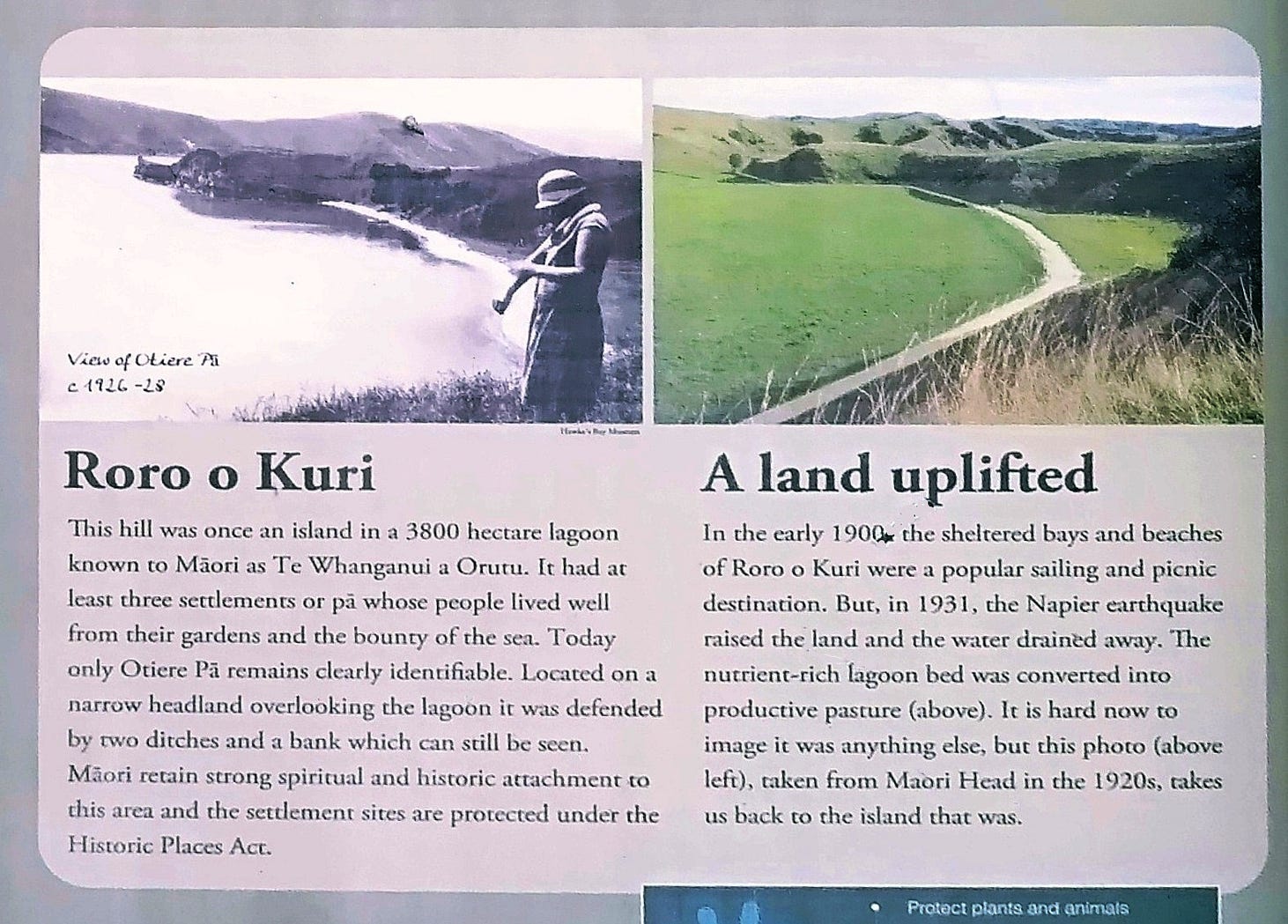
I saw a remarkable pair of images on a billboard describing the Whakamaharatanga Walkway, around what used to be the beaches of some more hilly island in the region.
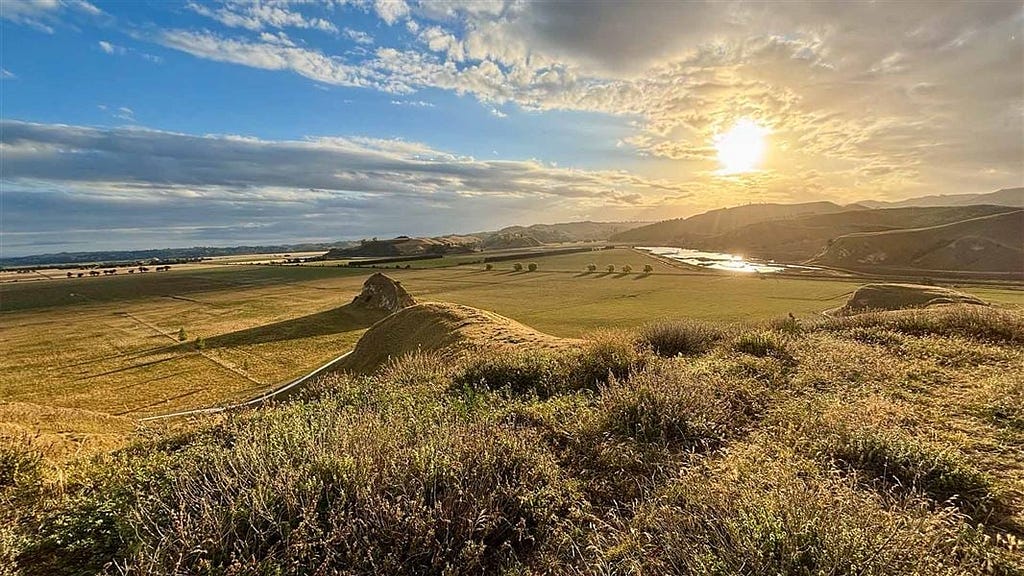
‘Nuff said! The next photograph shows the same area from another angle, a view of what was once coastal cliffs and a bay reaching up to them, with a rock that would have been an island just offshore.
A rapid post-earthuake rebuild in the then-fashionable Art Deco style produced a city that came to be known as the ‘Nice of the Pacific,’ after the French Riviera city of that name.

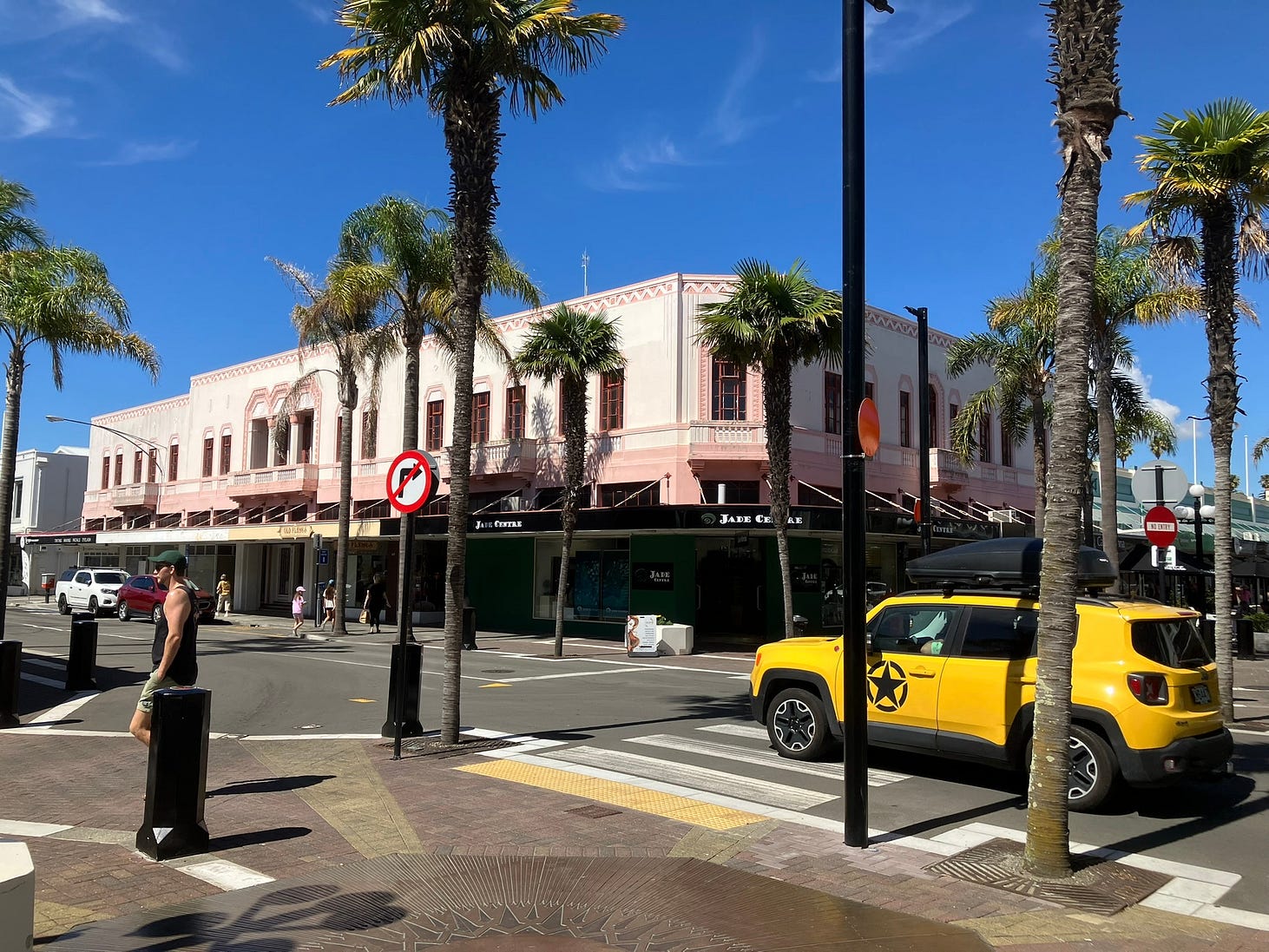
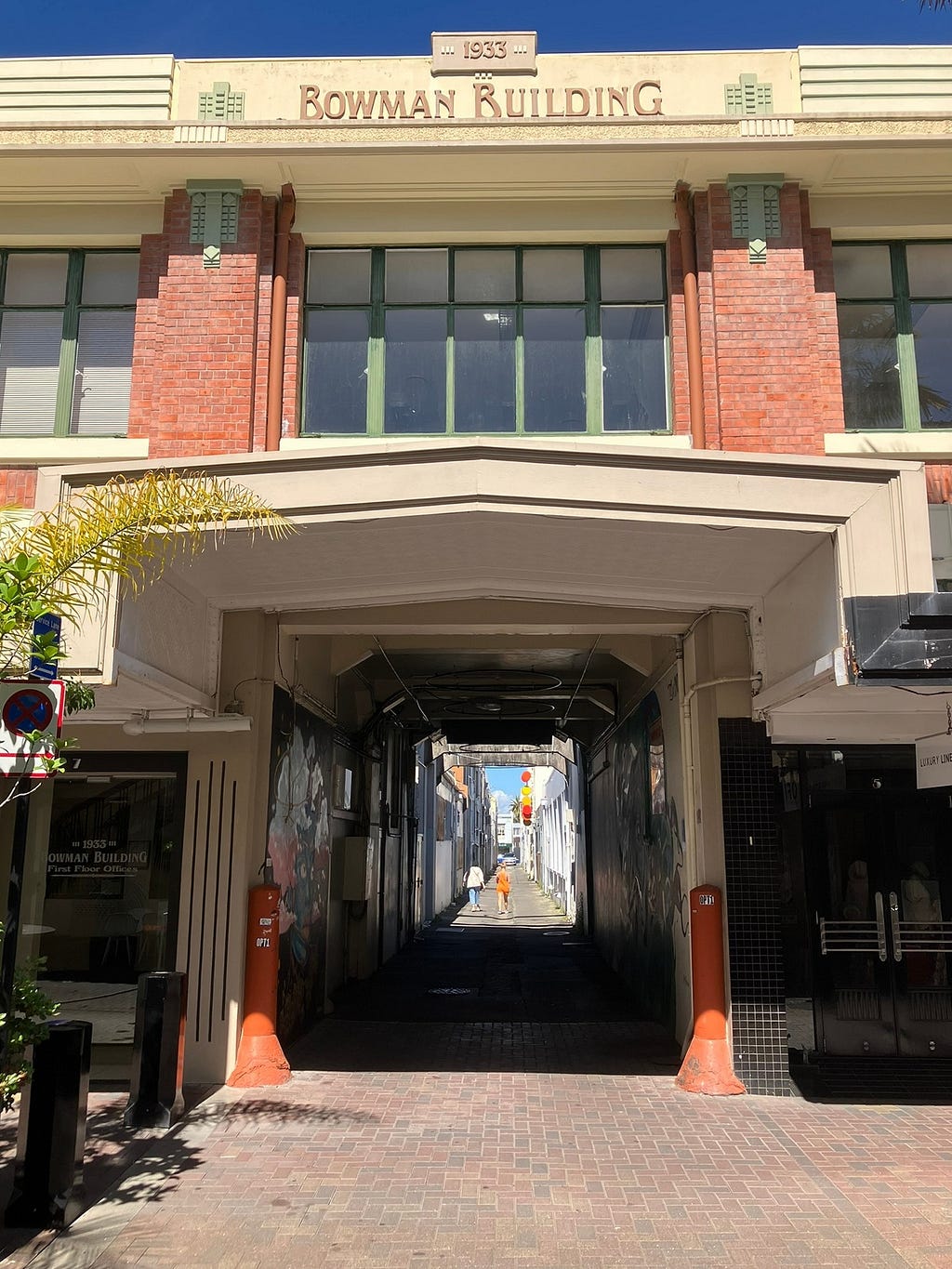
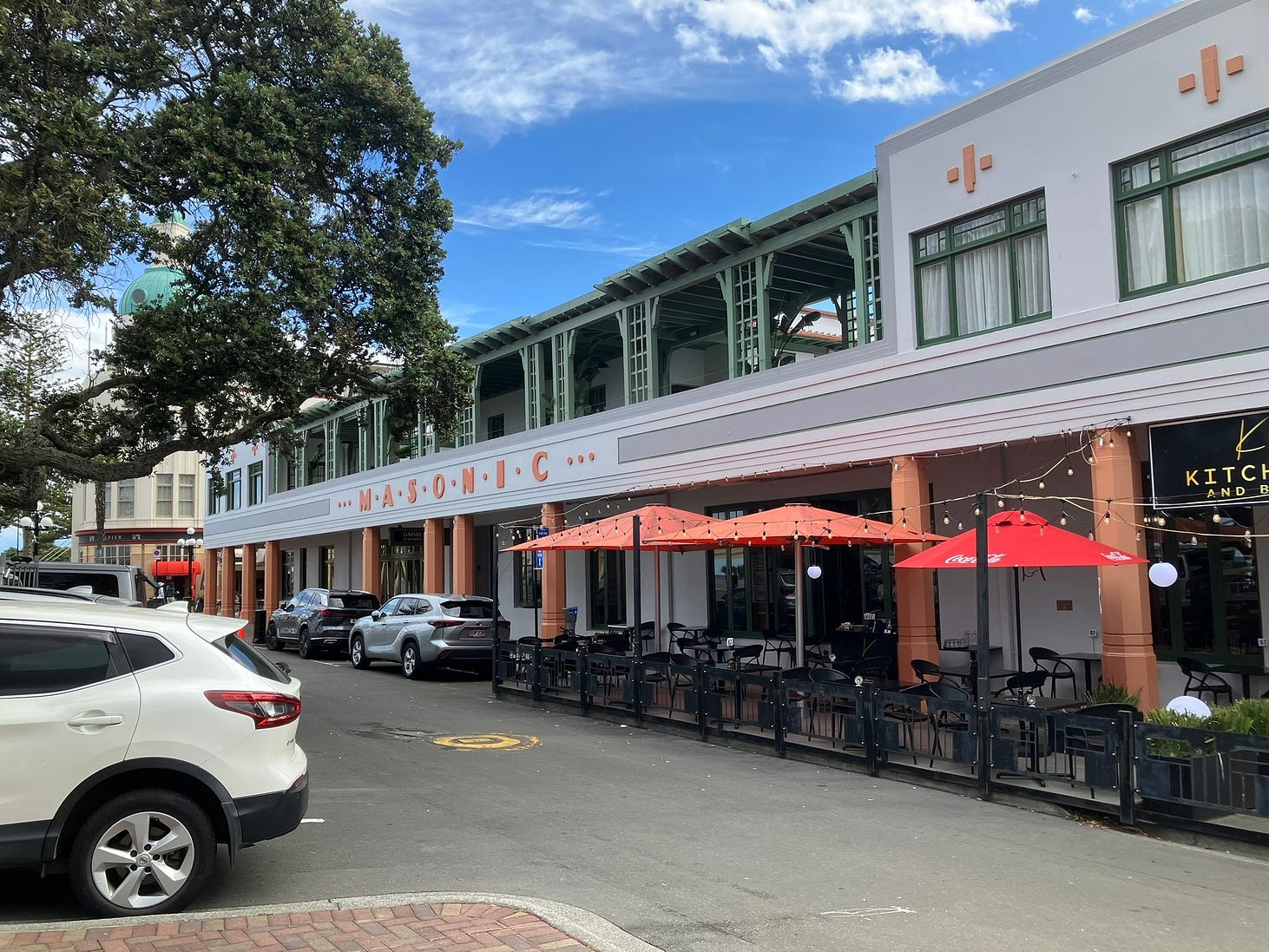


And so on — there are a great many more Art Deco buildings in Napier, and I really urge people to look them up, or better still, visit Napier and walk around!
All the same, as the museum display above indicates, it wasn’t too long before all that Art Deco “was already beginning to appear dated.”
By the early 1980s, some of Napier’s Art Deco had already been demolished, replaced by the generally much worse architecture of the mirror-glass era. The same fate beckoned for the remainder.
However, the fiftieth anniversary of the earthquake, in 1981, reignited local and even international interest in Napier’s Art Deco heritage, and the importance of preserving what was left of it.
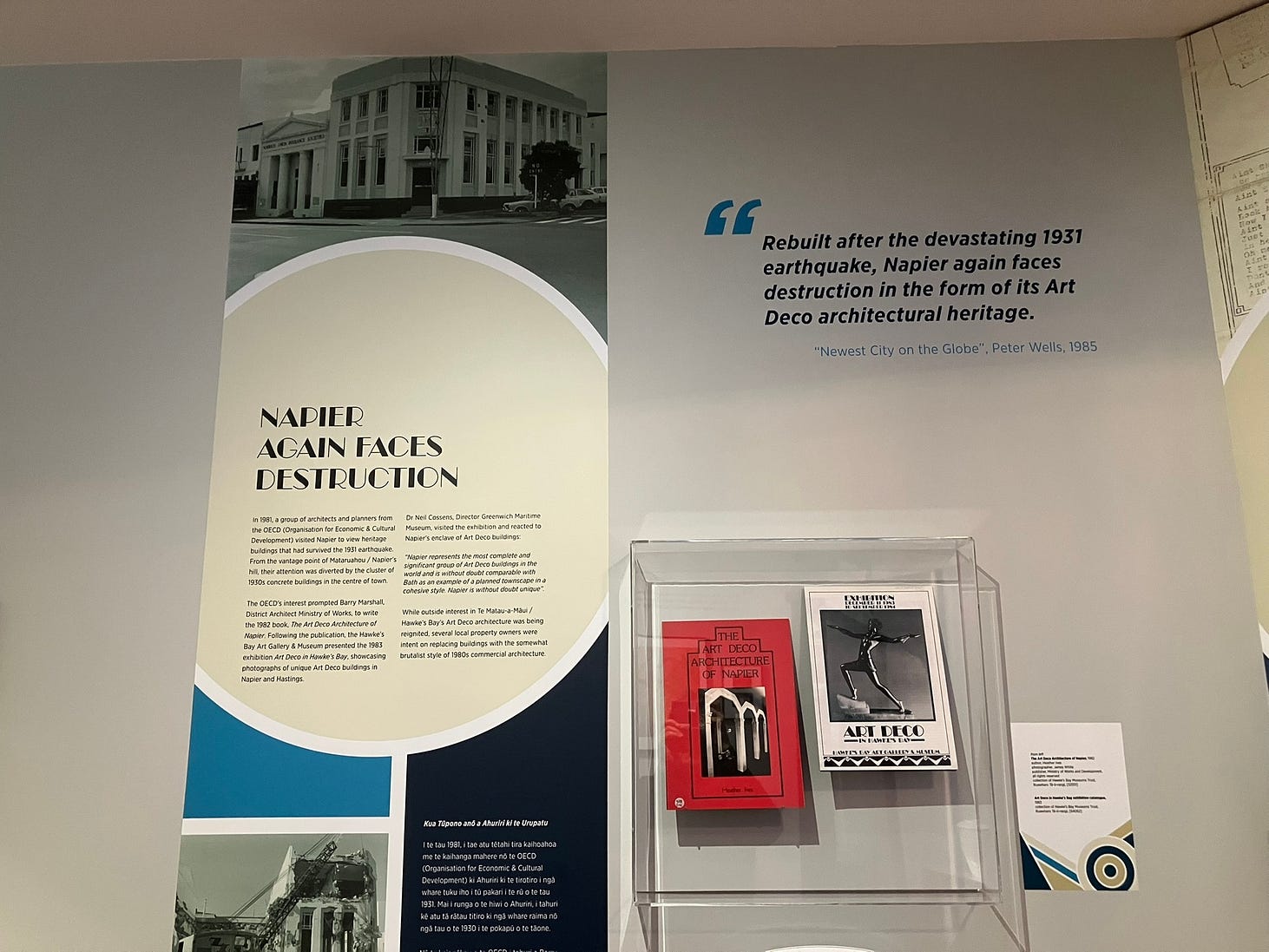
A portion of the text, above, deserves closer reproduction:
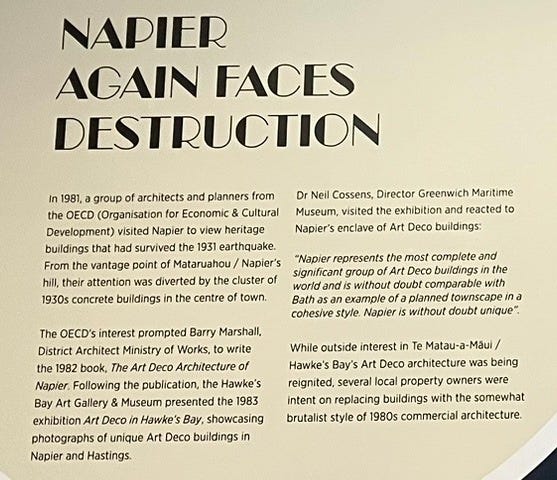
Heritage often goes through a sort of ‘Death Valley’ like that, with people thinking it is merely old junk for a while, its destruction liable to happen any day, until it becomes old enough to become interesting again — provided, of course, that it hasn’t been demolished in the interim. Napier’s Art Deco was no exception to this rule.
Anyway, by the 1990s, the locals had become aware that their Art Deco buildings, saved from destruction, that could actually be marketed as a tourist drawcard, with a marketing plan and, eventually, an annual Art Deco festival.

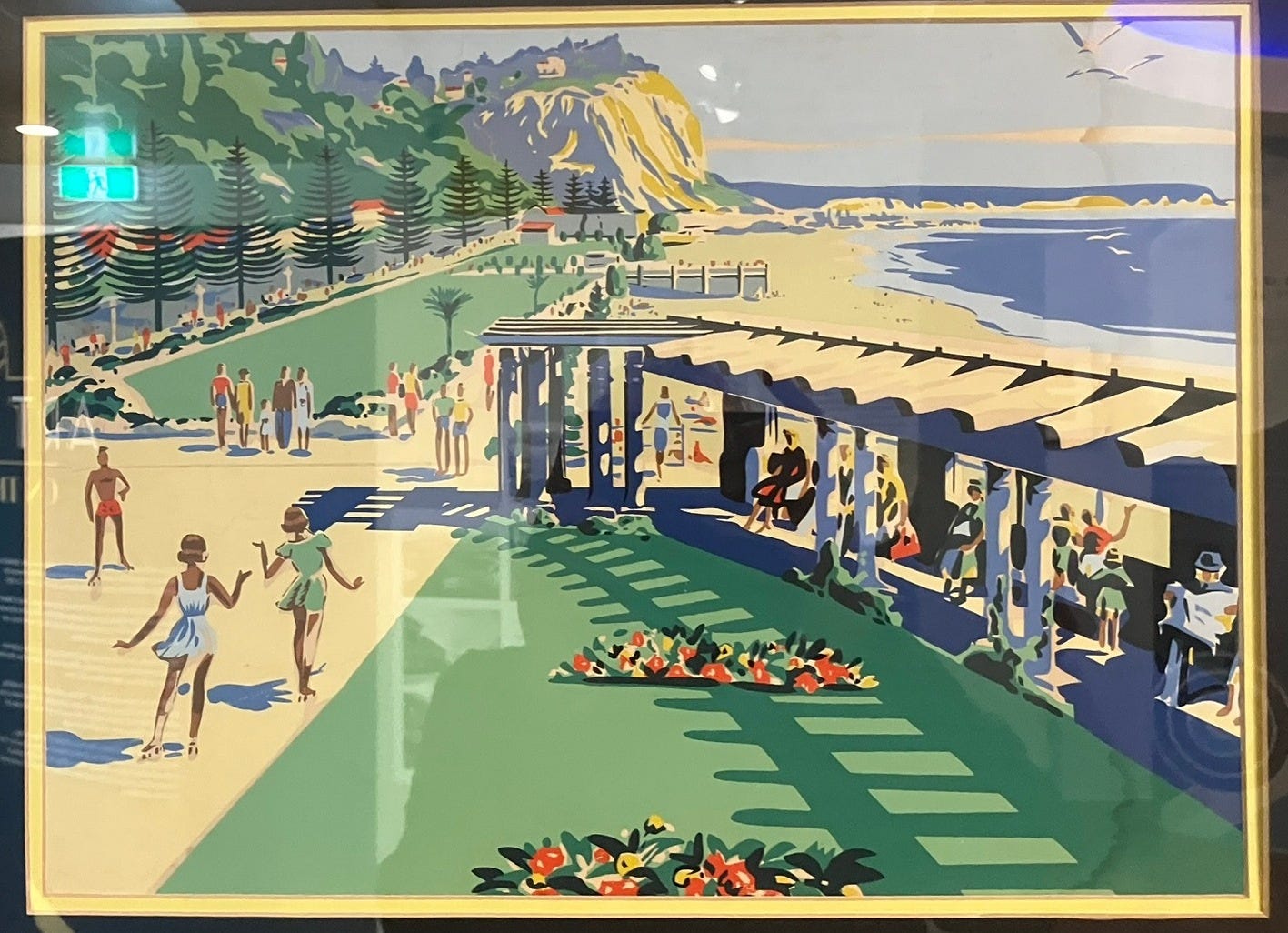
What really makes it work — I think — is not just the Art Deco buildings themselves but the way that they actually are on a Riviera — the stately, tree-lined Marine Parade — all of which makes the claims of the Nice of the Pacific more than just words.
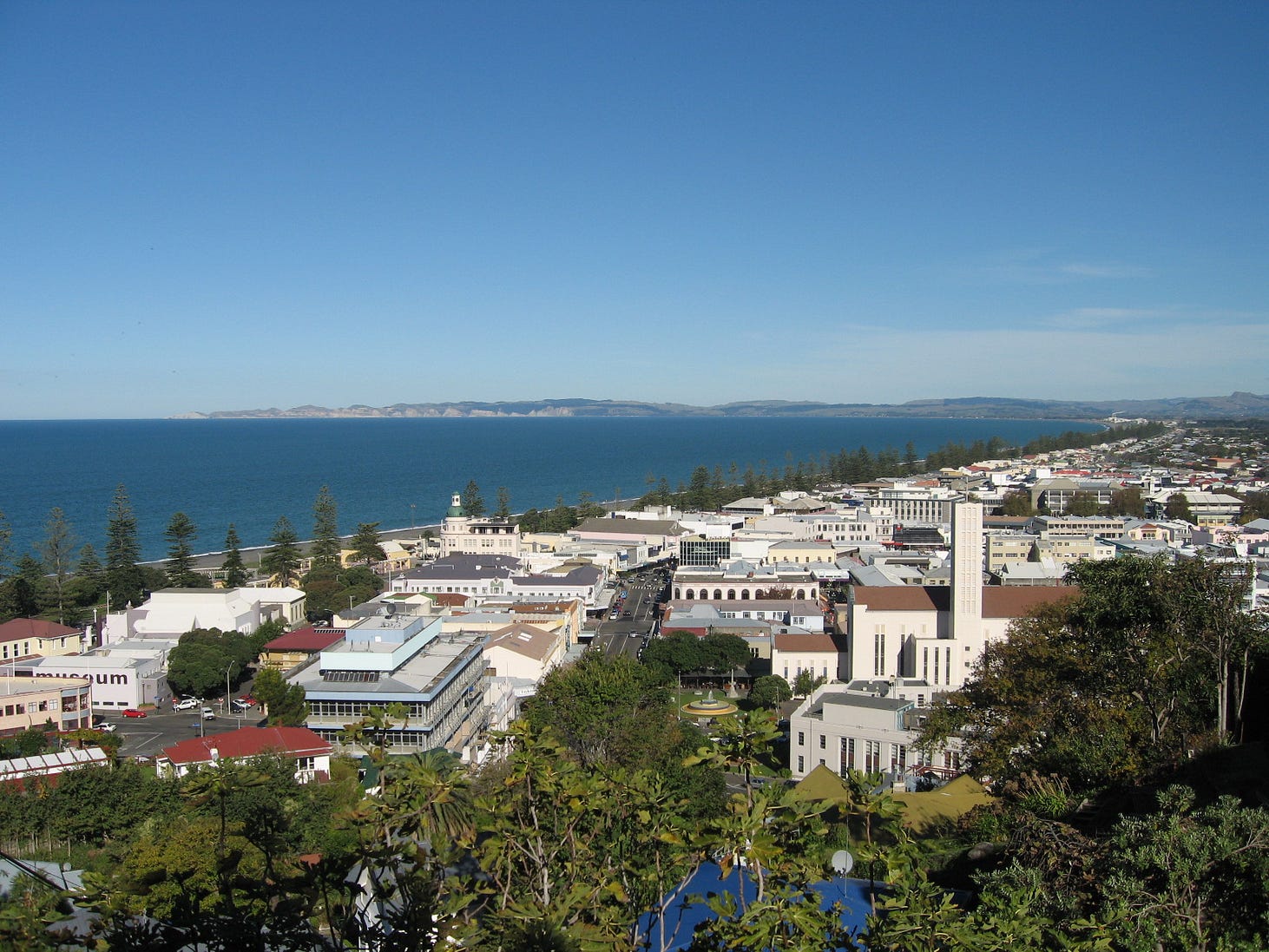
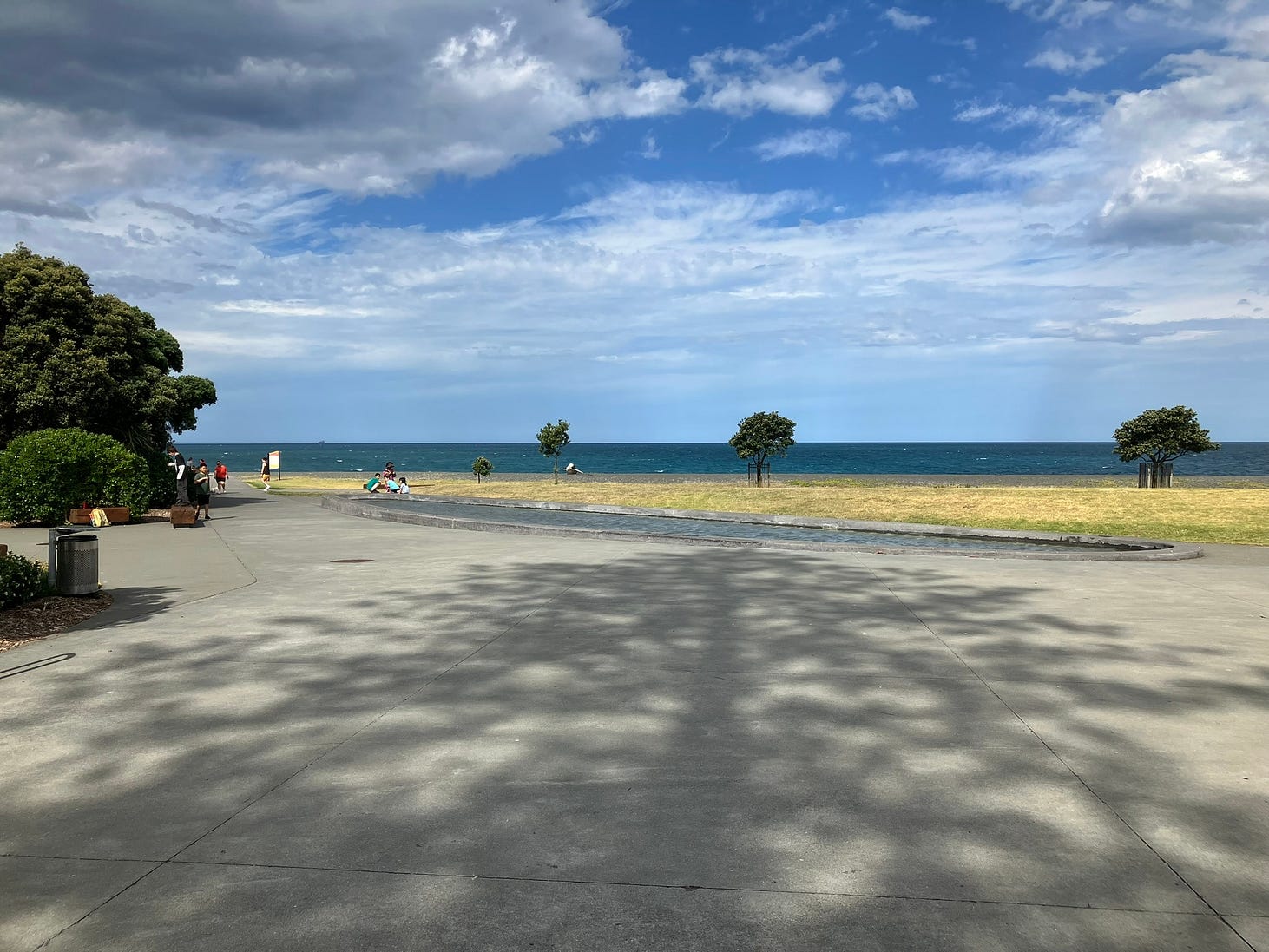
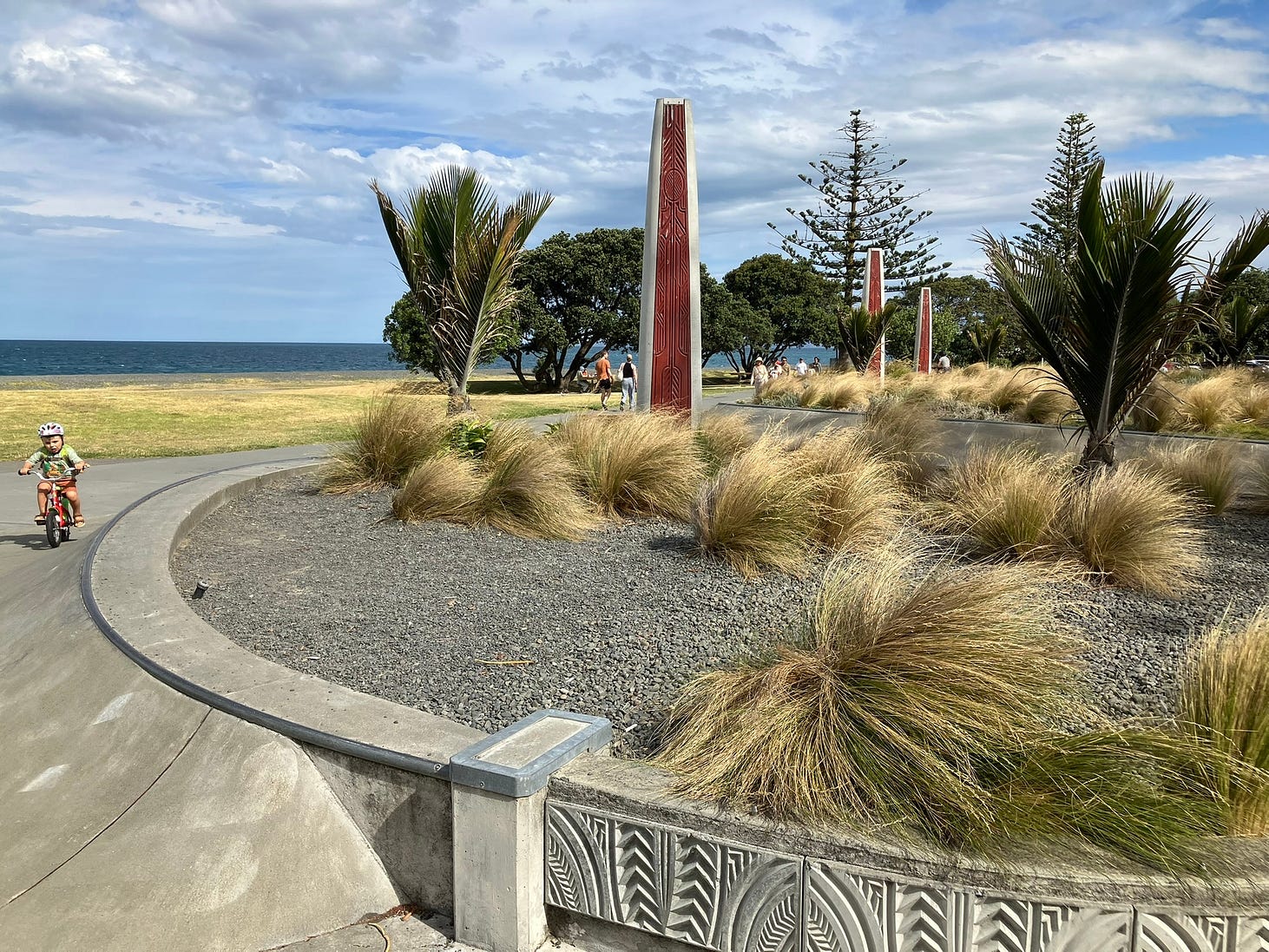
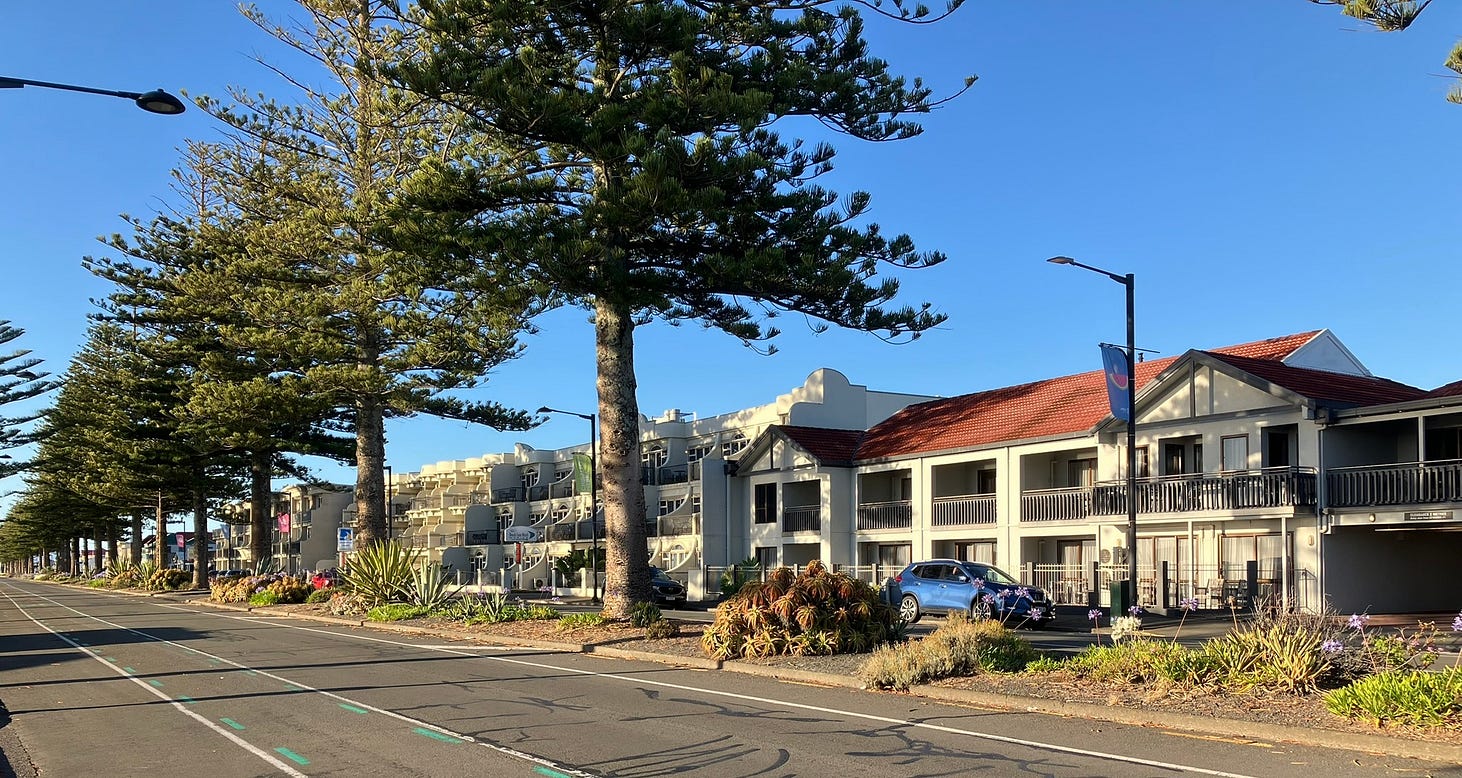
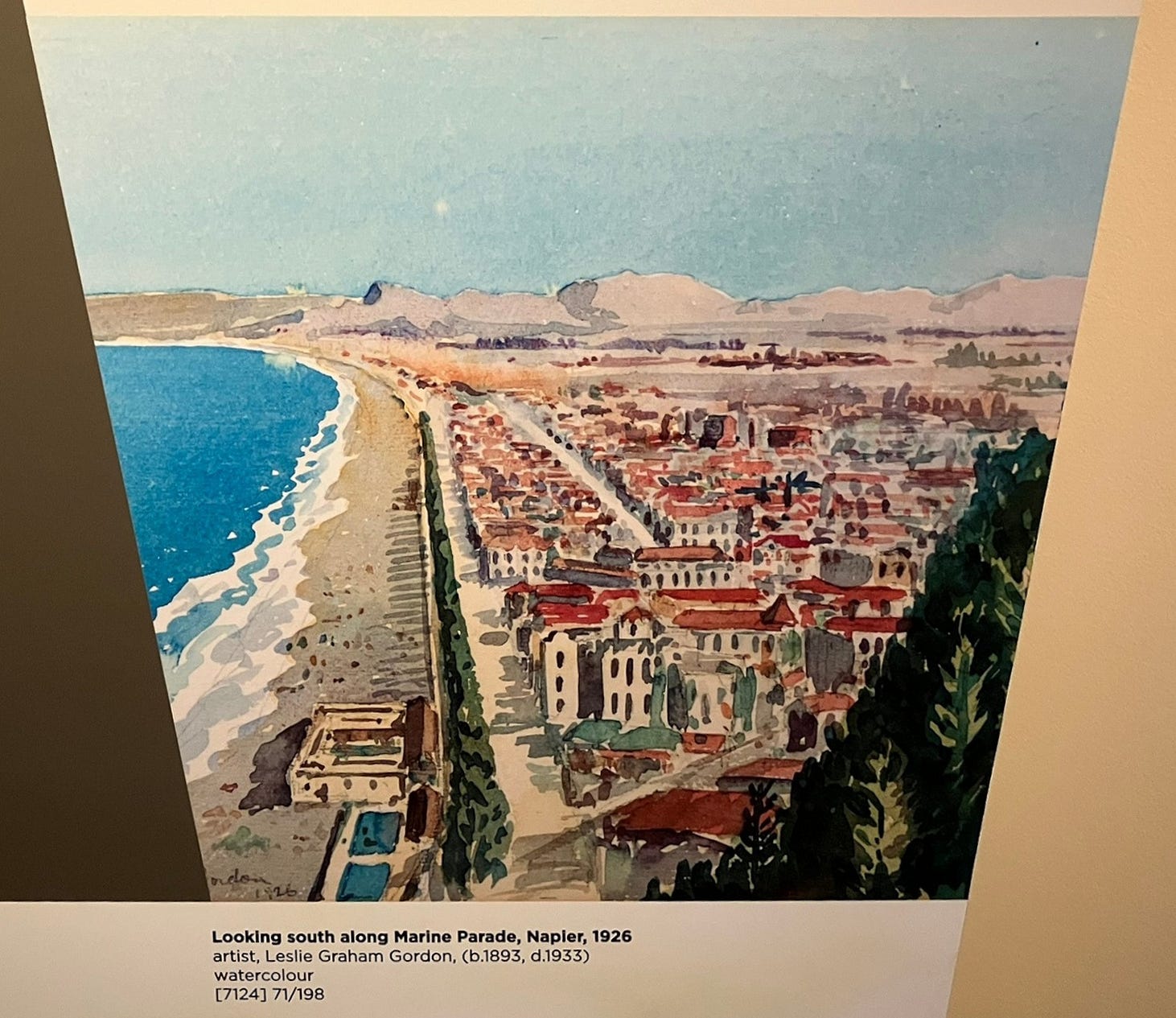
Though it has become more built-up in the 95 years since the earthquake, Marine Parade was already there, complete with trees, beforehand, as we can see from the following painting done in 1926 by a local artist.
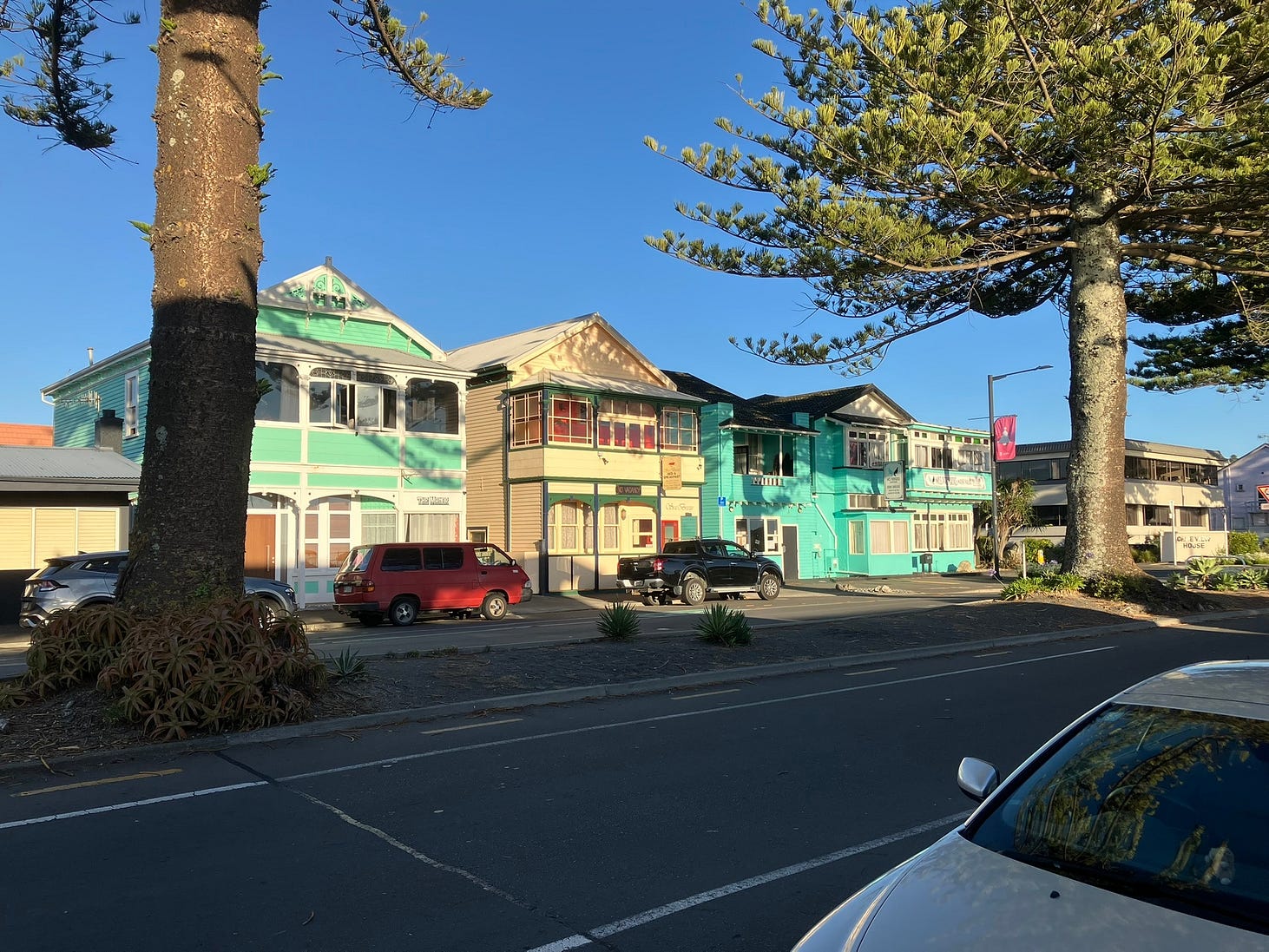
A handful of older wooden buildings, survivors of the quake that were missed by the subsequent fire, still exist amid all the glamorous modern hotels.
For a long time, one of the attractions of Marine Parade was Marineland, opened in 1965, a facility that featured performing dolphins and seals.
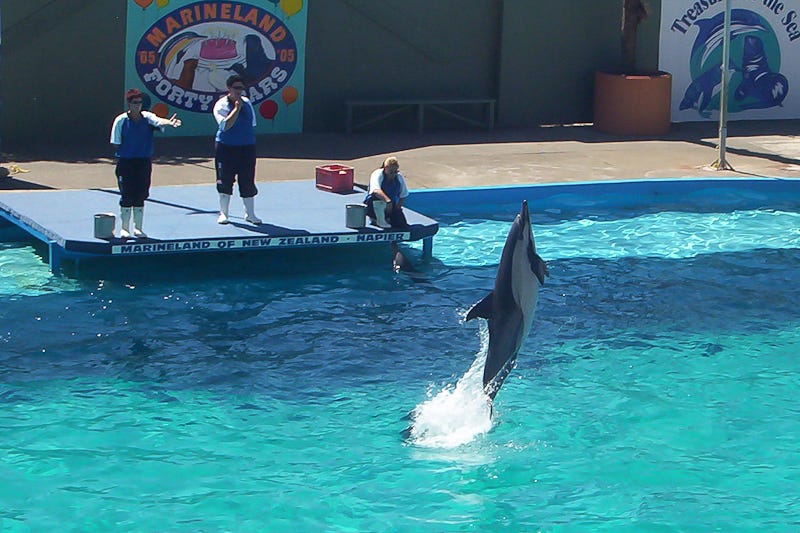
In its day, Marineland used to be one of Napier’s main tourist attractions, in fact more so than the Art Deco buildings. If you went to Napier, you had to go to Marineland.
In more recent times, however, performing seals and dolphins came to be seen as a bit naff: the public was now more interested in freeing the marine mammals than watching them perform.
And so, Marineland closed down in 2008.
But in its place (though not exactly on the same spot) there is now the National Aquarium of New Zealand.
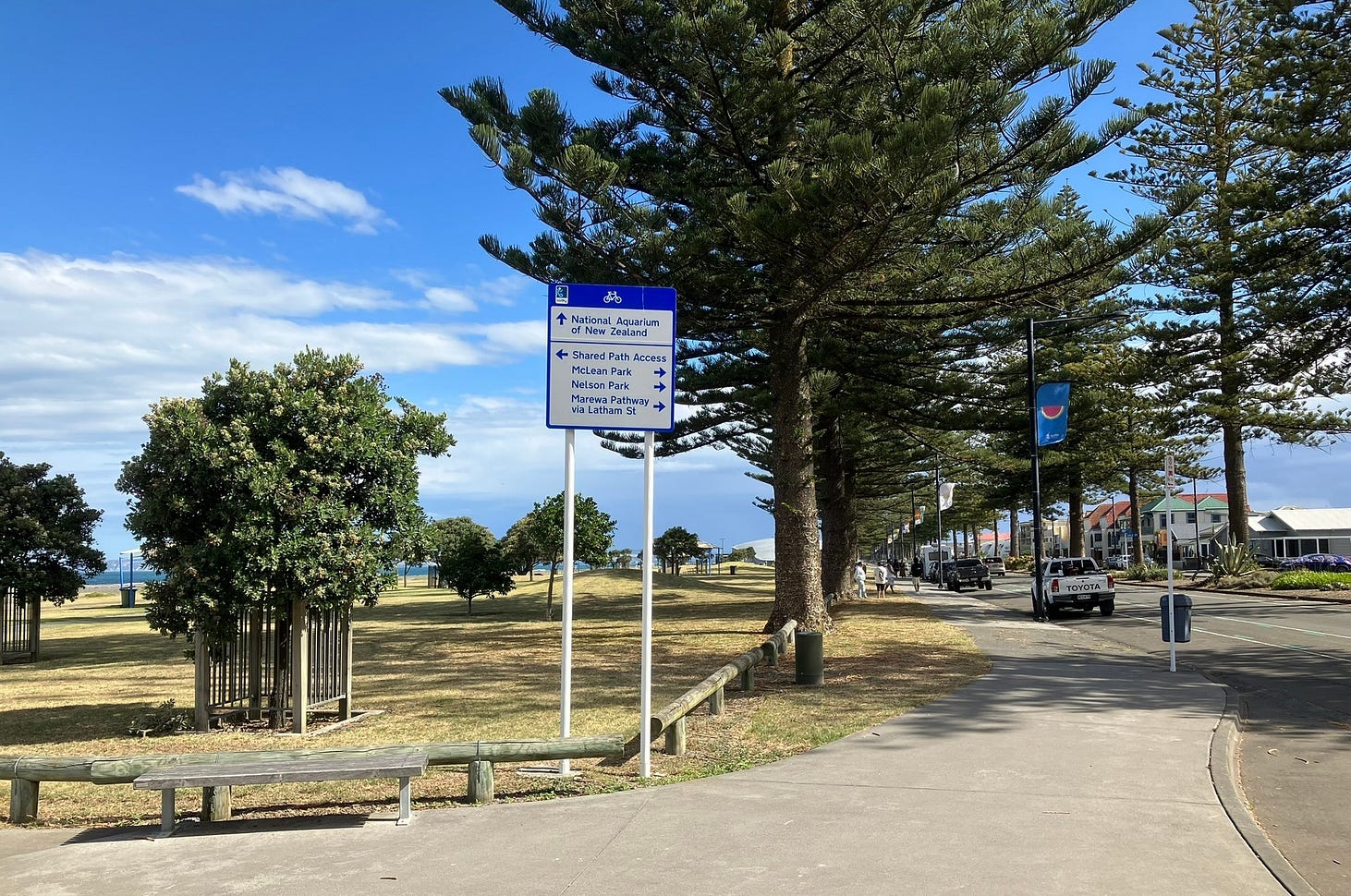
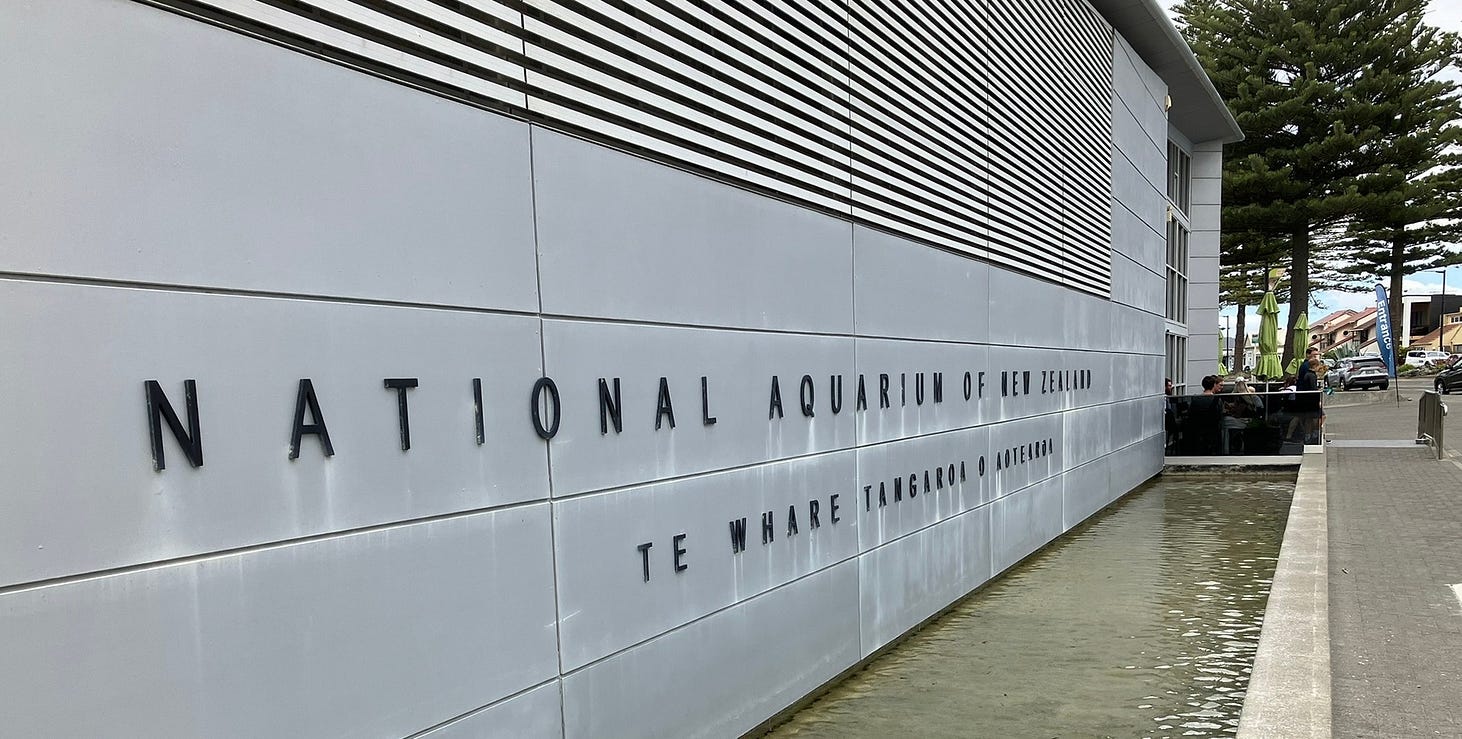
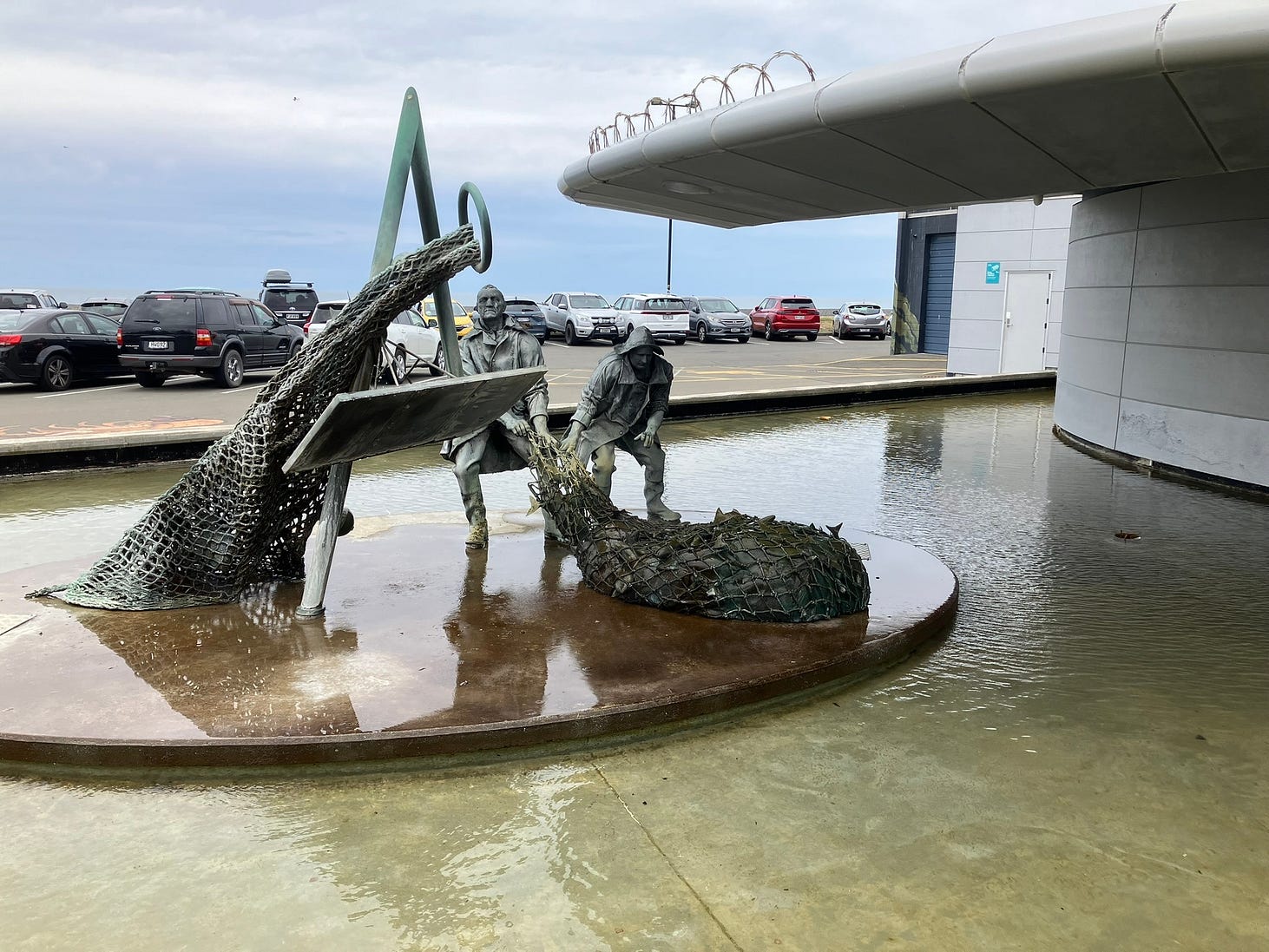
Next to the National Aquarium, there was a terrific sculpture called ‘Trawlermen.’
Going inside, you are greeted by the mouth of a giant shark.

But the main attractions are really, of course, the aquariums, of which there are actually several, on two levels.

The biggest one is the Oceanarium, which has a walk-through tunnel from which you can see fish swimming overhead. The tunnel tends to be a bit noisy inside, as whenever a shark or anything like that swims near, the kids all start screaming.

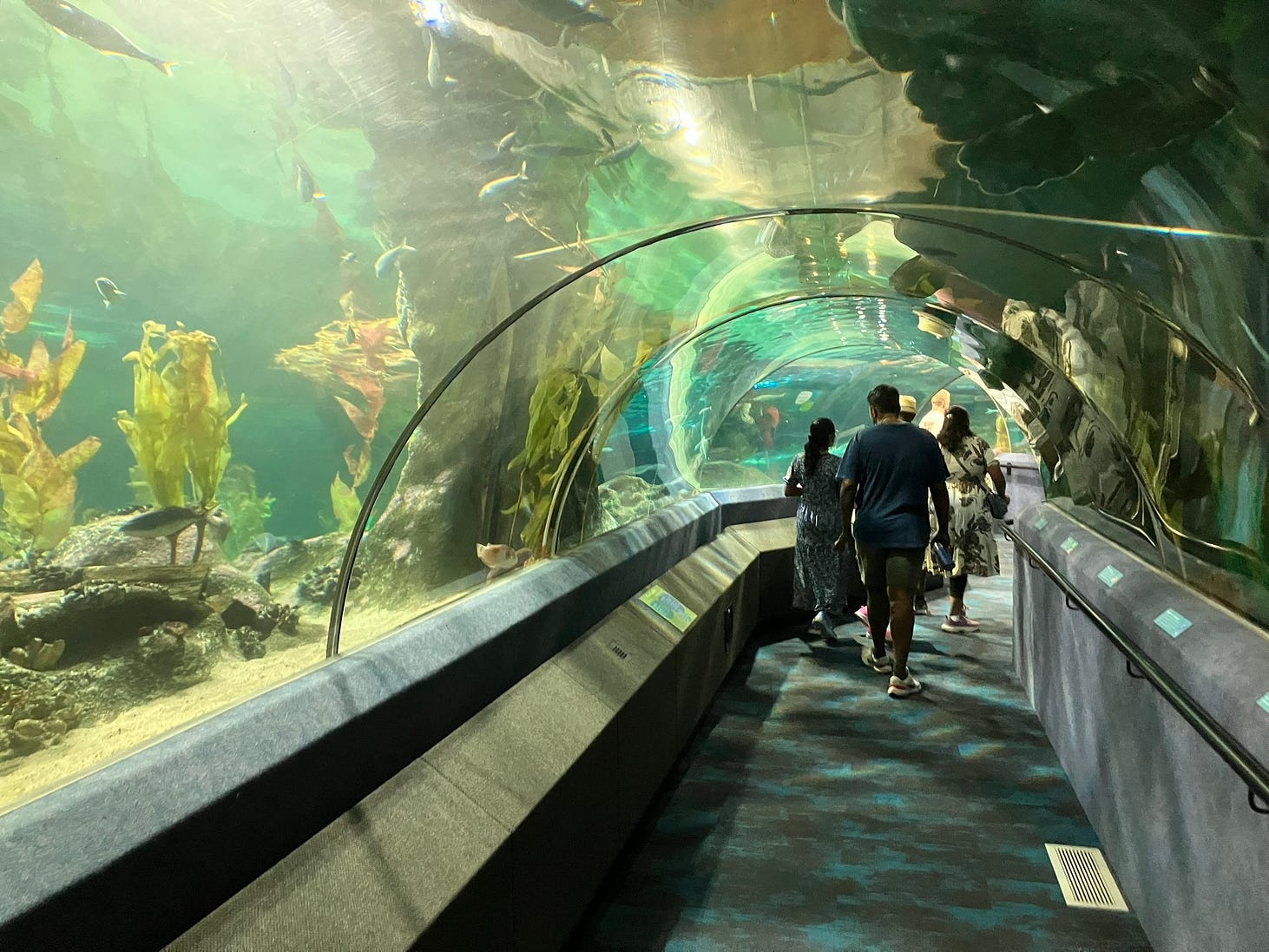


Here’s a video of some of the fish swimming about in various tanks, including the huge walk-through oceanarium:
Other major attractions included tanks containing a huge Hawksbill turtle, and other aquatic reptiles, recorded in a video here:
And a penguinarium:

They also had some kiwis snuffling around under dim red light:
Next week, I will delve further into the history and culture of Napier, including its Māori myths and facts, and a park dedicated to Polynesian navigation by the stars.
If you liked this post, check out my book about New Zealand’s North Island! It is available for purchase from this website, a-maverick.com.
Subscribe to our mailing list to receive free giveaways!

