Giveaways
AS we come to the end of another year, I’m keen to reflect on the coming of Christmas and also the ironies of how it differs from Christmas in the Northern Hemisphere.
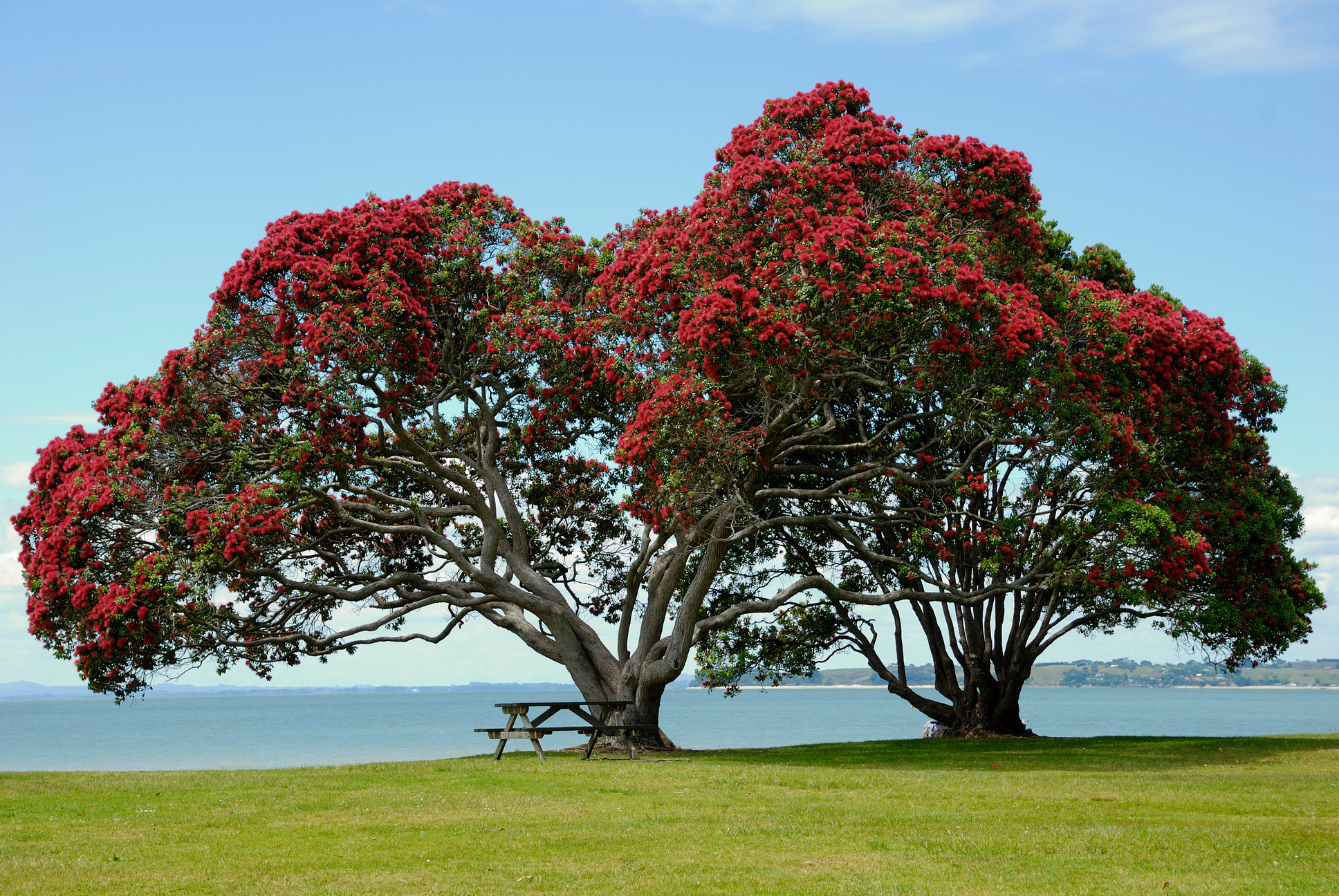
Here, of course, it’s the time of the summer holidays and the blooming pōhutukawa and rātā trees with their brilliant blossoms, usually crimson in the wild, though pink and yellow varieties have also been bred artificially.
Rātā, of which there are ten species in New Zealand with appearances ranging from large trees through bushes to vines, and pōhutukawa, which looks like a tree-type rātā and of which there are two New Zealand species (mainland and Kermadec), belong to the genus Metrosideros, whose members have distinctive, bottlebrush-like flowers.
Because they are so closely related, and because rātā themselves are so diverse, the distinction between rātā and pōhutukawa might seem a bit arbitrary.
The distinction springs, perhaps, from the fact that rātā thrive in dense forests, often inland, while pōhutukawa tend to exist as solitary trees, or in small clumps, on the coast.
Rātā, especially the southern rātā, Metrosideros umbellata, are also more tolerant of cold than the pōhutukawa, which only grows naturally in the warmer parts of New Zealand or on the Kermadec islands and is thus firmly linked in the mind’s eye with holidays on warm, subtropical beaches.
.jpg)
Rātā and pōhutukawa are known in Māori culture as rākau rangatira, or chiefly trees. According to a scientifically and culturally informative article by Tony Silbery and Erin Kavanagh-Hall, ‘Rātā — a rakau rangatira,’
Rātā has great significance in Māori culture. According to legend, Tawhaki, a young Maori warrior, climbed one of the great trees to find heaven, seeking help to avenge his father’s death. He fell to earth and the crimson flowers are said to represent his blood. The rātā was also valued by Māori for its medicinal properties. A concoction made from rātā bark and water was used to heal ringworm and applied to open wounds. Crushed and boiled bark was applied to bruises and ingested for the common cold, leaves were chewed for toothache, and nectar consumed to soothe a sore throat.
There is also a legend about a hero named Rātā, who kept trying to cut down a great tree without the appropriate incantations, and found that the gods were constantly re-erecting it:
As for the pōhutukawa, its greatest source of fame is the fact that an 800-year-old specimen at Cape Rēinga is said to be the tree from which spirits either jump to attain the underworld or climb down its elaborate roots to the same end.
On a more mundane note, you quite often see pōhutukawa and rata trees on city streets as well. The pōhutukawa, in particular, likes to grow sideways into empty spaces, which in its natural state would mean hanging out over the beach, but which in town means growing across the street. This makes them superb shade trees, as well as pleasing to eyes sick of the city’s straight lines.
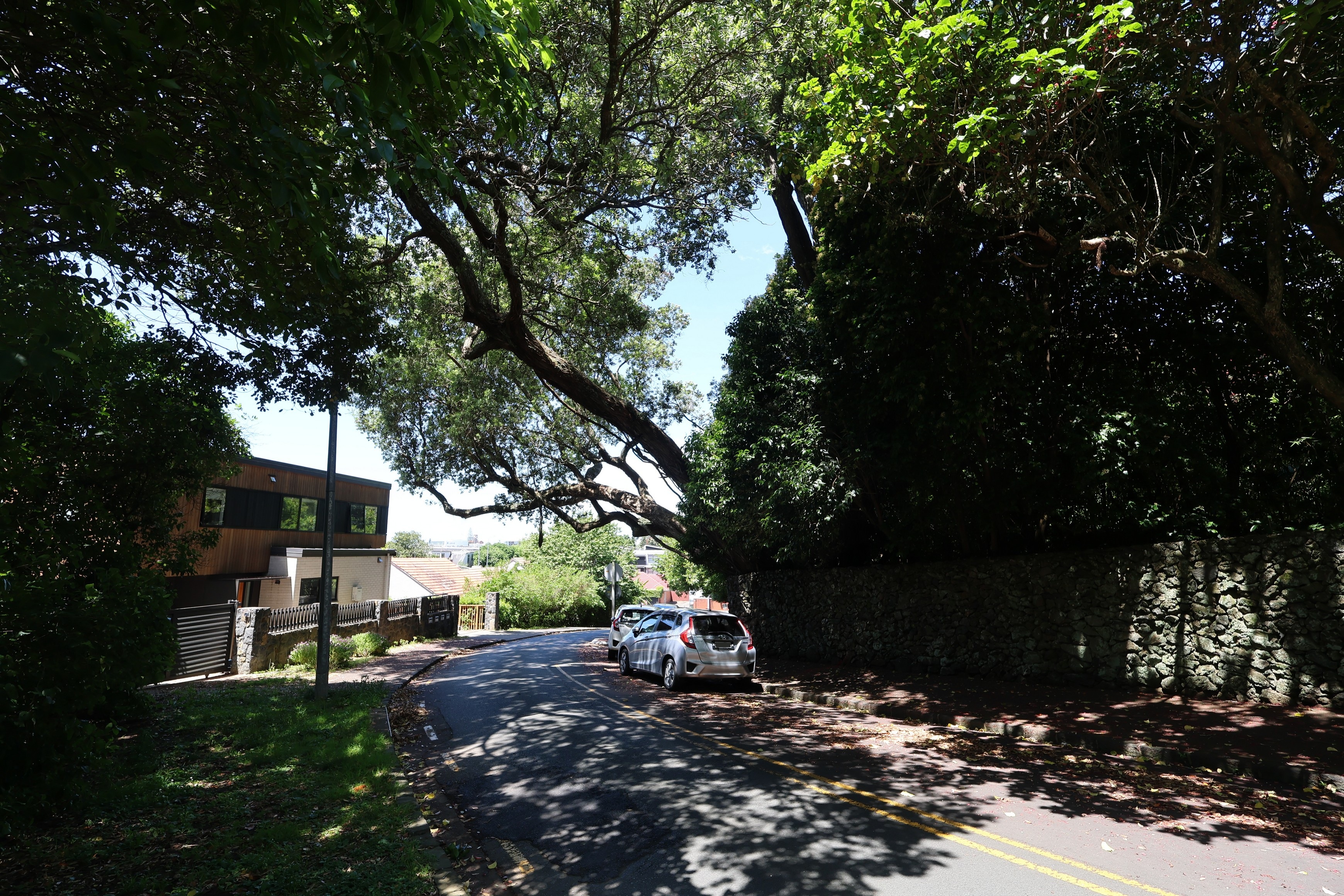
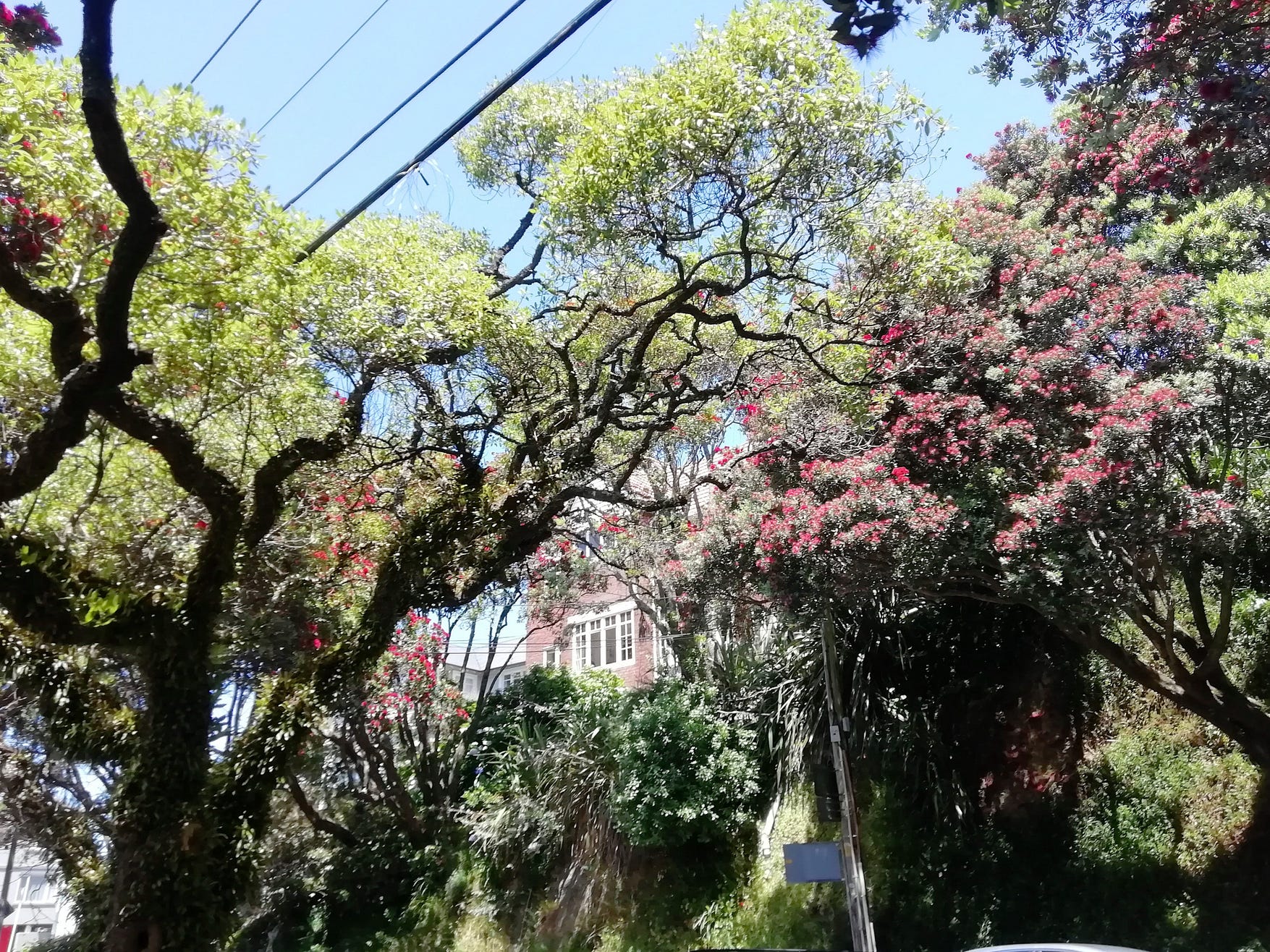
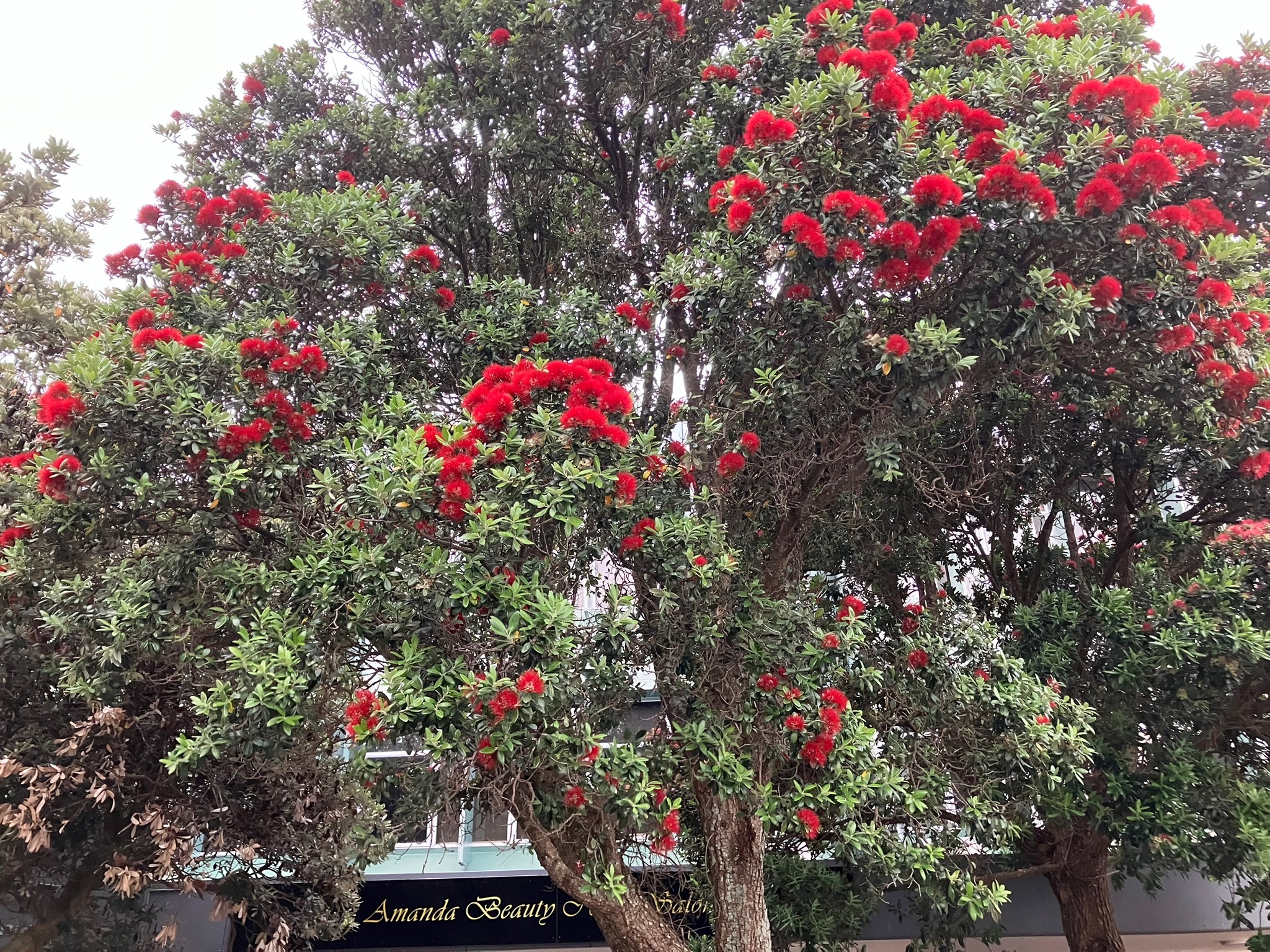
The next four photos were taken in Wellington, when Metrosideros street trees were blooming.
The ones in the next two photos look like pōhutukawa, which, according to a 2020 news item, made up 42% of Wellington’s street trees at the time.
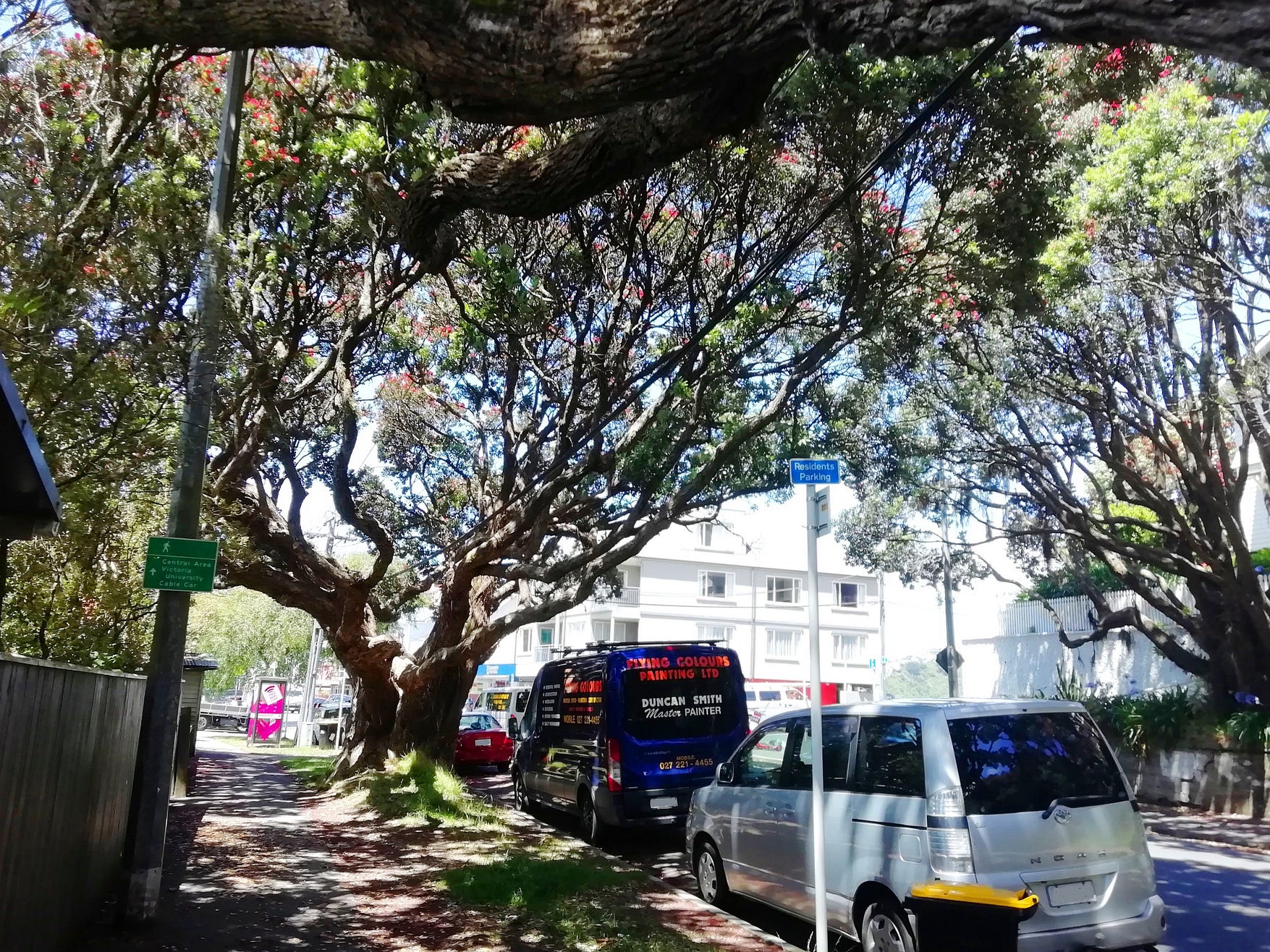
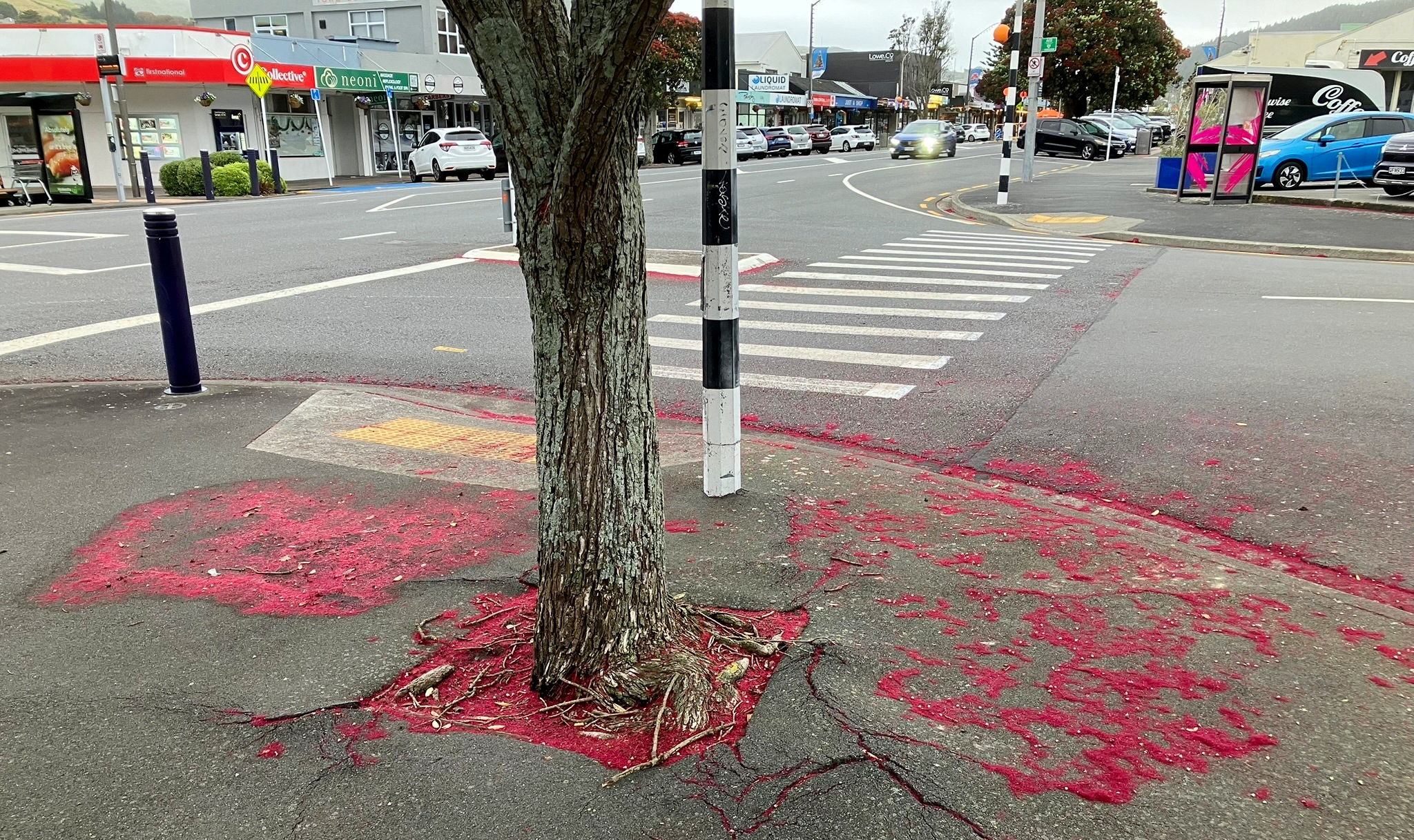
In that last photo, you can see how the roots of the tree are heaving up the berm and will, eventually, heave up the whole footpath, while at the same time crushing any underground services immediately underneath.
This is a fairly typical problem with urban pōhutukawa. It’s the flip side of the magnificent roots that cover coastal rocks in the warmer parts of the country, and down which the spirits are supposed to descend at Cape Rēinga.
Pōhutukawa don’t thrive naturally on the southerly-assaulted coasts of Wellington. But they will survive there if planted in a more sheltered spot.
The next photo shows a magnificently blooming, but less unruly, Metrosideros street tree in the Wellington suburb of Tawa. It looks like a modestly sized rātā, but it might just be a young pōhutukawa.
Underneath another Tawa street tree, you can see the characteristic carpet of bottlebrush-flower needles that falls from rātā and pōhutukawa in the flowering season.
They even have pōhutukawa street trees in San Francisco, where there has been a lot of complaint about how their roots cause problems, though Wellingtonians seem more resigned to the issue.
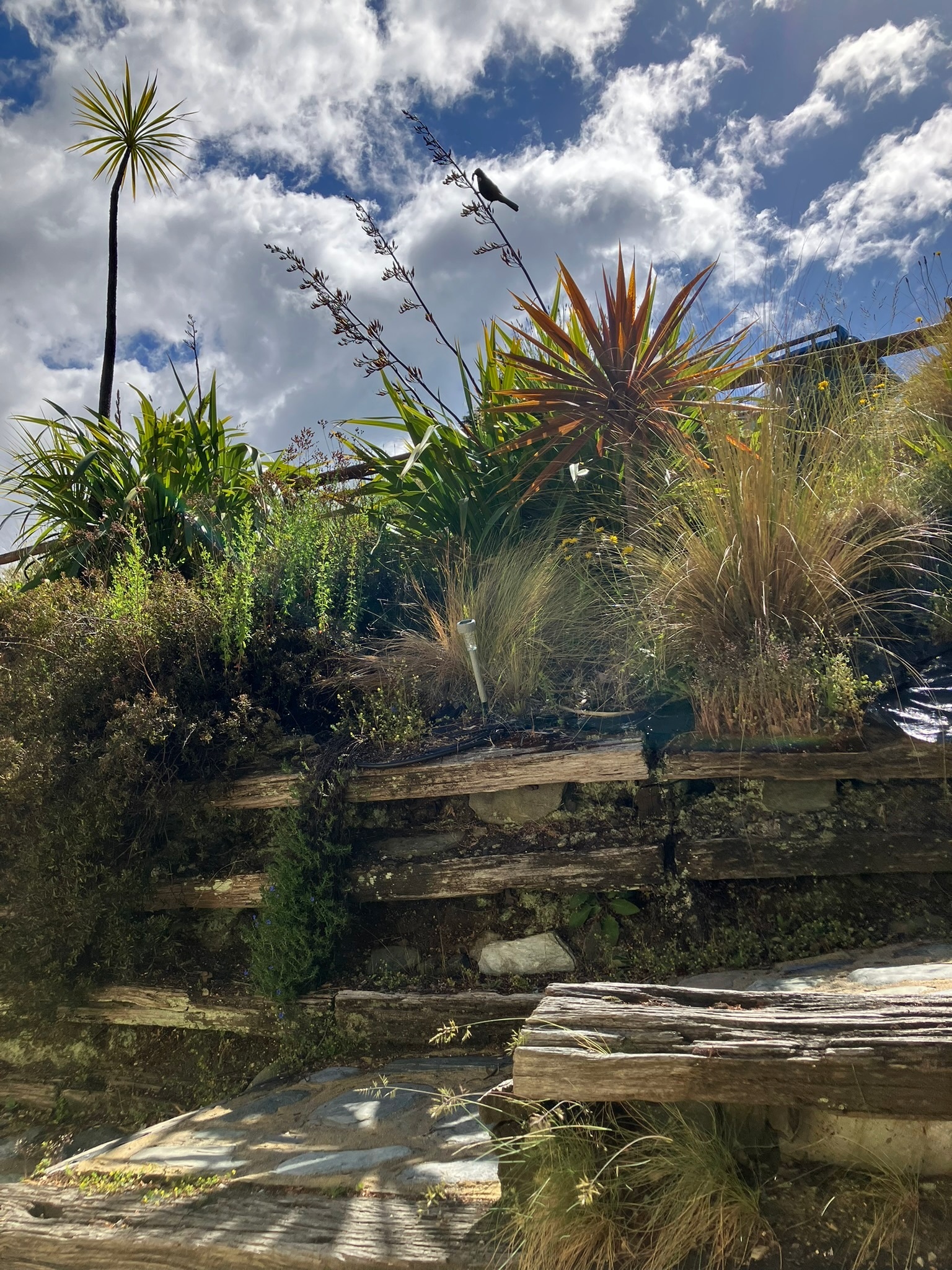
Back in this country, December is not too late in the year to see tūī gorging themselves on the nectar of harakeke flowers.
And December is perhaps the best month to go hiking in the woods as well, for there is still an air of spring about.

But December is also a month when we can still get cold snaps, especially in the south. Take the following Queenstown snowfall, for example, which only missed out on happening in summer by two days.
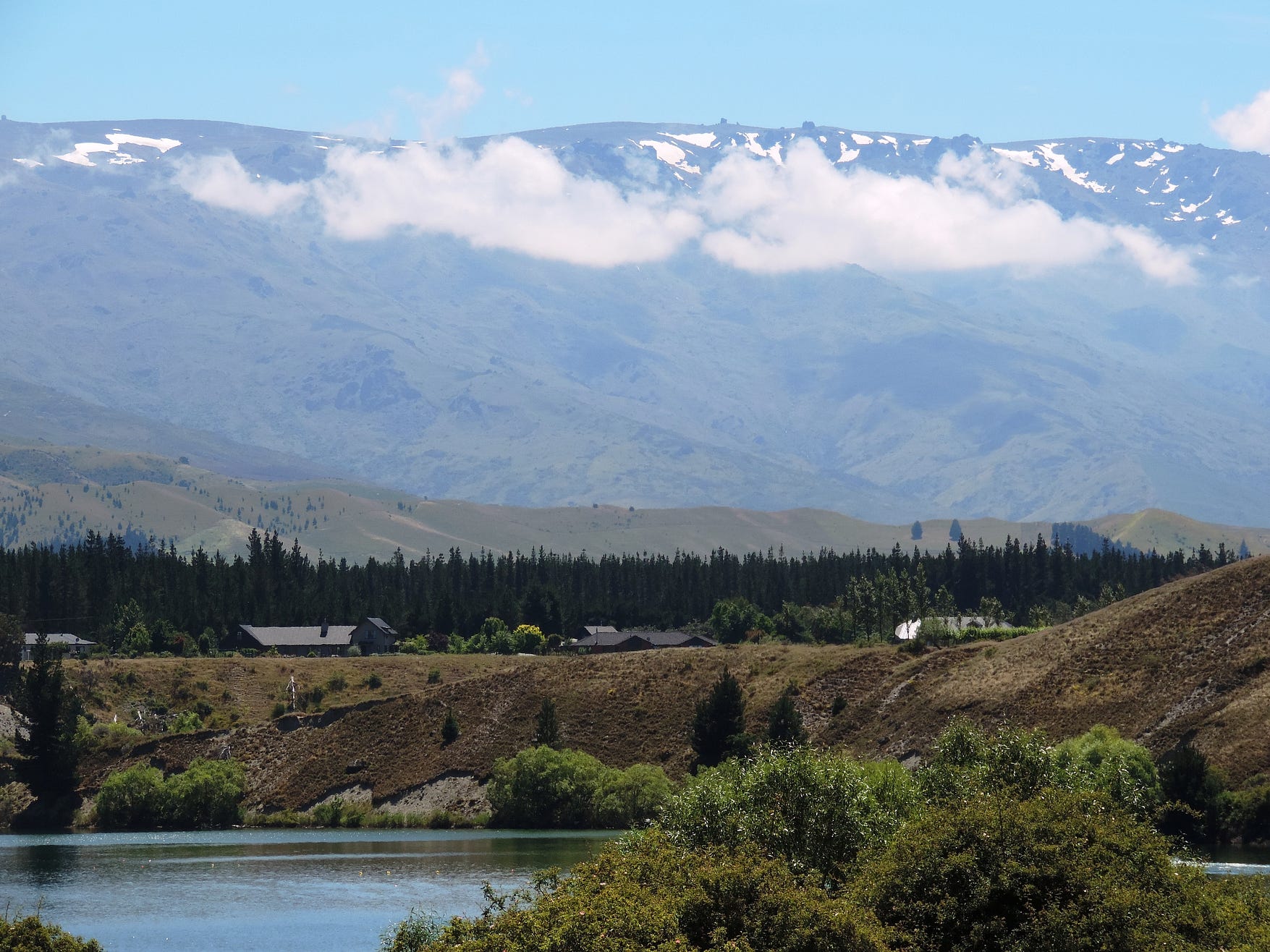
In the south, the snow often lies on the hills till Christmas as well.
Although most of the South Island east of the Main Divide is too dry for the southern rātā, there is some around the shores of Lake Wakatipu nonetheless. The Bobs Cove area is a good place to see some:
When the sun comes out, the south is wonderful. A friend of mine took the last photo, of the snow in the hills, when we drove from Queenstown to Cromwell a few days before Christmas a few years back, on a day when lingering chill gave way to bright sunshine.
Cromwell has a well-preserved old town that’s a real time capsule of the late 1800s in these parts.
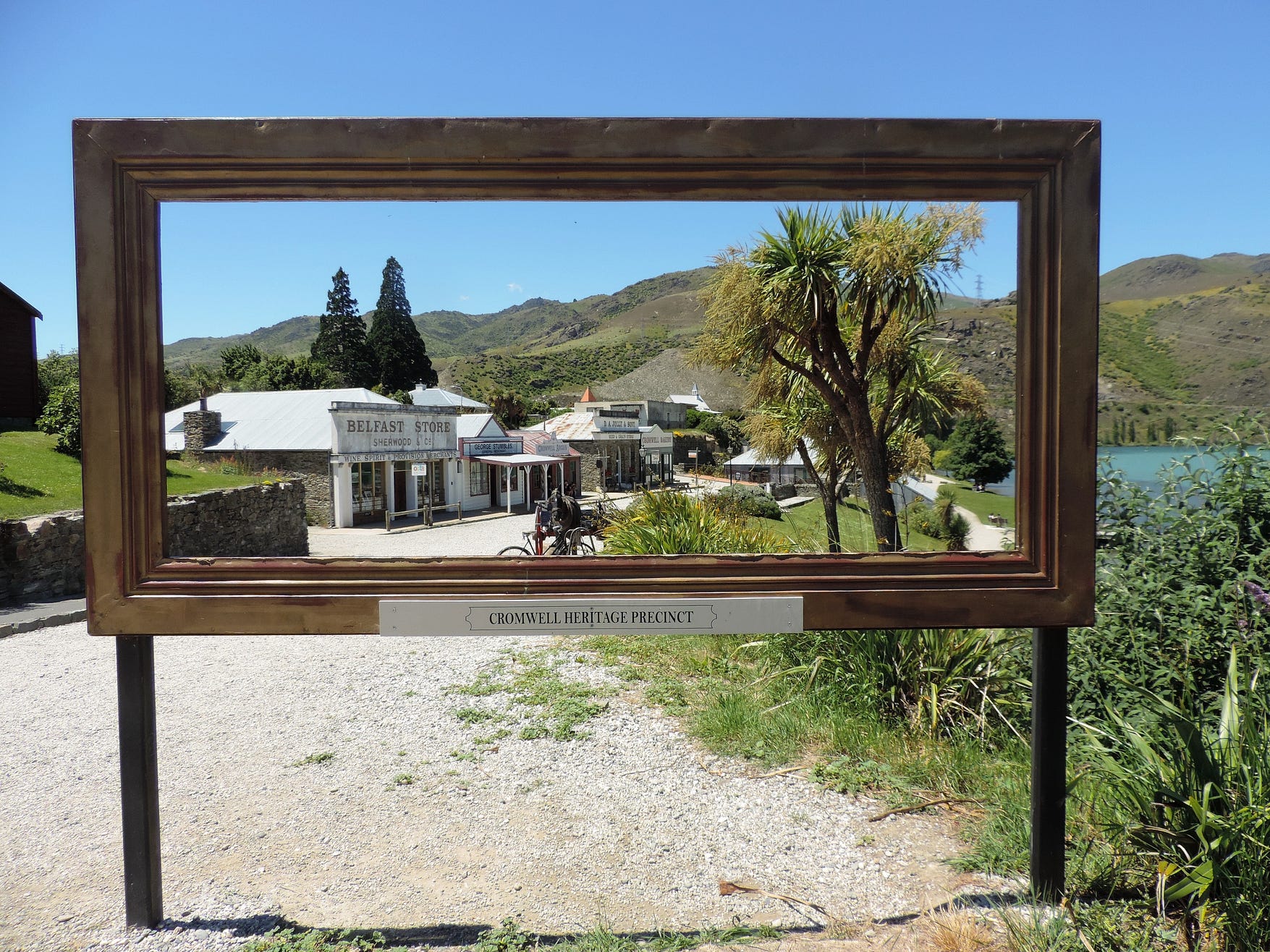

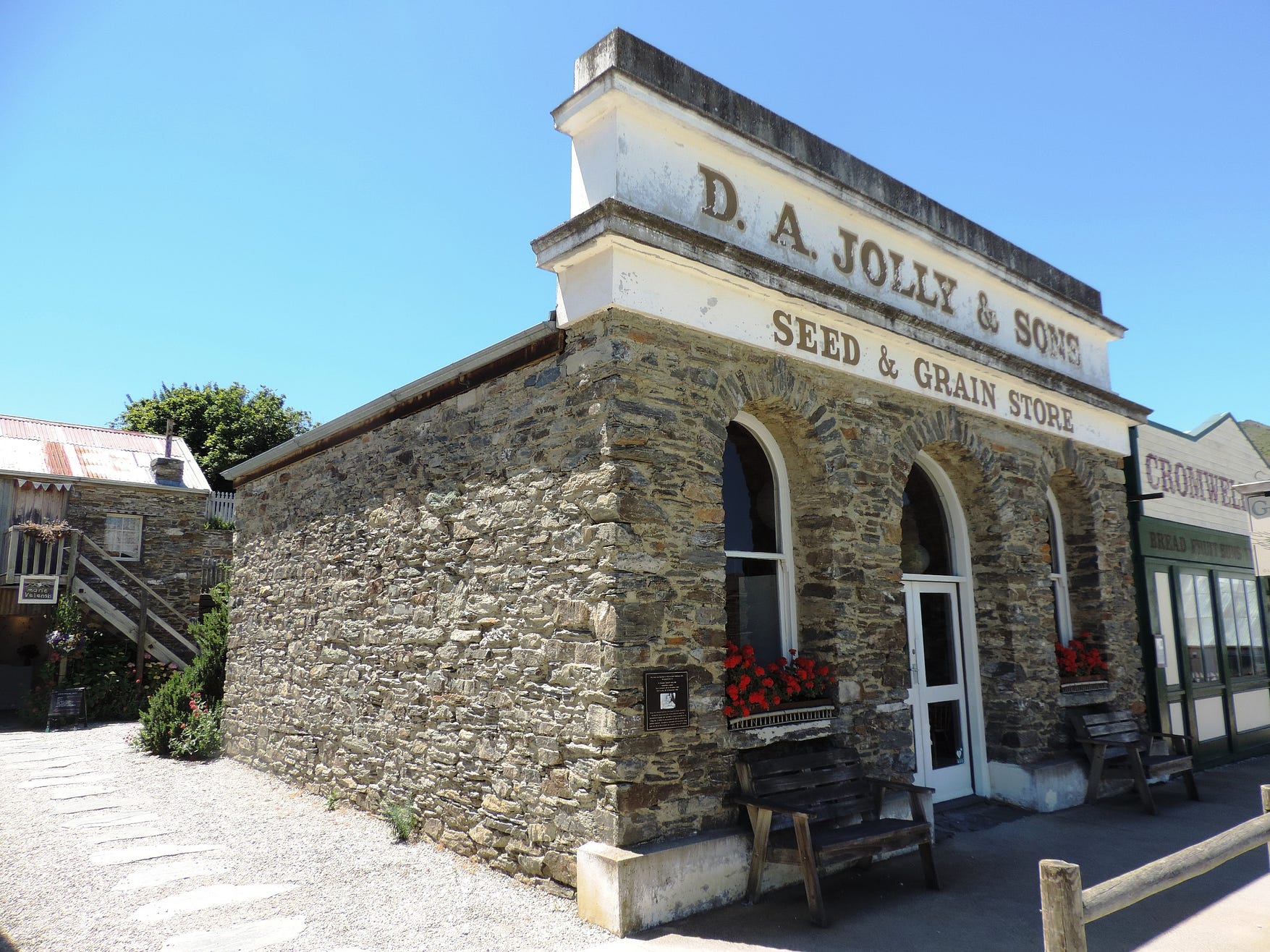
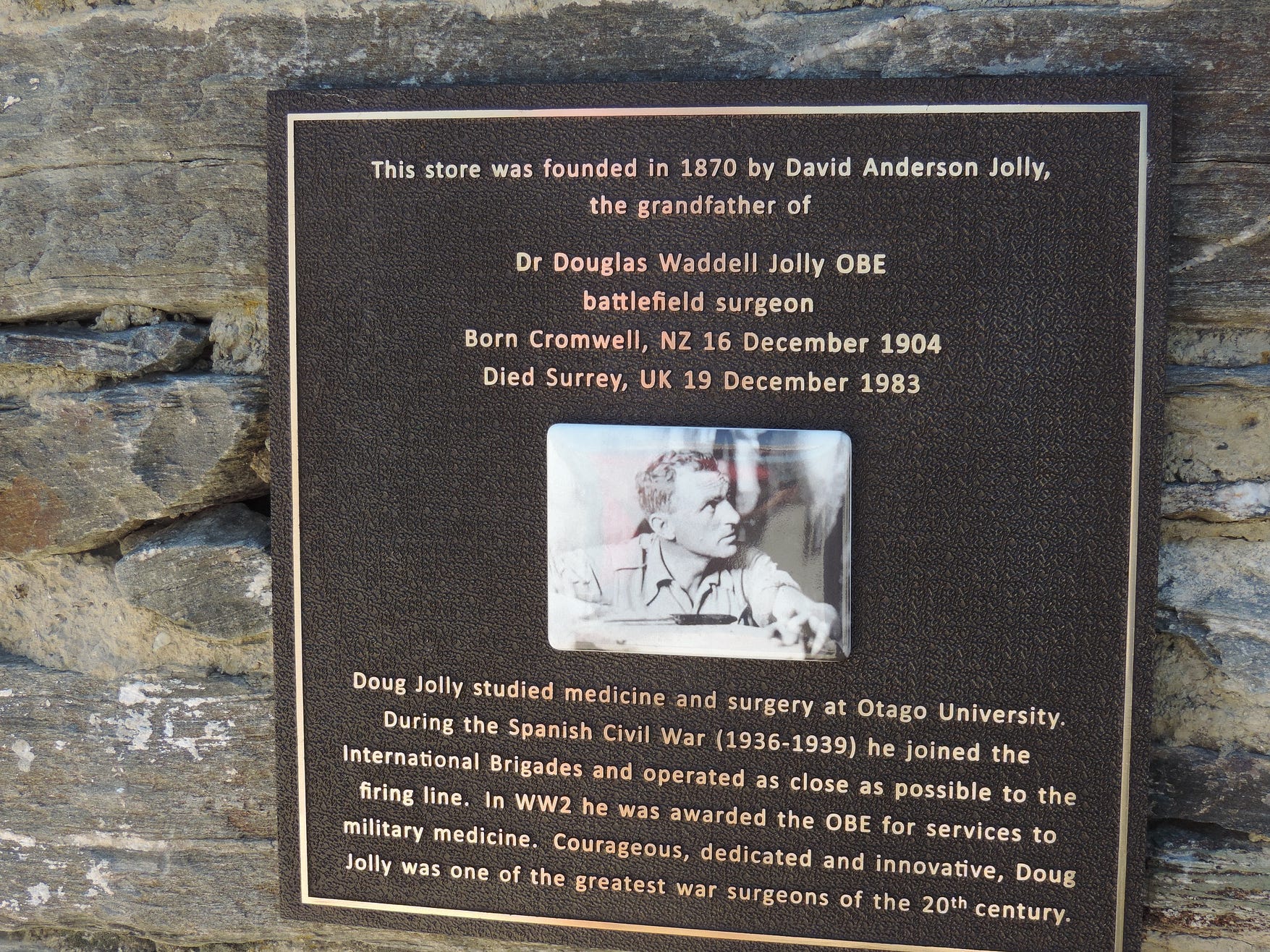
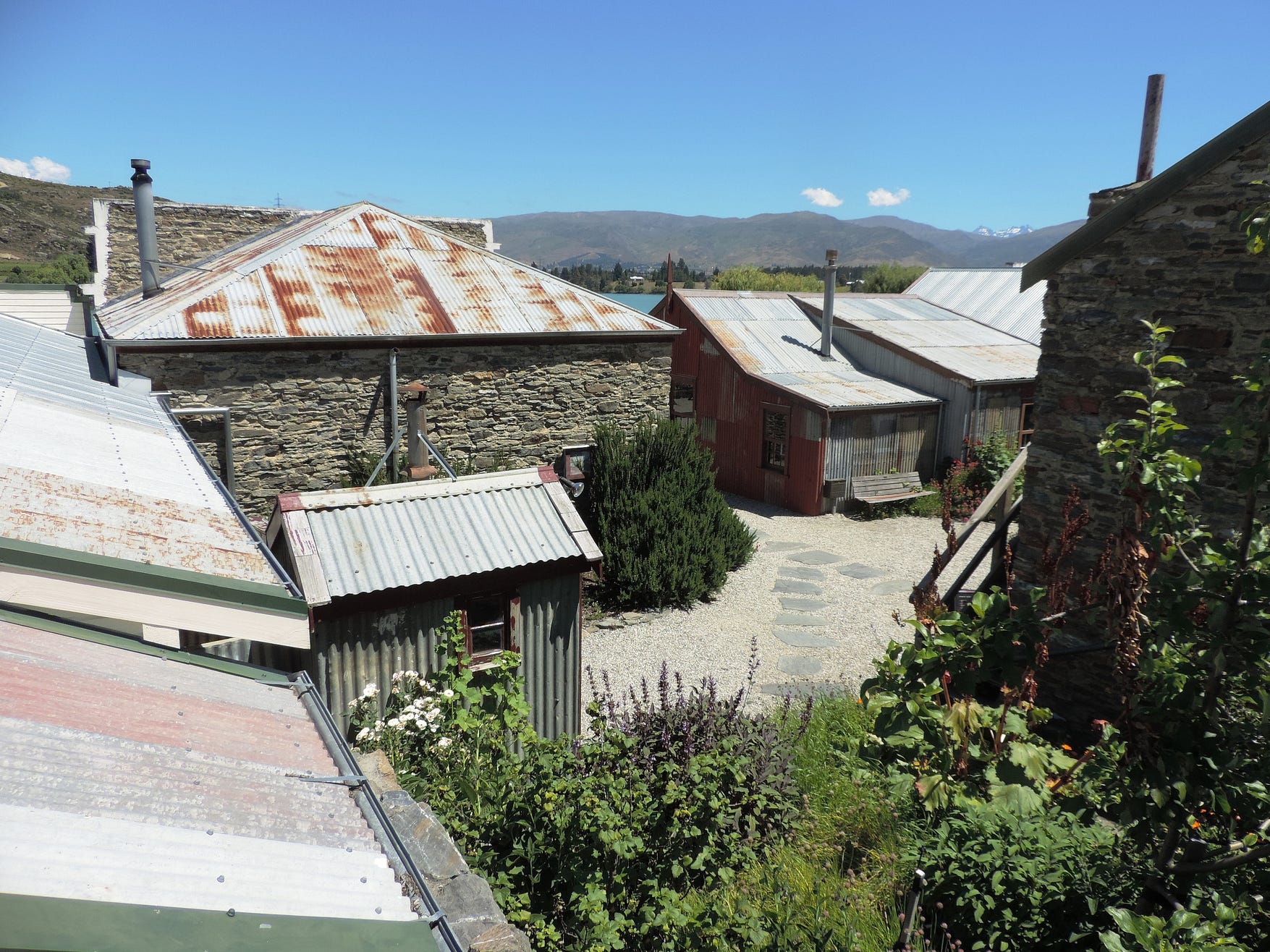
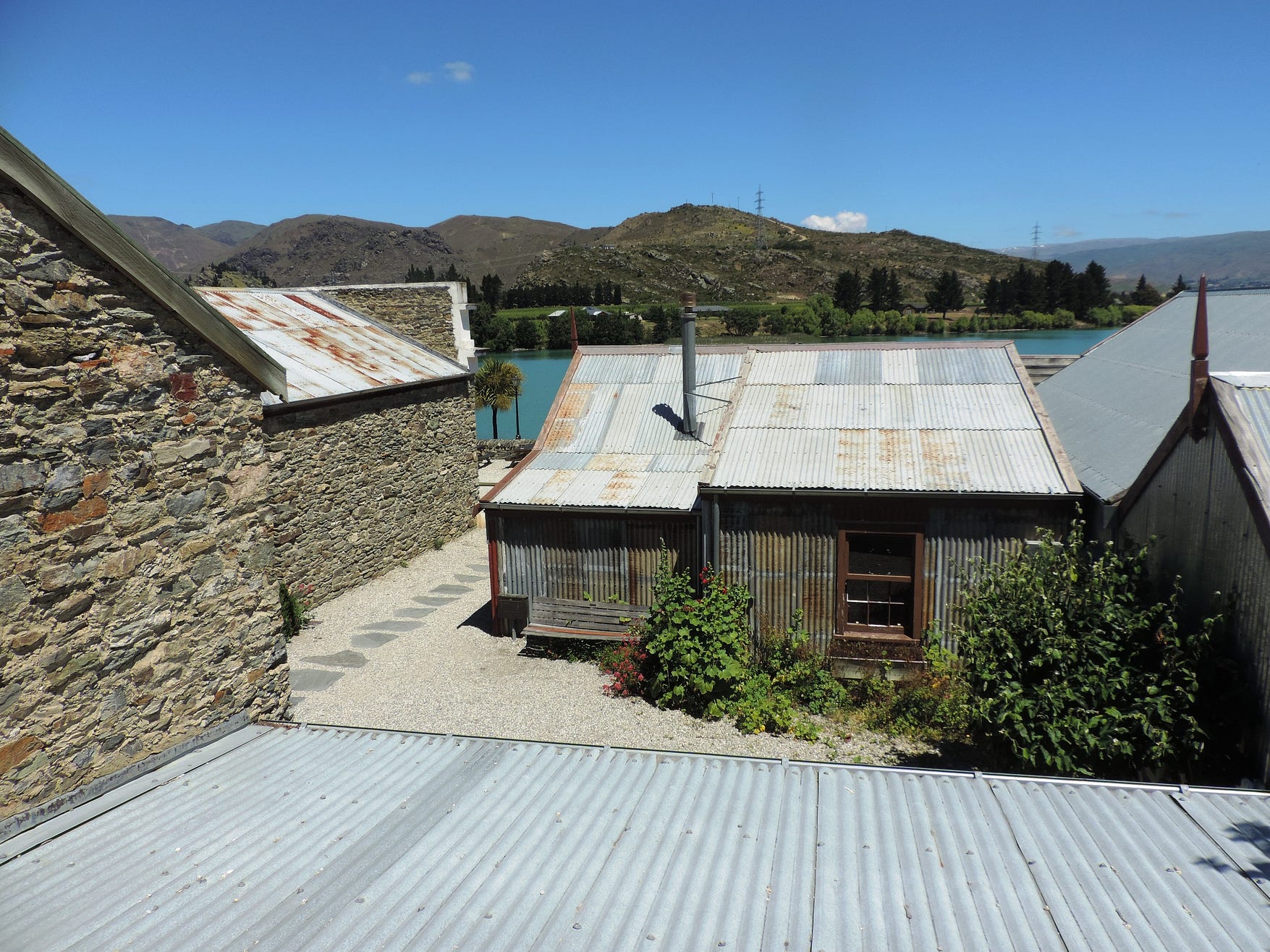
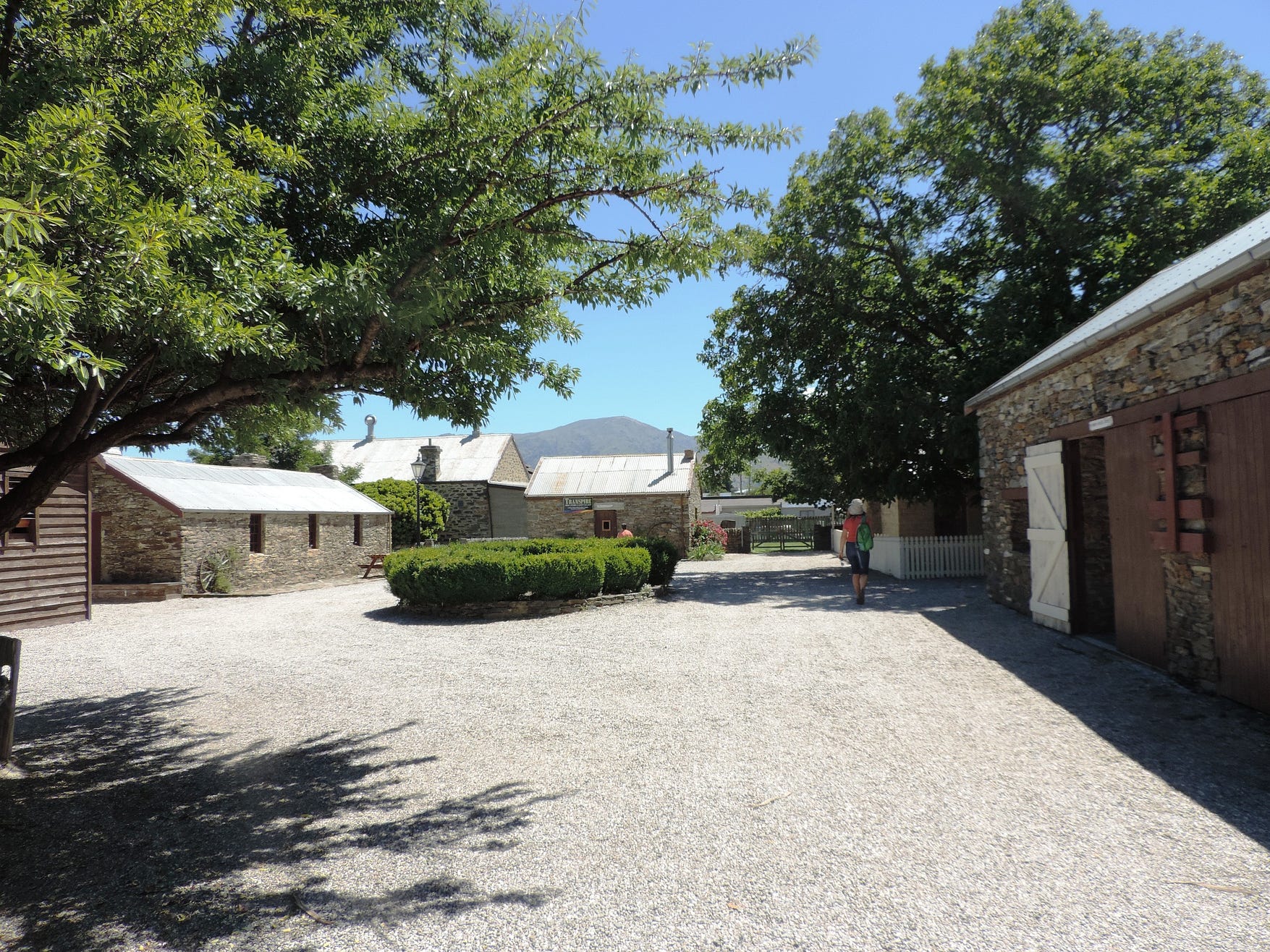
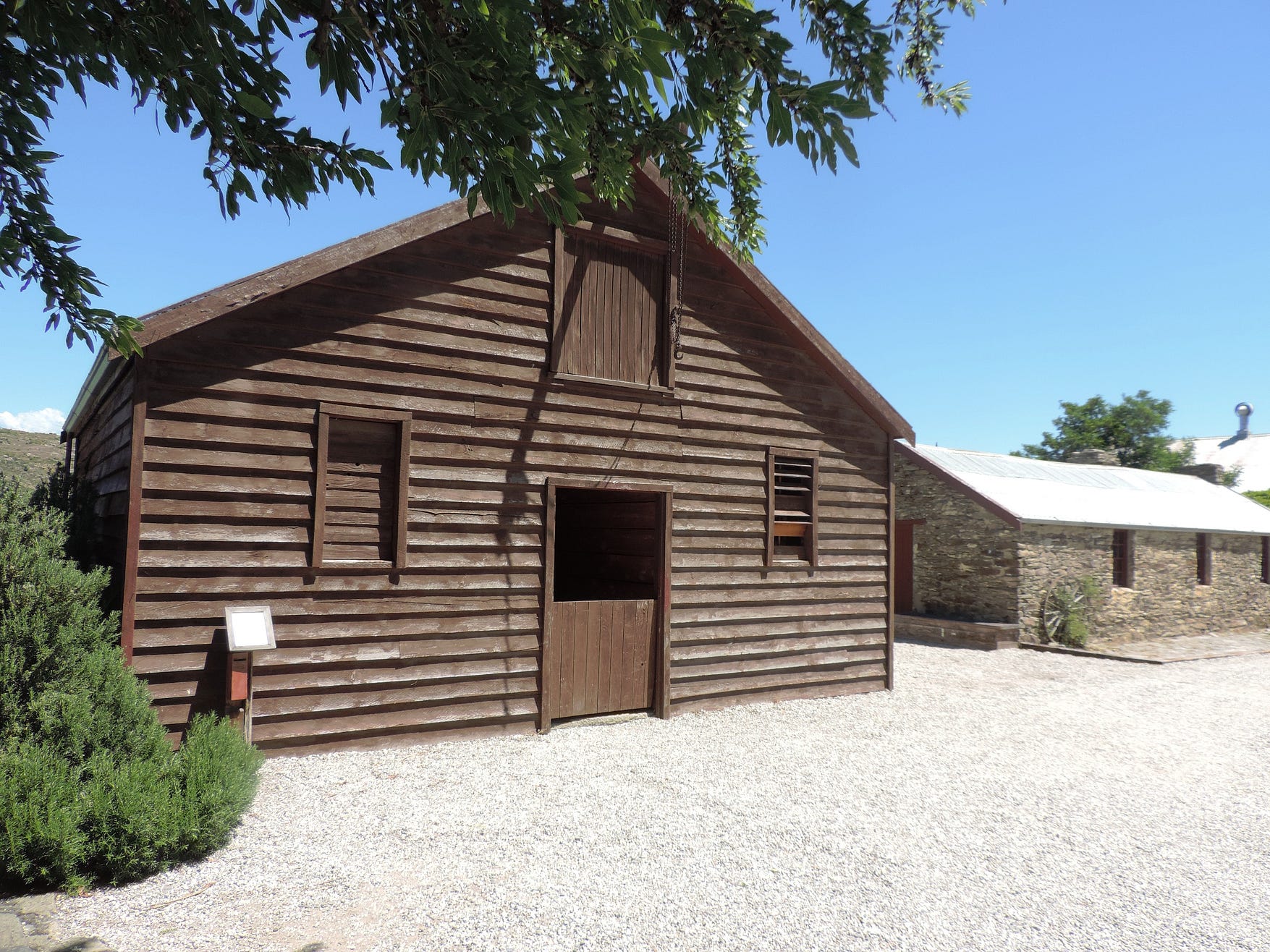
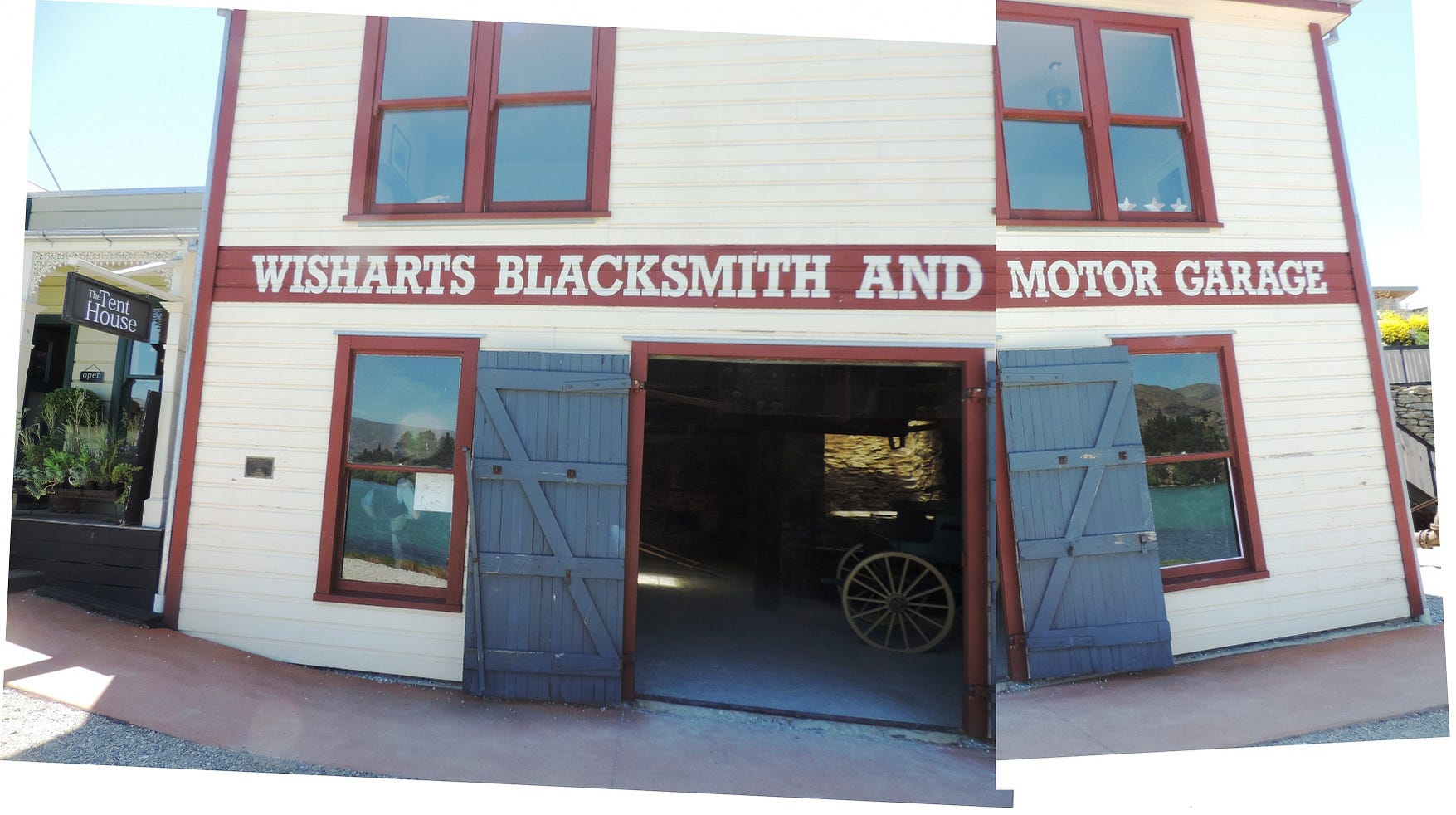
Another Christmas holiday trip we made was to the Paradise Valley, at the head of Lake Wakatipu.
The Glenorchy-to-Paradise road leads into a valley very much like the Yosemite Valley in California. A flat valley floor is hemmed in by impressive, steep-sided mountains. There would be hundreds of people up the Paradise Valley every day if it were as easy to get to or handy to big cities as Yosemite; but of course it isn’t.
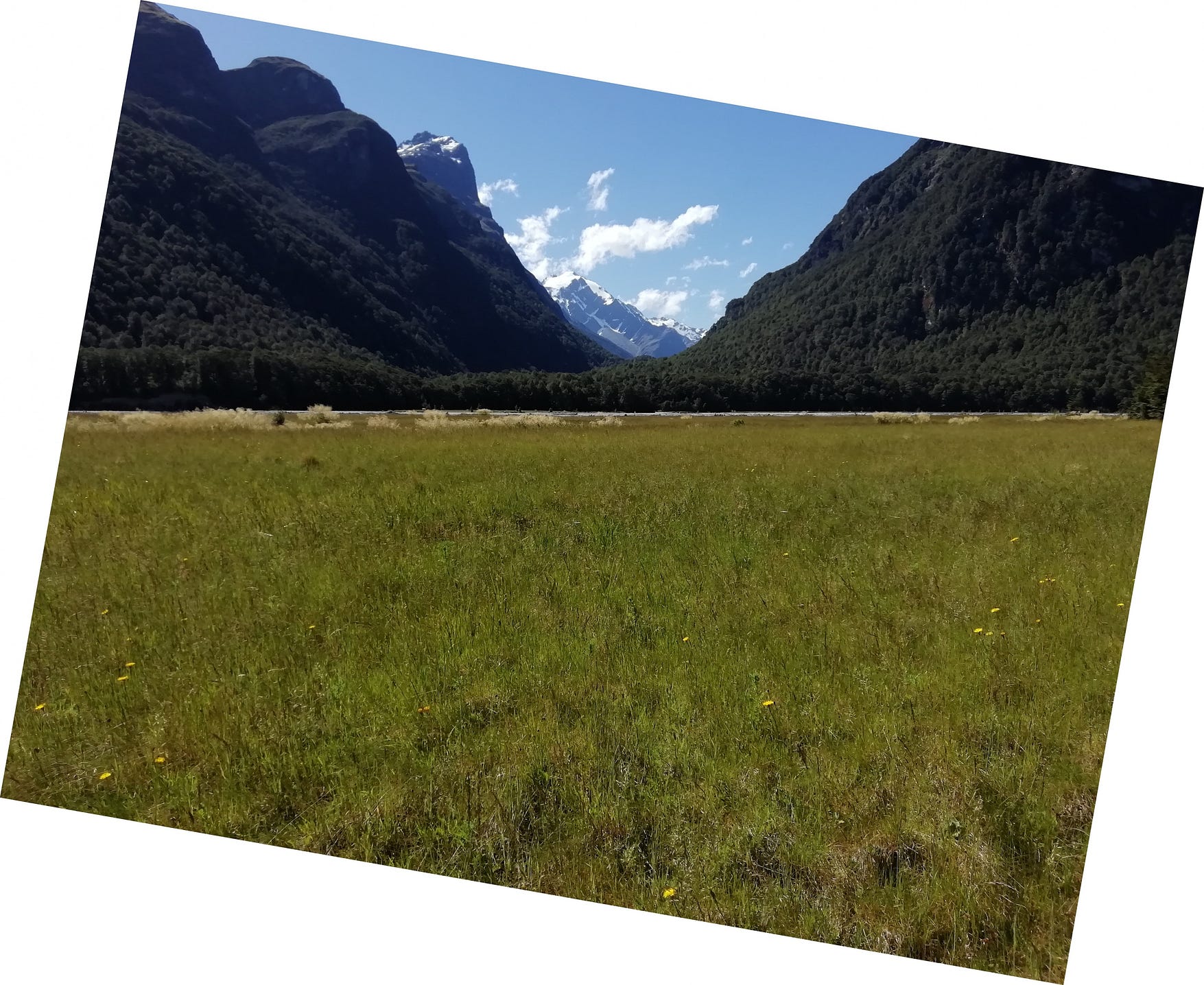
There is some tourism, though. The valley sports a huge rambling wooden guesthouse called Arcadia, or Paradise House, a surprising sight in what is increasingly a real wilderness as you keep heading away from the lake.
Also, one end of a back-country trail of major importance, the Rees-Dart Track, comes out into the Paradise Valley.
The area around Glenorchy and on to Paradise is the setting of the 2013 British TV drama Top of the Lake. Many locals thought the series was too Deliverance-like, even though the director, Jane Campion, is a New Zealander herself.
Lately, there’s been some grumbling about how the combination of Christmas and the summer holidays causes the country to shut down, or go slow, for too long. But I actually think this is a sign of how civilised we are!
If you liked this post, check out my books about New Zealand! They are available for purchase from my website, a-maverick.com.

Subscribe to our mailing list to receive free giveaways!

