Giveaways
THE Batanes are a group of small islands that lie halfway between Luzon and Taiwan. Together, they form the northernmost province of the Philippines.

The island that lends its name to the group, Batan, is only 20 km long. Even so, Batan contains the largest town on the islands, Basco, and its attendant Basco Airport.

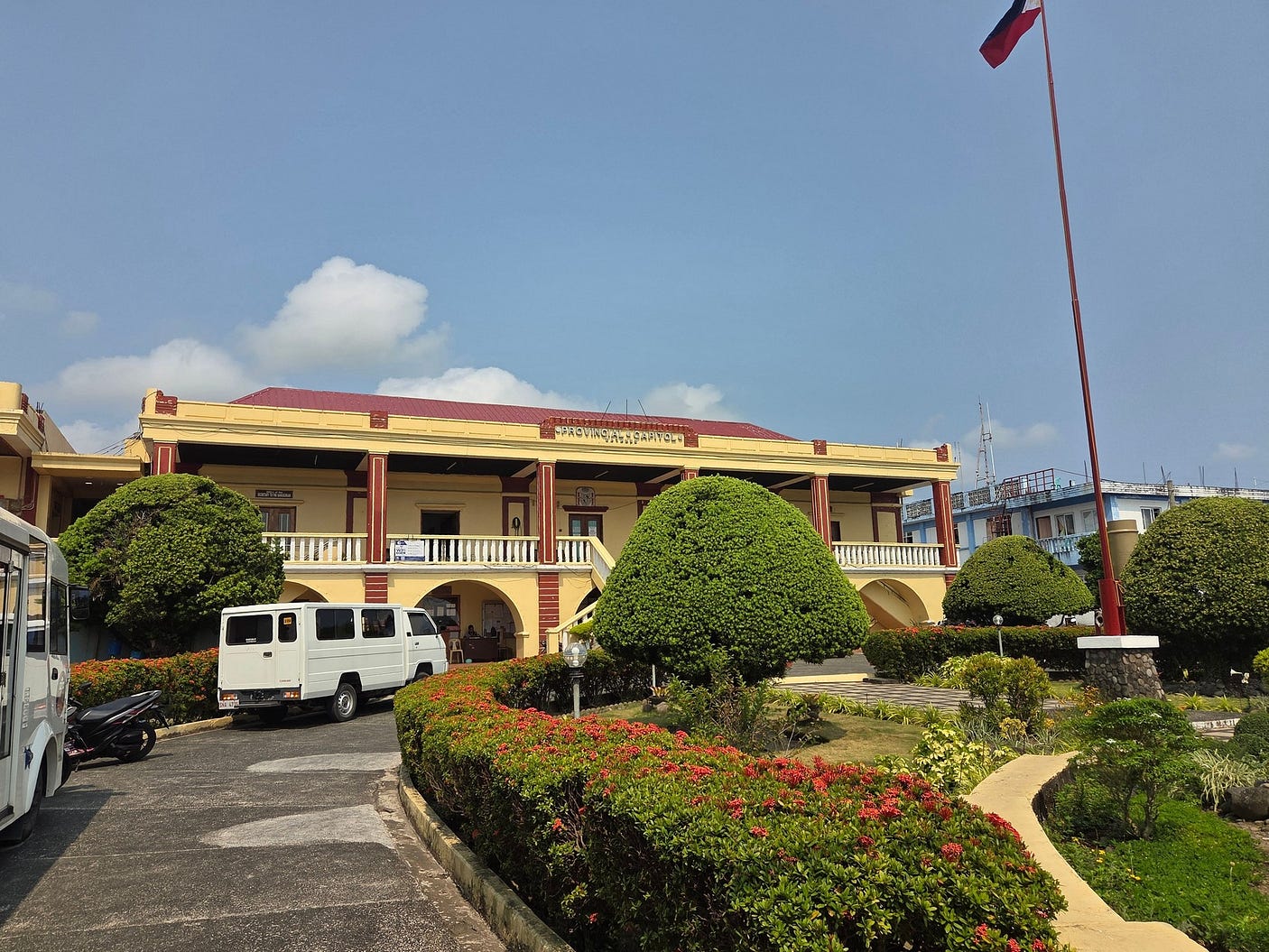
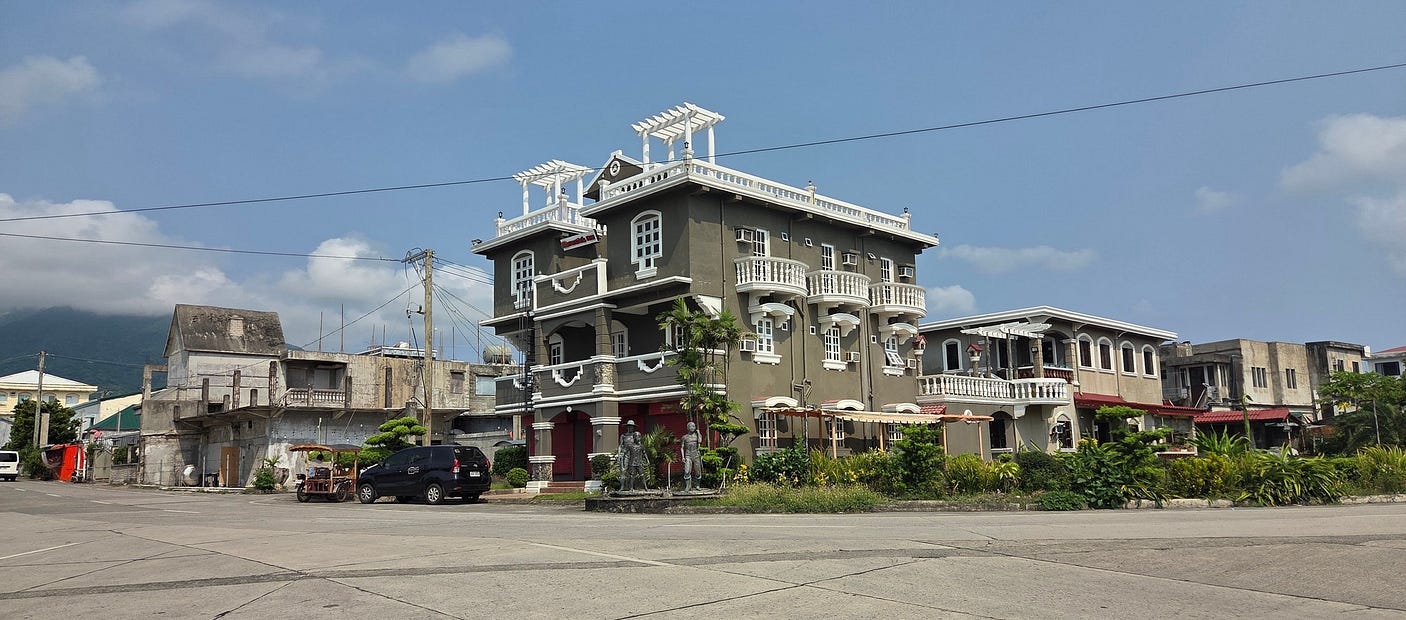
As you can tell from the modest scale of the official buildings above, Basco is not a huge place: its population is only about ten thousand or so.
I flew to Basco Airport from Clark International Airport in Luzon, on the site of the former American Clark Air Base.
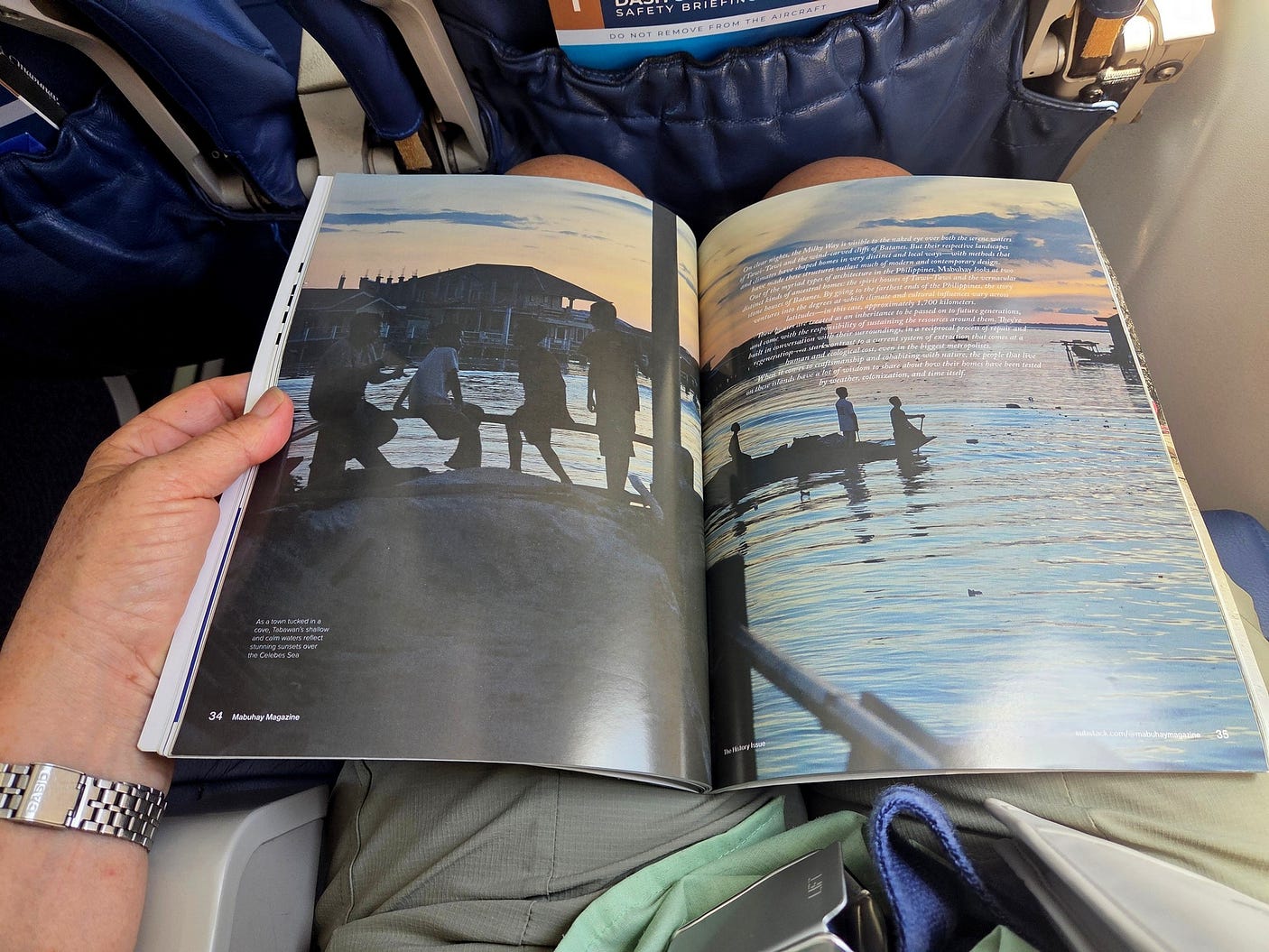
I spent the journey reading an in-flight magazine about the distinctive culture of the indigenous inhabitants of the islands, the Ivatan, whose name means people from Batan.
The provincial capital’s name comes from a Spanish governor, José Basco y Vargas, who annexed the Batanes to the Philippines in the late 1700s. Like many people named Basco or Vasco, his name signified some kind of attachment to the northern, Basque lands of Iberia.
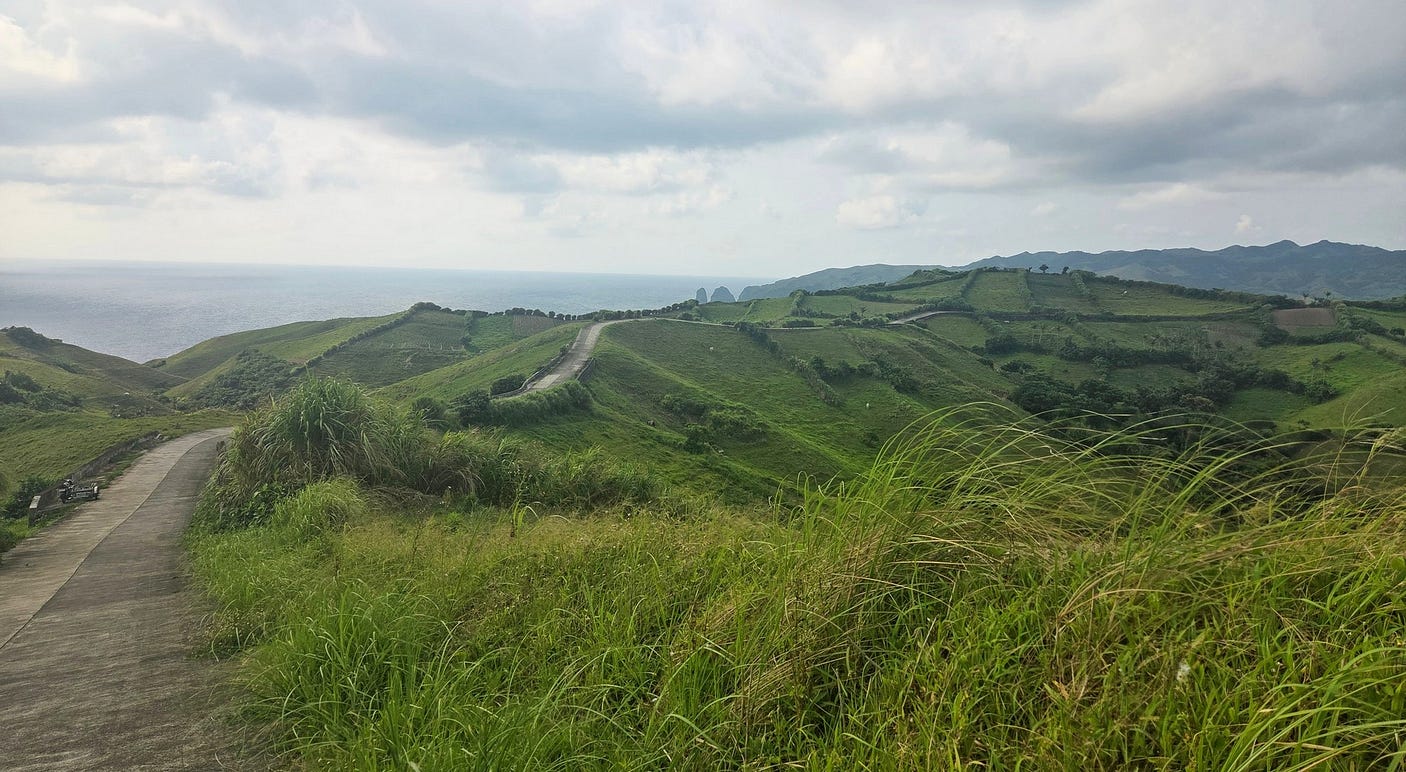
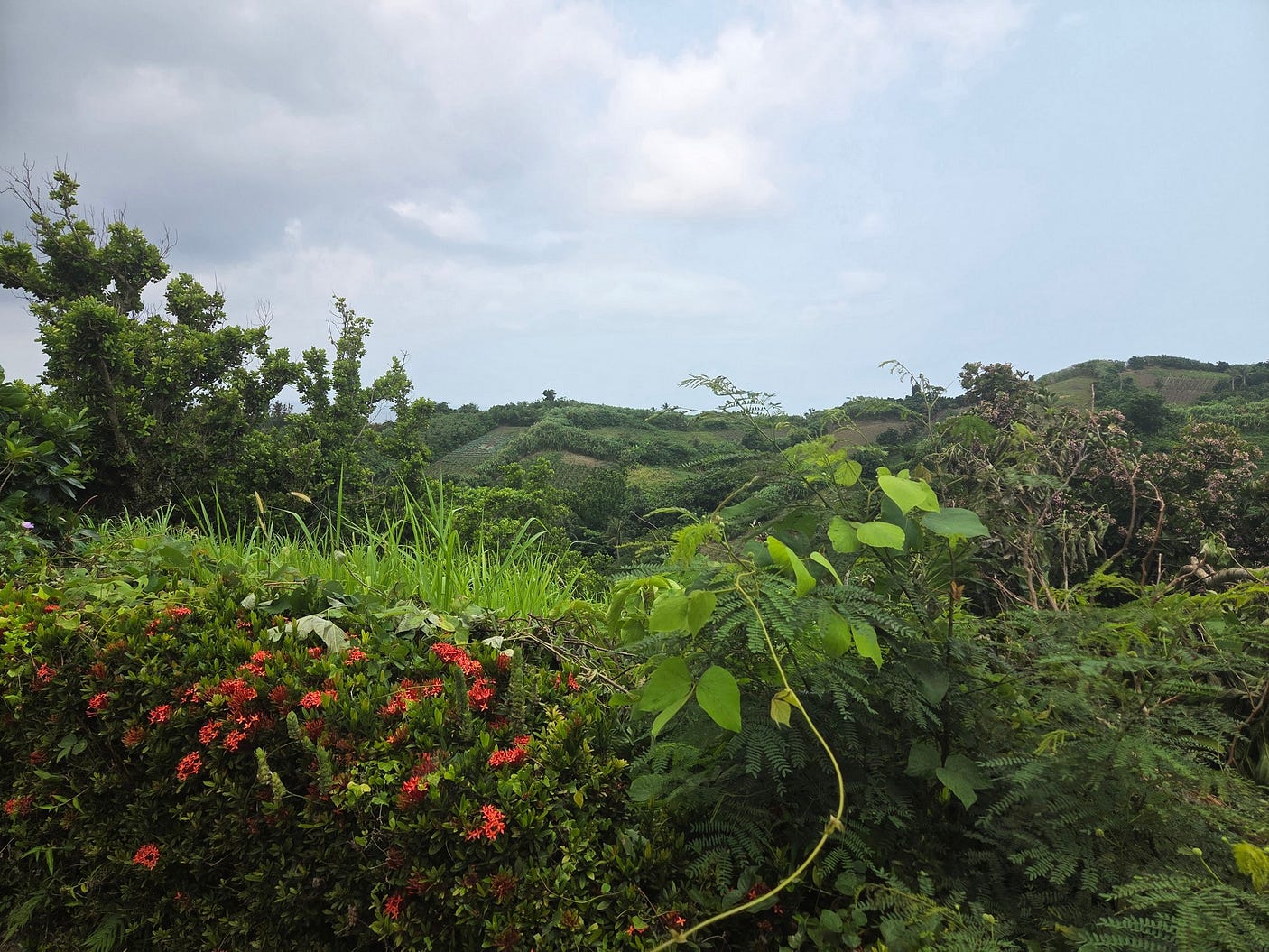
It’s strange to think of a town so far away bearing a Basque name. But in some ways it is appropriate, because the Batanes do have something of the rugged look of the Atlantic coast of Europe, with hedgerow fields climbing up into the mountains.
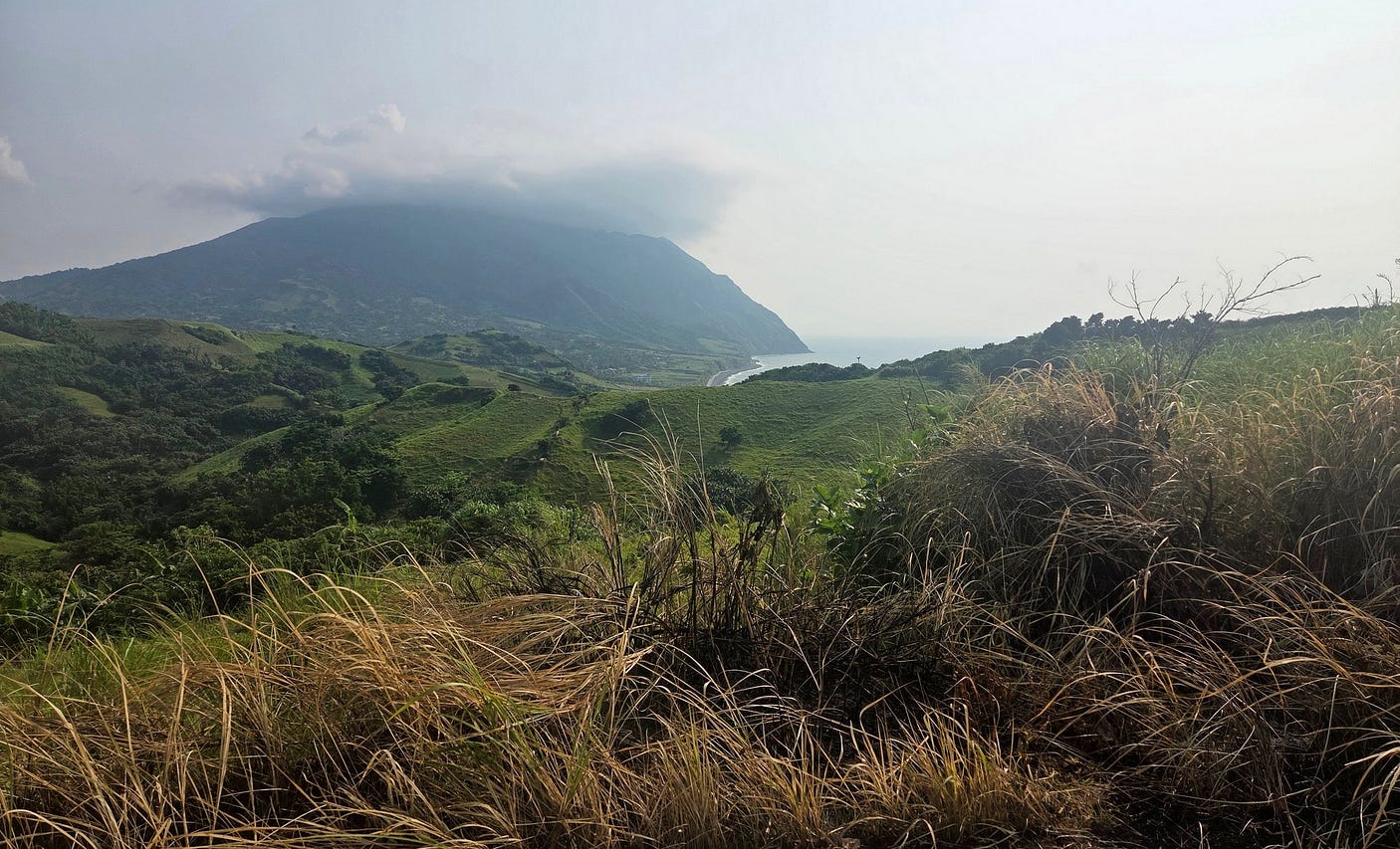
The largest mountain in the Batanes is Mount Iraya, at the northern end of Batan. It is a volcano that last erupted in 1454, and is 1,009 metres tall. Rugged hiking trails lead to the summit.

Mount Iraya is often covered with a white cloud, which is traditionally supposed to announce the death of an Ivatan elder, in much the same way that the Māori say that if it rains at a funeral, the heavens are weeping.
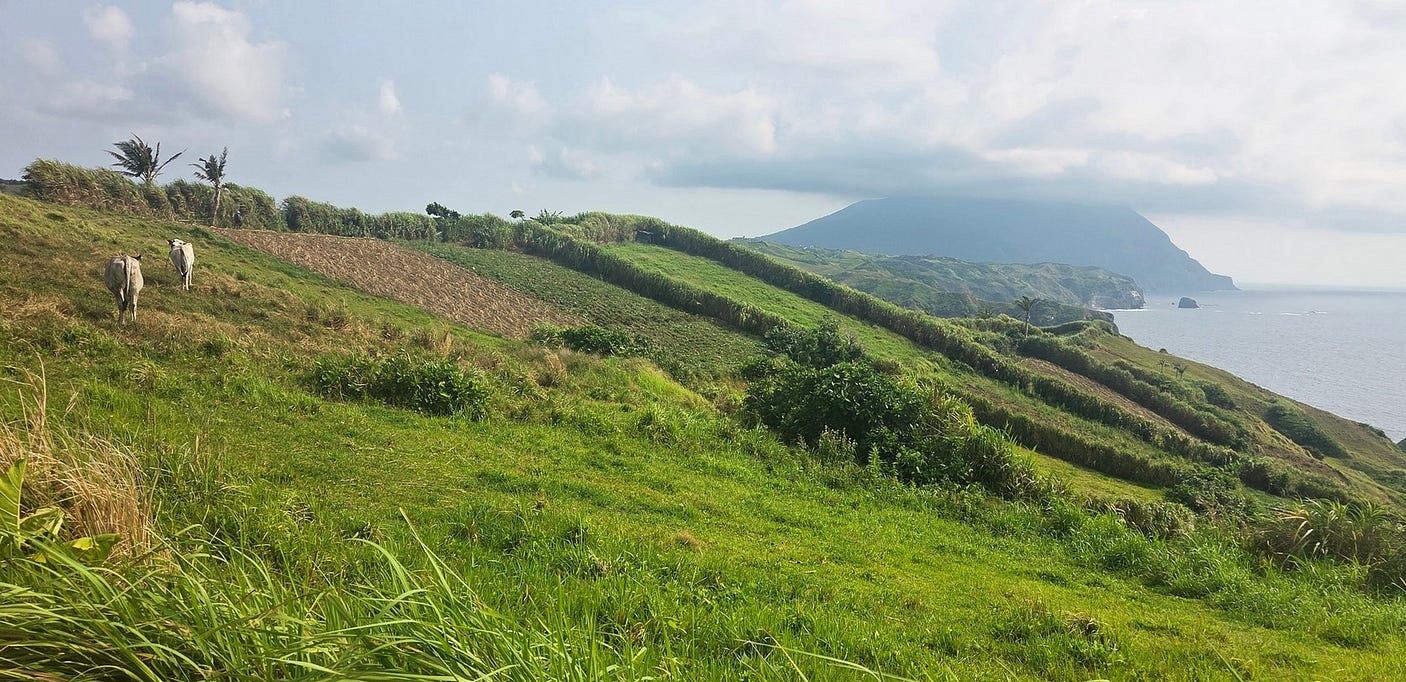
Like Europe’s Atlantic shore and islands, only more so, the Batanes are tremendously windswept: prone not just to gales but typhoons. The Ivatans thus cover their fields with windbreaking hedges, which, in an aerial view, take up much of the land and must be very good for the birds and the bees: much like England in a bygone era, perhaps.
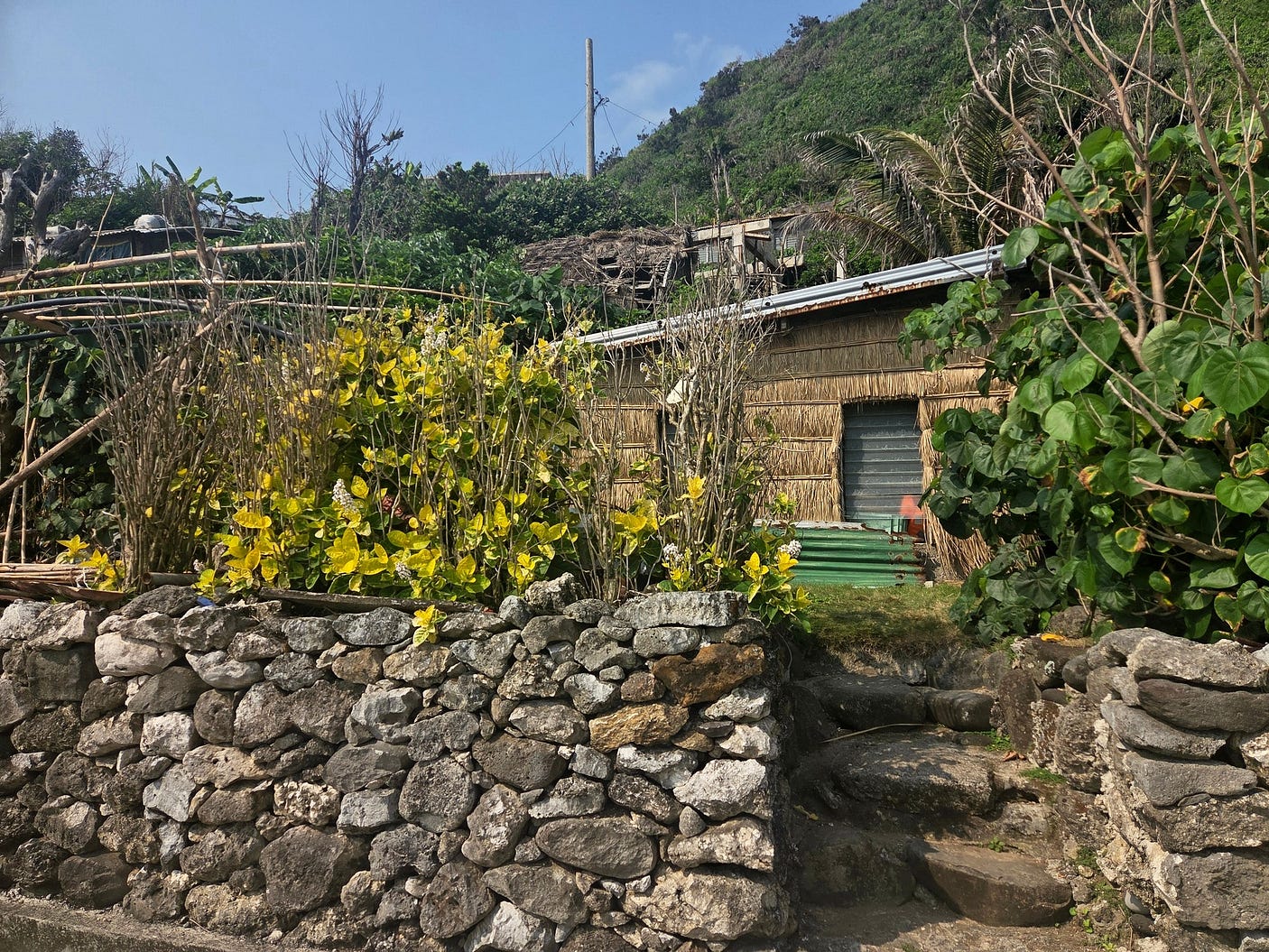
And, traditionally, built stone houses made from limestone and coral, with walls up to one metre thick.

Though they might be roofed with more modern materials today, these houses were traditionally roofed with thatching made from cogon grass, thus making them appear somewhat as if they were the homes of Scottish crofters. In fact, thatched roofs and even matting on the outside are still pretty common.
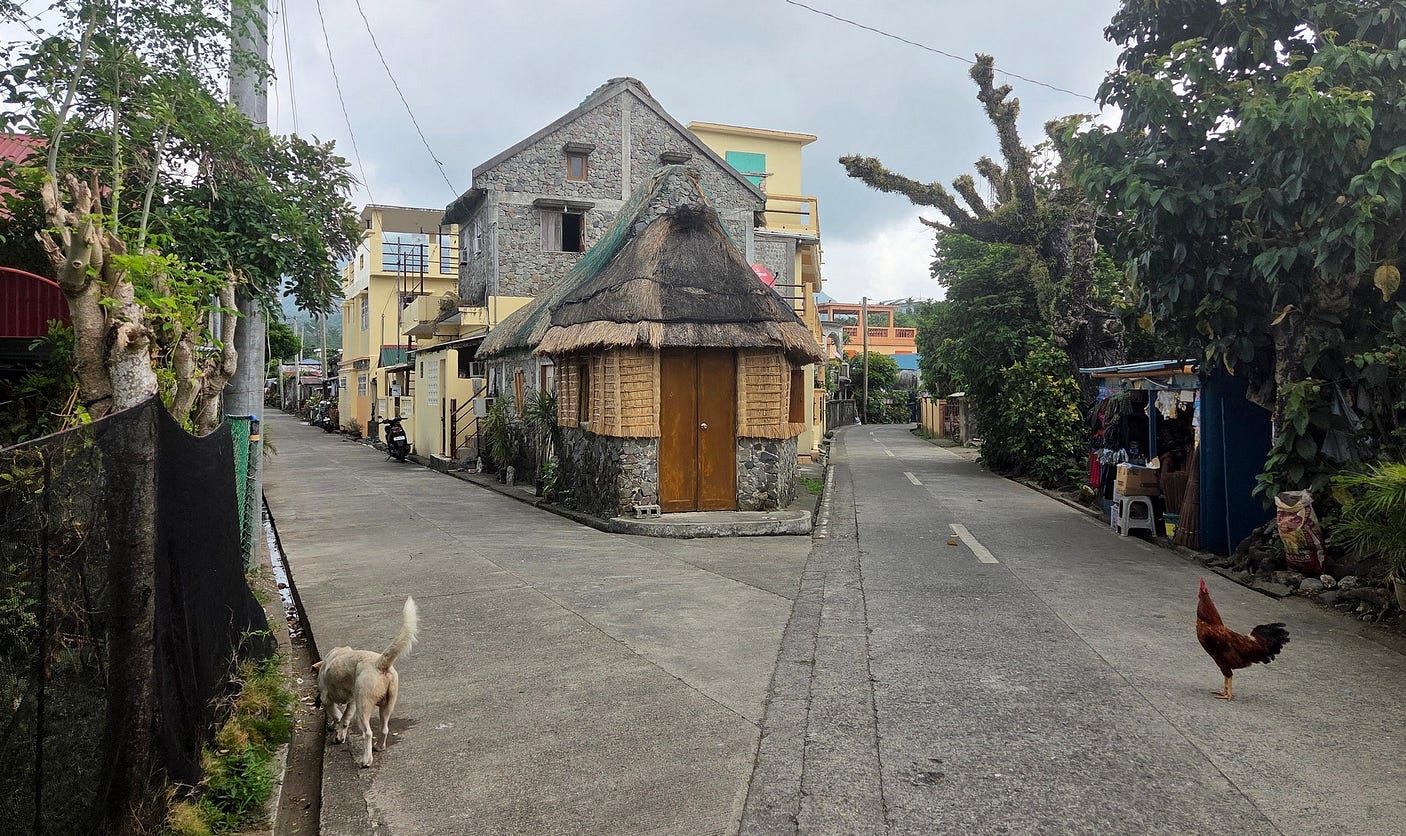
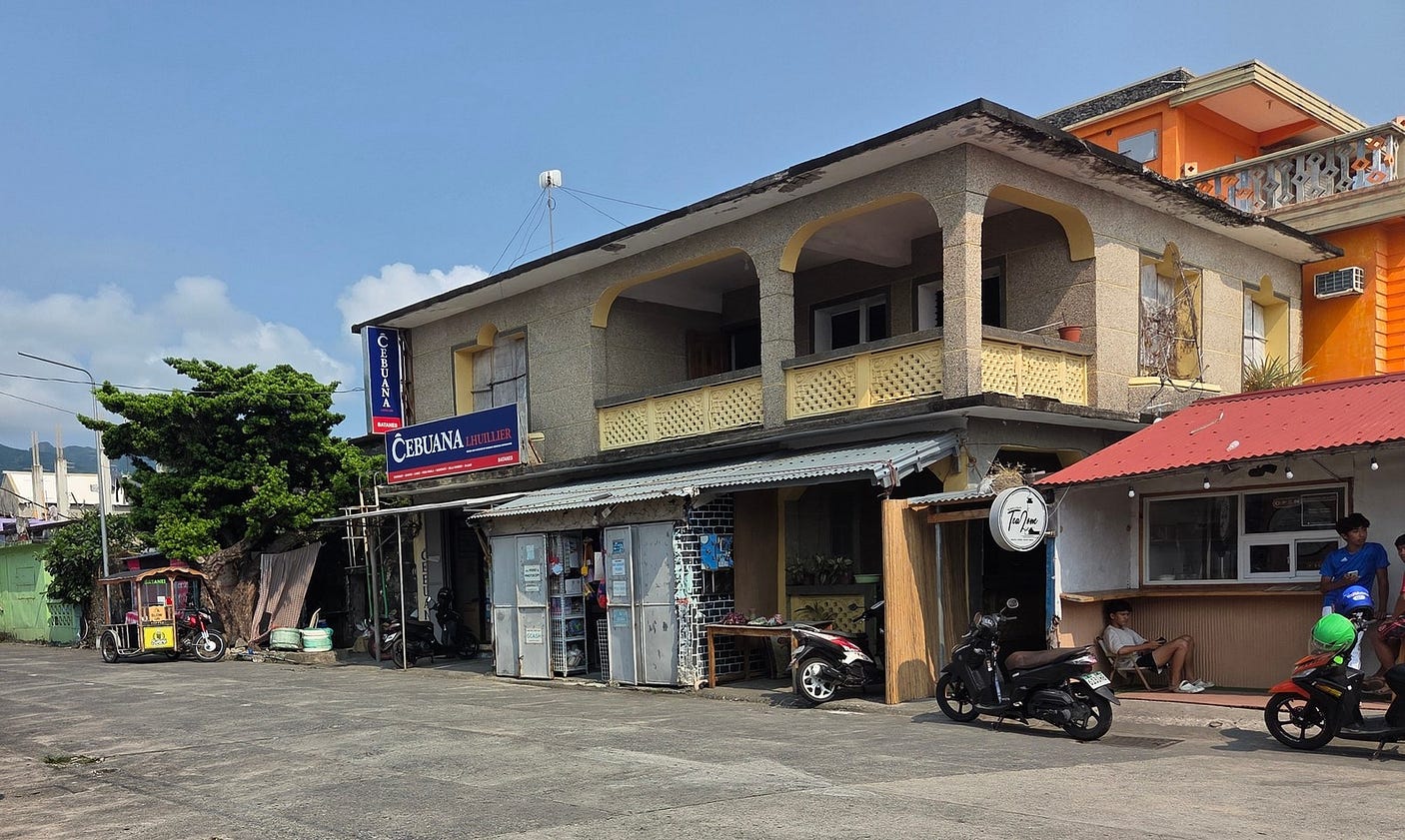
I suspect that where the walls are made of matting, these are somewhat sacrificial: that maybe the mats fly away, and then people go and collect the mats and put them back on — the opposite approach to the thick stone walls, which, as the photo above, only seem to form the lower half of the building on the corner.

The Batanes are the original stepping-stones by which early Austronesian voyagers set out from Taiwan to colonise the Malay-Indonesian realm, Madagascar, and the Pacific.
The Ivatan are not the direct descendants of the original Austronesians from thousands of years ago, however, but rather, of people who migrated backward from Luzon once a sizable Austronesian population had become established on that island.
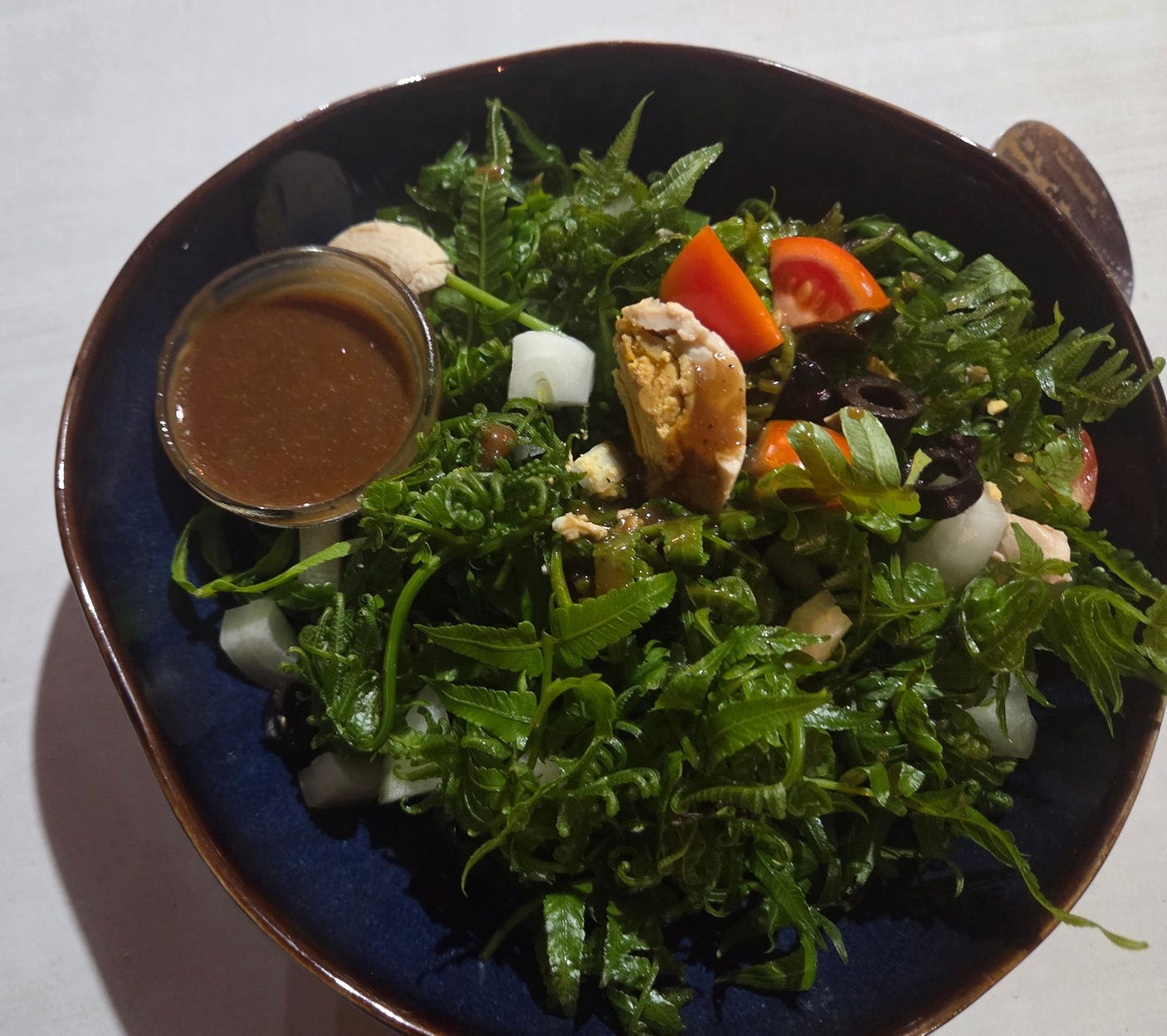
I stayed at Anvel Homestay in Basco, which is about five minutes from the airport. There was one place I really liked which was called the Biker’s BBQ Grill House. The chef was married to a Texan guy, and she did the smoked beef, pork, and other meats: the menu was wonderful. I had an Ivatan five-fern salad which they got from the forests, a local variation of the famous Philippine fern salad known as paco (or pako) salad.
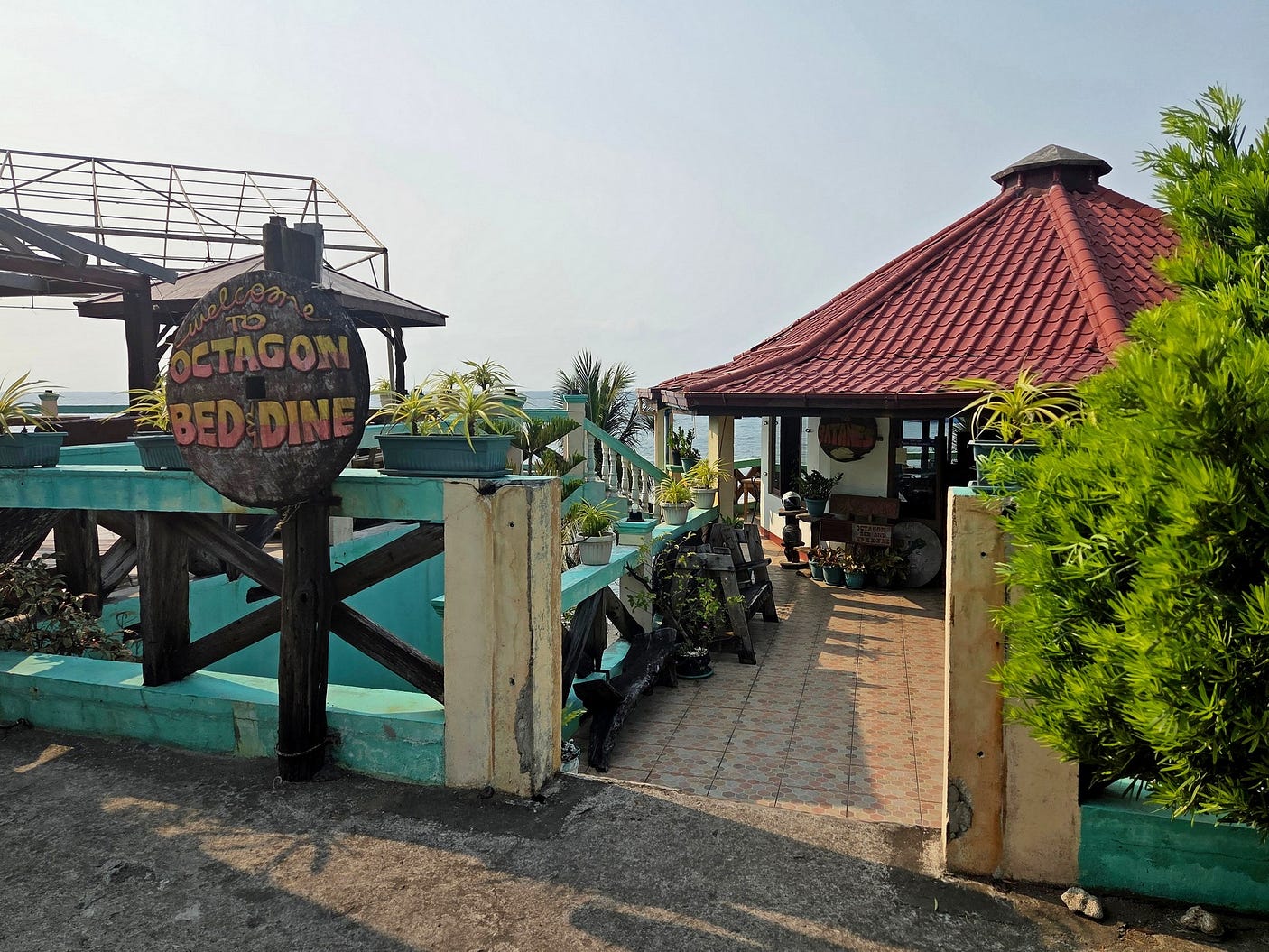
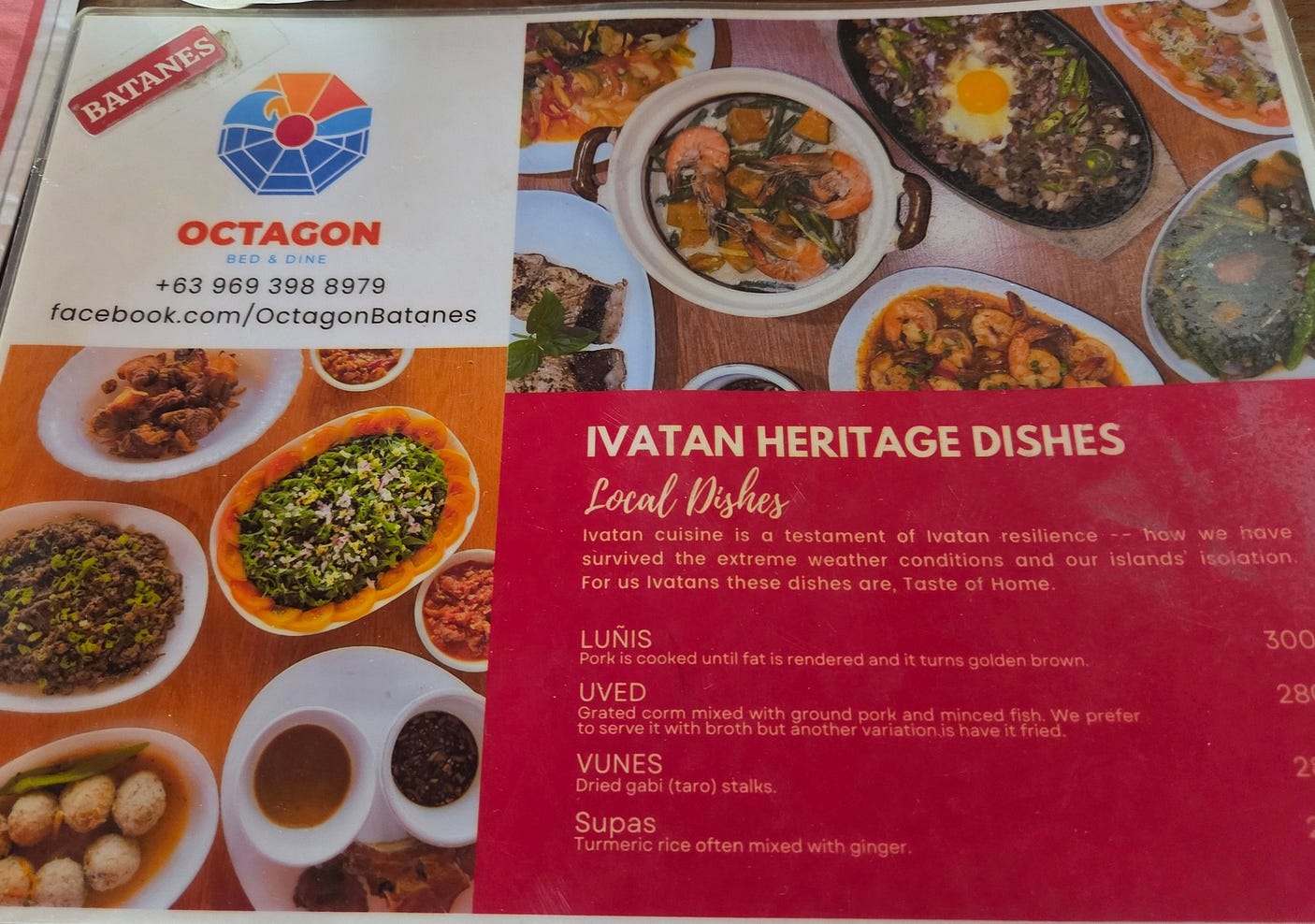
Another place that served Ivatan cuisine was the Octagon Bed and Dine, also in Basco.

Though the capital is named Basco, it also has a statue of the Ivatan chieftain Aman Dangat, who stood up to Basco and was eventually executed by the governor in 1791.

And, of course, José Rizal.

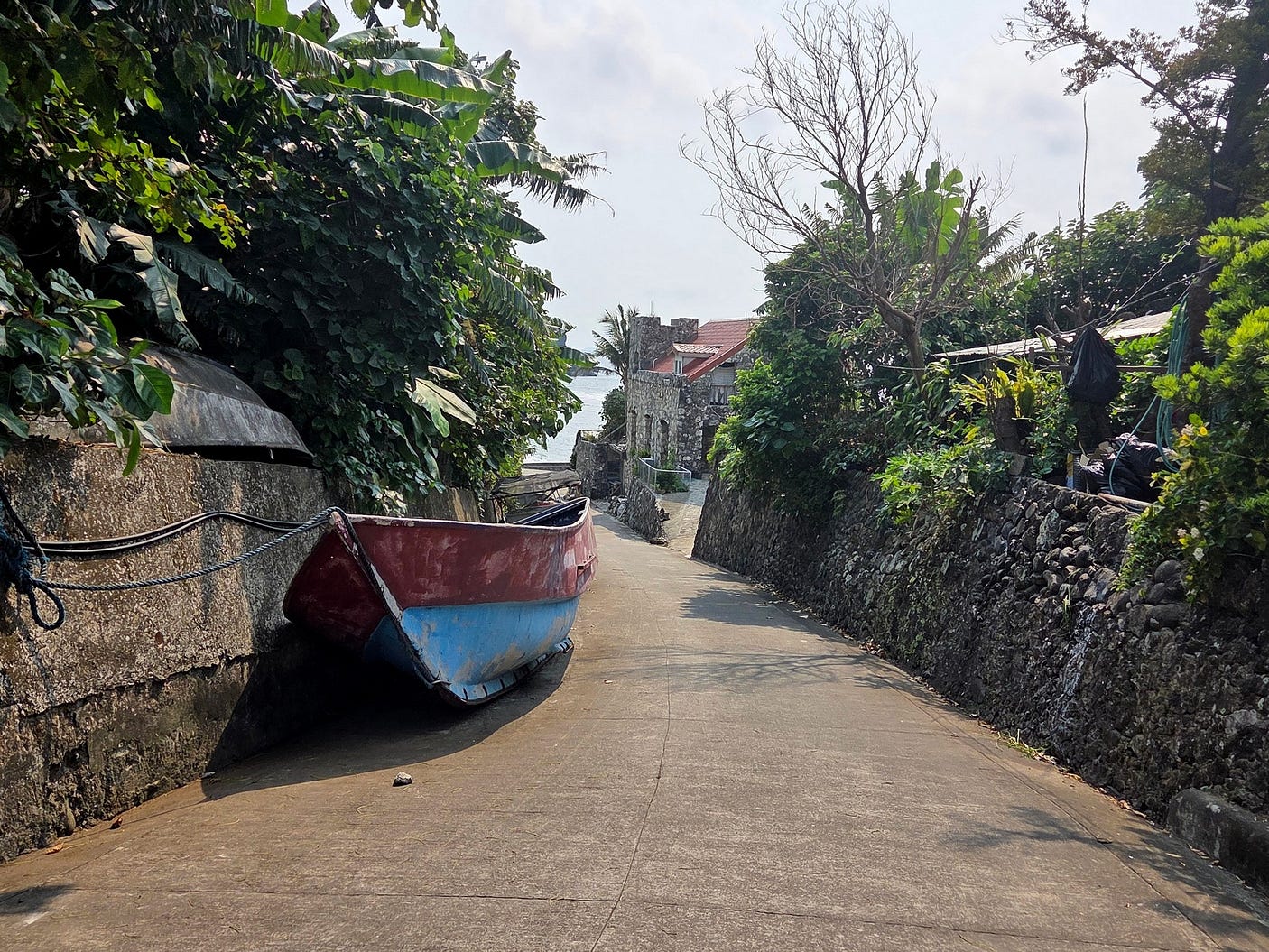
Basco has lots of amazingly quaint houses, shops, alleys, and streets to stroll around.
The next photo shows a local branch of the Ĉebuana Lhuillier Pawnshop, of which there are thousands in the Philippines.
Here’s a very quaint stone shop or cafe with blue shutters.

And a stone-lined alleyway with boats in it: tons of character!
I then hired a motorbike for 1,000 pesos a day and drove around the island.
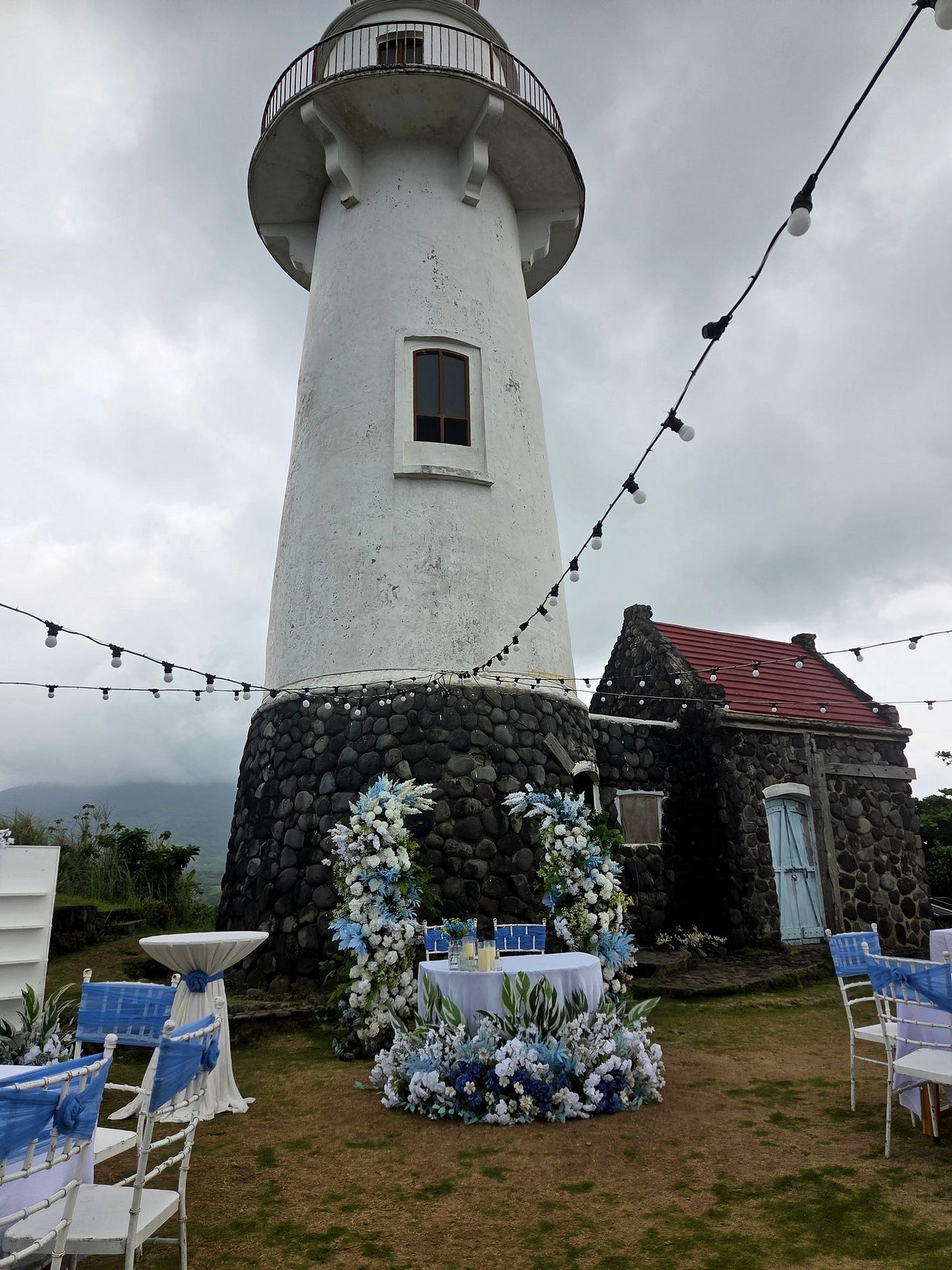
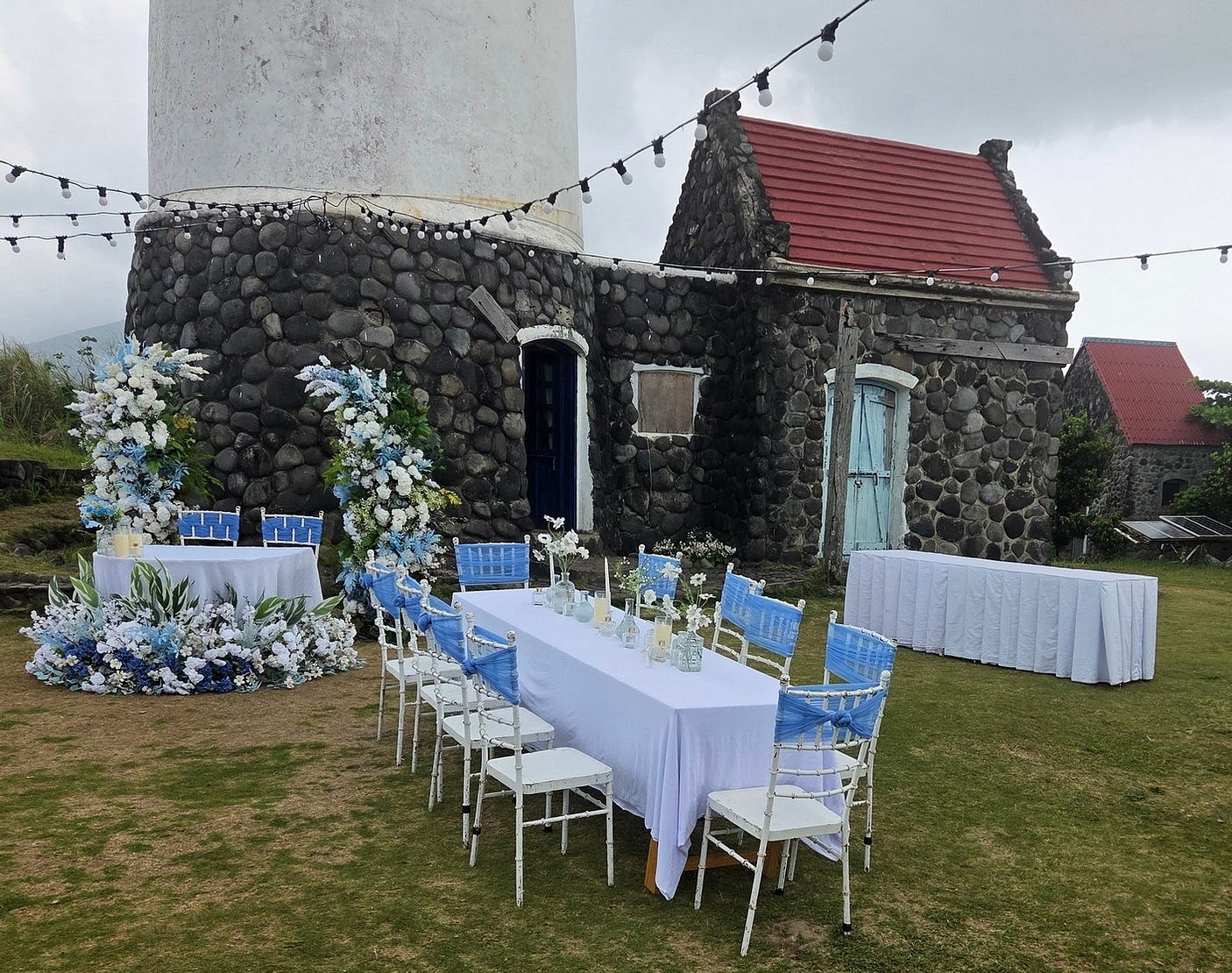
With my newfound freedom of the road, I promptly discovered such things as the Basco Lighthouse, itself partly built in the old stone style and, surprisingly enough, only first lit in 2003.

In reality, it is partly a tourist attraction, and celebrations were going on while I was there.
There was a mural of an old-time farmer inside.
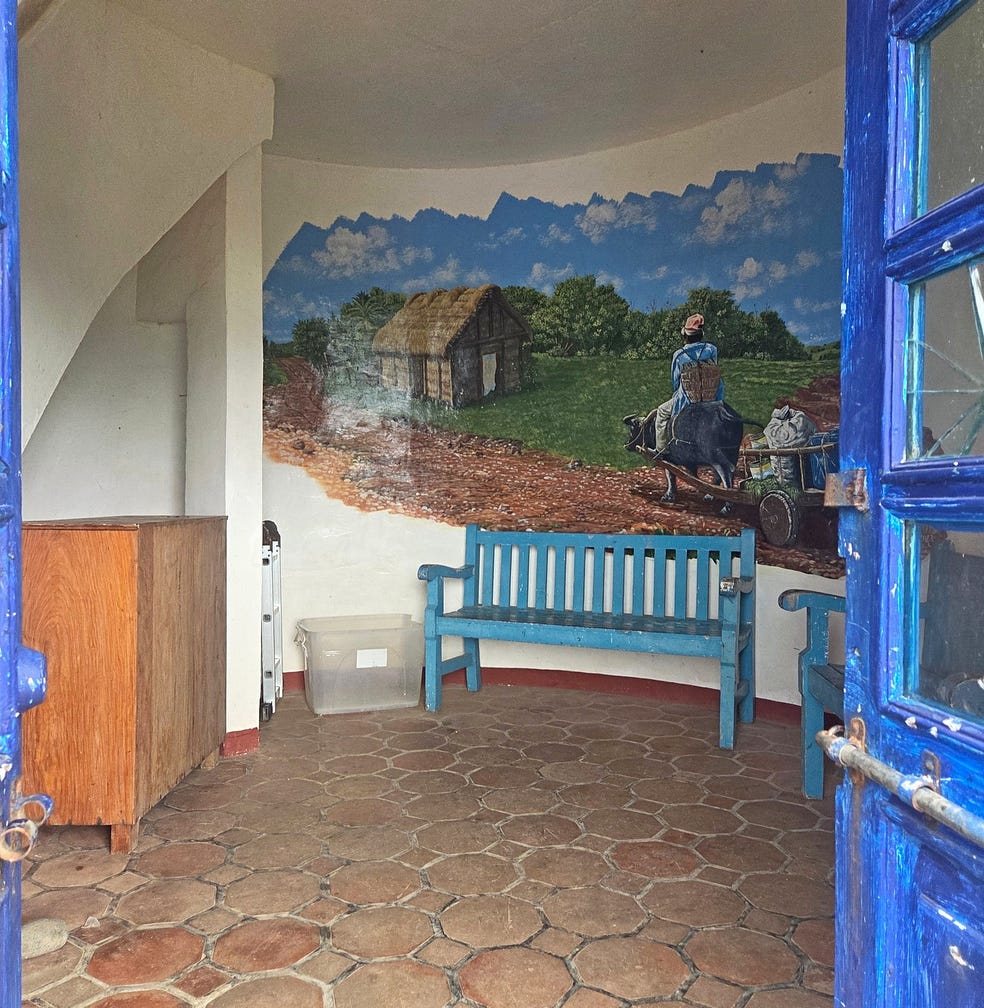
There are great views from the site of the lighthouse.
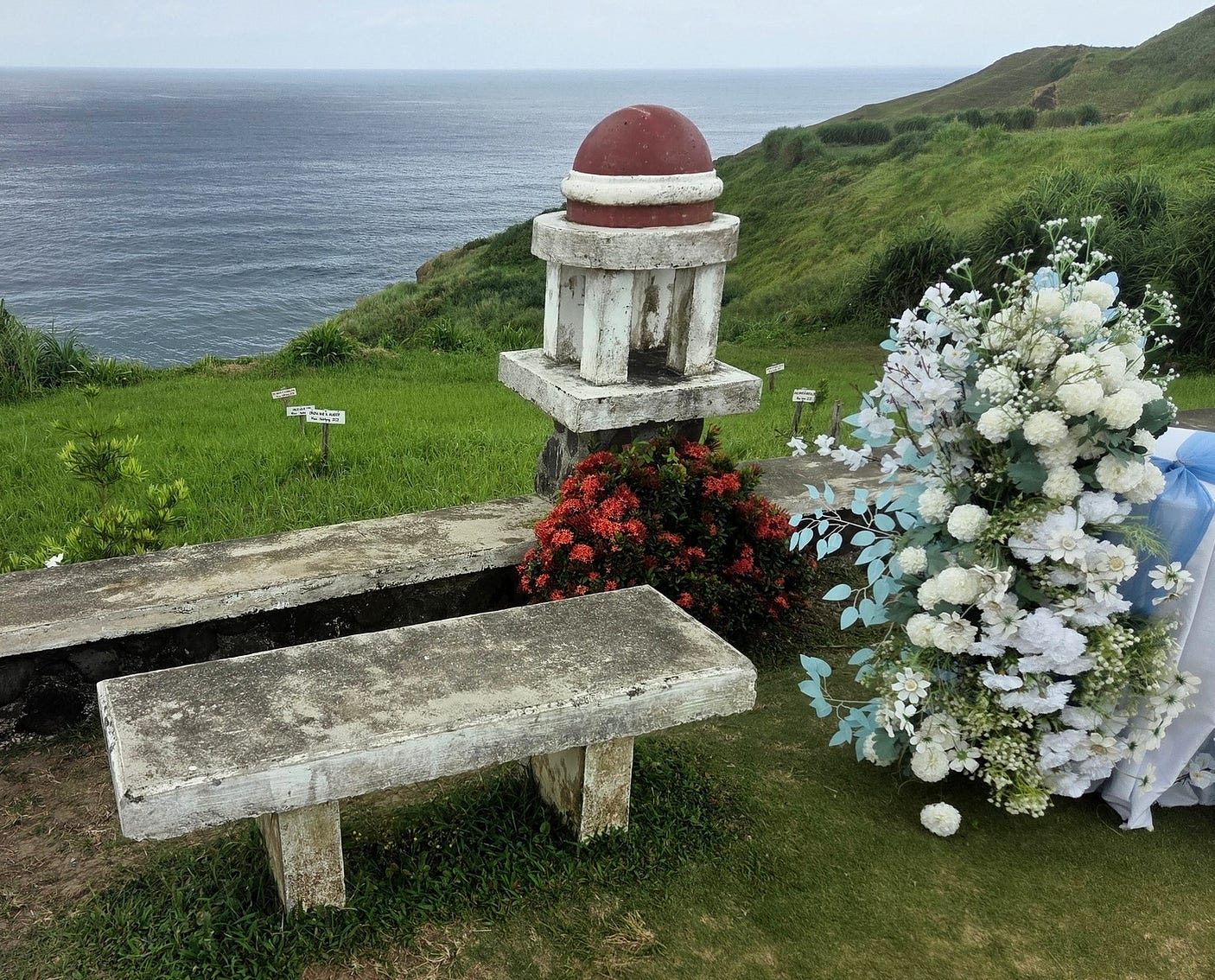
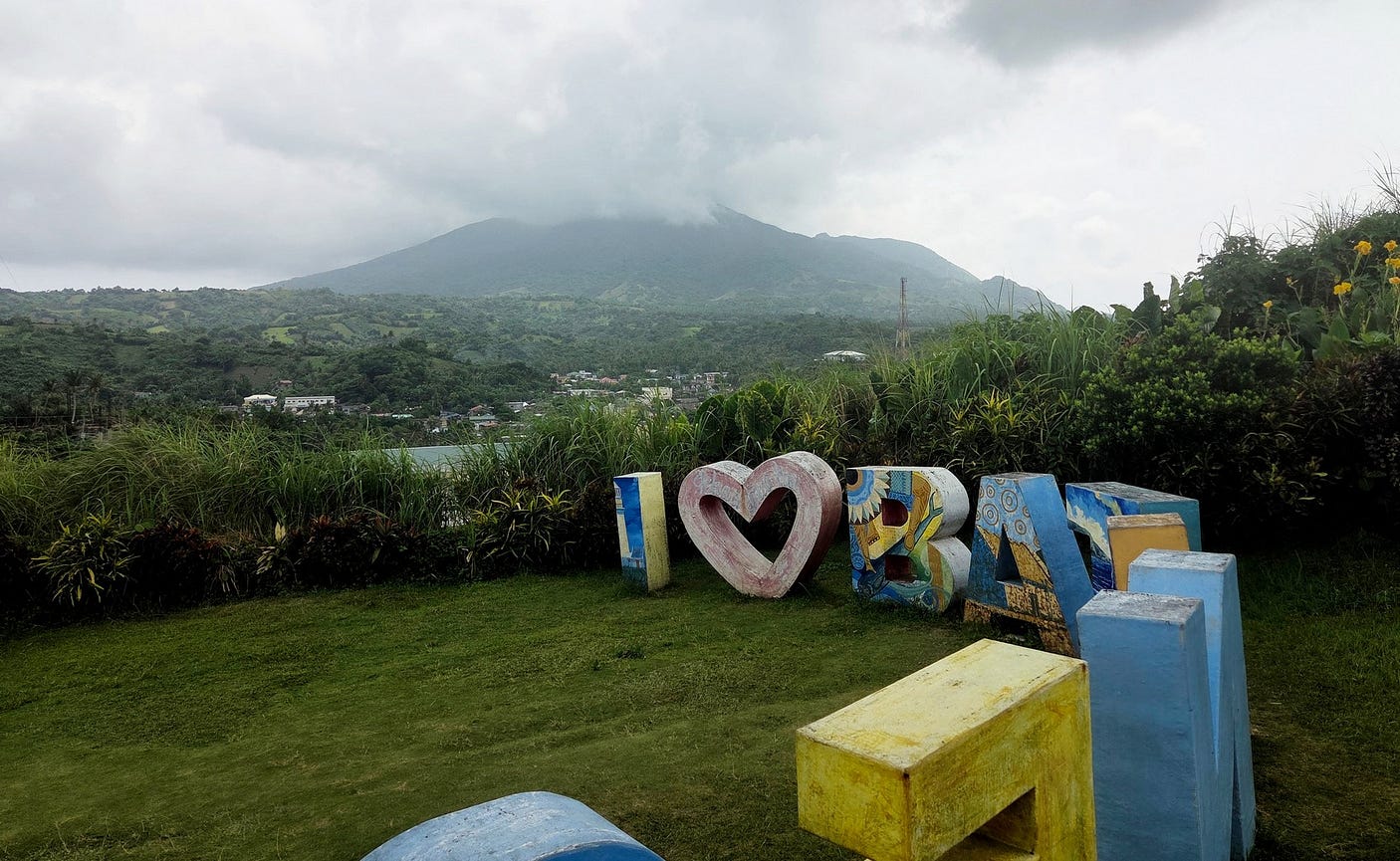
Next week, I will describe more of the things I came across on my Batan Road Trip!
Subscribe to our mailing list to receive free giveaways!

