Giveaways
FROM Palawan, the subject of last week’s post, I flew back to Clark Airport in Luzon and then travelled by bus, 180 km northward from Manila, to Baguio City.
Baguio is a lovely city, much smaller than Manila, with a population of around 415,000 in its metro area.

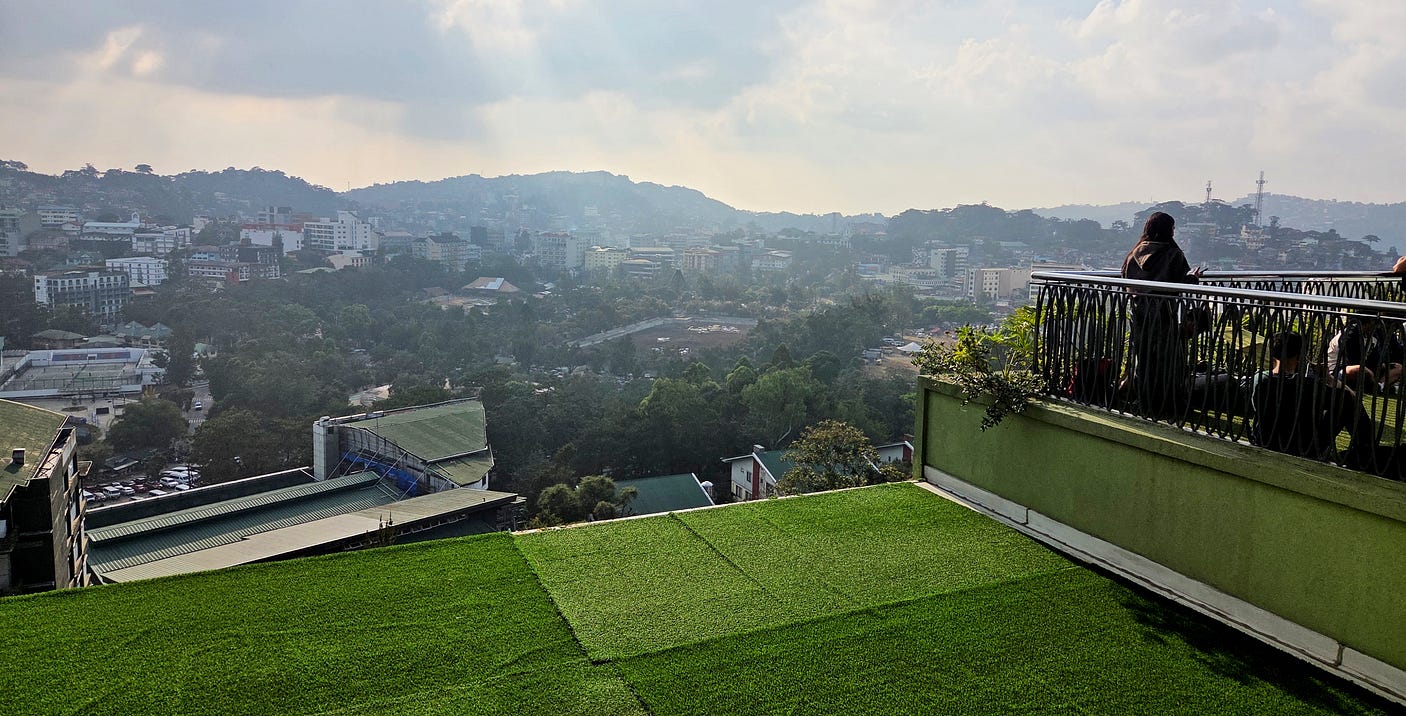
Baguio was founded by the Americans in 1900, shortly after they took over the Philippines from the Spanish, on the site of an indigenous Ibaloi village.
In 1903, the Americans founded a military base at Baguio, called Camp John Hay, part of which is now Camp John Hay Park.
The reason the Americans came to Baguio is that, with its lowest point 1,400 metres above sea level, Baguio was seen as a refuge from the summer heat of the lowlands.
In other words, the Americans developed Baguio as a ‘hill station.’ Under the American colonial regime, which lasted until 1946, Baguio City became the summer capital of the Philippines.
Today, Baguio City is no longer a colonial outpost.
But it still has all the attractions that drew the Americans to it. Baguio is now reinventing itself as a tourist destination high up in the cool mountains, under the slogan ‘Breathe Baguio.’
In the peak tourist season, from November to May the population of Baguio can increase by as much as its resident population again, or perhaps even more
Even so, nearly every tourist who visits Baguio City is a Filipino, with only one or two per cent of visitors being international tourists.
While Baguio offers a refuge from the summer heat, its peak tourist season is actually in winter: the time of the Christmas and New Year holidays, and the Panagbenga Flower Festival in February, the very busiest time.

At the end of April, I was near the end of the peak tourist season.
Initially just a base for the military and various officials, Baguio was chartered as a fully fledged city in 1909.
I’m not sure what had happened to the village by that stage, but there is a reconstructed indigenous village called Tam-Awan in Baguio City, and other more continuously inhabited ones in the rural districts outside the city.
The Americans hired a famous architect, Daniel Burnham, to devise a plan for their intended city.

That was in the days before the automobile was common, and, as such, before inner-city motorway junctions and random suburban sprawl: when even the Americans still took town planning seriously. To this day, the central parts of Baguio City, at least, remain faithful to Burnham’s plan.

The Americans also founded the Baguio Country Club in 1905, still heavily patronised by Americans as far as I could tell. There was heightened security at the Country Club, and you could only get in if you were sponsored, so I could not go in for a beer to escape the heat (Baguio might have been the summer capital, but it was still pretty warm when I was there).
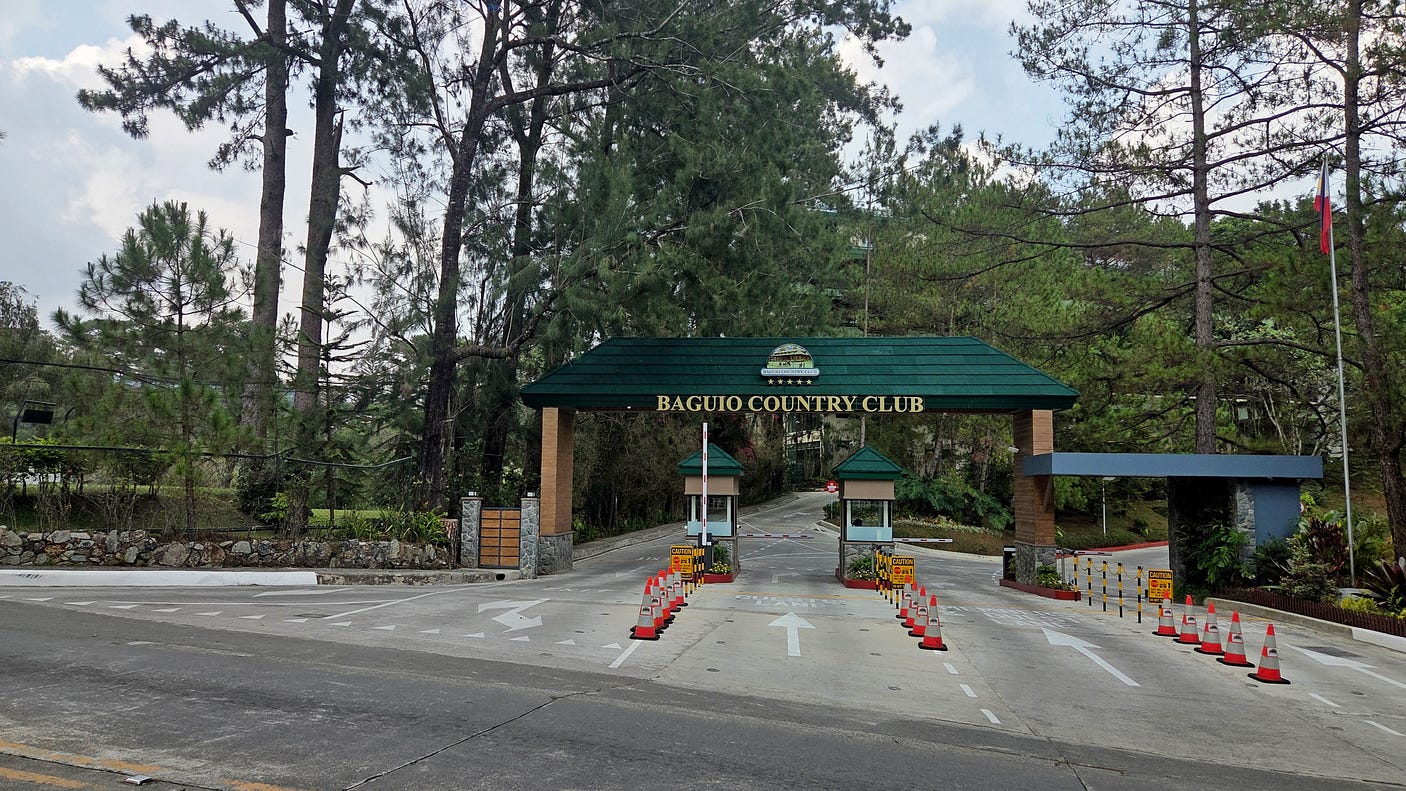
There was a golf course, but I couldn’t see anyone playing golf, either.
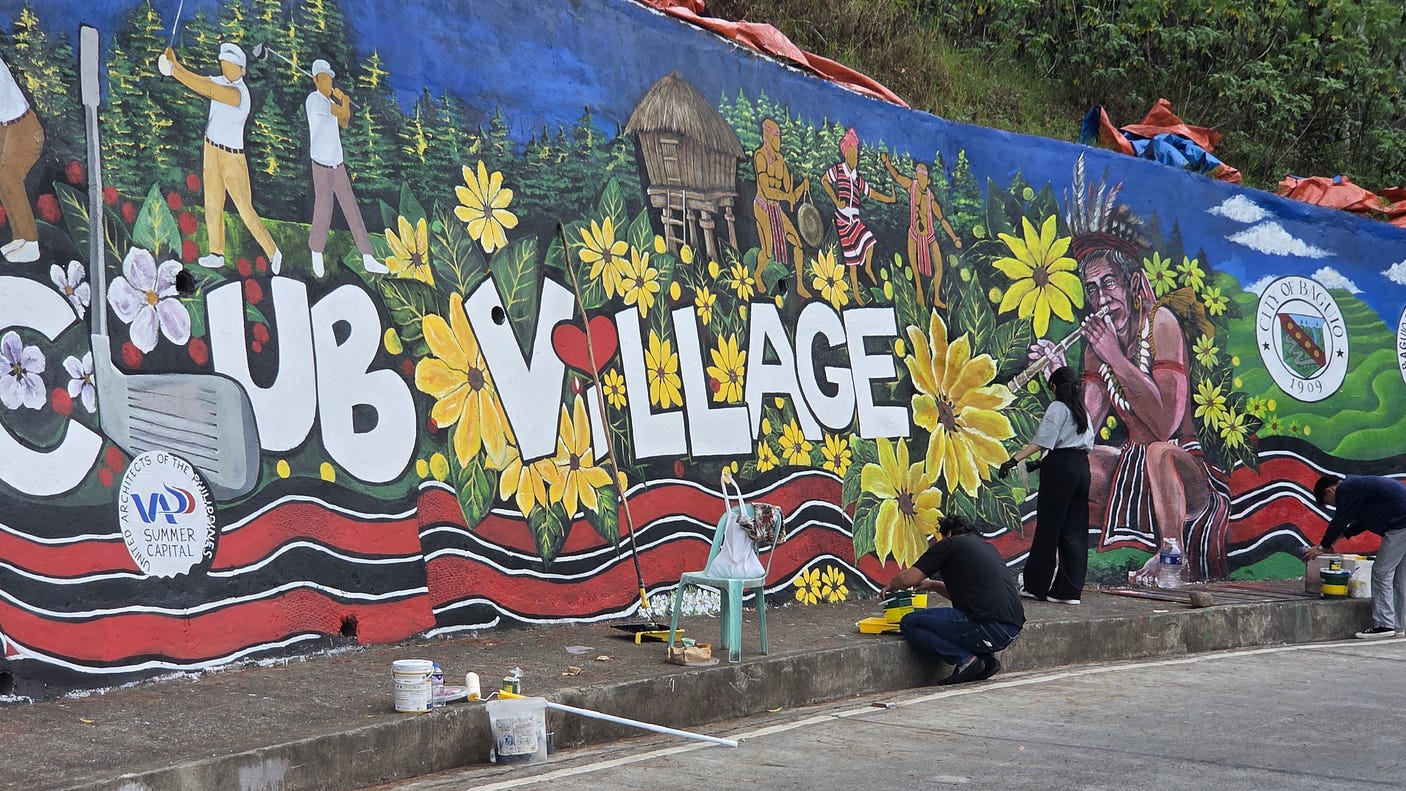
Baguio’s role as a summer capital would decline once air conditioning made it practical to keep on performing office work in Manila during the summer, but the city still retains the ceremonial title of summer capital.
In Baguio, I explored the former Camp John Hay.
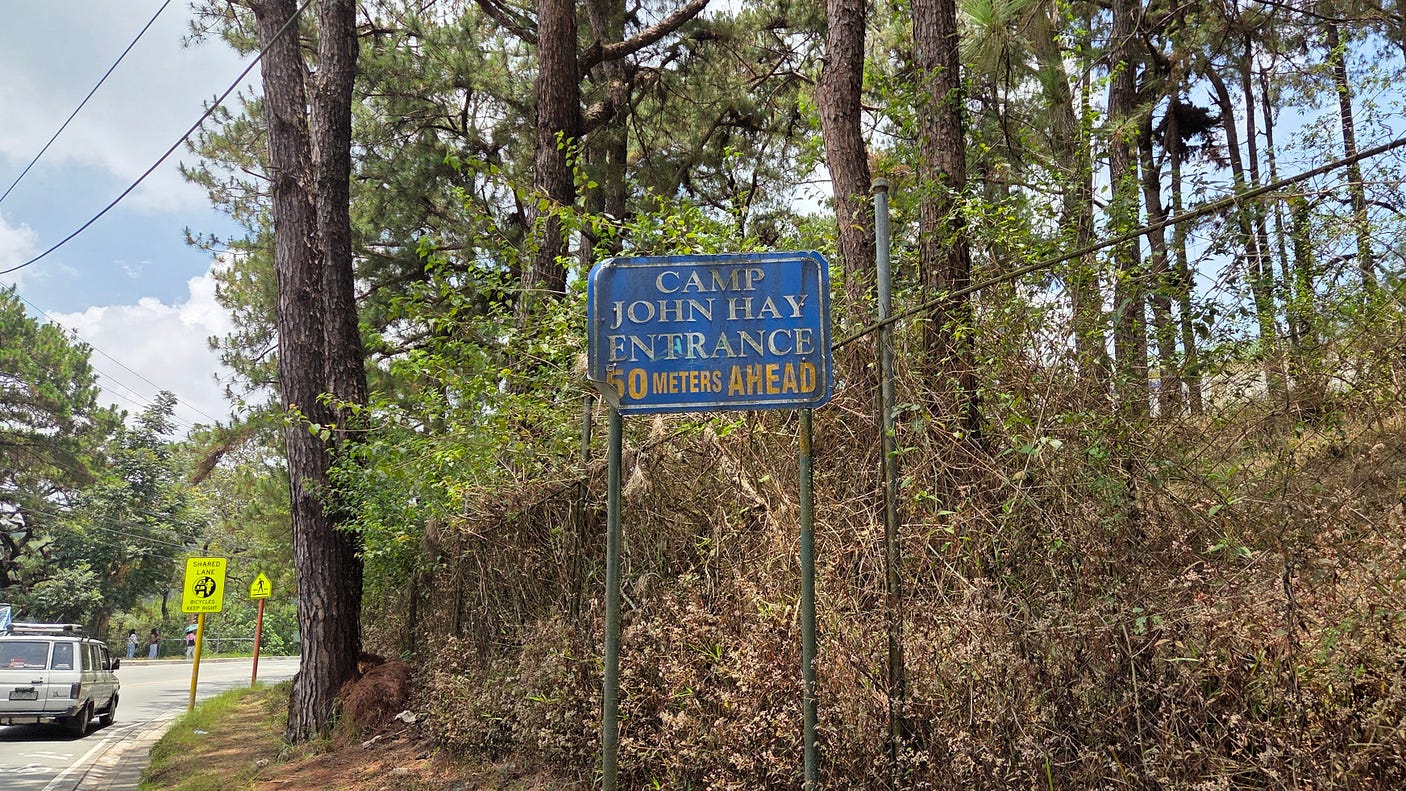
The former Camp John Hay is gradually being redeveloped by an organisation called the Bases Conversion Development Authority (BCDA). Partly into commercial redevelopment.
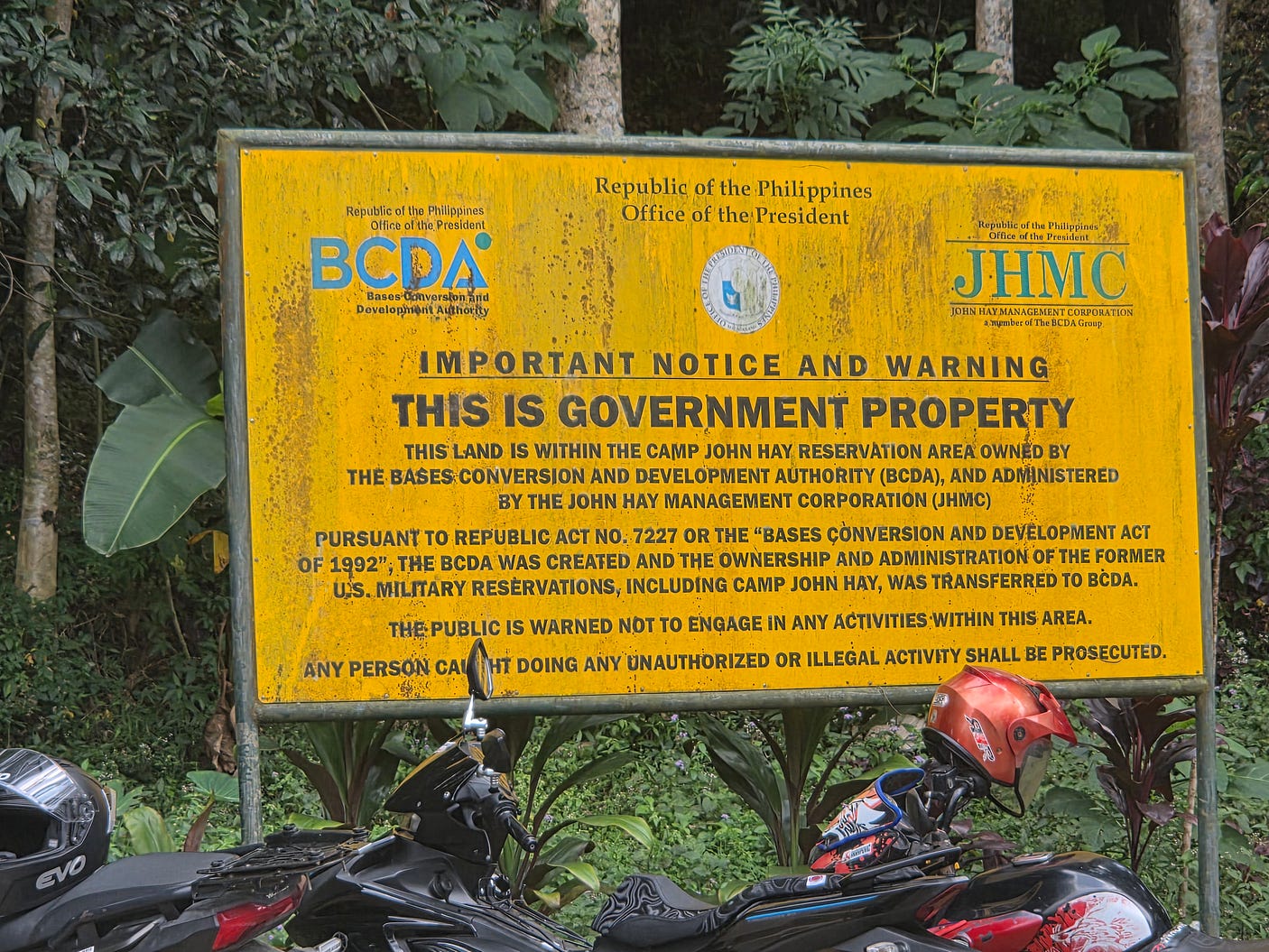
Another section was being made into a great park called Camp John Hay Park.
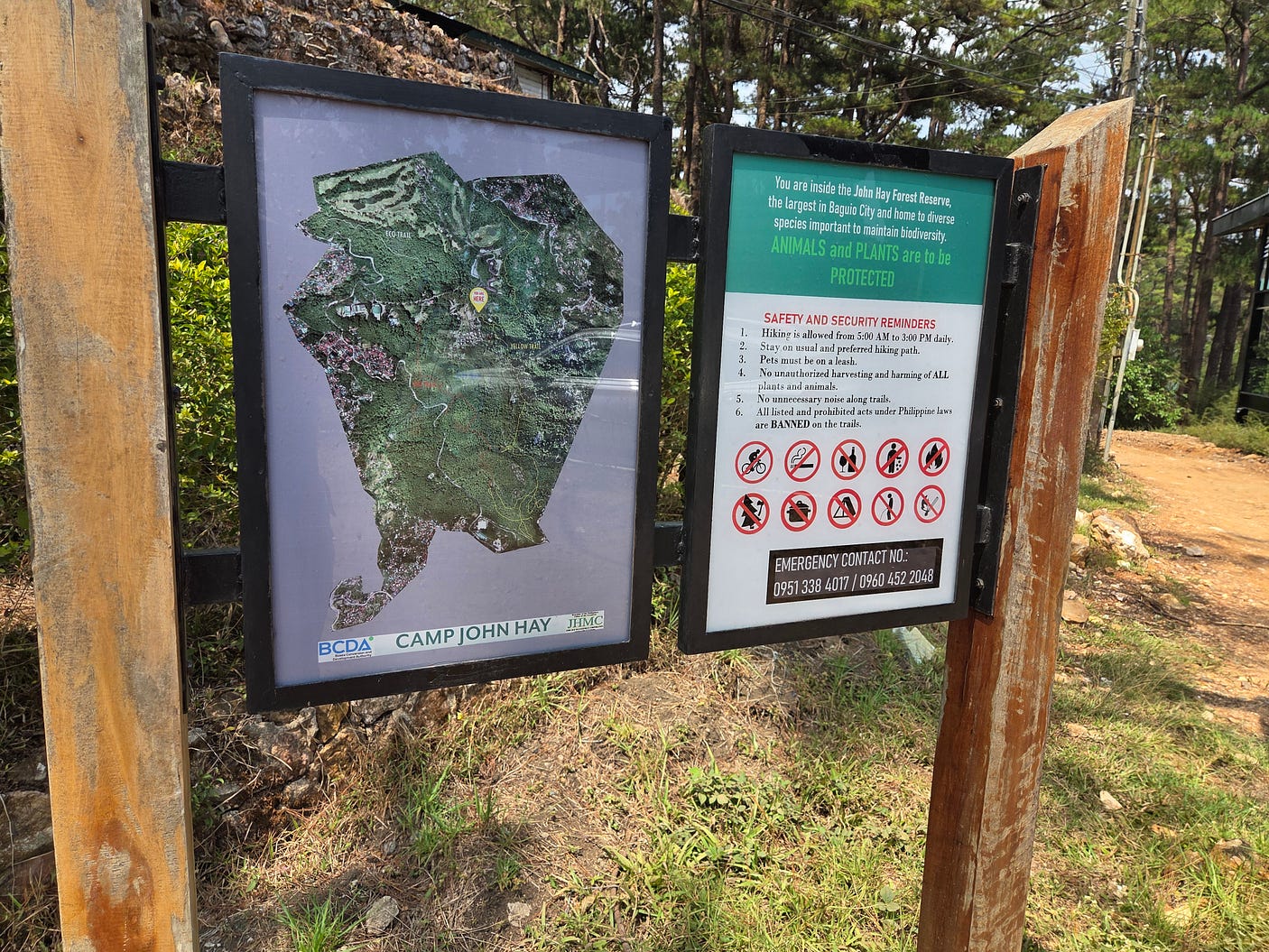
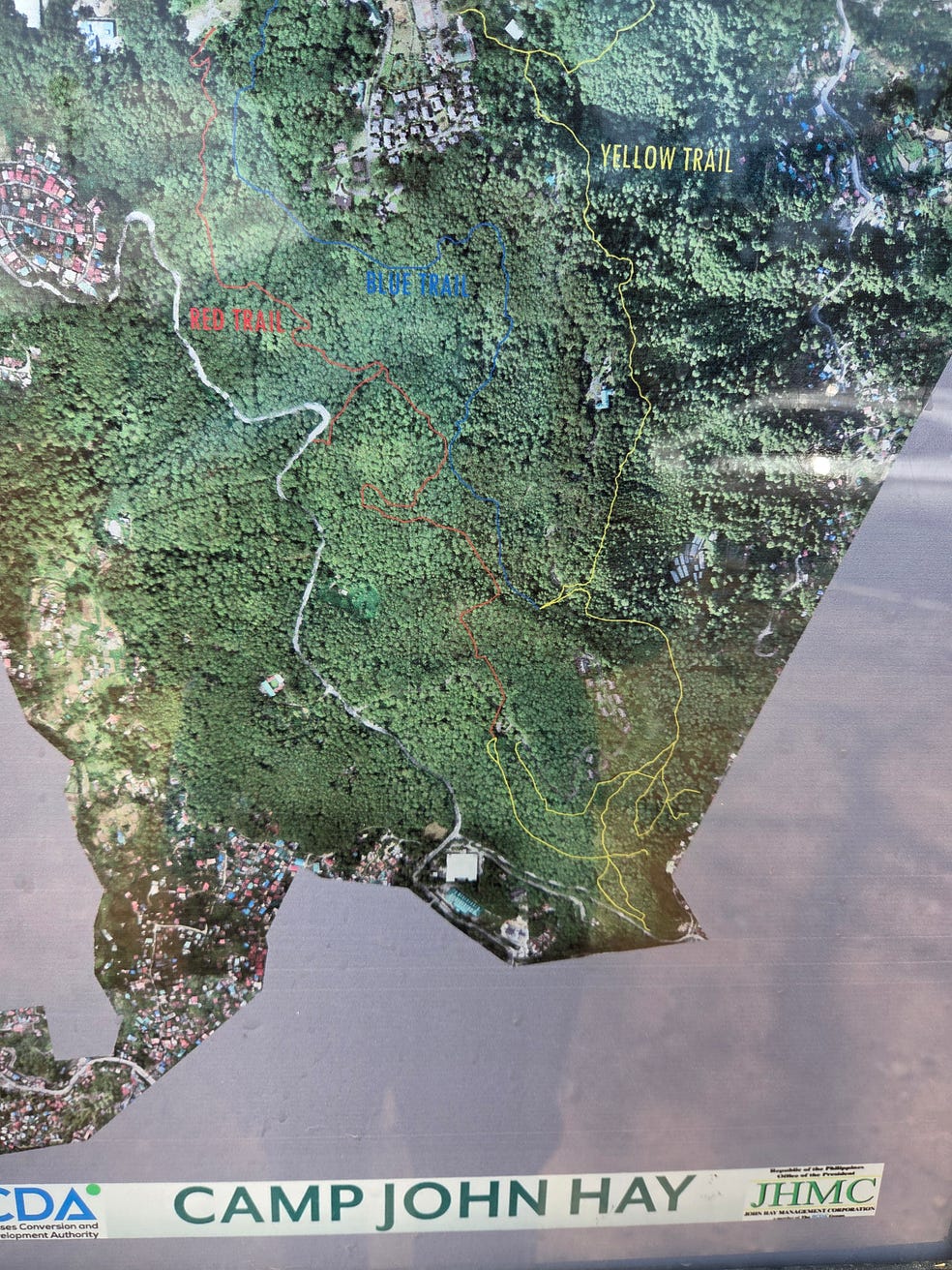
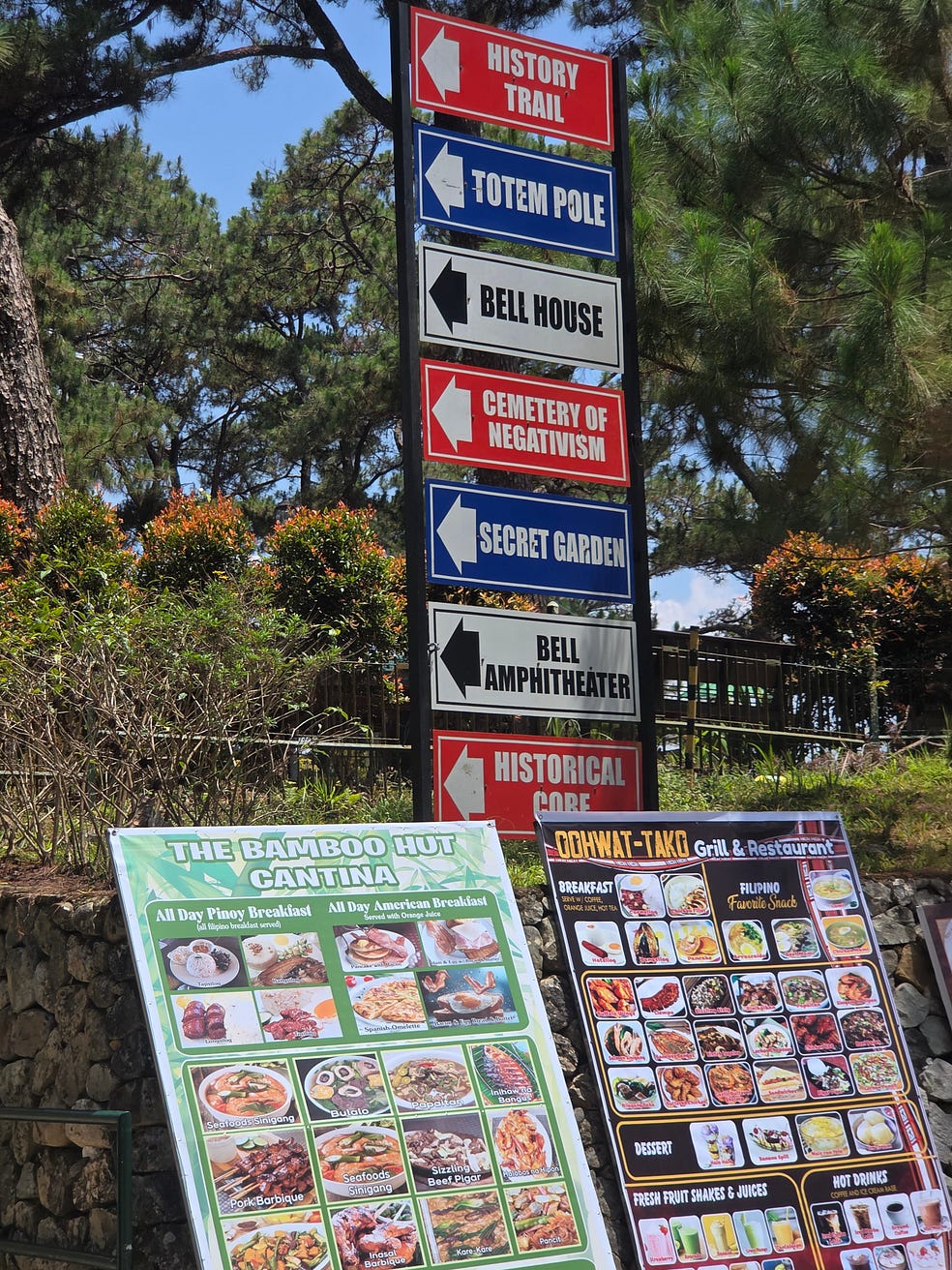
There is a free tourist bus that takes you past many of the main attractions of the former camp.

One of the quirkiest was the Cemetery of Negativism, created by a former commander of the base.

By order, all negative thoughts were to be interred in the cemetery.
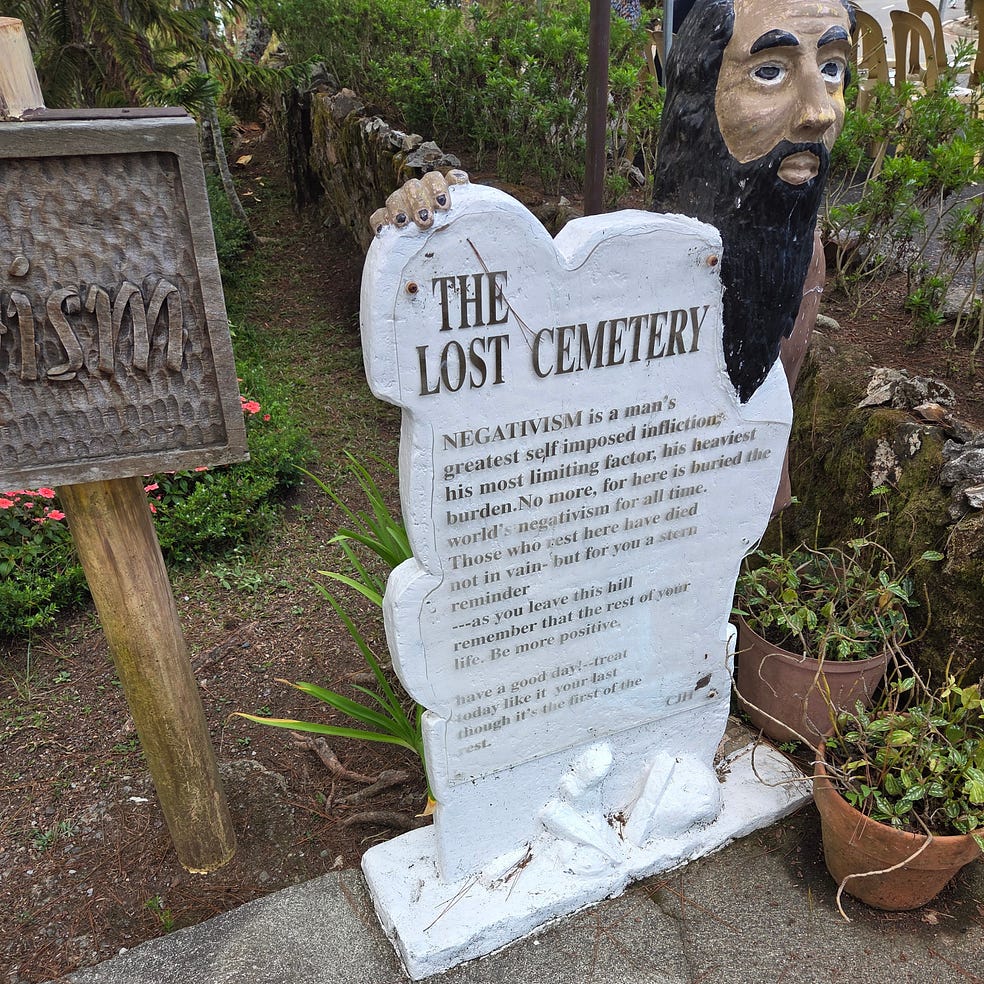
Negative thoughts such as ‘Just Kant Shakit / Born 5 October 1819 / Died of Passivity 20 May 1913.’

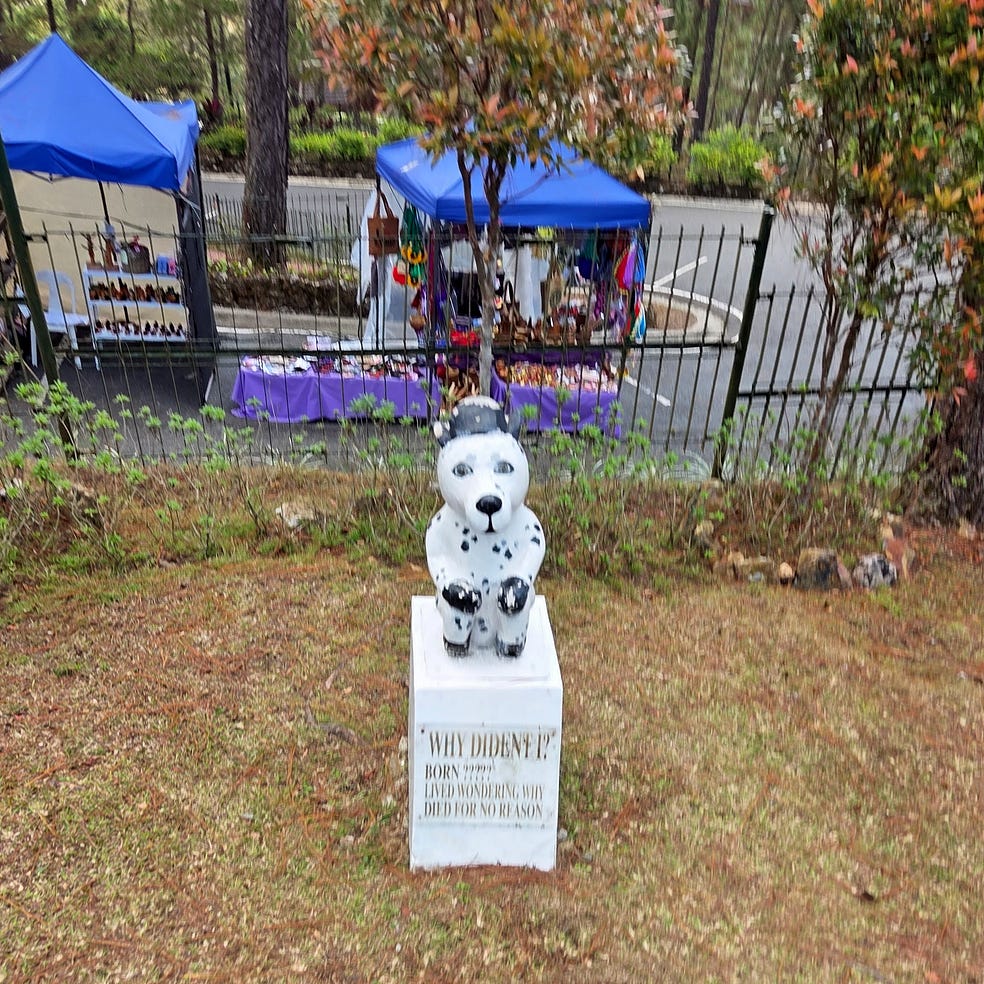
And ‘Why Dident I? / Born ???? / Lived Wondering Why / Died for No Reason.’
And then there was the totem pole, a pou whenua (as we say in New Zealand) of historical figures associated with the development of Baguio City and Camp John Hay, many of whom sported most impressive moustaches. It was carved by the local master woodcarver Ernesto Dul-ang.
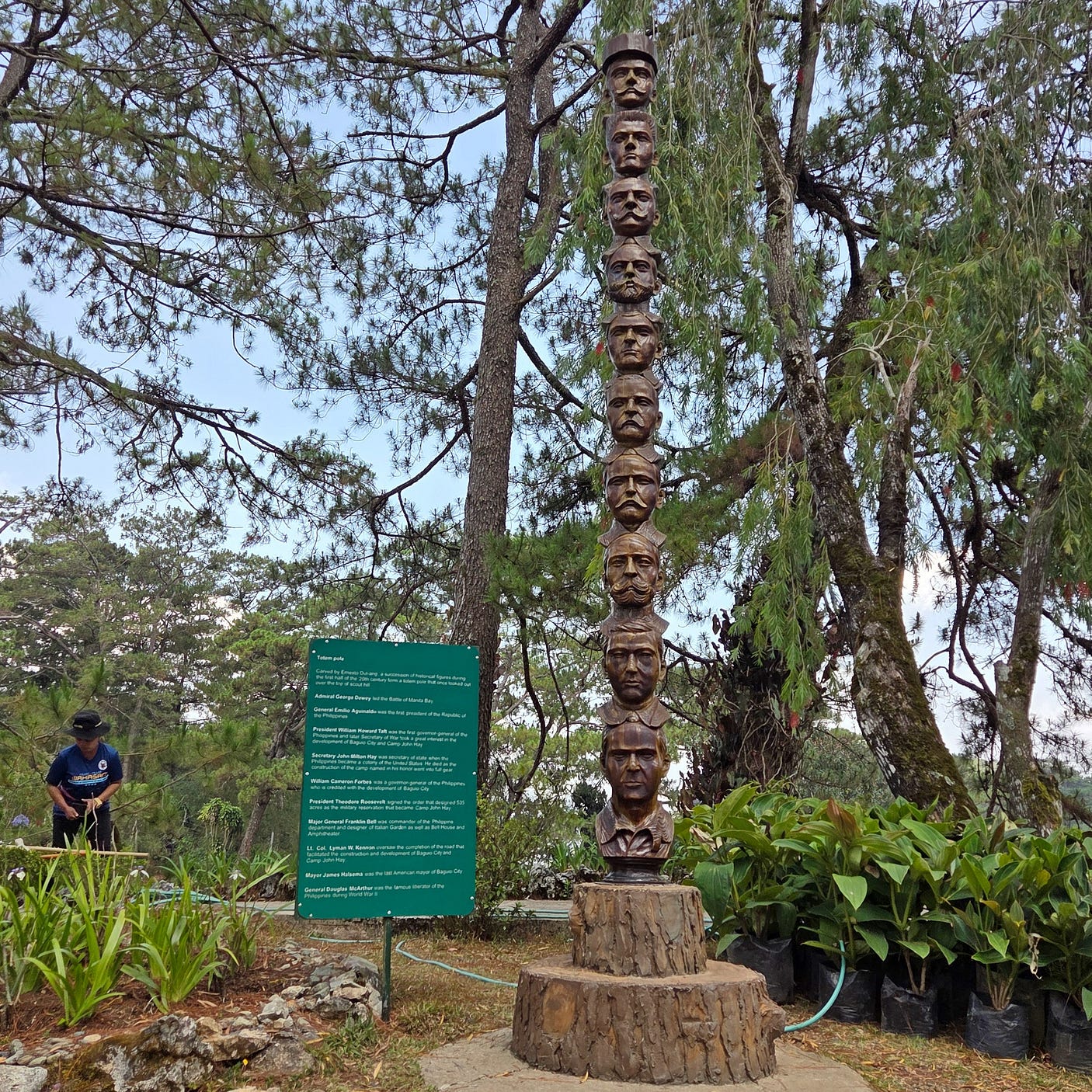
Here’s the information panel in the photo above, sharpened:

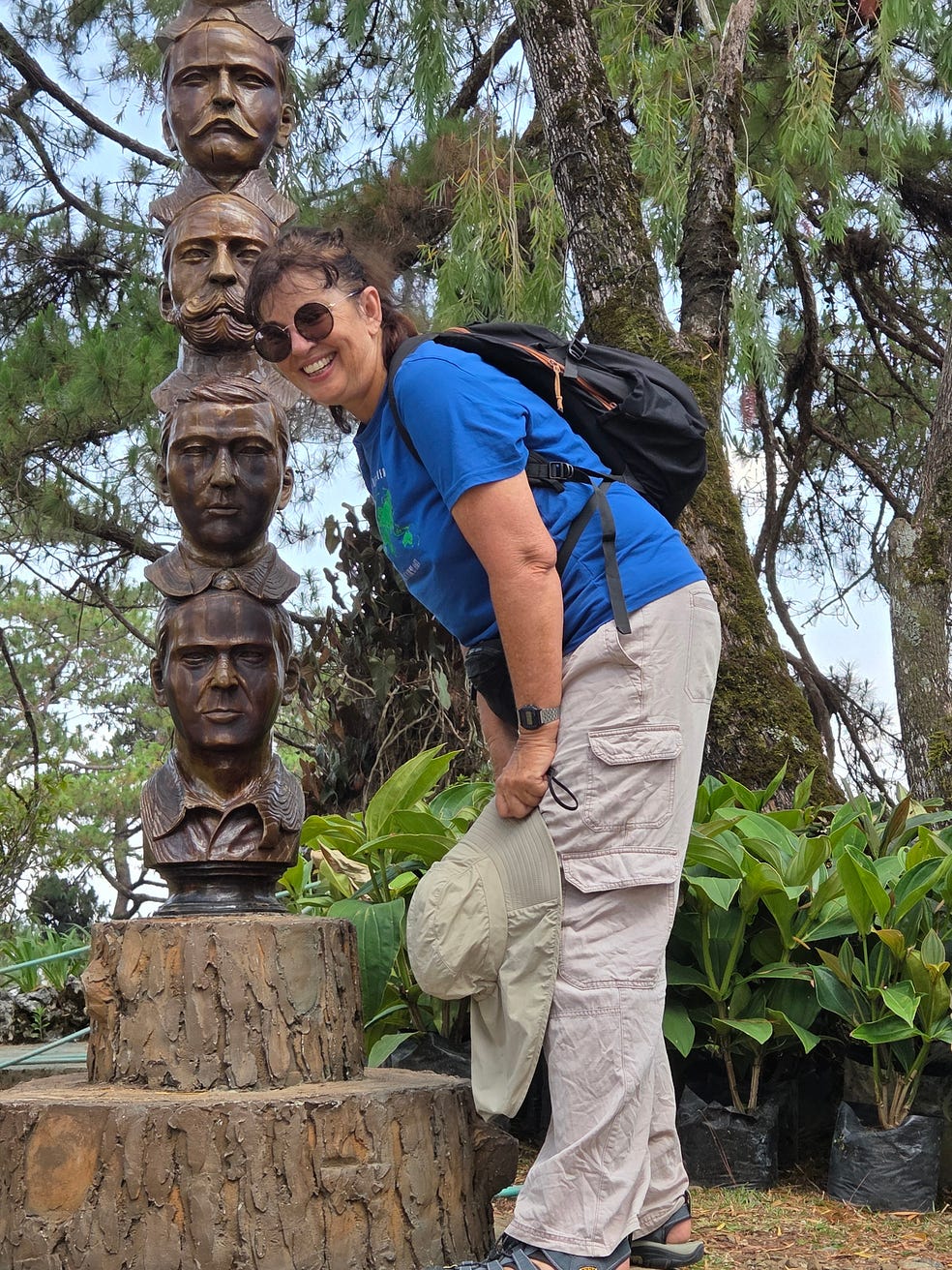
The camp was named after the equally stern-looking John Milton Hay, fourth from the top of the totem pole: the US Secretary of State at the time of the founding of the US settlement of Baguio.
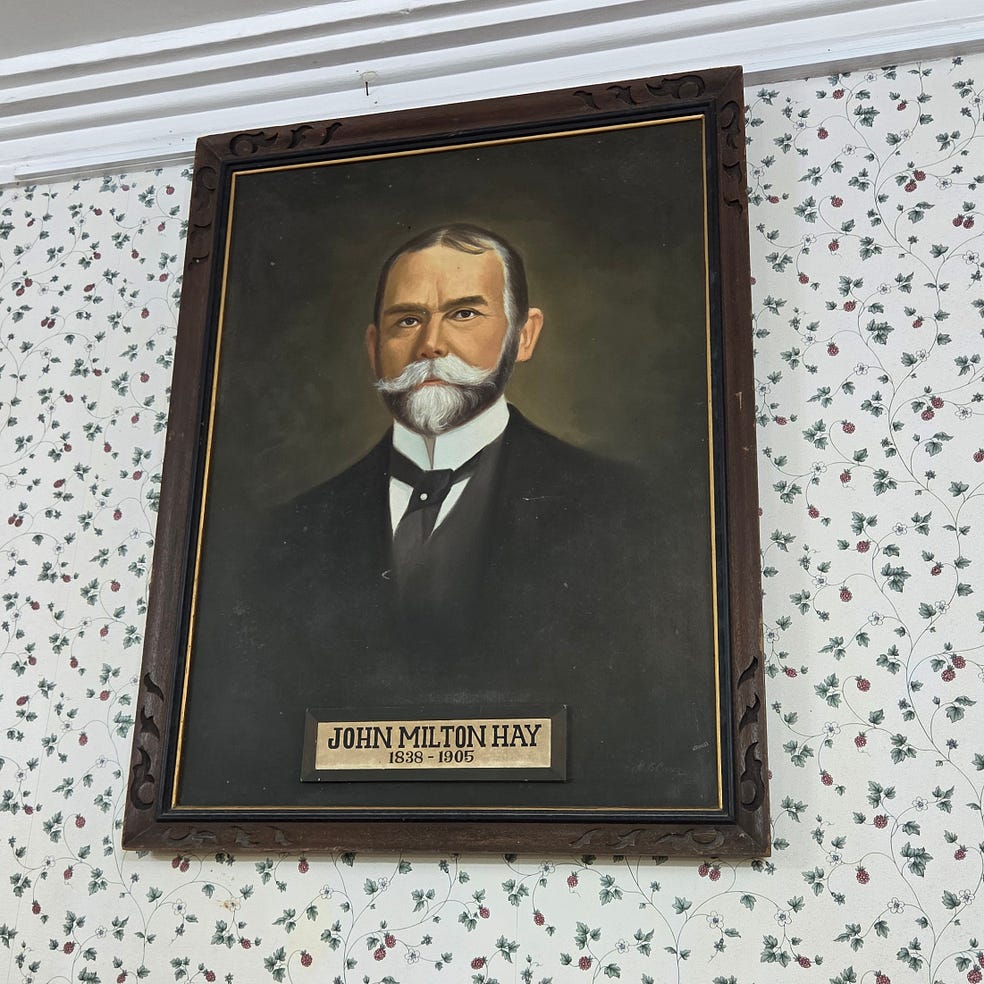
The portrait of Hay, just above, hangs in the Bell House, commissioned by General James Franklin Bell (fourth from the bottom).

Here are some photos from inside the Bell House.

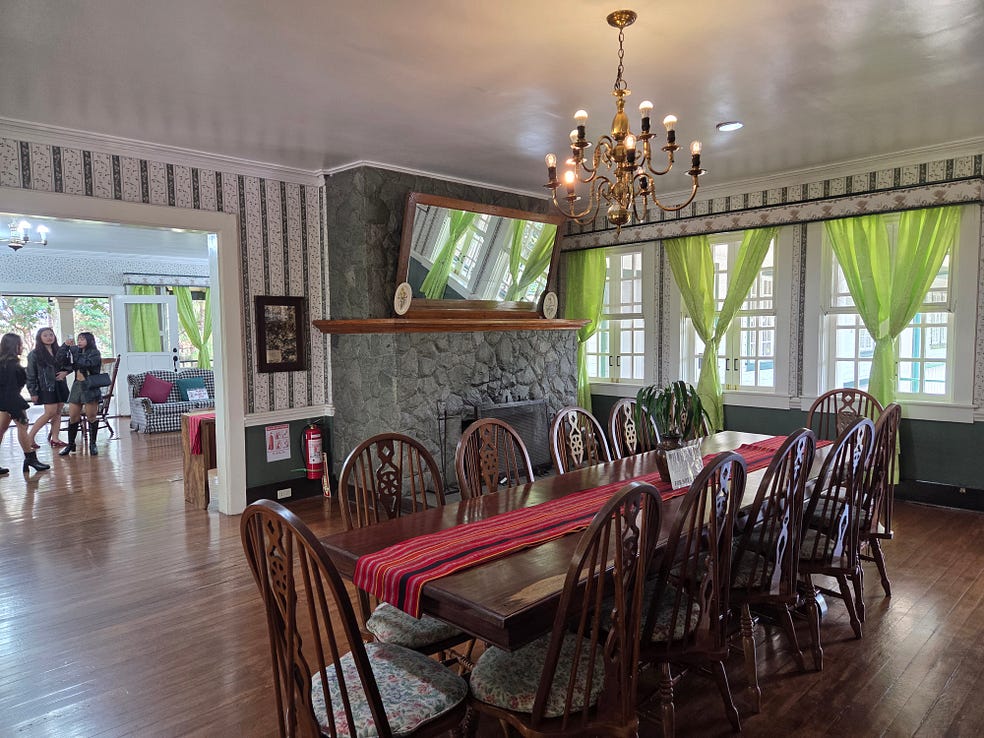
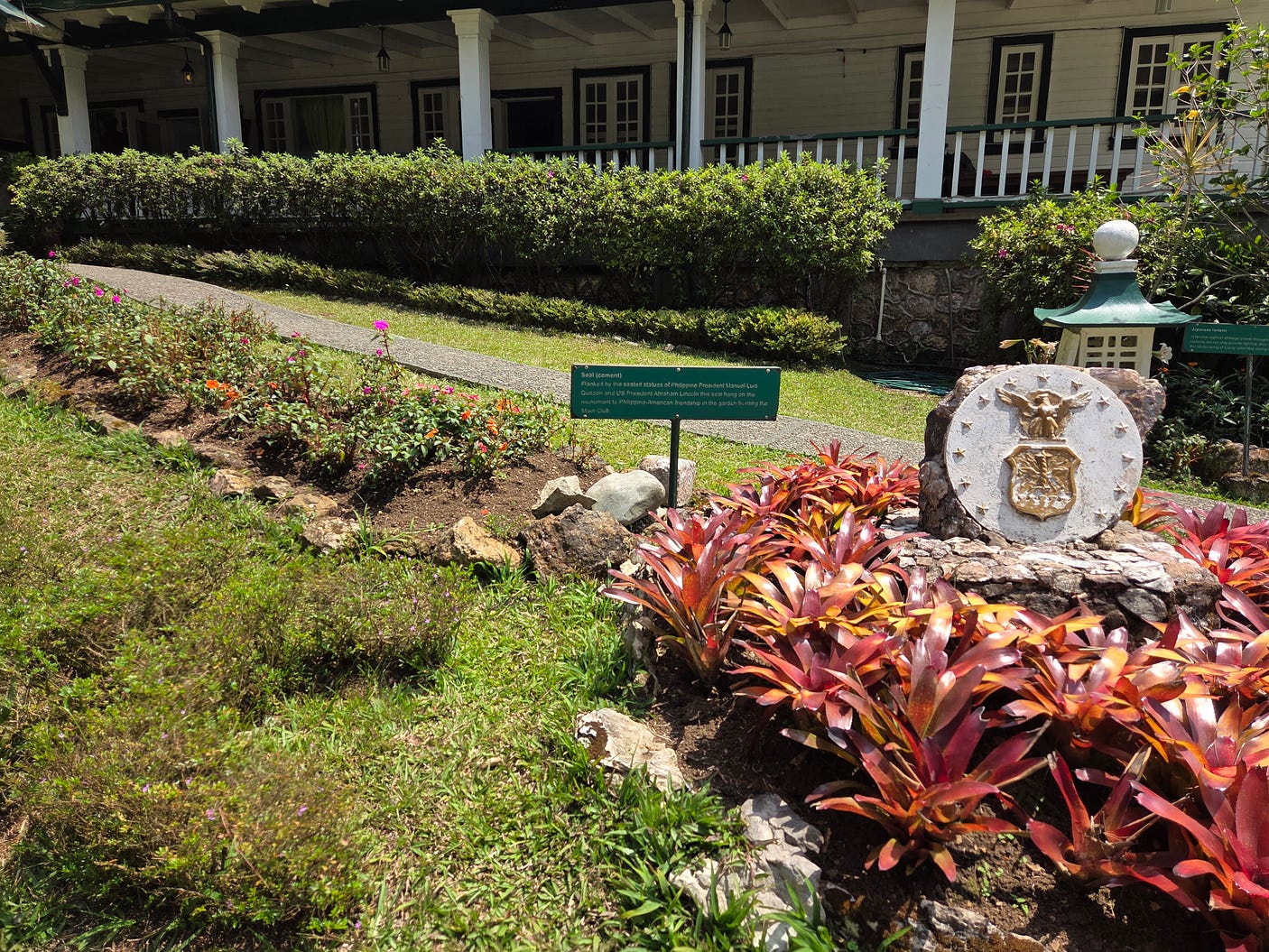
The final Japanese surrender in the Philippines took place in another building in Camp John Hay, the American High Commissioner and later Ambassador’s summer house. Ernesto Dul-ang has also done an amazing carving of that scene.
I explored the Secret Garden
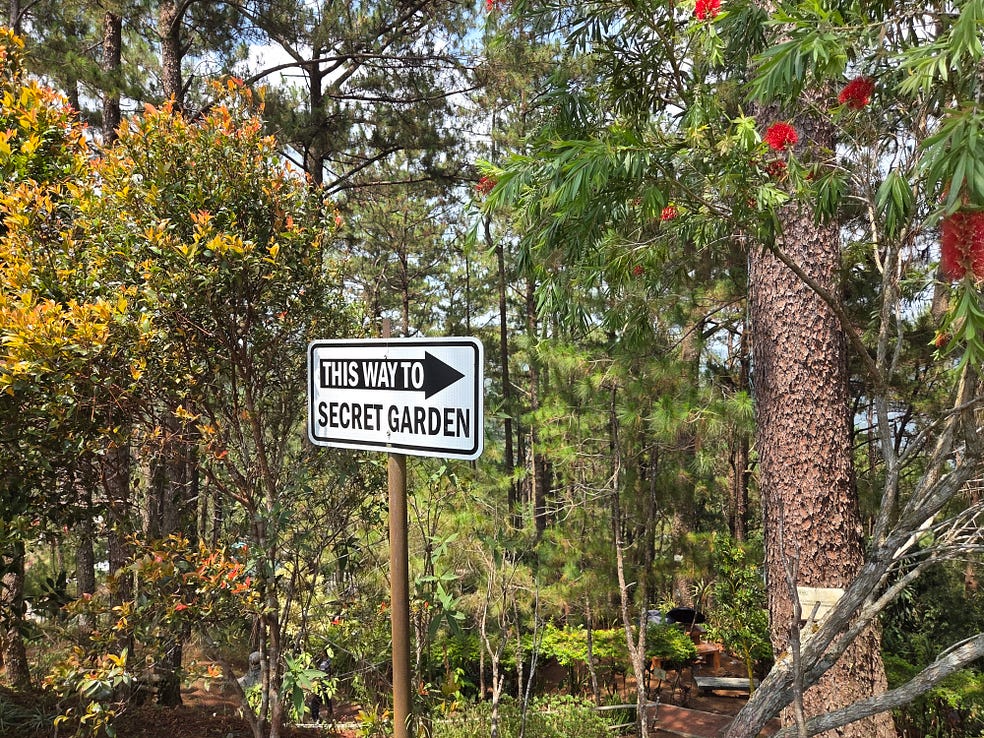
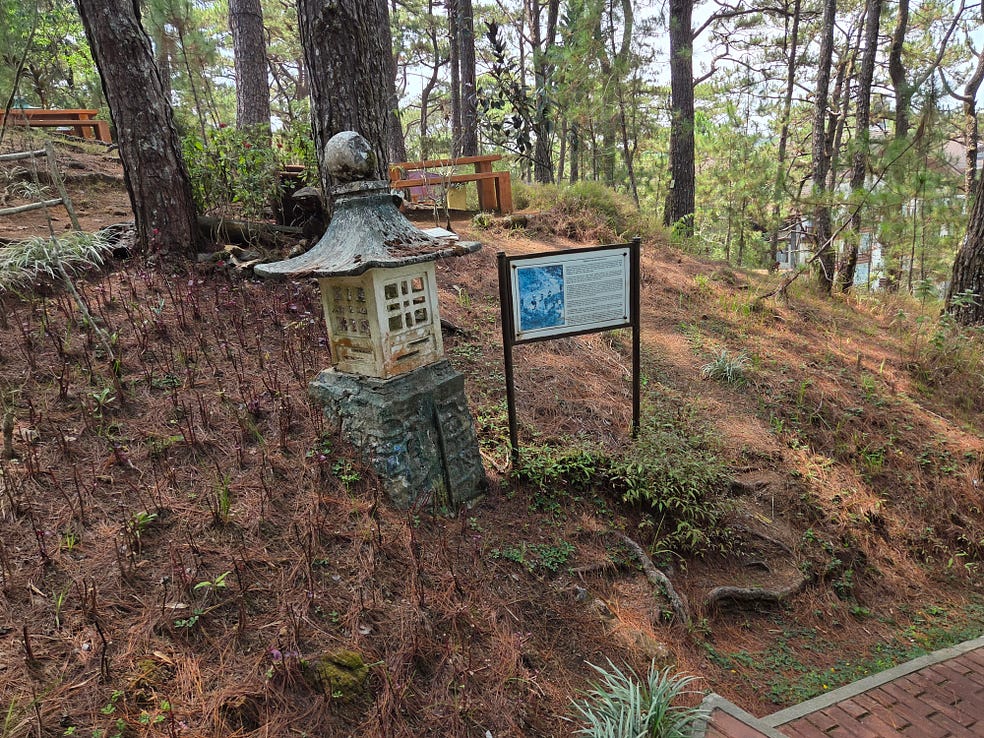
Here’s a recent YouTube video of the Bell House and Secret Garden:
And the Bell Amphitheater:

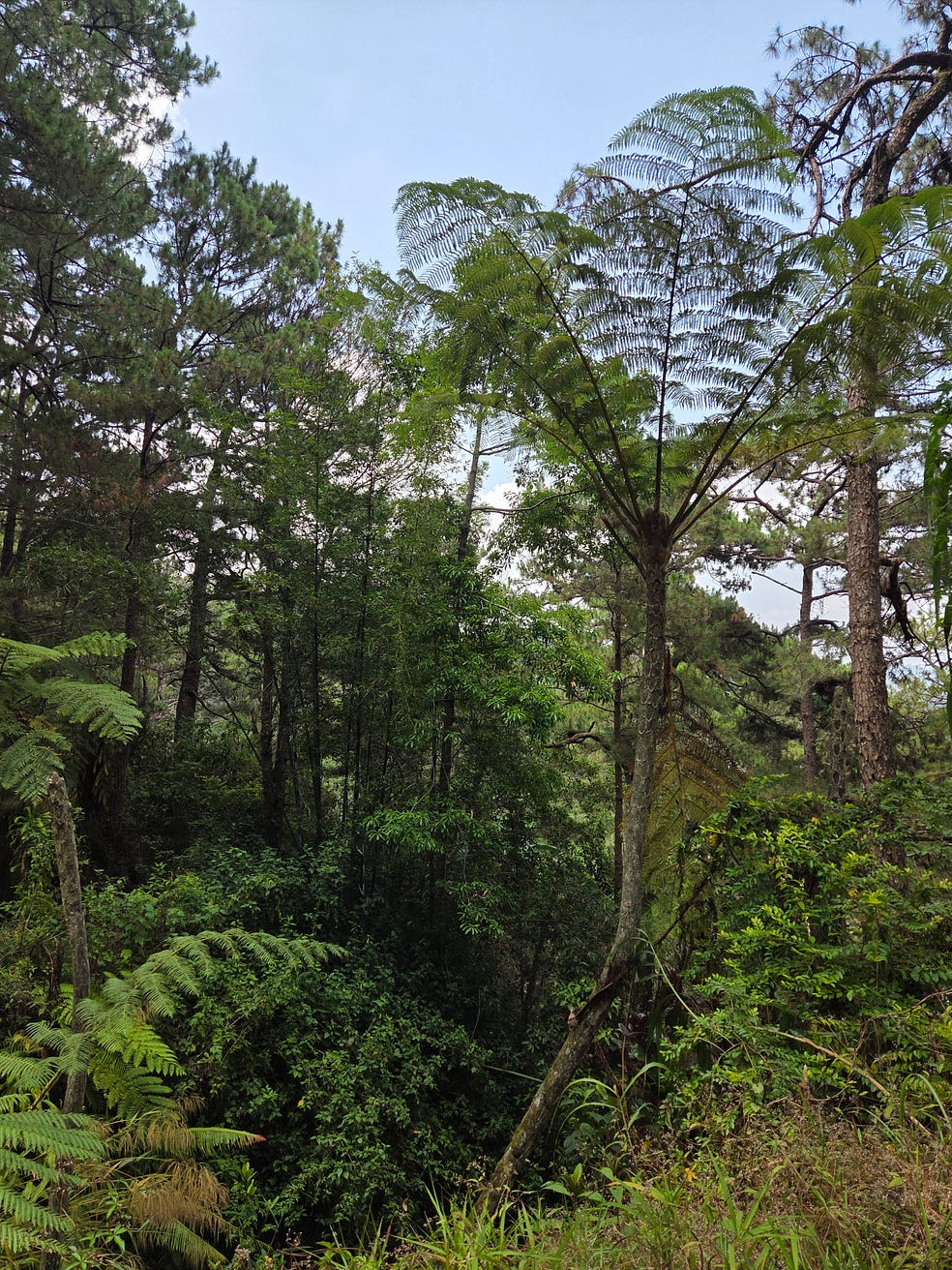
I got lost, and wandered through the pine forest for half an hour till I found my way out by following the water race down.

There were tree ferns that looked amazingly similar to New Zealand ones.
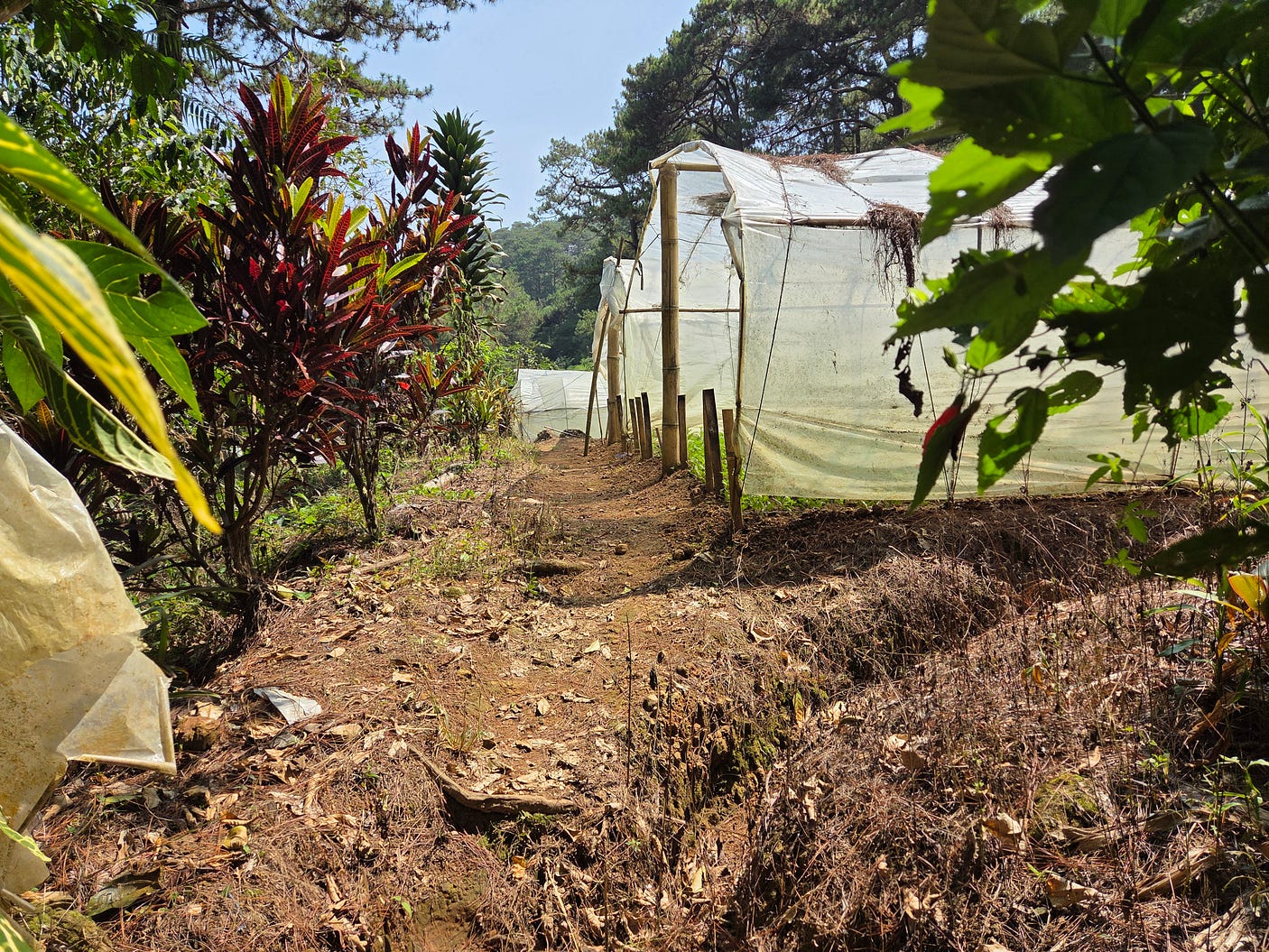
I came across gardening projects that were off the beaten track.

But there is a lot of poverty in Baguio City, as elsewhere in the Philippines, with corrugated iron one of the few things that is in abundance.
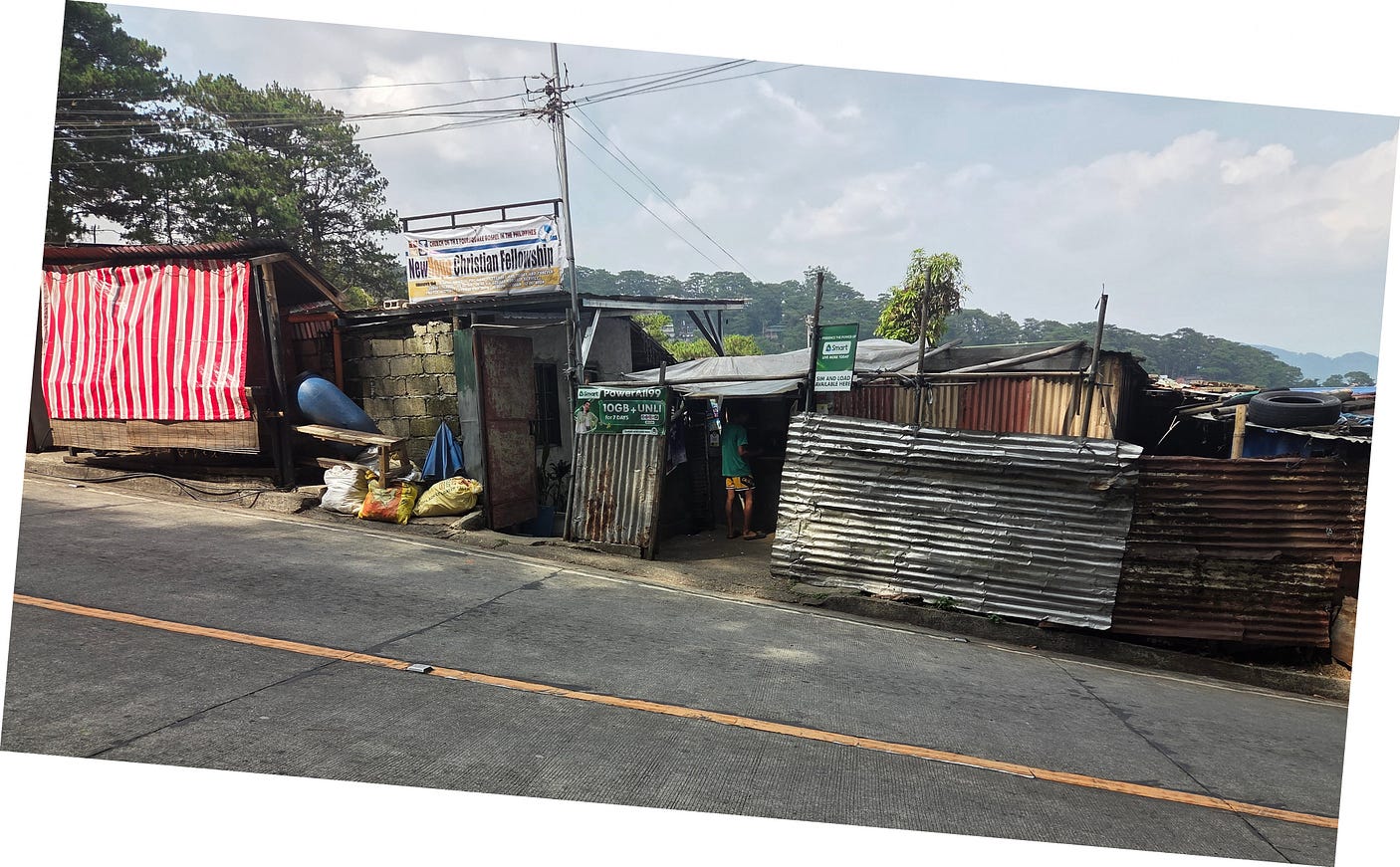
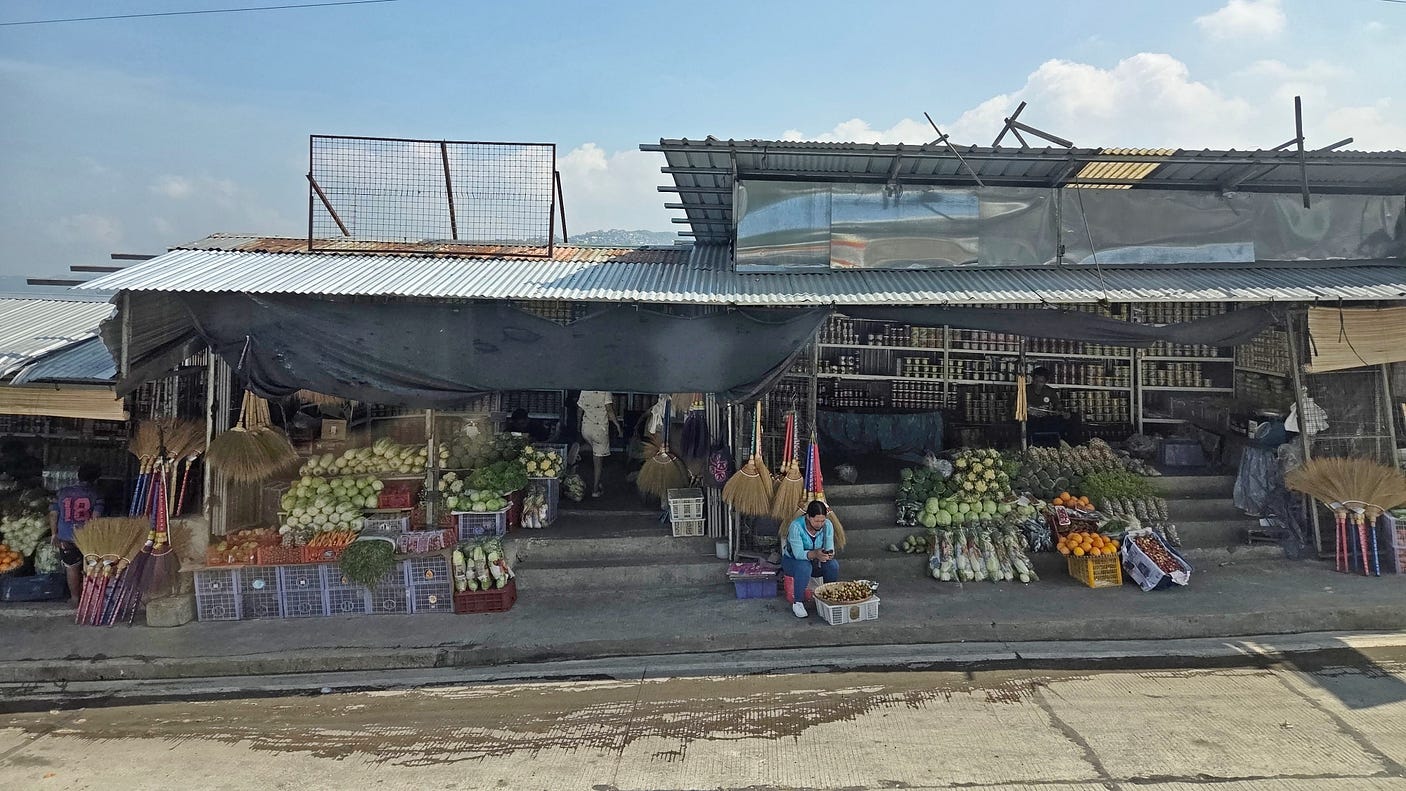
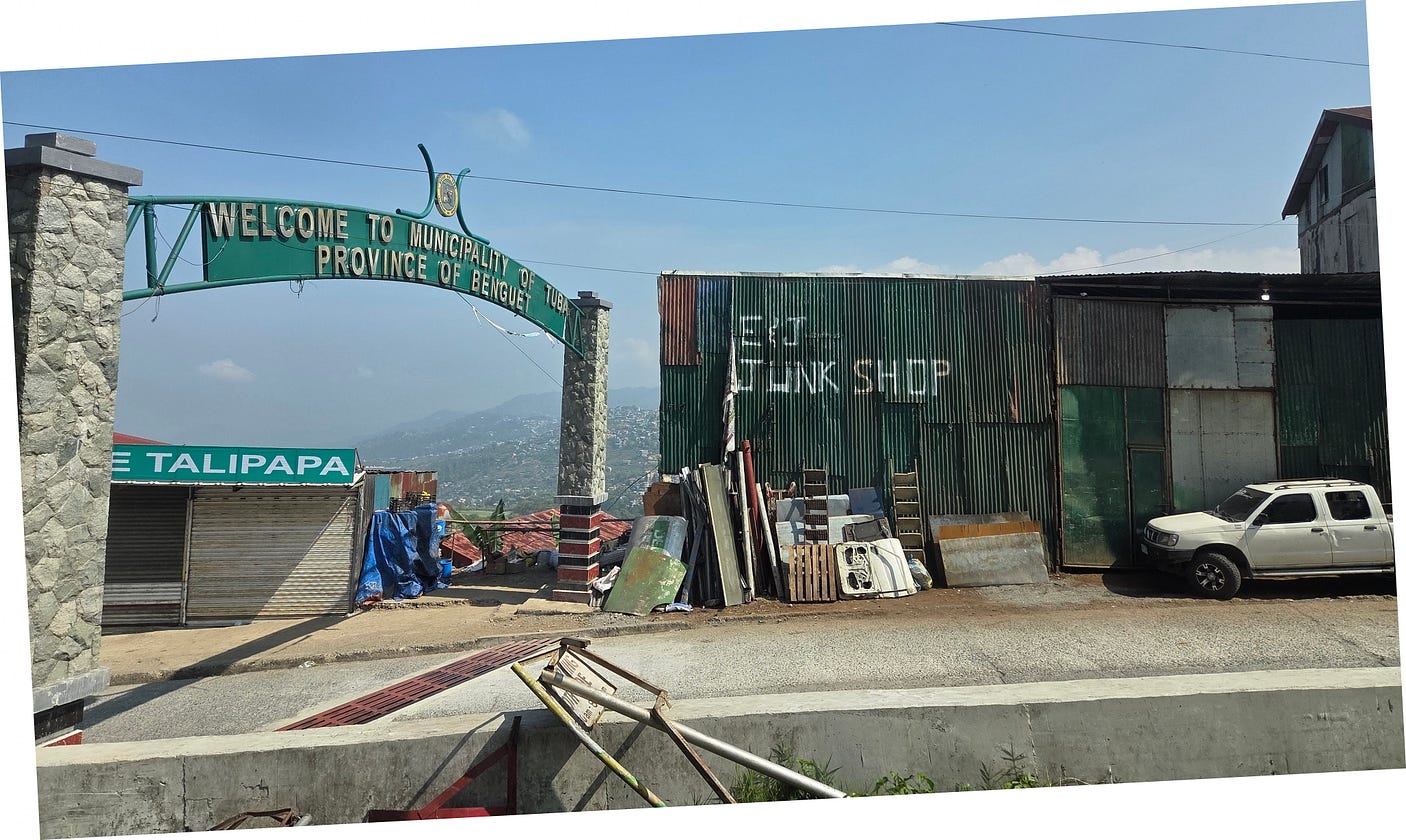
There doesn’t seem to be any major social movement for change and poverty relief in the Philippines.
I came out of Camp John Hay at a military checkpoint, where I noticed that even the military need to cut down wood to cook meals. I don’t know why the military can’t supply them with gas. They are meant to be there to protect the conservation area, after all.
‘Breathe Baguio’ notwithstanding, there are many forest fires in the region, for which, apparently, no-one is ever punished.
And then I visited the General Emiliano Aguinaldo Museum, located in the former house of the turn-of-the-twentieth century freedom fighter of that name.
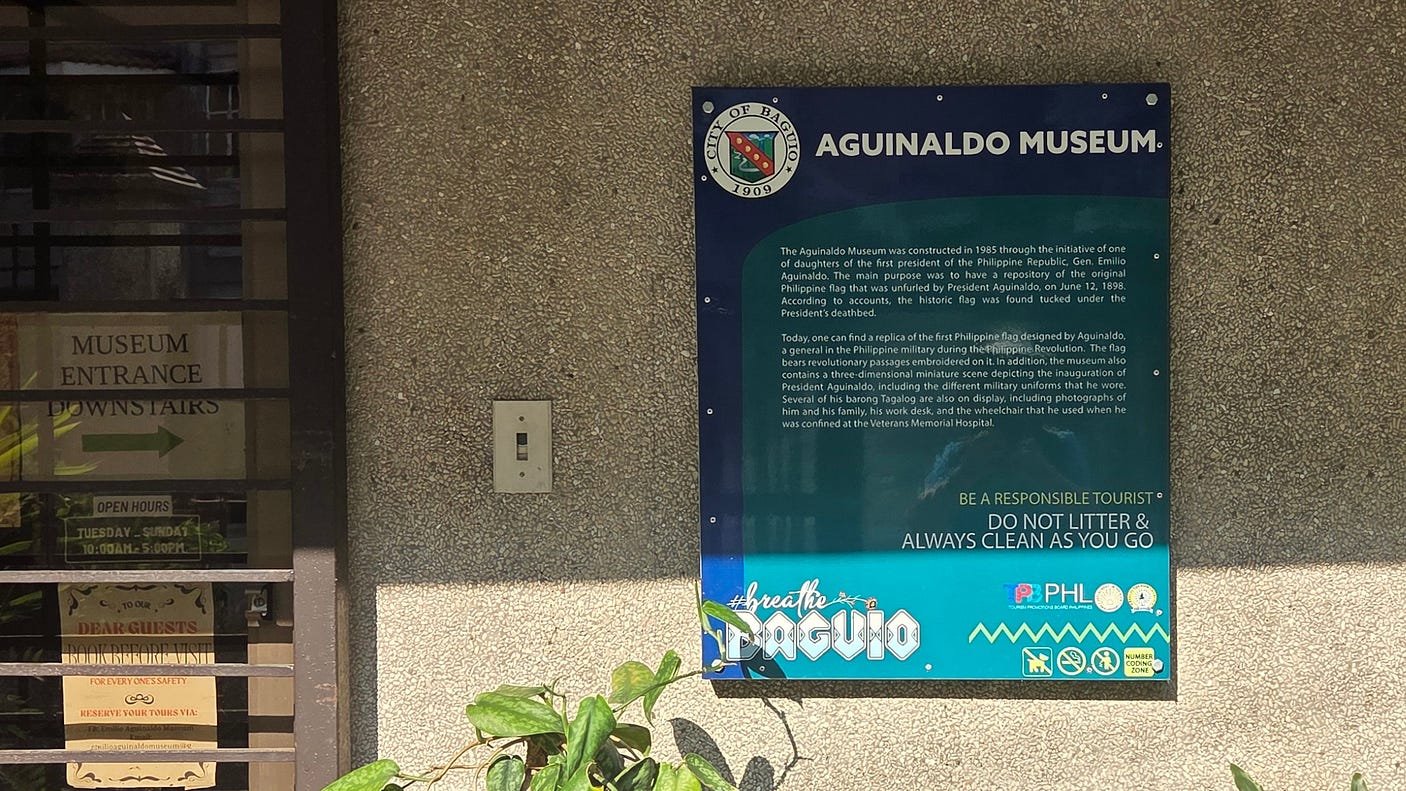
The museum occupies General Aguinaldo’s former mansion, first built in the mid-nineteenth century as a country house in the hills, decades before the founding of Baguio City itself.
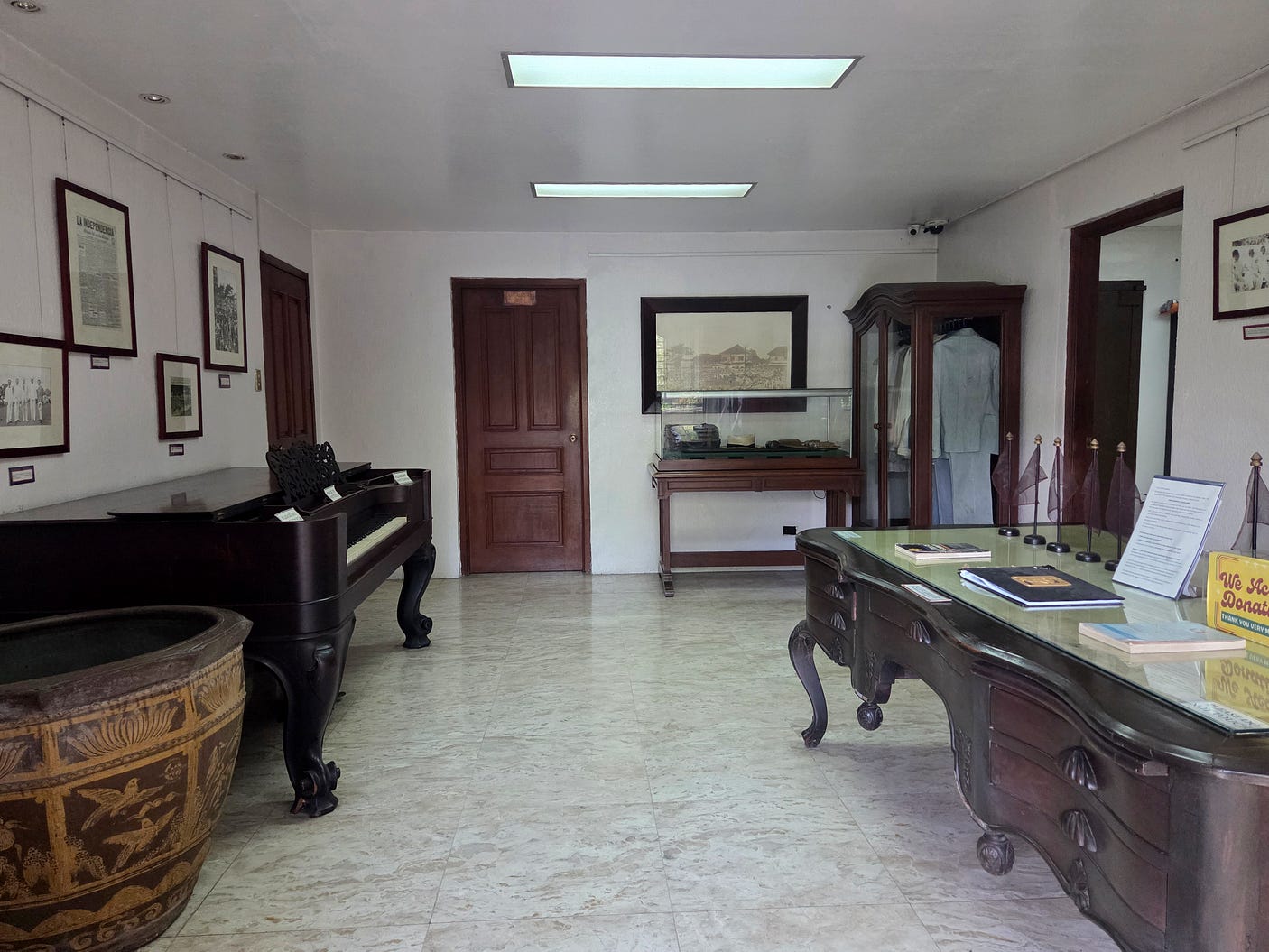
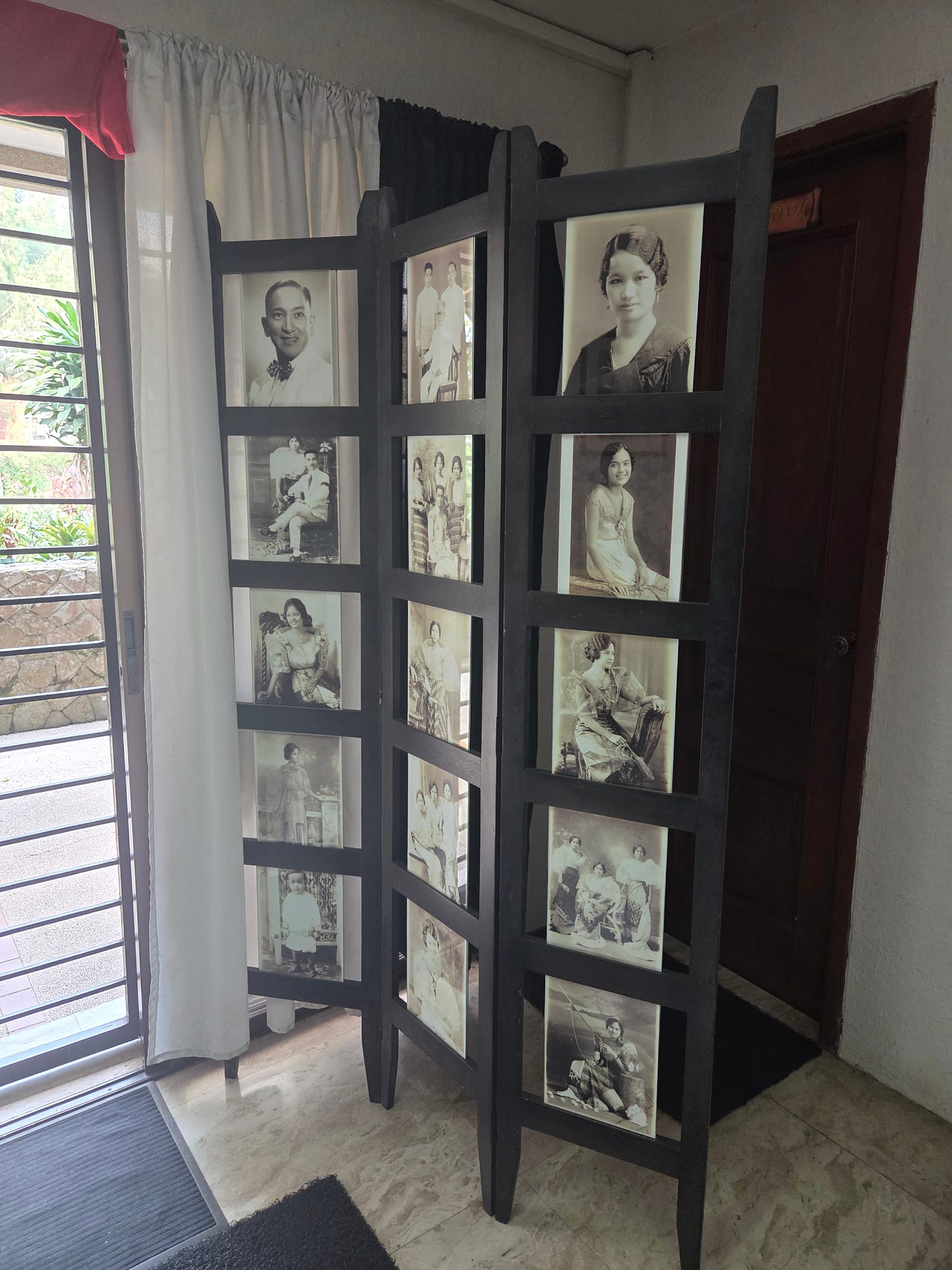
Aguinaldo was the President of the First Philippine Republic, proclaimed after the defeat of Spain, the former colonial power in the Philippines, in the Spanish-American War of 1898.

The present-day flag of the Philippines is based on the flag of the First Philippine Republic, the two differing only in minor details.
Though they had defeated the Spanish, the Americans only had a small presence in the Philippines immediately after the Spanish left; basically, just in downtown Manila, as most of the fighting had taken place in Cuba.
The Filipinos proclaimed their independence, as the First Philippine Republic, and were surprised to discover that the USA wished to claim their islands as a colonial possession of its own.
A war then broke out between the First Philippine Republic and the USA, ending in US victory in 1902 and a period of US colonial rule, with gradually increasing self-government, until the Philippines became independent in 1946.
Controversially, during the Second World War and the Japanese occupation, Aguinaldo, who was still alive, took part in the government of a Japanese puppet state called the Second Philippine Republic, because he disliked the Americans so much.
The Third Philippine Republic lasted from 1946 until Ferdinand Marcos’s declaration of martial law in 1972. A Fourth Republic lasted from the lifting of martial law in 1981 to 1986, when the People Power Revolution ousted Marcos. Like the French, the Filipinos are now living in a Fifth Republic.
I also got a photograph of the cathedral and a shrine in front of it.

There is not much news about the Philippines outside of the country. While I was there, I read about the International Criminal Court’s charges against the former president Duterte, because of the disappearances (i.e., murders) of thousands of alleged drug dealers during his term of office.

I also visited Luisa’s Cafe, on Session Road near the centre of town. Luisa’s Cafe dates back to 1957 and is said to be the oldest cafe in Baguio City. Though unprepossessing from the outside, and spartan on the inside, it’s a great favourite of many!

The locally indigenous Ibaloi belong to a wider group called the Igorot. According to the sign in the next photograph, the Baguio Convention and Cultural Centre is modelled on the form of “an Igorot hut, characterized by a towering pyramid or hipped roof on a rectangular volume.”
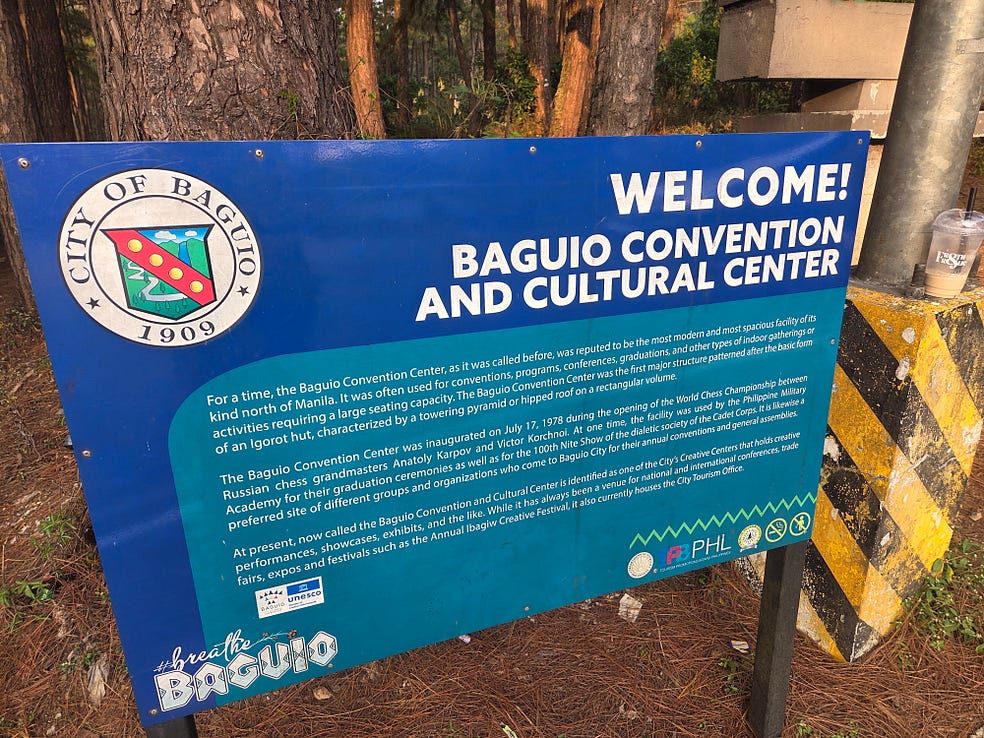
The Baguio Museum. though separate, is in a similar indigenous style.

The Baguio Museum contained many indigenous exhibits about the Igorot, who have practiced many interesting customs, such as that of seating the deceased in a ‘death chair’ and smoking them to preserve the body, and then placing it in a coffin that hangs from a cliff, to bring the deceased closer to the spirit world.
The mueum also contained material about the Pacific Theatre conflict of World War II, much of which was waged in the Philippines regardless of whose side the government was on at the time.
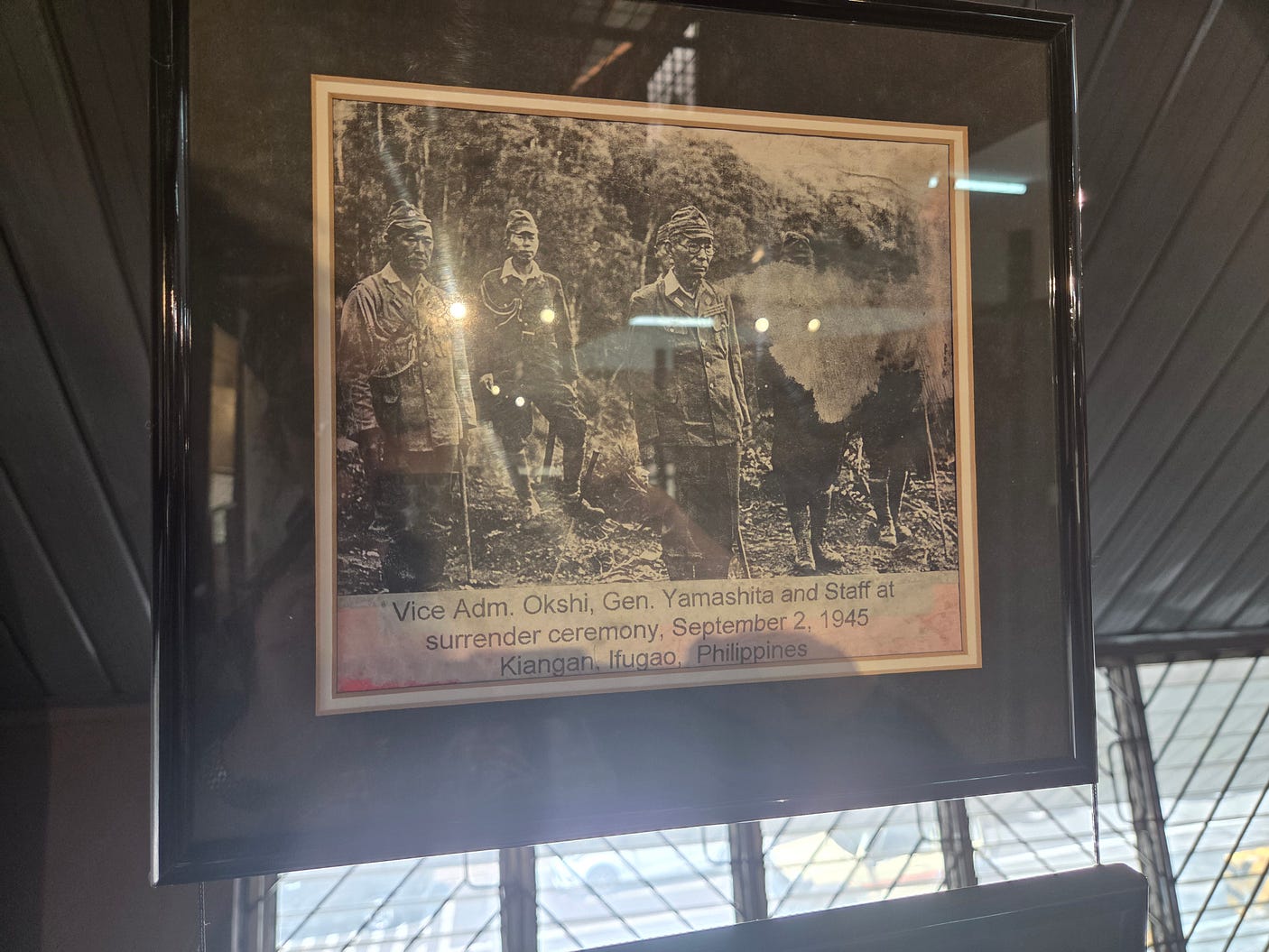
The museum contained notes on the history of Baguio City:

I could have climbed nearby Mount Ulap (1846 m), but I was feeling a bit tired at the time. However, it sounds like this hike, for which guided tours are offered, is really worth it.
There are several other mountain tours that you can do, such as Mount Pulag, Atok, multi-day tours of the Cordillera, and several peaks within Baguio City itself, including the Mines View Park.
Despite the occasional complaint such as to do with the smoky forest fires, I enjoyed Baguio because it was small, easy to walk around, and nicer than staying at Clark, which I wouldn’t recommend to anybody.
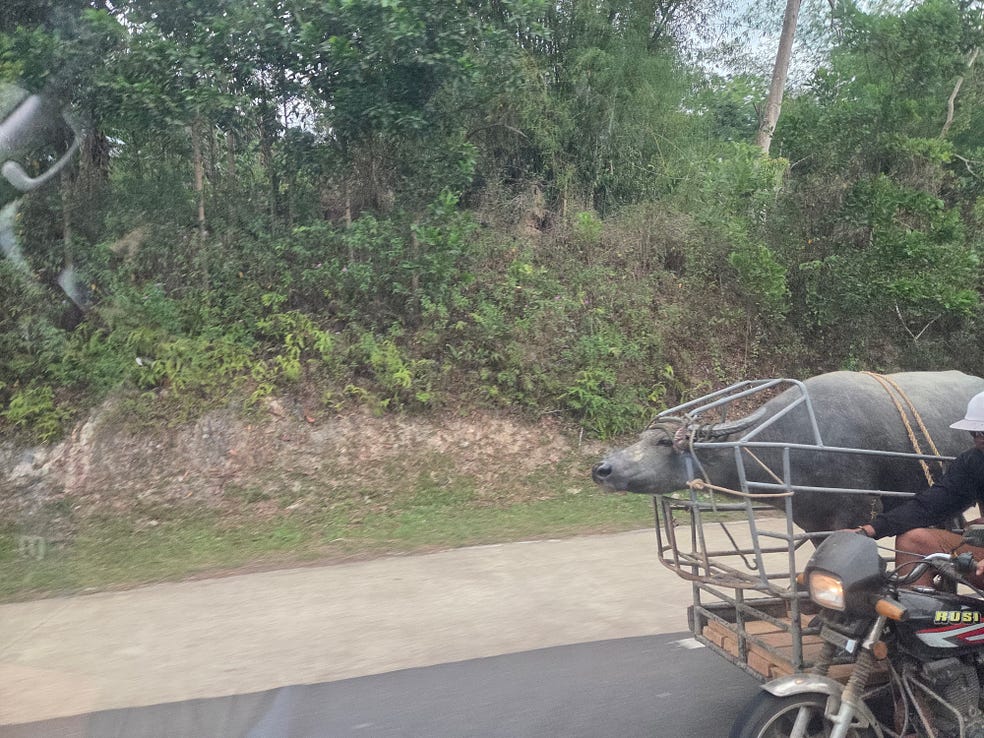
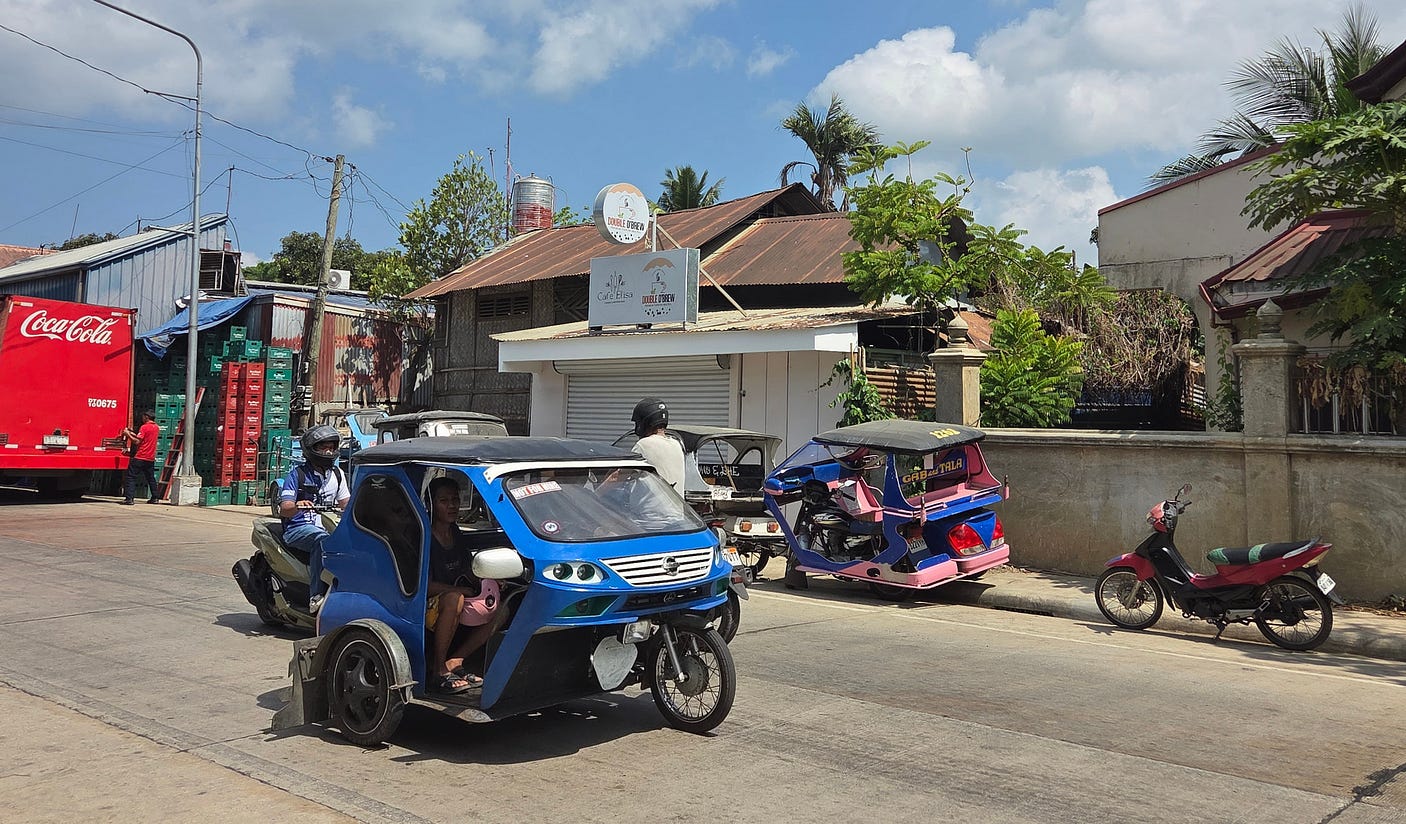
By the way, to round off, here are some last photos I took in Palawan but forgot to include last week: a couple of quirky ones of a buffalo being transported by motorcycle and sidecar — yes, it is possible! — and a photo of more of the Philippines’ distinctive three-wheelers outside Cafe Elisa in Puerto Princesa.

Next week, I head to Taiwan!
Subscribe to our mailing list to receive free giveaways!

