Giveaways
THIS January, I decided to visit the 19th International Akaroa Music Festival, at Akaroa, on Banks Peninsula, southeast of Christchurch.

Banks Peninsula is a rugged outcrop named after Captain Cook’s botanist Sir Joseph Banks.
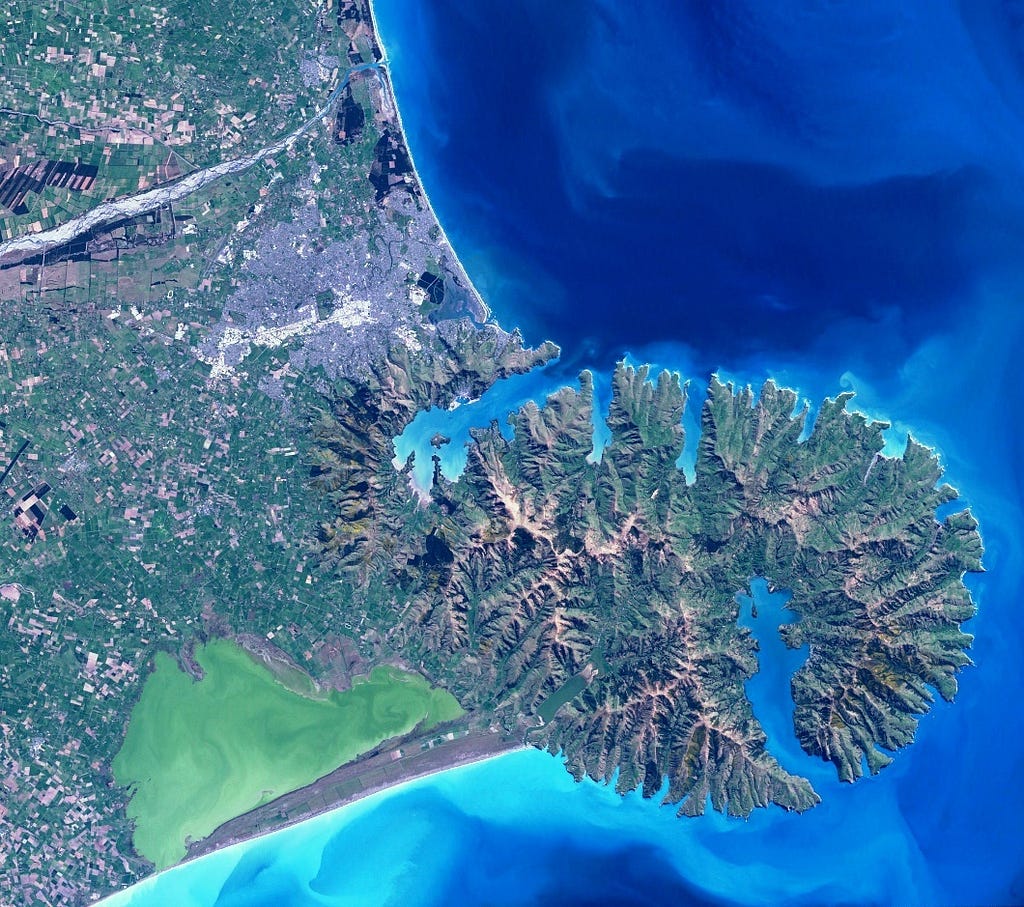
Banks Peninsula is also known in Māori as Te Horomaka, meaning the foiling of Maka, captain of an old-time war-waka, and Te Pātaka o Rakaihautū, the storehouse of a legendary explorer named Rakaihautū.


Banks Peninsula is the eroded remnant of three volcanoes. It used to be an island millions of years ago, but the Canterbury plains have slowly grown out toward it.
The biggest harbours on the Banks Peninsula are the remnants of ancient craters. These are Lyttelton Harbour or Te Whakaraupō (‘the harbour of the raupō reed’) near Christchurch, which contains the port of Lyttelton, and Akaroa Harbour further east, on the south side, where we find the village of Akaroa.
Akaroa is a South Island dialect version of Whangaroa, meaning ‘long harbour’, an apt description of Akaraoa Harbour. The name is a slight mis-spelling of even the dialect version, and may well be altered in the future to Whakaroa.
The first Europeans to colonise Banks Peninsula were not the British but the French, who possessed many islands in the South Pacific — indeed, still do— and thought it useful to have a port in New Zealand as well. As such, they founded the village of Akaroa.
The settlers in Akaroa were under the protection of a French naval vessel moored in the harbour until 1846, six years after the signing of the Treaty of Waitangi.
An amusing play from a few years ago, Le Sud, was based on the idea that the British got the North Island and the French got the South. Various myths abound as to how that could have happened. I saw this poster about one of them in the Akaroa Museum:
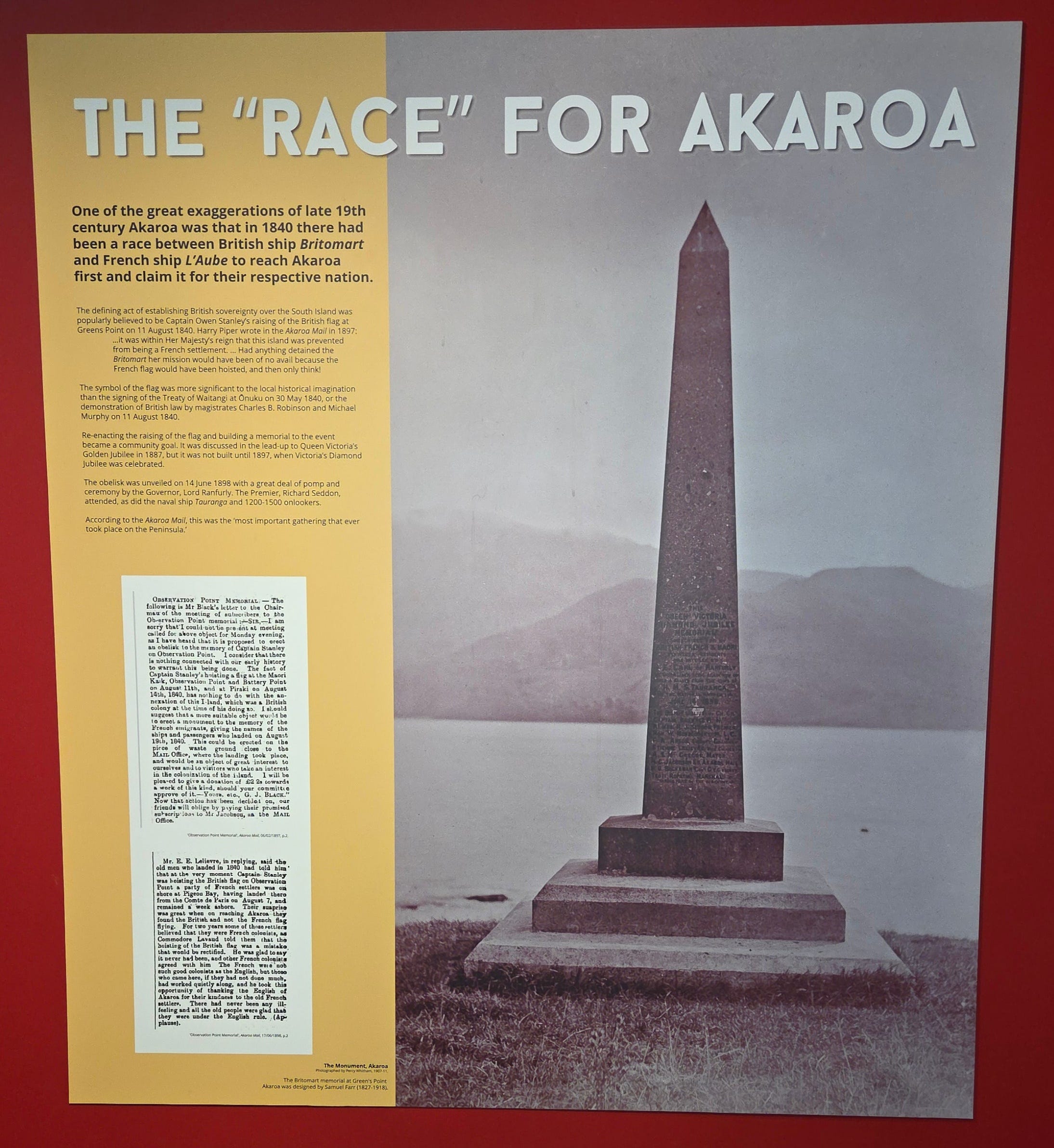
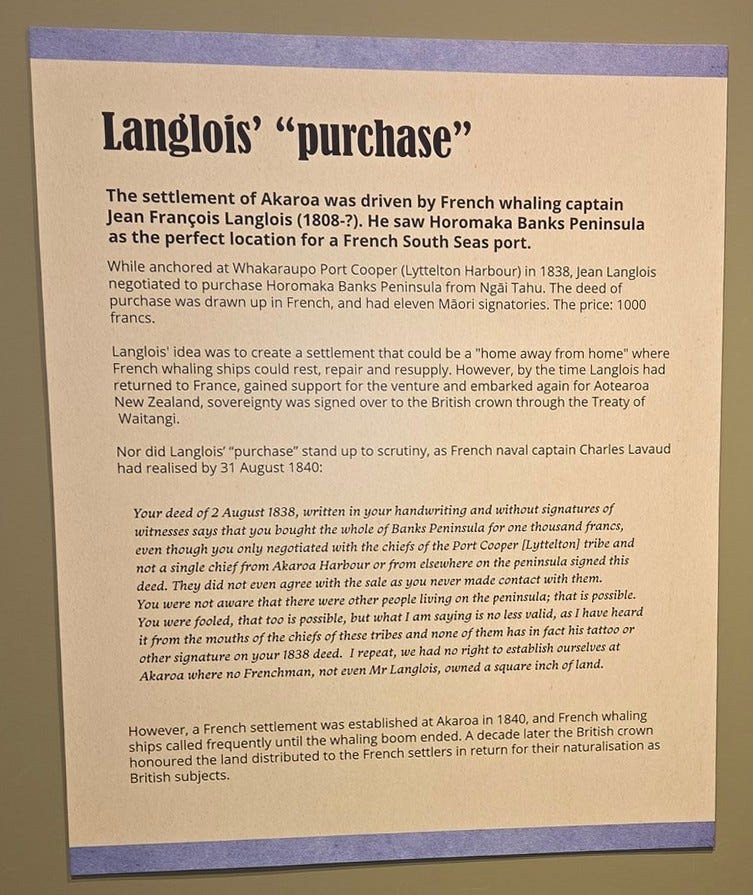
In any case, the French acquisition of Akaroa was as dubious as anything the British cooked up elsewhere, as their own officers conceded.
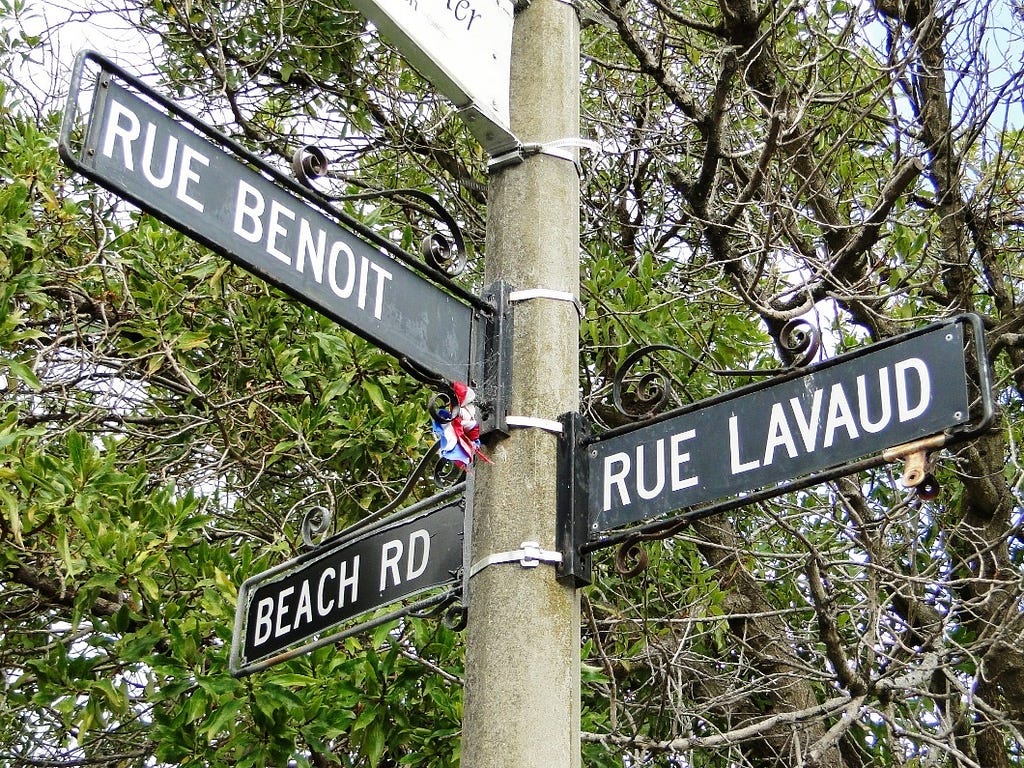
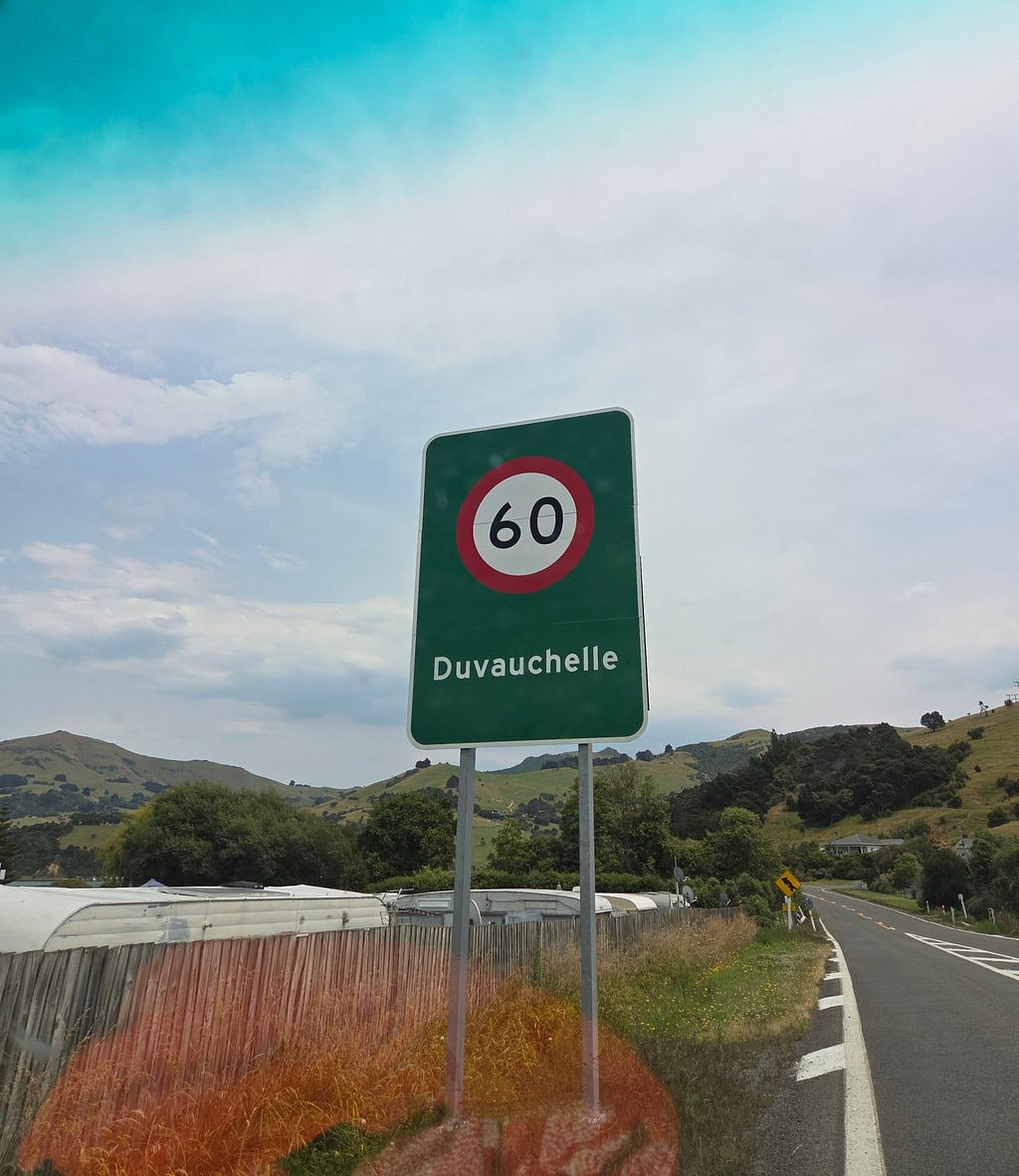
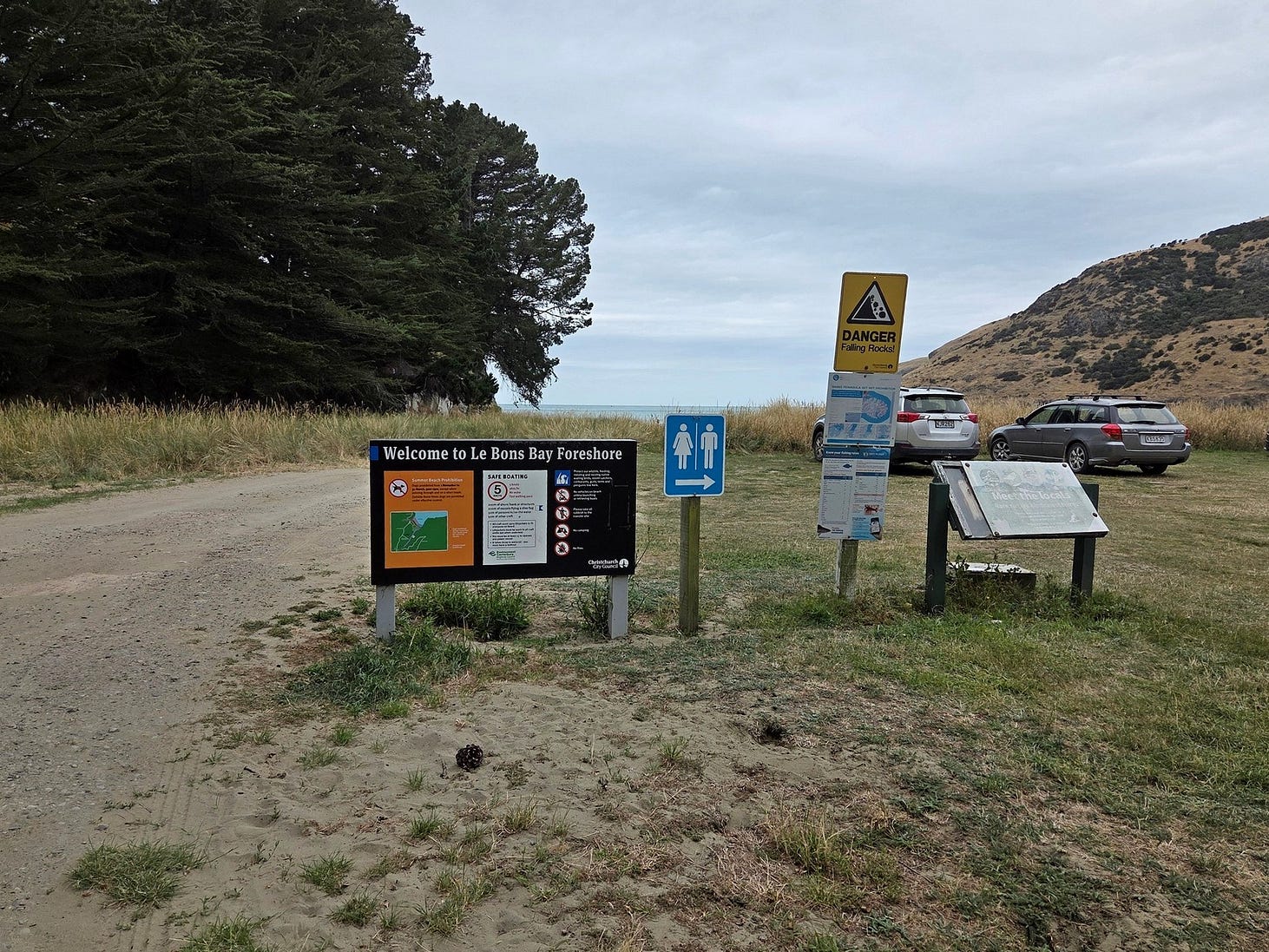
French names abound in Akaroa and a few other localities on the peninsula, such as Duvauchelle and Le Bons Bay.
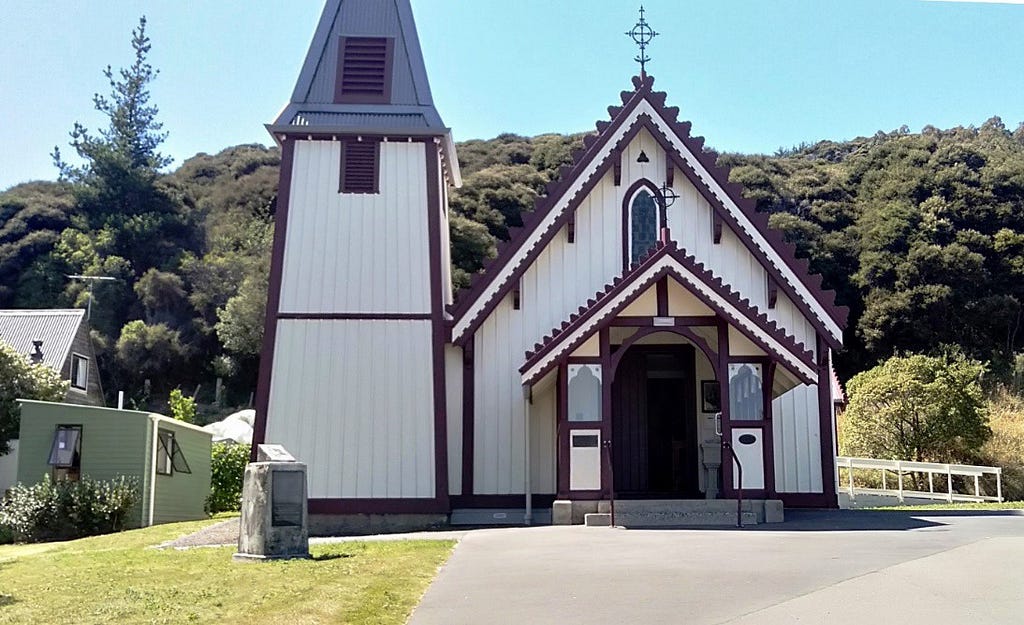
Akaroa is the local tourism centre, full of quaint old colonial buildings including its Catholic church, established by the French but bearing the name of St Patrick’s. The church has lately been restored and repainted in a more authentically Victorian colour scheme picking out all the details.
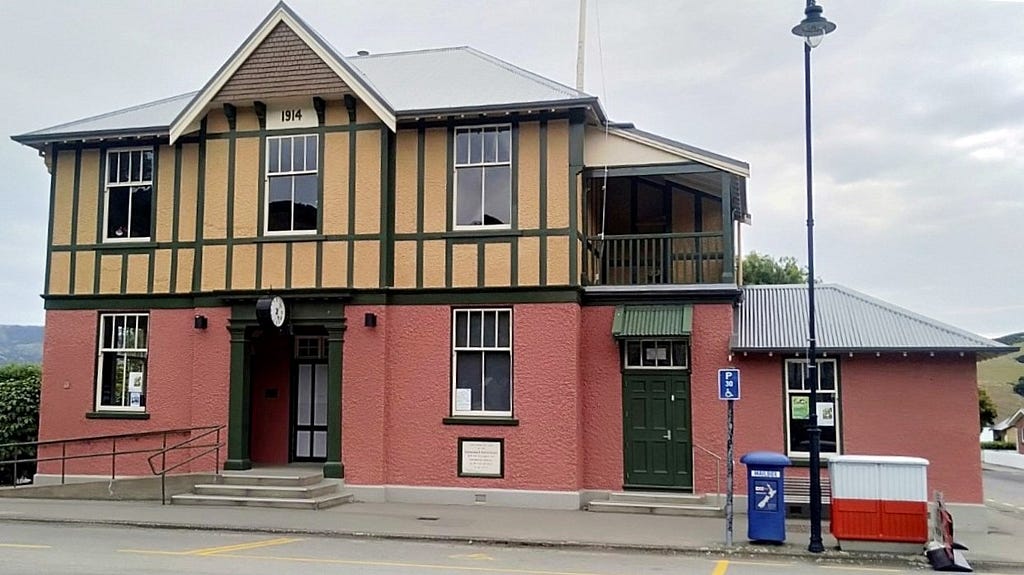
In Rue Lavaud, just outside the old post office, there is a statue of Charles Meryon, a famous Parisian engraver (not a painter as shown) who spent time in the new township in the 1840s.
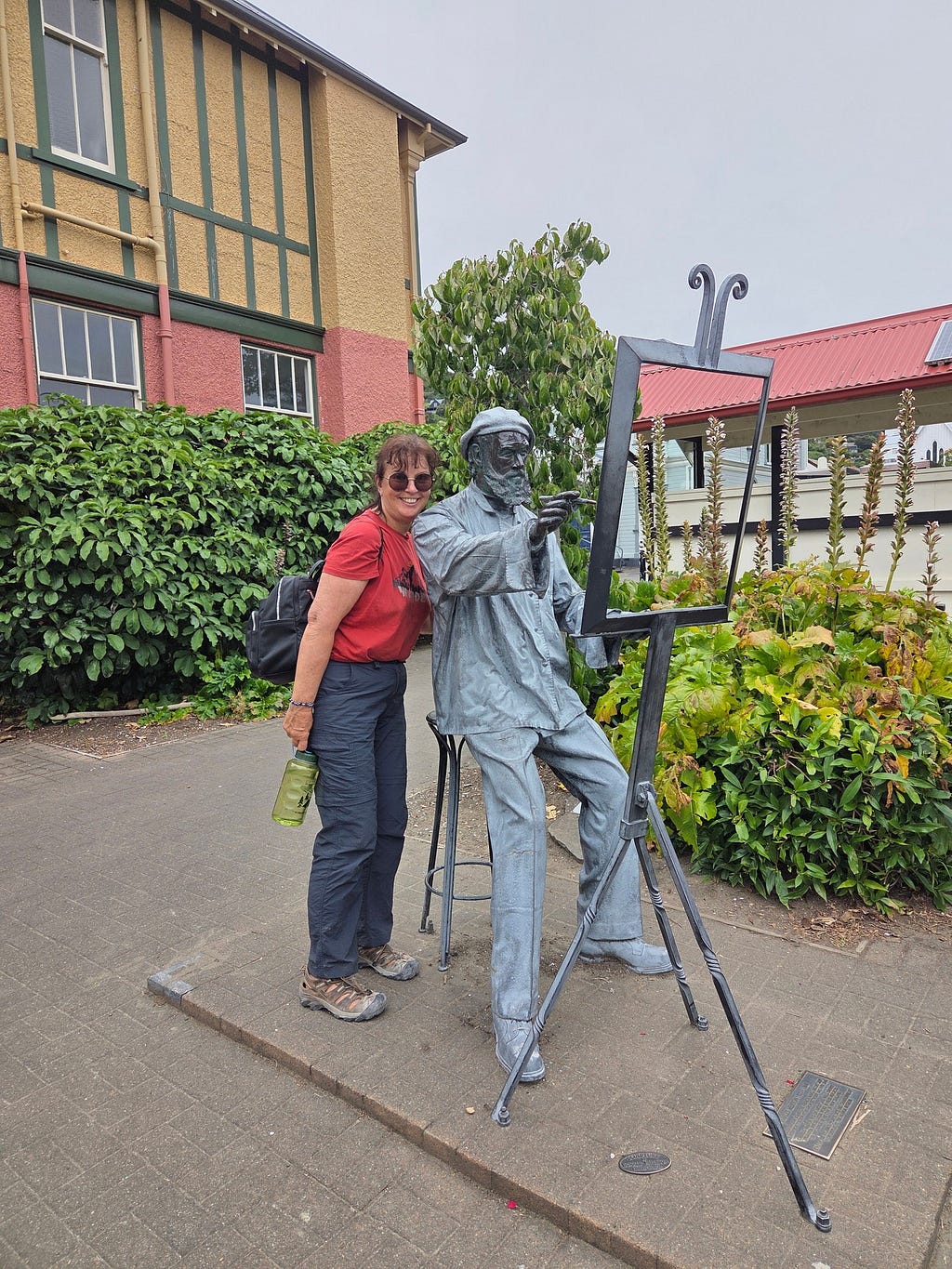
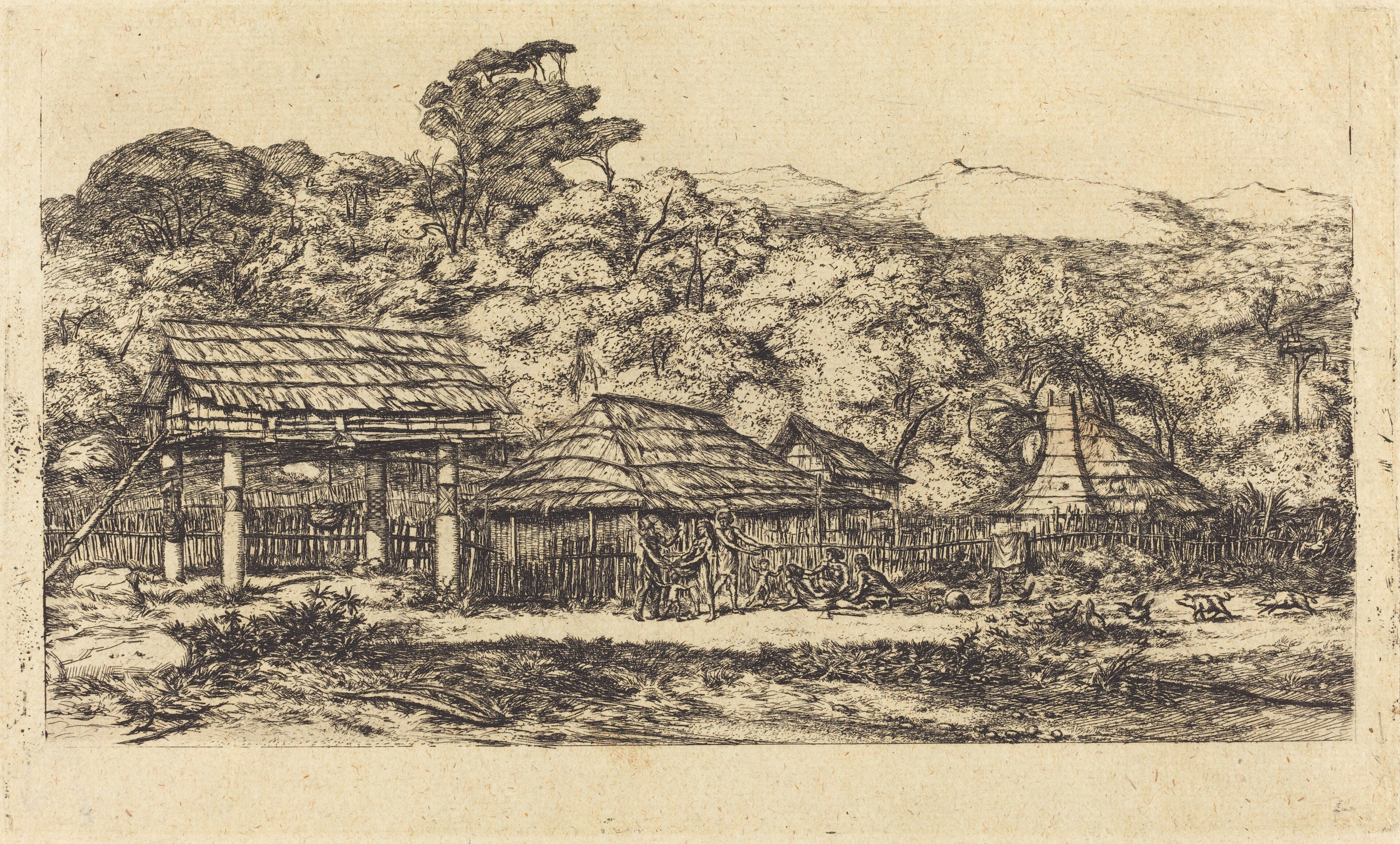
Here is the plaque that you can see at my feet in the photo of Meryon’s statue, above:

Here is that etching, whose French name in the plaque, translated into English, means ‘Colliers’ Point,’ charbonniers, or colliers, being people who deal with coal or charcoal. I can’t find it on any maps these days. The longer version of the name of the scene describes the activity of purse seine (net) fishing at Pointe dite des Charbonniers, with several figures hauling on the net-rope at the left of the picture.

Here is the waterfront today— I don’t know if it is the same spot! The wharf in the photo is called Daly’s Wharf.
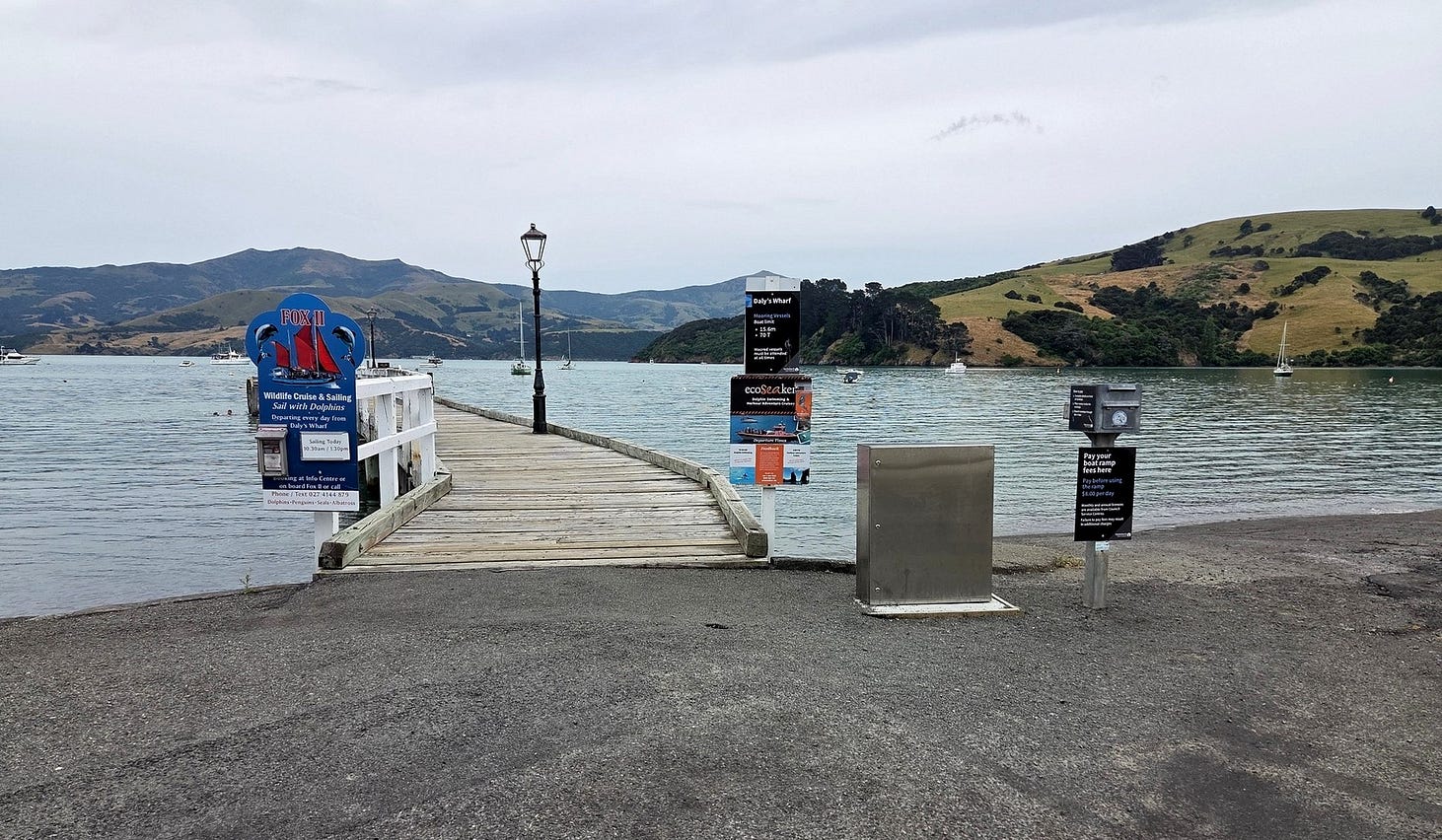
Here is a video of the harbour and Daly’s Wharf.
As for the Akaroa Museum, here it is.
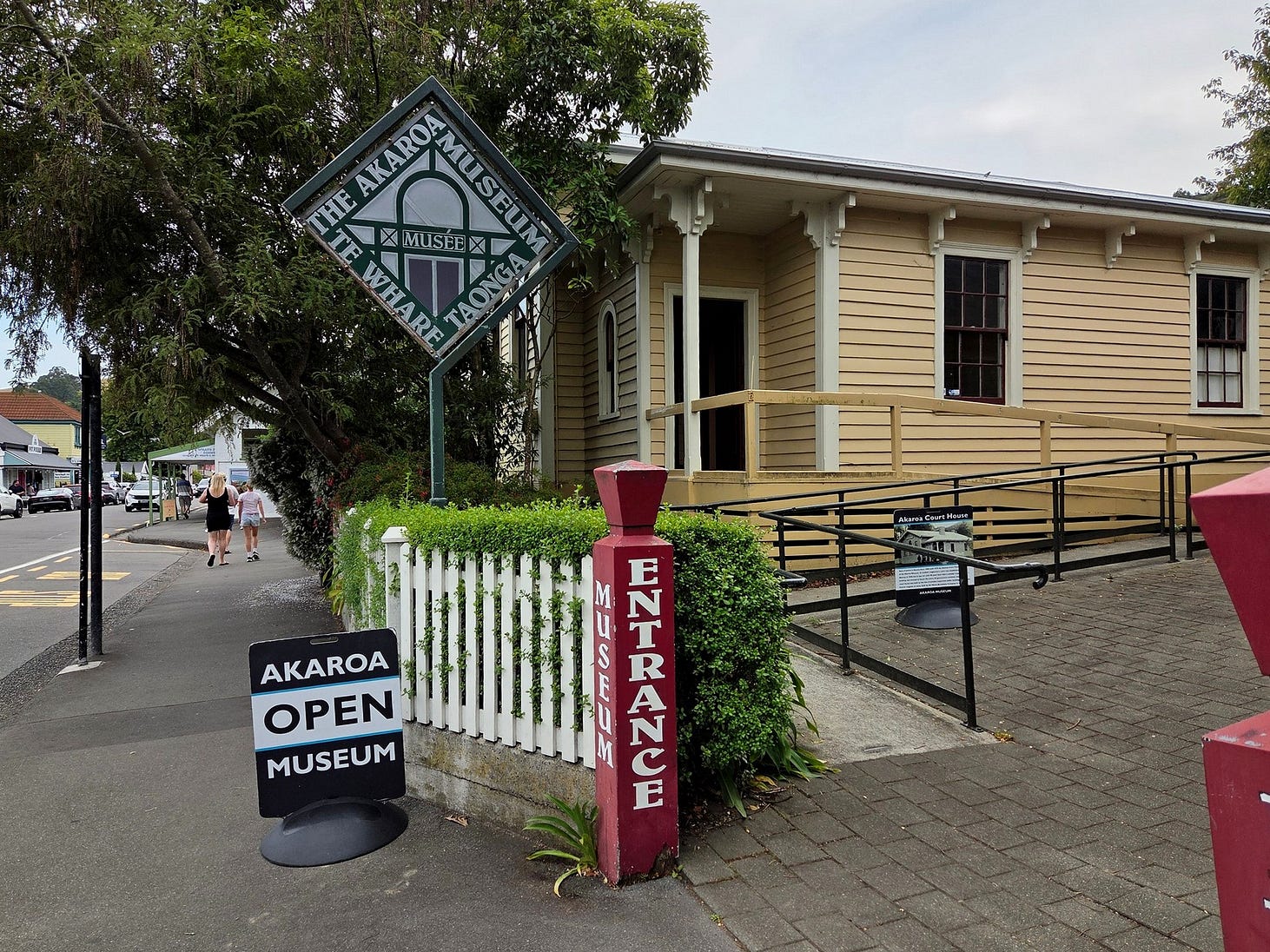
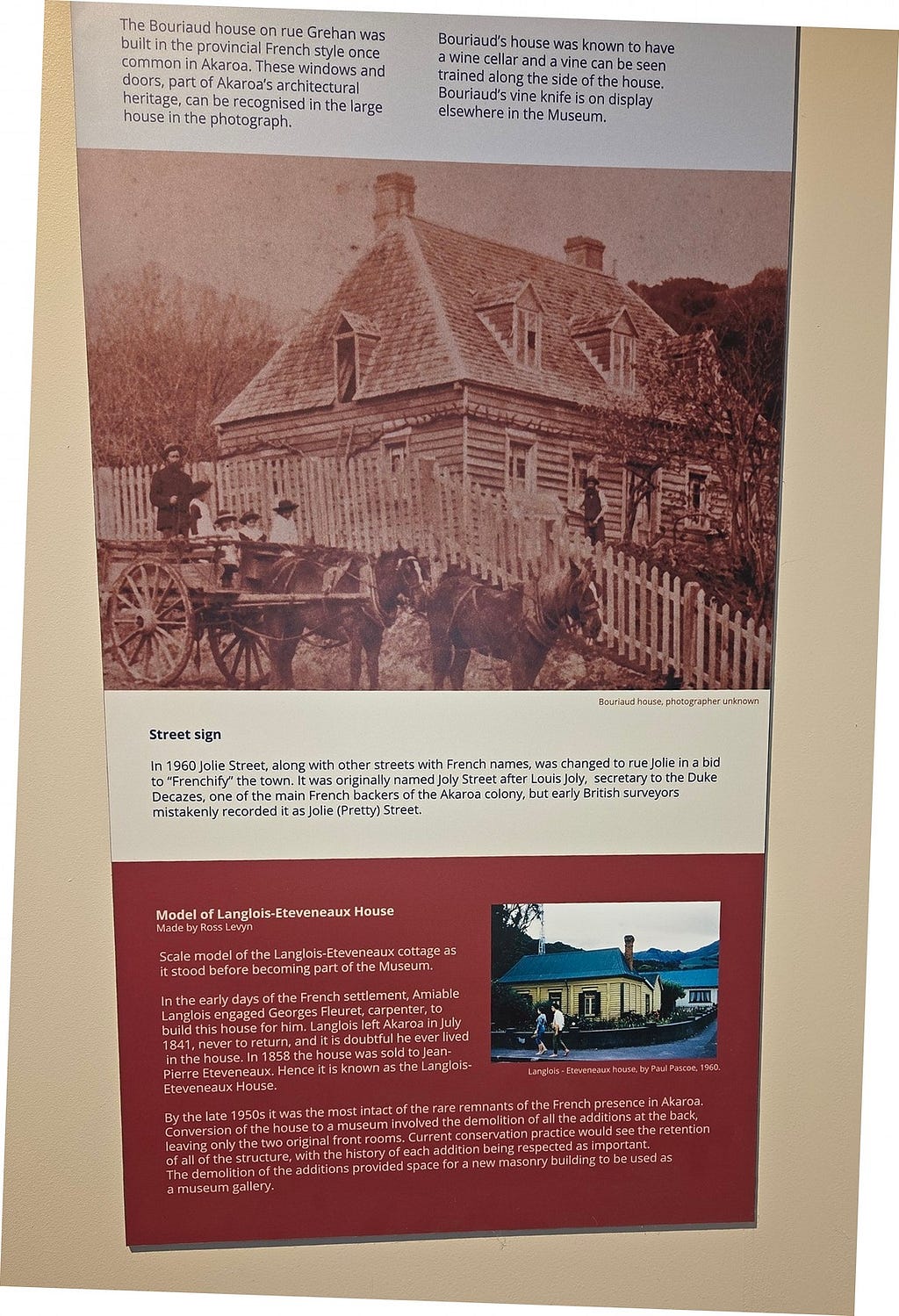
The museum had exhibits about the oldest houses in Akaroa, among many other things.

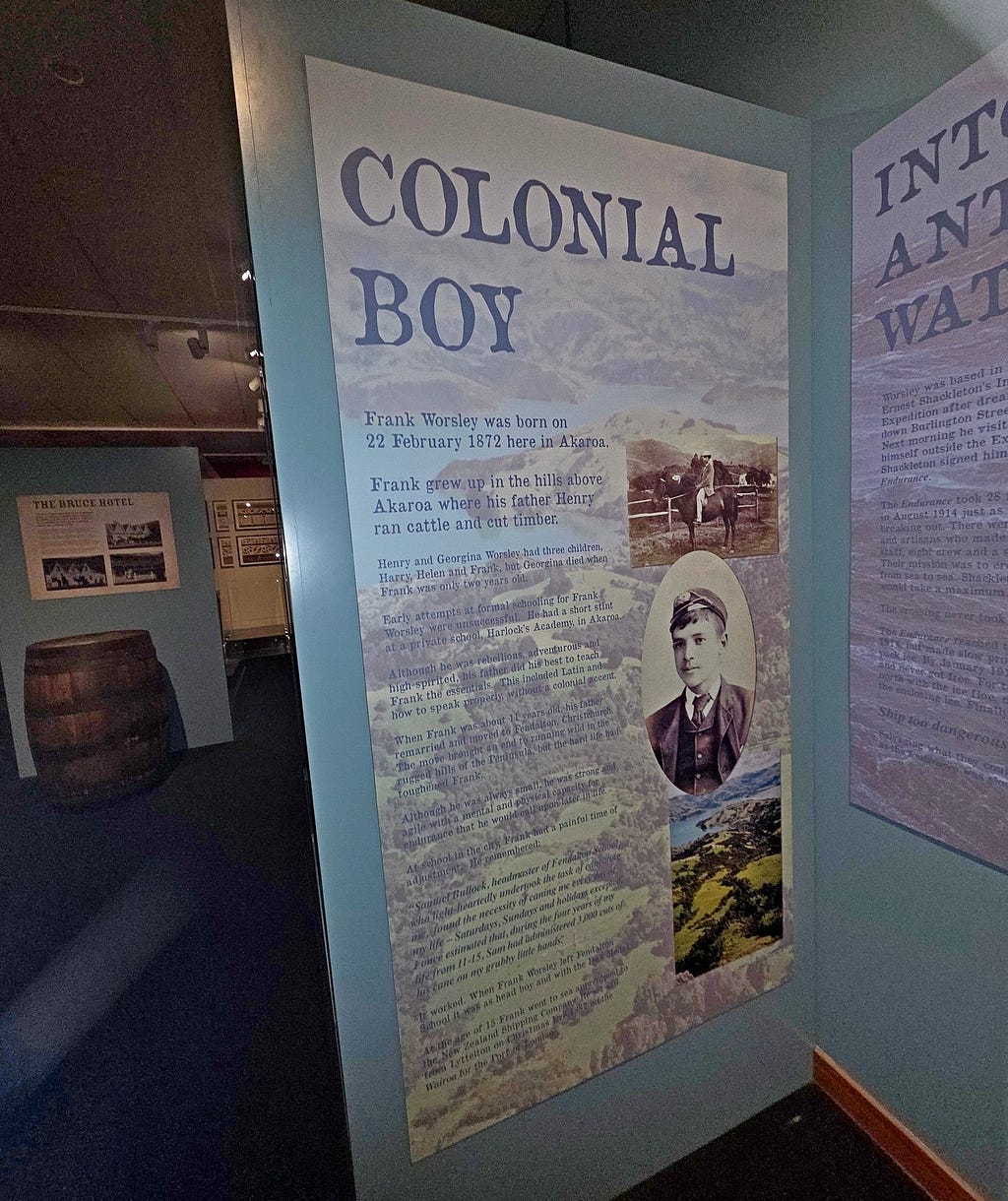
Viewing another exhibit, I discovered that Frank Worsley, the captain of Ernest Shackleton’s Endurance, was born in Akaroa!
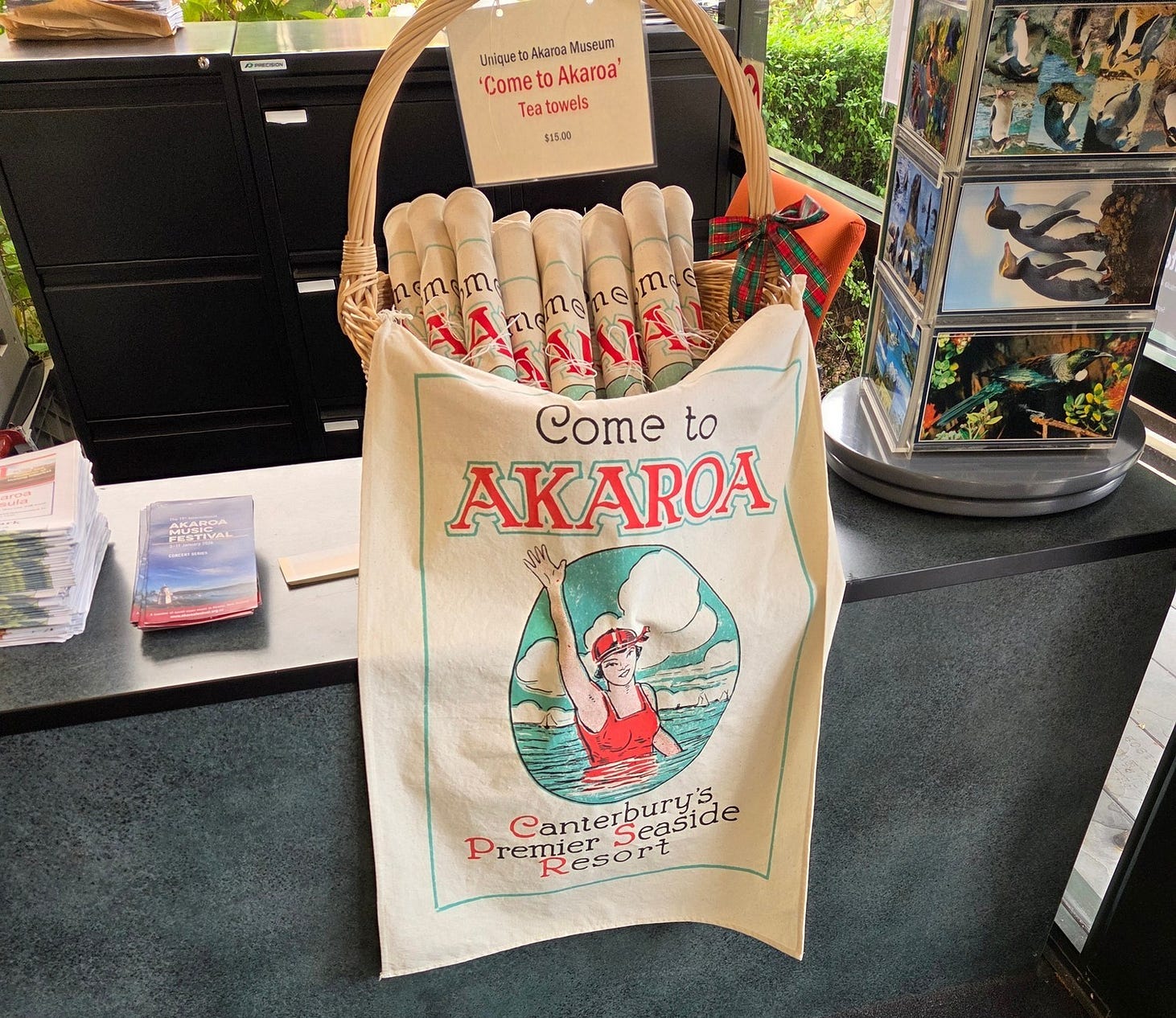
I got a retro-themed souvenir teatowel, as well.
These days, the town is very gastronomic.
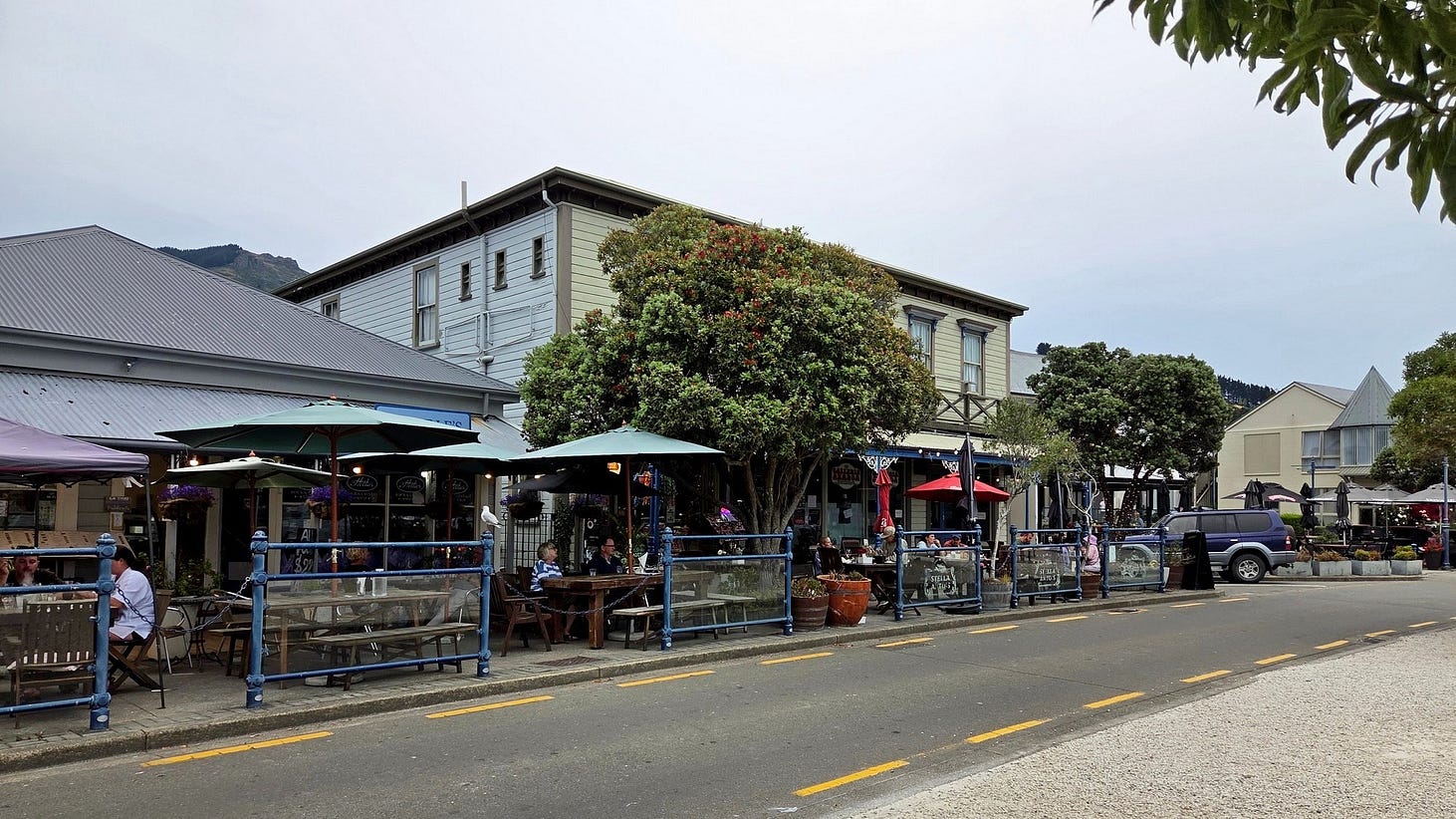
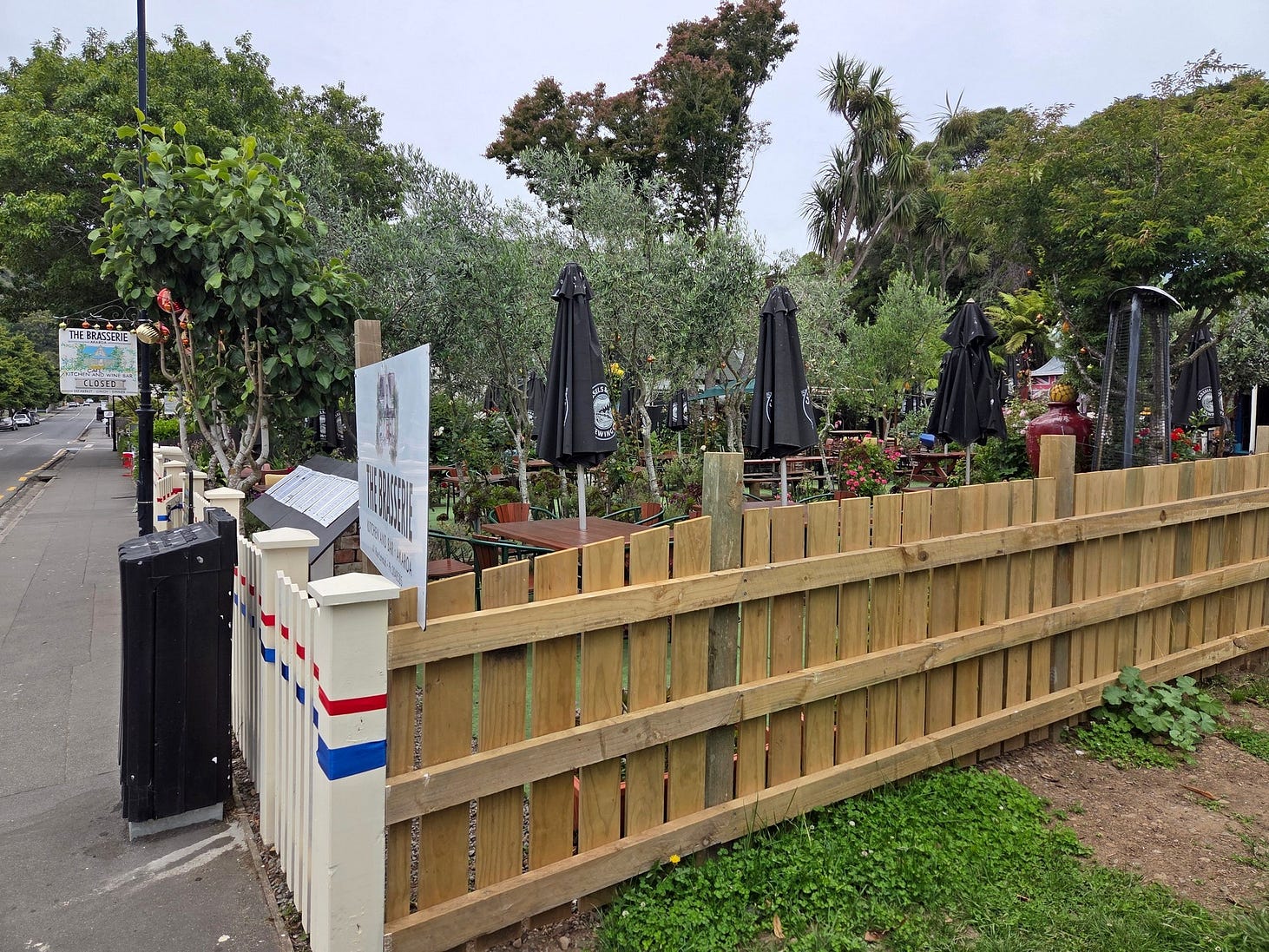
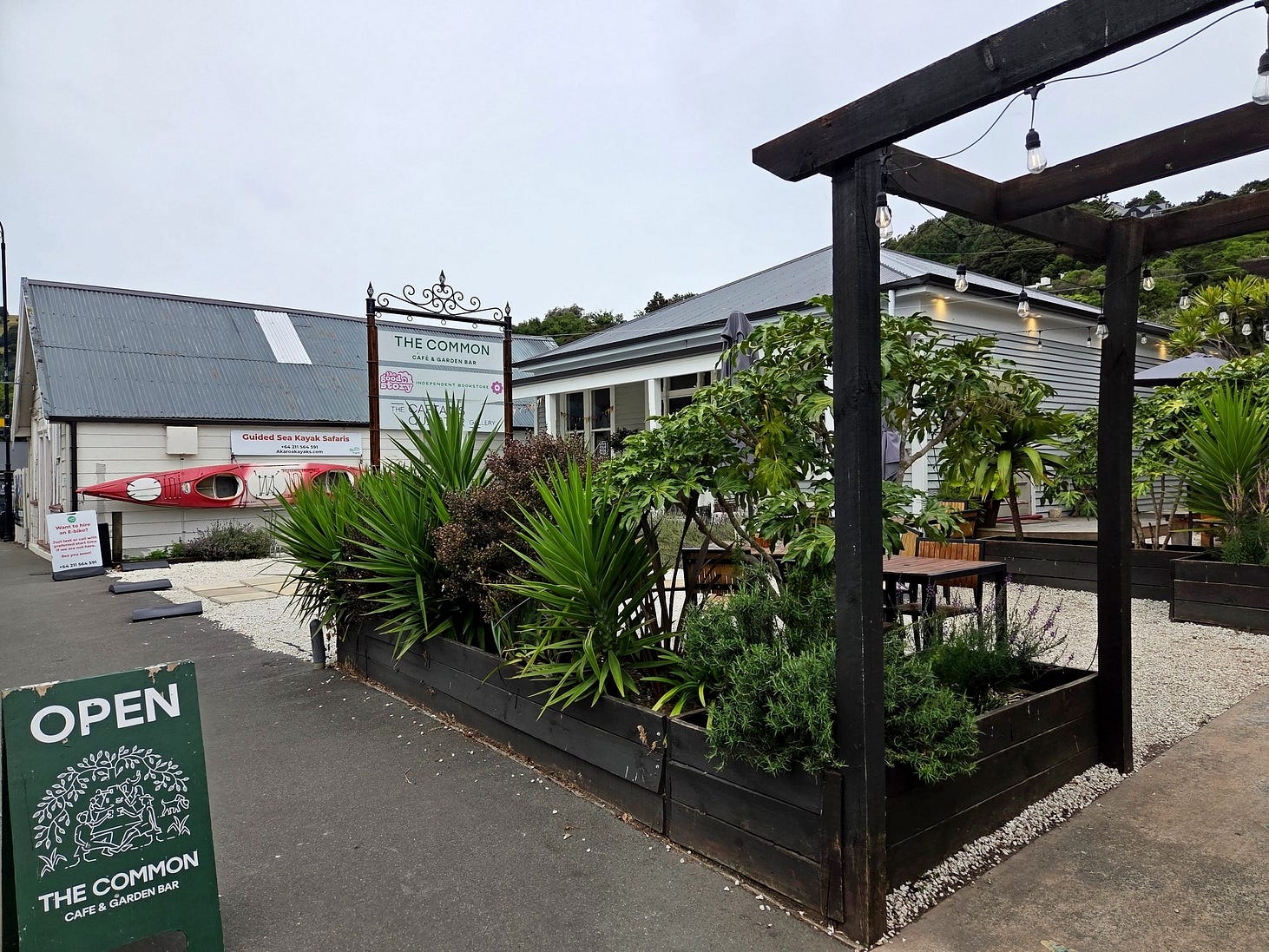
I went to one of the local cafés. The food was sugar-free and delicious.
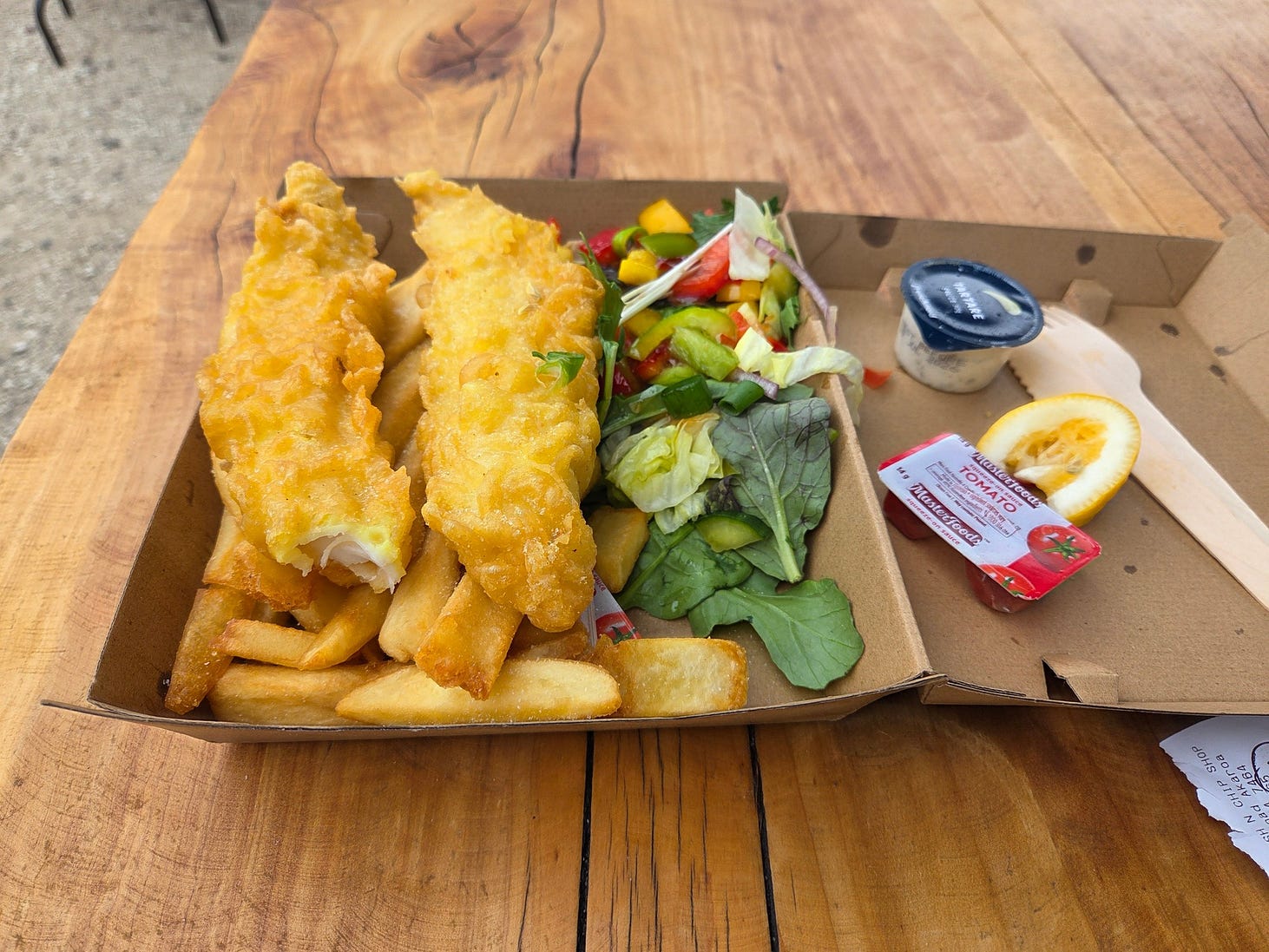
There were beautiful flower gardens in front of the old colonial houses, the oldest of which are in a French style, as you can see from the museum displays.
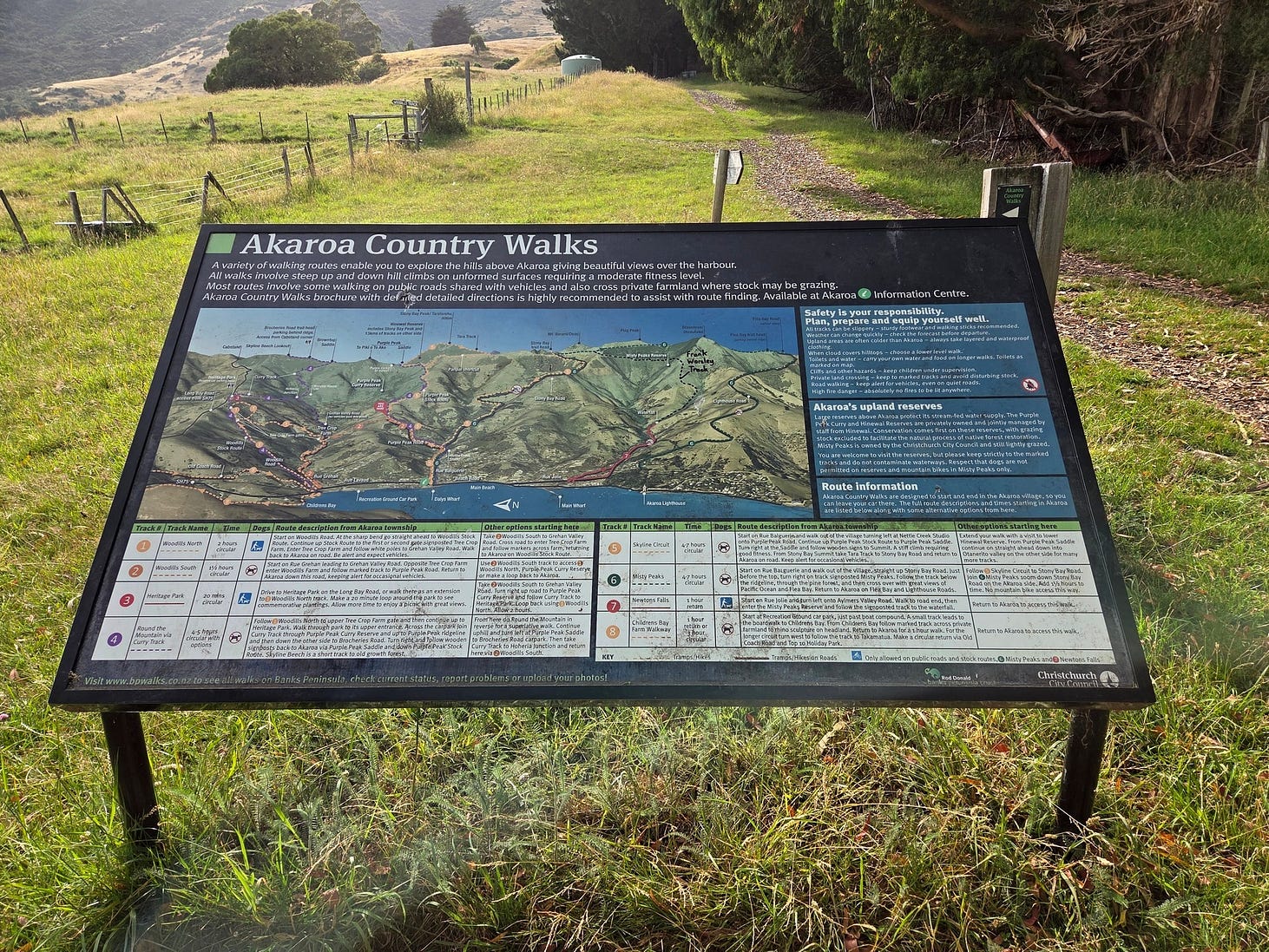
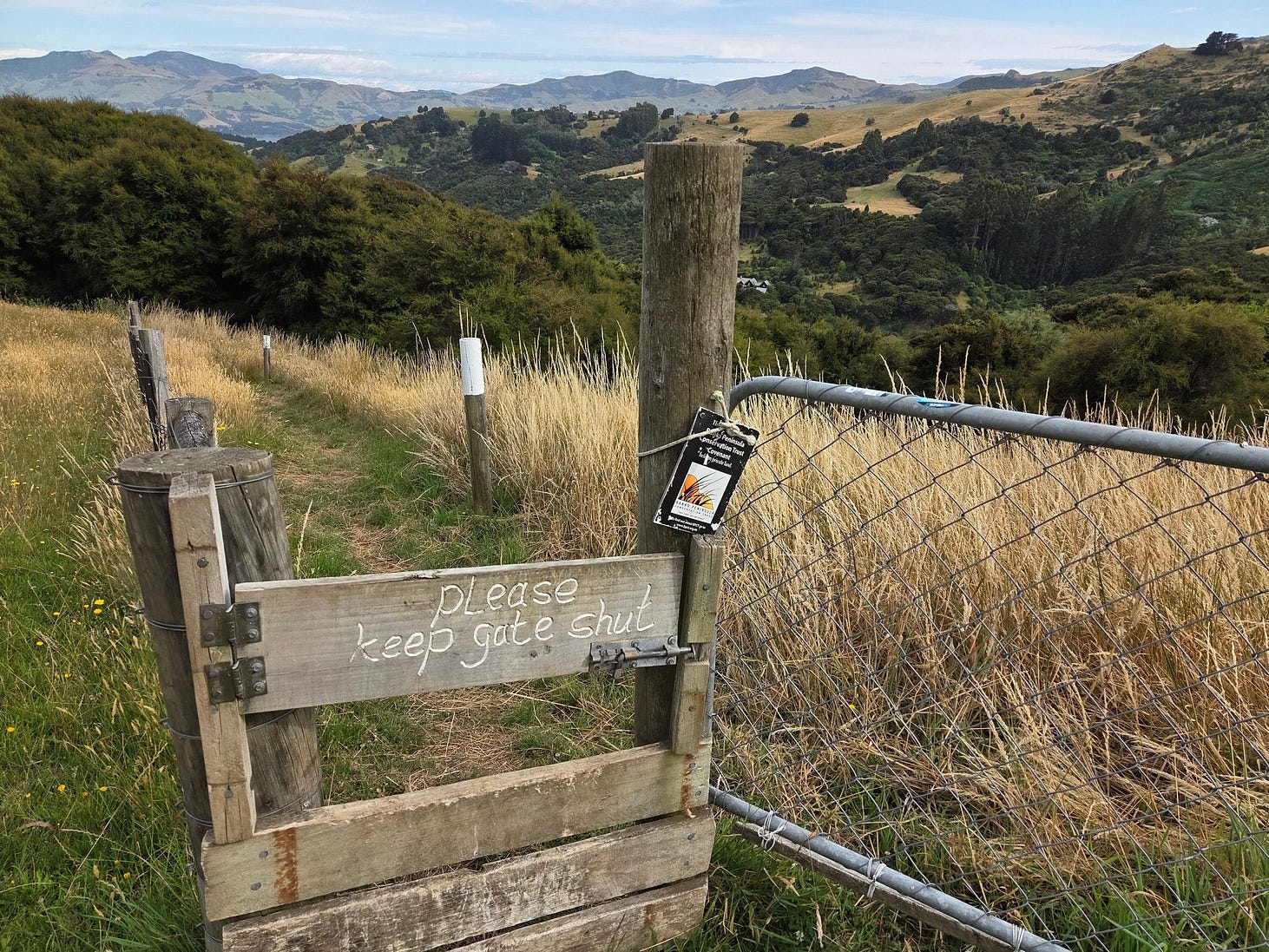
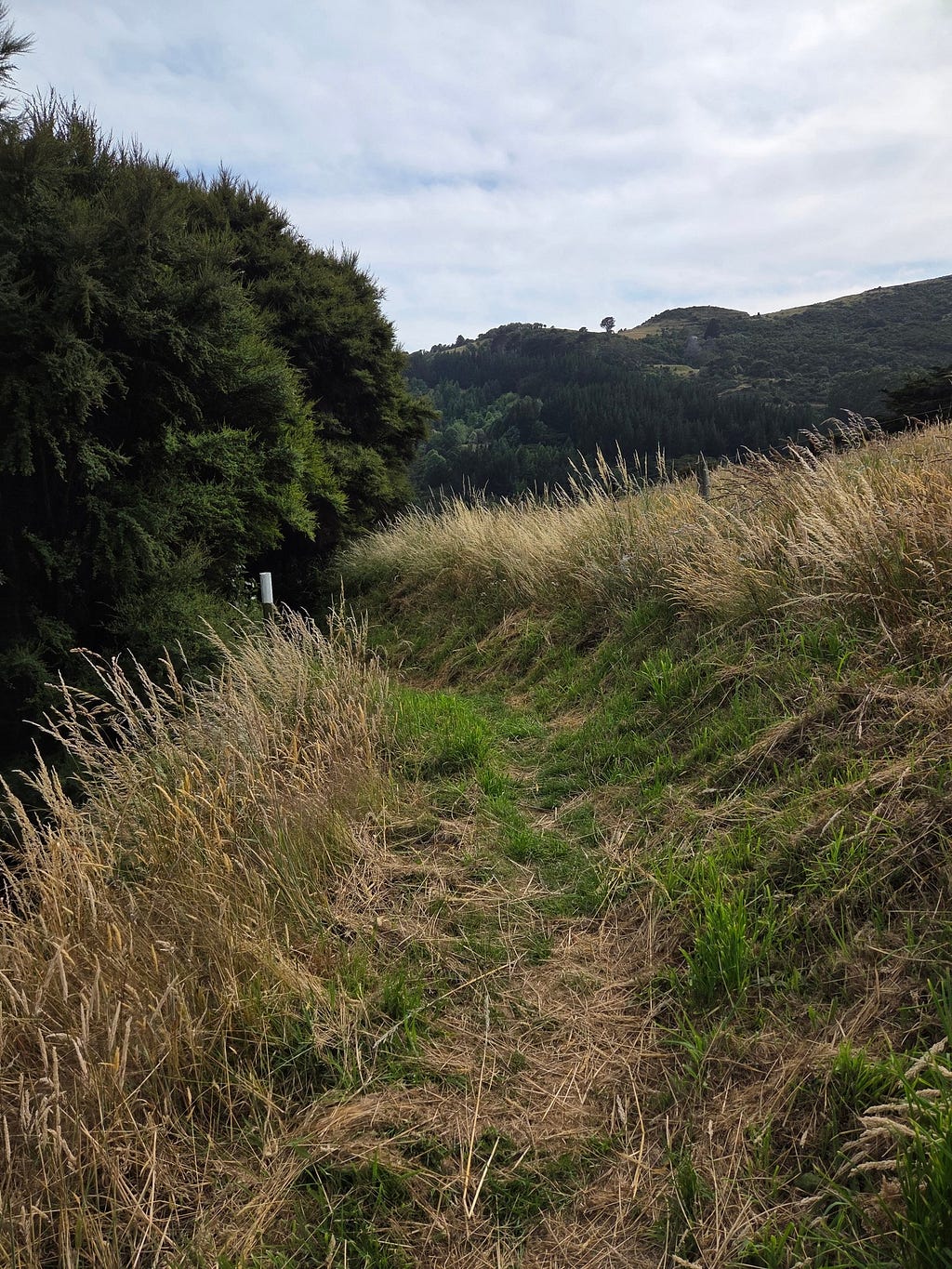
There are lots of tracks!
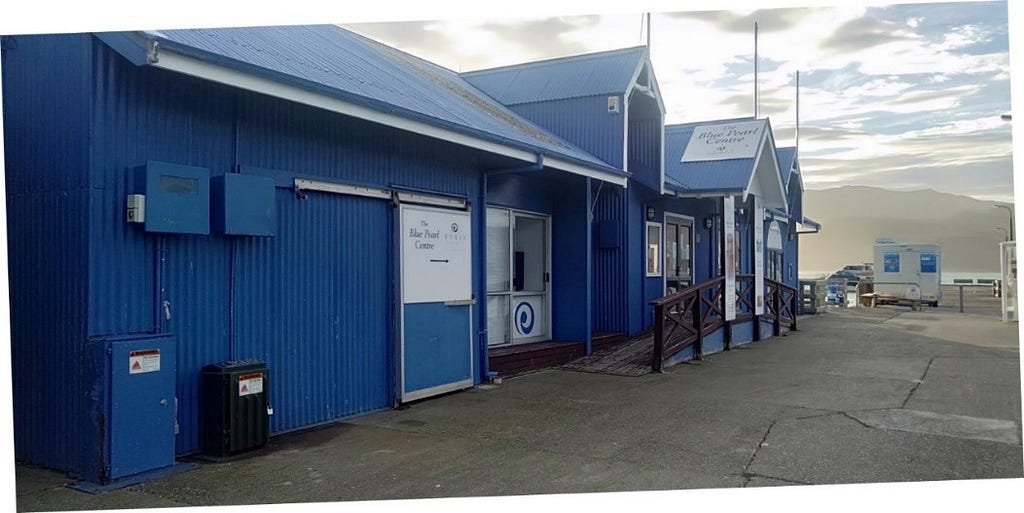
Akaroa is also one of the few places where you can obtain jewelry made from New Zealand blue pearls. These actually come in a range of colours from pale and pastelly to dark and saturated, and from green in some cases through to blue-black, all of them iridescent and stunning.
The colour range overlaps the much better-known black pearls of Tahiti. Blue pearl jewelry makes a nice portable souvenir to take back after you’ve done the Banks Track, and certainly isn’t something you’ll too easily get outside New Zealand.
The shop is on the Main Wharf, south of Daly’s Wharf.
On Beach Road, which is the main road, you can also see the Akaroa Lighthouse.
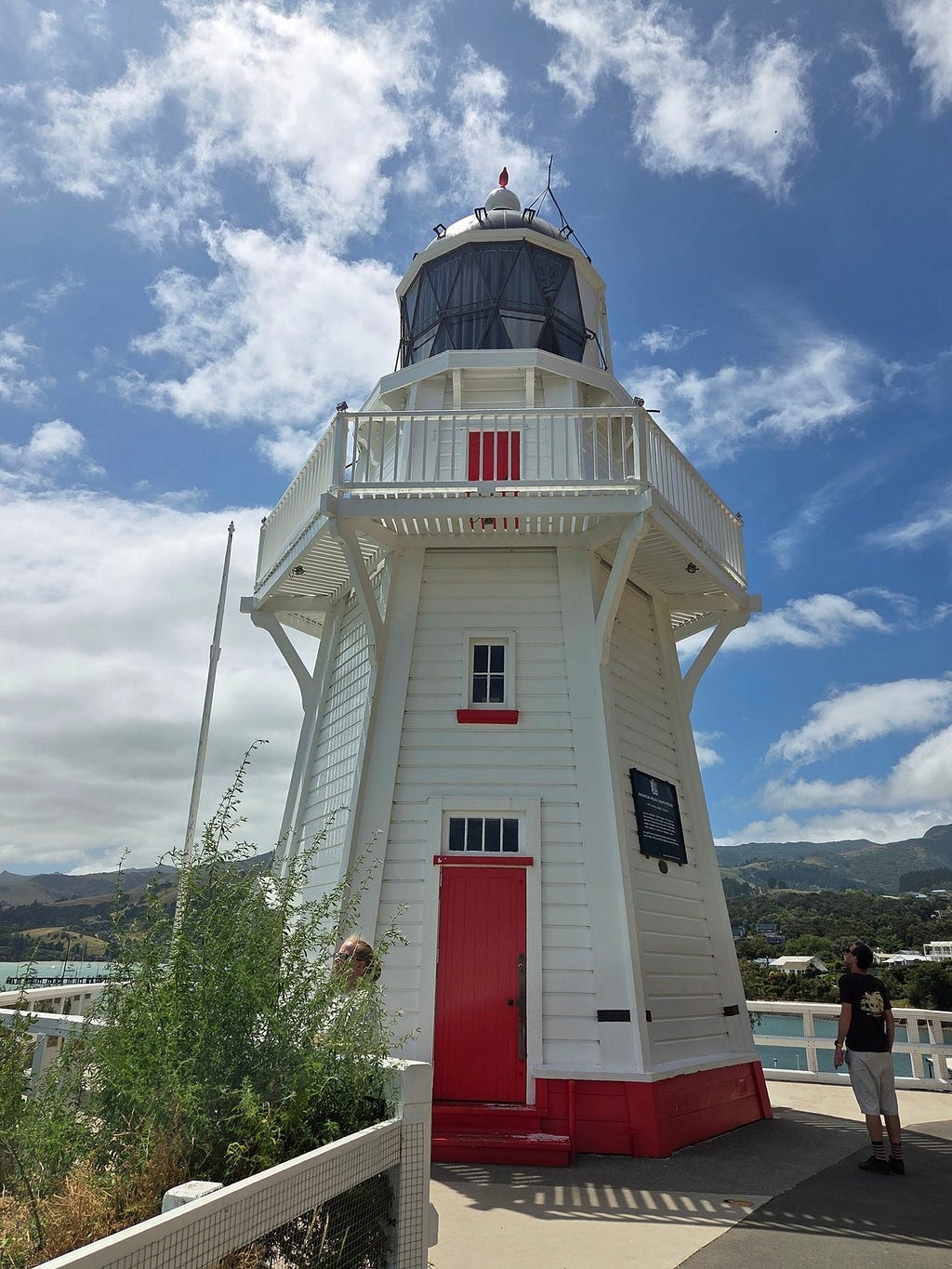
I wanted to go kayaking, but the wind was too high. On the other hand, you can go on a whole range of local walks that enable you to look down on the harbour, and there is birdlife everywhere: kereru, or wood pigeons, in the middle of town.
Continued next week!
If you liked this post, check out my book about the South Island! It’s available for purchase from my website, a-maverick.com.
Subscribe to our mailing list to receive free giveaways!

